How to Set Up a Simple Catfish Bottom Rig for Beginners
A catfish bottom rig for beginners is simple: a sliding sinker, a short leader, and a circle hook. Here is how to tie one and fish it from the bank safely.
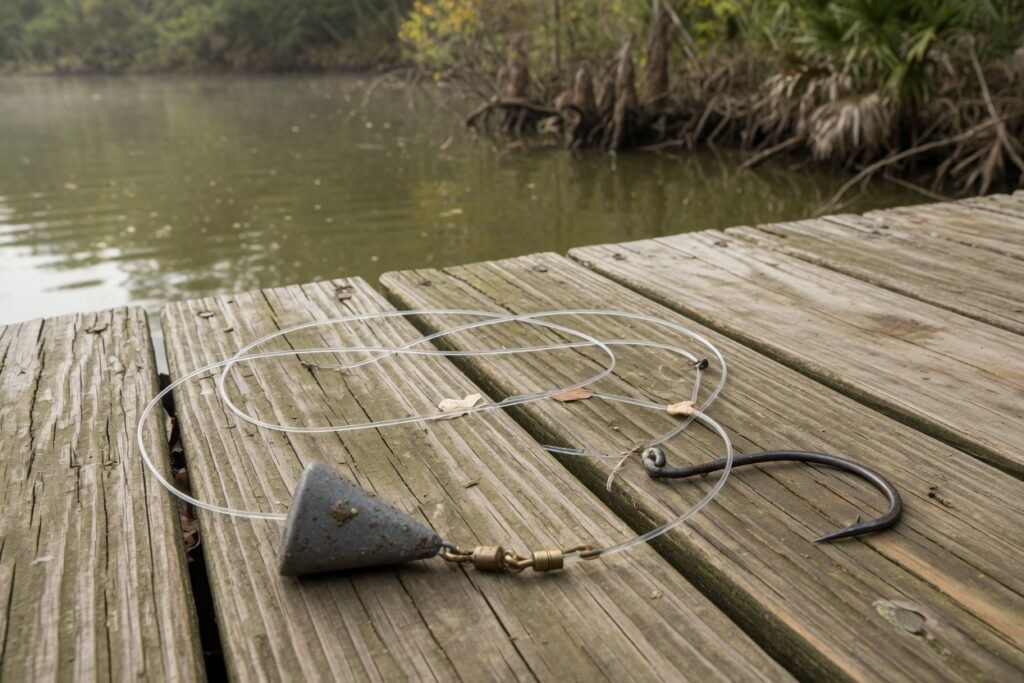
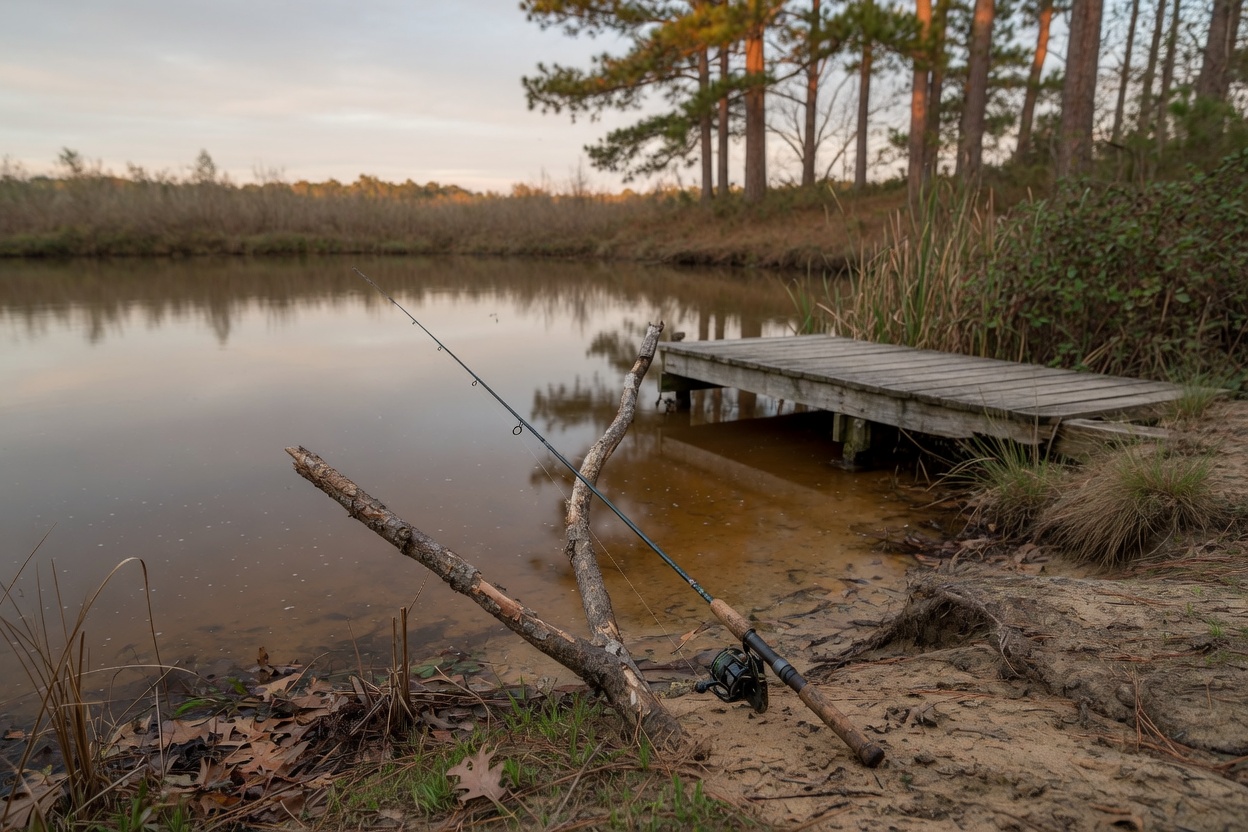
A channel catfish is the fish that taught me patience. You can fish for a bluegill and have a bobber go under in a minute. A catfish makes you wait. You put your bait on the bottom, set the rod in a forked stick, and sit down. Sometimes it’s ten minutes. Sometimes it’s an hour and a good story. Then the rod tip nods once, twice, and bends, and the whole evening changes.
I’ve fished for catfish off my own pond bank for most of my life, and the rig I use hasn’t changed much since my daddy tied one for me. It’s called a bottom rig, and it’s one of the simplest things you’ll learn to tie. This is how I put one together, how I fish it, and the mistakes I made so you can skip them. The water won’t be warm enough for the best catfish bite for a while yet, but the time to get your rig ready is before the first warm spell, not after.
What a bottom rig does
A bottom rig keeps your bait on the bottom, where a catfish feeds, and lets the fish pick it up without feeling the weight of the sinker. That last part is the whole trick. A catfish that feels resistance will drop the bait. A fish that feels nothing will swallow it and swim off with it.
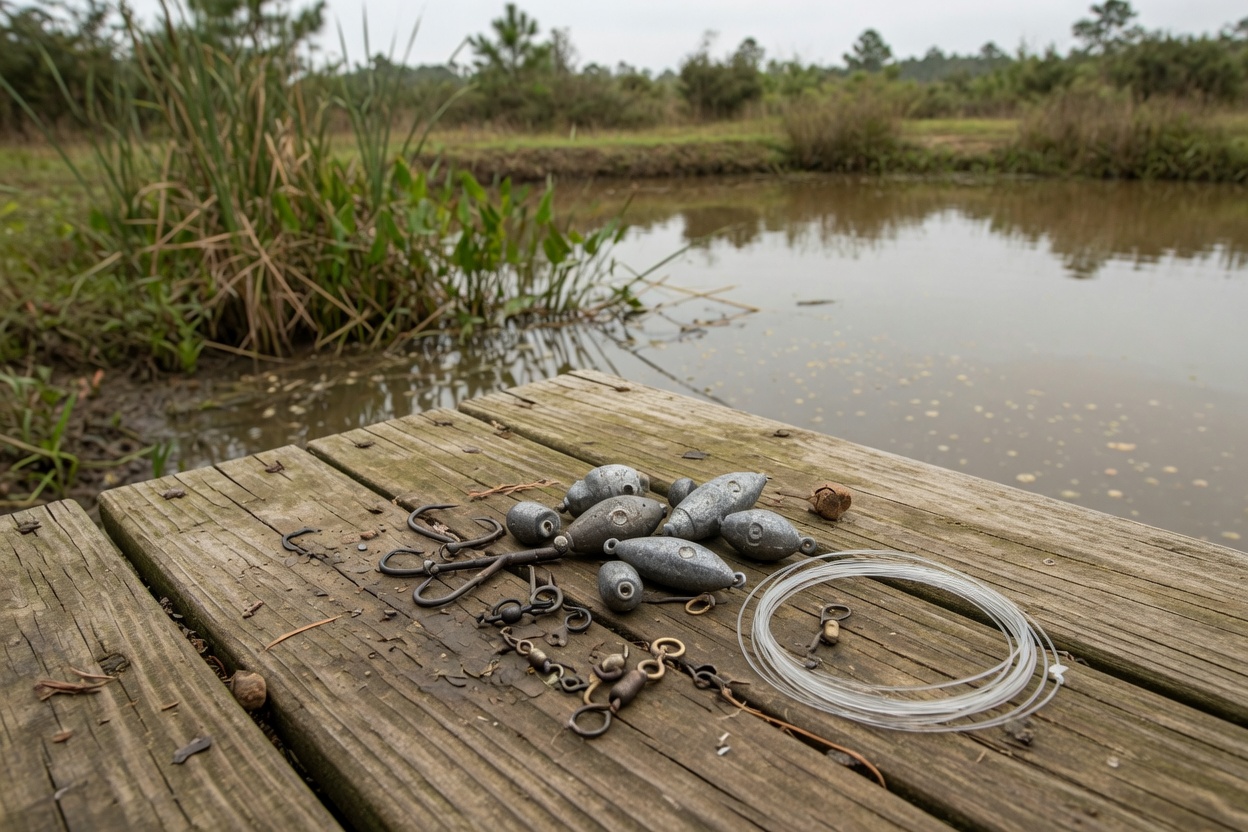
You’ll build that out of four pieces: a sinker that slides on your line, a small bead or stop, a swivel, and a short leader with a hook. That’s it. You can buy the pieces for a few dollars at any bait shop or hardware store in the county.
What you need
Your rod and reel. You don’t need anything special. I fish a plain spincast outfit, a Zebco 33 on a five-and-a-half-foot rod, the same one I put in a child’s hands. It handles a channel cat up to several pounds without trouble. If you land a big blue cat, you’ll want something heavier, but for a beginner on a pond or creek bank, the outfit you already have is probably enough.
Line. Ten- or twelve-pound monofilament is a good match for channel cats. Lighter line breaks on a snag, and heavier line is more than you need.
An egg sinker. A smooth, oval-shaped weight with a hole through the middle. A half-ounce to an ounce does the job in a pond or slow creek. Go heavier only if the current in a river is pulling your bait away.
A small bead and a barrel swivel. The bead protects your knot from the sinker. The swivel stops the sinker from sliding down to the hook, and it keeps your line from twisting.
A leader of about eighteen inches. Use a piece of monofilament that’s the same weight as your main line, or a little lighter. I’ll tell you why in a moment.
A circle hook, size 1/0 to 3/0. A circle hook has a curved point that turns in toward the shank. It sets itself in the corner of the fish’s mouth as the fish moves off, which means you don’t have to jerk, and you hook fewer fish deep in the throat. It’s the best thing that ever happened to beginners.
Tying it, step by step
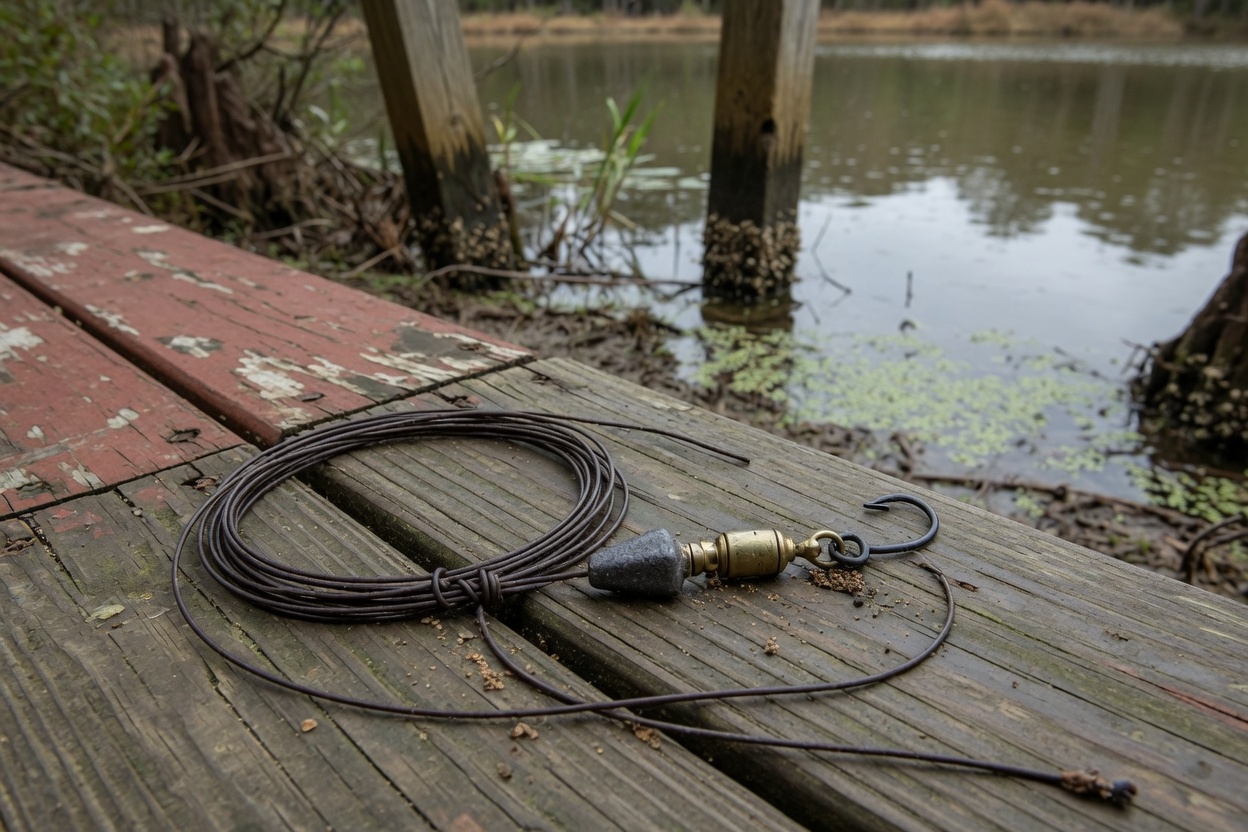
1. Slide the egg sinker onto your main line. Thread the line through the hole in the sinker, and let it slide down.
2. Add the bead. Slide it down behind the sinker.
3. Tie on the swivel. Use an improved clinch knot, pulled snug. If you need a refresher on the knot, I put it step by step in how to tie simple fishing knots for beginners. Wet the line with a little spit before you pull it tight so it doesn’t burn.
4. Tie your leader to the other end of the swivel. Another clinch knot. Cut the tag end short.
5. Tie the hook to the other end of the leader. Same knot. Leave a loop-end if you prefer, but a plain clinch is fine.
You’ve got a rig. The sinker slides on the main line above the swivel. When a catfish takes the bait, it pulls line through the sinker without lifting it, and feels nothing but a bait that tastes right.
The reason for a lighter leader is simple. If the hook snags a log or a rock, the leader is what breaks, not your main line. You lose a hook and not a rig.
What to bait it with
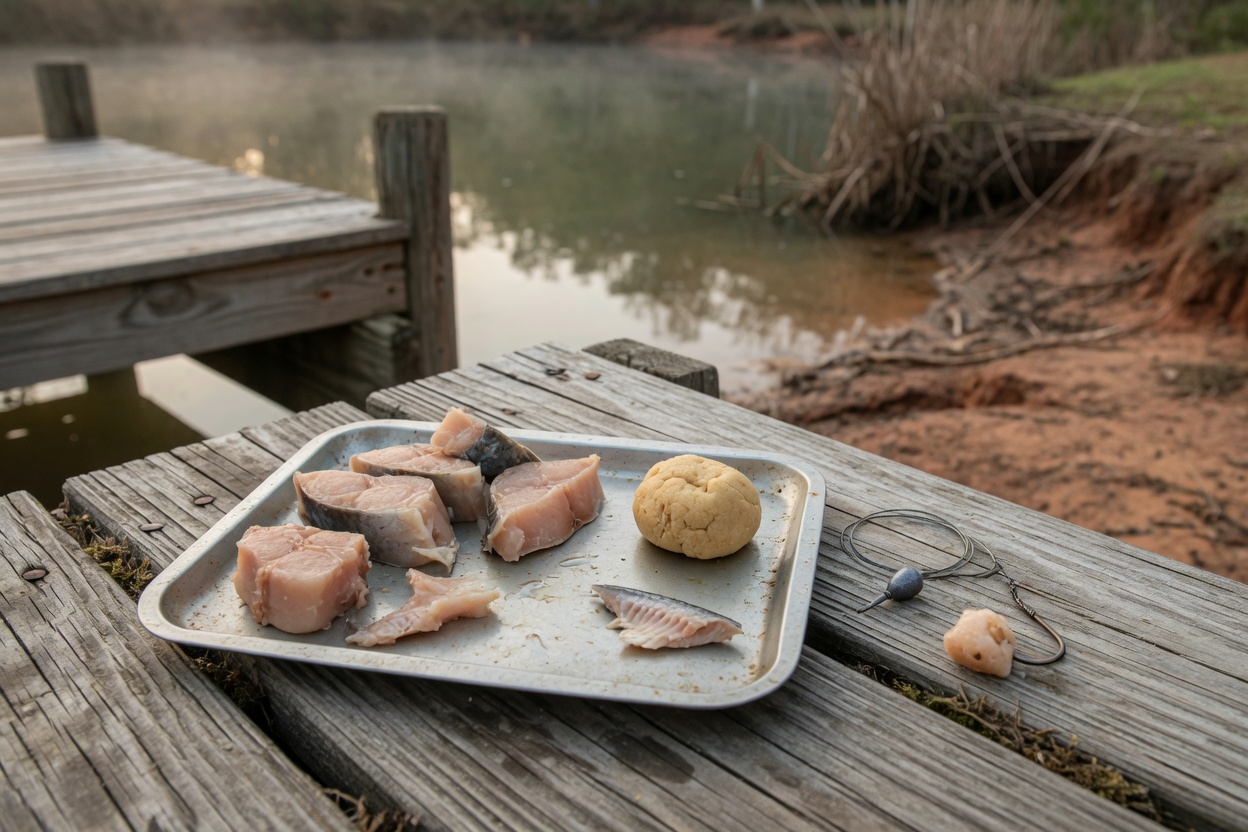
Catfish eat with their noses and their whiskers. Strong smells bring them in. Here’s what has worked for me and for my grandkids.
Cut bait. A piece of fresh bluegill or shad about an inch square. It oozes oil and scent into the water. It’s my first choice, and it costs nothing if you’ve been catching bluegill.
Chicken liver. Messy, smelly, and good. It falls off the hook easily, so I thread it on the hook, then wrap it with a rubber band or thread to hold it.
Nightcrawlers. A fat worm on a circle hook catches catfish and also bream, which is a fine problem to have.
Stink bait. Works, and smells like it. Keep the jar well sealed and away from the truck seat, if you want to keep your family’s good will.
Fishing it from the bank
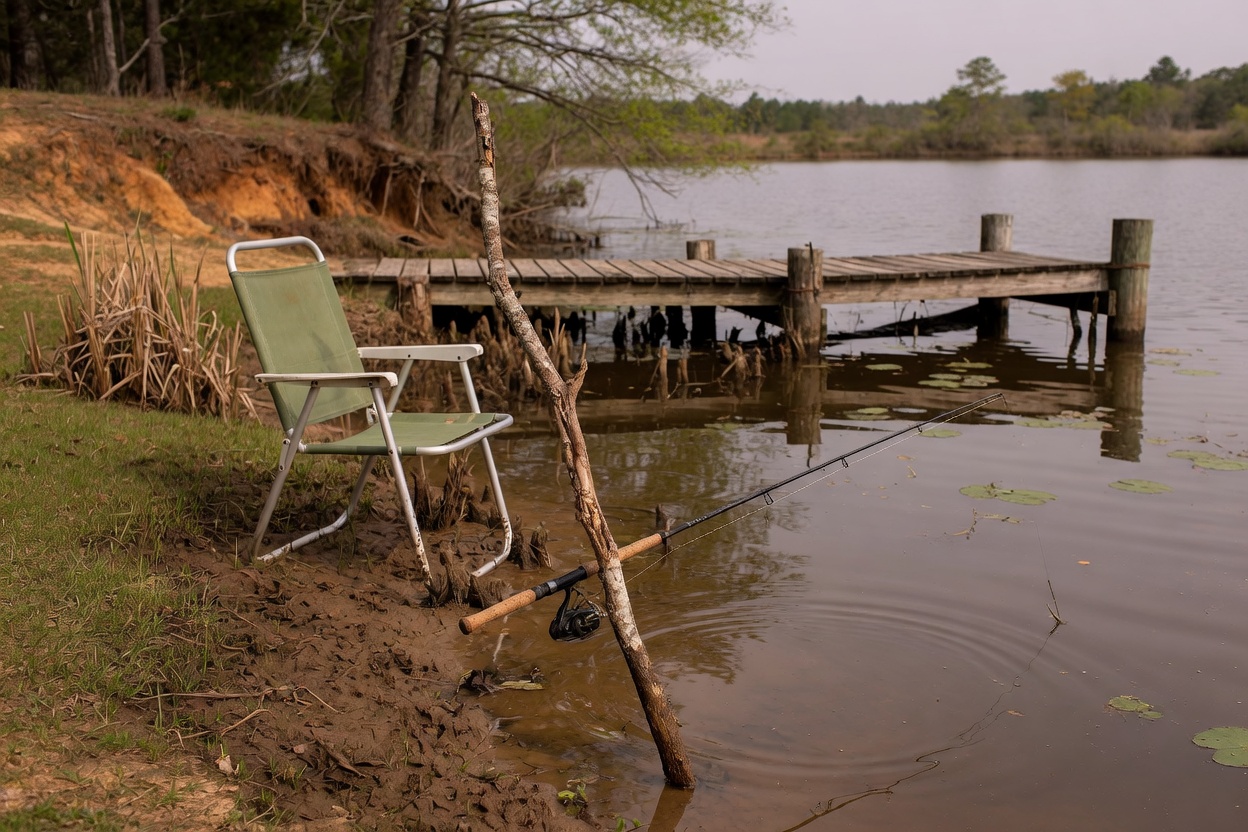
Find a spot where the bottom drops off a little, a creek bend, the deep end of a pond, or the edge of a laydown where the cats rest in the shade. Cast out, let the sinker hit bottom, and then reel just enough to take the slack out of the line. Don’t pull it tight. Set the rod in a forked stick or a rod holder with the reel’s bail or button ready.
Now you wait. Watch the tip of the rod. A catfish bite starts as a tap, then another, then a steady pull that bends the rod. Because you’re using a circle hook, the key is to do nothing. Don’t snatch. Don’t set the hook. Pick up the rod, start reeling steady, and let the fish hook himself against the pull of the rod. Hold the rod up and keep reeling.
If you miss a fish, check your bait. A catfish can strip a worm or a piece of liver clean and leave you with a bare hook.
A word on handling a catfish
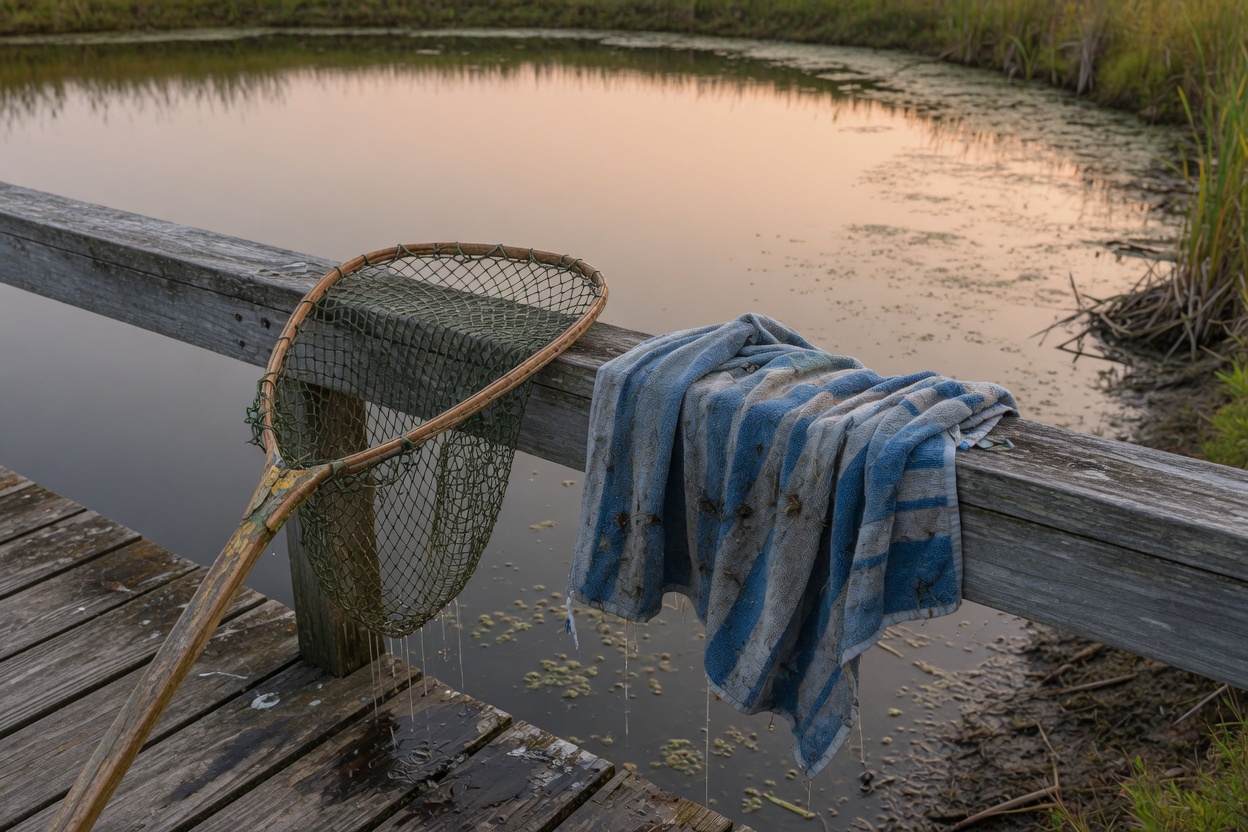
A channel cat has sharp spines on the dorsal fin and on each side, near the gills. They can cut you. Hold the fish from underneath, with your hand behind the pectoral fins and your thumb on the back, or use a pair of pliers to remove the hook. Don’t grab one from the top with your palm over the spines.
When you’re ready to keep your fish, how to keep your catch fresh until you get home comes first, then how to clean a fish for beginners. And when it’s time for the fish fry, how to fry fresh-caught fish will see you the rest of the way. Check your state’s fish advisory for the water you fish, too. Some waters carry limits on how often you should eat certain species.
When to fish it
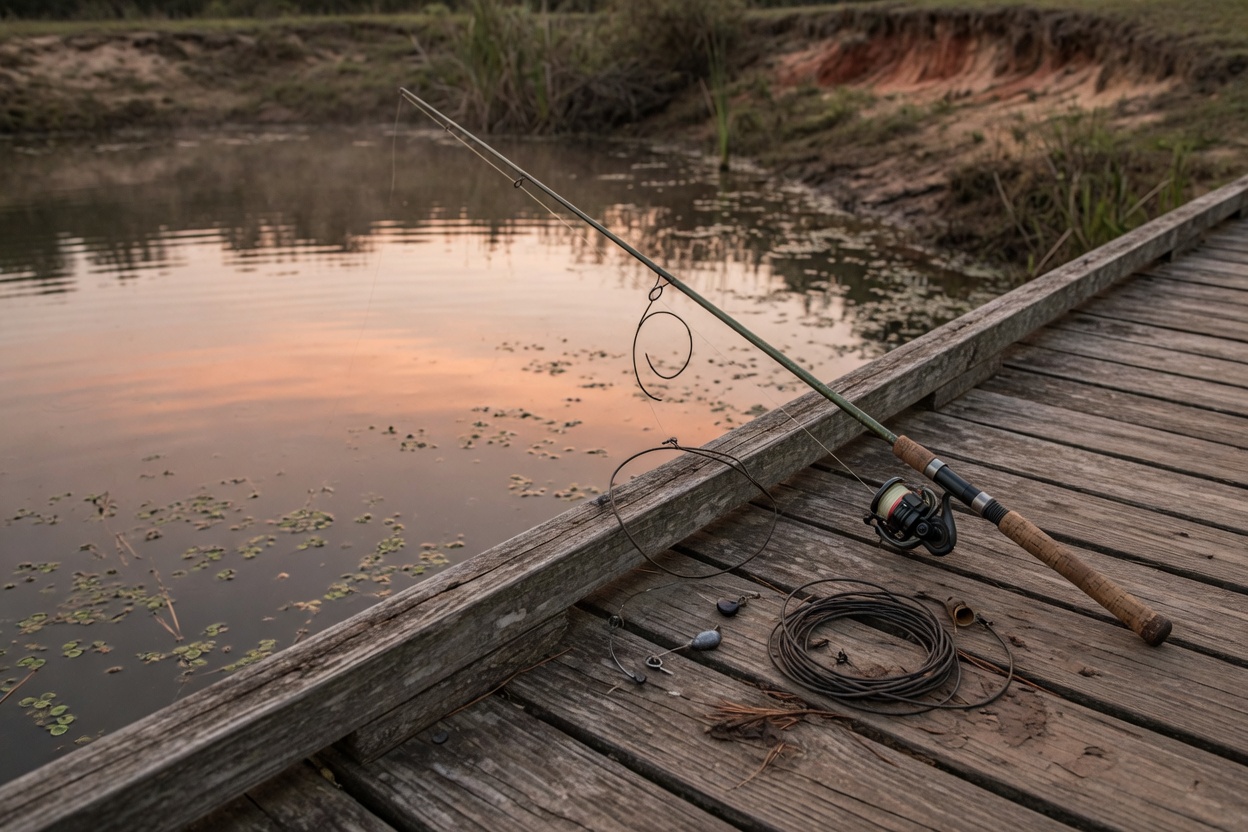
Catfish stay slow while the water is cold. They begin to feed seriously once the water climbs into the high fifties and sixties, and the evenings and the hours after dark are best. I’ve caught plenty in daylight, though, especially in murky water after a rain. If you want a closer look at fishing the cold months, I wrote about how to catch channel catfish in winter, and the bank basics are in how to catch channel catfish from the bank.
I put together a simple almanac of the best days to fish each month, by the moon, the weather, and the water, so you can pick your evenings with some sense. I give it away free. You can pick up the Best Days to Fish starter kit here.
And if there’s a young one in your house who wants to come along, my little journal, My First Catch, gives them a place to write down the first cat they ever land. They’ll remember it longer than you will.
Read the signs.
