How to Fry Fresh-Caught Fish the Southern Fish-Fry Way
How to fry fresh fish the old Southern fish-fry way — cornmeal, hot oil, and a cast-iron pot. The whole method for bluegill, crappie, and catfish.
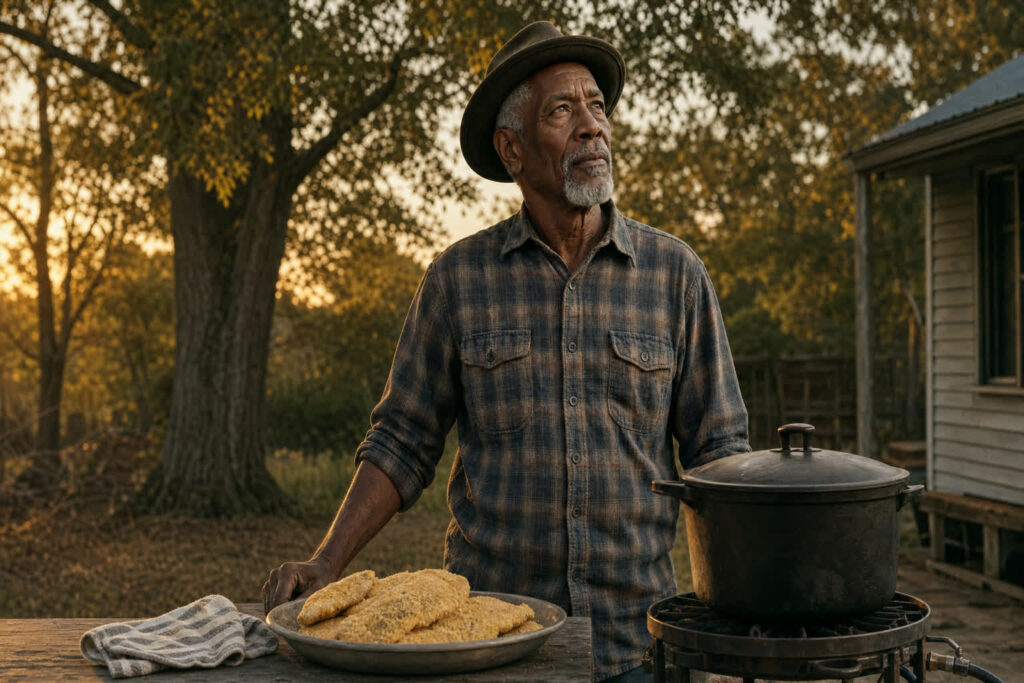
A fish you caught yourself, cleaned yourself, and fried up that same evening is about the finest supper there is. I’ve said for years that the catching is only half of it. The other half is the plate, and for as long as I can remember, the plate at my house and at my church has meant a cast-iron pot, a bag of cornmeal, and hot oil. My name is Silas Whitfield, and I ran the Friday fish fry at my church for longer than some of the congregation has been alive. Let me hand you the whole method, plain.
This is freshwater fish — bluegill and shellcracker, crappie, channel catfish, the fish a beginner actually catches off a bank or a dock. Cook the fish you catch, at home, and you’ll never think much of a restaurant fry again.
Start with a fish handled right
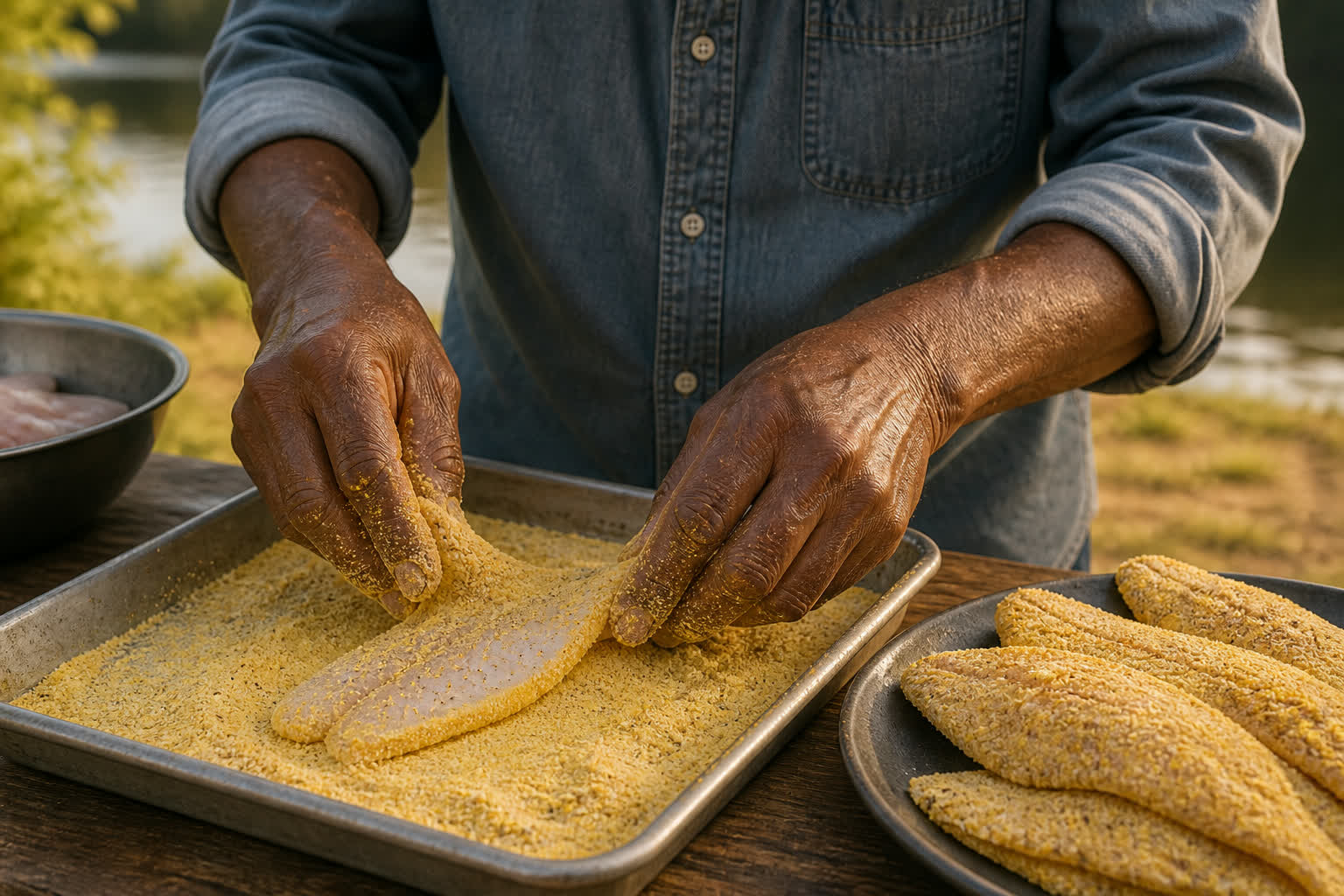
Good fried fish starts long before the oil. It starts at the water. A fish keeps best cold, so I carry a little cooler with ice and my catch goes on it as soon as it’s off the hook. Warm fish left on a stringer in the sun all afternoon loses quality fast, and you can taste the difference on the plate.
Clean your fish soon after you’re off the water — filleted for catfish and the bigger crappie, or scaled and gutted whole for a hand-sized bluegill, which fries up beautiful on the bone. If you’re new to that part, my guide on how to clean a fish for beginners walks it through. Then cook it fresh that day if you can. What you won’t cook soon, get into the freezer quick, sealed against the air.
The coating — cornmeal is the old way, and the right way
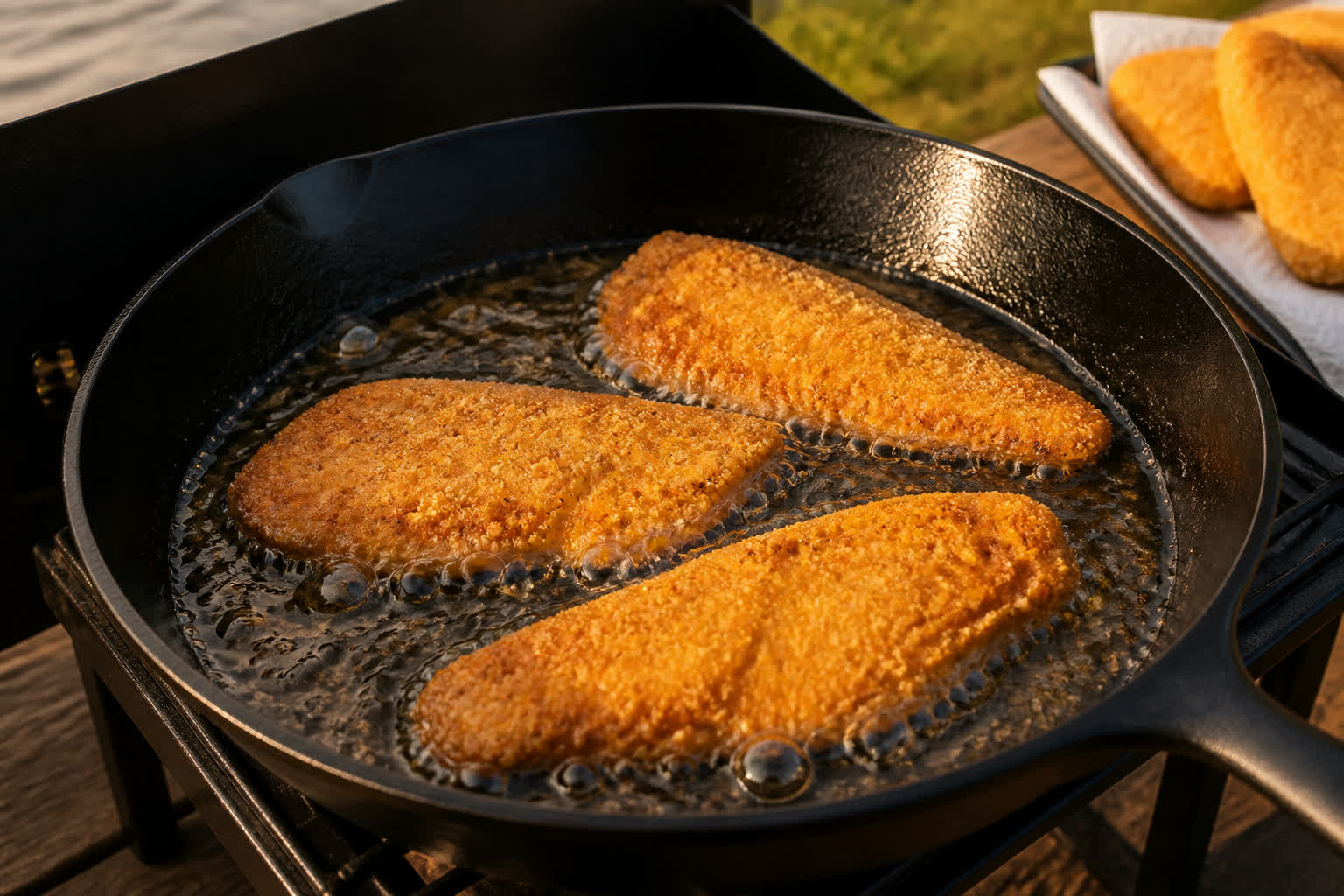
There’s no mystery to a Southern fish fry, and anybody who tells you it’s complicated is selling something. The coating is cornmeal.
I use a plain yellow or white cornmeal, seasoned simple with salt and black pepper. Some folks cut it with a little flour for a lighter crust, maybe a third flour to two-thirds meal, and that’s fine — suit yourself. A shake of seasoning in the meal is good too, whatever your house likes. Keep it simple. The fish is the star; the meal is just the jacket it wears.
Now, to make the meal stick, the fish wants to be a little wet. The old way is to soak the cleaned pieces in buttermilk a spell, and buttermilk does give a fine crust. But plain water, or just the moisture off a rinsed fillet, works honest too. Dredge each piece in the seasoned meal, press it on, shake off what’s loose, and set it aside. Coat them all before the oil gets hot so you’re not fumbling once it’s ready.
Get the oil right — this is the whole game
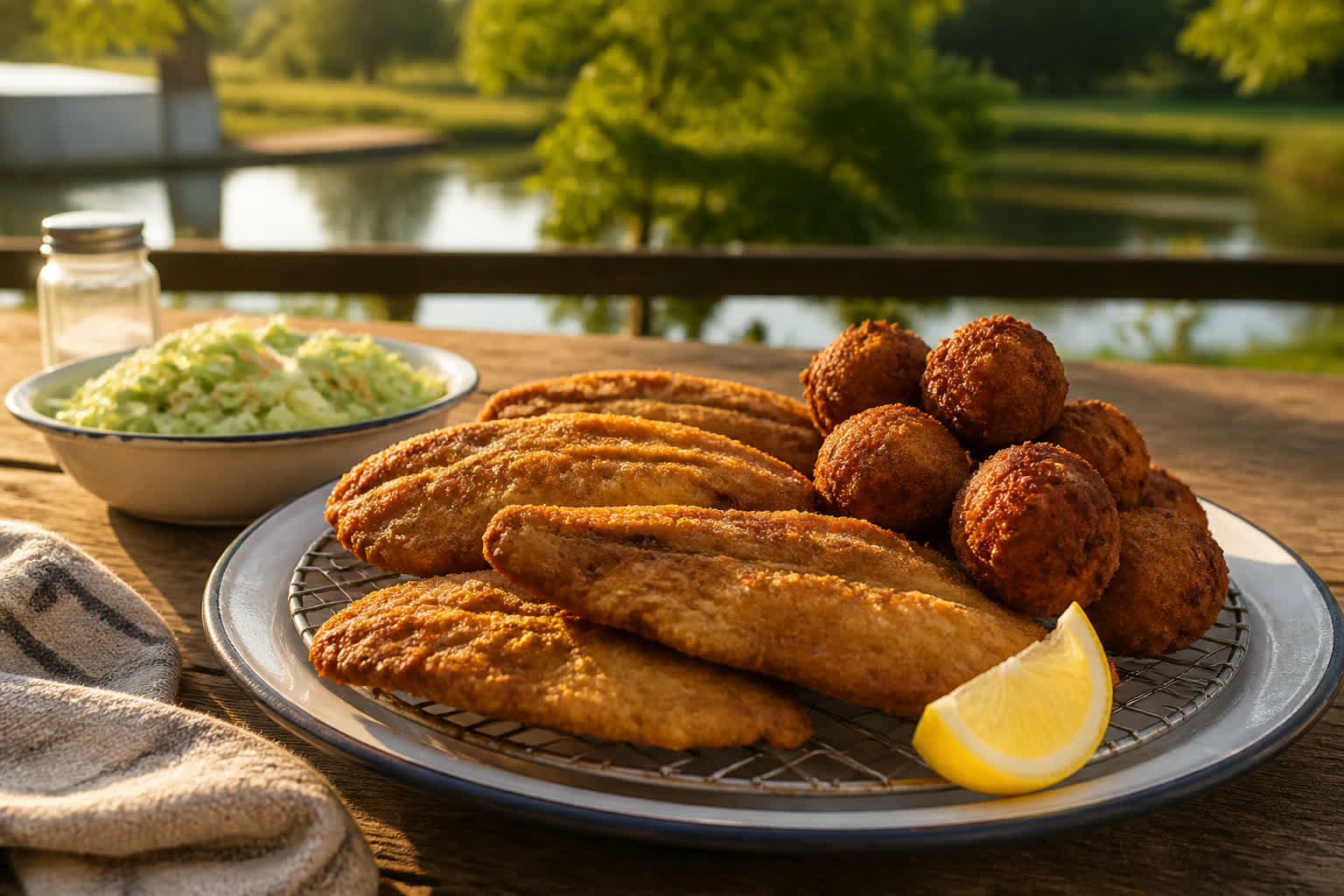
Frying is mostly about the oil being the right heat, and most beginners get this one wrong by rushing it. Too cool and the fish sits and soaks and comes out greasy. Too hot and the meal burns black before the inside cooks.
Use a heavy pot or a cast-iron skillet — cast iron holds its heat steady, which is exactly what you want, and it’s what I’ve fried in my whole life. Pour in enough oil to come up the side of the fish, an inch or two; a peanut or vegetable oil that takes high heat is right. You’re after about 350 to 375 degrees. If you don’t have a thermometer, the old test never fails: drop a pinch of the cornmeal in, and when it sizzles and dances right up to the top, the oil’s ready. If it just sinks and sits, wait.
Lay the fish in gentle, away from you, and don’t crowd the pot. Two or three pieces at a time. Crowd it and the oil temperature crashes and everything goes greasy at once. Fry in patient batches; it’s worth it.
Know when it’s done
Fresh fish cooks fast — faster than people expect. A thin bluegill fillet or a small whole bream may only want three or four minutes; a thicker catfish fillet a little longer.
Watch the fish, not the clock. When it floats up and the crust is a deep golden brown, it’s about there. Turn it once, let the other side color, and lift it out. The surest sign is the flesh: it’s done when it’s turned from clear to white and flakes apart easy at a fork. Fish is a thing you can ruin by overcooking it, so err toward pulling it a touch early — it keeps cooking a moment on the way to the plate.
Set the fried pieces on a rack or a folded paper to drain, and salt them right then while they’re hot, so it takes. Serve them straight away. Fried fish waits for no man; it’s at its best the minute it comes out of the pot.
A word on the hot oil, and on doing it together
Hot oil deserves respect. Dry your fish so it doesn’t spatter when it goes in, never fill the pot more than halfway, and keep water well away from it. Keep the children back from the stove until it’s time to eat. A calm, careful cook is a safe one, and I’ve never had a bit of trouble in all these years by simply not hurrying.
And that’s really the heart of it — the fish fry was never just about the fish. It was Friday evenings, the whole congregation, Audra running the kitchen and turning out hushpuppies faster than we could fry the bream. It’s how a community sat down together. If you’ve got a young one, a fish fry is the natural end of a day on the bank, and letting a child help bread the fish is how the whole tradition gets handed on. I made a little journal for exactly that — a place for a young angler to set down what they caught and where — and you can find My First Catch here.
Before you fry, though, you’ve got to catch, and the catching is easiest when you go on the right day. I keep a little almanac of my own pond that marks the best days by the moon, with a plain checklist for the water and the weather, and I put together a free one you can use for yours — pick up the Best Days to Fish starter kit here, and read the whole method in my post on reading the three signs.
Read the signs, fill the cooler, and get the pot hot. I’ll see you at the water — and at the table.
