How to Grow Tomatillos in Containers (You Need Two)
How to grow tomatillos in containers on a balcony: why you need two plants, when to start seeds indoors, the right pot size, and how to tell when they're ripe.
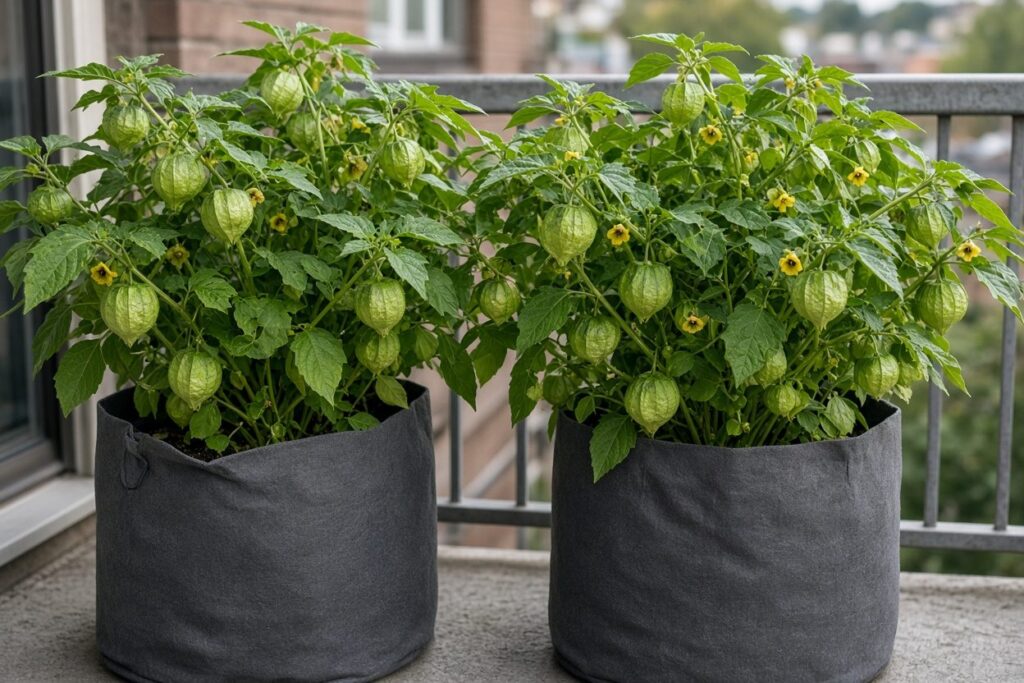
The first summer I grew tomatillos, I grew exactly one plant, in a ten-gallon grow bag in the sunniest corner of the balcony, and it gave me about a hundred empty paper lanterns and not a single fruit. It flowered all July. Every little husk puffed up on schedule. I’d pinch one open and find nothing inside but air.
Here’s the thing I didn’t know: a tomatillo can’t pollinate itself. You need two plants, and they need to be close enough for a bee to visit both. The second year I grew two, side by side in matching bags, and by late August I was giving salsa verde away to the neighbors.
So that’s rule one. Everything else about tomatillos in containers is easier than tomatoes, and the seeds go in under a grow light in early March, which makes now a good time to plan.
Why two plants, and how close
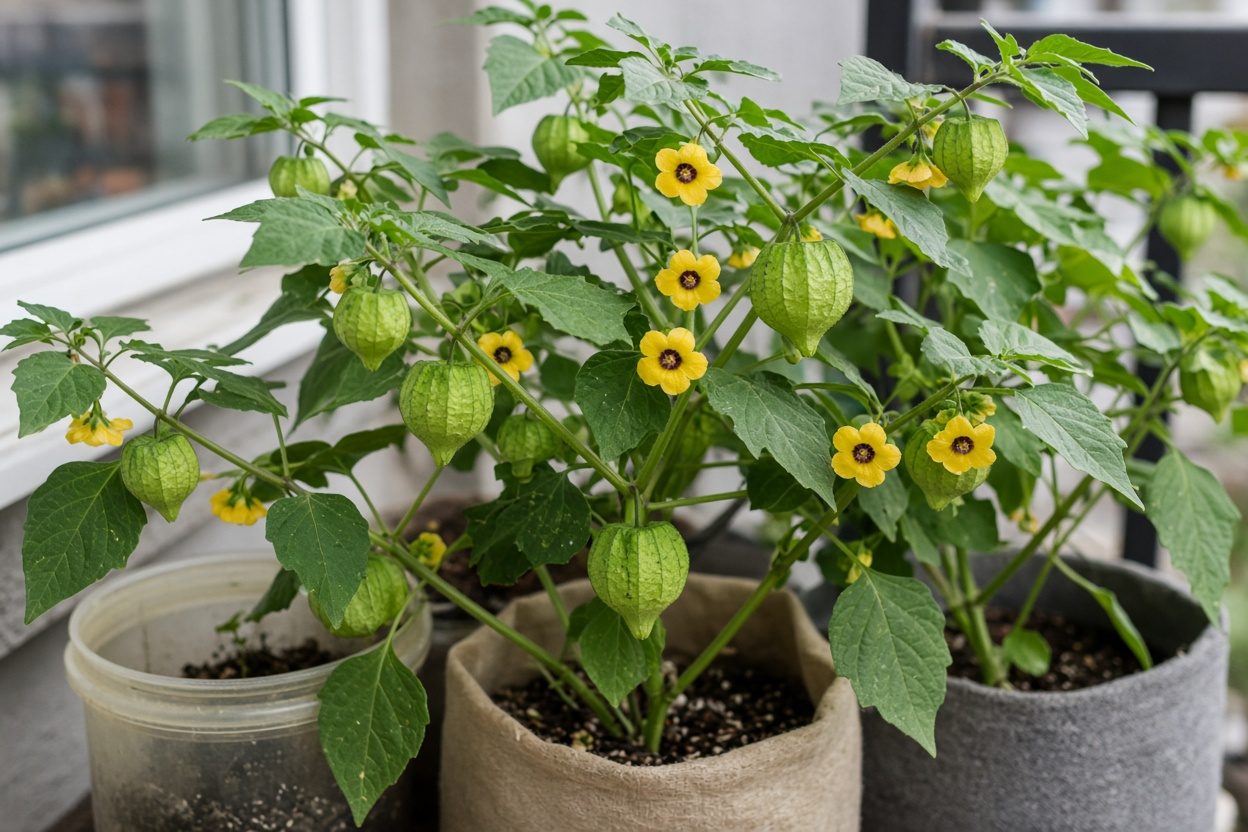
Tomatillos are self-incompatible, which is a fancy way of saying one plant’s pollen won’t set its own fruit. Two plants of the same variety work fine. They just need to be neighbors.
On my 6×10 balcony, the two bags sit about two feet apart along the railing, which is plenty. If you only have room for one container, a single large 20-gallon bag with two plants about eighteen inches apart works too, as long as you feed it well. One plant alone will flower and flower and leave you with nothing. Trust me.
Picking a variety for a small space

Tomatillos sprawl. A happy plant in a container gets three to four feet tall and almost as wide, so I look for the more compact, earlier varieties.
– ‘Toma Verde’ is the one I grow most. Green, reliable, early enough for a Portland summer.
– Purple tomatillos (sometimes sold as ‘de Milpa’) are smaller-fruited, sweeter, and gorgeous. Slightly slower to ripen.
– ‘Grande Rio Verde’ gives big fruit but a bigger plant. I’d skip it unless you have a sunny patio with room to spare.
Tomatillos are a cousin of ground cherries, and they want the same thing tomatoes want: heat and six-plus hours of direct sun.
Start seeds indoors in early March
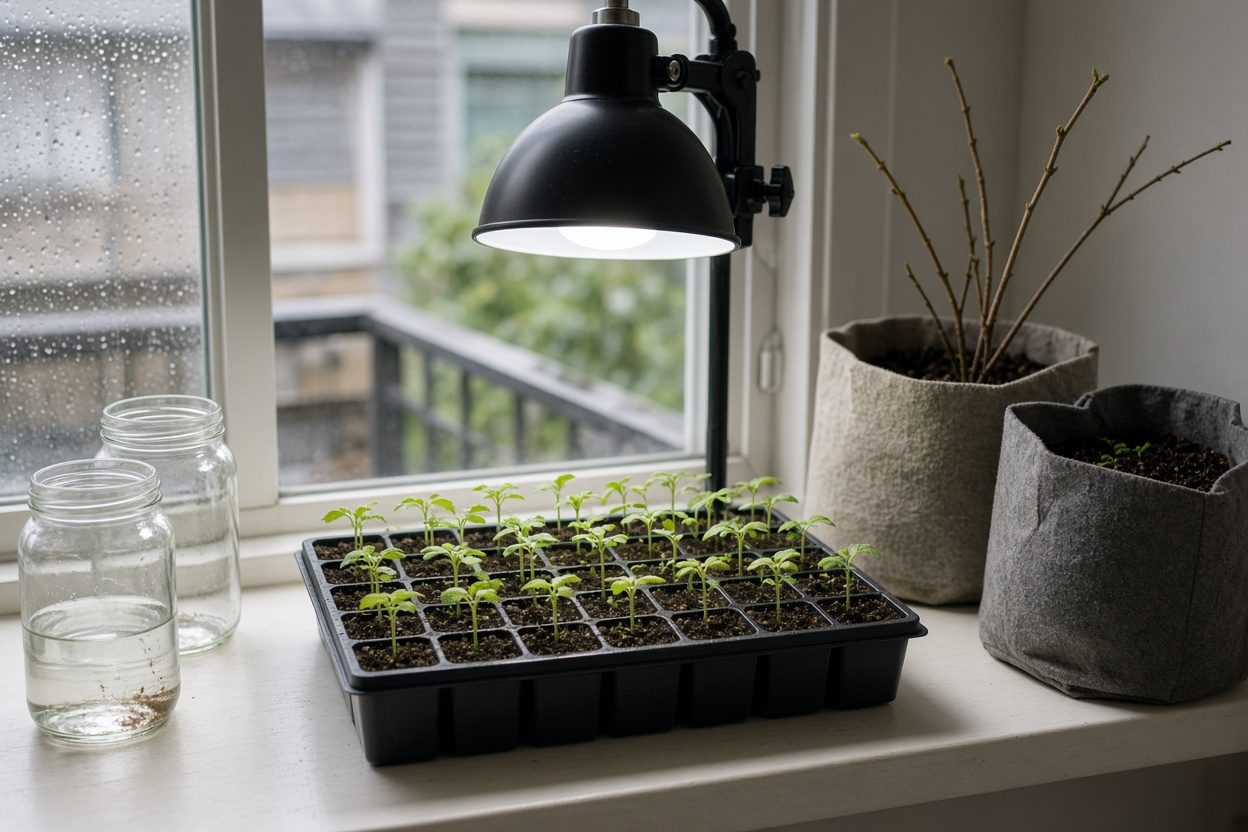
Start tomatillo seeds about six to eight weeks before your last frost. For me, that’s the first or second week of March. The process is almost exactly the same as tomatoes, which I walk through in how to start tomato seeds indoors for spring.
Fill small cells or yogurt cups with damp seed starter, press two or three seeds about a quarter-inch deep, and keep them somewhere warm. They germinate in five to ten days. Once they’re up, put them under the clip-on grow light set two to three inches above the leaves, on for about fourteen hours a day.
Start a few more than you need. I always sow six cells for two plants, then keep the two strongest and give the extras to whoever on my street asks first.
When they have two sets of true leaves, move them into four-inch pots. Tomatillos, like tomatoes, can be planted a little deeper each time you pot up, and they’ll root along the buried stem. How to pot up seedlings into bigger containers has the details.
Move them outside when nights stay warm

Tomatillos sulk in the cold even more than tomatoes. I wait until nighttime temperatures stay above 50°F, which in my part of Oregon is usually mid-May, then harden them off over a week. My week-long routine is in how to harden off seedlings on a balcony.
Fill each grow bag with potting mix, never garden soil, and plant each seedling deep, burying the stem up to the first set of leaves. Ten gallons per plant is the minimum I’d go with. In a five-gallon pot they live, but they dry out by noon in July and fruit much less. I compare bags and plastic in fabric grow bags vs. plastic pots if you’re deciding.
Support, water, and a little food
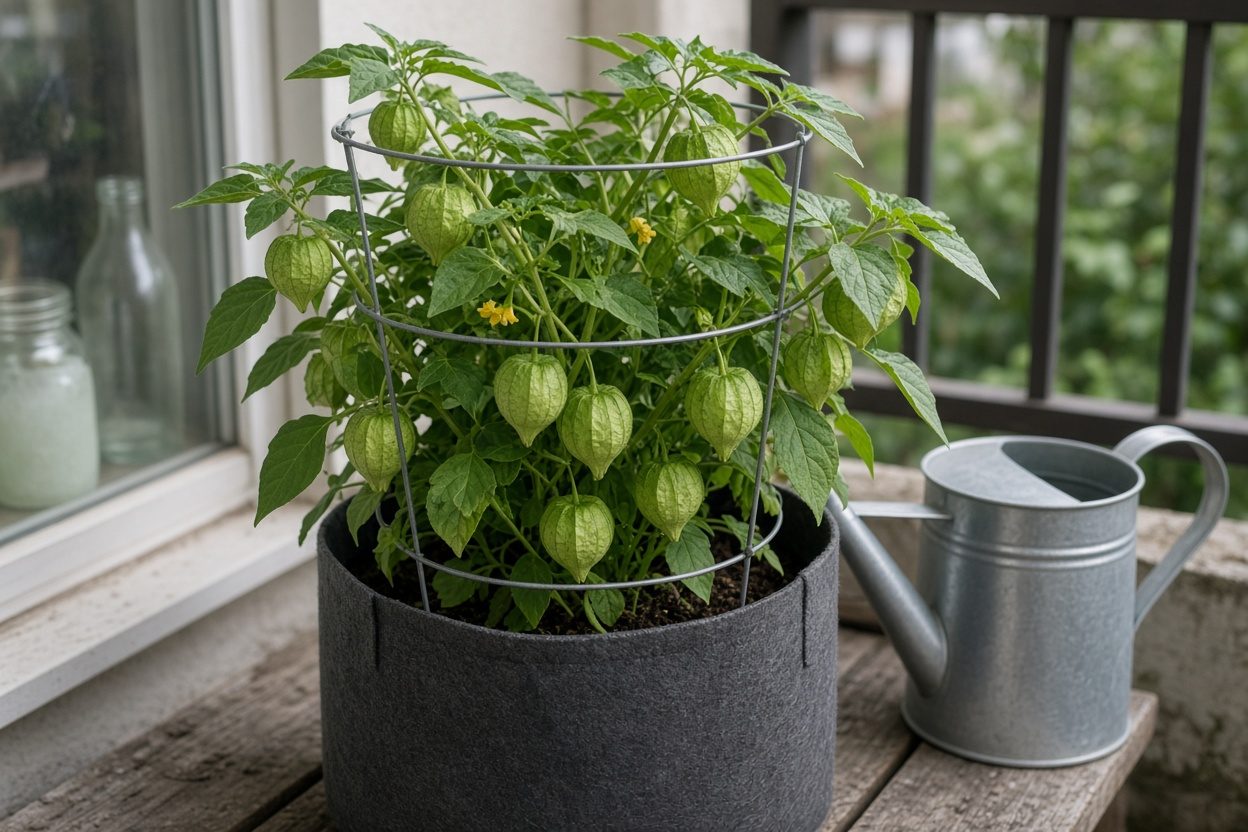
Give each plant support early. A tomato cage pushed into the bag at planting time is perfect. I don’t have a verified cage I’d send you to, so any sturdy one about four feet tall works. A floppy tomatillo lies across the balcony floor, and Otto treats the lower branches as a personal chew toy.
Water deeply when the top inch is dry. A ten-gallon bag in full sun can need water every day in August, and a moisture meter saves you from guessing. Tomatillos are more forgiving of uneven watering than tomatoes. You won’t get blossom-end rot or split fruit, which is one reason I love them.
Once they start flowering, scratch a quarter-cup of Garden-Tone into the top of each bag, and again about a month later. Go easy. Too much nitrogen gives you a huge leafy plant with fewer fruit. My full container feeding schedule is in how to fertilize container vegetables.
How to tell when they’re ripe
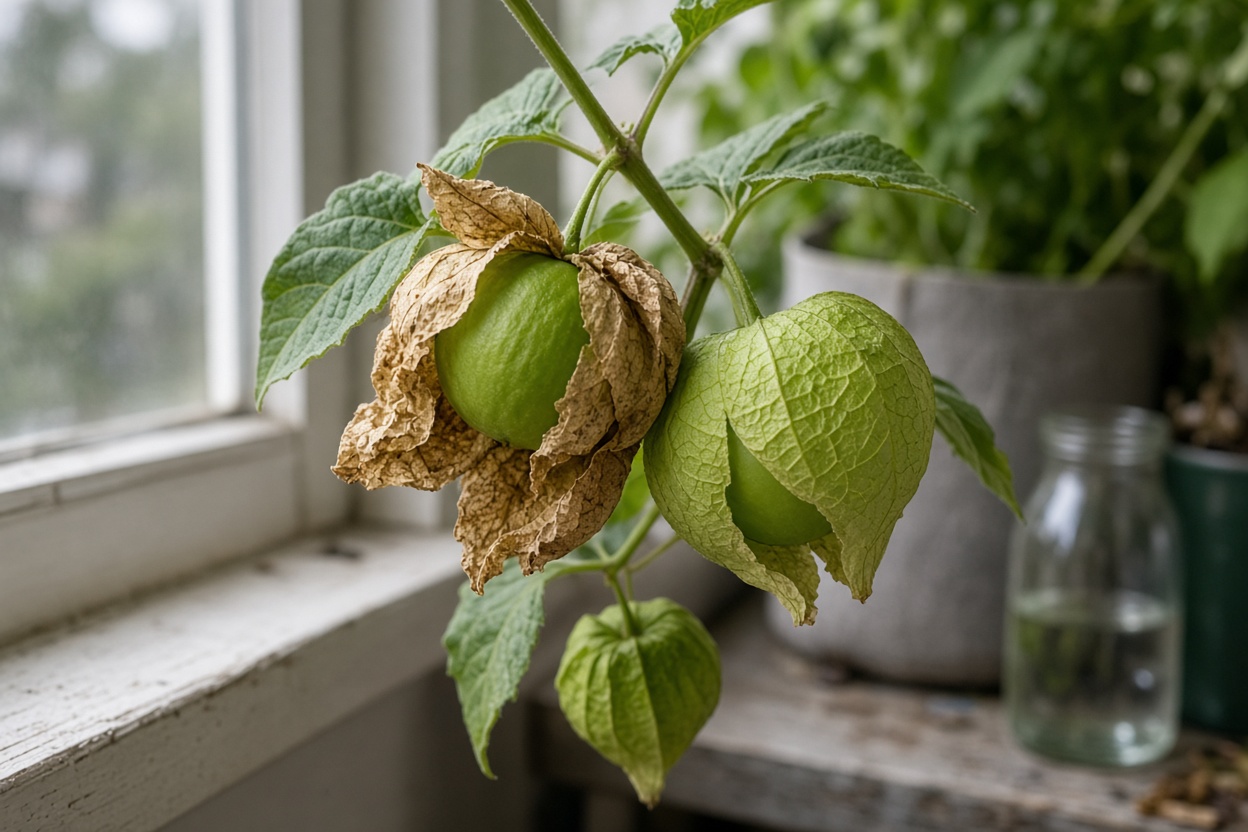
This is the part that confused me most. A tomatillo is ripe when the fruit fills the husk completely and the husk starts to split or turn papery and tan. The fruit itself should be firm and still bright green (or purple, for purple varieties). If it turns yellow, it’s past its prime for salsa, but it’s sweeter and fine for jam.
Some fruit drops to the ground when it’s ready. Pick those up. They’re usually perfect.
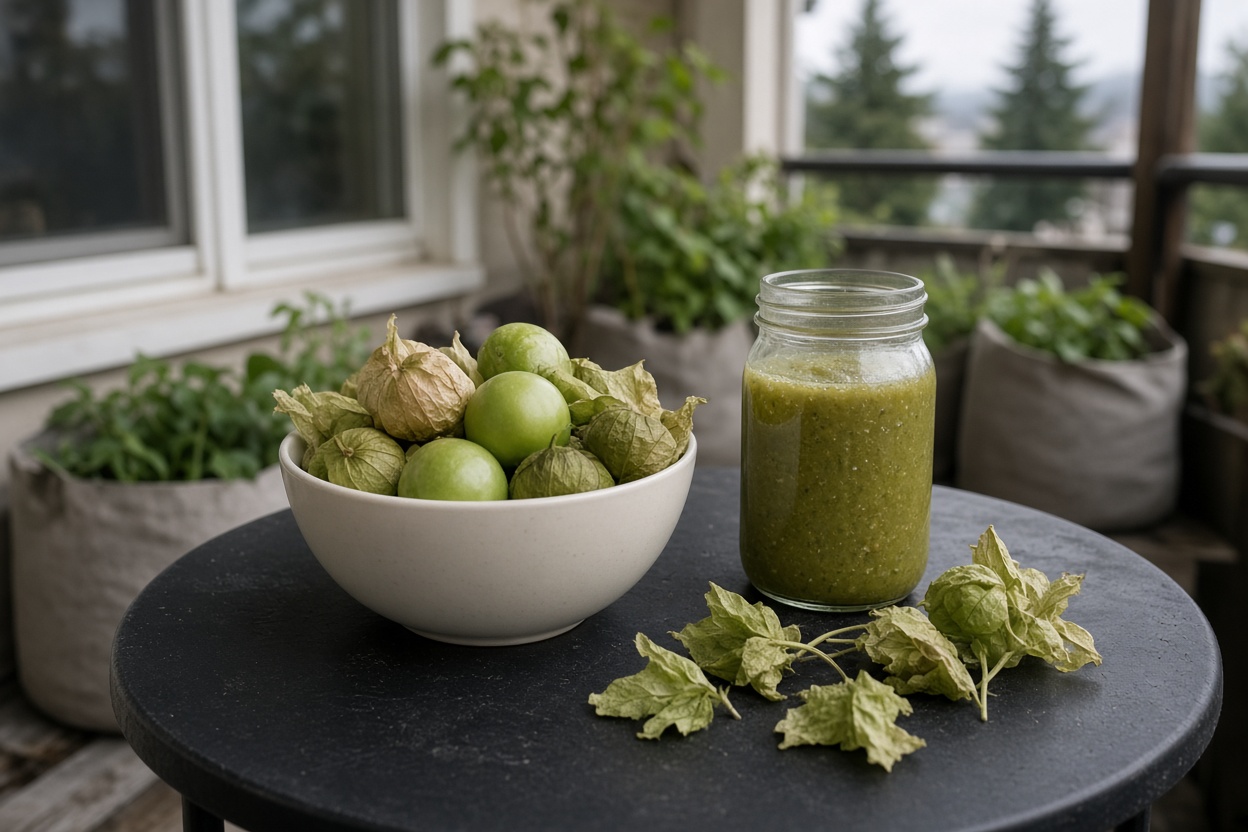
Leave the husks on until you’re ready to cook. They’ll keep for two weeks in a paper bag in the fridge. When you peel them, the fruit is a little sticky. That’s normal. A quick rinse takes it off.
Two healthy plants in ten-gallon bags gave me about four pounds of tomatillos last summer, picked a handful at a time from August to the first cold nights of October. Enough for a jar of salsa verde most weeks, and a bag to leave on the neighbors’ step now and then.
The quick version
– Grow two plants. One alone won’t give fruit.
– Start seeds in early March, under a light, six to eight weeks before last frost.
– Ten-gallon bags, deep planting, sturdy cages.
– Go out when nights stay above 50°F.
– Pick when the fruit fills the husk.
Tomatillos are one of those plants that look intimidating and turn out to be easier than the tomatoes next to them. I go into planning a whole balcony of summer vegetables, from seed-starting to the last harvest, in Small-Space Big Harvest. If you have one sunny railing and a little ambition, it’s written for you.
