How to Fertilize Container Vegetables (Without Burning Them)
How to fertilize container vegetables on a balcony — why pots run out of food fast, the weakly-weekly liquid feed routine, and how to avoid fertilizer burn.
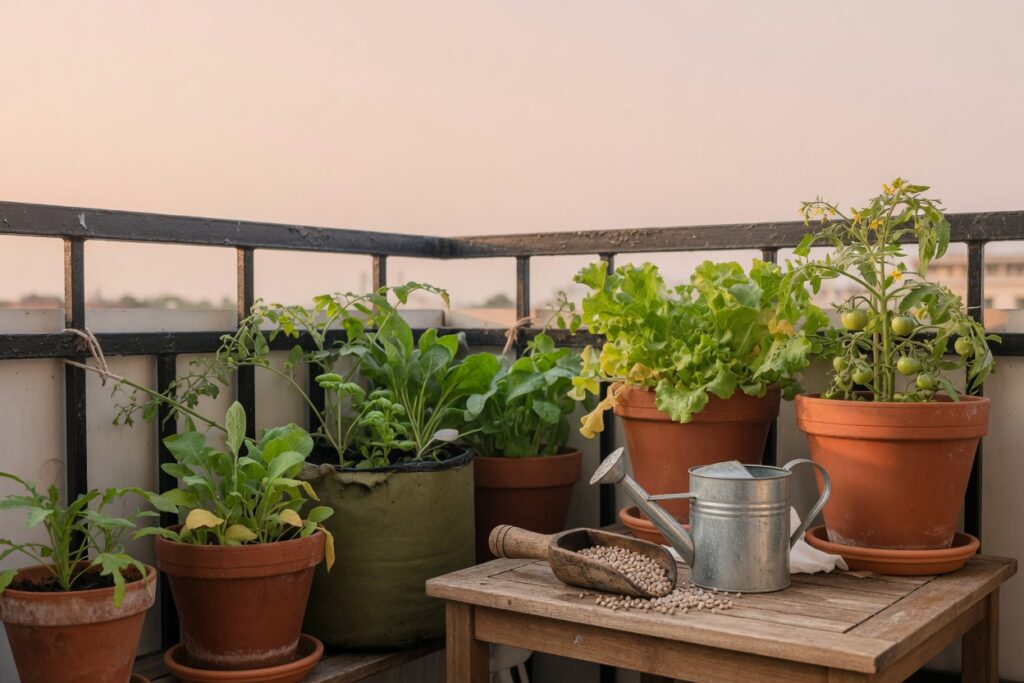
You did everything right. You filled the pot with good mix, you planted your tomato or your lettuce or your bush beans, you watered faithfully. And then somewhere around midsummer the plant just… stalled. The lower leaves went pale, the new growth got small and stingy, and you started wondering what you’d done wrong.
Probably nothing. Container plants run out of food, and they run out faster than anyone tells you when they hand you a bag of potting mix. The good news is that feeding a pot is simple once you understand why it goes hungry — and you can do the whole thing on a balcony with no yard, no compost pile, and about five minutes every couple of weeks. Let me walk you through it.
The one thing I can’t hand you a link for yet is the actual fertilizer — a granular organic feed and a bottle of liquid feed are what I reach for, and I don’t have listings here I’d stand behind. So pick those up at your garden center; I’ll add ones I trust here when I’ve got them. What matters more is knowing how and when to use them, which is the whole rest of this post.
Why pots go hungry (and the ground doesn’t)
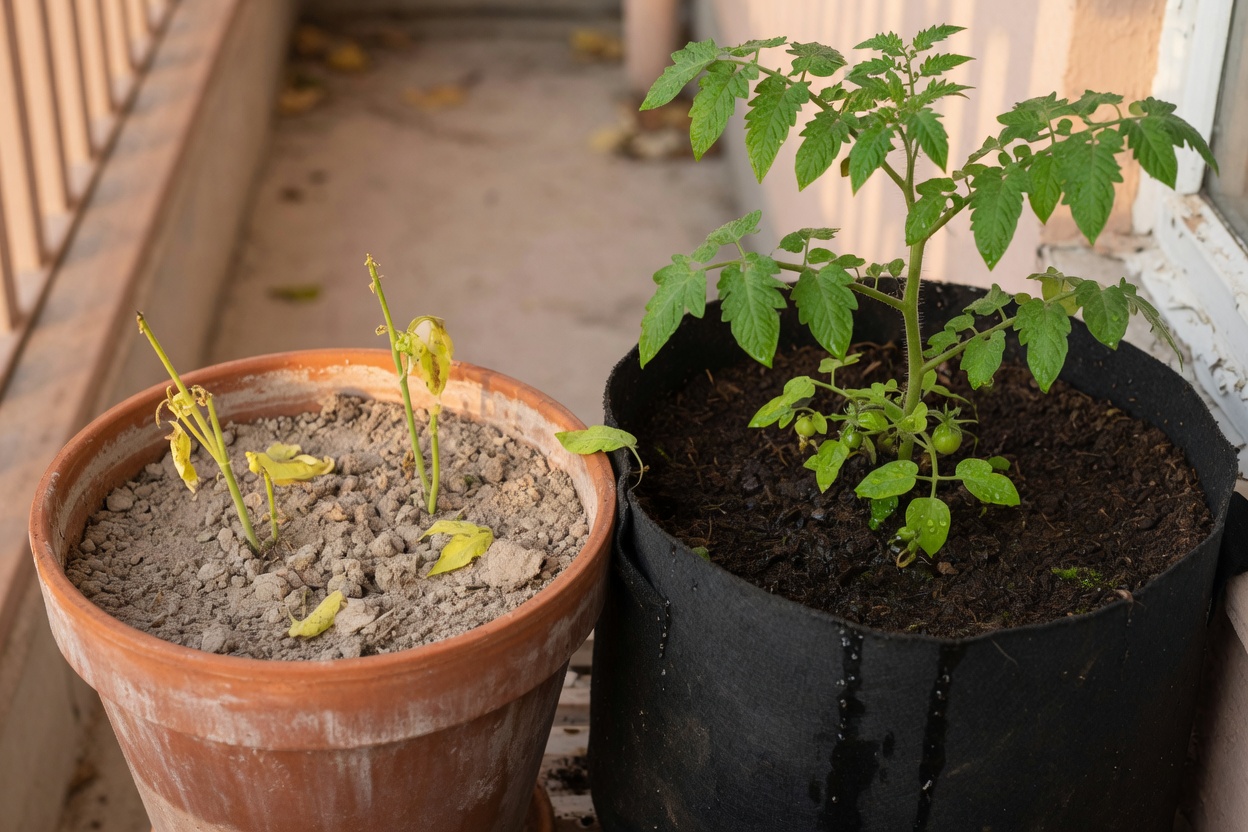
Here’s the thing nobody explains at the checkout. Potting mix is not soil. It’s mostly peat or coir, bark, and perlite — light, fluffy stuff built for drainage and root air, not for holding a pantry of nutrients. Most bagged mixes come with a starter charge of fertilizer, but it’s a small one, and it’s usually gone in four to six weeks.
Then there’s the watering problem. Every time you water a container until it runs out the drainage holes — which you should — you’re rinsing dissolved nutrients right out the bottom along with the water. A plant in the ground has the whole earth as a savings account it can draw on. A plant in a pot is living paycheck to paycheck, and on a hot balcony where you’re watering every day, that paycheck washes away fast.
So container vegetables aren’t being difficult when they get hungry. They’re doing exactly what the setup guarantees. Feeding them back is just part of the deal, the same way watering is.
Two ways to feed: slow-release and liquid
There are two tools here, and I use both. They do different jobs.
A granular slow-release fertilizer goes in at planting time and doles out food gradually every time you water. Mix it into the top few inches of the pot, or scratch it into the surface of an established container, and it feeds steadily for weeks or a couple of months depending on the product. This is your baseline — it means an empty pot is never truly empty. An organic granular feed (the kind sold as a “garden tone” or “tomato tone”) is my default because it’s forgiving and it also feeds the soil life in the pot.
A liquid feed is the quick, responsive one. Diluted in your watering can and poured at the roots, it’s available to the plant almost immediately — perfect for a heavy feeder in full production, or for perking up something that’s gone pale. Fish emulsion and seaweed blends are the organic options; there are plenty of balanced synthetic ones too. The liquid is what you lean on through the busy middle of the season, on top of the slow-release baseline.
For most balcony crops I do both: a granular feed worked in when I plant, then a diluted liquid feed every week or two once the plant is growing hard. Belt and suspenders, and the plants show it.
The rhythm: weakly, weekly
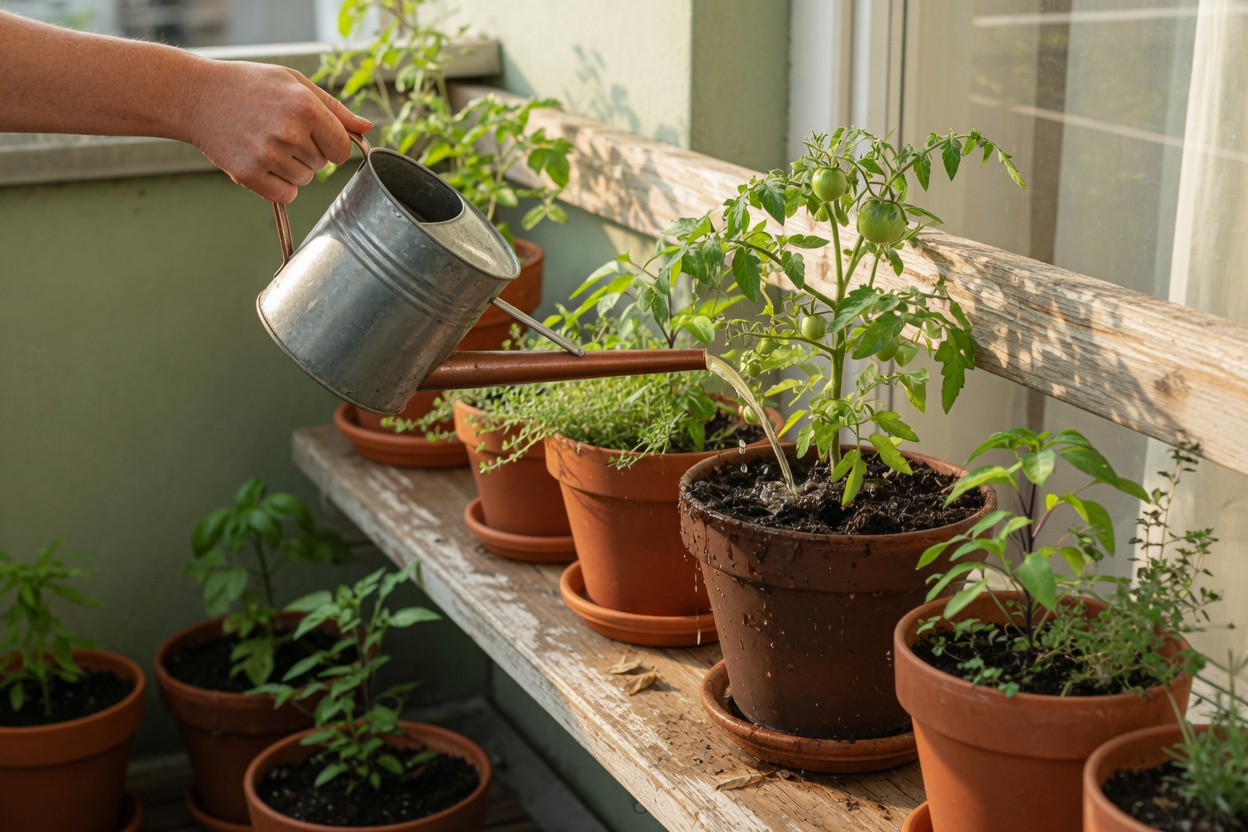
The single most useful phrase I ever picked up for container feeding is “weakly, weekly.” Feed with a weak solution, often, rather than a strong dose once in a blue moon.
Mix your liquid feed at half the strength the bottle suggests, and give it every week to every other week during active growth. A container’s roots are packed into a small volume of mix, and a full-strength dose can overwhelm them — more on that in a second. A gentle, regular feed keeps a steady supply coming without ever shocking the plant. I pour it in with a long-spout watering can so it goes down at the soil, where the roots are, instead of sitting on the leaves where it can scorch them in the sun.
One honest caution, because I’ve killed plants this exact way. Never feed a bone-dry pot. Fertilizer salts hitting parched roots is how you burn a plant. Water it first, or feed right after a normal watering, so the roots are already moist and the feed goes in diluted and gentle.
Match the feed to the crop
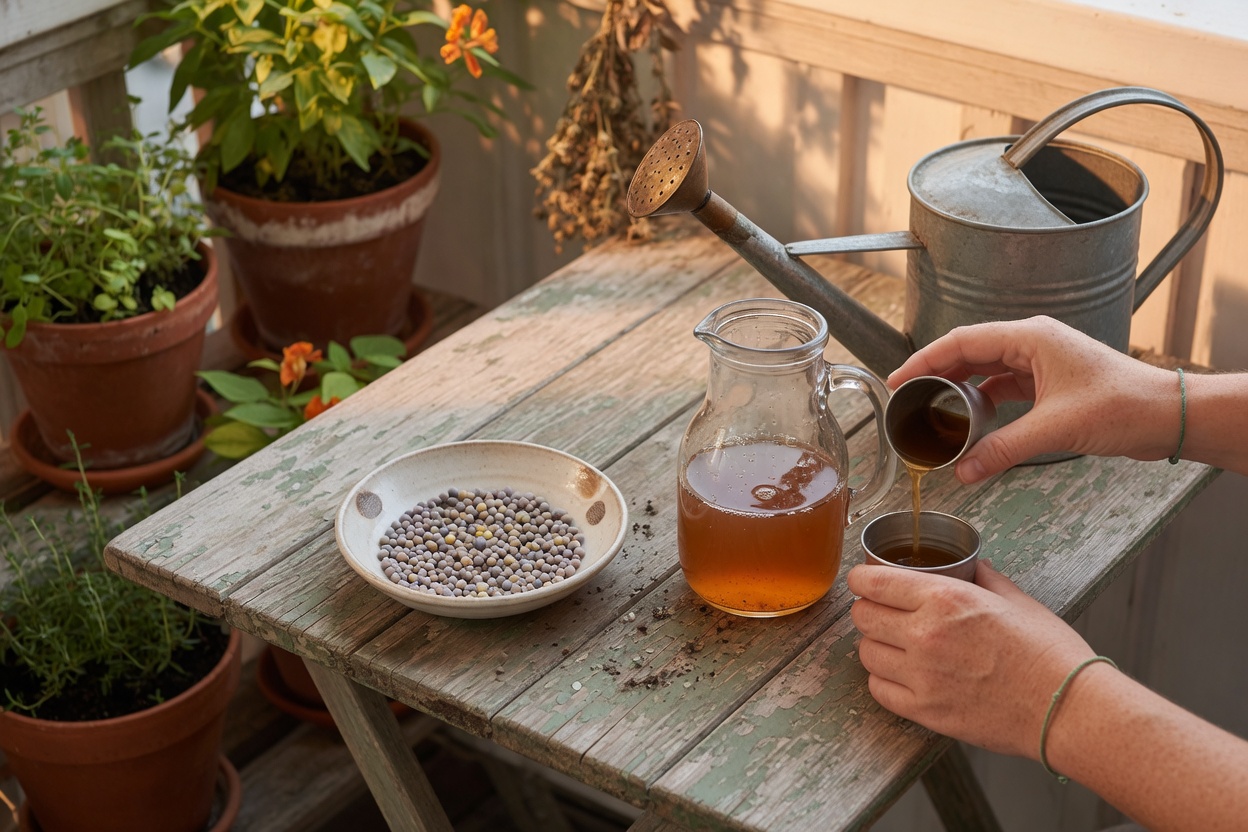
Not every container plant is equally hungry, and matching the feed to the plant saves you fertilizer and trouble.
Heavy feeders — tomatoes, peppers, eggplant, squash, anything fruiting in a pot — want it all. They’re producing a crop out of a few gallons of mix, so they get the granular baseline plus a regular liquid feed all season. Tomatoes especially will tell you the moment they’re short. If you’re growing them, I get into their whole routine in how to grow tomatoes in containers.
Leafy greens — lettuce, spinach, chard, kale — mostly want nitrogen for leaves, and they want it steady but modest. A gentle liquid feed every couple of weeks keeps them tender and growing; too much and they get lush and floppy.
Herbs are the surprise: most of them want less. Basil takes a light feeding, but Mediterranean herbs like rosemary, thyme, oregano, and sage actually taste better a little lean — overfeed them and you get soft, watery growth with weak flavor. A light touch once a month is plenty. If you keep a winter herb pot going indoors, I talk about their easy needs in how to grow herbs indoors in winter.
Read the plant, and don’t overdo it
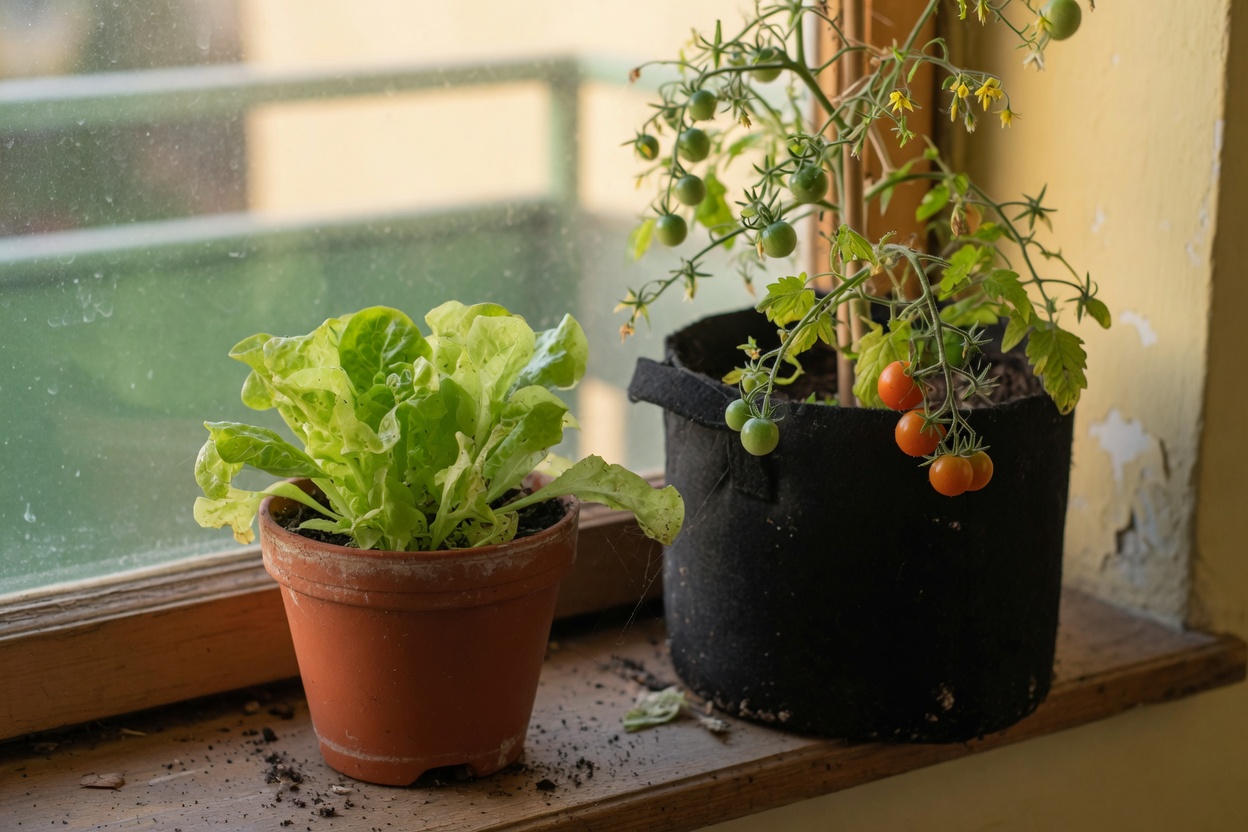
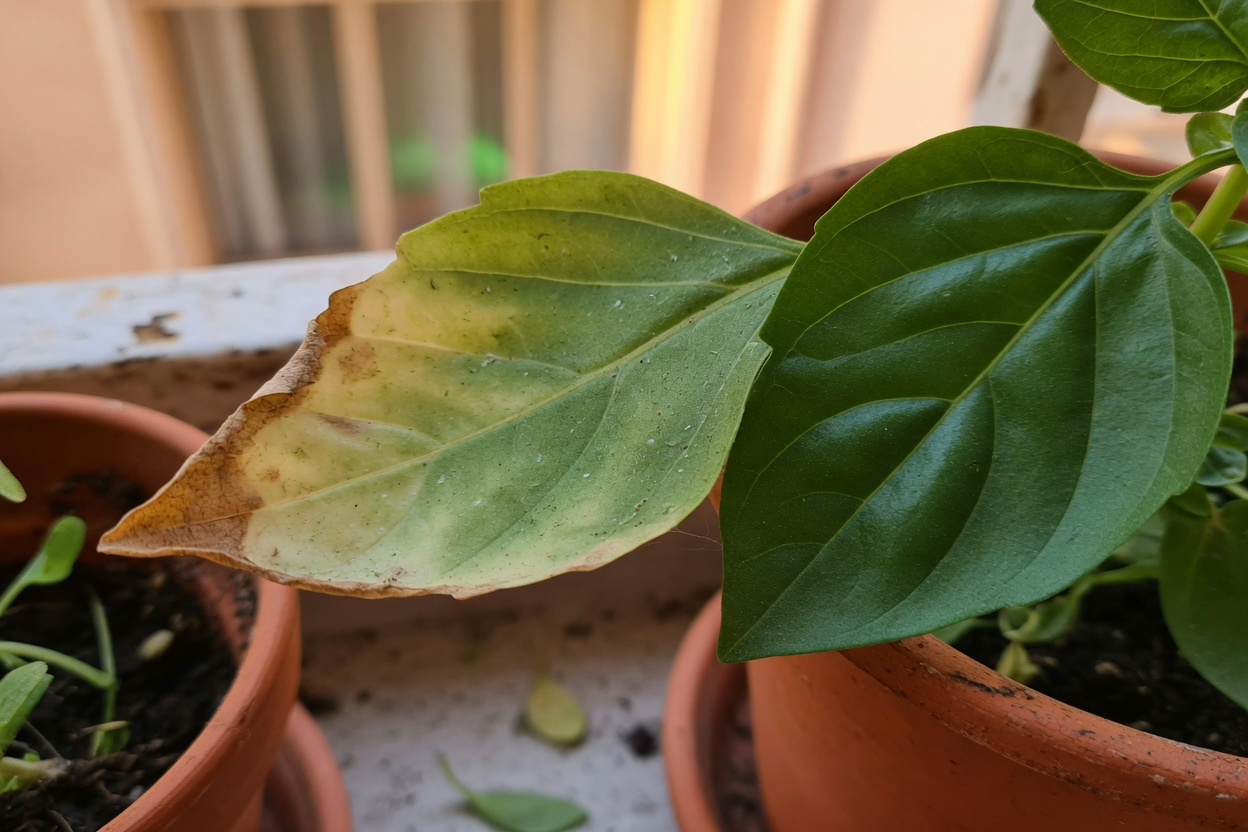
You don’t need a soil test or a chart. The plant tells you. Pale, yellowing lower leaves and slow, stingy new growth usually mean it’s hungry — time to feed. Deep green, steady growth, flowers and fruit setting? It’s fed. Leave it be.
And more is not better. This is the mistake I see most on balconies, right after underwatering: someone pours a full-strength dose “to really give it a boost” and ends up with scorched leaf edges, a white crust of fertilizer salts on the soil surface, and a sulking plant. That’s fertilizer burn, and it’s harder to fix than simple hunger. If you see that crust, flush the pot with plain water a few times to rinse the salts through, and ease off.
I check a pot with a no-battery moisture meter before I feed, for the same reason I check before I water — a plant sitting in cold, soggy mix isn’t drinking, so it isn’t taking up food either, and dumping fertilizer on it just builds up salts it can’t use. My hungriest crops live in fabric grow bags partly for this: more mix means more room for roots and a little more buffer before things go hungry or too salty. Otto, for the record, thinks the fish emulsion smells like the best thing I’ve ever brought onto the balcony, which tells you everything about the dog and nothing useful about gardening.
Feeding container vegetables really does come down to a small, steady habit: a slow-release baseline, a weak liquid feed every week or two, water first, and read the leaves. Fifteen minutes of attention across a couple of weeks, and a crowded little pot will hand you more food than it has any right to.
I go deeper on keeping a whole balcony productive — feeding, watering, succession, the works — in Small-Space Big Harvest. This is the feeding piece on its own. The book is how you keep the whole railing growing all season long.
