How to Grow Shallots in Containers on a Small Balcony
Grow shallots in containers: when to plant sets in late winter, how big the pot should be, how to water and feed them, and how to harvest, cure, and store them.
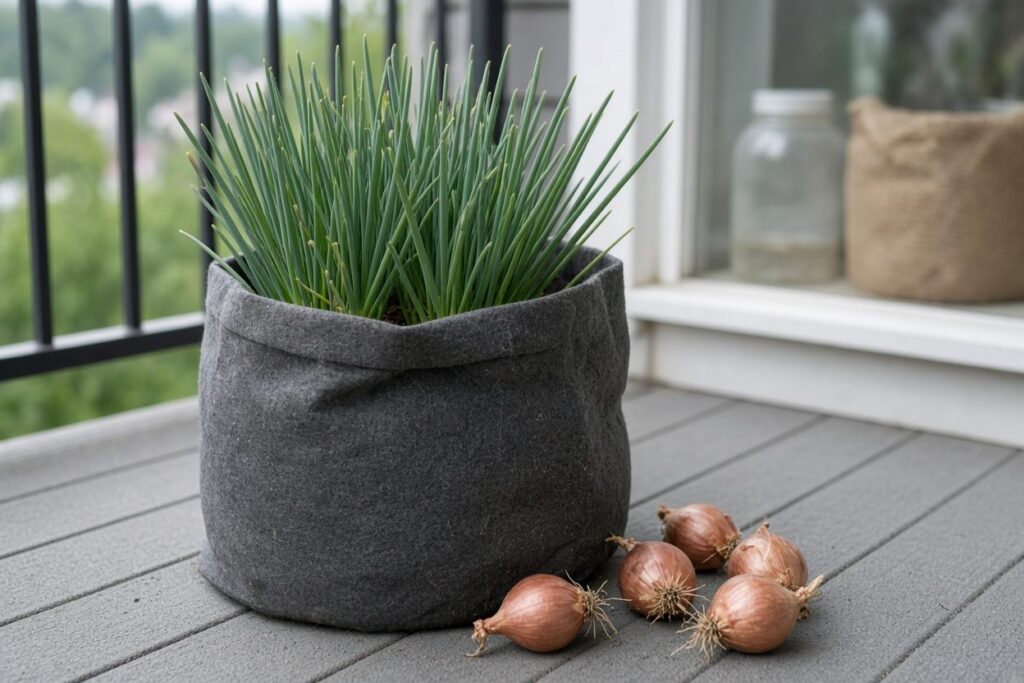
My first balcony shallots were six soft little bulbs rescued from the bottom of a grocery-store mesh bag, pushed two inches deep into a small plastic pot in April, and by August they had become exactly six slightly firmer little bulbs. No clusters. No harvest to speak of. Just six shallots that had spent a summer thinking about it.
I’ve done better since. Shallots turn out to be one of the most forgiving things you can grow in a pot, as long as you get three things right: the right bulbs, the right month, and a pot that’s wide instead of deep. Here’s what I do now.
You’ll also want shallot sets, which are small bulbs sold for planting. More on those in a minute.
Why shallots are a small-space crop
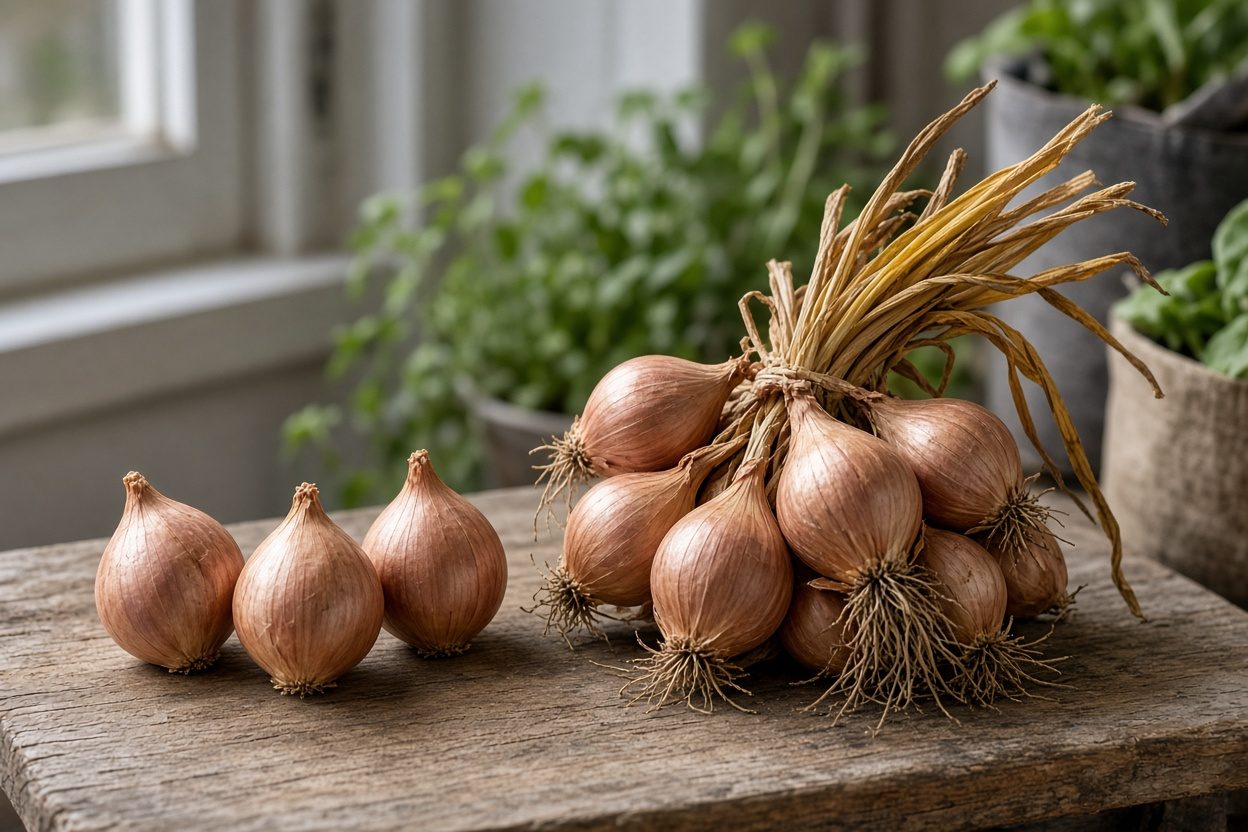
Here’s the thing about shallots. You plant one bulb and you harvest a cluster. A single healthy set usually divides into four to ten new bulbs by midsummer, all bunched together like a little family at the soil line. That’s a real return on a few inches of balcony.
They’re also tidy. The leaves stand up straight and stay out of their neighbors’ way, and the plants are done by July or August, which frees the pot for a late-summer sowing of lettuce or radishes.
And they store. A cured shallot will sit in a basket in a cool cupboard for months. Mine usually last into the new year.
Choose sets, not grocery bulbs

This was my first mistake, so let me save you the summer. Grocery-store shallots are grown and stored for eating, not planting. Some are treated to slow sprouting, and you have no idea what variety you’re getting. They’ll often grow, but they’re a gamble.
Buy shallot sets from a nursery, a garden center, or a seed catalog in late winter. Look for firm, dry bulbs about the size of a big grape or a walnut, with no soft spots or mold. ‘French Red’ and ‘Dutch Yellow’ are the two I’ve grown on the balcony, and both did well. French Red has that pinkish flesh and a slightly sharper flavor, and Dutch Yellow stores a little longer.
You can grow shallots from seed too, with varieties like ‘Ambition’, but each seed gives you one bulb rather than a cluster. For a first try, start with sets.
When to plant
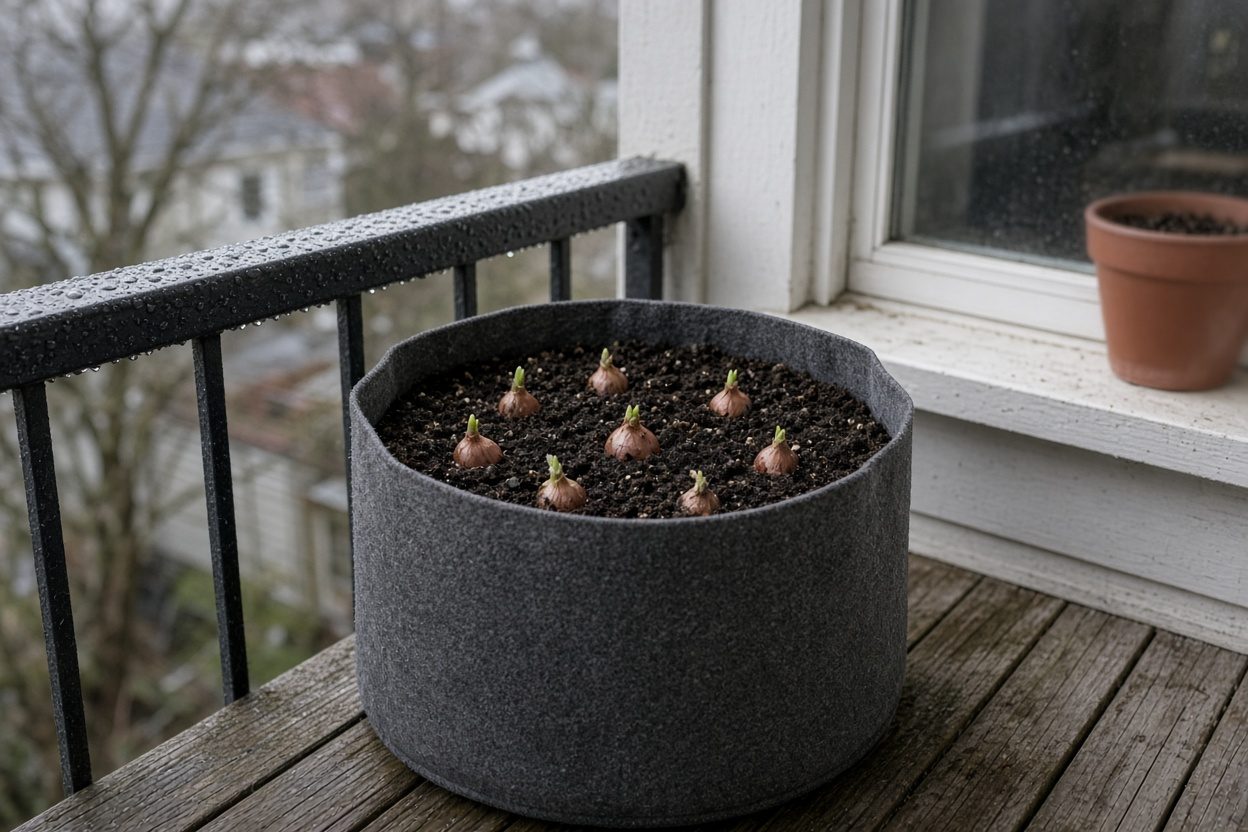
In mild climates like mine near Portland, you can plant shallot sets in fall or in late winter. I’ve had my best luck planting in late February or early March, as soon as the potting mix in the bag isn’t frozen and isn’t sopping wet. Shallots don’t mind cold. They mind sitting in a soggy pot.
If your winters are colder, plant as early in spring as you can work the soil. Shallots use the cool, lengthening days of spring to grow leaves, and then they switch to making bulbs as the days get long in June. Plant late, like I did that first April, and they don’t have time to do both.
Pot size and planting
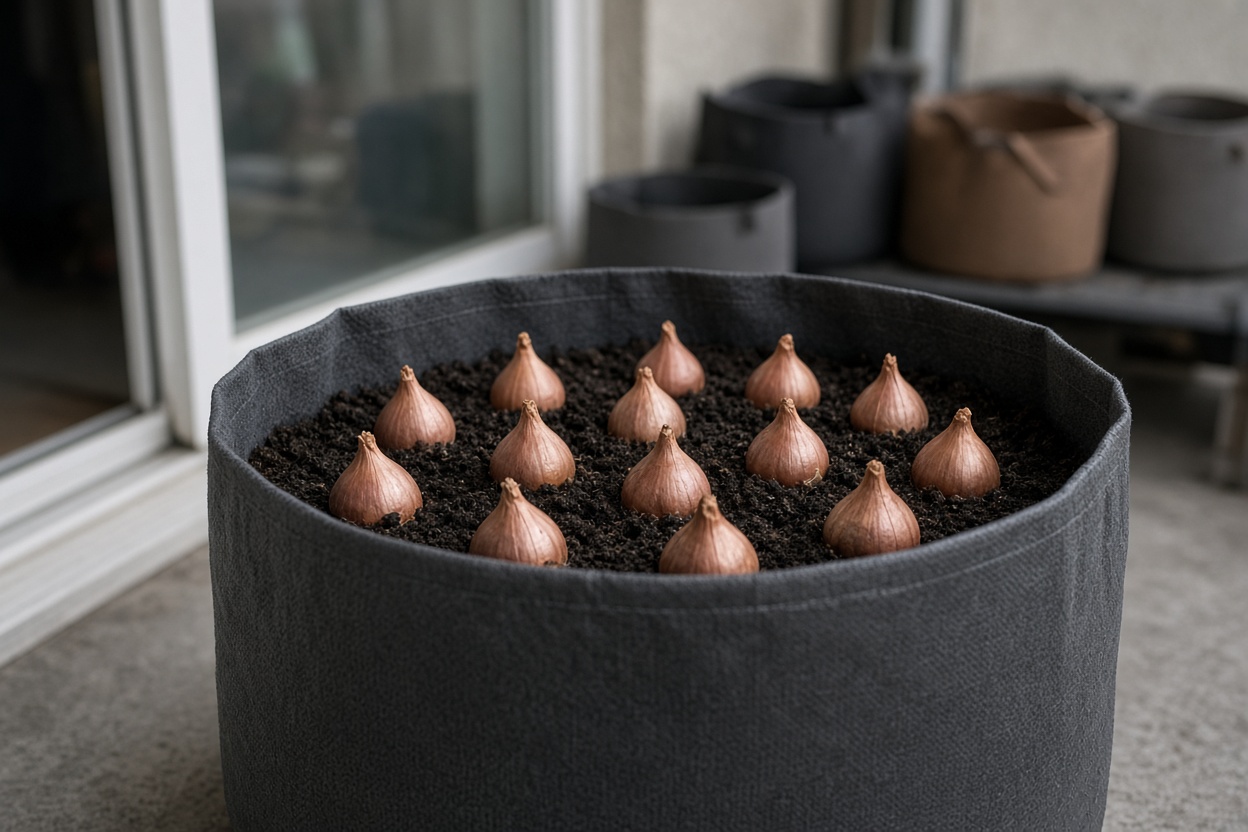
Shallots need width more than depth. Roots go down six or eight inches, but the clusters spread outward. A pot or grow bag at least 8 inches deep is plenty. The real question is how many you want.
– A 3-gallon bag holds about four or five sets.
– A 5- or 7-gallon fabric grow bag holds about eight to ten.
– A long railing planter, 8 inches deep, holds a row with sets about 6 inches apart.
Fill the container with potting mix, not garden soil. Mix in a small handful of Garden-Tone per bag, following the label. Push each set in pointed end up, so the tip is just at or barely below the surface. This is the other thing I got wrong. I buried mine two inches down, and buried shallots tend to sulk. You want the shoulders snug in the mix and the tip peeking out.
Space them about 6 inches apart in every direction. They look lonely at first. Trust me, they fill in.
Water and feed
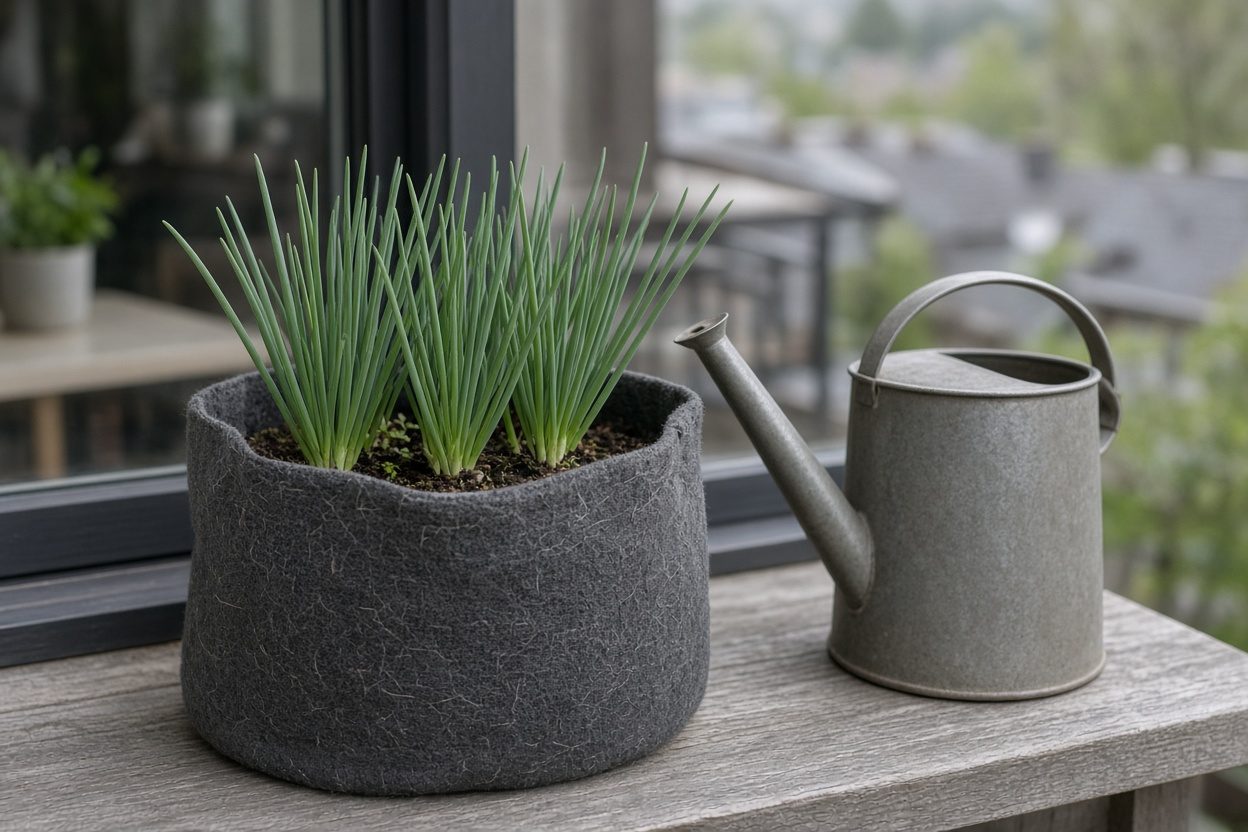
Water well right after planting, then keep the mix evenly moist through spring. Containers dry out faster than the ground, especially on a windy balcony, so check with a finger an inch down. If it’s dry, water slowly at the base with a long-spout can until it runs out the bottom.
About six weeks after planting, when the leaves are a few inches tall, sprinkle another small dose of Garden-Tone around the plants and water it in. That’s all they need. I go into feeding schedules in more detail in how to fertilize container vegetables.
Keep the pot weeded, too. Shallots have skinny upright leaves that don’t shade out weeds, and they don’t like competition.
When the leaves start to yellow, back off the water. That usually happens in early July. The bulbs are finishing, and wet mix at this stage invites rot. Let the container get drier and the papery skins will start to form.
Harvest, cure, and store
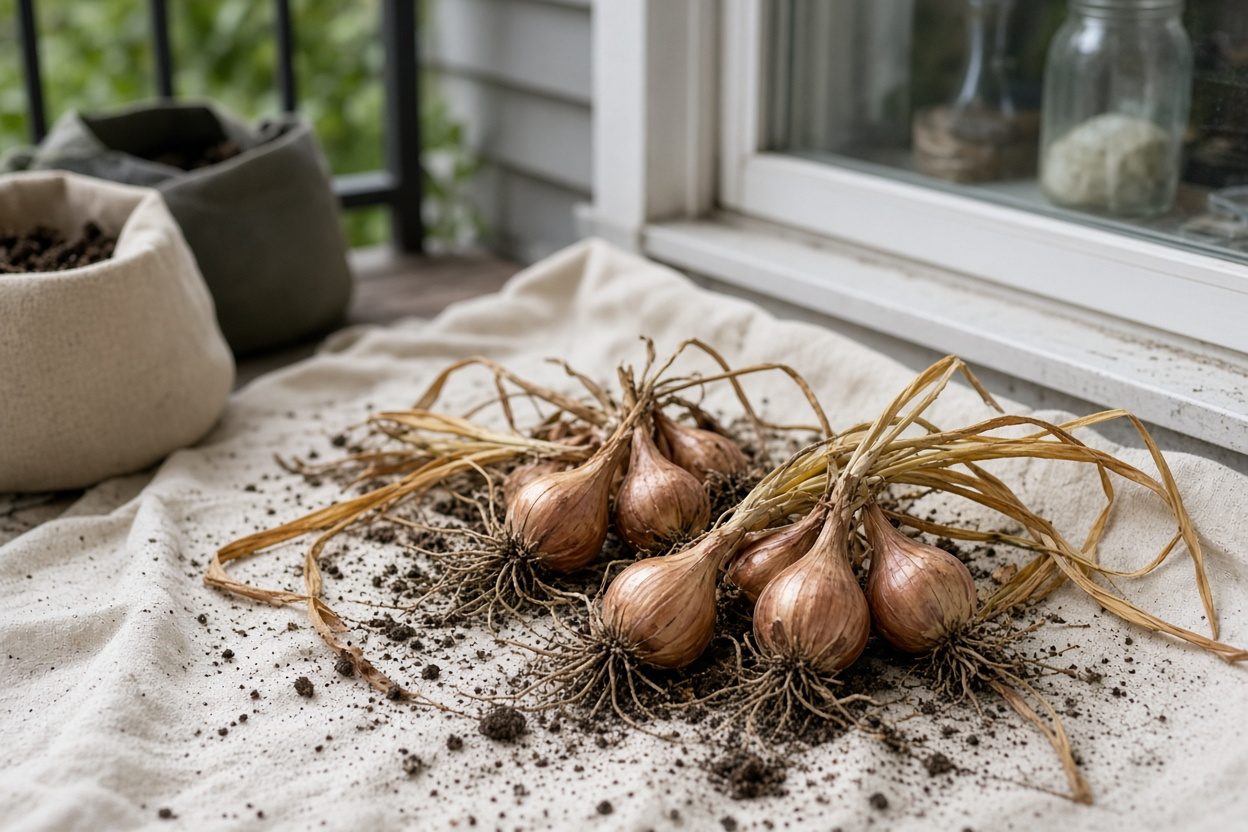
You’ll know it’s time when most of the leaves have yellowed and flopped over. Tip the grow bag onto a tarp or ease the clusters up with your fingers. Bags make this easy, which is one reason I like them for bulbs. I explain more in fabric grow bags vs. plastic pots.
Brush off the potting mix, but don’t wash them. Spread the clusters in a single layer somewhere dry, airy, and out of direct sun for two to three weeks. A shelf in a garage or a spot under a covered patio works. When the necks are dry and the skins rustle, trim the tops and roots and separate the bulbs.
Store them in a mesh bag or a basket in a cool, dark, dry spot. Save a few of the biggest, firmest bulbs to plant next year. That’s the nice part. Once you’ve bought sets once, you may never need to again.
A few honest notes
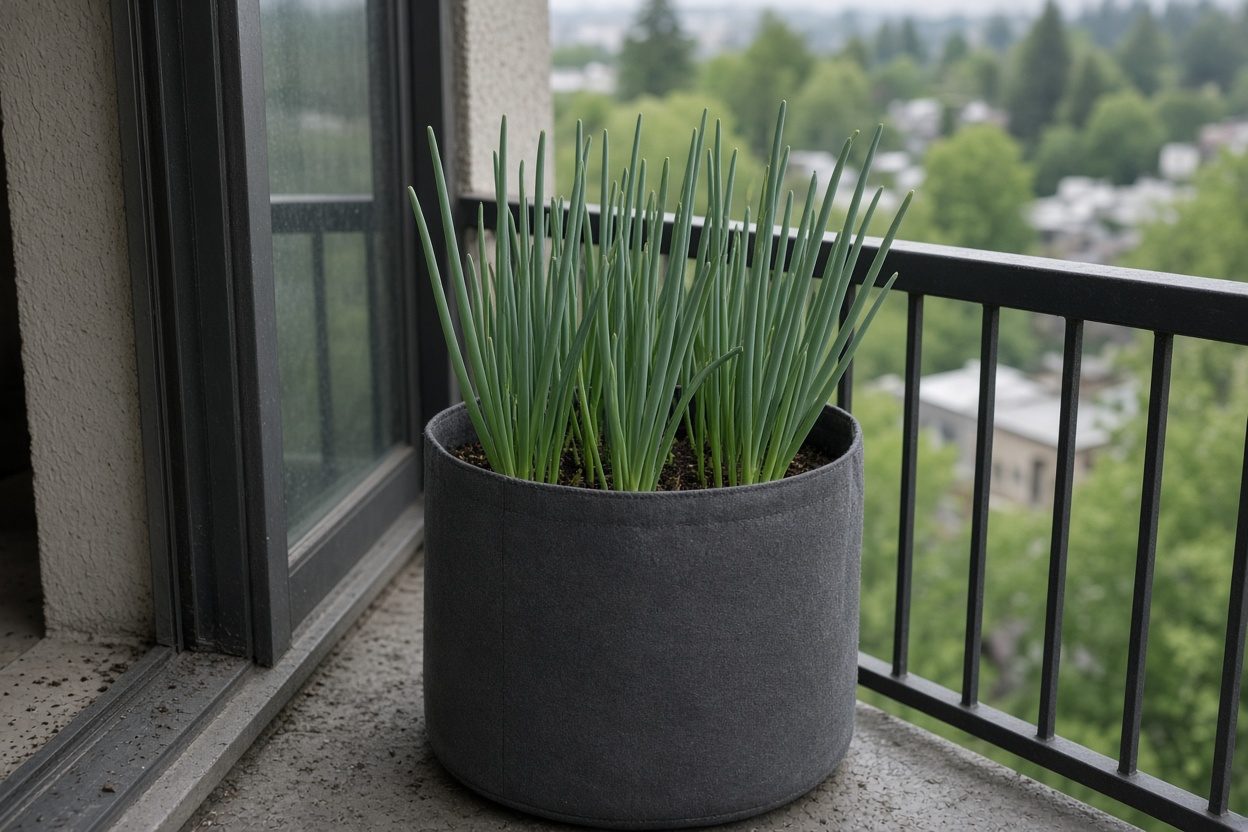
Shallots aren’t fast. From planting to harvest is about four months. And they’re not dramatic plants to look at; for most of spring they’re a pot of green spikes. But they’re almost pest-free on a balcony, they don’t need staking or pruning, and a single bag gives you enough for a winter of sauces and vinaigrettes.
You can also snip a few green leaves in spring and use them like chives. Don’t take more than a few from each plant, since the leaves are what feed the bulb.
If you like the idea of a pot that’s mostly alliums, my notes on how to grow scallions in containers and how to grow leeks in containers make a good little trio with this one.
Going further

If you’d like the whole season mapped out for a small space, from what to sow in February to what to plant after the shallots come out, I go through it in my book, Small-Space Big Harvest. It’s the book I wish I’d had the year of the six sad shallots.
