How to Grow Potatoes in Grow Bags on a Balcony
How to grow potatoes in grow bags on a balcony or patio — seed potatoes, the earthing-up trick, watering, and tipping the bag out for the harvest. No yard needed.
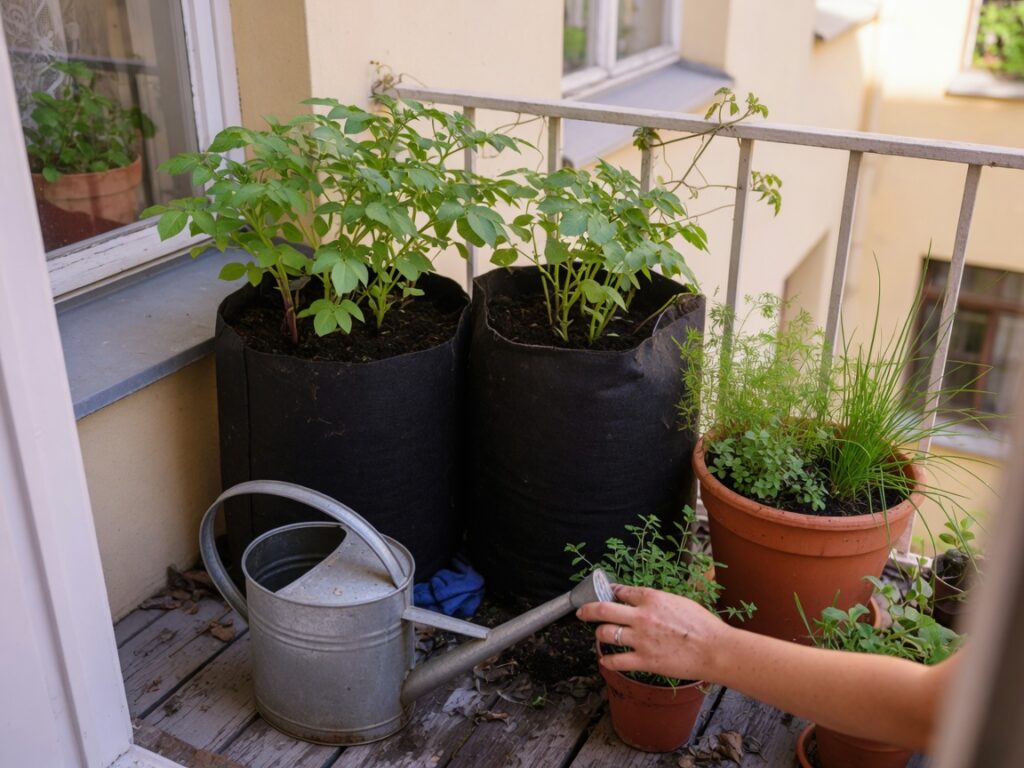
Potatoes were the first crop that made me feel like my balcony was a real garden. Not herbs, not lettuce — potatoes, the thing everyone assumes you need a field and a pitchfork for. You don’t. You need a fabric bag, a sunny corner, and a couple of seed potatoes, and at the end of the season you get to tip the whole bag out and go digging with your hands like a kid at a beach. It is, I promise you, the most fun you can have in a container.
Grow bags are almost purpose-built for this. They’re deep enough to give a potato plant the room it wants, they drain well so the tubers don’t rot, and you can move the whole thing to chase the sun or bring it in out of a cold snap. Here’s how I grow a good bag of potatoes on a small space, start to harvest.
Start with seed potatoes, not the ones in your pantry
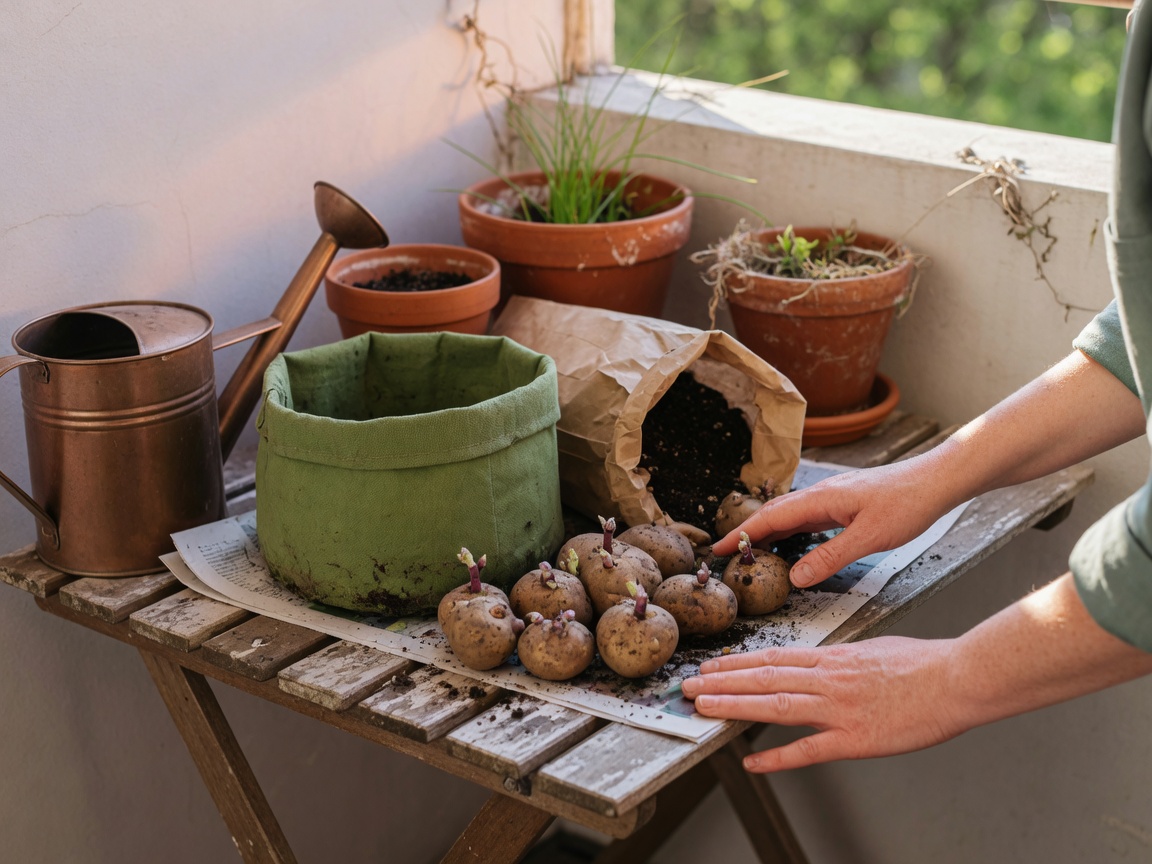
The first rule is the one people skip: plant certified seed potatoes, not potatoes from the grocery store. Seed potatoes are grown and sold specifically for planting, certified free of the diseases that can wipe out a crop. Supermarket potatoes are often treated with a sprout inhibitor so they won’t grow in your cupboard, which is exactly the wrong quality in something you’re trying to grow. Buy seed potatoes from a garden center or a mail-order supplier in late winter or early spring. A little goes a long way — two or three seed potatoes will fill a good-sized bag.
Pick a variety that suits your patience. “First earlies” and “second earlies” are quick — new potatoes in as little as ten to twelve weeks — and they’re my pick for containers because you get the reward faster and the plants stay a bit smaller. Maincrop varieties take longer and yield more, but they’re greedier for space and time. For a first bag, start with an early. Success early keeps you going.
Chit them first (it’s just a windowsill and a few weeks)
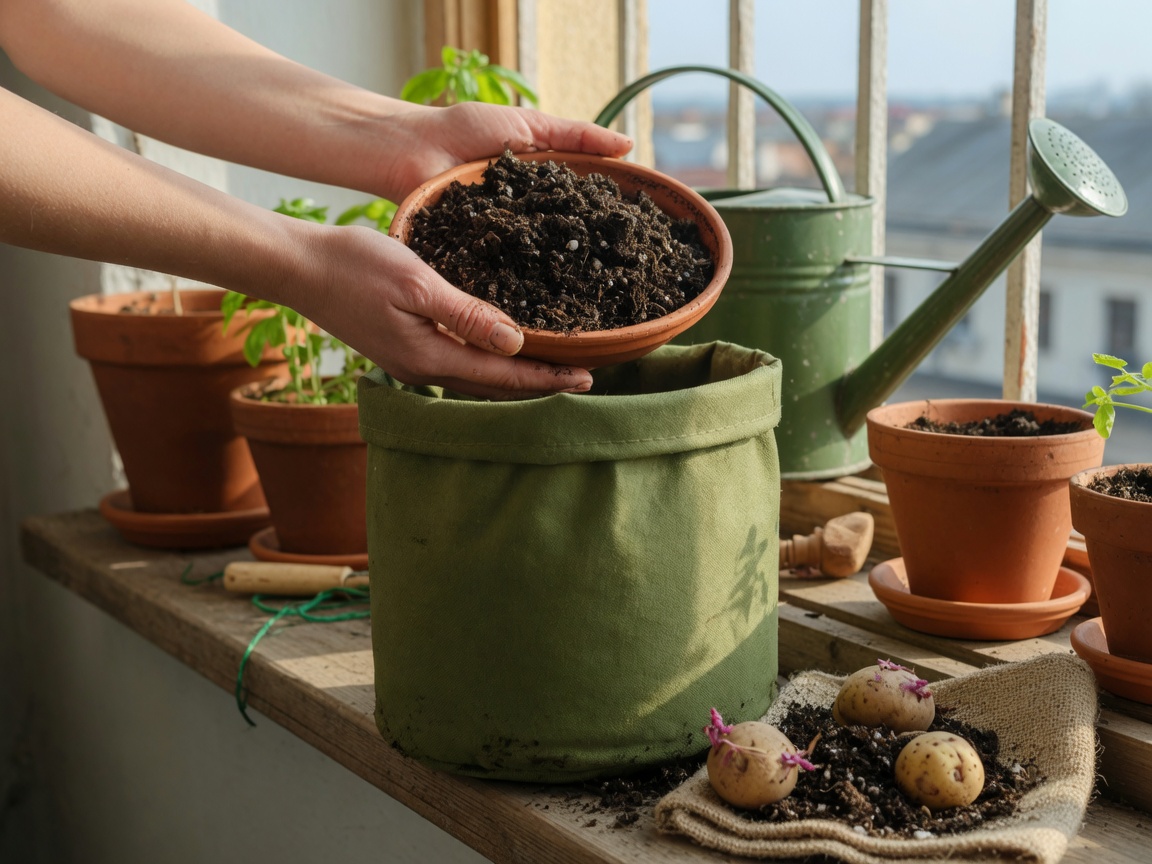
A couple of weeks before you plant, “chit” your seed potatoes — a fancy word for letting them sprout. Stand them in an egg carton or a shallow tray, most-eyes-up, somewhere cool and bright but out of direct sun. A windowsill in a cool room is perfect. In two to three weeks they’ll push out short, stubby, dark-green sprouts.
That’s all chitting is, and it gives your plants a running start when they go into the bag. If a potato throws long, pale, spindly sprouts instead, it’s too warm and too dark — move it somewhere brighter. Don’t overthink it. Even un-chitted seed potatoes will grow; chitting just buys you a couple of weeks.
Plant shallow, then “earth up” as they grow
Here’s the one technique that makes grow-bag potatoes work, and it surprises everyone the first time: you don’t fill the bag. You start with it rolled down low.
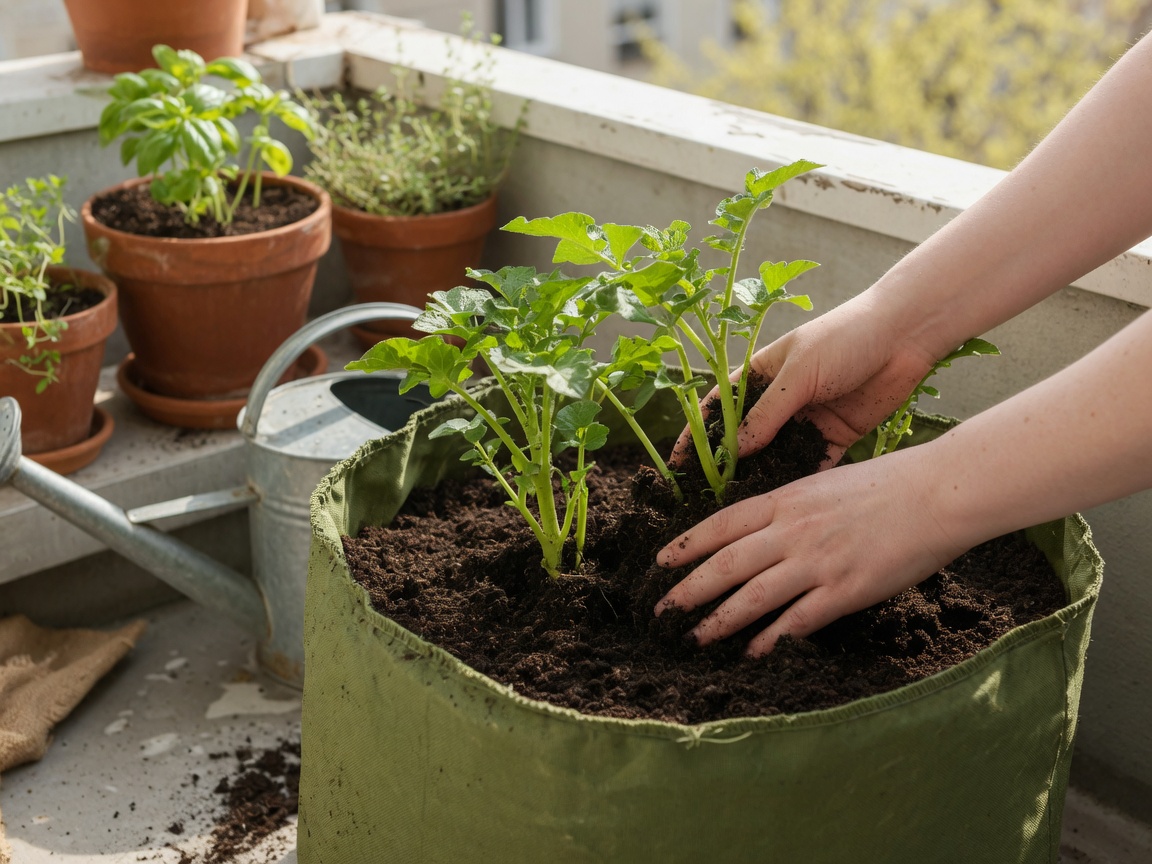
Roll the sides of a fabric grow bag down so it’s only about a third full of potting mix. Set two or three chitted seed potatoes on top, sprouts up, and cover them with three or four inches of mix. Water them in. Then wait.
When the green shoots reach six or eight inches tall, add more mix — or a mix-and-compost blend — to bury the bottom half of those shoots, unrolling the bag’s sides as you go. This is called earthing up, and it’s the secret to a big harvest. Potatoes form along the buried stem, so every time you bury more stem, you give the plant more room to make tubers. Keep earthing up every couple of weeks as the shoots grow, until the bag is full to near the top and the plants are happily leafing out above it. It also keeps the tubers in the dark, which matters — potatoes exposed to light turn green, and green potatoes are mildly toxic and shouldn’t be eaten. Bury them and you never have that problem.
Sun, water, and a little food
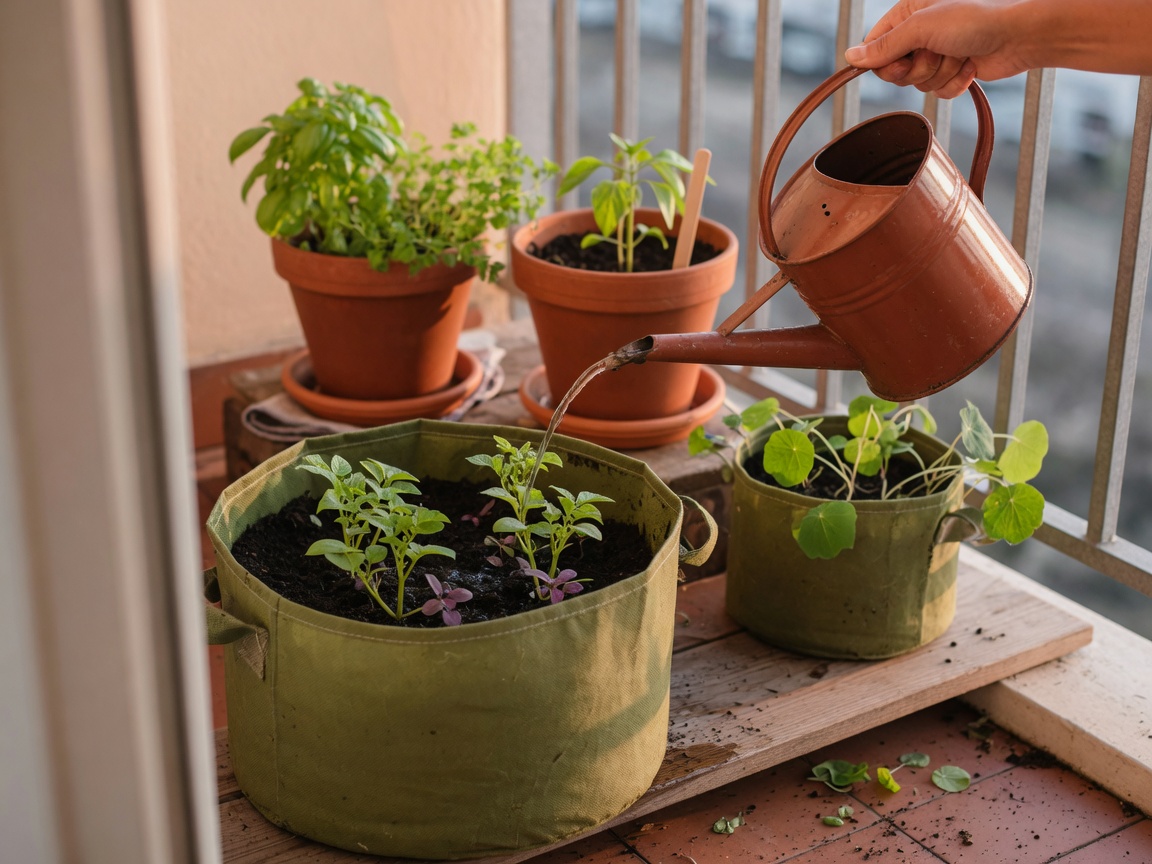
Potatoes want sun — six hours a day at least, more if you can give it. This is the one thing a balcony can’t fake, so put your bag in the brightest spot you have. A north-facing two-hour balcony won’t grow a potato crop; a warm south or west corner will.
Water is where most container potatoes go wrong, in both directions. A deep bag full of foliage drinks a lot, and the top can look damp while the middle is bone-dry — so I check with a no-battery moisture meter pushed well down into the bag before I decide anything. Aim for steady, even moisture, especially once the plants flower, which is when the tubers are bulking up and thirsty. Water deep and even with a long-spout watering can rather than a quick splash on top. But don’t keep it soggy, either — waterlogged bags rot the tubers. Grow bags help here, because the fabric lets excess water drain and breathe in a way a solid pot doesn’t.
Feeding is simple. Mix a little slow-release fertilizer into the bag at planting, and once the plants are growing hard, a diluted liquid feed every couple of weeks keeps them producing. Potatoes are moderately hungry, not fussy. If you want the whole container-feeding routine, I lay it out in how to fertilize container vegetables.
Harvest: tip the bag and go digging
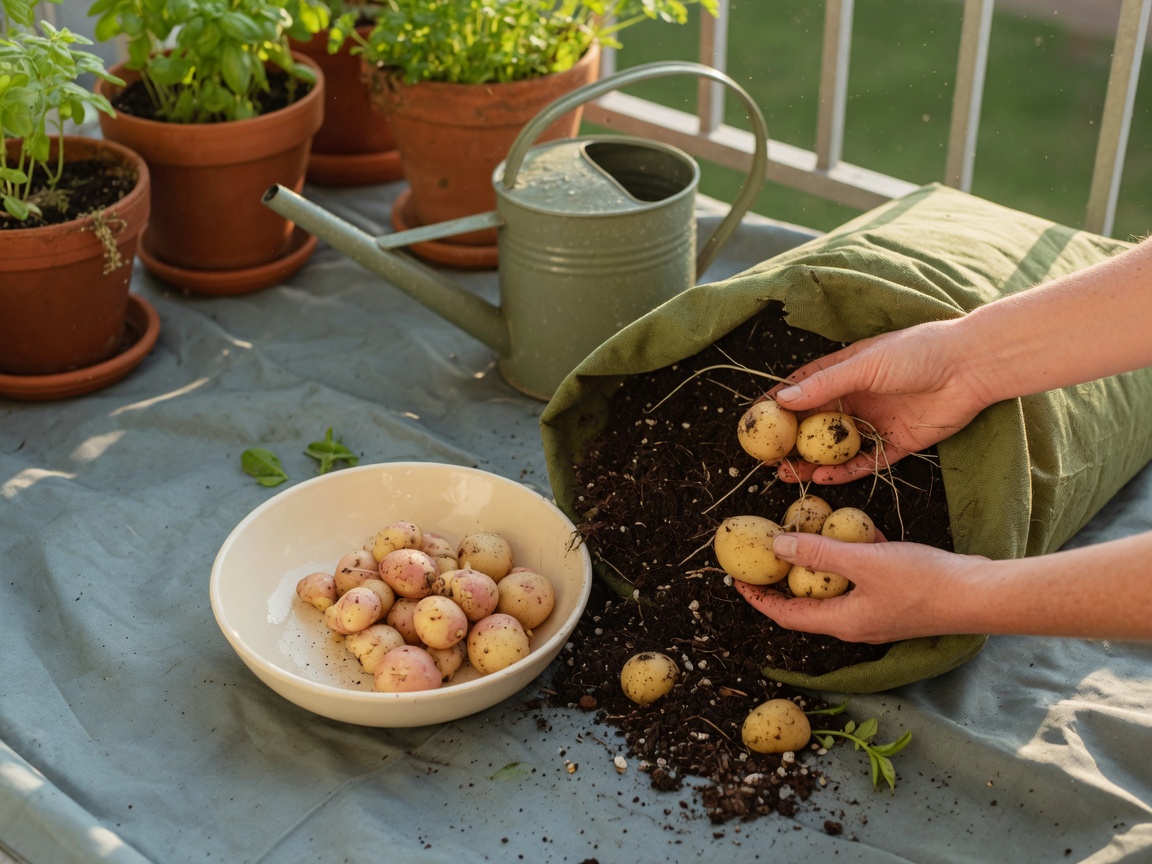
This is the part I look forward to all season. You can steal a few new potatoes early — small, thin-skinned, and unbelievably good — a couple of weeks after the plants flower, by reaching gently down into the side of the bag with your fingers and feeling around without pulling up the whole plant.
For the full harvest, wait until the foliage yellows and dies back naturally. That’s the plant telling you the tubers are mature and their skins have set for storing. Stop watering for a week or so, then tip the entire bag out onto a tarp or straight onto the balcony floor and dig through the mix with your hands. There will be potatoes in there you didn’t know you had — that’s the magic of earthing up. Let them dry on the surface for a few hours, brush off the dirt (don’t wash them until you’re ready to eat), and store the ones you’re keeping somewhere cool and dark.
And save the spent mix — don’t toss it. I tip it into my grow bags for the next crop of leafy greens; it’s had one light-feeding crop and it’s got plenty left for lettuce. If you’re weighing grow bags against pots for the next thing you plant, I get into that in fabric grow bags vs. plastic pots.
One bag is all it takes to be hooked
You don’t need a yard, a plot, or a single square foot of actual ground to grow potatoes. You need a bag, some sun, and the patience to bury the stems a few times over. It’s the crop that most makes a small-space gardener feel like they got away with something — a real, hearty, dig-it-yourself harvest off a balcony. Otto is no help at harvest, for the record; he just supervises the digging and hopes something edible rolls his way.
I go deeper on getting the most food out of a tiny space — what to grow, in what size container, and how to keep the whole thing producing all season — in Small-Space Big Harvest. This is the potato bag on its own. The book is how you fill the whole balcony.
