How to Grow Eggplant in Containers on a Small Balcony
Eggplant loves heat and a big pot. Here's how to start seeds, choose a container, feed, and harvest eggplant on a small balcony, even in a cool Portland summer.
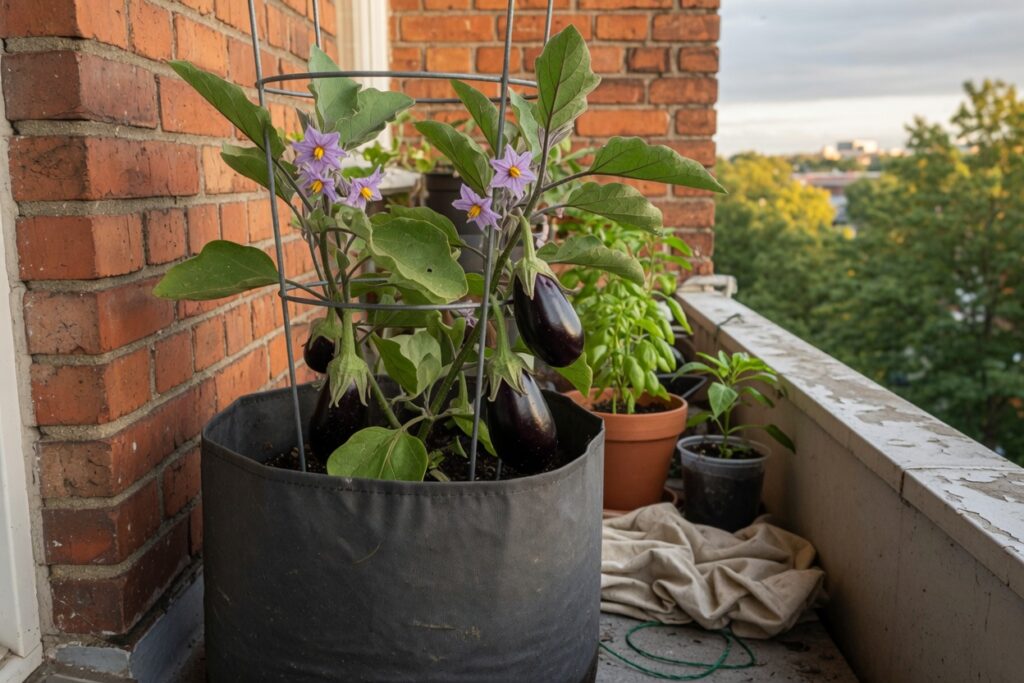
My first eggplant sat in its pot all June doing absolutely nothing, a sulking purple-green stick, until a heat wave finally hit and it woke up like it had been waiting for permission. Otto watched the whole thing from the patio door. By August I had four glossy fruits and a plant that took up a third of the balcony, and I understood that eggplant isn’t hard, exactly. It just wants to be warm, and it wants you to wait.
That is the whole secret. Eggplant is a heat-lover, which makes it a little stubborn in a cool Portland summer, but it does well in a container because you can put the pot exactly where the heat is. It is late October, which means you have time to plan. Here’s how I grow it on a 6×10 balcony, and when to start.
Pick a compact variety

The big Italian globe types, like ‘Black Beauty’, are lovely and want a long, hot summer. On a balcony in a cool-summer area I reach for compact types that finish faster. ‘Fairy Tale’ makes small striped fruits in clusters. ‘Patio Baby’ stays low and bushy. ‘Little Fingers’ gives you slender dark fruits and is a good choice if your summer runs short. Check the days to maturity on the packet and pick one that finishes in 60 to 75 days from transplant.
Start seeds in late winter

Eggplant is slow. Start the seeds indoors about 8 to 10 weeks before your last frost, which here in the Portland area means early to mid-February. If you haven’t started seeds in a window before, my walk-through in how to start pepper seeds indoors for container growing works the same way for eggplant.
Sow in seed-starting mix, a quarter inch deep, and keep the tray warm. Eggplant seeds germinate best around 75 to 85 degrees, which a sunny window rarely gives you in February. I set the tray on top of the refrigerator or near a heat source until they sprout, which takes one to two weeks, sometimes longer. Once they’re up, move them under light. A clip grow light a few inches above the seedlings, on for about 14 hours a day, keeps them stocky.
Pot up, then wait for warm weather
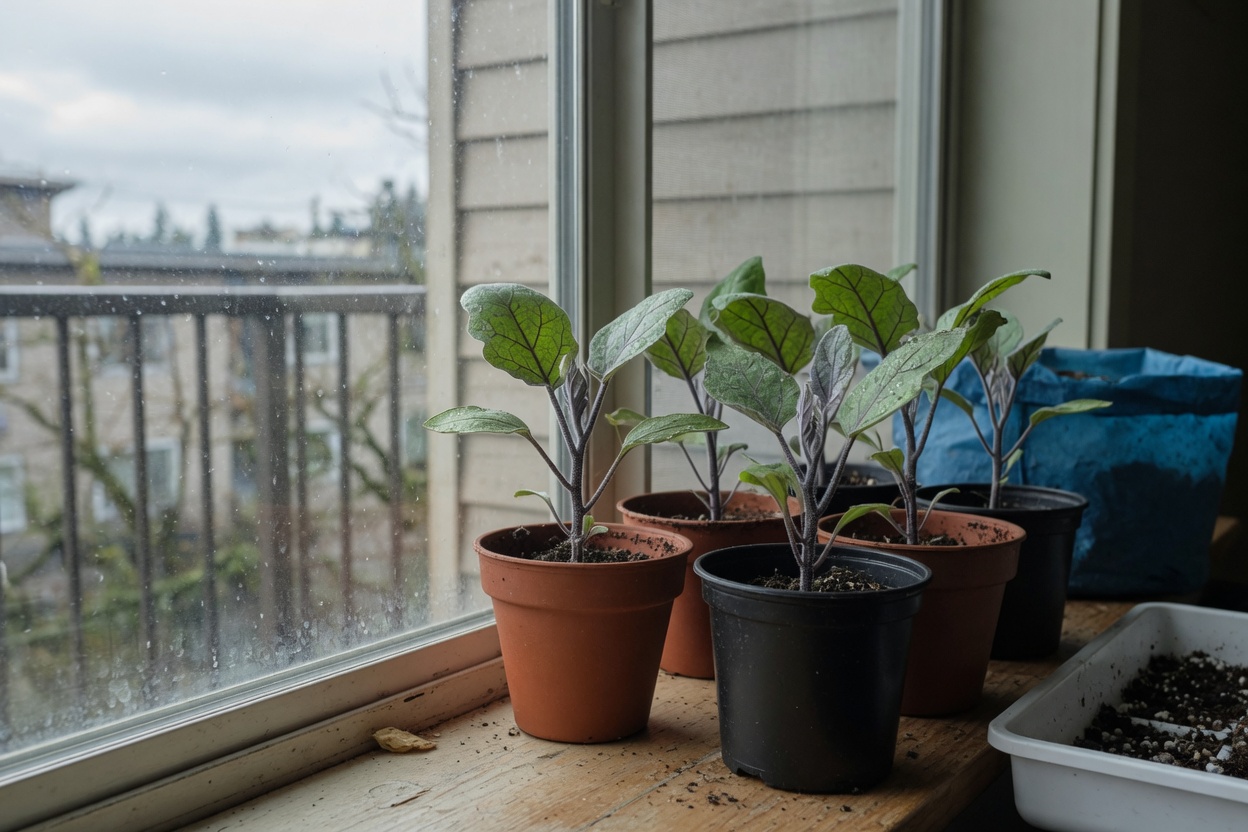
When the seedlings have a couple of sets of true leaves, move each one into its own small pot. Don’t rush them outside. Eggplant stalls in cold. Wait until nighttime temperatures stay above 55 degrees and the soil has warmed, which for me is late May or even June. Harden the plants off over a week, with a few hours outdoors at a time, like I describe in my post on how to harden off seedlings on a balcony.
The container

Go bigger than feels reasonable. One eggplant wants a container of at least 5 gallons, and 7 to 10 gallons is better. I use a large fabric grow bag, and one plant per bag. If you’re choosing between bags and plastic, I compared them in fabric grow bags vs. plastic pots. One trick for cool climates: dark fabric bags warm up faster in the sun than light plastic, which suits eggplant.
Fill with potting mix, not garden soil, leaving an inch below the rim for watering. Plant the seedling at the same depth it was growing in its small pot.
Sun and placement

Eggplant wants 6 to 8 hours of direct sun, and the more heat the better. On my balcony that’s the south-west corner against the wall, where the brick holds warmth into the evening. If your balcony is shady or breezy, pick a different crop, because eggplant won’t forgive it. If it’s windy, tuck the pot against a wall or railing.
Watering without drowning it
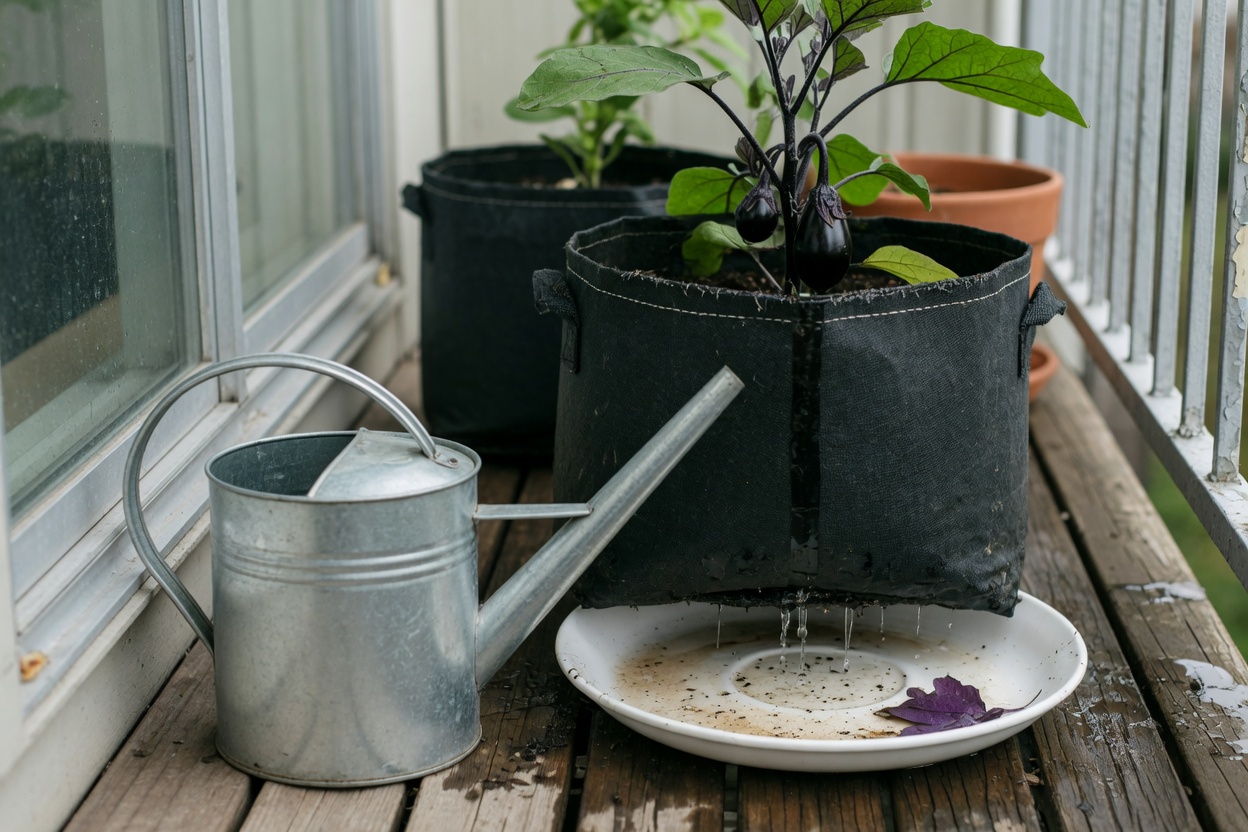
Pots dry quickly in summer heat, and eggplant likes steady moisture, so I water deeply, until it drains from the bottom, whenever the top inch or two feels dry. A soil moisture meter would help here, and I wrote about whether you really need one in do you need a soil moisture meter. My honest answer: your finger works, and the meter is a convenience. Water at the soil, not over the leaves, which invites trouble.
Feeding

Eggplant is a hungry plant once it starts to flower. A month or so after transplant, I mix a small handful of Garden-Tone into the top of the soil, water it in, and repeat every four to six weeks. Too much nitrogen early gives you a big leafy plant with few fruits, so wait for the first flowers. More on feeding in how to fertilize container vegetables.
Pests and support
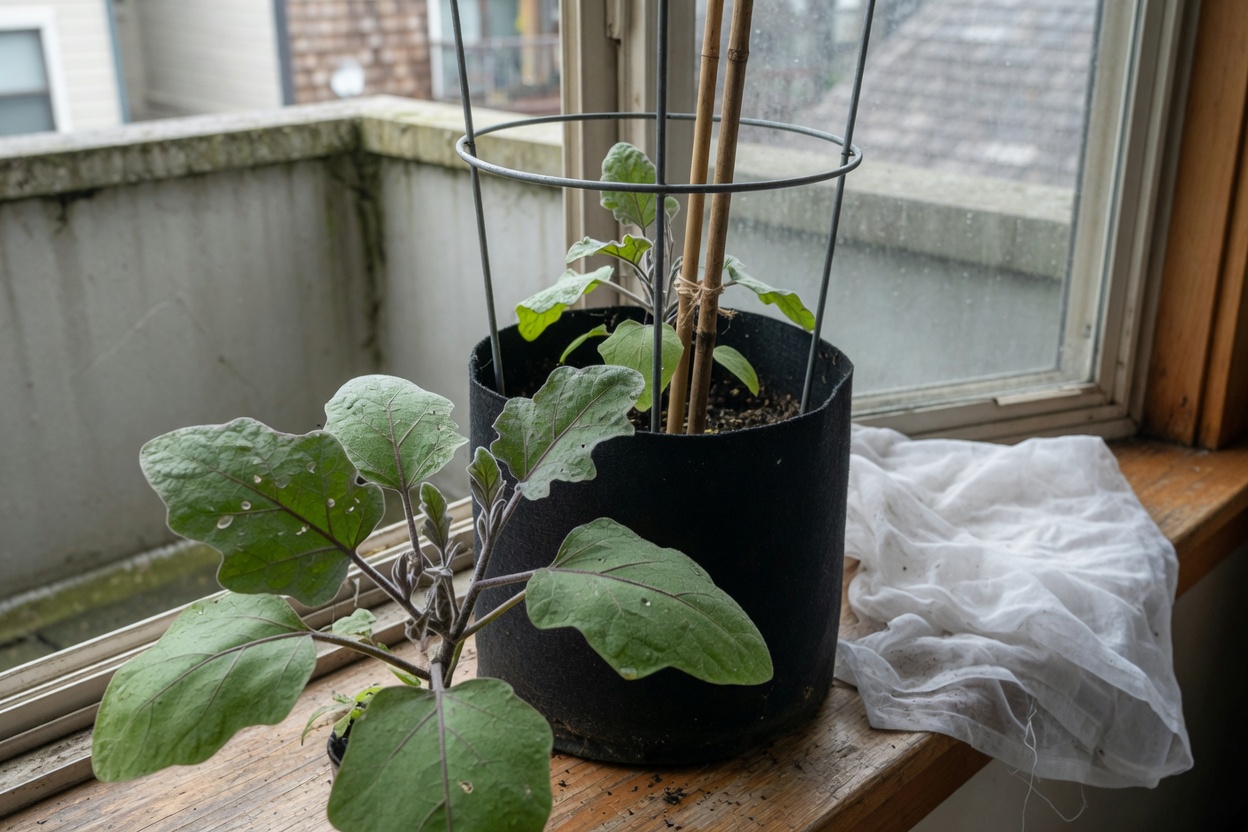
Flea beetles are the usual problem, tiny black beetles that chew small holes in young leaves. They hurt seedlings most. A light row cover over young plants helps, and a mature plant shrugs off a few holes. A tomato cage or stake keeps a heavy plant from toppling in the wind, so I put one in at planting time rather than later, when the roots are in the way.
Harvest
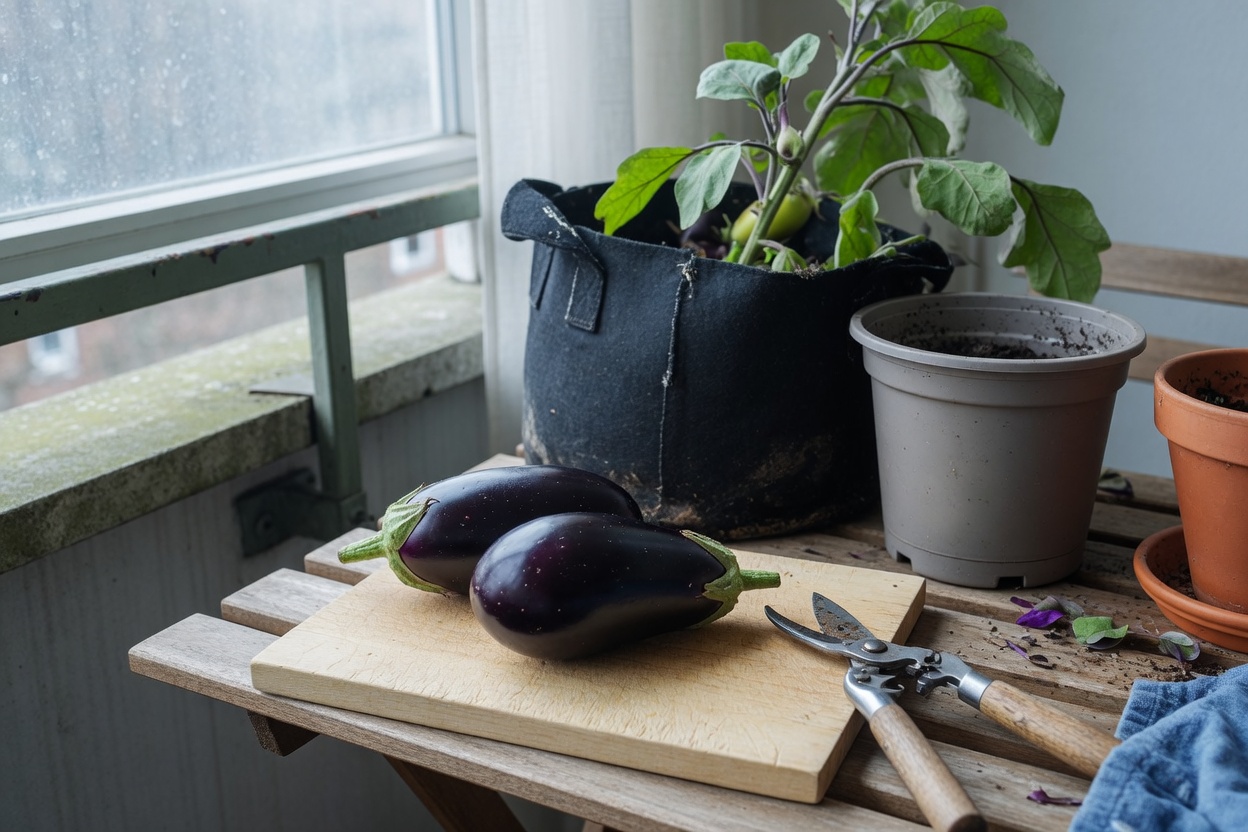
Pick when the fruit is glossy and full-sized for its variety, and when the skin springs back after a gentle press. A dull skin or visible seeds means it’s gone past its best. Cut the stem with scissors or pruners, leaving a short cap on the fruit. Don’t pull.
A couple of pros and cons

Eggplant is rewarding but slow, and a cool summer can mean just a few fruits. In a bad year I got three. The fruit is worth it, but if you want a quicker harvest, start with something faster and add eggplant when you’re ready for the wait. My honest take on gear: you could skip the clip light if you have a bright south window, and the meter is a convenience. The big grow bag and good potting mix are the two things I wouldn’t skimp on.
Where to go from here

Order your seeds in January and mark early February on the calendar. Pick the sunniest corner of your balcony now and notice how many hours of sun it gets. The rest follows.
I go deeper on choosing containers, mixes, and what to grow where in Small-Space Big Harvest: Small-Space Big Harvest.
