How to Grow Carrots in Containers on a Balcony or Patio
You can grow carrots in containers, no yard needed. Here's the pot depth, the right short varieties, and the watering that gives you straight, sweet roots.
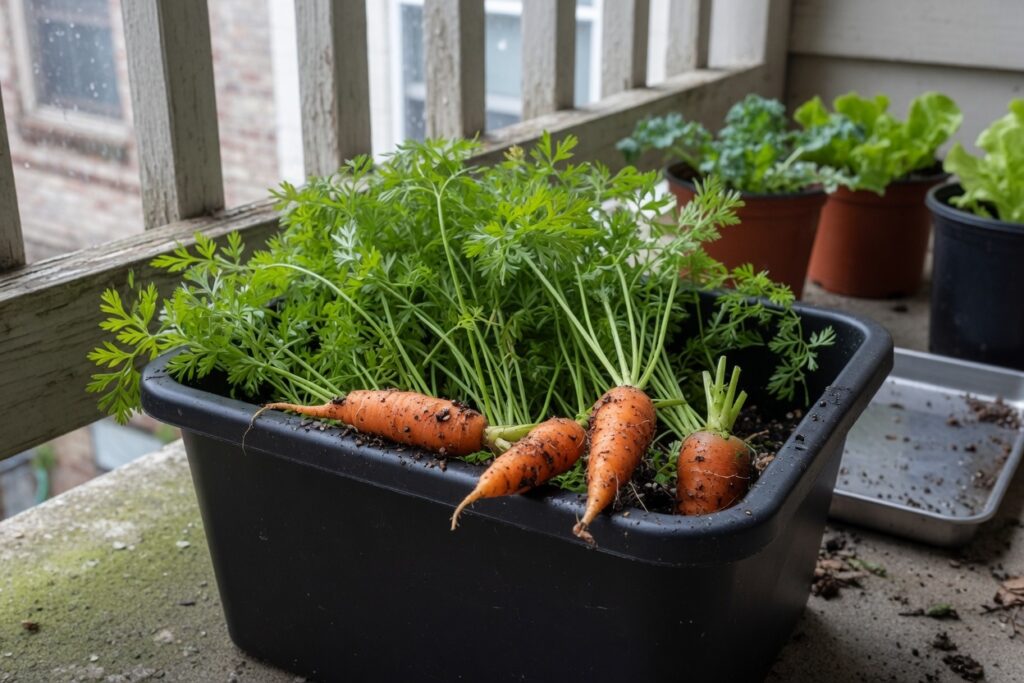
My first carrots came out of a 6-inch terracotta pot, and I want to be honest about how they looked. There were four of them. One was shaped like a very small mitten. Another had split in two and wrapped around its own sibling. They tasted wonderful anyway, and I stood on the balcony eating a dirty carrot, thoroughly pleased with myself.
If you’ve been told carrots need a deep, loose garden bed, that’s half true. They need loose, deep soil. They don’t need a yard. A decent container filled with the right mix will grow carrots that are straight, crisp, and sweeter than anything in a plastic bag, and the trick is picking the right type for your pot.
I’m writing this now, in October, because carrots are a spring job and the spring sowing window is shorter than you’d think. If you plan your pots and your seeds over the winter, you’ll be ready when the soil thaws.
One thing I can’t hand you a link for is the seed packet itself. Pick one from any garden center or seed rack, and look for the variety names I mention below.
Choose a short carrot, not a long one

Here’s the thing that trips up most beginners. The classic long supermarket carrot, the kind that grows eight or ten inches, needs a pot that deep and soil that never packs down. On a balcony, that’s a lot to ask. So choose differently.
Short Nantes types grow about 6 to 7 inches and are my first recommendation for a container 10 to 12 inches deep. They’re sweet and crisp.
Round or “ball” varieties, like Paris Market, grow almost as wide as they are tall. They work in a pot as shallow as 6 to 8 inches, and they’re the most forgiving choice if you’re just starting out.
Finger or baby types are bred to be small and tender. They’re a nice option for a window box.
Skip anything labeled “Imperator” or “storage” for now. Those are the long, deep-rooting kinds, and they’ll be unhappy in a pot.
The container and the mix

A container 10 to 12 inches deep is ideal for Nantes types. A fabric grow bag in the 5- to 7-gallon range gives you room for a nice patch, and the bag’s breathability keeps the roots from getting waterlogged. Whatever you use, it needs drainage holes. A pretty pot without them is just a bucket.
Fill it with a light potting mix. I use Espoma organic potting mix because it’s loose and not too heavy, and I break up any clumps with my hands before it goes in the pot. Rocks, sticks, and chunks matter here: a carrot that hits something solid in the soil will fork around it. That was my mitten.
Don’t add much fertilizer. Too much nitrogen gives you lush green tops and hairy, forked roots. If you want to feed a container crop, my post on how to fertilize container vegetables covers how to do it without overdoing it, and carrots need less than most.
Sowing, the patient part
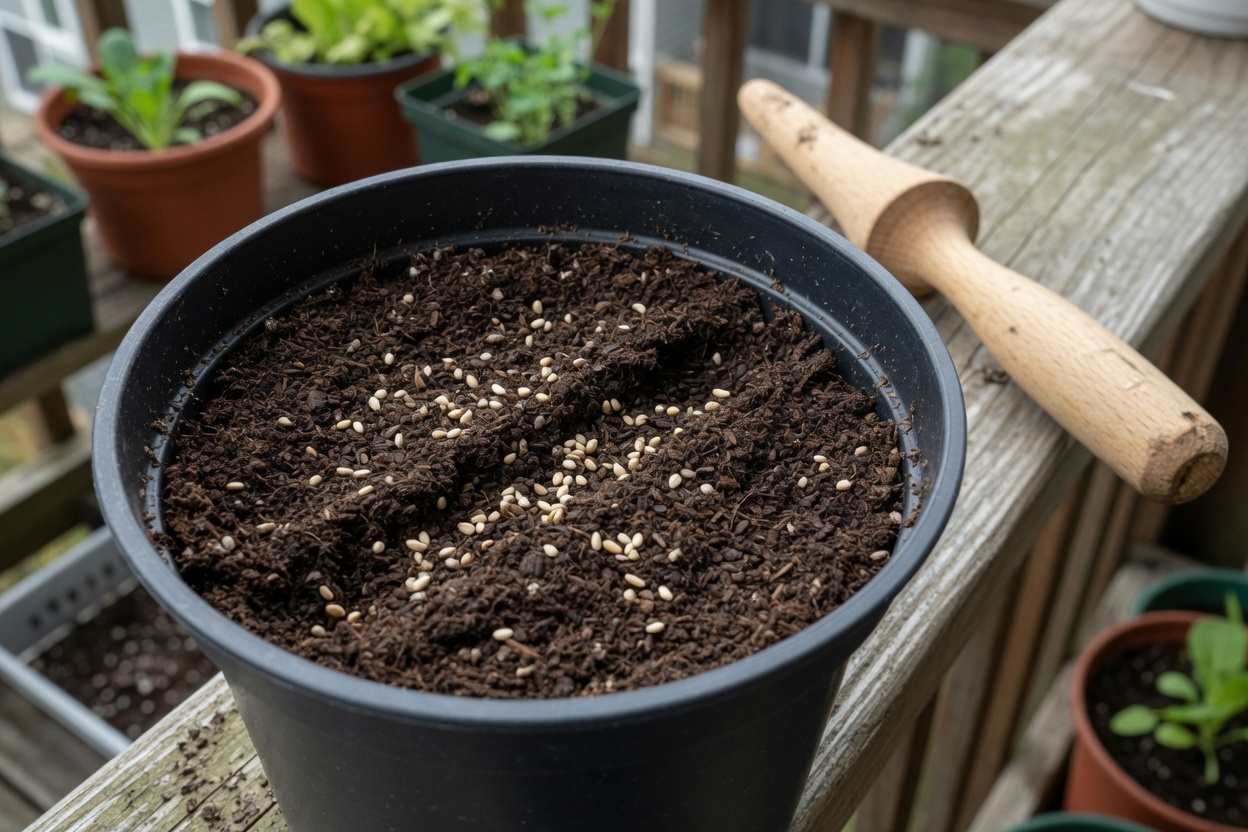
Carrots like cool weather. Sow them in early spring, a few weeks before your last frost date, as soon as the potting mix is workable and not frozen solid. Your local extension office can give you the date for your area, and it’s worth a two-minute search.
1. Fill the pot nearly to the top and press the surface level. Water it well before you sow so it’s evenly damp.
2. Scatter the seed thinly, about a quarter inch deep. Carrot seed is tiny and tempting to dump. Resist.
3. Cover lightly with a thin layer of mix and press down gently.
4. Keep the top damp. This is the part that decides everything. Carrot seed can take two to three weeks to sprout, and if the surface dries out in that time, it quits. I water gently with a long-spout can once or twice a day if it’s warm, and I lay a sheet of newspaper or a pot saucer over the top for the first week to hold in moisture. Check it daily and take it off the moment you see green.
A soil moisture meter earns its keep during those weeks. I wrote up whether you really need one, and for carrot seed, the answer is a cheerful yes.
Thin them. Really.

This is where I used to lose my nerve. Once the seedlings are an inch or two tall, you thin them to about 2 inches apart, snipping the extras at the soil line with scissors rather than pulling them, which disturbs the neighbors’ roots. It feels cruel. Do it anyway. Carrots crowded together stay thin and twisted, and the thinnings are tender enough to toss into a salad.
Water, sun, and the little things

Carrots want about six hours of sun, though they’ll cope with less. Keep the soil evenly damp, like a wrung-out sponge. Swings between bone dry and soaked cause roots to split. If you’ve struggled with that in other pots, you may find my post on growing lettuce in containers all summer helpful, because the watering rhythm is much the same.
When the tops of the roots push up out of the soil, mound a little mix over them. Exposed shoulders turn green and bitter in the sun.
When to pull them

Most varieties are ready in 60 to 75 days. You can check by brushing the soil away from the top of a root: if it’s about as wide as your thumb (or the width on the seed packet), pull it. Loosen the soil around it first, or you’ll snap the top off and be left with a sad stump. I’ve done that more than once. Otto has eaten the evidence.
Pulled and rinsed, a carrot from your own pot has a sweetness that surprises people who’ve only had the bagged kind. That sweetness is the reason to bother.
If you want the full plan for what to grow in containers, when, and in what, that’s what I put in Small-Space Big Harvest. It starts from a single balcony and builds up from there, exactly as it should.
