How to Grow Broccoli in Containers on a Balcony or Patio
Grow broccoli in containers: the pot size it needs, when to start seeds, how to feed it, and when to cut the head. A beginner's guide for balconies and patios.
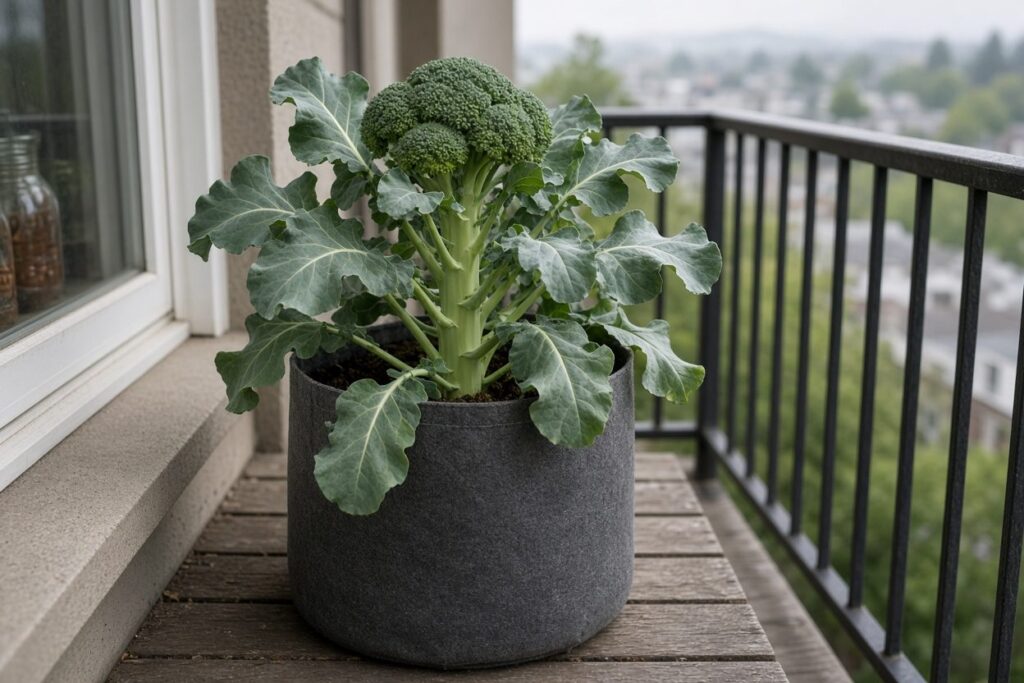
I bought my first broccoli start at a Portland farmers market in March, felt very pleased with myself, and planted it in a six-inch pot on the balcony. It made a head the size of a golf ball. A very earnest golf ball, but still.
Broccoli is one of the best cool-season crops for a small space, and it asks for exactly two things: a big enough pot and steady water. Get those right and you can pick a real head, then a few side shoots for weeks after. Here is how I grow it now.
Why broccoli works in a container
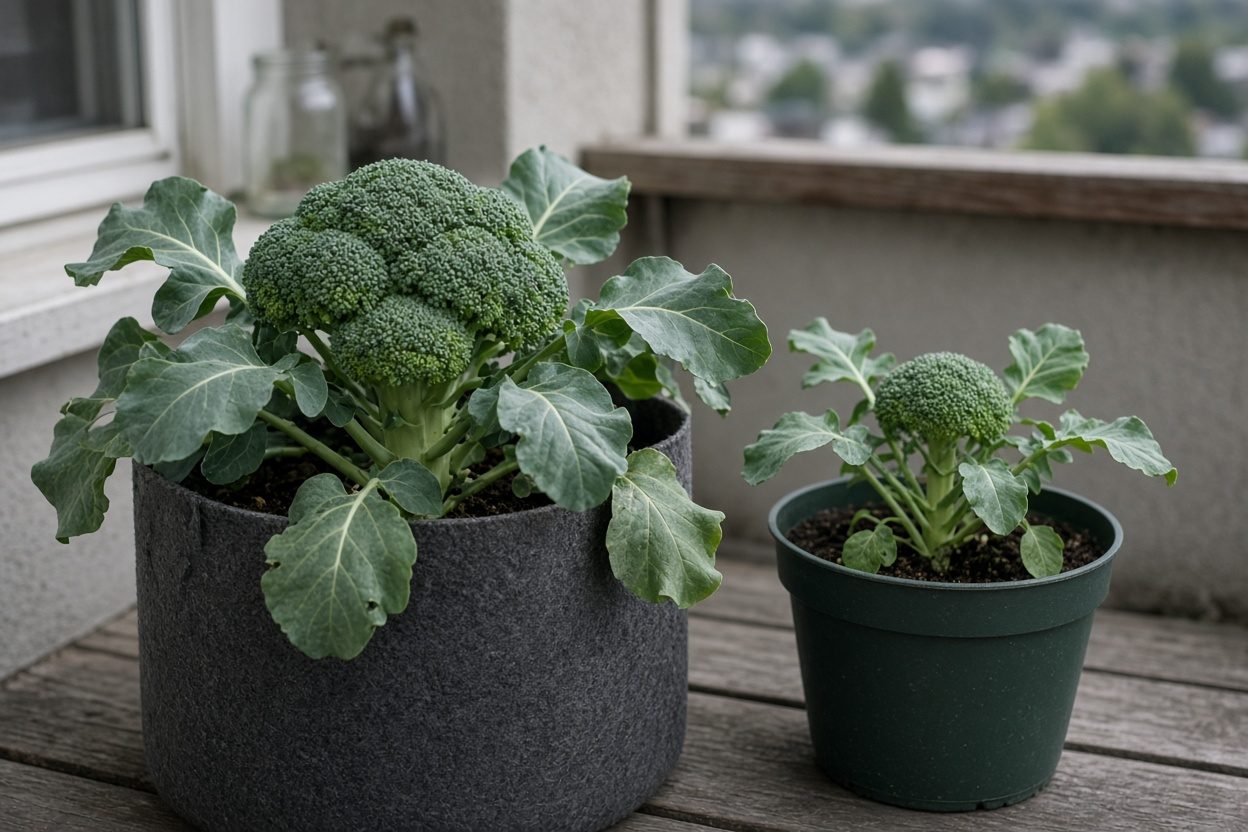
Broccoli likes cool weather, and in the Portland area that gives me two windows: spring and fall. A single plant needs about a foot and a half of space, but it grows up and out more than down, so it fits a pot or a bag on a balcony.
The catch is that broccoli is a big plant. It wants a container that holds at least 5 gallons per plant, and 7 to 10 is better. A small pot dries out fast and stresses the plant, and a stressed broccoli plant makes a tiny head or bolts into yellow flowers. That was my golf ball.
Pick a variety that suits a pot
Look for compact or quick-maturing varieties. I’ve had good luck with ‘Packman’ and ‘Green Magic,’ both of which mature in about 55 to 60 days from transplant and handle a little heat. ‘Calabrese’ types are the classic big-head broccoli, and they take longer. If you want more picking from a small space, choose a variety known for side shoots, which keep coming after you cut the main head.
When to start

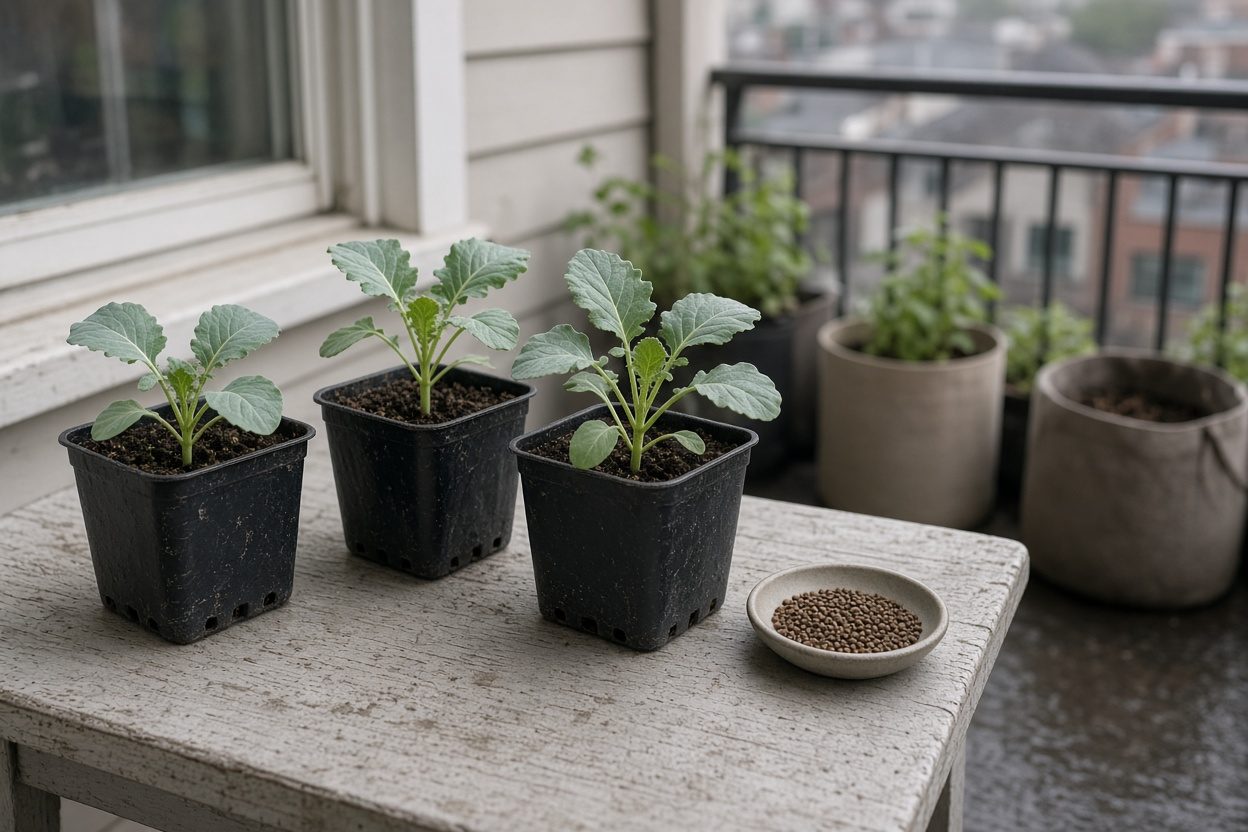
Broccoli wants to mature in cool weather. For a spring crop, start seeds indoors about 6 to 8 weeks before your last frost. For me, that’s late January to mid-February. Plant a quarter inch deep in seed-starting mix, and keep it moist. Seeds sprout in a few days.
Put them under a clip-on grow light as soon as they come up, with the light about two inches above the leaves. Winter windows are dim, and seedlings without enough light go leggy and weak. If you’d like a refresher on getting started, I wrote how to start seeds indoors on a windowsill.
When the seedlings have a few true leaves, they’re ready to harden off and move out. Two to four weeks before your last frost is fine, because broccoli tolerates a light chill. I explain the process in how to harden off seedlings on a balcony.
Planting in the container
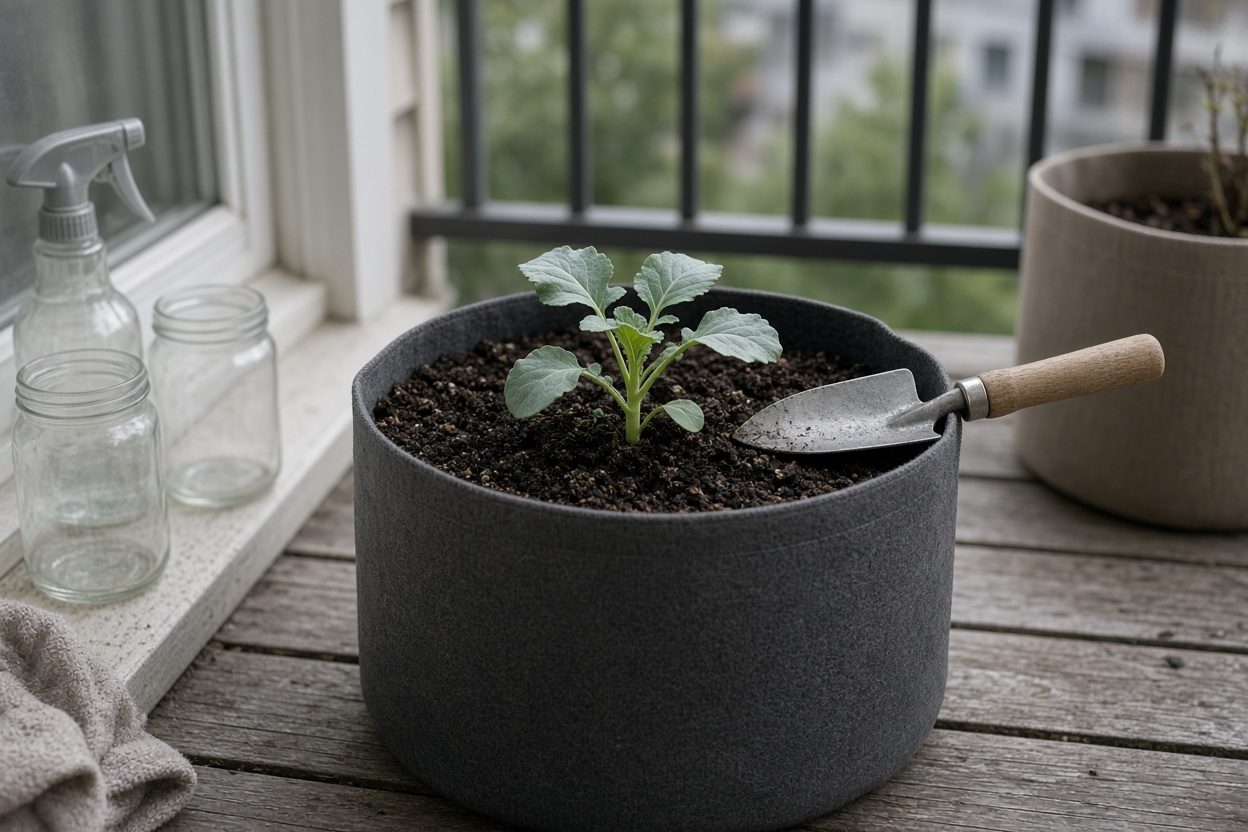
Fill a fabric grow bag most of the way with potting mix, and mix in a scoop of Garden-Tone. Plant the seedling a little deeper than it was in the cell, up to the first set of leaves. Water it in well.
One plant per bag. I know it looks like a lot of room when the transplant is the size of your hand, and I know it’s tempting to add a second. Don’t. Two plants in one bag give you two small heads, or none.
Water and feed
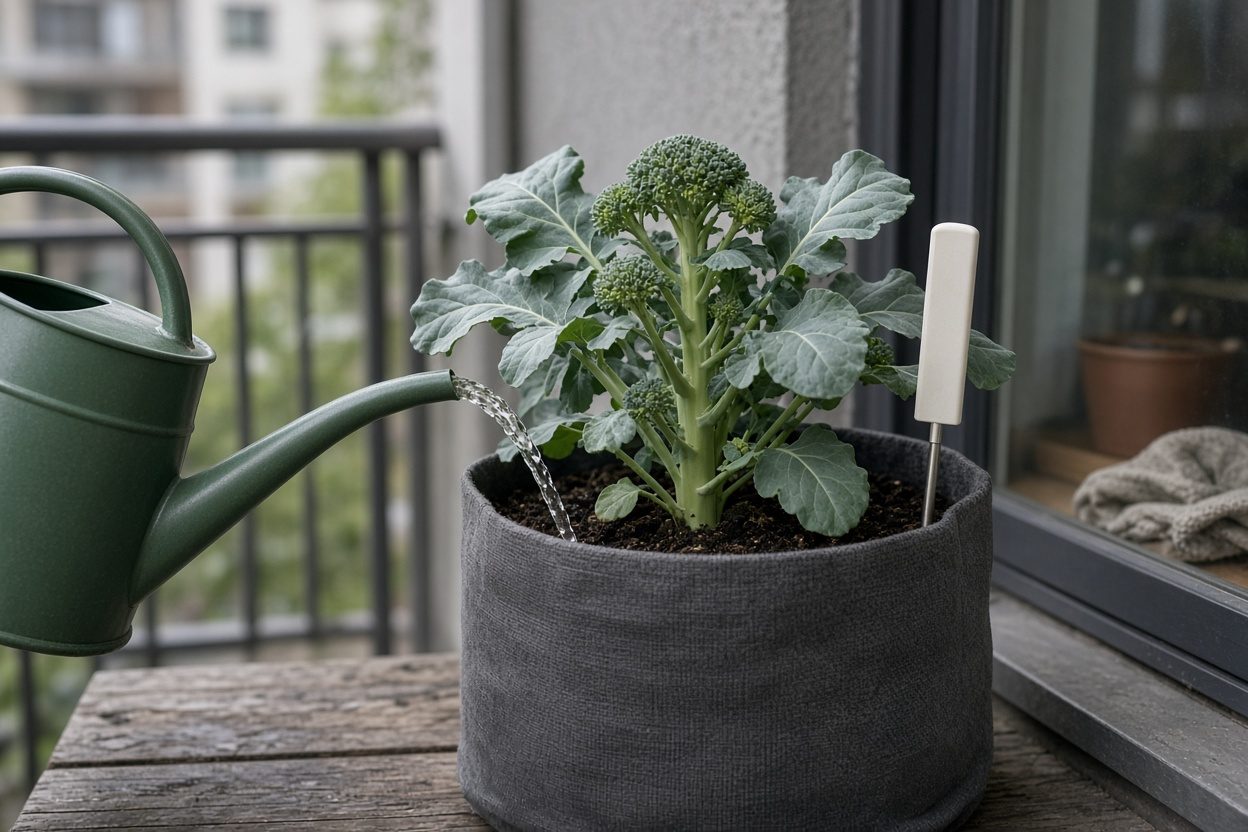
Broccoli wants steady moisture. The soil should feel like a wrung-out sponge, never bone dry and never swampy. Fabric bags dry faster than plastic pots, so check often. A moisture meter helps me know when to water without sticking my finger in every day, though it’s only a guide, and my finger is still the final word. Water slowly at the base, not over the leaves.
Feed again about four weeks after planting with another scoop of granular feed worked into the top of the soil. If you’d like more on feeding container vegetables, see how to fertilize container vegetables.
Problems you might meet

Cabbage worms. Small green caterpillars chew holes in the leaves. Check the undersides every few days and pick them off by hand. A fine mesh cover over the plant keeps the moths out.
Aphids. A blast of water from the watering can knocks them off.
Bolting. If a warm spell hits, the head can loosen and flower. Pick it early if you see the buds start to open.
Yellowing lower leaves. Usually a sign of hunger or too much water. Check the soil, then feed.
When to harvest

Cut the main head when the buds are tight and dark green, before any yellow petals show. Use a sharp knife and cut the stem at an angle about five or six inches below the head. Then leave the plant in the bag. Small side shoots will grow from the leaf joints, and you can pick those for several weeks. They’re smaller, and they’re free.
What I got wrong
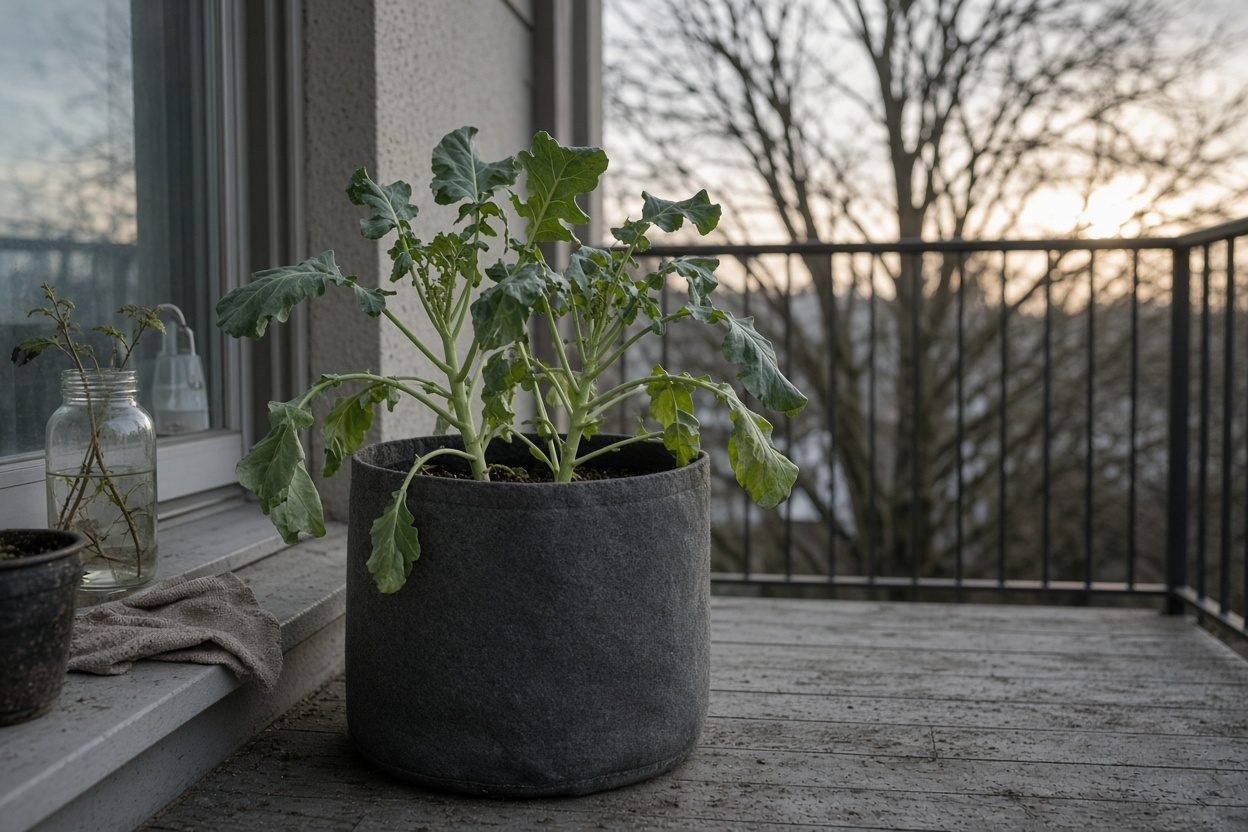
My first fall crop went in too late. I planted in late September, the days got short, and the heads never formed. Count backward from your first fall frost, and give the plant at least 10 weeks of decent light.
Keep growing
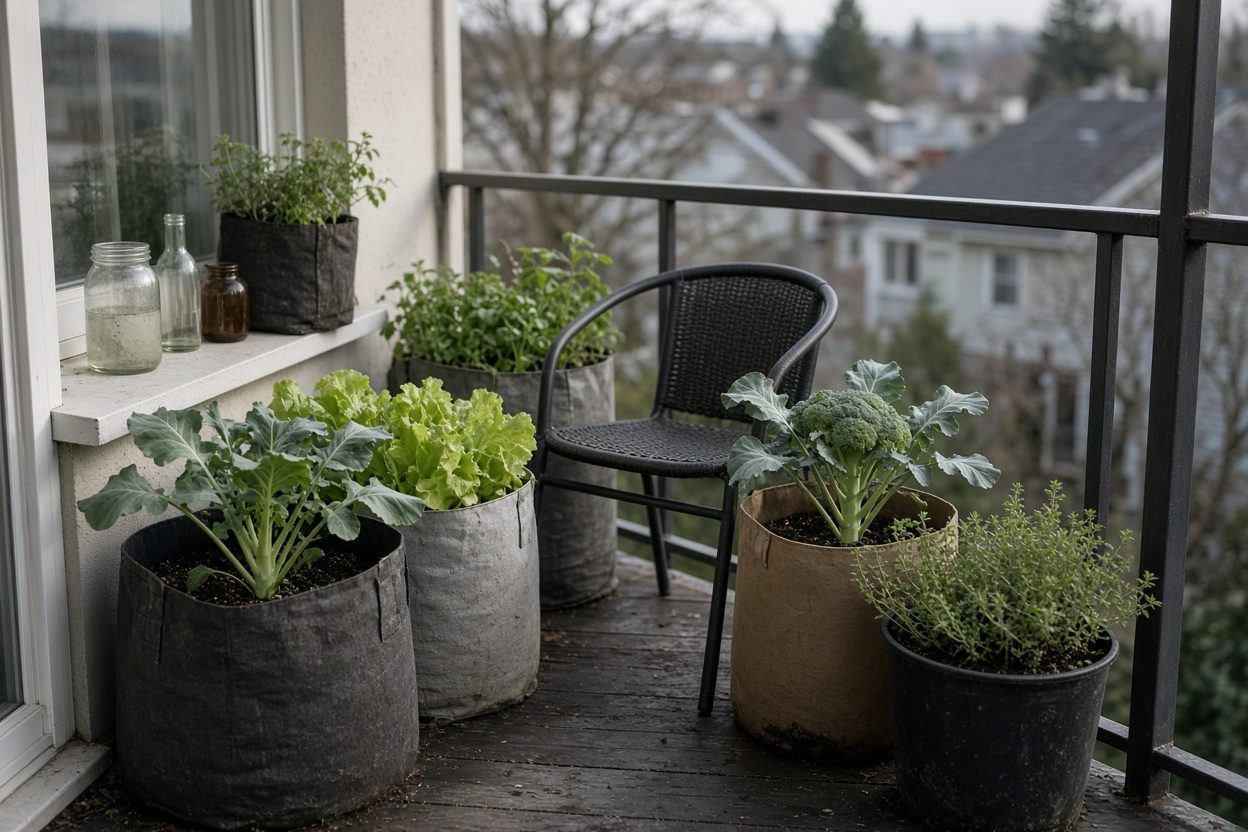
Container growing is a skill you build one pot at a time, and I walk through the whole system, from soil to watering to what to plant when, in my book, Small-Space Big Harvest. It’s written for the balcony gardener who has more ambition than square footage, which is to say, me.
Give your broccoli a big pot. It’ll thank you with something better than a golf ball.
