How to Grow Beets in Containers (Roots and Greens)
Beets grow well in a deep pot or grow bag. Here's how to sow, thin, and water them on a small patio, when to start in spring, and how to use the greens too.

My first beets came up as a thick green carpet, and I thinned them with my fingers and felt terrible about it, like I was weeding my own seedlings. Otto watched from the patio door with the quiet disapproval of a dog who does not understand why anyone would pull up something that is growing. Two months later I pulled up a plate-sized handful of roots the color of a Portland sunset and forgot all about the guilt.
Beets are a good container crop for a cool spring, and the greens are a second harvest hiding on top of the first. It is late October, so you have plenty of time to get your pots and mix lined up. Here is how I grow them on a 6×10 balcony and a postage-stamp patio, and when I’d start.
Pick a deep container
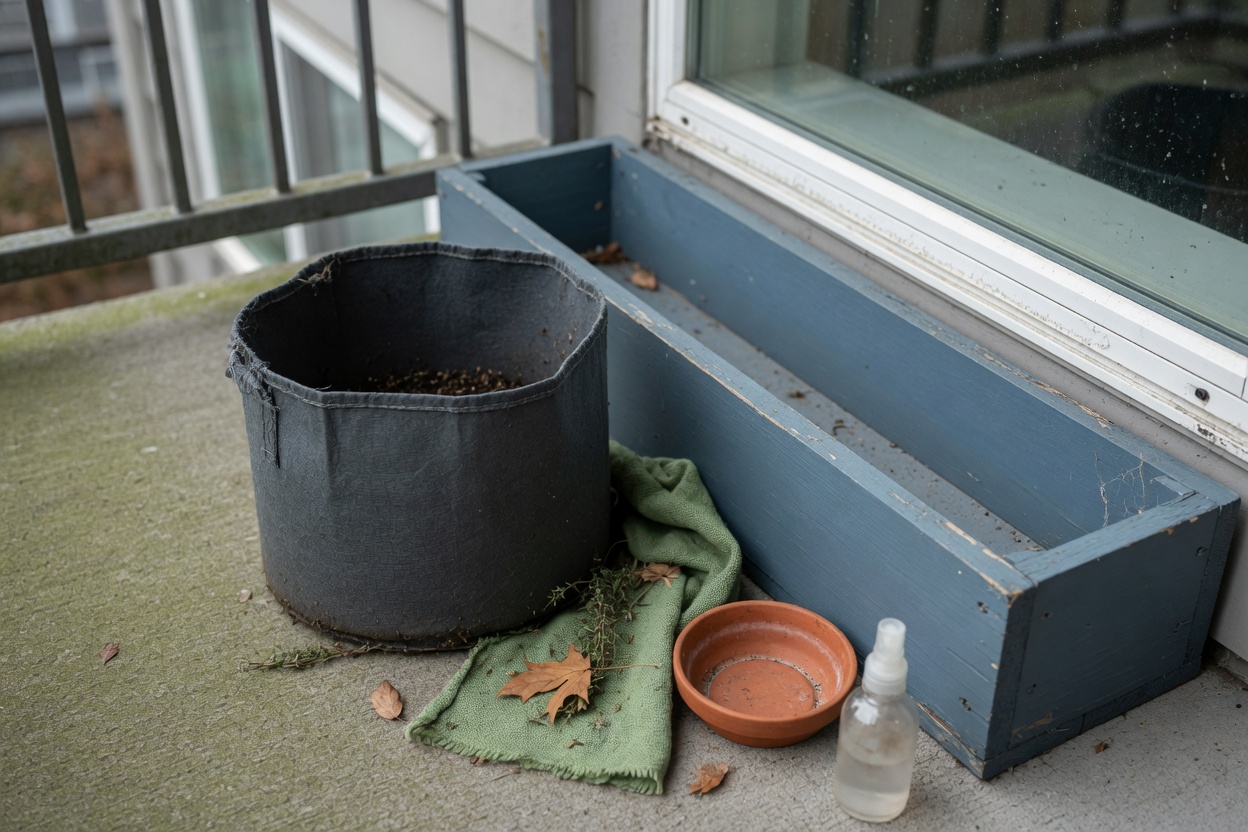
Beets make a round root that swells a few inches below the surface, so give them depth. A pot or grow bag that is 10 to 12 inches deep is plenty. Width matters more than people think: a pot about 12 inches across holds a good crop, and a long window box works too if it’s deep enough.
I use fabric grow bags for root vegetables because they breathe and drain, and a root crop in soggy soil rots or stays small. If you’re deciding between bags and plastic, I compared them in fabric grow bags vs. plastic pots. Whatever you use, make sure there are drainage holes.
Fill it right

Use a light potting mix, not garden soil. Garden soil packs down in a container and gives you pale, stunted roots. I fill the bag with organic potting mix, leave an inch below the rim for watering, and water it through before I sow so it settles.
Pull out any rocks or sticks. A beet root that hits a pebble will bend around it, and it comes out looking like a little hand.
When to sow

Beets are a cool-weather crop. They sprout in cool soil and get tough and woody in hot weather. Here in the Portland area I sow from about mid-March, a few weeks before the last frost, and keep sowing a little every two or three weeks until early May. A second round in August gives me beets in October. Check your own last-frost date with your local extension office, and sow beets two to four weeks before it.
You can start earlier if you have a protected spot. They’ll germinate in soil as cool as 50 degrees, though slowly.
Sowing and thinning

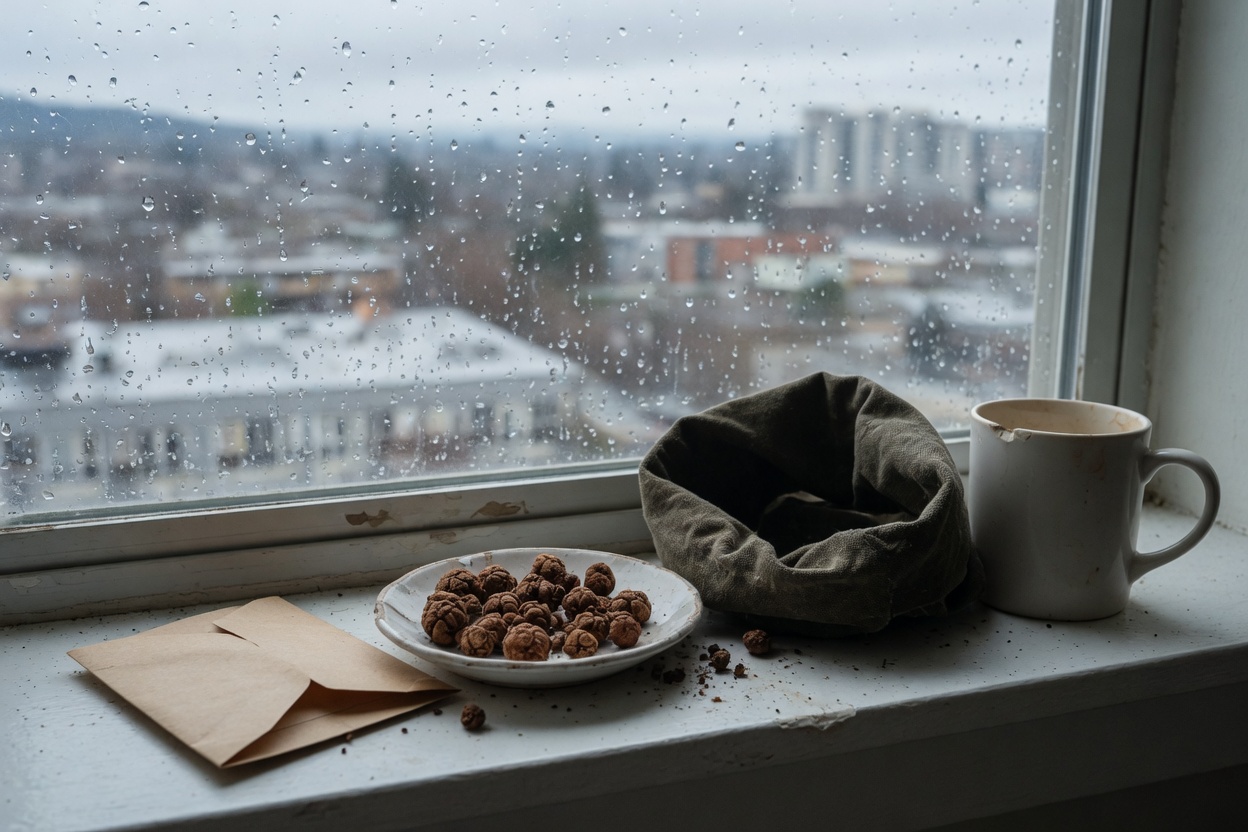
Each beet “seed” is really a little cork-like cluster that holds several seeds, so you’ll get a tuft of seedlings from each one. That’s the thing that surprised me my first year.
Sow the seeds about half an inch deep and an inch or two apart. Press the soil gently and water with a gentle spray. They sprout in about a week to ten days.
When the seedlings are two to three inches tall, thin to one plant every 2 to 3 inches. Snip the extras at the soil line with scissors rather than pulling, which disturbs the roots you’re keeping. And don’t throw the thinnings away. They’re tender, mild baby greens and they go straight into a salad.
Watering, honestly

This is where beets can go wrong in a pot. Uneven watering makes them split, or makes the roots tough and stringy. Pots dry fast in the wind, and then you overcorrect with a flood.
Aim for steady, even moisture. The top of the soil can dry slightly, but the root zone shouldn’t go bone dry. A soil moisture meter is a cheap way to check, and I wrote about whether you really need one in do you need a soil moisture meter. My honest take: I used my finger for two years and the meter made me better at it, but it isn’t essential. Water at the base, not over the leaves.
Feeding
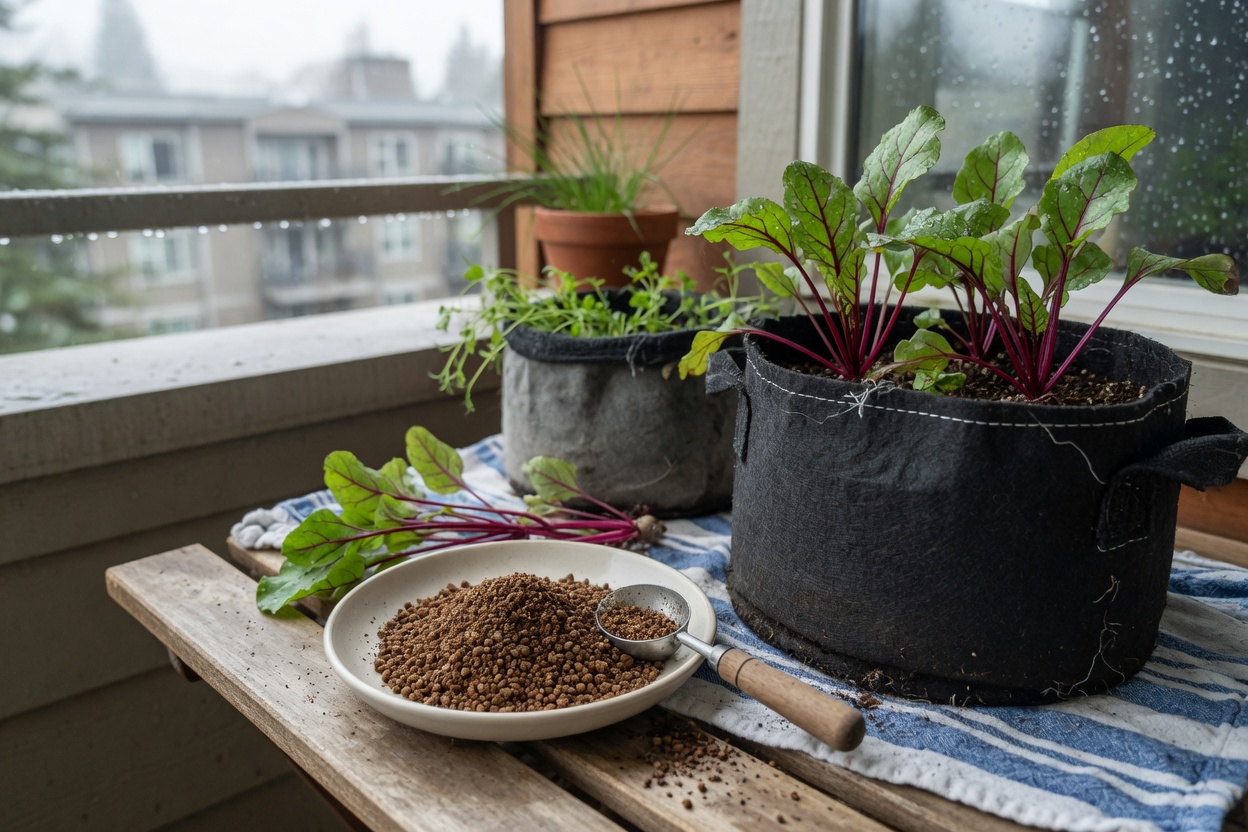
Beets don’t need much. A container with good potting mix will get them started, and a light feeding with a balanced organic fertilizer about a month in is enough. Too much nitrogen gives you a lot of leaf and small roots. My guide to how to fertilize container vegetables covers the basics.
Harvest
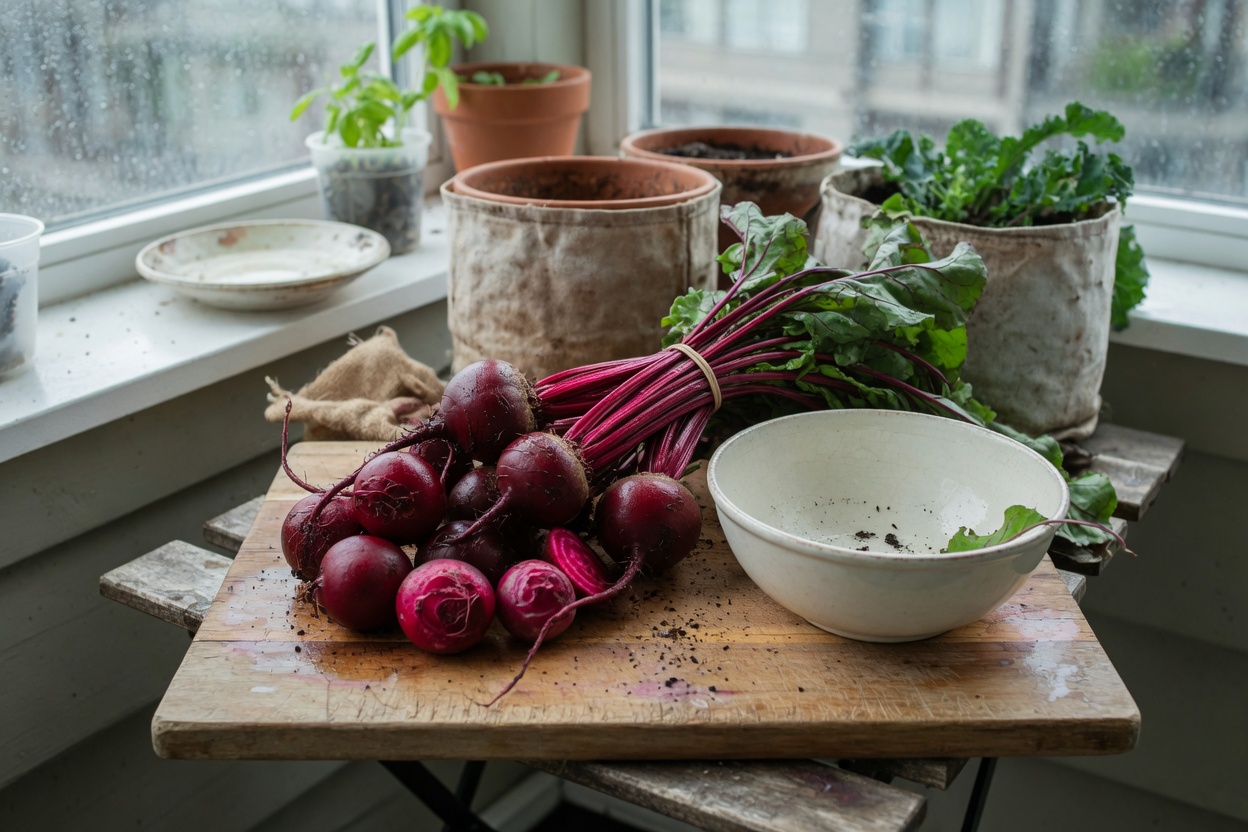
Most beets are ready in 50 to 70 days. Start pulling when the roots are about the size of a golf ball to a small plum, which is when they’re tender. Larger ones get woody, especially in warm weather. Twist the tops off at an inch above the root and save the greens.
Beet greens are a harvest of their own. Cook them like chard or spinach. If you want another quick container green, my post on how to grow spinach in containers works the same way for the cool season.
A couple of pros and cons

The good: beets are forgiving about light. They’ll put up with four to six hours of sun, which is more than a lot of vegetables will, and they give you two crops in one. The downside is that they’re slow to germinate in cold, and they sulk in heat, so a hot summer patio isn’t the place. And they’ll never be the heavy producer a tomato is. A 12-inch pot gives you a salad’s worth of roots, not a pantry.
Where to go from here
Pick your pot this winter, get your mix ready, and mark mid-March on the calendar. If you want the whole picture for small spaces, including what to plant when and how to match crops to containers, it’s in my book Small-Space Big Harvest. It’s written for a balcony and a few pots, which is where I garden.
