How to Forage and Use Sassafras Root in Appalachia
Sassafras root has a long mountain history. Learn to know the tree in winter, dig a sucker's root without harm, dry it, and what to weigh before you use it.
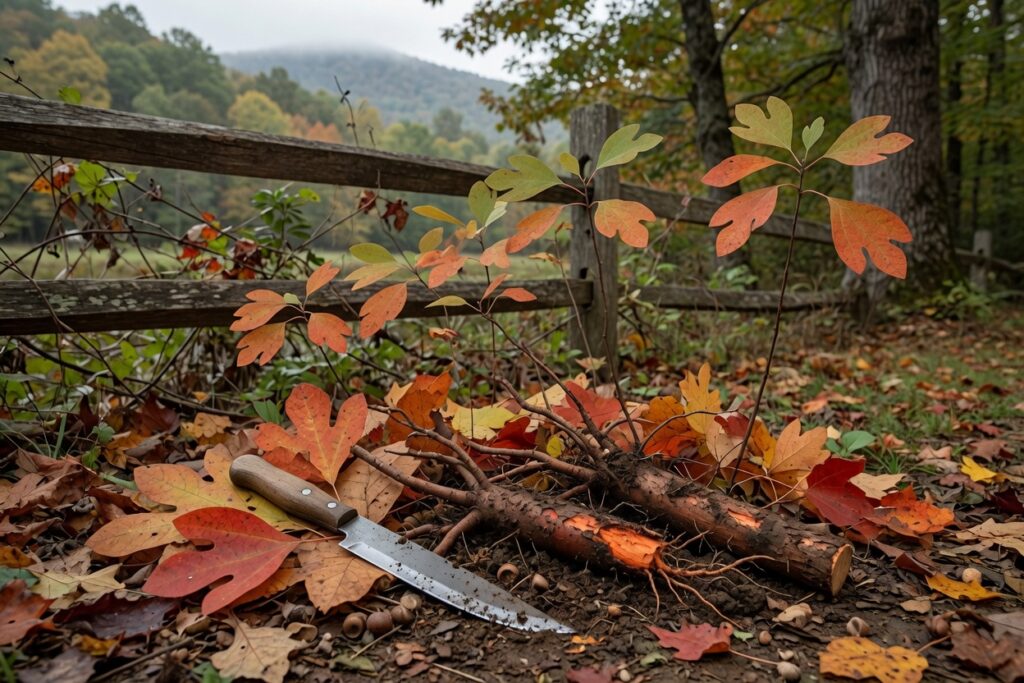
My grandmother could name a sassafras from the road in January, with no leaf on it, and when I asked how she said to scratch a twig and smell it. I was nine. I broke a green twig off a sapling at the edge of our hayfield, scraped it with a thumbnail, and got a sharp, sweet, spicy smell, like root beer and orange peel and something older. I have known the tree by that smell ever since.
Sassafras albidum grows from one end of the southern mountains to the other, and it has been dug in these coves for as long as people have lived here. Winter is the traditional time to dig it. I want to show you how to know the tree for certain, how to take a root without hurting the stand, and how to dry it. And I need to tell you plainly what the FDA says about it, because sassafras is one plant where that matters.
Know the tree, even in winter
Never gather a wild plant on one source alone. Check your identification against at least two good field guides, then against someone who knows the plants of your area. When in doubt, leave it. I put together a longer list of what to rule out in how to identify dangerous look-alikes of Appalachian medicinals.
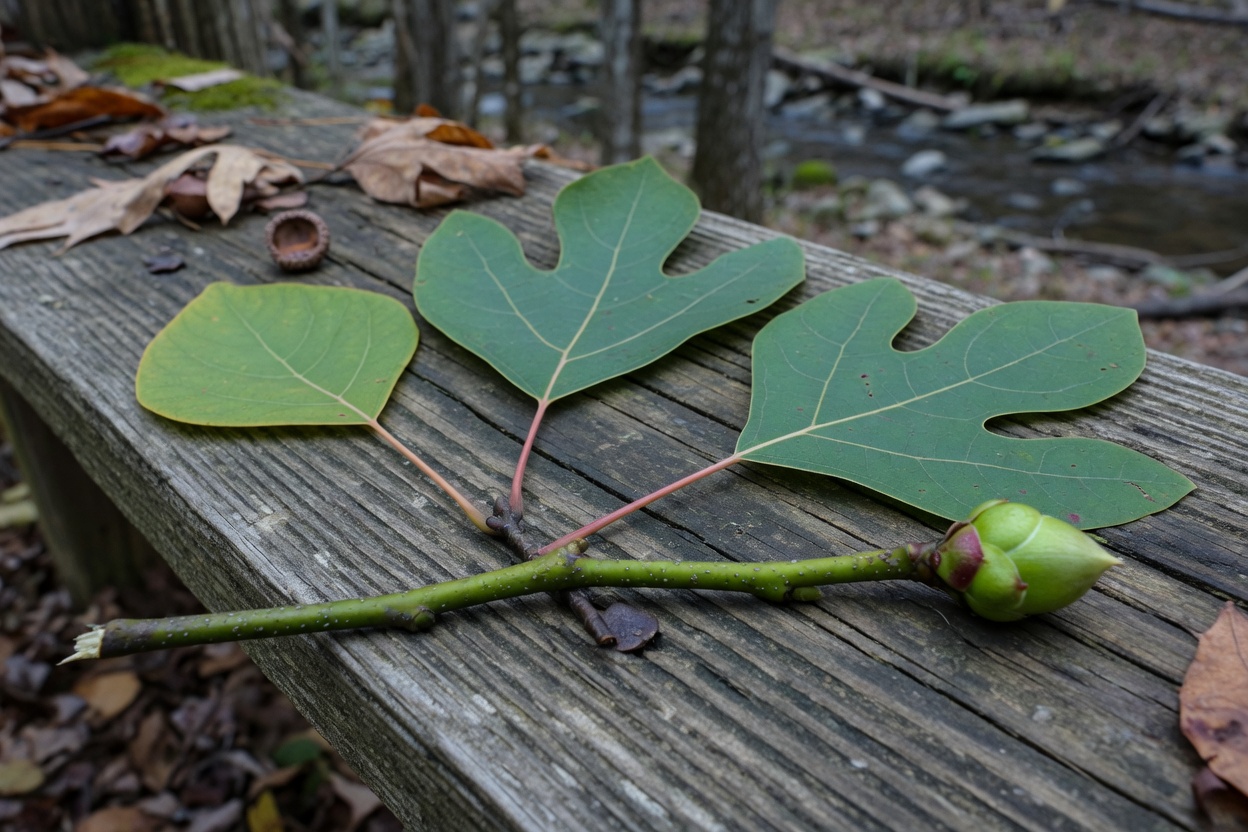
In summer, sassafras is easy, because a single tree carries three different leaf shapes at once. Some leaves are plain ovals. Some are shaped like a mitten, with one thumb. Some have three lobes, like a ghost with its arms out. Few other trees do that. In fall the leaves turn a clear yellow, orange, and red.
In winter you are down to the bark and the twigs. Young stems are green and smooth, and they stay green into their second year. The bark on an older tree is deep red-brown and furrowed in thick ridges. Scratch a twig, and you get that smell. If a stem has no scent at all when you scrape it, you don’t have sassafras.
Sassafras is a tree that spreads by root. You’ll find it in old fields, fencerows, and the edge of a clearing, in colonies of saplings of every size standing around one parent. That habit is the reason the root is gatherable at all, which I’ll come to.
Where and when to dig

I dig between late fall and early spring, once the leaves are down and the plant has pulled its energy into the root. In Madison County that is November through February, on a day when the ground isn’t frozen hard.
Pick your ground with care. Gather only on land you own or have permission to dig, and learn the rules where you are, since national forests and state lands often limit or forbid digging roots. Stay away from roadsides, utility cuts, and old pastures where herbicide has been sprayed.
How to take a root without harming the stand

This is where sassafras is kind to a beginner. Because it spreads by suckers, a dense colony can spare a few young stems. Find a thick patch with plenty of saplings, choose a stem about as thick as your thumb, and follow it down with your hori-hori until you find a lateral root running away from it. Cut a section of that root, a foot or so, and leave the sapling and the parent tree alone.
I take from a patch once, and I take a third at most, and I do not come back to the same spot for years. A single tree dug out by the roots is a tree lost, and sassafras is not a plant to strip. Backfill the hole. Walk away knowing the colony will still be standing in spring.
The part you want is the root bark, the thin reddish outer layer on the root. When it’s fresh it’s soft and smells strongly.
Drying and storing it

Scrub the root clean with a stiff brush and cold water. Don’t soak it. Shave or peel the bark off with the knife, or cut the root into small pieces, and spread them in a single layer on a screen or a clean towel, loosely covered with cheesecloth to keep the dust and flies off. Keep it out of direct sun, in a dry, airy place like a shed or an attic. In my drying shed it takes about two weeks. In a damp mountain house, longer.
It’s dry when it snaps clean, with no give. Store it in a wide-mouth mason jar, labeled with the plant and the date, in a dark cupboard. Our humid winters will turn anything slightly damp to mold, so I wrote up how I handle that in how to store mountain herbs through a humid Appalachian winter. For the cleaning and drying steps in more detail, see how to clean and dry medicinal roots after the dig.
How it has been used, and what you should weigh

Sassafras root bark steeped in hot water is the old mountain spring tea, the “blood tonic” my grandmother talked about, and it was the flavor in the original root beer. The Cherokee also used sassafras in several ways, and the place to read about it is Paul Hamel and Mary Chiltoski’s Cherokee Plants and Their Uses, which is where I would send you. I am sharing what I learned. The Cherokee knew it first, and I credit them.
Here is what you should know before you decide anything. Sassafras root bark contains safrole. The FDA has prohibited safrole-containing sassafras in food since the 1960s, after animal studies linked it to liver damage and cancer at high doses. You can still buy “safrole-free” sassafras products, and you can still dig your own, but the root is not a daily drink. I steep a small piece now and then and no more, and I do not give it to children or to anyone who is pregnant or nursing. If you take medicine, have liver trouble, or manage a health condition, ask a qualified practitioner first. This is traditional use, not advice, and I don’t offer a dose.
That is the plant. It’s lovely and it deserves respect.
Honest notes on the tools
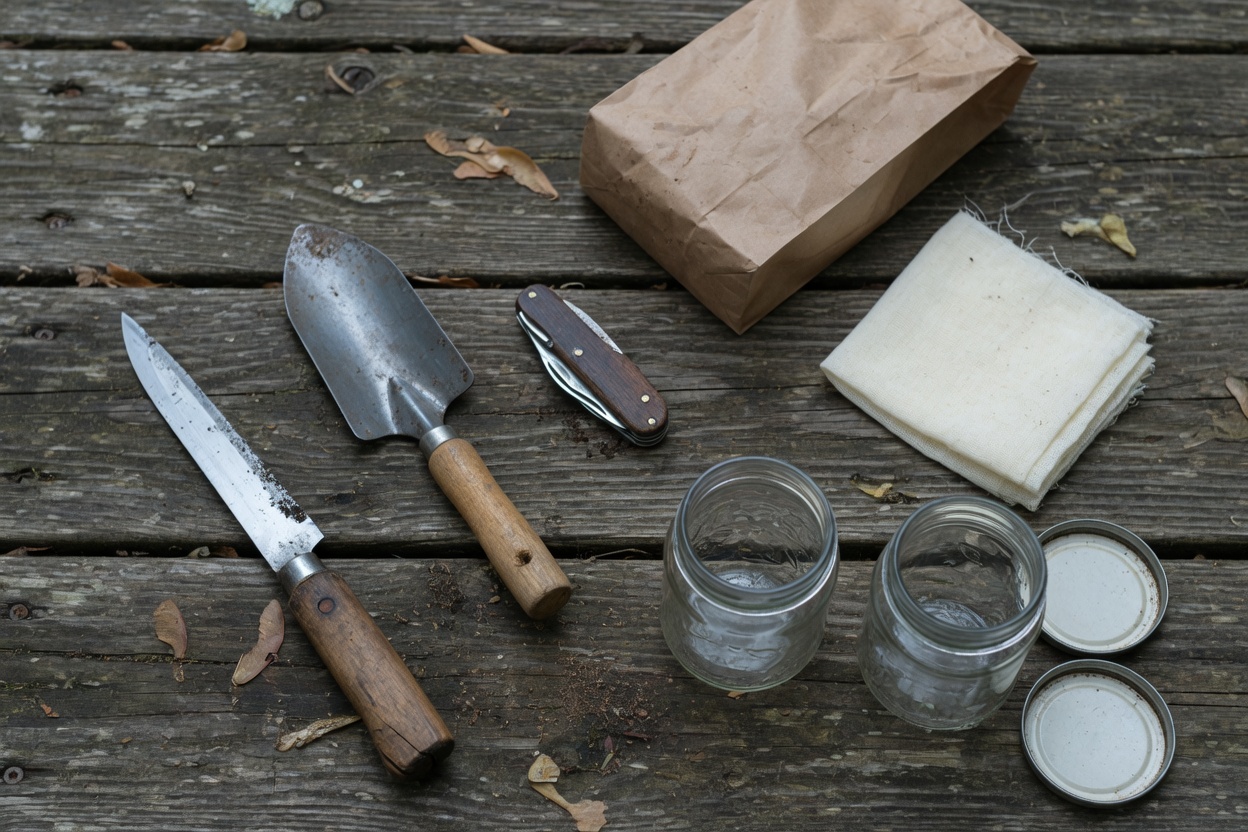
You can do all of this with a trowel, a sharp pocketknife, and a paper bag. The hori-hori earns its keep because the serrated edge saws through a root cleanly and the narrow blade lets you work between stones without tearing the colony up. The cheesecloth and jars will serve you for every root you dry afterward. If you’ve never dug a root before, learn on something milder first, and start with yellow dock root.
Where to go from here
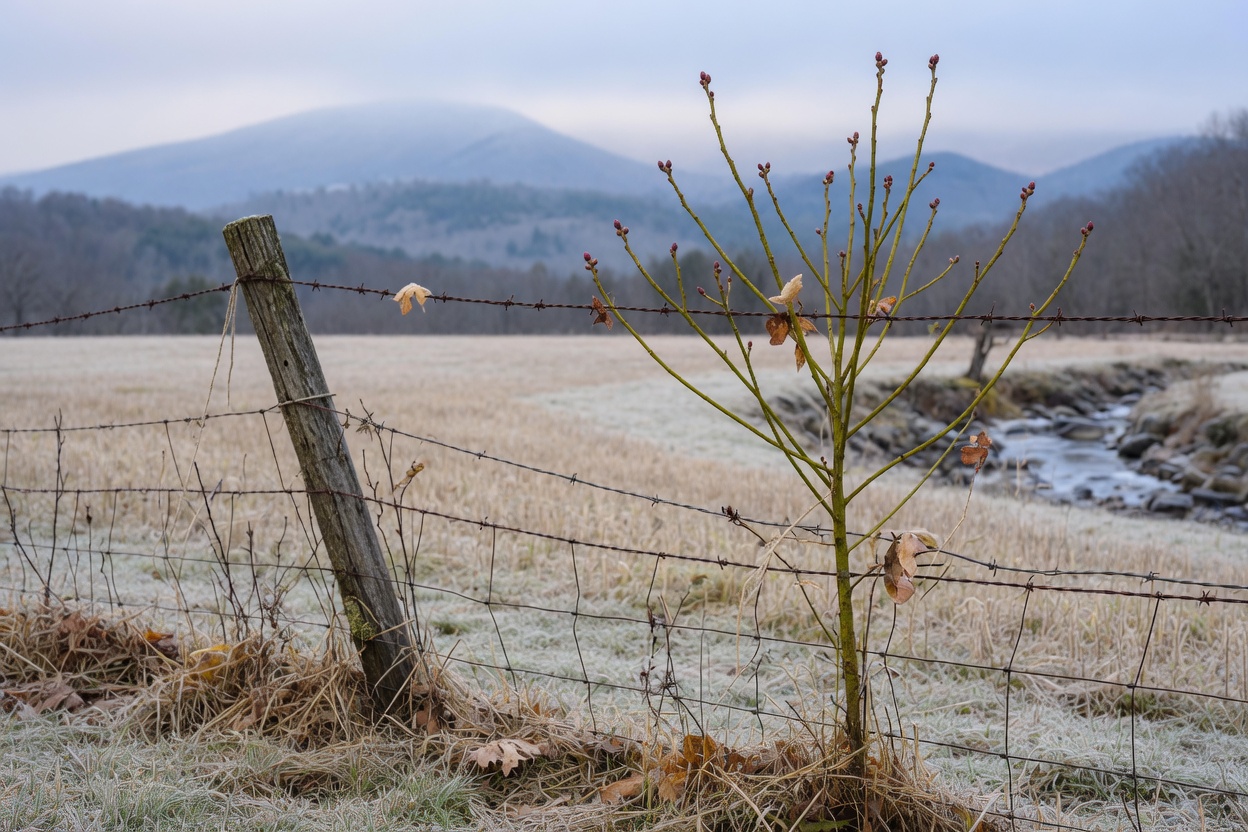
Walk an old fencerow this month and find a sassafras sapling. Scratch a twig, smell it, and learn the shape of the bark. You don’t need to dig anything yet. Winter is long, and the tree isn’t going anywhere.
Sassafras is one of many plants I walk through, with the look-alikes, seasons, and stewardship rules laid out so you aren’t guessing, in Appalachian Medicinal Plants: Appalachian Medicinal Plants.
