How to Forage and Use Maypop in Southern Appalachia
Find maypop (wild passionflower) in Appalachian fencerows, tell it from look-alikes, when the fruit and vine are ready, and how mountain folk have used it.
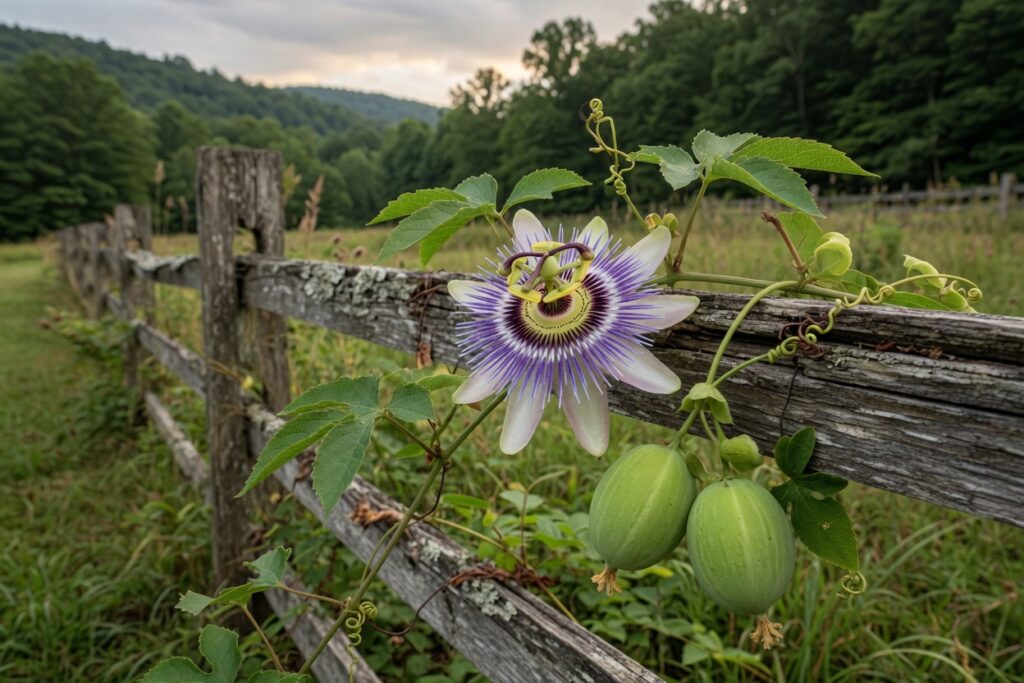
Where I grew up, a maypop was something you stomped. Kids on our road lined the gravel shoulder with the ripe green fruits in September, and the pop one made under a bare heel was the whole point. It took me until I was grown, and my own children were in school, before I picked one up and cut it open to see what was inside.
That is the plant I am writing about this week, and it is a good one to learn in late October. The vines are yellowing now, the last fruits are dropping, and the whole patch is easy to find while the leaves still show. By Thanksgiving the vine will be a brown tangle on the fence, and you will wish you had marked it.
What it looks like
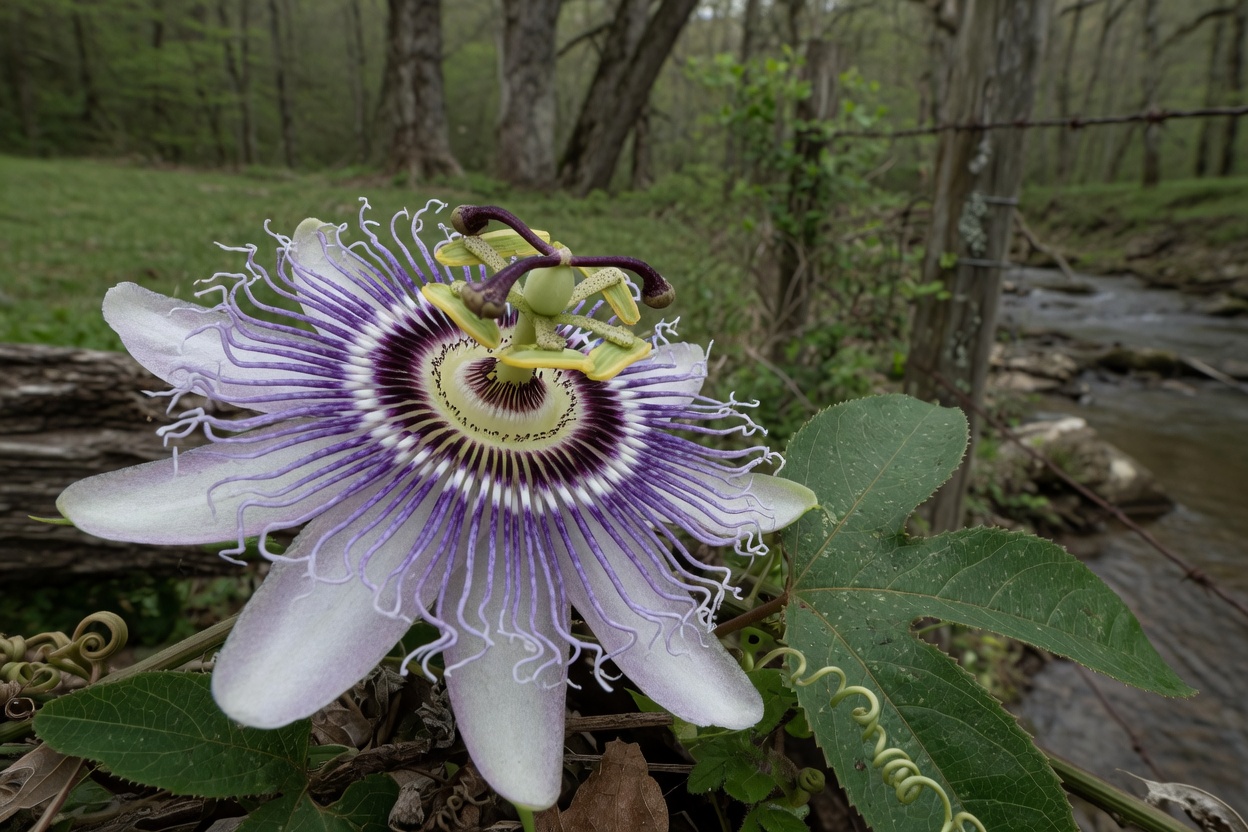
Maypop is Passiflora incarnata, a perennial vine that dies back to the ground every winter and comes back late the next spring. Folks call it passionflower, and some in the mountains say wild apricot, though that name causes confusion, so stick with the botanical one when you are checking an ID.
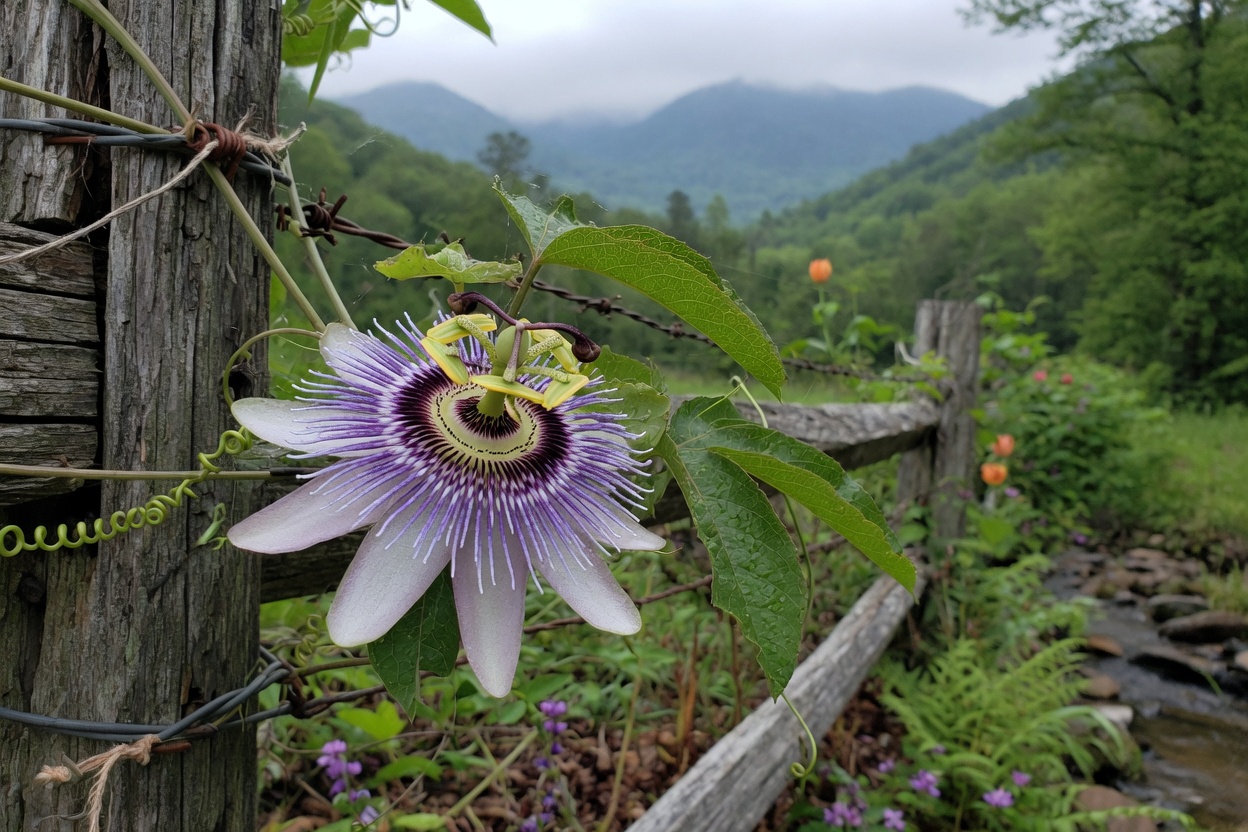
The vine climbs by curling tendrils, up a fence, a shrub, or a stand of tall weeds, and it can run fifteen or twenty feet in a season. The leaves are the first field mark. Each is deeply cut into three lobes, with fine teeth along the edge, and if you look at the leaf stalk just below the blade, you will find two small raised glands, like a pair of little knobs. Those glands are the thing I always check.
The flower is nothing you would miss in summer: wide as a child’s hand, with a fringe of purple and white threads over a ring of petals, and a crown at its center. After it comes the fruit, an egg-shaped pod that starts green and firm and softens and wrinkles as it ripens in September and October. Cut one open and you will find a mass of seeds, each wrapped in a clear, juicy sac.
Now the line I give everybody. Never use a wild plant on a book, an app, or a single source alone. Match it against more than one good guide, and then against a local person who knows it by sight. When in doubt, leave it.
Look-alikes to rule out
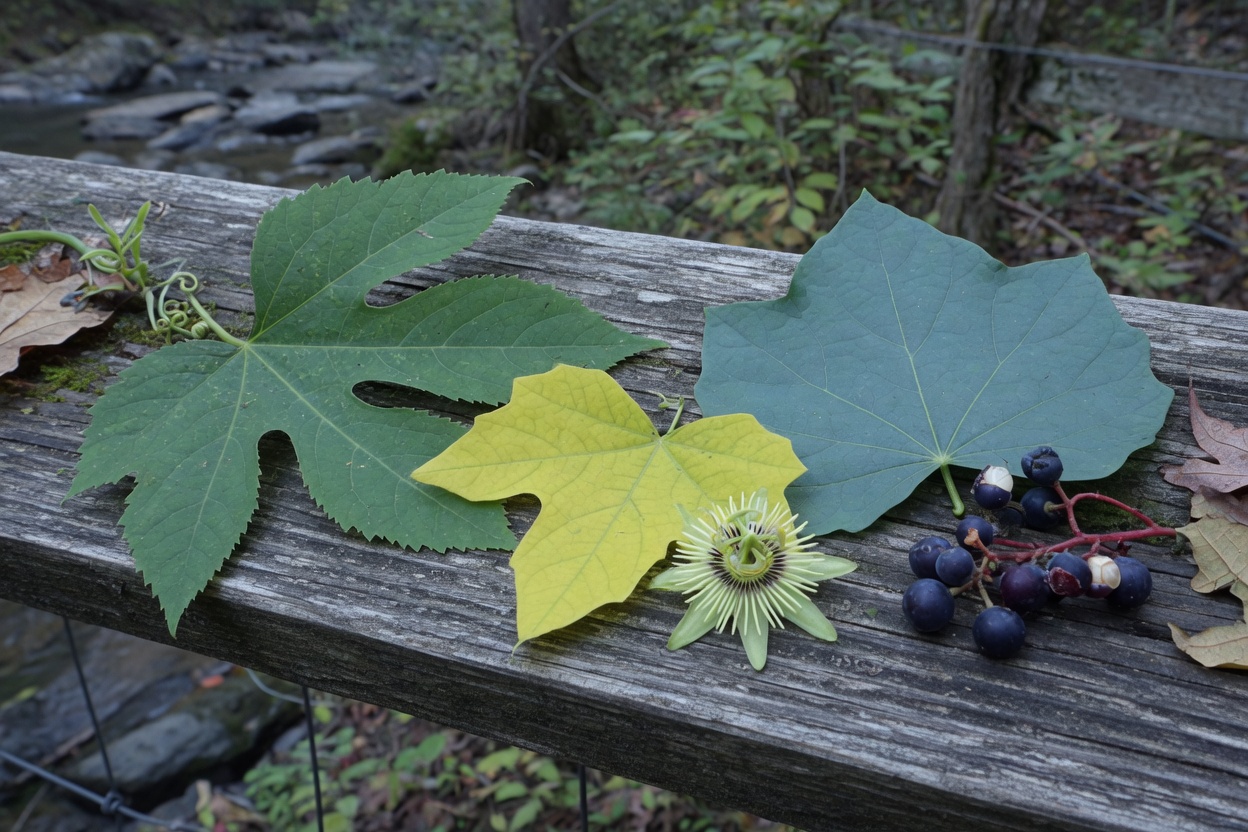
The cleanest check is the tendril. Maypop climbs by tendrils, and so do a few others, but its three-lobed leaf and the glands on the leaf stalk set it apart. Yellow passionflower (Passiflora lutea) grows in the same country, with smaller, greenish-yellow flowers and leaves that are only shallowly lobed. It is a different plant with a smaller fruit, and I don’t gather it.
Moonseed (Menispermum canadense) is the one that worries me. It is a climbing vine with lobed leaves, and its dark fruit is poisonous. It has no tendrils and none of the leaf-stalk glands, and it grows from twining stems. If the vine you are looking at has no tendrils, put it down and walk away. I wrote about the ones that fool people most in how to identify dangerous look-alikes of Appalachian medicinals, and it is worth reading before you carry a bag out.
Where it grows, and why to look now
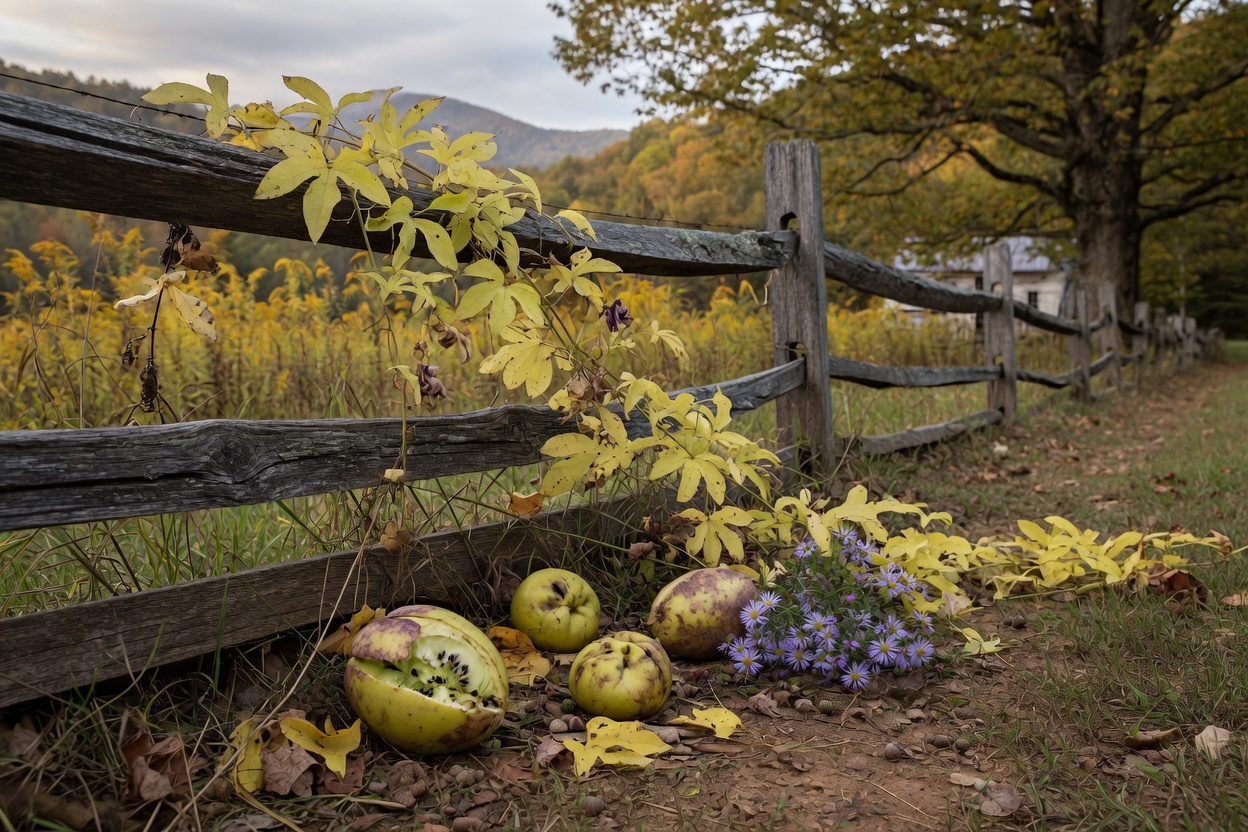
Maypop wants sun and poor, disturbed ground: fencerows, field edges, the shoulder of an old road, a ditch bank. It sends out underground runners and will spring up several feet from the parent plant, which is how a single vine becomes a patch. It is not rare or at risk in these mountains, and in a good year it is nearly a nuisance, so you can gather it without worry about the stand.
Which is why this month matters. In October, you can see the yellowing vines and the dropped fruits and mark where the patch is. A photo with a landmark, or a pin on your phone, is enough. In May and early June, the new shoots will come up late, usually after you have decided the vine is dead.
Mind the ground you are on. Fencerows are often sprayed, and so are roadsides and power lines. Gather only from places where you know the owner and know nothing has been applied, and ask first.
When to gather
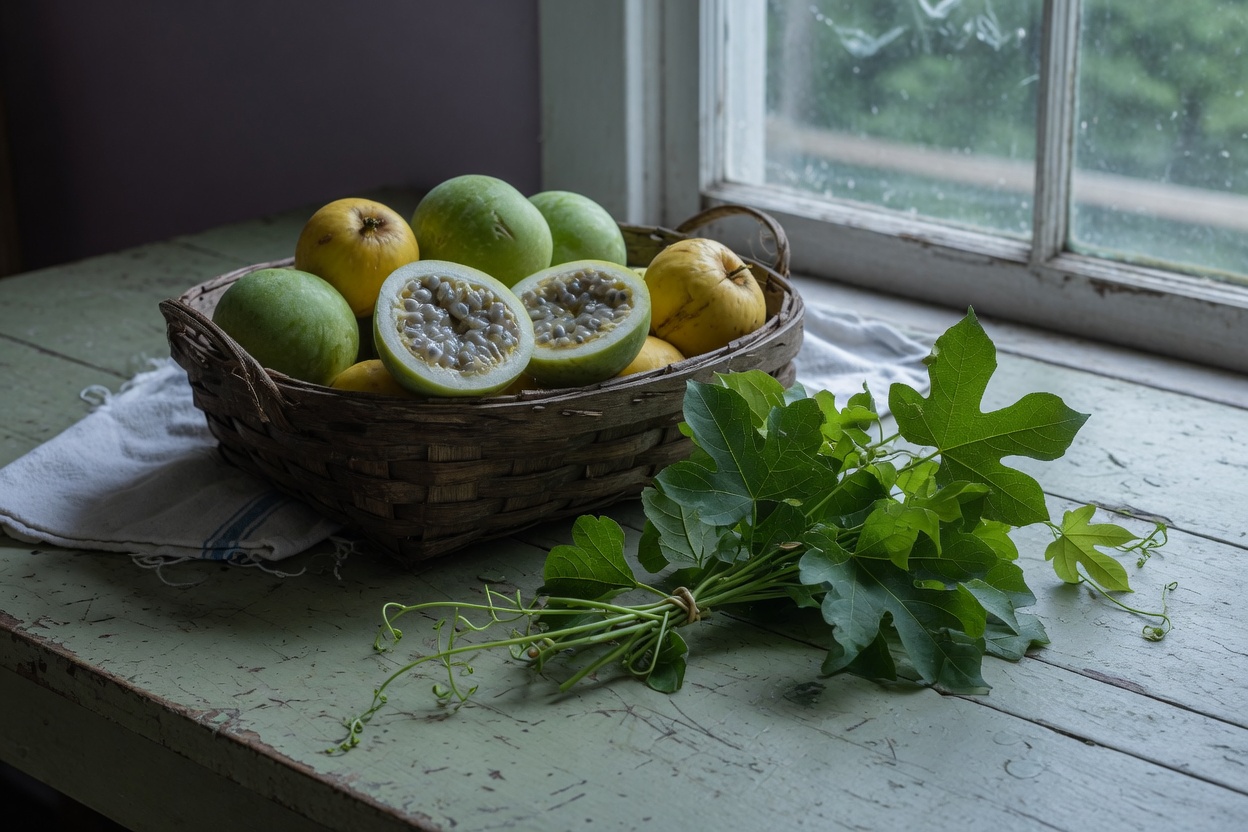
I gather three things from maypop, in three seasons.
The fruit, in September and October. Pick the ones that have dropped or that have gone soft and wrinkled and pull free from the vine with a gentle tug. The pulp and seeds can be eaten fresh, and it tastes tart and floral, something between a guava and a lemon. A fruit that is hard and glossy green isn’t ready.
The leaf and vine tips, in June and July. Gather them in the morning once the dew has lifted, before or during flowering. Take a handful of tips from each vine, never the whole plant, and leave most of the patch standing.
Nothing in winter. The vine is down, and so is my interest.
Because it spreads so freely, I am less strict with it than I am with something like ginseng or goldenseal, but I still take no more than a third of any stand.
Drying the leaf
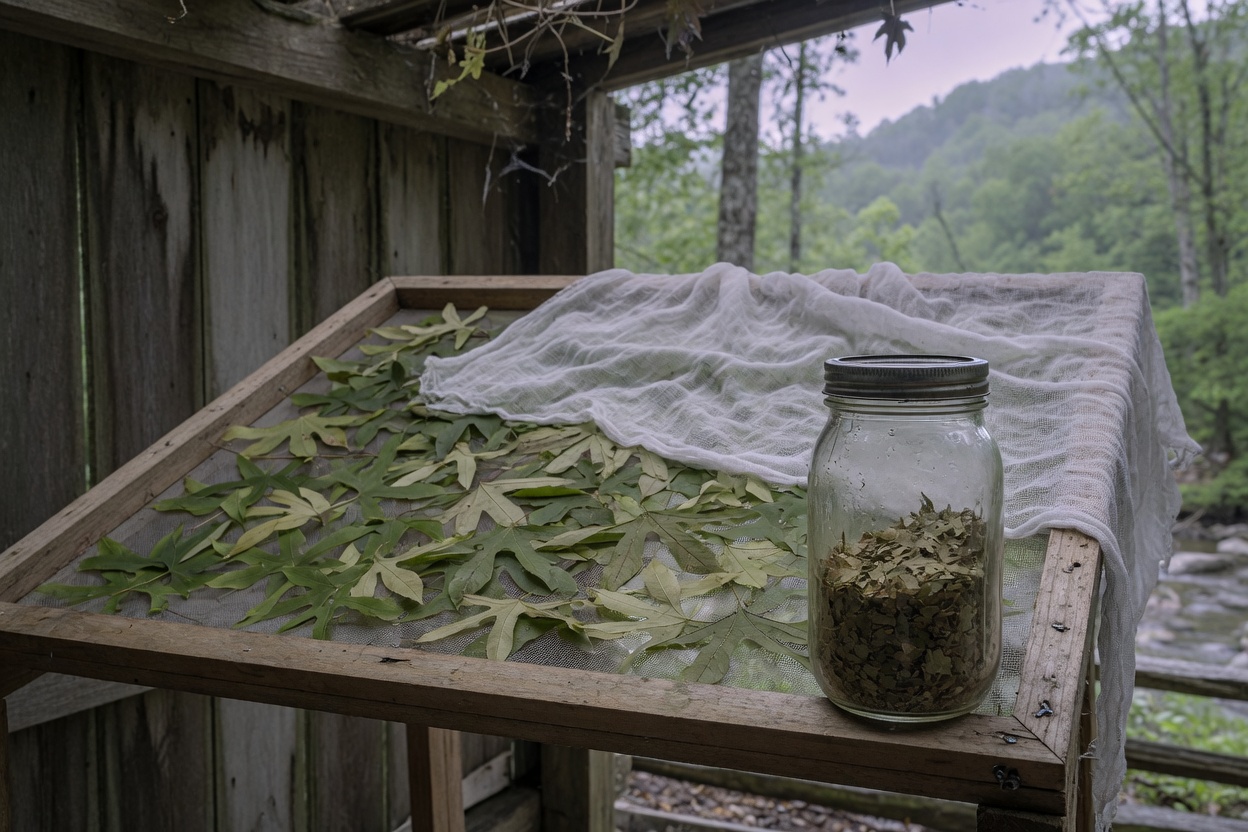
Maypop leaf is thin and dries easily. Spread it in a single layer on a clean cloth or a screen in the shade, with cheesecloth laid loosely on top to keep dust and flies off while the air moves. In a mountain summer, three to five days will do it. The leaf is dry when it crumbles. If it bends, it needs more time.
Pack the dry leaf loosely in a wide-mouth mason jar, label it with the plant and the date, and store it out of the light. I keep mine on a shelf in the drying shed with the door closed, and I have never lost a jar to damp doing it this way.
How it has been used
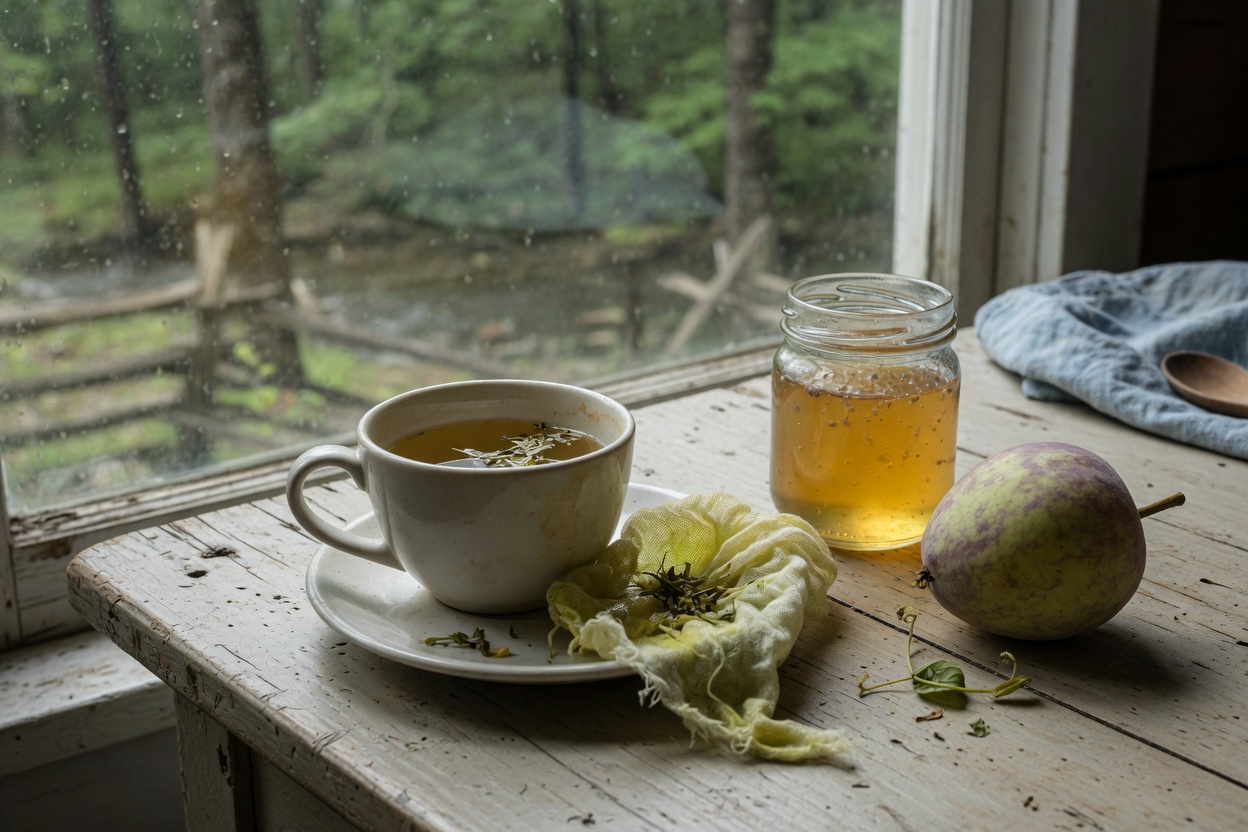
I make no claim about what maypop does for the body, and I would distrust any page that does. What I can tell you is how people in these mountains have handled it. Folks have steeped the dried leaf in hot water for tea, and some make a jelly from the fruit juice. That is the folk practice, and whether it works is not something I will promise you.
My own use is modest. I steep a small pinch of dried leaf in a cup of hot water, covered, for ten minutes, and strain it through a scrap of cheesecloth. It tastes mild and grassy. I drink it because I like the taste and the habit of it.
Two cautions I take seriously. If you are pregnant, nursing, on any medication, or managing a health condition, ask a qualified practitioner before you drink any herbal tea, and maypop is one I would ask about first. And try a small amount the first time, because a plant can disagree with you. This is traditional use, not advice, and I am not a doctor.
The Cherokee knew this plant long before any of us did. I am sharing what my own family handed down, and for what is recorded of Cherokee use, I would point you to Hamel and Chiltoskey’s Cherokee Plants and Their Uses rather than guess at it. I credit them, and I won’t claim that knowledge as mine.
Honest notes on the tools
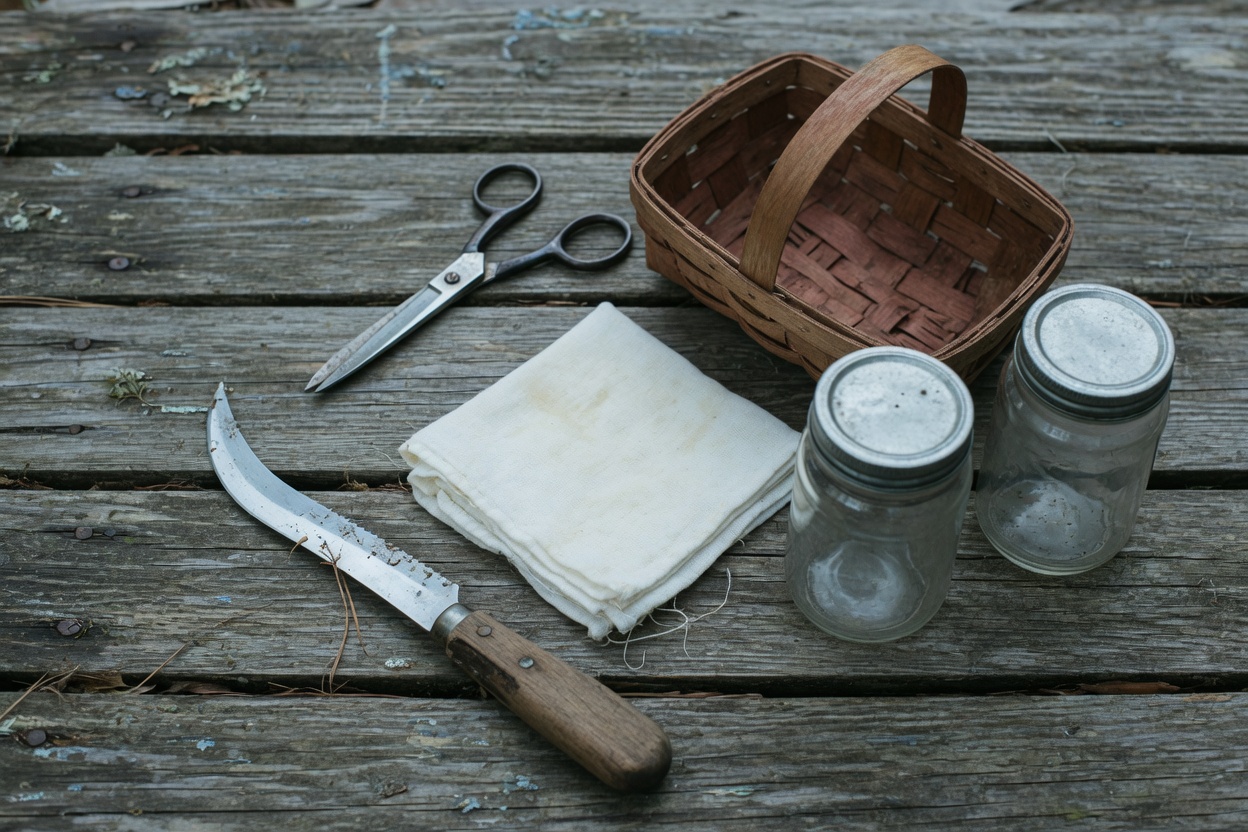
You do not need much. Scissors and a basket do the gathering. The cheesecloth and mason jars earn their keep because they serve every plant you will dry. The hori-hori is the one I would not buy for this plant alone. I carry it on every fall walk anyway, and it is useful here only if you want to trace a runner back to the crown to see how the vine is rooted.
Where to go from here
Walk a fencerow this week with permission, and look for the three-lobed leaf and the glands on the stalk. Mark the patch. In June, come back with a basket and the flowers will tell you the rest.
If you would like the mountain plants laid out one at a time, with how to tell each from its kin, that is what I put into Appalachian Medicinal Plants: Appalachian Medicinal Plants. And for another low-ground plant to learn while the weather is slow, read how to forage and use jewelweed.
