The Best Time of Day to Fish in the Fall
The best time of day to fish in the fall isn't first light — it's the warm middle of the day. Here's why the rule flips once the water turns cold.
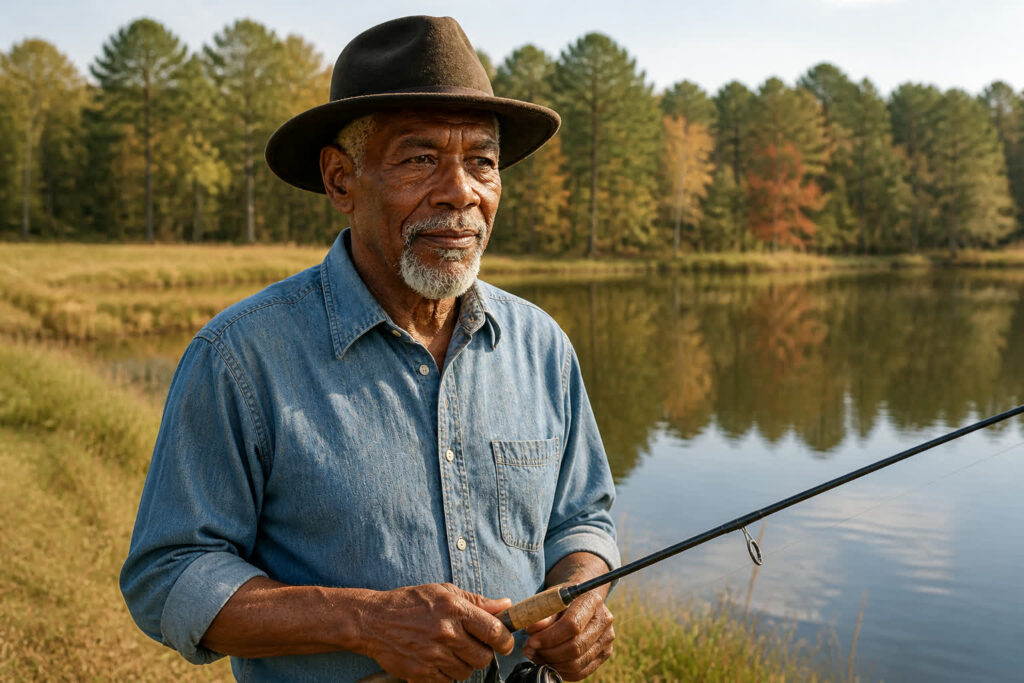
All summer I’ll tell you to be on the bank before the birds. First light and last light — that’s when the fish feed in warm weather, and the middle of the day you might as well be home in the shade. But the fall changes the rule, and a lot of good summer fishermen keep showing up at dawn in October and wonder why the cooler stays empty. My name is Silas Whitfield, and I’ve fished the same pond most of my life. Let me tell you what my granddaddy taught me about the fall, because the clock runs backward this time of year.
The short of it is this: in the fall, the best fishing is usually the warm middle of the day, not the cold edges of it. That runs against everything summer taught you, and there’s a plain reason for it, same as always. Read the water and it makes sense.
Why the rule flips when the water cools
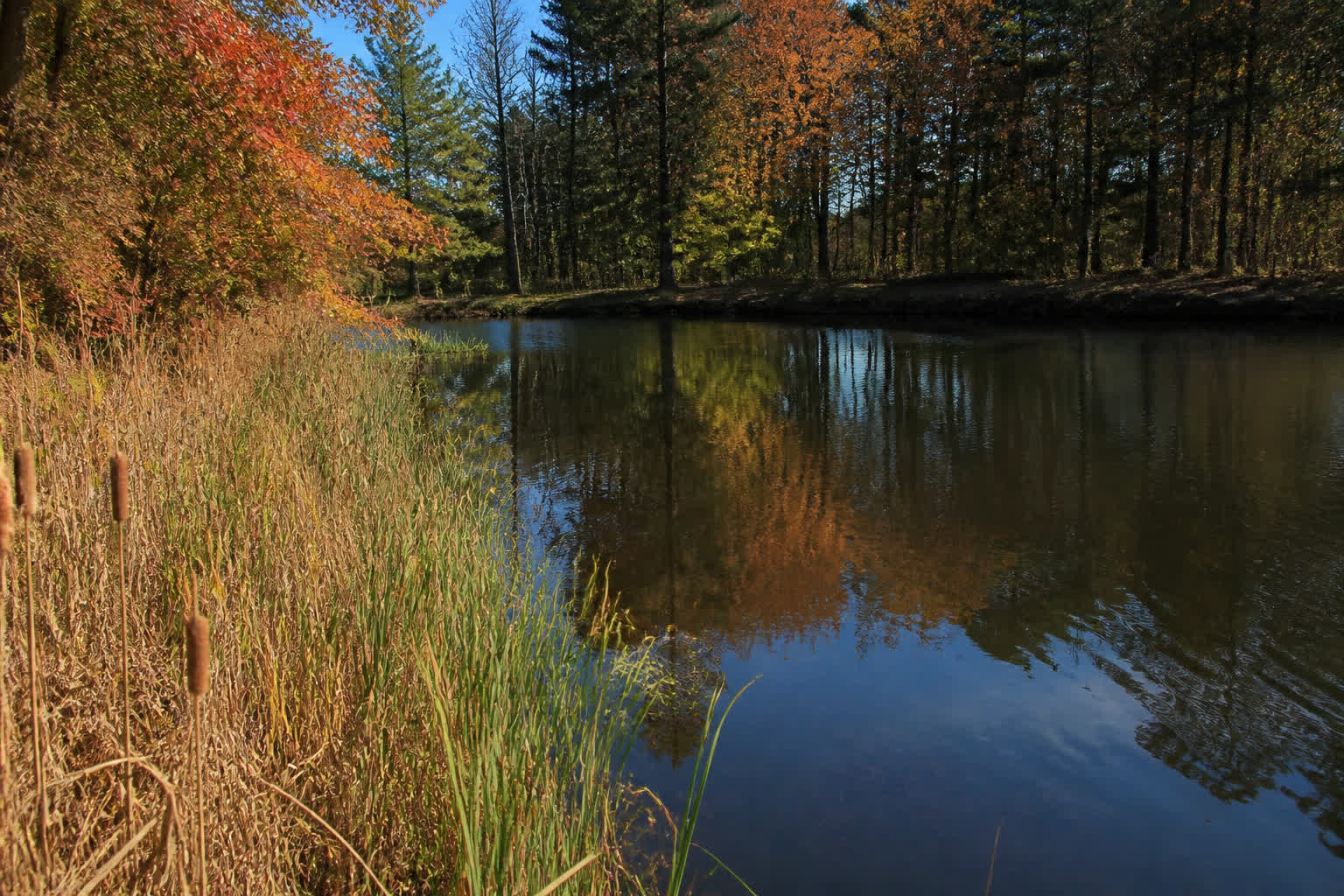
Here’s the thing to hold onto, and it’s the same truth underneath all fishing. A fish is cold-blooded. The water sets how fast its body runs. In the heat of summer, the shallows get too warm by midday and the fish slide out to the cool deep and wait — so you catch them in the cool of the morning and the evening, when they come up to feed where you can reach them.
In the fall, that turns over. Now the water’s cool to cold, and it’s the warmth the fish are after. A frosty fall morning leaves the shallows cold and the fish sluggish, barely interested in eating. But let the sun climb up and work on that shallow water for a few hours, and by early afternoon it’s warmed a couple of degrees — and a couple of degrees is plenty to wake a cold fish up and put him on the feed. So the middle of the day, roughly ten in the morning to four in the afternoon, is when a fall pond gives up its fish. That’s the opposite of July, and it catches people every year.
The fall feed-up works in your favor
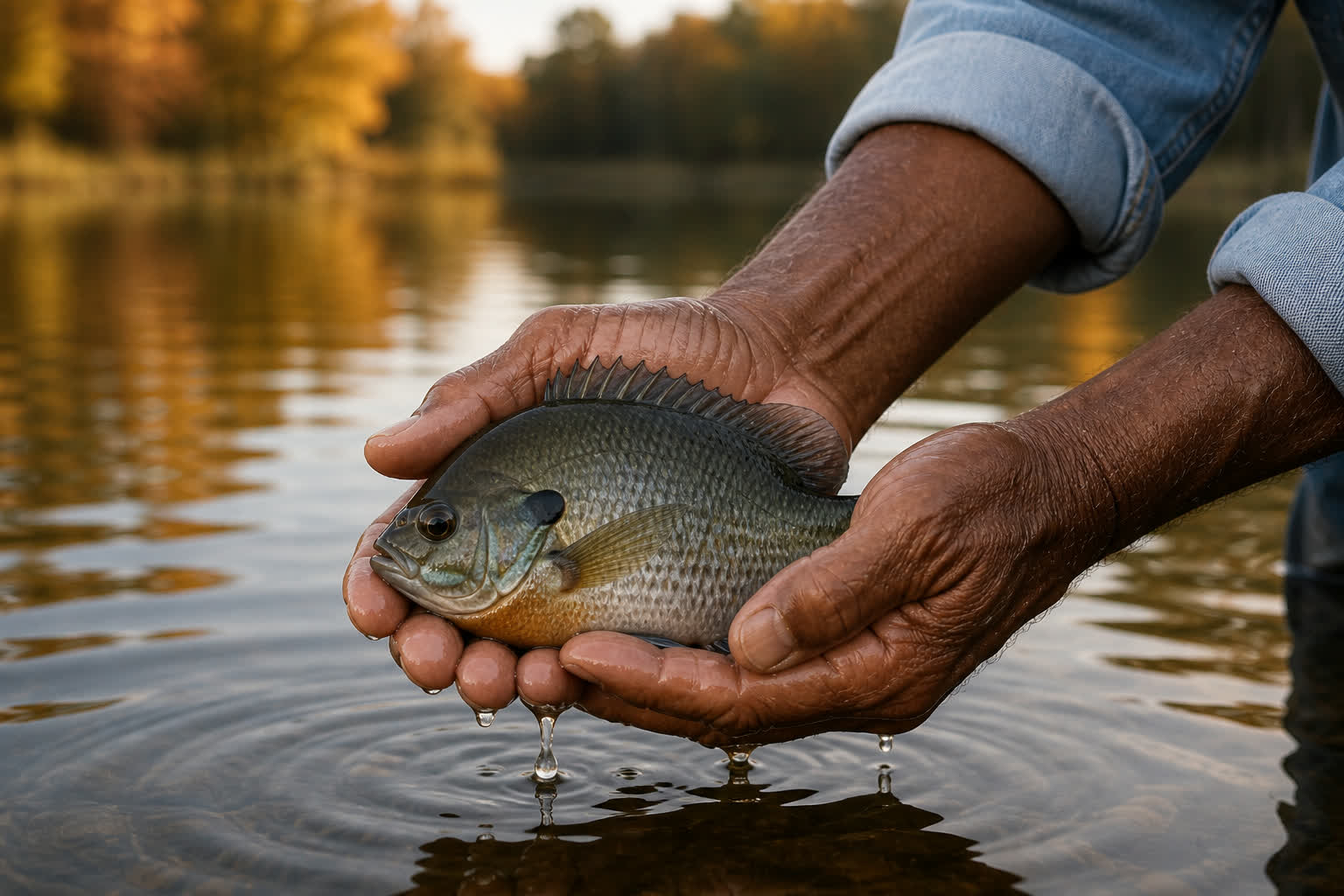
There’s a second thing going on in the fall that’s all to your good. The fish know winter’s coming the same way the squirrels do, and they feed hard to put on fat for the lean months ahead — the old folks called it putting on the feedbag. Bluegill, crappie, bass, catfish, all of them get greedy in the fall in a way they aren’t in high summer.
So when you stack the two together — hungry fish feeding up for winter, coming active in the warm part of a cool day — a bright, mild fall afternoon after a cold night can be some of the finest fishing of the whole year. Not the pretty dawn. The lazy afternoon.
Warm days and warm spells beat cold snaps
Let me put a finer point on the day itself, because not every fall day fishes the same.
The best of them come during a warm spell — two or three mild days in a row will warm the shallows enough to really turn the fish on, and the afternoon of the second or third warm day is money. A sharp cold snap does the reverse: it drops the water temperature, and the fish go quiet and sulky for a day or two until they settle into the new cold. When a hard front has just blown through and the sky’s gone bright blue and cold behind it, that’s the day to stay home and mend line. When a warm, gray, still afternoon settles in after a cold stretch, that’s the day to go.
And the water itself will point you. On any cool day, fish the sunny side of the pond — the north bank that’s been catching the low southern sun all morning warms first, and that’s where the fish will gather. The shaded side stays cold and empty. Follow the sun around the water as the day goes.
The day still gets picked by the signs
Now, the time of day is only half of it. The right day still gets picked the way it always has — by the signs. A falling barometer with a soft gray sky ahead of a warm front will out-fish a bright bluebird day every time, fall or not. The water temperature tells you whether the fish are even active. And the moon is the old tiebreaker my granddaddy never fished without. Those three — the weather, the water, and the moon — pick the day; the warm afternoon picks the hour within it.
If you want to learn to read those three, I wrote the whole of it down in how to read the three signs — start there, then come back and lay the fall’s warm-afternoon rule on top, and you’ll have both halves. That’s the whole almanac in two pieces: the right day, and the right hour.
One plain way to remember it
Let me give it to you the way I’d tell a grandchild, so it stays. In summer, fish the cool. In fall, fish the warm. The heat of a July day drives the fish down and out; the warmth of an October afternoon brings them up and on. Same fish, same pond, opposite clock — and the only thing that changed is what the water needed.
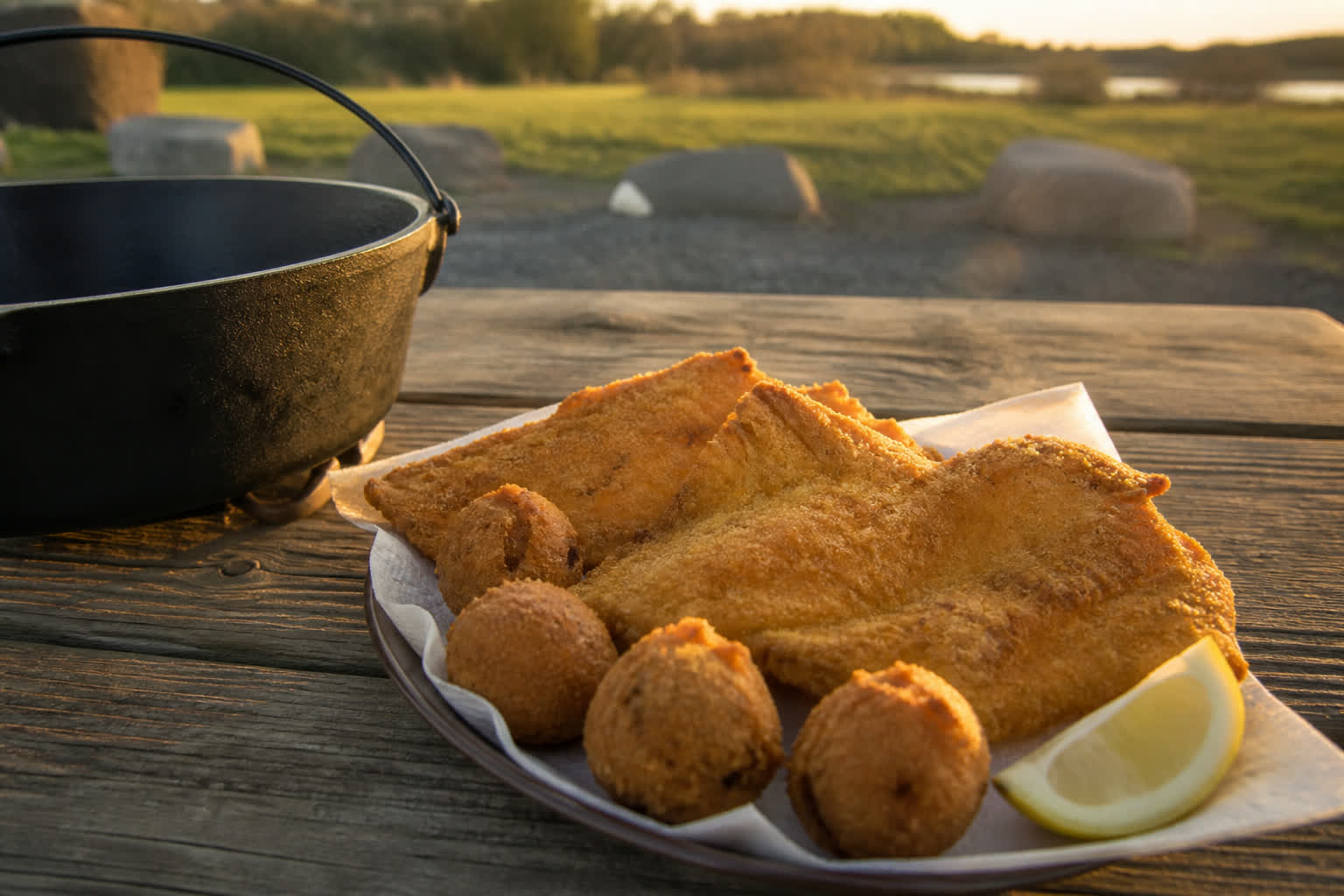
So this fall, sleep in a little. Let the sun get up and warm the shallows, walk down to the sunny bank in the early afternoon with the barometer falling and a warm spell behind you, and fish it hard till the light gets long. That’s the fall pattern, handed down and proven on my own pond more falls than I can count. Come home with a mess of bluegill or a channel cat and have a fish fry while the weather turns — there’s no better way to close out the season.
I keep a little almanac of the best days from my own pond, and I put together a simple one you can use for yours. It marks the best days each month by the moon, with a plain checklist for the barometer and the water, so you can read your own pond the way my granddaddy read his. I give it away free — you can pick up the Best Days to Fish starter kit here. Keep it by the door.
Read the signs. Tight lines — and I’ll see you at the water.
