Best Days to Fish: How to Read the Three Signs
The best days to fish come when three signs line up — the weather, the water, and the moon. Here's how to read all three and stop guessing at the bank.
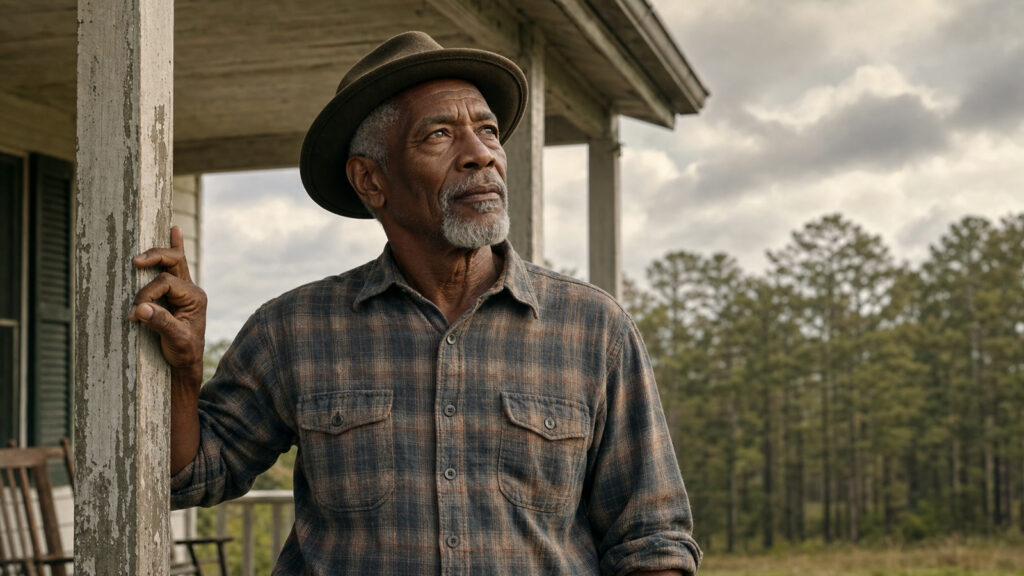
The best day to fish is the day a storm is rolling in, over water that’s warmed past sixty degrees, near a new moon or a full one. Line those three up and the fish feed like they won’t see food again. My name is Silas Whitfield, and I’ve fished the same pond most of my life. My granddaddy taught me to read a fishing day before I ever left the porch — the moon, the weather, and the water. Three signs. No app, no fancy gear, nothing you can’t check with your own two eyes.
Get them wrong and you’ll stand on the bank all day admiring your own patience. Get them right and you’ll wonder why you ever guessed. So let me walk you through all three, the way it was talked to me — starting with the one that matters most, and ending with a gray morning nobody thought I should have fished.
Here’s the thing to understand first, because it makes the rest make sense. A fish doesn’t decide to be hungry the way you and I do. A fish is cold-blooded. The water it lives in sets how fast its body runs, and the weather overhead tells it when to eat and when to lay low. So the fish isn’t really choosing — the water is choosing for it. That’s why some mornings the pond boils and some mornings it’s a mirror. Read the signs, and you’re not guessing anymore. You’re just showing up when the table’s already set.
Sign one: the weather, and a falling barometer
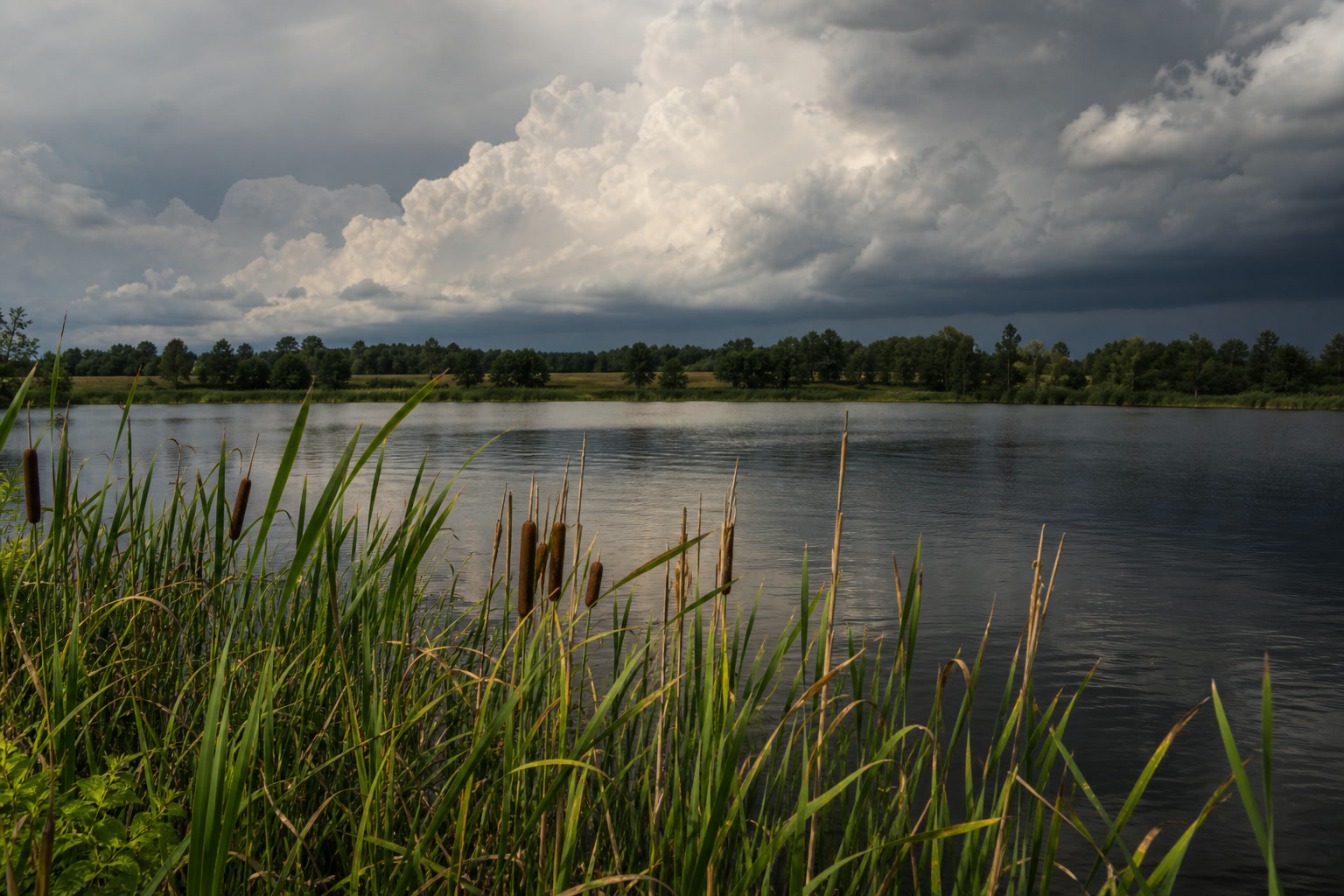
The strongest sign I know is the weather — and more exactly, the pressure in the air. They call it the barometer. When a storm is on its way in, the air pressure starts to fall a day or so ahead of it. The fish feel that drop before the first cloud ever shows, and it turns them on. They feed hard, like they know the weather’s about to shut the kitchen. That falling barometer, with a soft gray sky and maybe a little wind, is about as close to a sure thing as fishing gives you.
Now here’s the other half, the part nobody likes to hear. Once that front sits down on top of you and the sky clears off bright blue and the pressure climbs back up, the fish go off. That gorgeous bluebird day after a storm is the prettiest day to be outside and one of the hardest days to catch a thing.
You don’t need a special tool for this. Any weather app on your phone shows the pressure and which way it’s headed. See that little arrow pointing down, a front coming in a day out? That’s your morning marked.
Sign two: the water, and the sixty-degree line
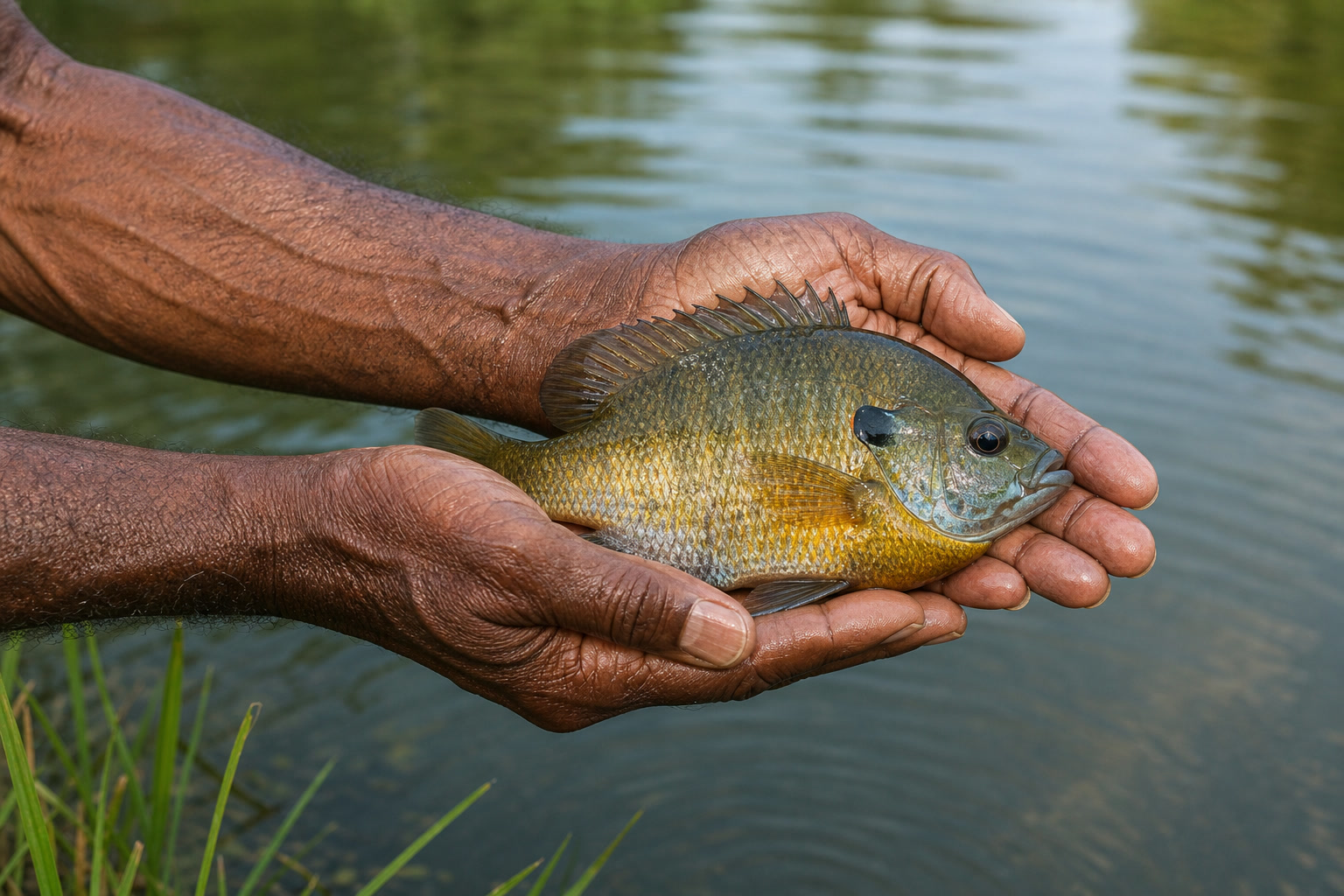
The second sign is the water itself, and for panfish there’s a number worth remembering: sixty degrees. Below sixty, a bluegill’s body is running slow, and he isn’t much interested. Once the water climbs past sixty, something flips — they start feeding, and they’ll take a worm or a cricket like they mean it. Get up around sixty-five to seventy and they move into the shallows to spawn, and that is the finest, easiest bluegill fishing of the whole year. Crappie like it a touch cooler, right around sixty-eight to bed.
You don’t have to guess at this either. A little thermometer costs about ten dollars, and you just dip it off the dock. No thermometer? Then read the season. After the first good warm spell of spring, the shallow water on the sunny side of the pond warms first — that’s where the fish will be, before the deep water ever catches up.
So the barometer tells you the day. The water temperature tells you whether the fish are even home yet.
Sign three: the moon — respect it, don’t worship it
The third sign is the oldest one, and I’ll be honest with you about it, because that’s how my granddaddy was with me. Folks have fished by the moon for as long as folks have fished. Back in 1926, a man named John Alden Knight put a name to it — the solunar theory. The idea is that fish feed heaviest around the new moon and the full moon, and at certain hours when the moon is high overhead or down underfoot. The Old Farmer’s Almanac has printed best fishing days off that notion for longer than I’ve been alive.
Now, is it gospel? No. I’ve seen the studies that looked back over years of catches, and the truth is mixed — some show a little edge near the full moon, some show hardly any. So I don’t sell you the moon as a sure thing. I use it as a tiebreaker. When the barometer and the water both say go, and the moon’s near full or new on top of that, that’s the day I clear my whole morning for. When the moon’s the only thing in my favor and the weather’s against me, I stay home and mend line. The moon is the oldest layer of the almanac. Respect it; don’t worship it.
The three signs pick the day — the sun picks the hour
So the three signs pick the day. The sun picks the hour. On just about any warm-water pond, the fish feed best in low light — that first hour after sunup and that last hour before dark. The sun’s not glaring down into the shallows, the water’s cooler, and the fish come up out of the deep to eat where you can reach them. Midday, under a high bright sun, they’ll ease back down and wait.
So you stack it: the right day by the three signs, and then the right hour, at first light or last. That’s why my granddaddy had me on the bank before the birds — not because he was in a hurry, but because that’s when the table was set.
One plain rule to keep it straight
Let me put it in one plain rule, the way I’d tell a grandchild. One sign is a maybe. Two signs pointing the same way is a good bet. All three is the day you don’t miss.
Here’s a real one. Say the app shows a front rolling in tomorrow afternoon, pressure falling all morning. We’ve had a warm week, so the shallows are sitting at sixty-four, and the moon’s three days off full. That’s all three. I’d be on the bank at first light with a cooler I actually believe I’ll fill, and I’d fish hard right up until that storm got close.
And the other side of the rule matters just as much. When the signs are against you — bluebird sky, a cold snap dropping the water back into the fifties, no moon to speak of — the wisest thing an old fisherman does is stay home. There’s no shame in it. You’re not failing to catch fish; you’re refusing to waste a morning. Knowing when not to go is half of reading the signs.
Let me finish with that gray morning I promised you. I was maybe ten. The sky was low and mean, and every neighbor we had said it was a foolish day to fish. My granddaddy looked at that falling sky, and he looked at me, and all he said was, “Get your poles.” The barometer was dropping. The water had been warm a week. And there was a full moon behind all that cloud. He didn’t have the words barometer or solunar — he just knew the signs. We came home with the cooler full and had a fish fry that night, while the neighbors who stayed dry caught nothing but supper out of a can.
That’s the whole thing. It was never luck, and it was never a secret. It’s three signs anybody can learn to read — the weather, the water, and the moon — and the patience to go when they line up and stay home when they don’t.
I keep a little almanac from my own pond, and I put together a simple one you can use for yours. It marks the best days to fish each month by the moon, with a plain checklist for the barometer and the water, so you can read your own pond the way my granddaddy read his. I give it away free — you can pick up the Best Days to Fish starter kit here. Keep it by the door, and you’ll stop guessing.
Read the signs. Tight lines — and I’ll see you at the water.
