The Best Potting Mix for Container Vegetables
The potting mix I actually use for container vegetables, why bagged garden soil ruins pots, and how to feed a mix through a whole growing season.

The first year I grew vegetables in containers, I filled every pot with bagged garden soil because it was cheaper than the potting mix and I figured dirt is dirt. It is not. By July the soil in my pots had compacted into something close to brick, water sat on top for a full minute before it went anywhere, and my tomatoes sulked the whole summer.
A pot isn’t a garden bed. It’s a closed little world with no earthworms, no deep soil life, and no room for roots to go looking for what they need. What you fill it with matters more in a container than it ever does in the ground, and after six seasons of balcony and patio growing, I’ve landed on what actually works.
Here’s the short version: skip garden soil entirely, start with a real potting mix, and feed it through the season instead of expecting one bag to do all the work.
Why garden soil fails in a pot

Garden soil is built to be part of a much bigger system. In the ground, it drains sideways and down into subsoil, worms tunnel through it, and roots can travel a foot in any direction looking for water. None of that exists in a 5-gallon container. Garden soil in a pot compacts under its own weight, drains poorly, and often carries weed seeds and soil-borne disease you didn’t have before.
A real potting mix is built differently on purpose. It’s mostly peat or coir, plus perlite or vermiculite for air pockets, so it stays loose and drains fast even packed into a container. Loose and fast-draining is the whole job. Roots need oxygen as much as they need water, and a mix that stays fluffy is what makes that possible in a space that small.
The mix I use for planted containers

For anything already growing — tomatoes, peppers, greens, herbs in their forever pot — I reach for Espoma’s Organic Potting Mix. It’s peat-and-perlite based with a modest starter charge of compost and myco boost, light enough that a 14-inch pot doesn’t strain my back to move, and it hasn’t compacted on me by August the way a cheaper bag did my first year.
One bag of potting mix is not one season of nutrition. That starter charge feeds a plant for maybe four to six weeks. After that, the mix itself has almost nothing left to give, and this is the part most first-timers miss — they blame the plant, or the weather, when the truth is the soil ran out of food in July and nobody topped it up.
Seed-starting wants a different, finer mix
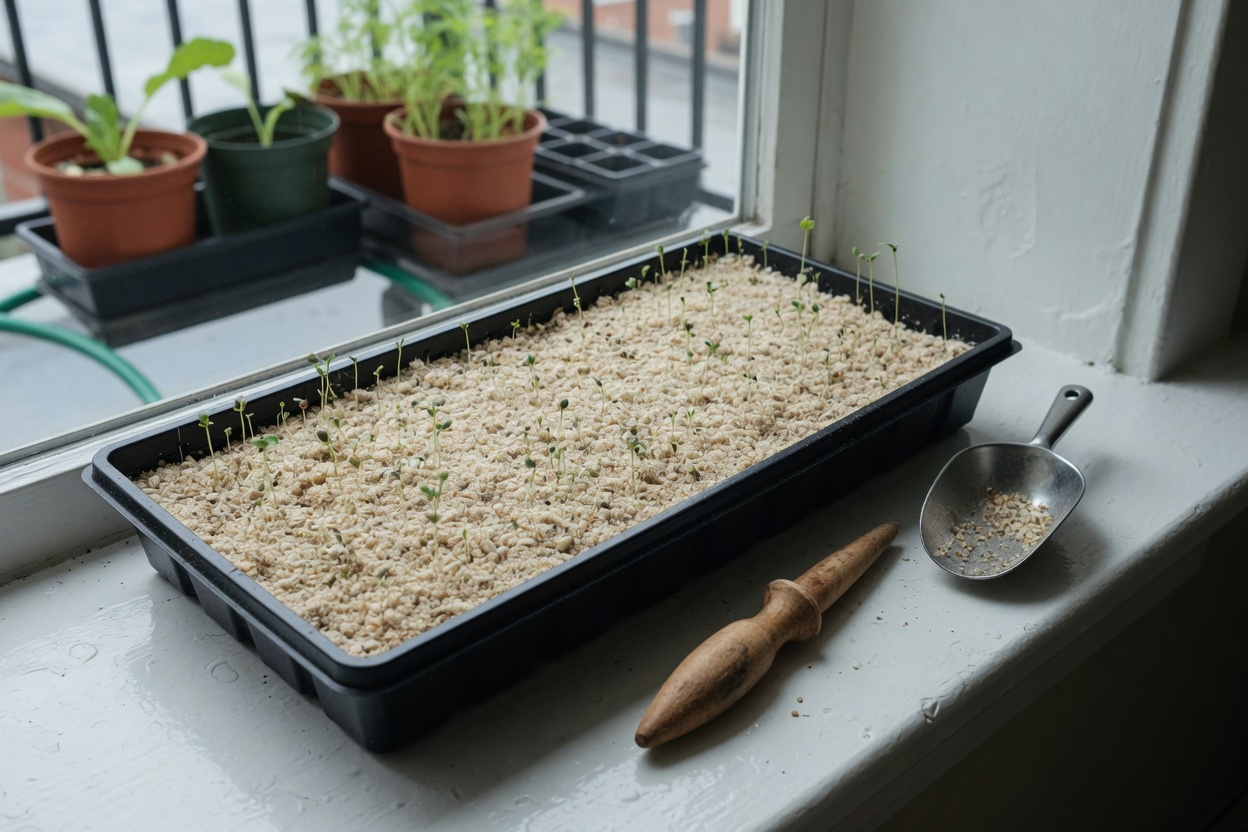
If you’re starting from seed instead of transplants, don’t use the same bag. Espoma’s Seed Starter mix is finer and lighter than the potting mix, which matters for two reasons: a fussy little root system can push through it easily, and the finer texture holds even moisture around a seed instead of drying out in patches the way a chunkier potting mix will.
I start tomatoes and peppers in the seed-starter mix in cell trays, then bump them up into the regular potting mix once they’ve got their first true leaves and a root system that can handle the coarser texture. Using seed-starter mix in the final pot works fine too — it’s just finer than it needs to be for a mature plant, and it holds moisture a little too well once roots fill out a full container.
Feed the mix, don’t just plant into it

Since a bagged mix runs out of food fast, I feed on a schedule instead of waiting for a plant to look hungry. Every four to six weeks, I work a small handful of Espoma Garden-Tone into the top inch of soil and water it in. It’s a slow-release granular, not a liquid feed, so it doesn’t spike and fade the way some quick feeds do — it just keeps giving a little at a time, which suits how often I actually remember to feed anything.
Link the Lawn & Garden fertilizer, not the grocery-shelf version of the same brand. Some Espoma products exist as both a garden-center item and a grocery-store item, and the two aren’t priced or packaged the same. Buy the L&G-listed one; it’s the version made for exactly this job.
What I’d skip

I don’t bother with mixes marketed as “moisture control.” They hold water evenly, which sounds good until you get a cool, cloudy week and the mix stays wet for days — that’s how I’ve rotted more than one pepper’s roots. A plain mix plus attentive watering beats a moisture-control mix plus inattentive watering, every time.
I also don’t reuse a full season’s worth of spent mix as-is the next year. It’s compacted some and lost most of its structure, so I mix it half-and-half with fresh mix rather than throwing it out entirely — a decent middle ground between wasteful and cheap.
Once you’ve got a mix and a feeding rhythm, the actual fertilizing schedule is worth reading next, and if you’re not sure whether your pots are drying out or staying too wet, a soil moisture meter answers that question faster than poking a finger in the dirt ever will.
I go through my whole container setup — mix, pots, feeding, the works — in Small-Space Big Harvest. This post is the soil. The book is everything you grow in it.
