How to Plan a Holiday Fish Fry the Whole Family Loves
How to plan a holiday fish fry for a crowd — how much fish to catch and freeze ahead, the cornmeal method, the sides, and the timing to get it right.
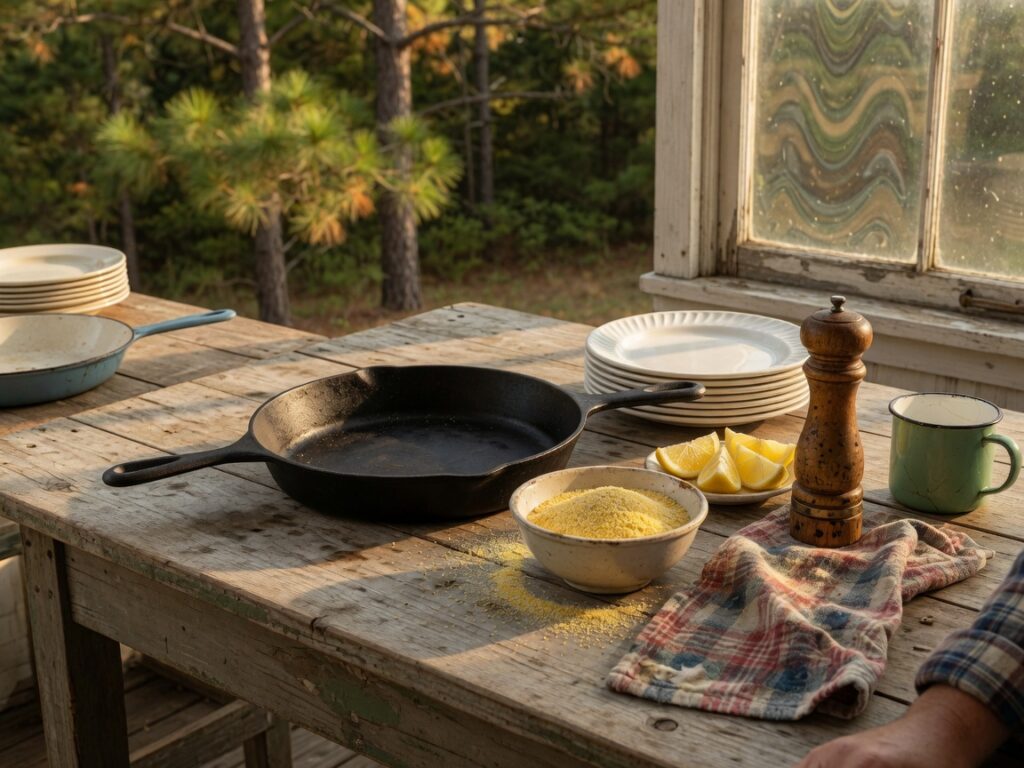
A holiday table with a platter of fish you caught yourself in the middle of it is a particular kind of pride, and it’s the way I’ve fed my family and my church at the year’s big days for longer than I can rightly count. A holiday fish fry isn’t hard, but feeding a crowd is different from frying a mess of bream for two. It wants a little planning ahead of time. My name is Silas Whitfield, and I ran the Friday fish fry at my church for years — let me walk you through hosting one for the holidays so it comes off easy, and so you get to sit down and eat too.
The whole thing comes down to four honest questions: how much fish, gotten how far ahead, cooked how, and served with what. Get those settled and the day takes care of itself.
First, how much fish you’ll need
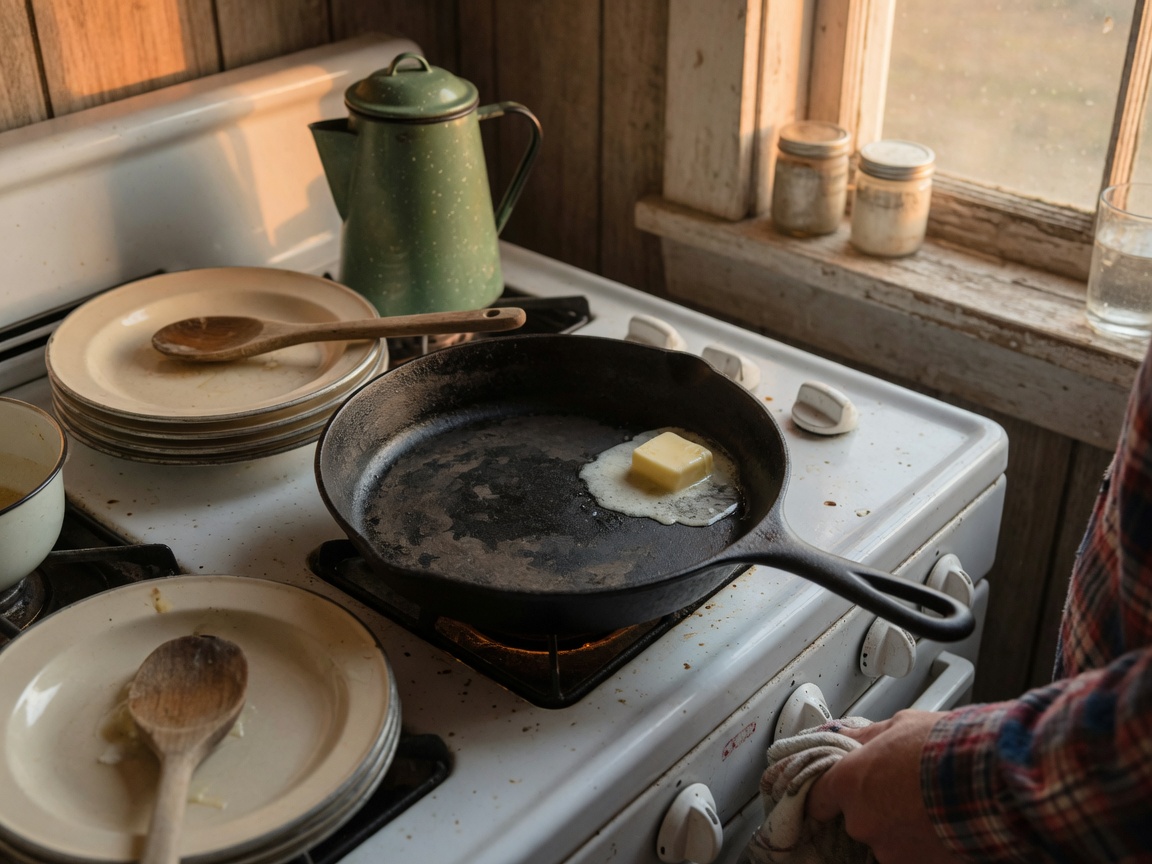
The mistake I see most is folks not catching enough and running short right when the second plate comes around. Plan on about a half to three-quarters of a pound of cleaned fillets per grown person, a little less for the children, and a little more if a fish fry is the whole meal rather than one dish among many. A table of a dozen adults, then, wants somewhere around six to eight pounds of cleaned fish. It’s better to have a pound left over — it freezes fine and never goes to waste — than to watch a hungry cousin eye an empty platter.
Panfish give up less meat than their size looks like, so count generously. It takes a good number of bluegill and shellcracker to make a platter, while a few decent channel catfish go a long way. I like a mix on the table — the sweet, delicate bream and the firmer catfish both, so everybody finds what they favor.
Catch and put it up ahead — don’t count on the day before
Here’s the part that separates an easy holiday from a frantic one: you catch a holiday fish fry over weeks, not the afternoon before. The weather does what it wants near a holiday, and you don’t want your whole supper riding on one cold, bright, dead-water morning when the fish won’t bite.
So I fish the good days as they come in the weeks ahead, and I put the catch up in the freezer as I go. Clean each batch soon after you’re off the water — if you’re new to that part, my post on how to clean a fish for beginners walks it through. Then get it into the freezer quick, sealed tight against the air; fish under water in a jug or a good freezer bag keeps clean-tasting for a couple of months, well long enough to catch across a fall and fry at the holidays. Label each bag with the date, because you will not remember. If you keep or manage a pond, laying in a winter’s fish is exactly what it’s for — I go into that in how to stock a farm pond for the freezer.
Set the fish out of the freezer to thaw in the refrigerator the night before, never on the counter in a warm kitchen. Thawed slow and kept cold, it fries up nearly as fine as fresh.
The method, scaled up for a crowd
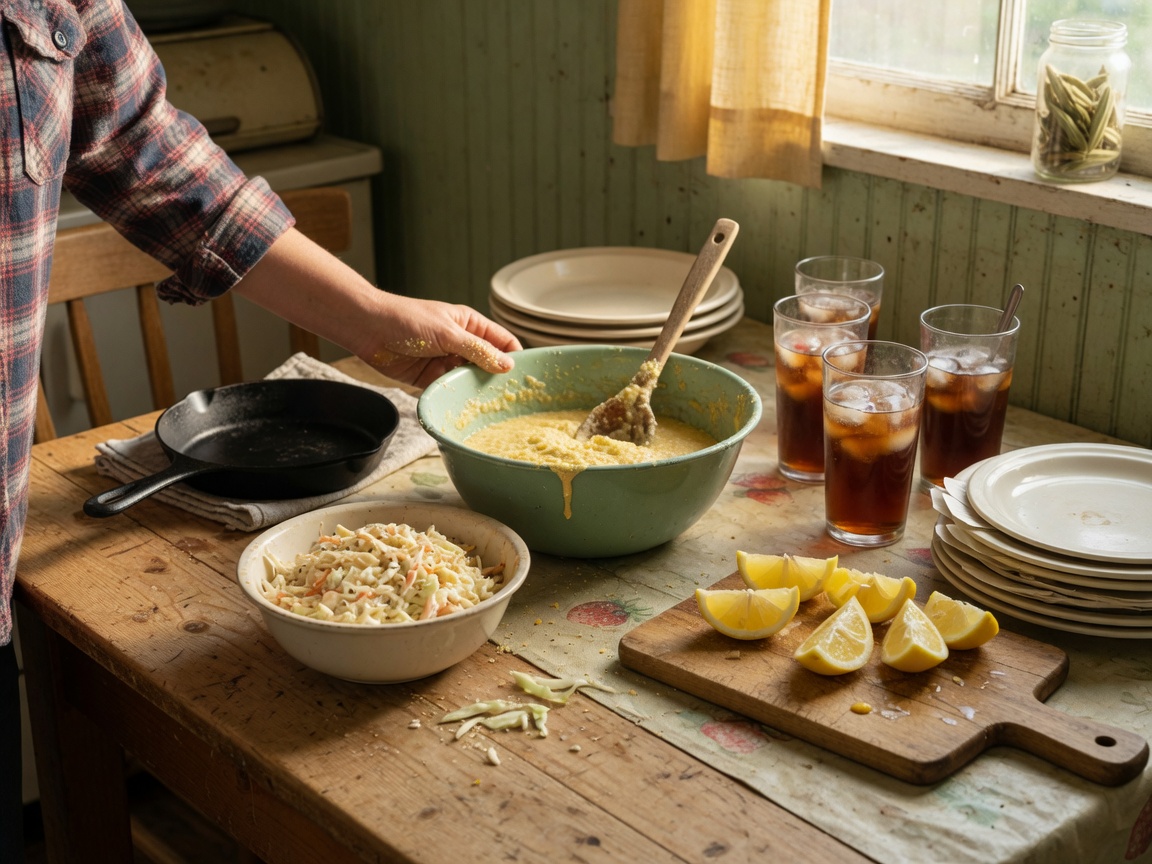
The fry itself is the same plain Southern method whether you’re cooking for two or twenty — cornmeal, hot oil, cast iron — I lay the whole thing out in how to fry fresh-caught fish. What changes for a crowd is how you manage it, and there are three things worth knowing.
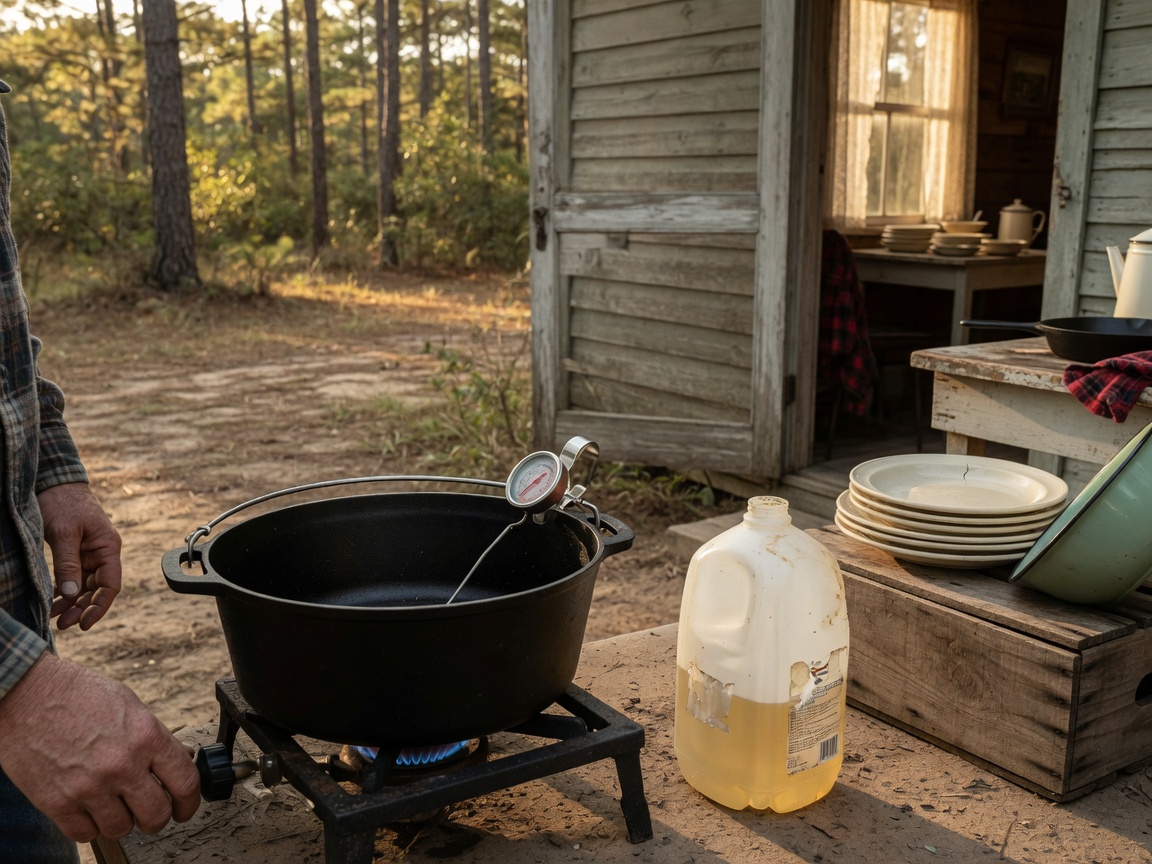
First, cook outside if you can. For a big fry I set up a burner and a heavy pot out in the yard, away from the house. It keeps the frying smell and the heat out of the kitchen, it gives you room to work, and it makes the fry part of the gathering instead of a chore you disappear to do alone. A steady cast-iron pot or a deep heavy kettle holds its heat best for batch after batch.
Second, coat everything before the oil’s hot, and keep the oil steady. Dredge all your fish in the seasoned cornmeal ahead and lay it out on trays so you’re not fumbling once you’re cooking. You’re after 350 to 375 degrees, and the enemy of a crowd fry is crowding the pot — three or four pieces at a time, no more, or the oil temperature crashes and everything comes out greasy at once. Patient batches. It goes faster than it sounds once you find the rhythm.
Third, hold the cooked fish warm without steaming it soft. Set the fried pieces on a rack — not a closed pile, which traps steam and ruins that crust you worked for — in a warm oven, around 200 degrees, while you finish the rest. Then everybody eats at once. Fried fish is at its glory the minute it leaves the pot, so time it to come off close to when you sit down.
The sides that make it a holiday
Fish alone is a meal; fish with the trimmings is a holiday. The classics earn their place. Hushpuppies first and always — that same cornmeal batter, a little onion, dropped in the same hot oil, and they’ll vanish faster than you can fry them. Then coleslaw for the cool and the crunch against the hot fish, and I like a pot of something starchy and filling — potato salad, or grits, or fries for the young ones.
Round it out with lemon wedges, a hot sauce and a tartar for those who want it, and plenty of sweet tea. None of it is fancy. That’s the point. A fish fry is honest food that says sit down, there’s plenty, and the sides should carry the same plain generosity as the fish.
Plan it so you get to enjoy it too
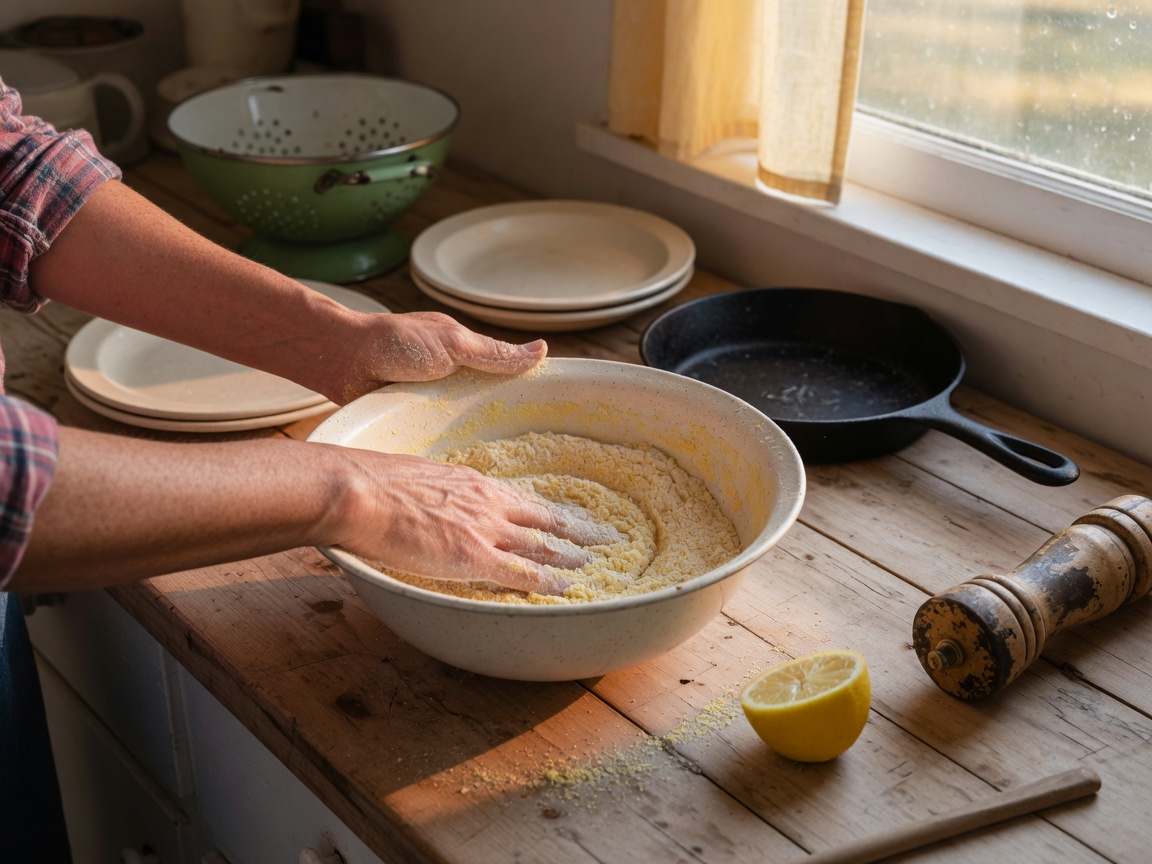
The last piece of planning is the one hosts forget: leave yourself out of the frying pan long enough to visit. Catch and freeze ahead so the day itself is only thawing and frying. Dredge and prep the sides in the morning. Get a family member on hushpuppies and another on drinks. And put the children to work breading fish with clean, dry hands — well back from the hot oil, but part of it — because that’s how the whole tradition gets handed down. The fish fry was never really about the fish. It was about the people gathered around it.
If there’s a young angler at your table, the best gift you can give is a day on the bank before the fry — and a place to set down what they caught. I made a little journal for exactly that, a spot for a child to record their first fish and where they landed it; you can find My First Catch here. And since a holiday fry starts weeks earlier with the catching, catch on the days the fish are actually biting — I keep a little almanac of my own pond marking the best days by the moon, with a plain checklist for the water and the weather, and I put together a free one you can use for yours. Pick up the Best Days to Fish starter kit here, and read the whole method in my post on reading the three signs.
Plan ahead, fill the freezer on the good days, and get the pot hot when the family’s gathered. Read the signs — and I’ll see you at the water, and at the table.
