What to Forage in the Pacific Northwest This Winter
What to forage in the Pacific Northwest in winter — the conifer needles, rose hips, usnea, chickweed, and licorice fern I still gather in the cold months.
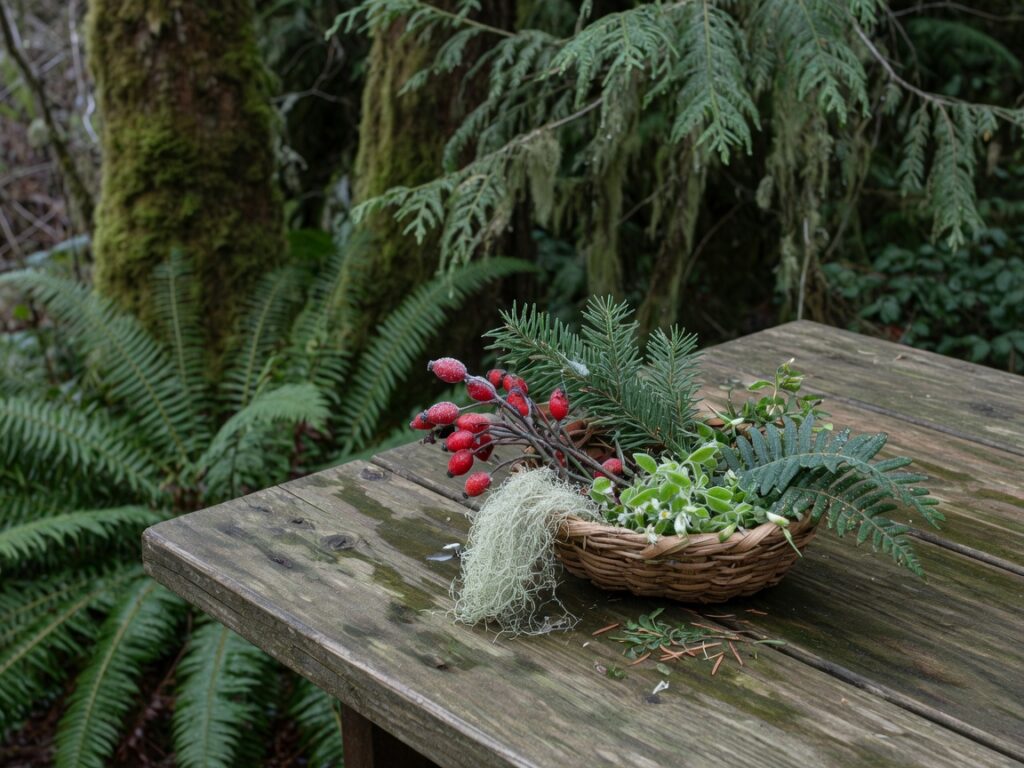
Most people hang up the basket after the last of the fall berries come in, and I understand why. The trailheads are wet, the light is gone by four, and the woods look, from a warm window, like they’ve closed for the season. They haven’t. Winter is the leanest foraging of the year here, but it isn’t empty — the evergreens are green for a reason, and a handful of things I count on carry right through the dark months on the rain-shadow side of the Olympics.
What follows is what I go out for from December into February, on my acreage outside Sequim and along the wet forest edges. A short, honest list a beginner can learn with certainty in the cold, when there are fewer green things around to confuse you — each with how I know it and what I do with it once it’s home.
One rule first, and I’ll say it plainly because you’re an adult: never eat or use a wild plant on the strength of a book, an app, or a single source. Confirm it against more than one reputable guide and, better, an experienced local who can put it in your hand. When in doubt, throw it out. Nobody ever regretted skipping a plant — and in winter, when the edible conifers grow within reach of one that will kill you, that rule earns its keep.
You’ll also want clean glass jars for tea and syrup. I reuse wide-mouth canning jars I already have rather than buying new, so I won’t send you off for those — anything with a good lid that seals will do.
Conifer needles, and the one tree you must never confuse
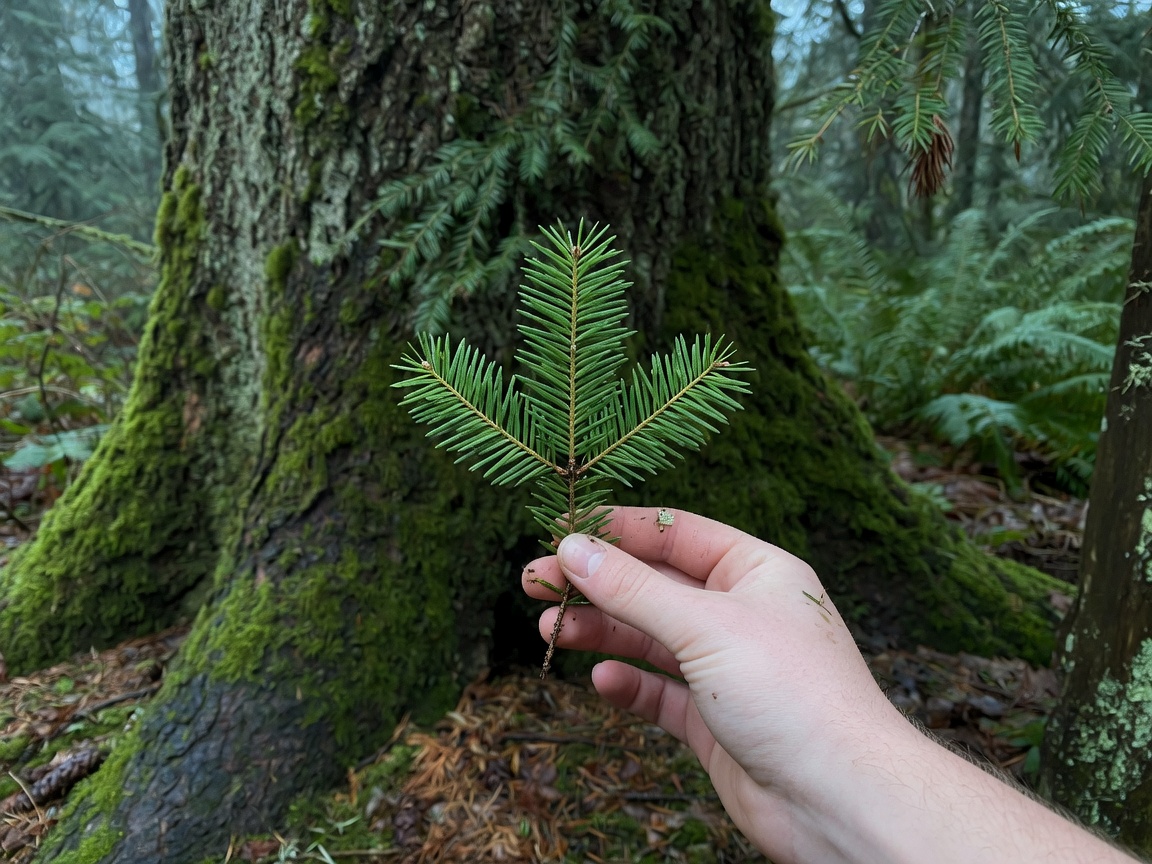
The winter forage I reach for first is right over your head. Douglas fir (Pseudotsuga menziesii), western hemlock (Tsuga heterophylla), and grand fir (Abies grandis) all keep soft, bright needles through the winter, and a small handful steeped in hot water makes a pale, resinous, citrusy tea that people on this coast have drunk against the long wet months for as long as anyone has lived here. Grand fir needles smell of tangerine when you crush them; Douglas fir is greener and sharper. Pick the newest growth you can reach, a small amount from any one tree, and steep — never boil — the needles for ten minutes, then strain through cheesecloth.
Here is the hard line, and it is not optional. *Yew (Taxus brevifolia) is deadly, and it grows in these same woods.* Every part of it but the red fleshy aril is poisonous, and its needles can look, to a hurried eye, like a fir’s. The tells: yew needles are soft, flat, dark green, and end in a small sudden point, set in two flat rows, and the tree bears no woody cones — only those single red berrylike cups. If you cannot tell a fir from a yew with total certainty, do not make needle tea. Learn this one before you need it. Pregnant women should skip conifer-needle preparations entirely, and I’ll leave the rest of the traditional talk at that — it’s a plain winter tea in my kitchen, and that’s all I’ll claim for it.
Rose hips, still hanging after the freezes
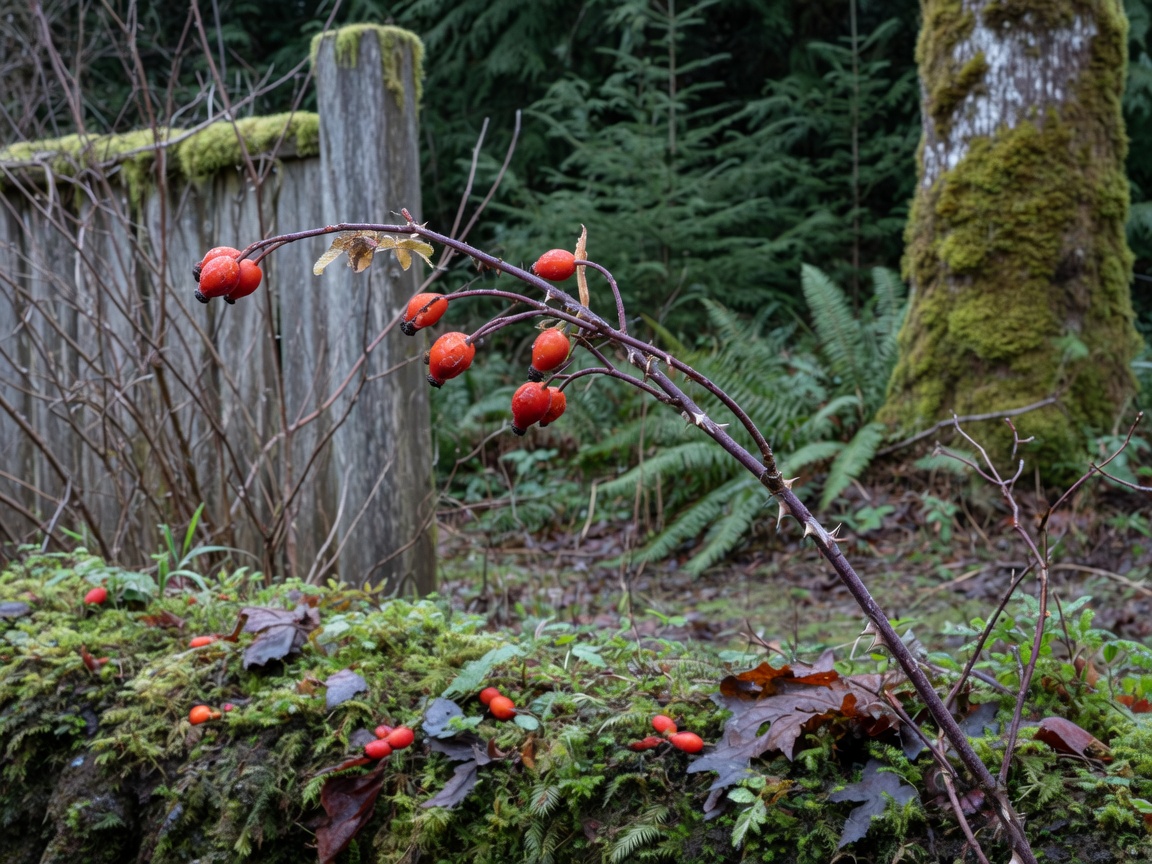
The rose hips I told you to gather in fall don’t all vanish. On the native Nootka rose (Rosa nutkana) and the naturalized dog rose (Rosa canina) along fence lines and forest edges, plenty of fat red-orange hips hang on well into winter, and repeated hard frosts only soften and sweeten them. A firm, deep-red hip with the dried sepals still clinging to the far end is the one you want; pass the black, mushy, or moldy ones by.
Split each hip and scrape out the seeds and the fine internal hairs — that’s the fussy part, and it matters, because the hairs are an irritant. What’s left dries for a tart winter tea or cooks down with a little water into a syrup, strained through cheesecloth to catch the last of the seeds. I keep mine cold and use it within a few weeks. Missed the fall window? This is your second chance — full method in my post on foraging and using rose hips.
Usnea, blown down by the winter storms
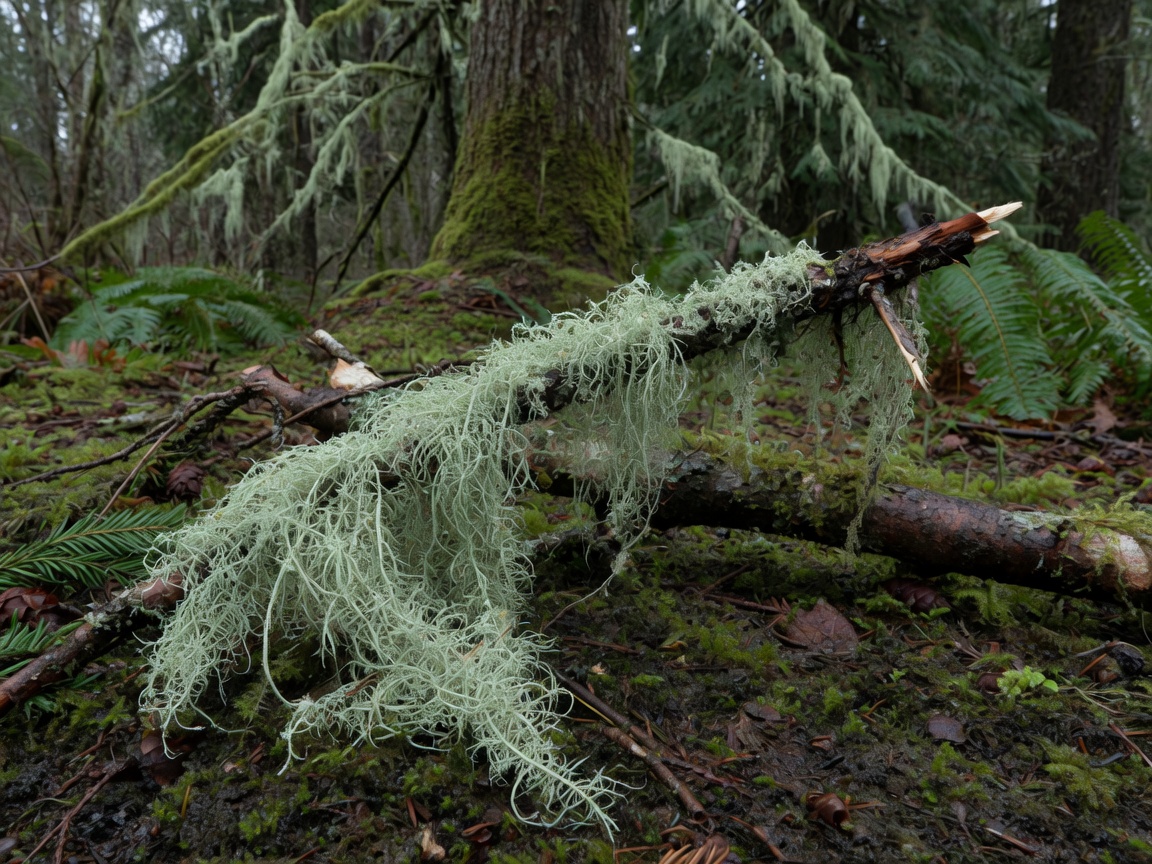
The winter windstorms do my gathering for me. Usnea (Usnea species), the pale gray-green beard lichen that hangs off firs and old apple trees, comes down all over the ground after a good blow, so there’s no need to strip it from a living branch — take what the wind already gave you. The test is the tell: pull a strand slowly and a fine white elastic thread stretches inside the gray sheath before it snaps. That white core is how you know true usnea from the look-alike beard lichens that lack it.
I collect the cleanest fallen strands, pick out the twigs and bark, and dry it thoroughly for the shelf. Usnea has a long history in folk practice; I gather it, dry it, and keep it, and I’d point you to more than one good guide before you do anything further with it. I put up more of what I found this way than I’d like to admit the first year I tried to strip it wet off the branches — let the storm do the work. More on it in my post on foraging and using usnea.
Chickweed, the green that grows through a mild winter
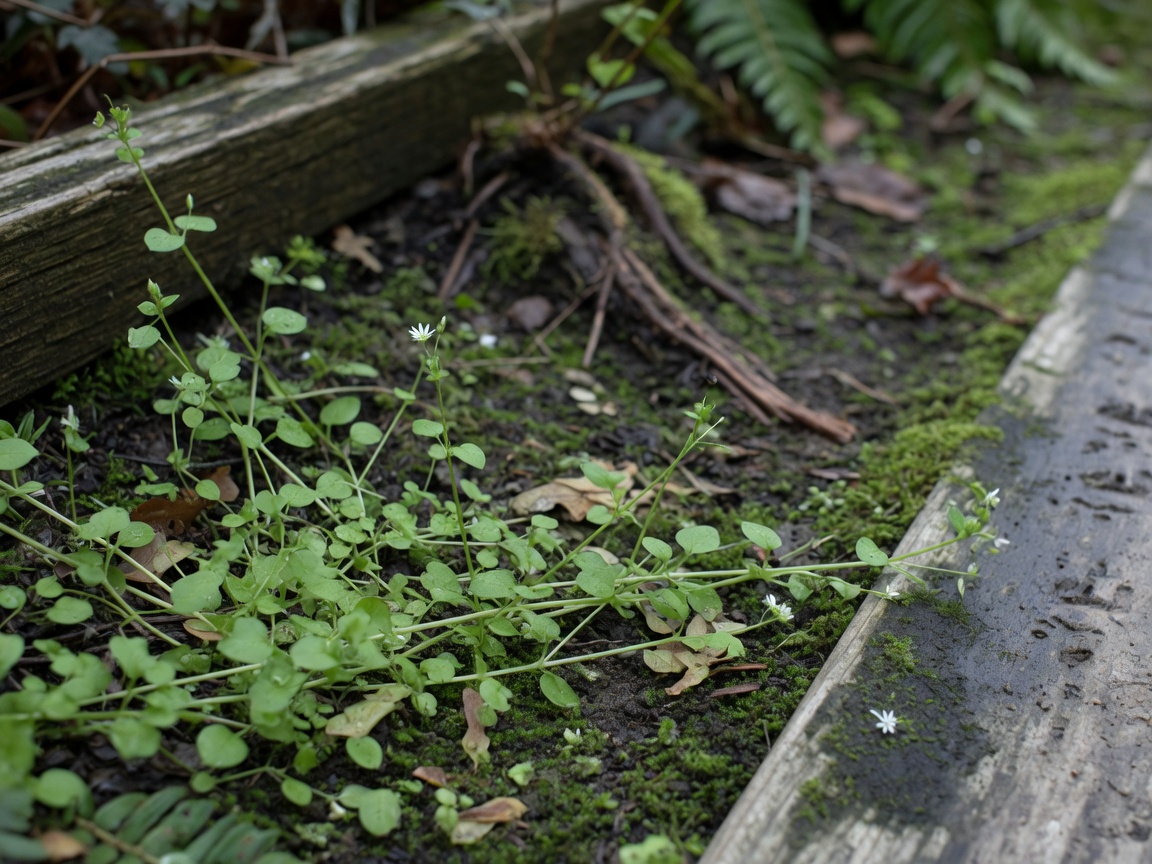
In our lowland winters, which rarely stay frozen for long, chickweed (Stellaria media) keeps growing right through — a low, sprawling mat of small oval leaves and tiny five-petaled white flowers, tucked in the damp shade of a garden edge or a fence line. It’s one of the few genuinely fresh greens you can gather in January here, mild and a little like corn silk, good raw in a winter salad or wilted into eggs.
The ID cue that keeps you honest is the single line of fine hairs running up one side of the stem, switching sides at each pair of leaves, and the stretchy inner core the stem shows when you pull it apart gently. There are lookalikes in the pink and spurge families, so confirm those tells before you eat it. Chickweed is a common lawn weed doing an uncommon thing — feeding you in the off season.
Licorice fern, on the mossy maples
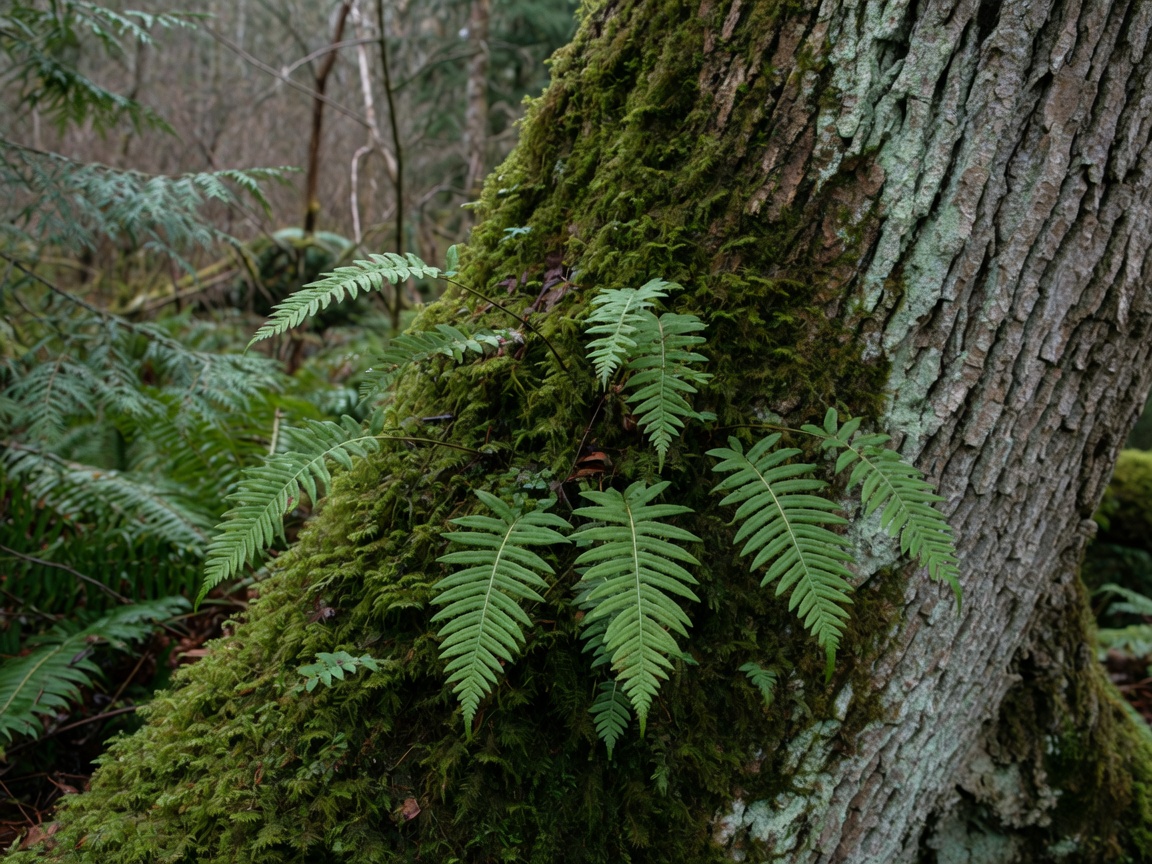
The last one grows where nothing else seems to want to in winter: on the mossy trunks and limbs of bigleaf maple (Acer macrophyllum), and sometimes on old stumps, a small fern (Polypodium glycyrrhiza) that greens up and thrives in the cold wet while the ground ferns die back. What people go to it for is the thin creeping rhizome that runs through the moss — scrape the surface clean and it’s genuinely, surprisingly sweet, with the taste its name promises.
The Coast Salish peoples of this coast, including the S’Klallam, used licorice fern rhizome long before any settler wrote it down; I learned about it from books, and I credit Nancy Turner’s Food Plants of Coastal First Peoples, a careful and Tribe-collaborative source worth your time. Take only a short length of rhizome from the edge of a healthy patch, leave the fern and most of its root to keep growing, and press the moss back down when you’re done. I chop a little and add it to a winter tea for the sweetness, or infuse it in jojoba oil with other winter bits for the salve shelf. Traditional use, gathered gently — that’s the whole of what I’ll say.
Turning a winter’s gathering into something that keeps
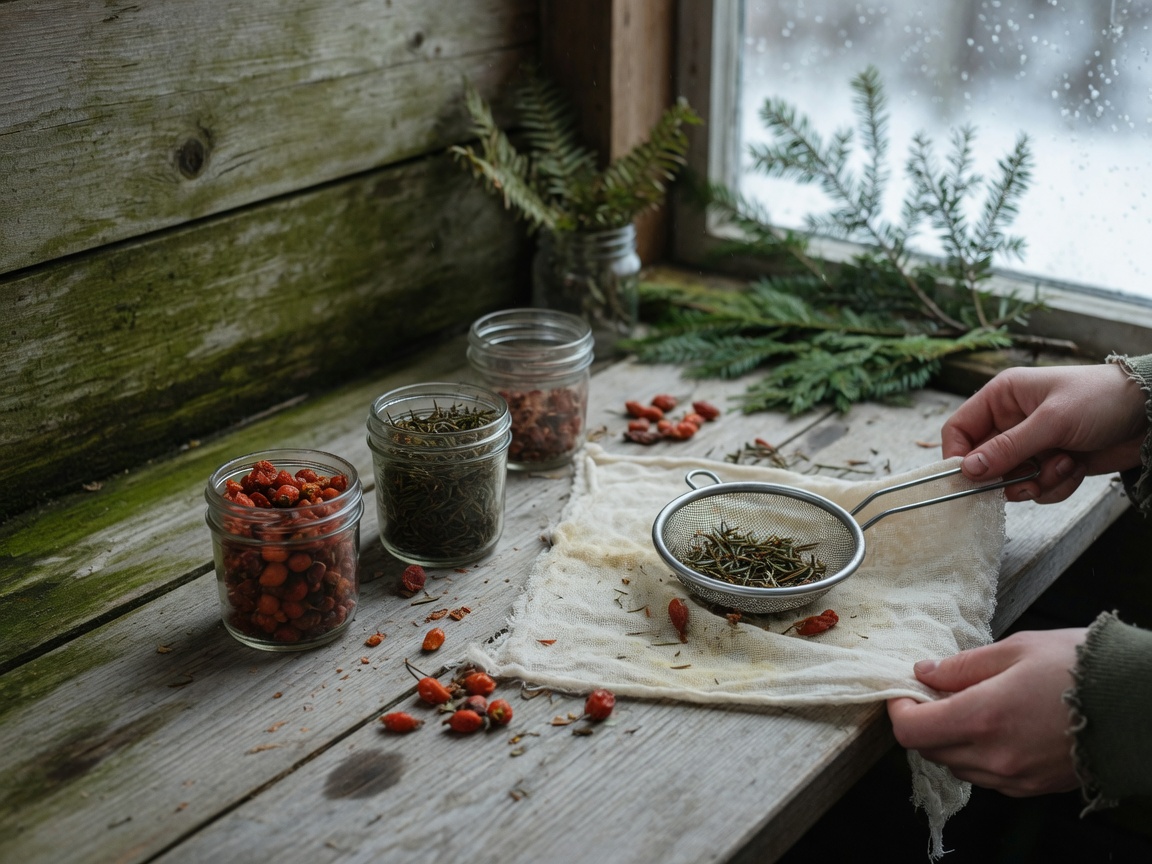
Winter forage is small and wet, and wet is the enemy of a shelf. Dry your rose hips and any needles you mean to keep in a single layer, out of direct heat, until they’re truly hard — anything stored soft grows mold, not medicine. Store dried material in clean jars in the dark, and use teas and syrups within a few weeks, kept cold. I go deeper on this in my post on storing dried herbs so they last.
For the resinous bits — the conifer, the licorice fern — I go the salve route while I’m indoors anyway. Warm the strained infused jojoba oil gently, melt in beeswax pellets at about an ounce of wax to a cup of oil, pour it into two-ounce tins, and label each with the plant and the date. You will not remember in six months — I promise you that. A row of winter tins and jars on a dark shelf is the quiet reason I still pull on my boots when the rest of the county has given up on the year.
Which plant, gathered when, and every honest caution about the ones that look alike — the yew most of all — is the part that takes longer than one post, and it’s the part I care most about. I put all of it into my book, Pacific Northwest Medicinal Plants: 115 wild plants of this coast, how to know each one without guessing, when to gather it, and how the generations before us used it. Winter is short on daylight and long on indoor time — the book is how you get ready for the green months coming.
