How to Forage and Use Usnea (Old Man’s Beard Lichen)
How to forage usnea, the pale hanging lichen PNW foragers call old man's beard — the one elastic-cord ID test that settles it, ethical harvest, and traditional use.
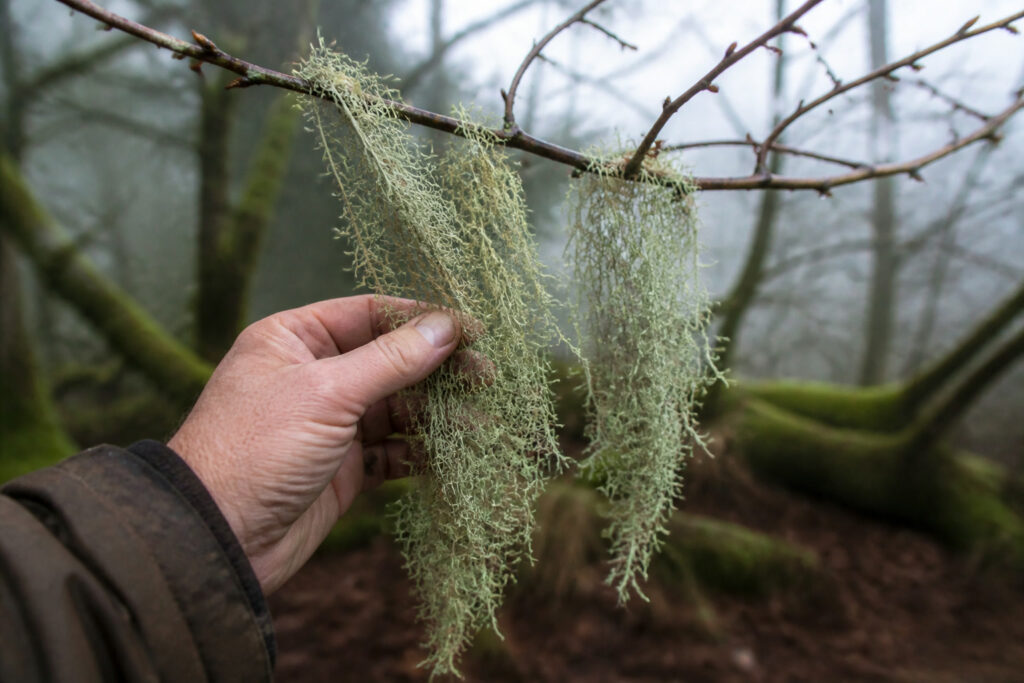
Winter is when I actually see it.
The pale green-gray beards of usnea hang off the branches all year, but in a wet Olympic Peninsula winter, when the alders and the old apple trees are bare and the wind has thrown a season’s worth of it down onto the moss, it’s suddenly everywhere you look. Usnea – old man’s beard, tree moss, the whole loose family of them – is one of the first things I put in a cold-weather forager’s hands, because you don’t have to fight brush or dig frozen ground to gather it. You mostly have to look down after a storm.
But usnea comes with two lessons that matter more than the gathering does, and I want to get them in early: there is one identification test you must do every single time, and there is a right way to take it that leaves the woods better than a wrong one. I’ve picked this lichen off the ground below the same stand of trees behind my place near Sequim for close to thirty winters, and it’s still thick, because I have never once stripped it from a living branch.
One thing I can’t hand you a good link for yet: a wide-mouth glass jar to macerate in, and a little amber dropper bottle for the finished tincture. Any clean pint jar from the pantry does the maceration, and a plain dropper bottle from the pharmacy holds the result – I just won’t point you at a listing I haven’t stood behind myself.
The one test that settles it: pull it apart
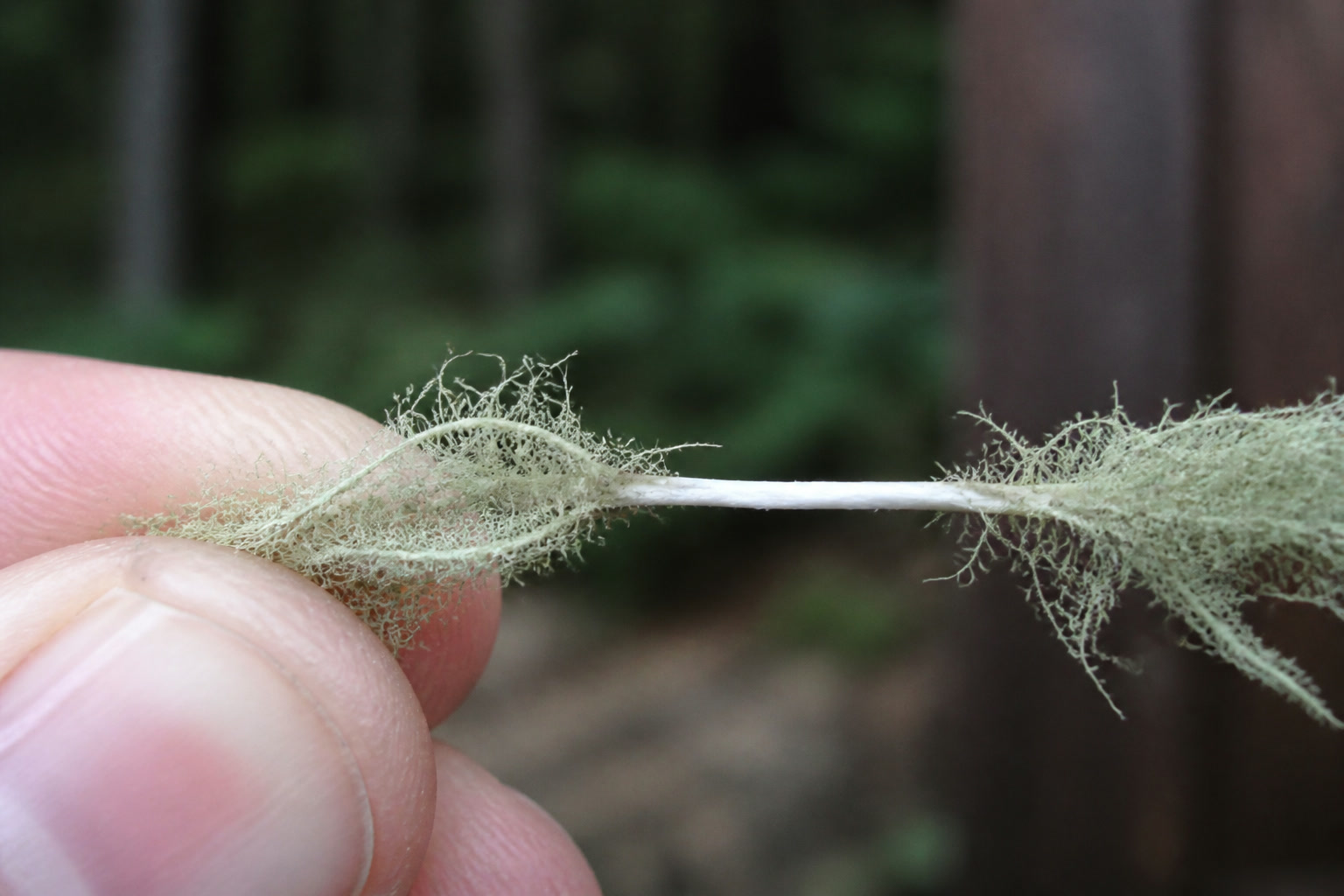
There are a handful of pale, hairy, hanging lichens on Pacific Northwest trees, and to a beginner they blur together. Usnea is the one with a secret in the middle, and finding it is the whole identification.
Take a single strand between your fingers and pull it slowly apart, lengthwise. If it’s usnea, the outer fuzzy sheath splits to reveal a tough, white, elastic central cord – like the stretchy core inside an old bungee. It stretches a little before it snaps. Nothing else that looks like usnea has that white rubbery thread running down the center. The look-alikes – the various Bryoria and Alectoria, the brittle horsehair lichens – pull apart to nothing but the same color all the way through, no cord.
Say this part with me, once, plainly, the way I say it about every wild thing: never gather or prepare any wild plant or lichen on the strength of one book, one app, or one article – this one included. Do the cord test on every strand, confirm against more than one reputable guide, and better, walk with an experienced local forager the first few times. When there’s any real doubt, leave it on the ground. Usnea is forgiving to learn. The habit of confirming is the thing you’re actually building.
Read the air before you gather
Here’s something usnea will teach you that most plants won’t. Lichens have no roots and no bark to protect them; they take in everything straight from the air, which makes them famously sensitive to pollution. A tree draped thick in healthy usnea is telling you the air there is clean. Sparse, blackened, or absent lichen near a busy road or a woodstove-heavy hollow is telling you the opposite.
So gather where the air is good – up a quiet forest-service road, off a tree well back from traffic – and skip the beards hanging over a roadside pull-out no matter how lush they look. What the lichen has been breathing, you’ll be extracting.
Take it off the ground, not off the tree
This is the rule I care most about. Usnea grows slowly – we’re talking a few millimeters a year, so a good-sized beard can be older than the child you’re teaching to find it. Strip it off living branches and you’ve undone a decade in an afternoon, and it won’t be back in your lifetime the way a patch of nettle will.
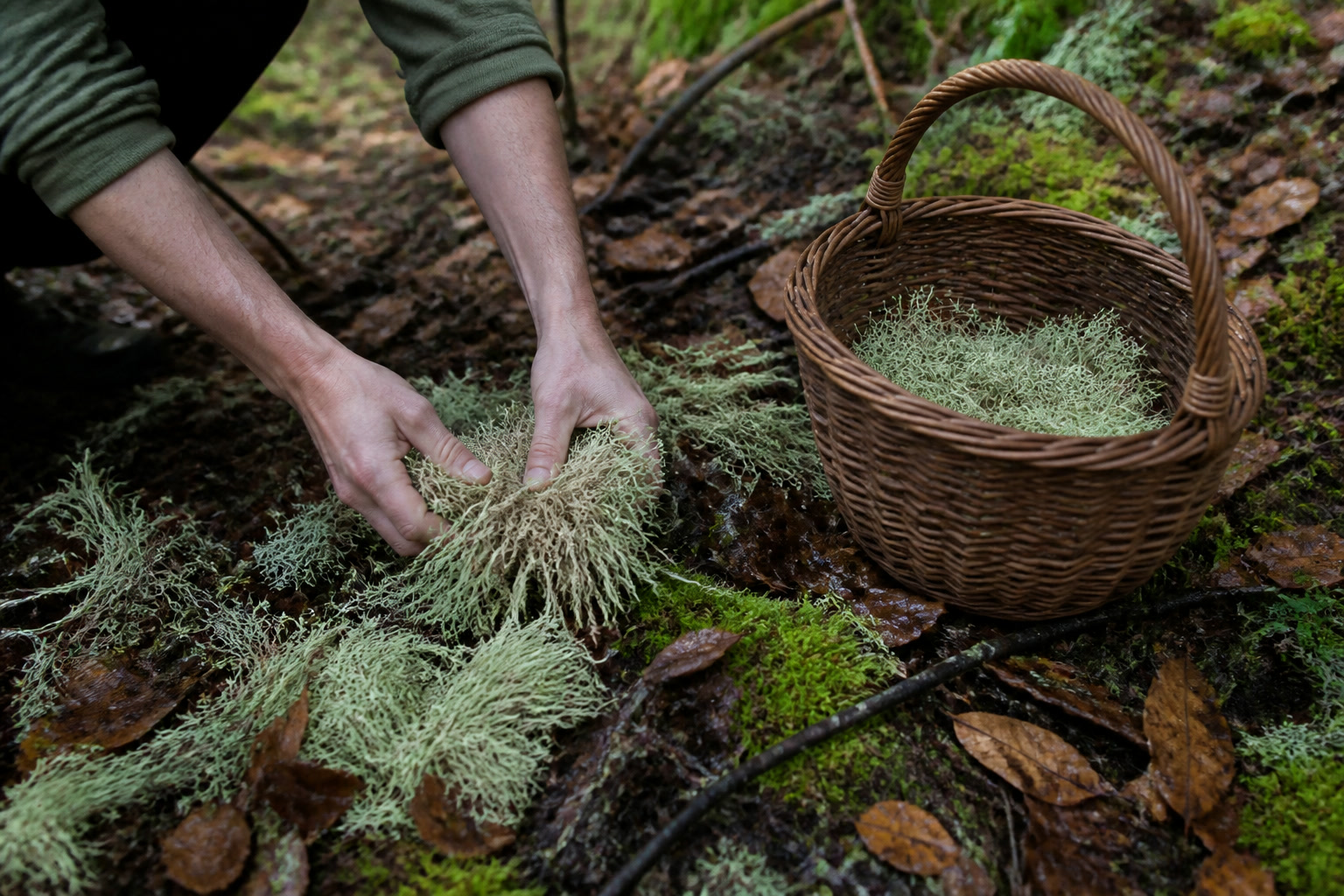
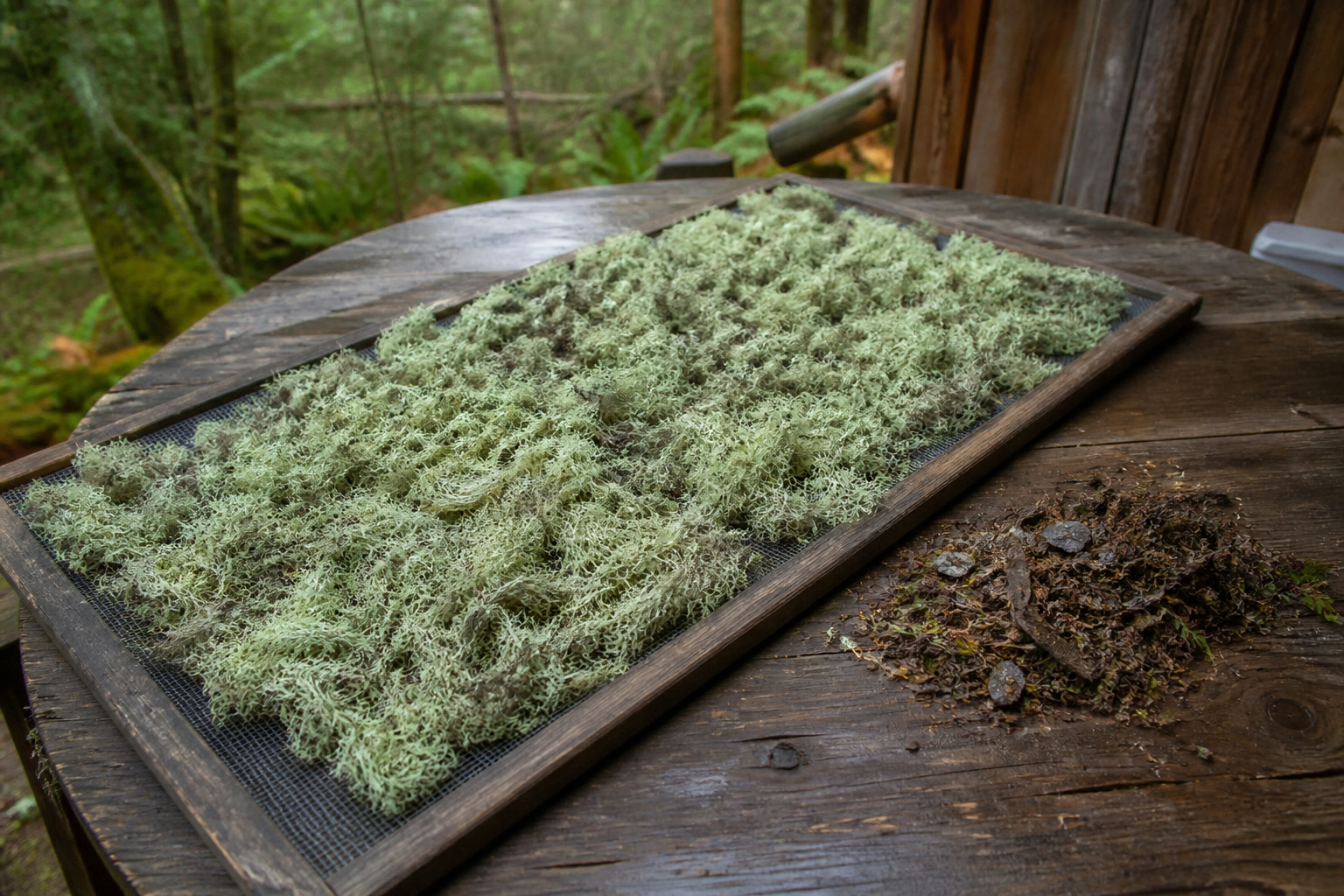
You don’t need to. After any real windstorm the ground under a lichen-heavy tree is littered with fresh, clean beards that came down on their own. Gather those. Take a modest basket, leave plenty for the next person and for the little kinglets that nest in it, and pick through it at home: shake out the bark and the bugs, pull off any moss or fir needles tangled in, and keep only the pale, springy pieces that pass the cord test. Then spread it somewhere dry and airy until it’s crisp, and store it in a clean lidded tin out of the light. Well-dried usnea keeps a year or more. If your winter is as damp as mine, my notes on storing dried herbs so they last apply to lichen exactly the same way – damp is the only thing that ruins it.
One traditional preparation, framed honestly
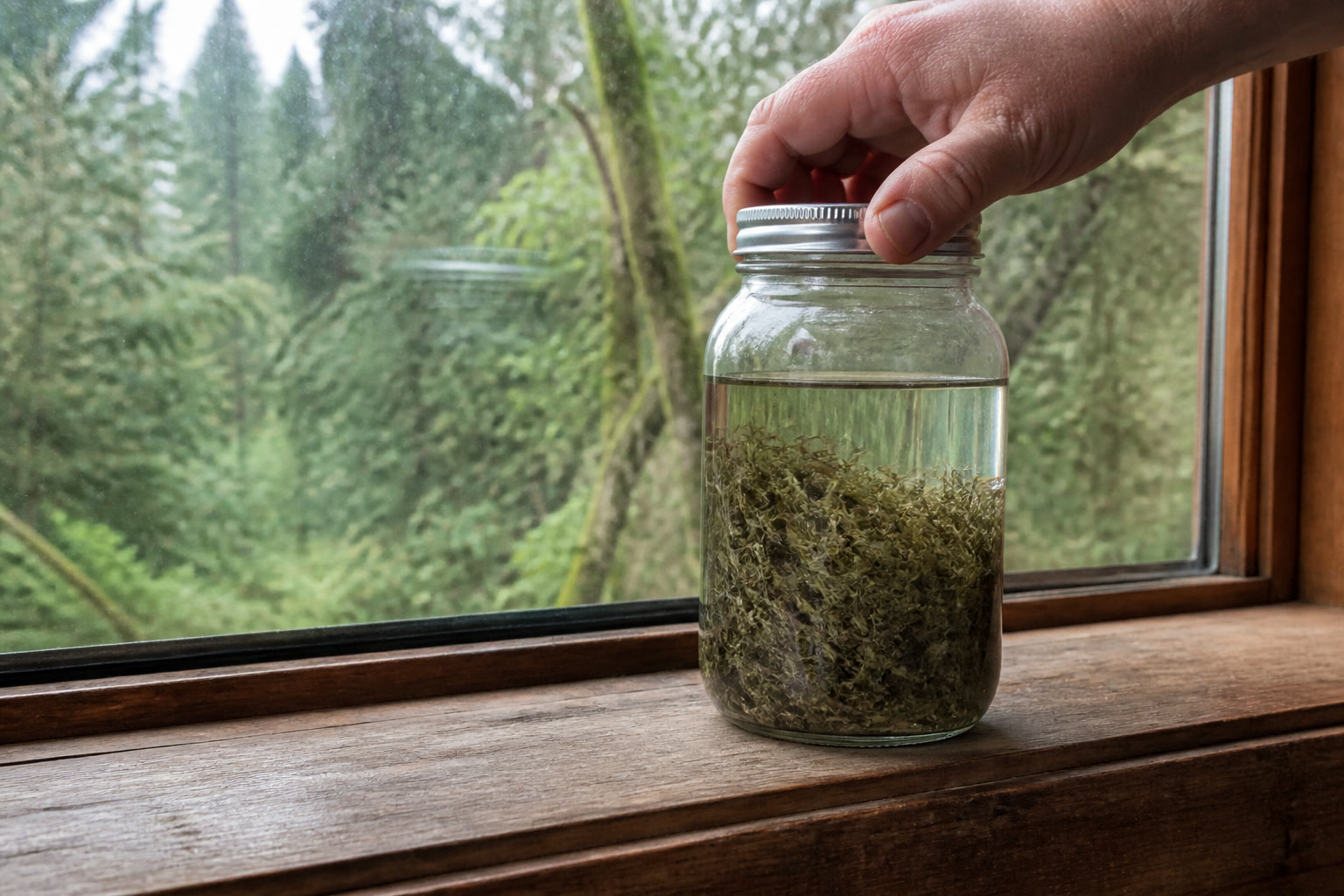
I’ll tell you how usnea has traditionally been prepared, and I’ll be careful about how I say it, because that matters. This is folk and traditional-use information – what the generations before us did with this lichen – not medical advice, and nothing here treats, cures, or prevents anything. For anything at all serious, see a qualified practitioner.
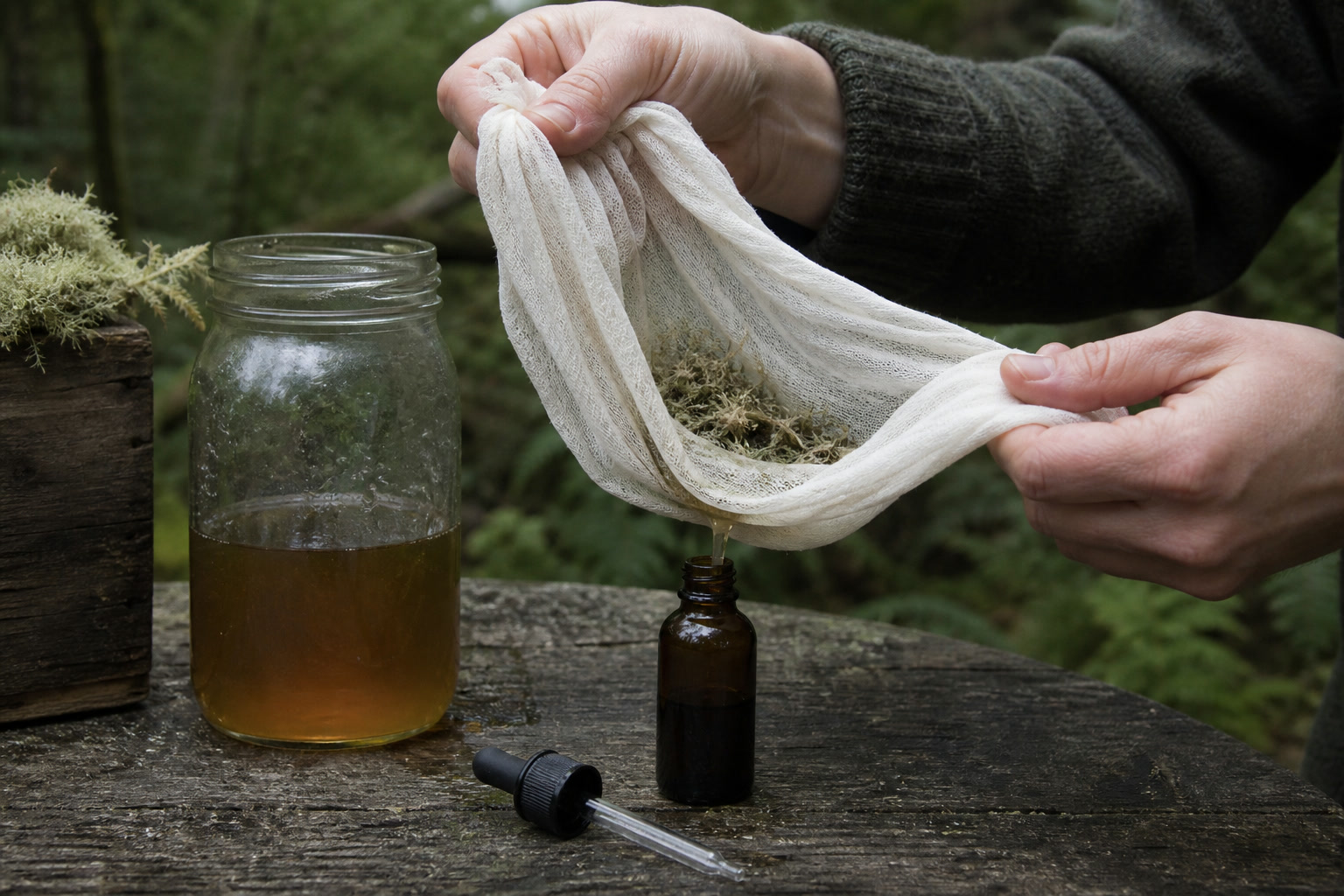
The traditional preparation is a double extraction, because usnea holds onto some of its character in alcohol and some of it only in hot water, and the old method captures both. Chop the dried lichen small and cover it with high-proof spirits in a clean jar, cap it, and let it sit somewhere out of the light for a few weeks, giving it a shake when you pass. Strain that off through a doubled layer of cheesecloth and set it aside. Then simmer the strained-out lichen gently in water – low, a good long while – and strain that decoction too. Combined and bottled in a dropper bottle, out of the light, that’s the traditional usnea tincture. It’s bitter and a little woodsy, and if you’ve made a tincture before, it’s the same rhythm as any other; if you haven’t, my walk-through of your first herbal tincture covers the plain single-extraction version first.
Label it with the lichen and the date, the way you’d label anything. A tincture kept cool and dark holds its character for a long time.
The gathering is the easy hour
Finding usnea, once you know the cord test, is genuinely the simple part of a winter walk. Knowing it apart from every pale beard it grows beside, gathering it in a way that leaves the trees carrying more than you took, reading the air it’s been living in – that’s the longer study, and it’s the part I care about passing on.
Most of what I know about usnea and the hundred-odd other wild plants and lichens of this coast is in my book, Pacific Northwest Medicinal Plants – how to identify each one without guessing, when and how to gather it without harming the stand, and how the people before us prepared it. Old man’s beard is the easy winter start. The book is how you learn the rest of the woods it hangs in. If you’re heading out this season, my guide to what to forage in the Pacific Northwest in fall is the natural place to go next.
