How to Stock a Farm Pond for the Freezer
Stock a farm pond right and it feeds your family for years. Here's how I'd stock a small pond for the freezer — bluegill, catfish, and bass, in the right order.

A pond is the closest thing there is to a garden you can fish. Put it in right, tend it a little, and it’ll set a mess of fillets on your table every year without you buying a thing. I’ve fed my family off the pond behind my house for the better part of forty years, and my father fed his off the creek before that. If you’ve got the water, or you’re thinking of putting one in, stocking it for the freezer is one of the most sensible things a family can do.
But there’s an order to it, the same as there’s an order to planting. Get the order wrong and you’ll end up with a pond full of little stunted bluegill and nothing worth cleaning. Get it right and you’ve got protein for years. Let me walk you through how I’d do it, plain and in order.
Start with a plan, not a bucket of creek fish
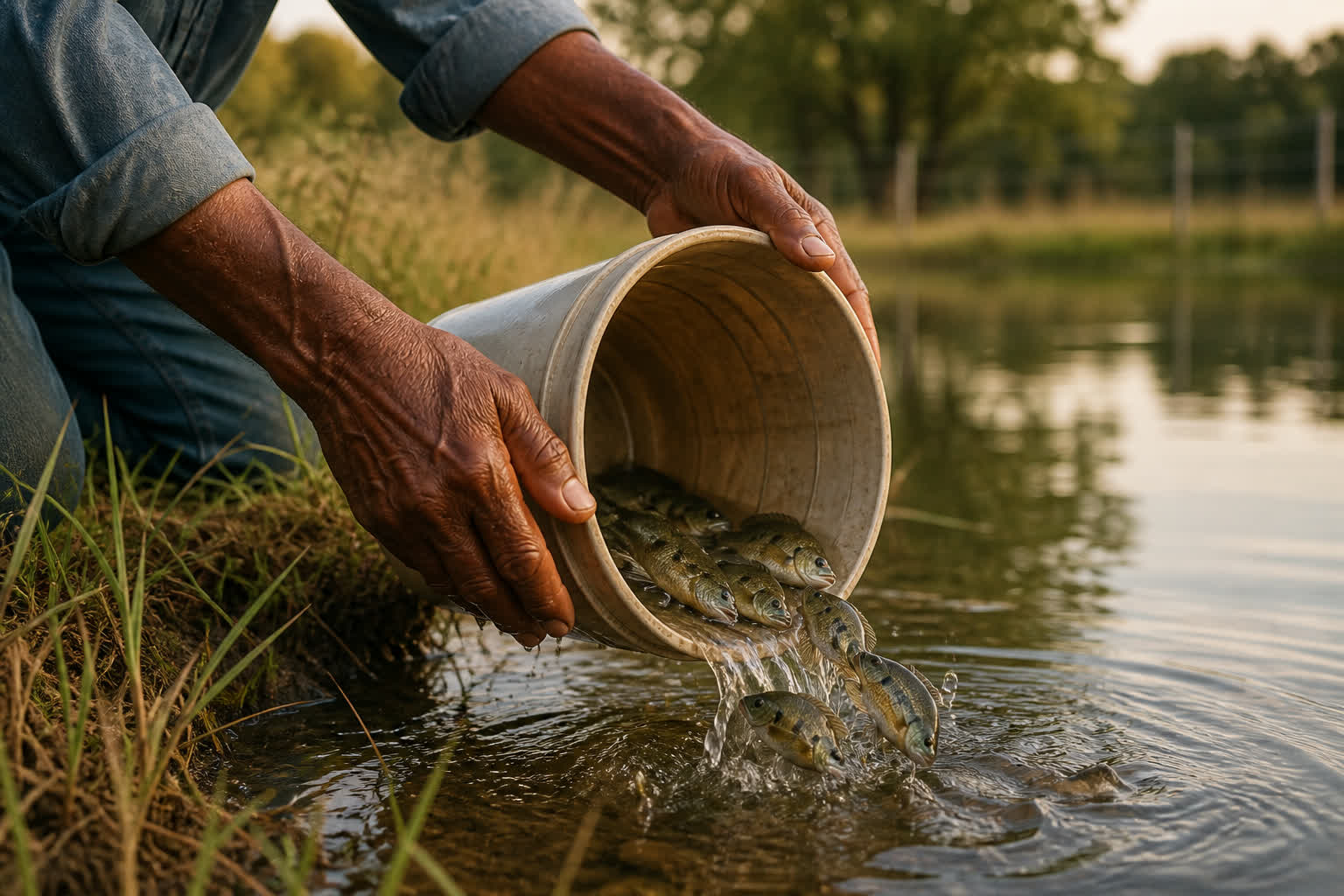
The worst thing you can do — and I’ve watched good folks do it — is dump a bucket of whatever you seined out of the creek into a new pond. That’s how you get green sunfish and other trash fish taking over, and once they’re in, they’re near impossible to get back out. A pond stocked on purpose, with the right fish in the right numbers, is a different animal entirely from a pond that just filled up with whatever wandered in.
So before anything goes in the water, call your state wildlife folks or the county extension office. Here in North Carolina the Wildlife Resources Commission will tell you exactly what your pond will hold, and a good fish hatchery will sell you healthy fingerlings and help you get the numbers right for your acreage. That one phone call is worth more than anything I can tell you from my porch.
The bread and butter: bluegill and shellcracker first
For a pond meant to feed people, the foundation is panfish. Bluegill are the workhorse — they breed like they mean it, they’re the finest eating there is out of fresh water, and they feed the bass you’ll add later. I like to put in shellcracker alongside them, what some folks call redear. They run bigger than a bluegill, they eat the snails that carry the grubs that pester your other fish, and they’re every bit as good in the pan.
Here’s the part that matters most: you stock the panfish first, a whole season ahead of the bass. Fall is the time to do it, once the summer heat’s off the water and the little fish travel easy without stressing. You put your bluegill and shellcracker in this fall — a hatchery will size the numbers to your pond — and you let them settle in and start reproducing over the winter and spring. Some folks add a few fathead minnows too, as easy early groceries. You’re building the pantry before you invite the big eaters to dinner.
Then the catfish, then the bass
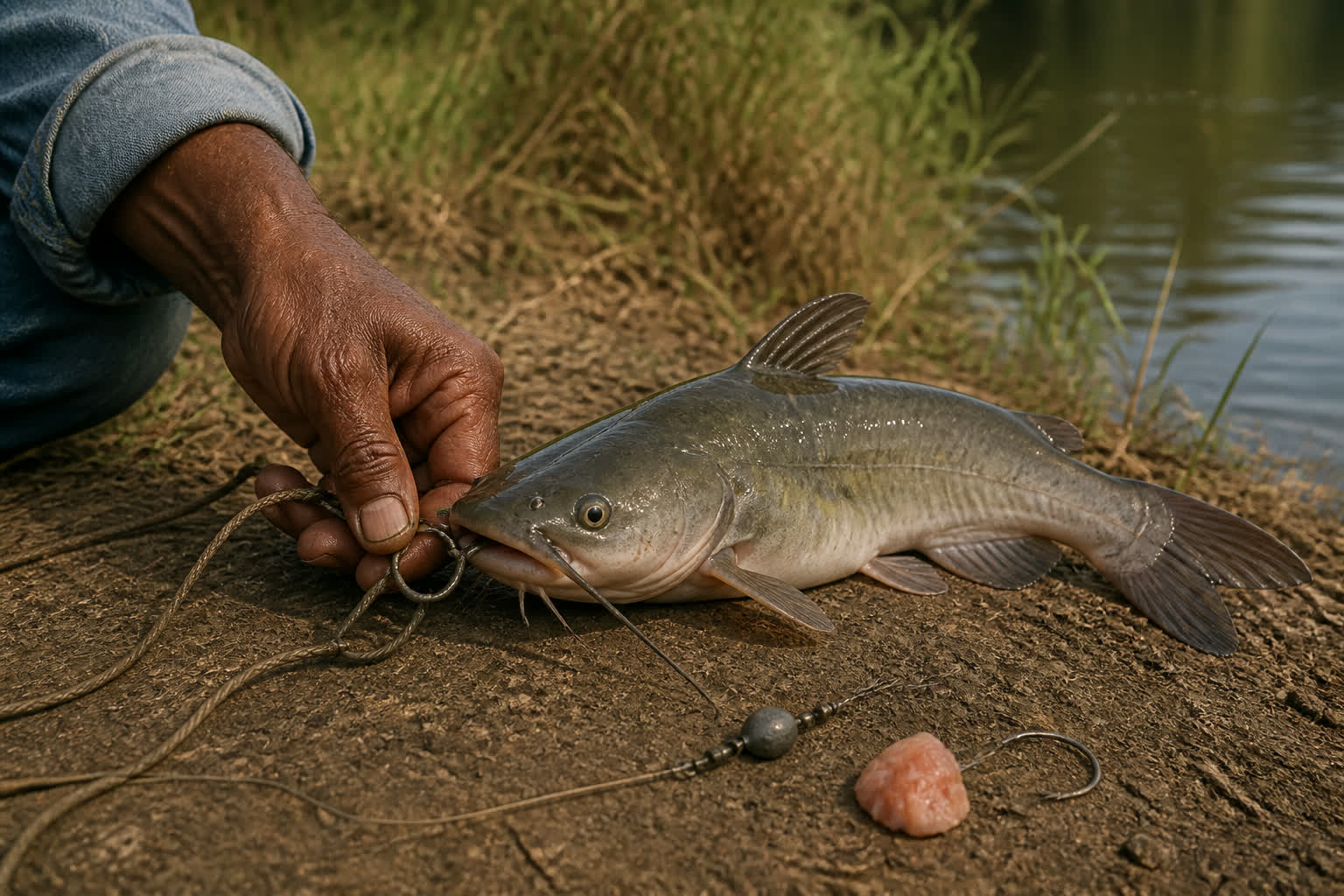
Channel catfish can go in with the panfish, that first fall. They keep to themselves mostly, they grow fast, they’re easy to catch off the bank on a piece of cut bait, and there’s not a better fish for a fall fish fry. A pond can carry a good number of channel cats without them throwing anything out of balance, and they’re some of the surest eating you’ll pull out of it.
The bass wait. You put largemouth in the following spring or early summer, after your bluegill have had a full season to spawn and fill the pond with the little ones the bass will live on. Add the bass too early, before there’s forage built up, and they’ll eat down your panfish before the panfish ever get established — and now you’ve got hungry skinny bass and no bream to fry. Patience here is the whole game. The bass aren’t really your freezer fish anyway; they’re the managers. They keep the bluegill from overpopulating and going stunted. You’ll harvest a few, but their main job is to keep the pond in balance so the panfish stay big enough to bother with.
Let it grow up before you fish it hard
I know it’s hard to look at a new pond and not fish it. But give it time. Most ponds want a full year, better two, before you really start harvesting. Let the panfish spawn a time or two and the catfish put on some size. When you do start, fish it the way you’d tend anything you mean to keep giving: take the panfish generous — you almost can’t overharvest bluegill on a healthy pond, and thinning them keeps the rest growing big. Take the bass sparing, especially the females, or you’ll lose the very thing keeping your bream in check.
Read the pond as it comes along, the same way you’d read a fishing day. If your bluegill are all little and skinny, you’ve got too many mouths and not enough bass — thin the bream hard, ease off the bass. If your bass are the skinny ones, they’ve run short of forage. A pond talks to you if you’ll watch it. That’s the almanac keeper’s whole trade: pay attention, and act on what the water’s telling you. If you’re new to reading the water itself, I laid out the way my granddaddy taught me in how to read the best days to fish by the signs.
What the freezer looks like
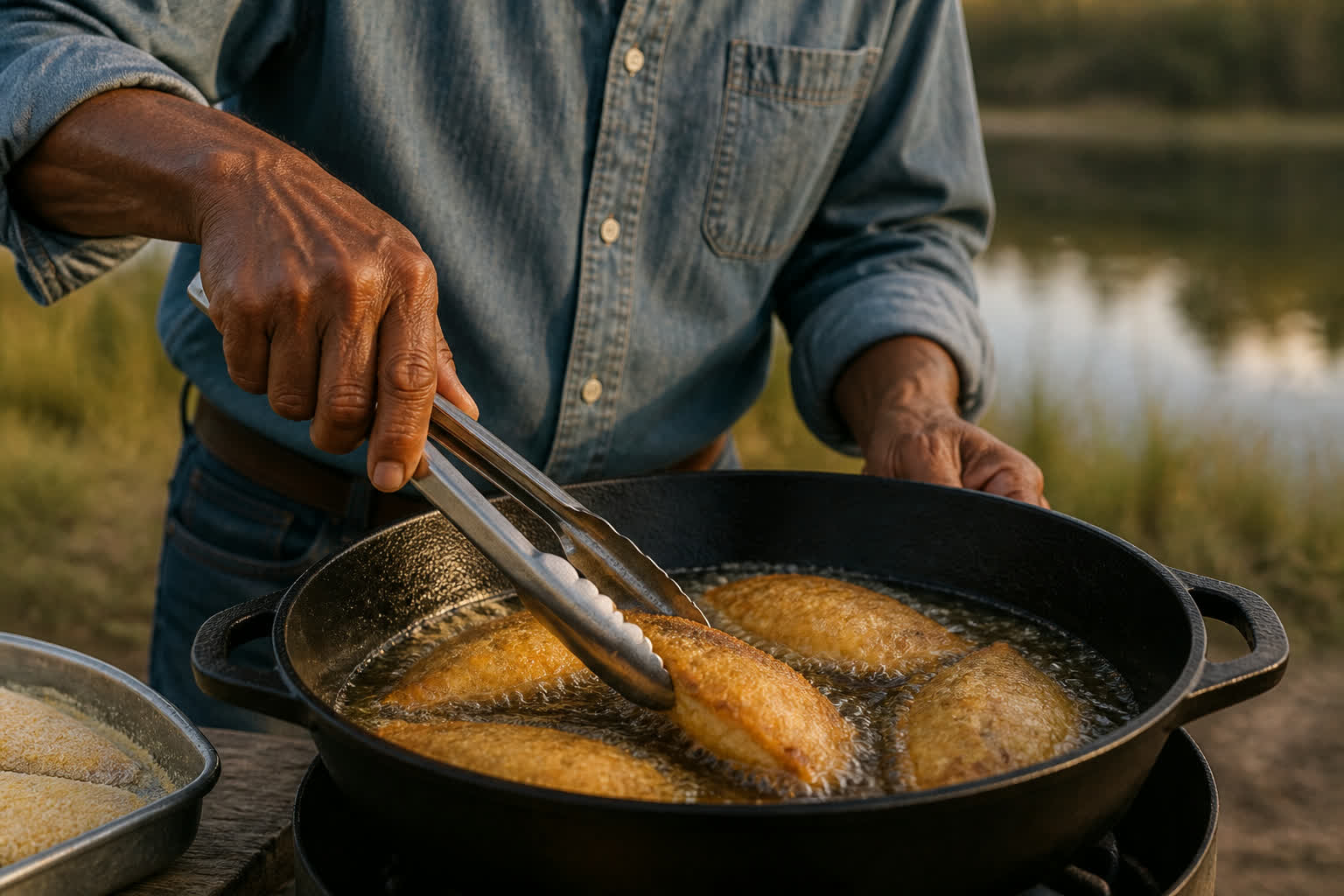
Do this right and here’s your reward, a few years on: a fall afternoon on the bank with the grandkids, a stringer of bluegill and a couple of channel cats, and Audra’s cast-iron pot already warming for the fish fry. That’s not a fantasy. That’s a well-stocked pond doing exactly what you built it to do. It feeds you, it teaches the young ones, and it doesn’t send you to the store.
When the pond’s grown in and you’re ready to take a grandchild out for their first bluegill off it, I put together a little journal for exactly that — a place for a young angler to write down their first catches, the date, the weather, what they used. It’s called My First Catch, and it’s the kind of thing a child keeps for a lifetime. And if you want to start reading your own water like a keeper, I give away a simple Best Days to Fish kit — the moon, the barometer, and the water temperature on one plain checklist. You can pick up the free kit here and keep it by the door.
A pond is a long, patient gift. Stock it in the right order, let it grow up, and read the signs. It’ll feed your family longer than you’d think.
Read the signs. Tight lines — and I’ll see you at the water.
