What to Plant in Containers in September for Fall
September isn't too late — it's the start of a whole second season. Here's what to plant in September in containers, from fast greens to garlic, on a small balcony.
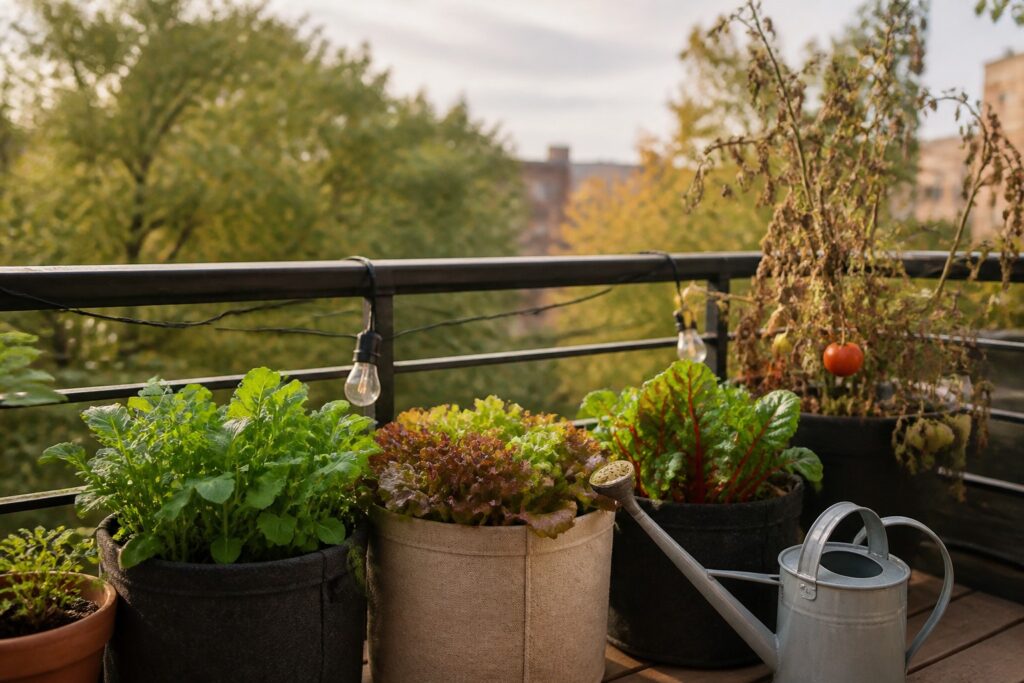
September feels like the end of the garden. It isn’t. On a balcony it’s the start of a second, gentler season — cool nights, softer light, and a whole list of things that actually prefer to grow now rather than in the brutal middle of summer. The tomatoes are winding down, sure. But the pot they’re in is about to be the best real estate you’ve got.
I garden on a six-by-ten balcony in the Portland area, and September is one of my favorite months out there. The watering slows down. The bugs ease off. And half of what I plant now will feed me straight through fall, some of it into winter. You don’t need a yard for any of this — every single thing here grows in a pot. Here’s what I’m putting in this month, and how.
Fast greens — the September no-brainer
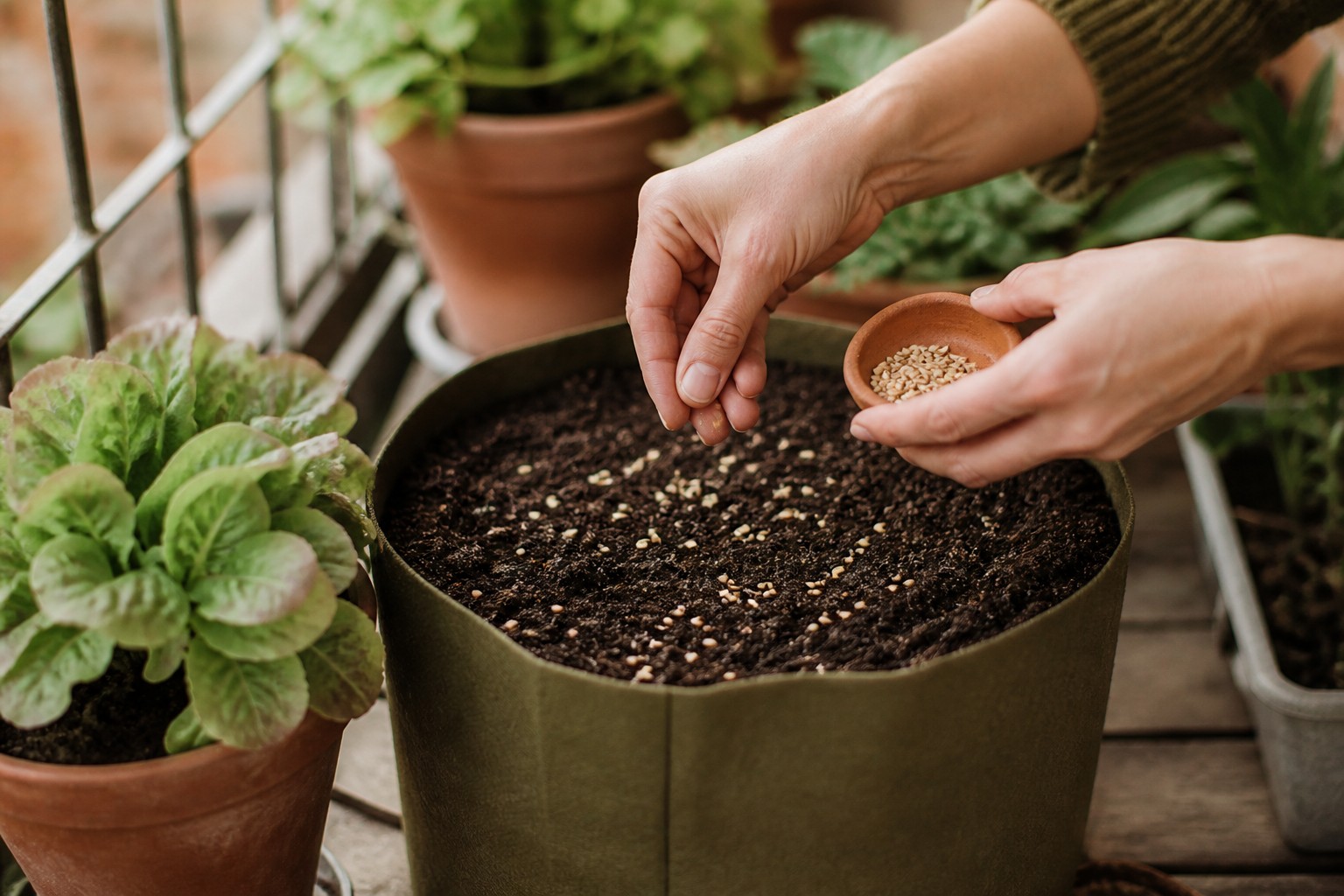
If you plant nothing else this month, plant salad greens. They’re the whole reason fall containers are worth it. Loose-leaf lettuce, spinach, arugula, mustard, mizuna, mâche — these are cool-season plants that turn bitter and bolt in July heat but grow sweet and fast in September’s cooler nights. Most are ready to start cutting in four to five weeks, and if you harvest the outer leaves instead of pulling the whole plant, one sowing keeps giving for weeks.
I sow these thick in a shallow fabric grow bag or a wide pot, scatter the seed, barely cover it, and keep it damp until it’s up. A twelve-inch bag holds a generous cut-and-come-again patch. Sow a little more every couple of weeks and you’ll have salad on the balcony well past the first frost — greens are tougher than people think.
Roots and quick crops
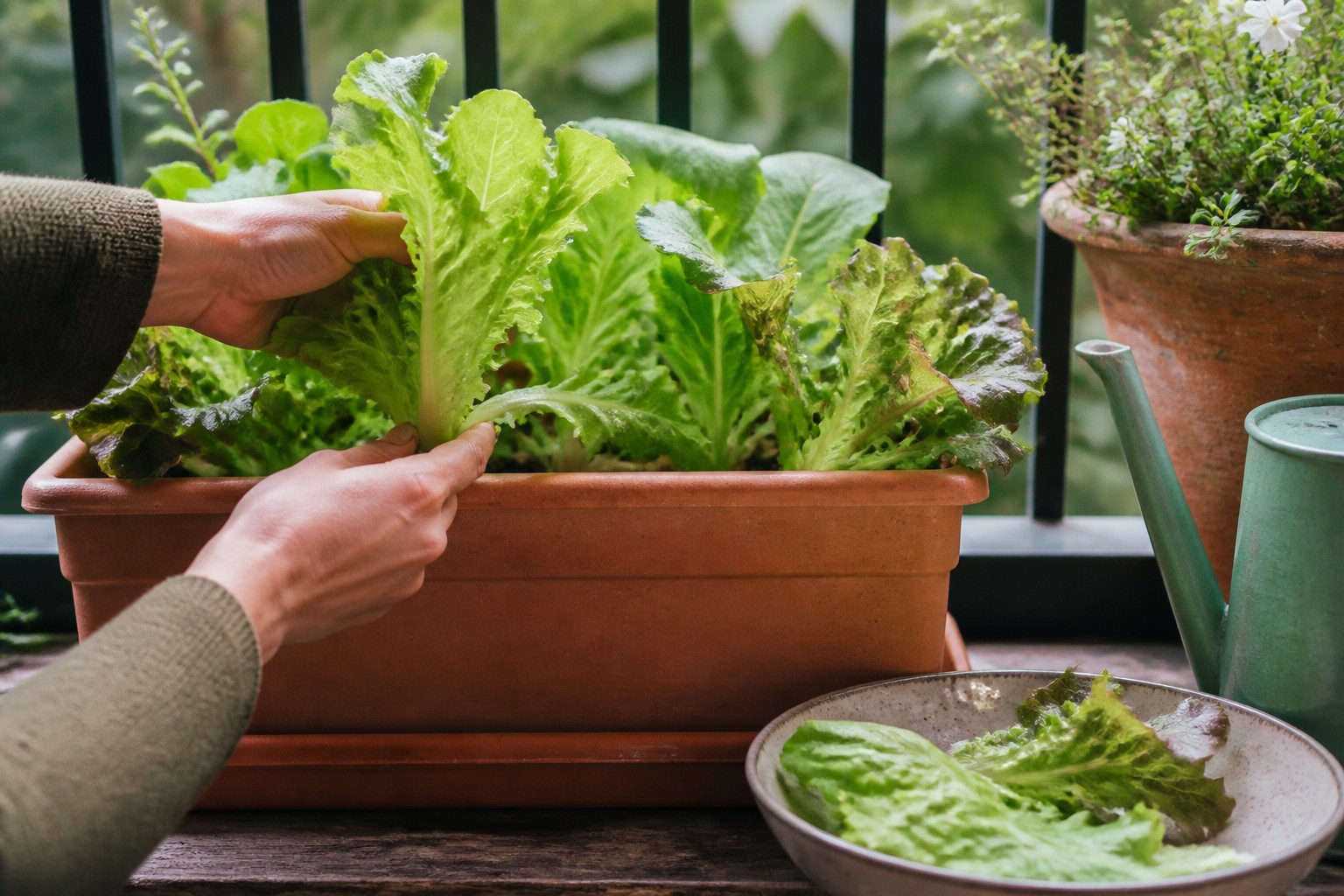
Radishes are the instant gratification of the fall container. Three weeks, start to finish, from a pot only six inches deep. They’re the crop I hand to anyone who thinks they’ve killed everything they’ve ever planted, because it’s genuinely hard to fail with a September radish.
Scallions, cilantro, and dill all settle in happily now too — cilantro especially, which bolts the moment summer looks at it but grows lush and slow in the cool. And if you’ve got a deeper container free, tuck in some spinach for real; the fall-sown stuff often overwinters and gives you an early, ridiculous burst the following spring.
The greens that shrug off frost
For things that’ll carry you into actual cold, plant the hardy leafy crops: kale, Swiss chard, and collards. Chard is my favorite of the three for a pot — it’s beautiful, it takes a light frost without blinking, and you cut it a few outer stalks at a time all season. Kale actually turns sweeter after a frost, which still feels like a small miracle every year.
These want a bigger home — a five-gallon container or a sturdy self-watering planter each, because they’ll be in that pot for months and you don’t want them drying out during a warm September spell. This is the same crew I lean on for a fall container garden, and there’s real overlap with the cold-hardy vegetables I plant for fall containers — worth a read if you’re planning the whole cool season, not just this month.
Garlic — plant now, harvest next summer
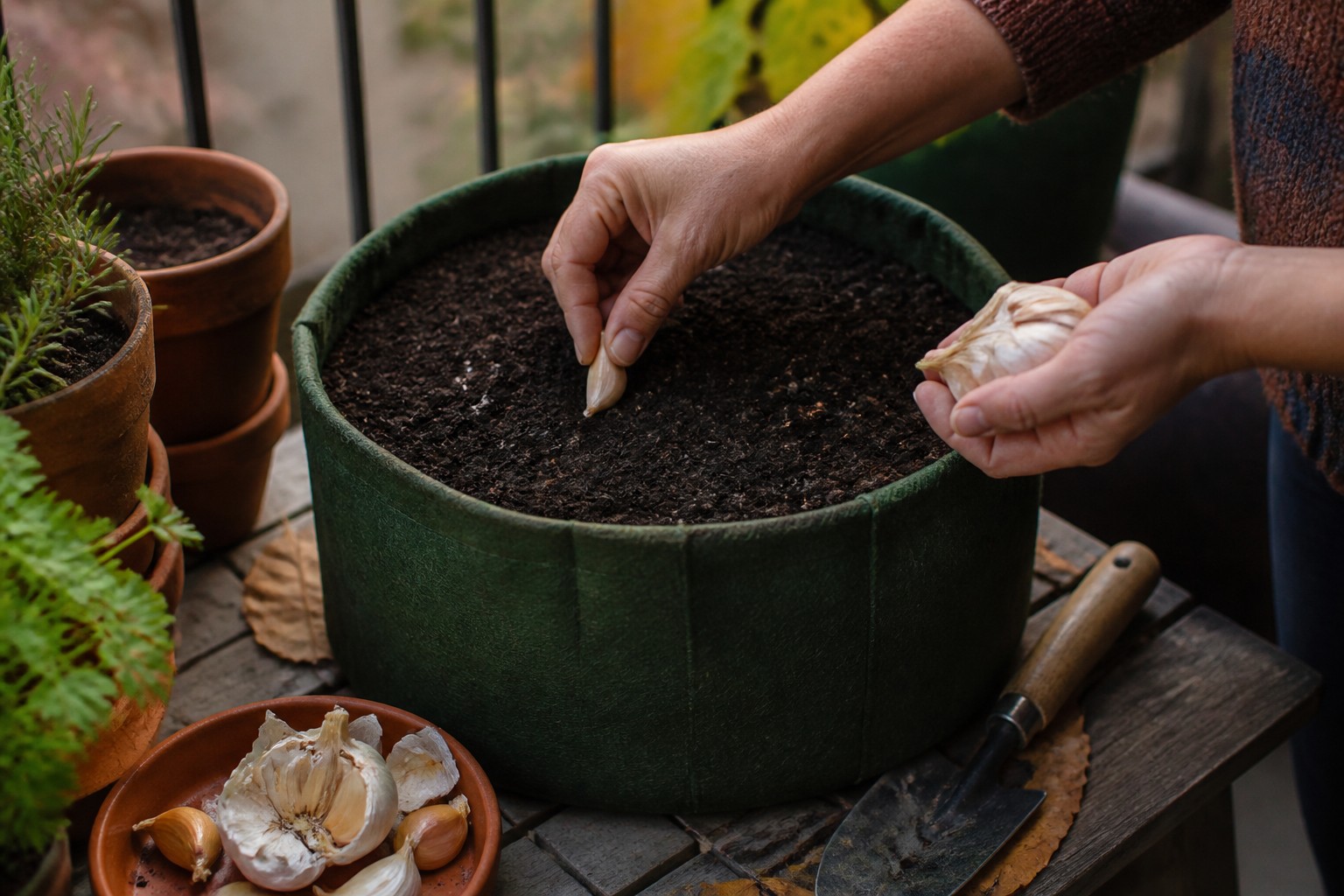
Here’s the long game, and it’s the one I never skip: September into October is garlic-planting time in most of the country. You break a head into cloves, push each one pointy-end-up a couple of inches deep into a deep pot or grow bag, and then you basically forget about it until spring. It sits through winter, sends up green shoots when the weather warms, and you pull fat homegrown heads the following summer.
A single grow bag will hold a surprising number of cloves, and there’s almost nothing to do in between. It’s the most set-it-and-forget-it thing on a balcony. I wrote out the whole method — which garlic to buy, how deep, how to cure it — in how to grow garlic in containers, because it earns its own guide.
The thing that actually kills fall containers
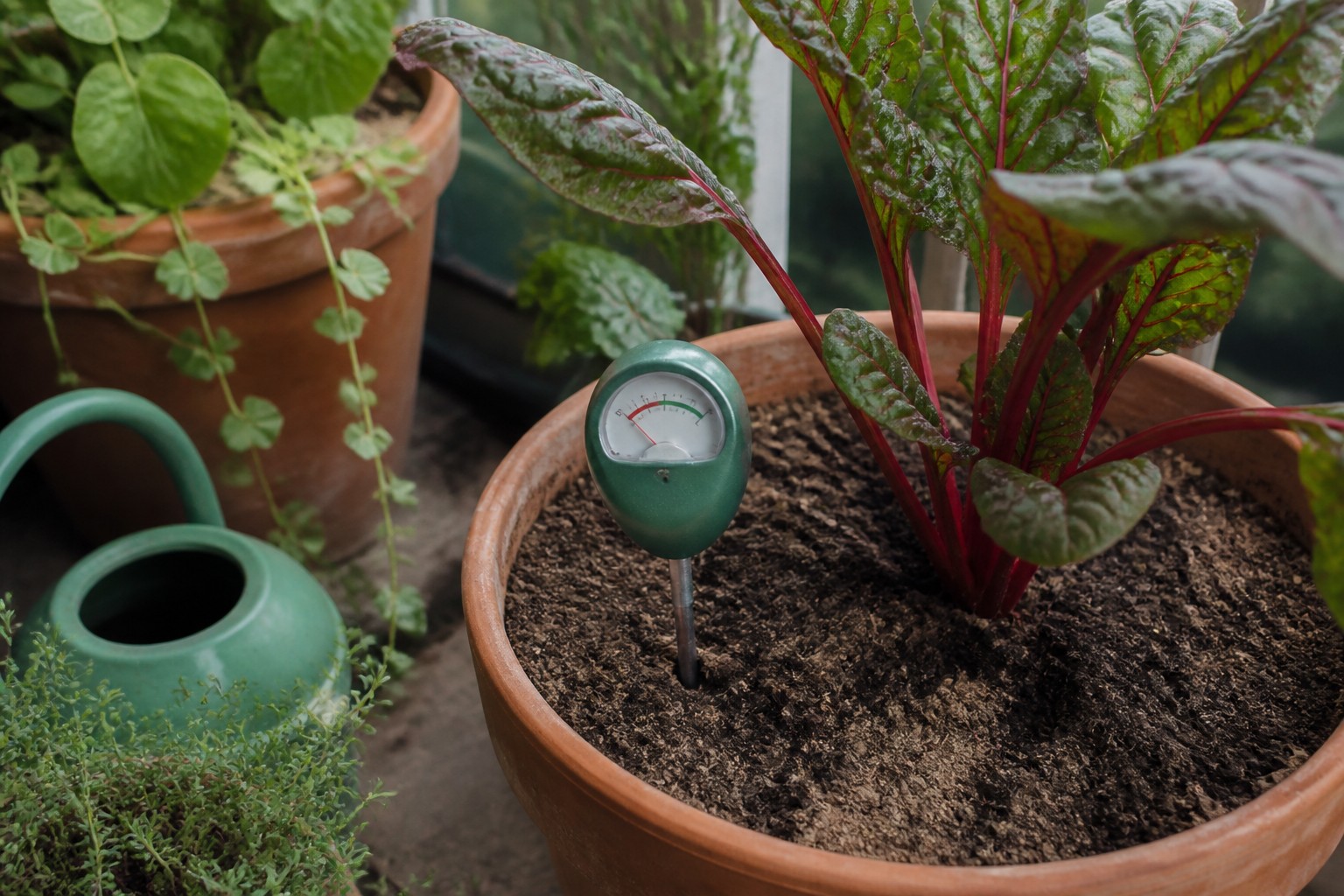
It’s not the cold. It’s overwatering. As the days shorten and the air cools, your pots dry out far slower than they did in August, but your hands remember the August routine and keep pouring. Cool, wet soil that never gets a chance to dry is how you rot roots and lose plants in the fall.
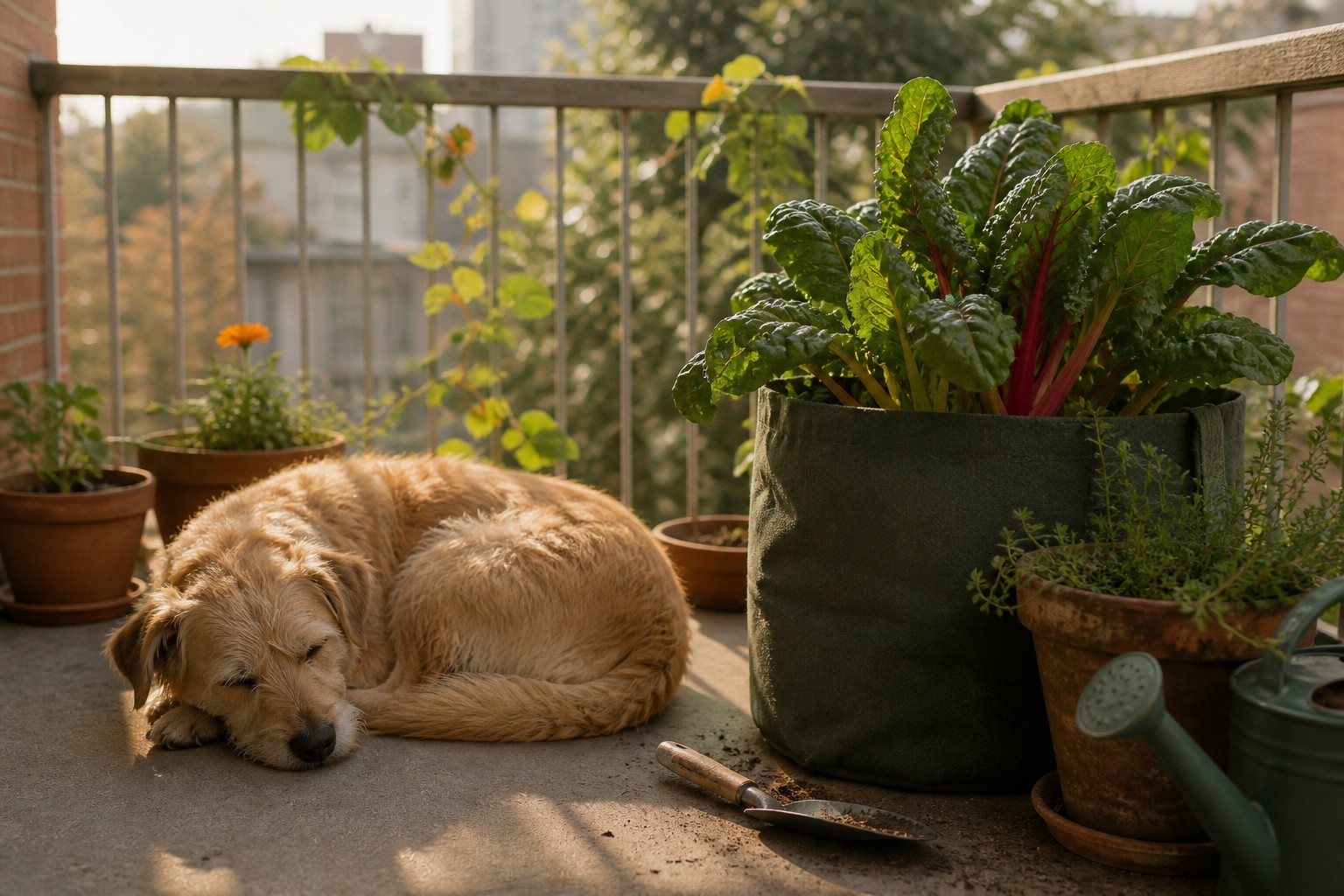
So this is the month I actually use a soil moisture meter instead of trusting my thumb, because the surface of a fall pot lies — it looks dry on top while it’s still soaking two inches down. Push the probe to root level, and only water when it reads dry there. When you do water, use a long-spout can to get it to the soil and keep the leaves dry, since wet foliage sitting in cool damp air is an invitation to mildew. Otto, for the record, supervises all of this from the one warm patch of sun on the rail and contributes nothing.
A small second season
That’s really the whole pitch. September isn’t the garden shutting down — it’s a quieter, more forgiving version of spring, with fewer pests and gentler light, on the exact same balcony you already have. Plant a bag of greens and a pot of chard this week and you’ll be cutting salad while everyone else is putting their gardens to bed.
If you want the full year of small-space growing — the container sizes, the succession timing, the whole calendar month by month — that’s what I put into my book, Small-Space Big Harvest. Fall’s the season most people quit on. It’s the one I’d least want you to miss.
