How to Fish a Pond During a Spring Rain: A Beginner’s Guide
A soft spring rain can be a good time to fish a pond. Learn why the bite picks up, how to rig for it, what to wear, and when to leave the water for safety.
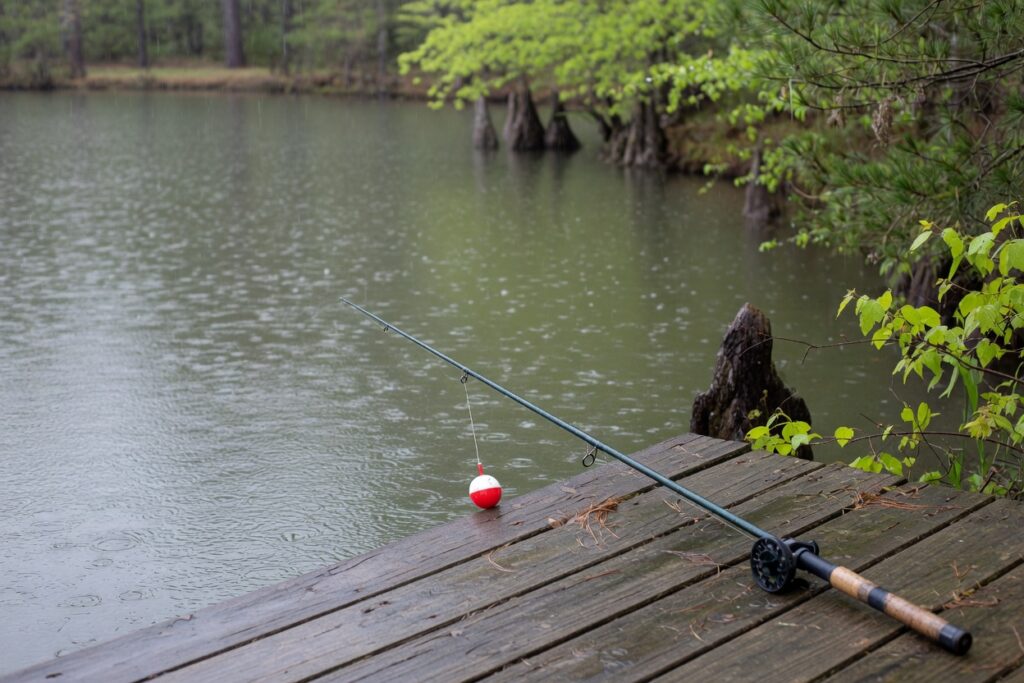
Audra tells me a sensible man stays inside when the sky turns the color of an old nail. I have never been that man, and some of my best evenings on the pond came with a soft rain pocking the water. The bank was empty, the fish were up, and the whole place smelled like wet earth and new leaves.
Rain gets a bad name among beginners. A gentle spring rain, the kind that drizzles all afternoon, can be some of the best panfish weather you’ll find. The trick is knowing what’s a good rain to fish in, what’s a bad one, and how to stay dry and safe either way.
You’ll also want a rain jacket with a hood, a hat with a brim, and a few small hooks. I’ll leave the hooks to your tackle box.
Why the fish bite in the rain
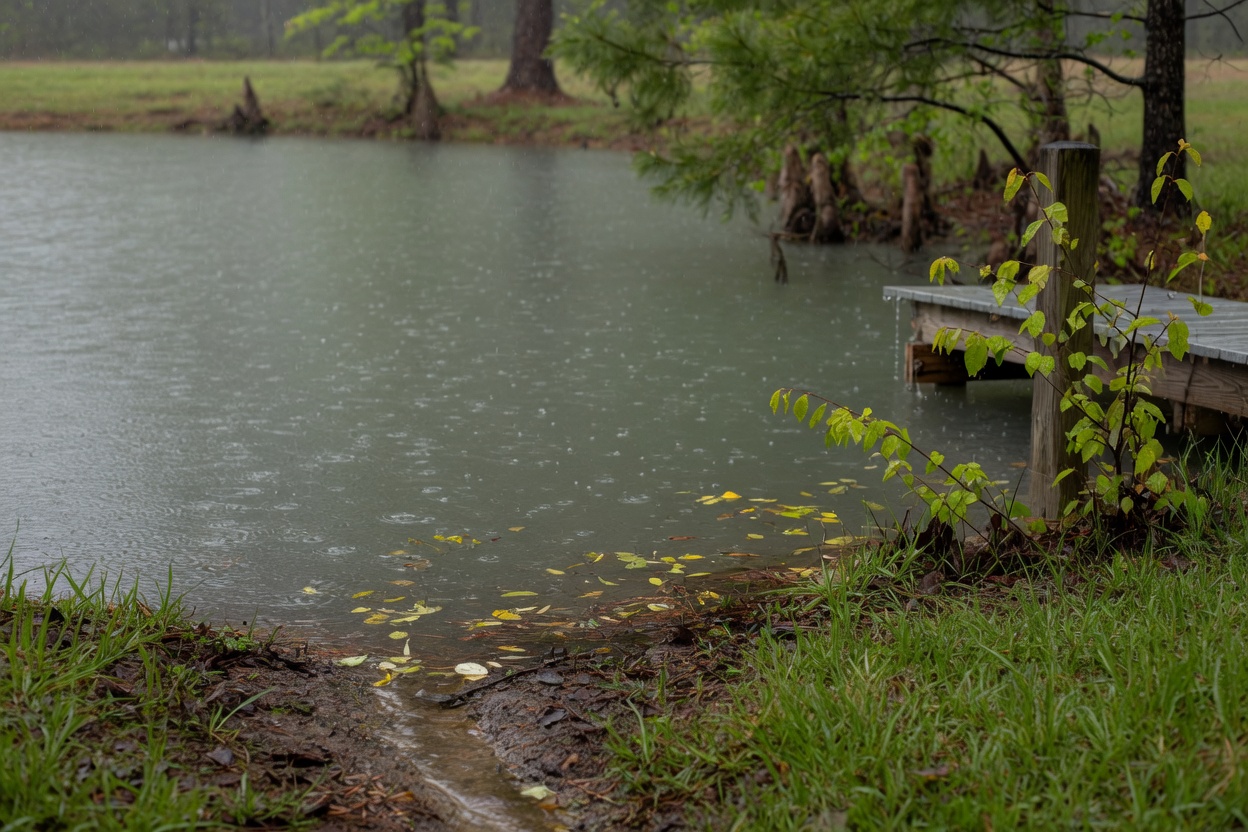
A light rain does a few things at once. Clouds cut the glare, so fish feel safer moving into the shallows. Raindrops break up the surface and hide you from their sight. Rain also washes insects, worms, and little bits of food off the bank and into the water, and the fish learn to go looking. And when the barometer drops ahead of a spring front, panfish often feed hard.
Bluegill and shellcracker will cruise the shaded edges. Bullheads and channel catfish come up from the bottom to feed on what washes in. I’ve caught more of all of them in a soft rain than on a bright afternoon.
A good rain and a bad rain
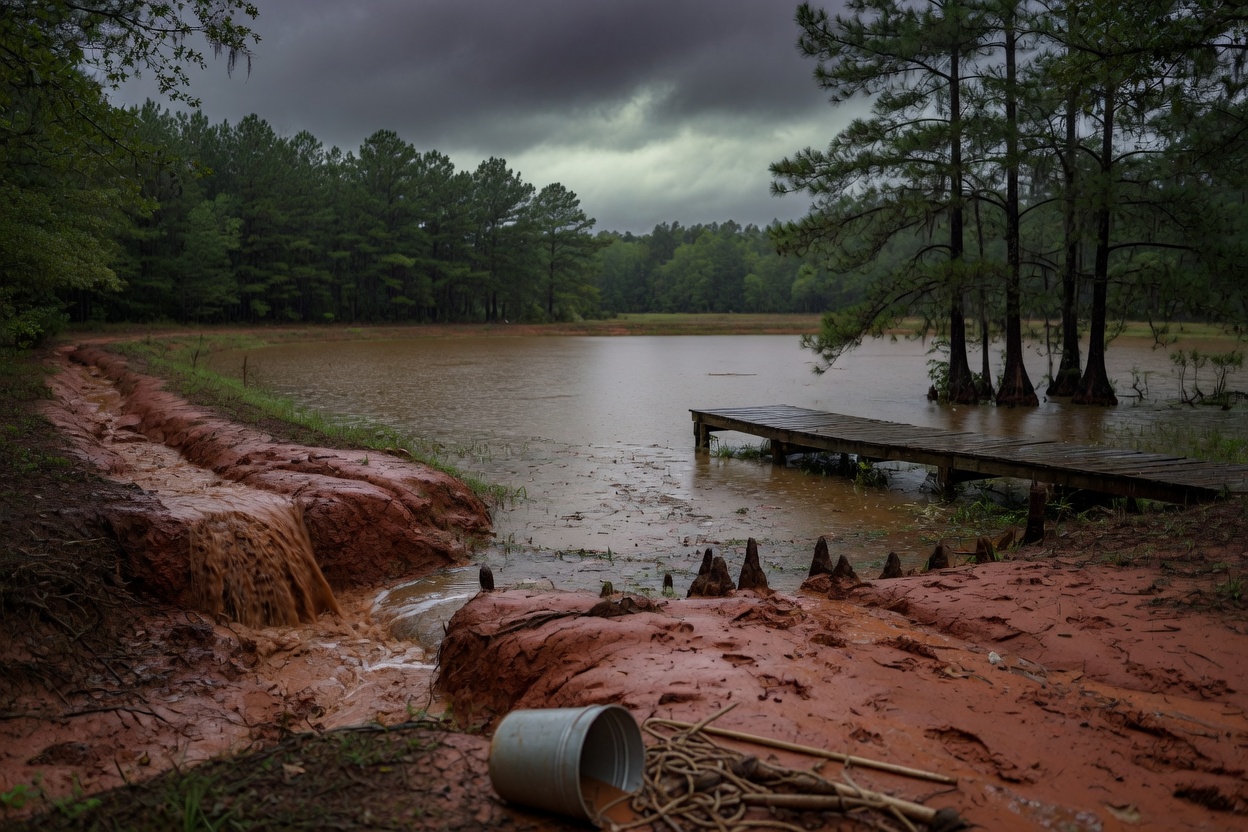
Fish a light, steady drizzle. Fish a gentle shower that moves through. Stay home for hard downpours, where runoff muddies the water and the bank turns to soup. A pond that’s swollen and brown with runoff isn’t going to bite well anyway. Give it a day or two to clear.
And the one rule I won’t bend: when you hear thunder, you’re done. Pick up your rod and leave the water. Go to your truck or a building, not under a tree. A fishing rod is a long pole, and lightning does not care how experienced you are. Wait thirty minutes after the last thunder before you go back. If you see a flash and hear thunder within thirty seconds, the storm is close enough to be dangerous. Fish don’t make up for that risk.
How to rig for it
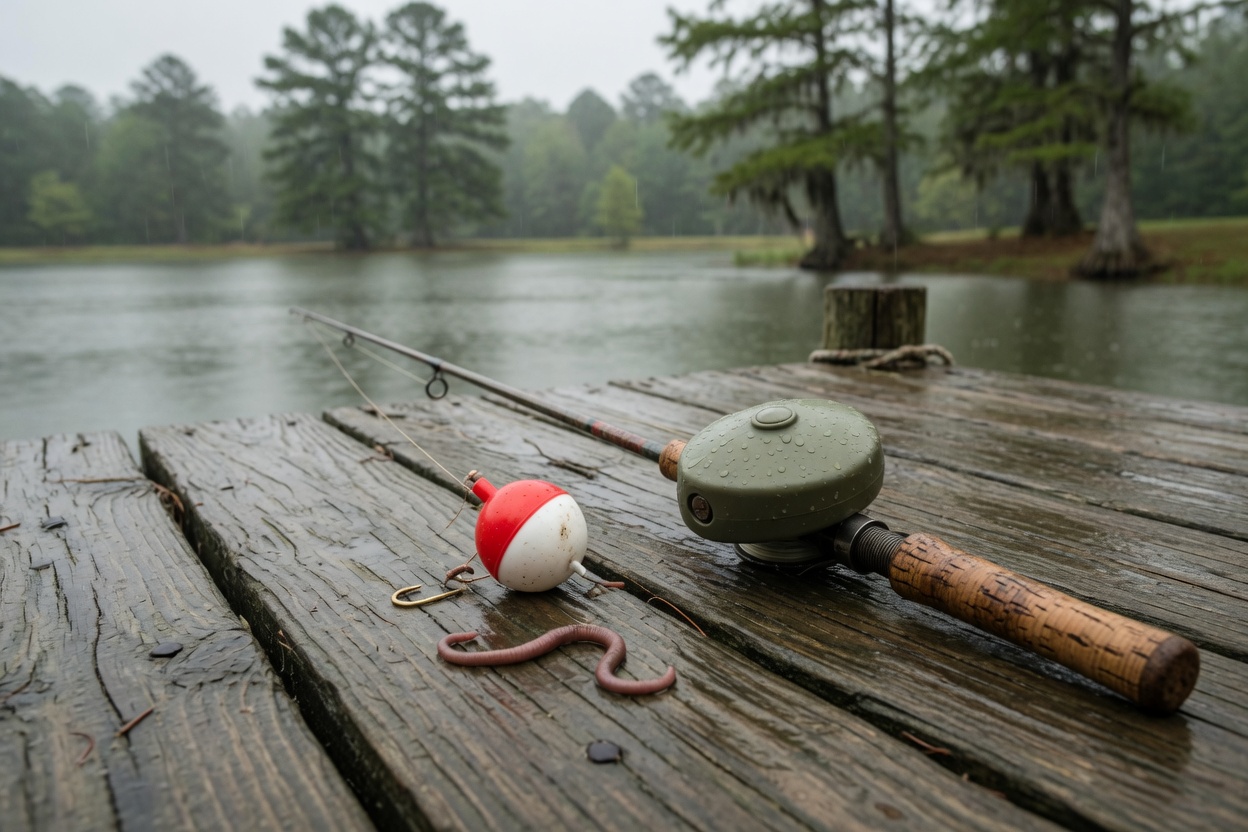
Keep it simple. Tie on a small hook, clip a snap-on float about two feet above it, and put a worm on. In the rain, I fish a little shallower than I would in the heat of the day, since the fish are up near the bank under cover of the clouds. If you want the full rigging steps, I wrote them down in how to rig a bobber for bluegill and crappie.
A spincast combo like the Zebco 33 is a fine fit for wet weather, because you push a button and cast, and the reel keeps the line covered. It’s not made for long casts across a big lake, and a more experienced angler will outgrow it, but for the pond bank it’s what I’d hand a beginner. The snap-on floats can slip on a hard cast, so give them a tug when you set them.
Worms are my first choice, because rain brings them out of the ground and the fish are looking for them. I wrote about fishing with them in how to fish with worms for beginners.
Where to stand and what to cast to
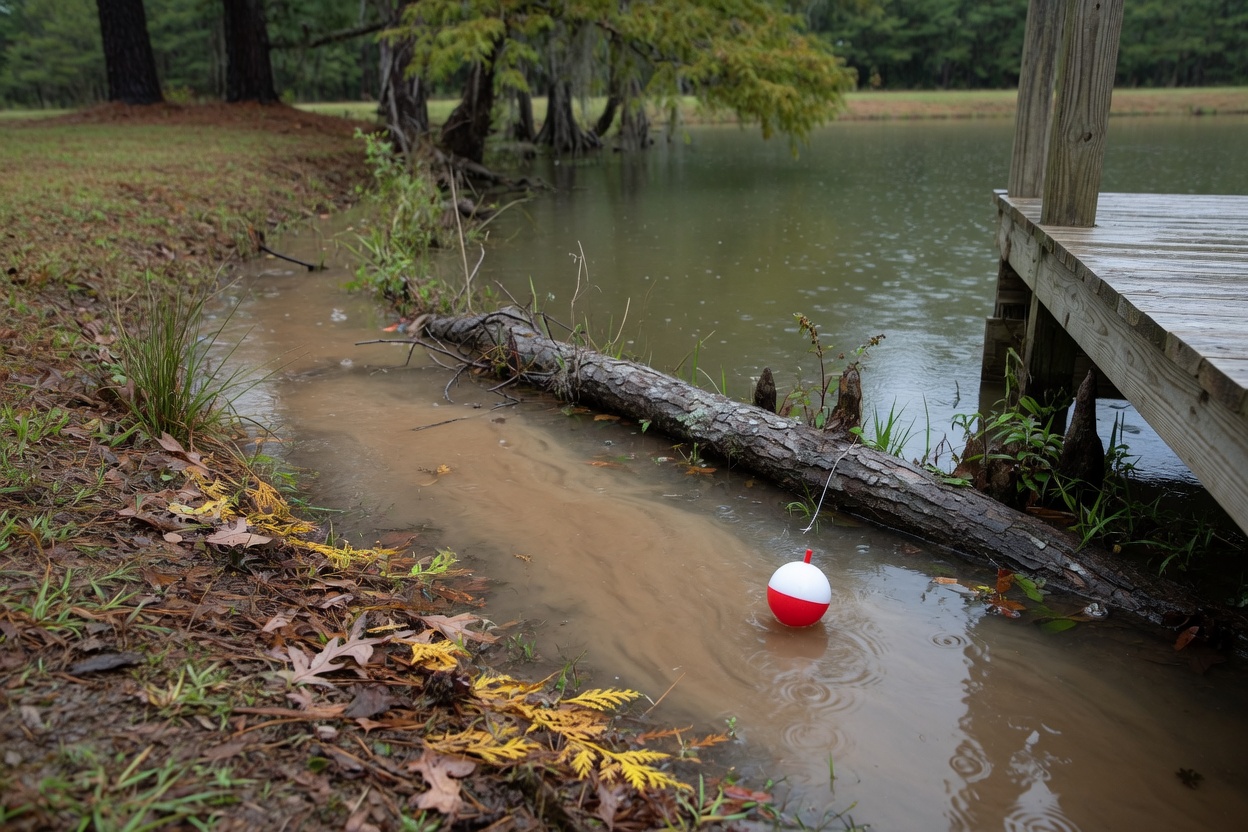
Look for the places where rain runoff enters the pond: the low spot where a ditch comes in, the edge near the dam where water slides down, the corner where leaves collect. Fish gather where food collects. Shaded banks, a fallen limb, and the edge of the weeds are good too.
Cast lightly and let the bobber settle. Rain makes noise on the water, so you don’t have to be as quiet as you do on a calm day, but a big splash still spooks the fish. When the bobber dips and stays down, lift the rod tip and reel.
Staying dry and safe
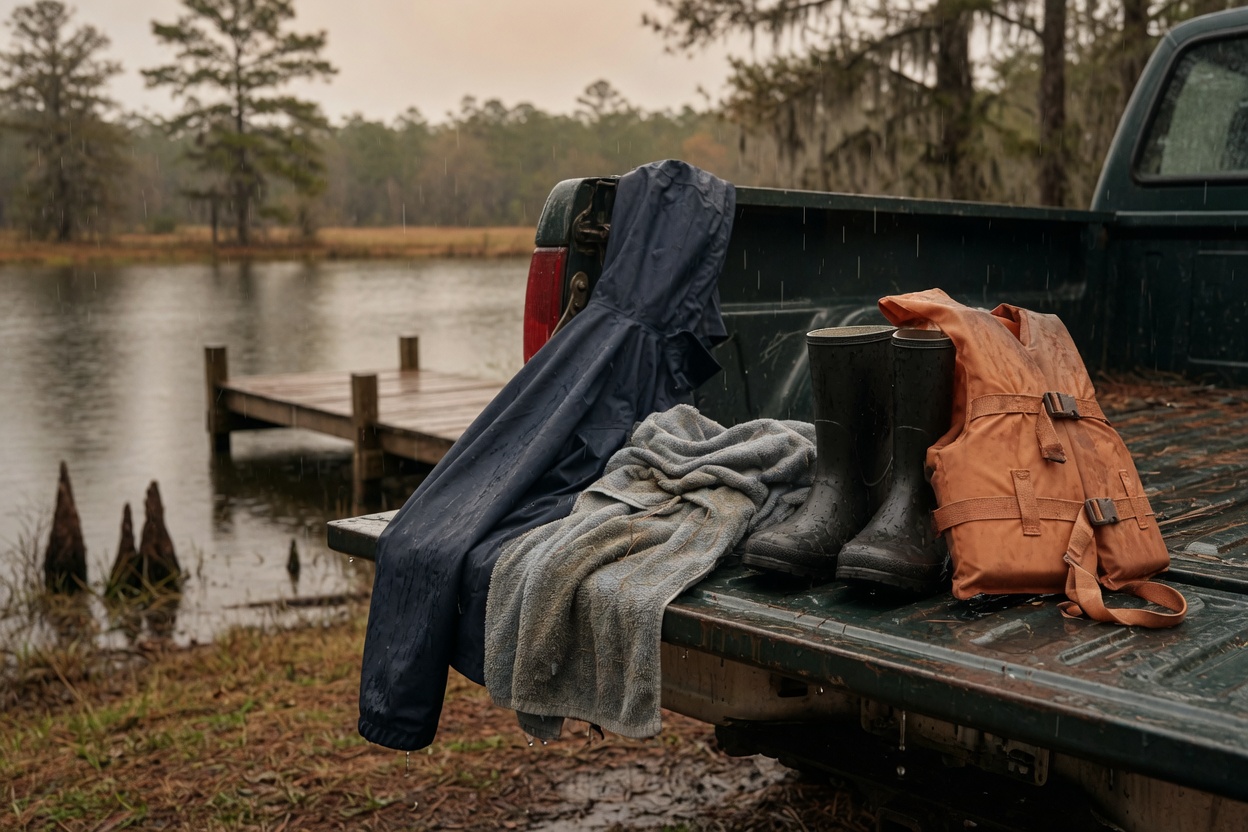
– Wear a real rain jacket, not a cotton sweatshirt. Cold and wet is how a good day turns into a miserable one.
– Watch your footing. A wet bank is slick clay. Wear shoes with grip and don’t lean out over the edge.
– Keep a towel in the truck. Dry hands make for easier knots and less fumbling.
– Take a child only in a gentle rain, with a life jacket near deep water and a short outing planned. For tips on teaching a youngster, see how to teach a kid to fish.
– Keep your bait dry. A lidded container or a small cooler works. A soaked can of worms gets mushy.
Know the rules and keep what you’ll eat
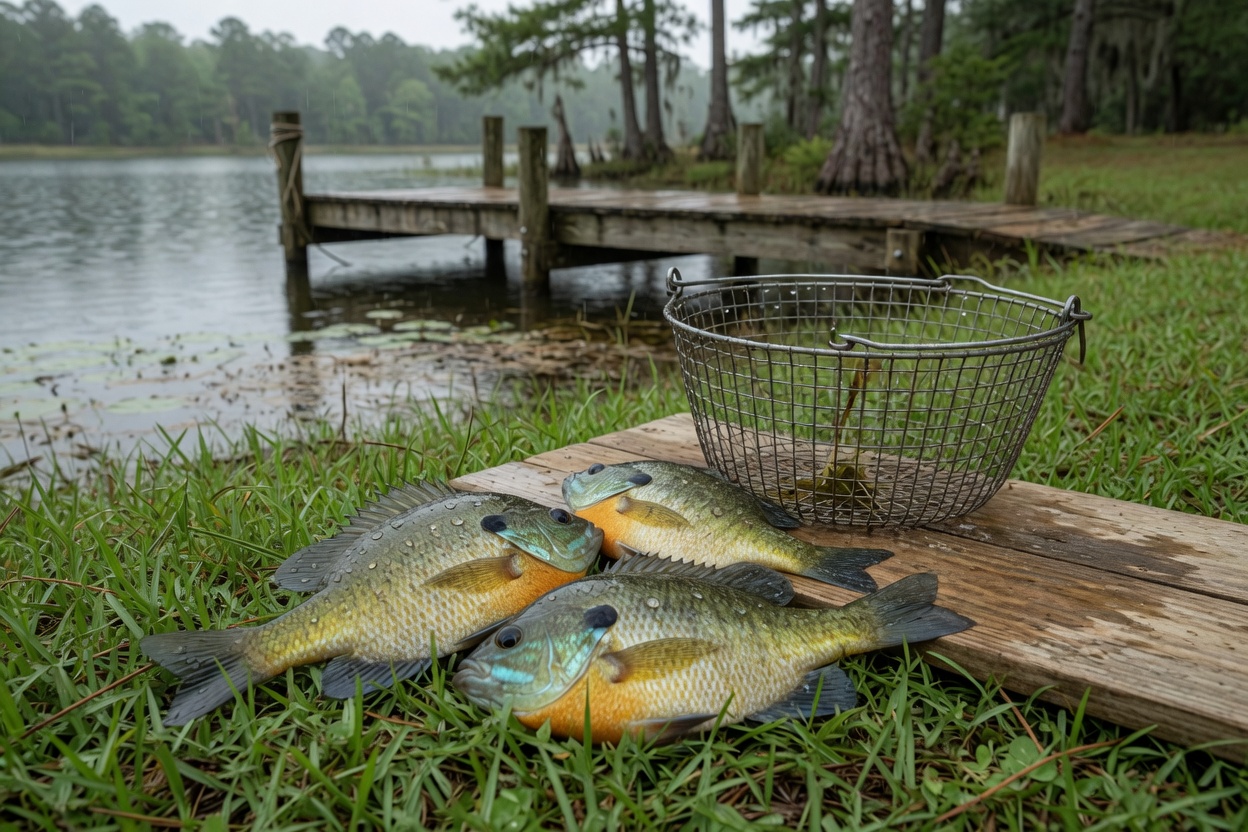
Know your state’s rules. Most require an adult license and set size and creel limits. Your wildlife agency’s website will tell you what applies on your water. Keep what you’ll eat, put the rest back gently, and if you’re curious what to do with a mess of bream, I walk through the next step in how to clean a fish for beginners.
Related: how to fish a pond in February · how to fish a pond in March
Reading the weather the old way
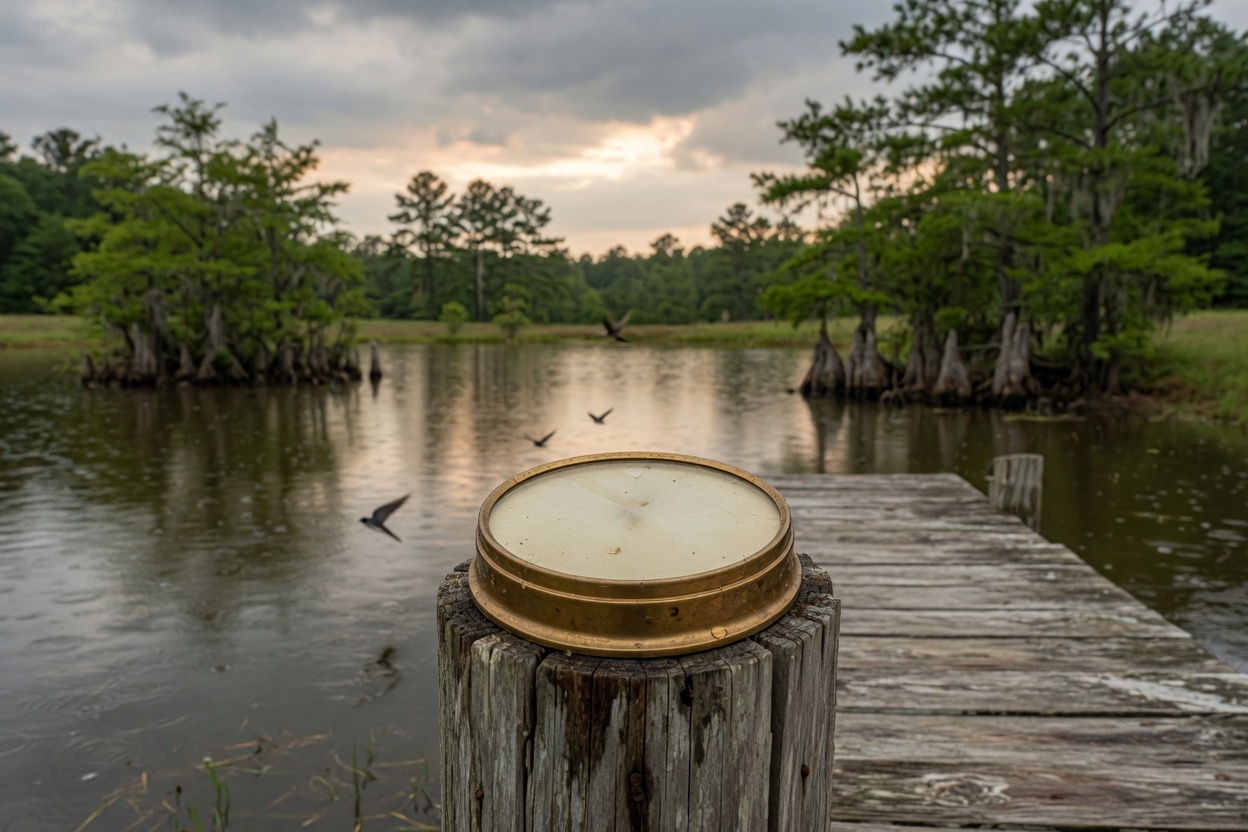
My daddy watched the sky and the birds and knew when the fish would bite. I do the same, with a barometer in the truck for good measure. If you’d like to learn that rhythm, I wrote about it in best days to fish: reading the signs.
If there’s a youngster in your life who’d like to keep track of what they catch, my journal My First Catch is made for them: My First Catch. And if you’d like to plan your trips by the moon and the weather, I put together a free guide. Grab the Best Days to Fish starter kit.
Read the signs.
