How to Fish a Pond in February: A Beginner’s Guide
February pond fishing for beginners: where fish sit in cold water, the best time of day, how to rig slow and small, and how to stay warm and safe.

February is the month Audra says a sensible man stays by the stove, and it is the month I most often find myself on the pond bank with a thermos of coffee and a bobber the color of a ripe tomato. The water is slow and clear, the bank is empty, and every fish I’ve ever caught that month felt like a gift.
Fishing a pond in February is not like fishing in May. The fish are cold, and cold fish move slowly and eat little. But they still eat, and if you slow down to their speed you can come home with supper. Here is how I do it.
You’ll also want warm layers, gloves you can work a hook in, and a few small hooks. I’ll leave those to your own closet and tackle box.
What cold water does to a fish

Fish are cold-blooded. When the pond drops into the 40s, their bodies slow down, and they eat less, move less, and sit near where the water holds a little warmth. A bluegill that will chase a worm across a pond in June might take it in February only if it drifts right past his nose.
That’s why the usual rules change. Cast less. Wait longer. Fish smaller. If you want to understand why, I wrote about reading the water in how to read water temperature for fishing.
Where the fish are
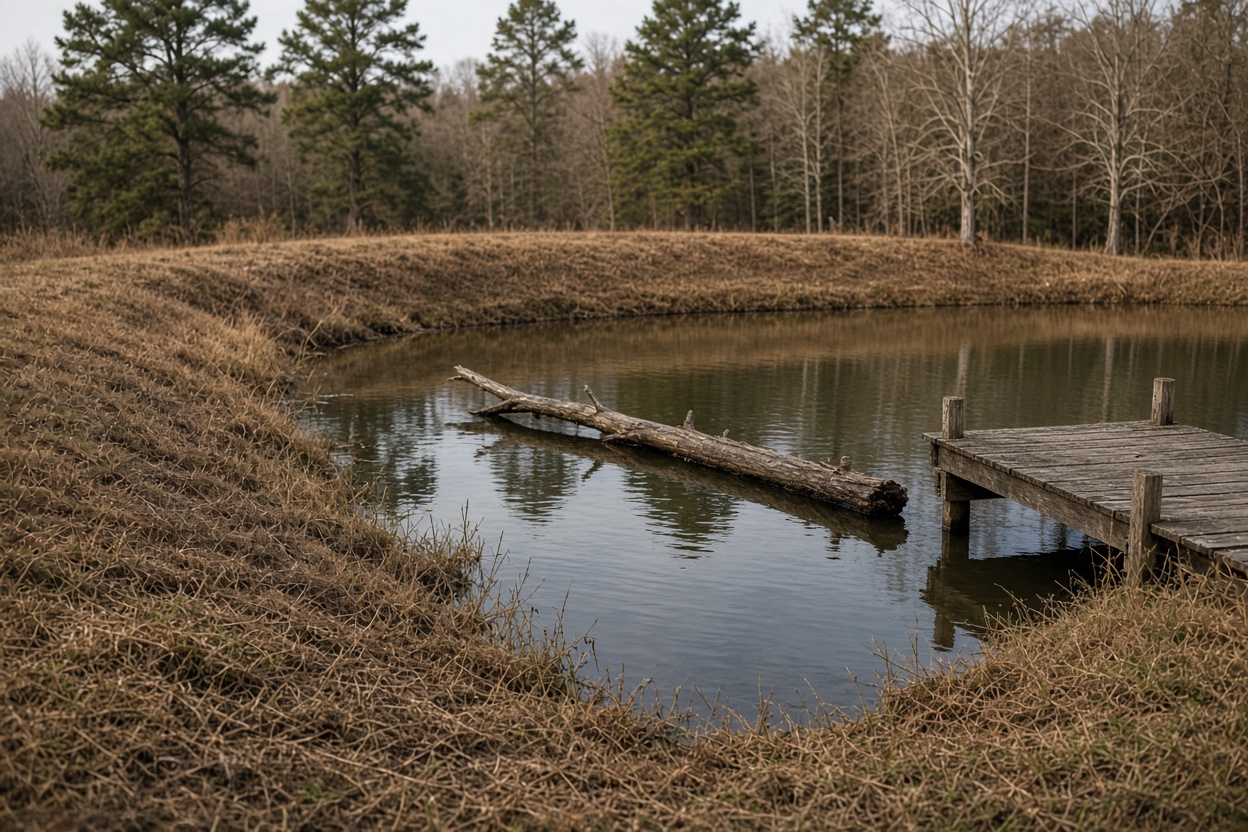
In winter, they go deep and hold close to something. Look for:
– The deepest part of the pond, often near the dam or the old creek channel. Fish collect there, where the water stays steadier.
– The sunny bank. A south-facing bank warms a few degrees by afternoon, and the fish drift up to it.
– Cover. A sunken brush pile, a laydown tree, the edge of a dock post. Fish like to have something to tuck beside.
On the bank, you can’t see the bottom, so think in terms of where you’d want to rest on a cold day. Out of the wind, close to a bit of sun, near something solid. I wrote more on finding them in how to fish a farm pond in winter.
When to go

Midday into mid-afternoon. In February, the warmest part of the day is the best part, and the water on a sunny bank may gain a degree or two. A few warm days in a row, a gentle southern breeze, a steady barometer, those are the days I pull my coat on and go. After a hard freeze, I stay home. The fish need a day or two to settle.
If you like to plan by the moon and the weather, I put a few notes together in best days to fish in winter.
How to rig it, slow and small

Keep your gear simple. Use a spincast combo, a small hook, and a snap-on float set so the bait hangs near the bottom, about a foot or two off it. Put a small piece of worm on, or a single cricket if you can get them. A whole nightcrawler is too much for a cold fish. Tear off a bit and let it hang.
Then be still. Cast out and leave it. A winter bite is a tiny thing: the bobber shivers, or leans a little, or sinks an inch. When it does, don’t snatch. Lift the rod tip slowly and reel.
The Zebco 33 is a fine beginner’s reel for this, and it casts a short bait easily. It isn’t built for long casts or heavy fish, and a more experienced angler will want something with more finesse, but for a pond bank in February it’s what I’d hand to a newcomer. The snap-on floats can slip on a hard cast, so give them a tug after you clip them. For help with the float, see how to rig a bobber for bluegill and crappie. And if the spincast is new to you, how to use a spincast reel for beginners will get you casting in ten minutes.
What you might catch
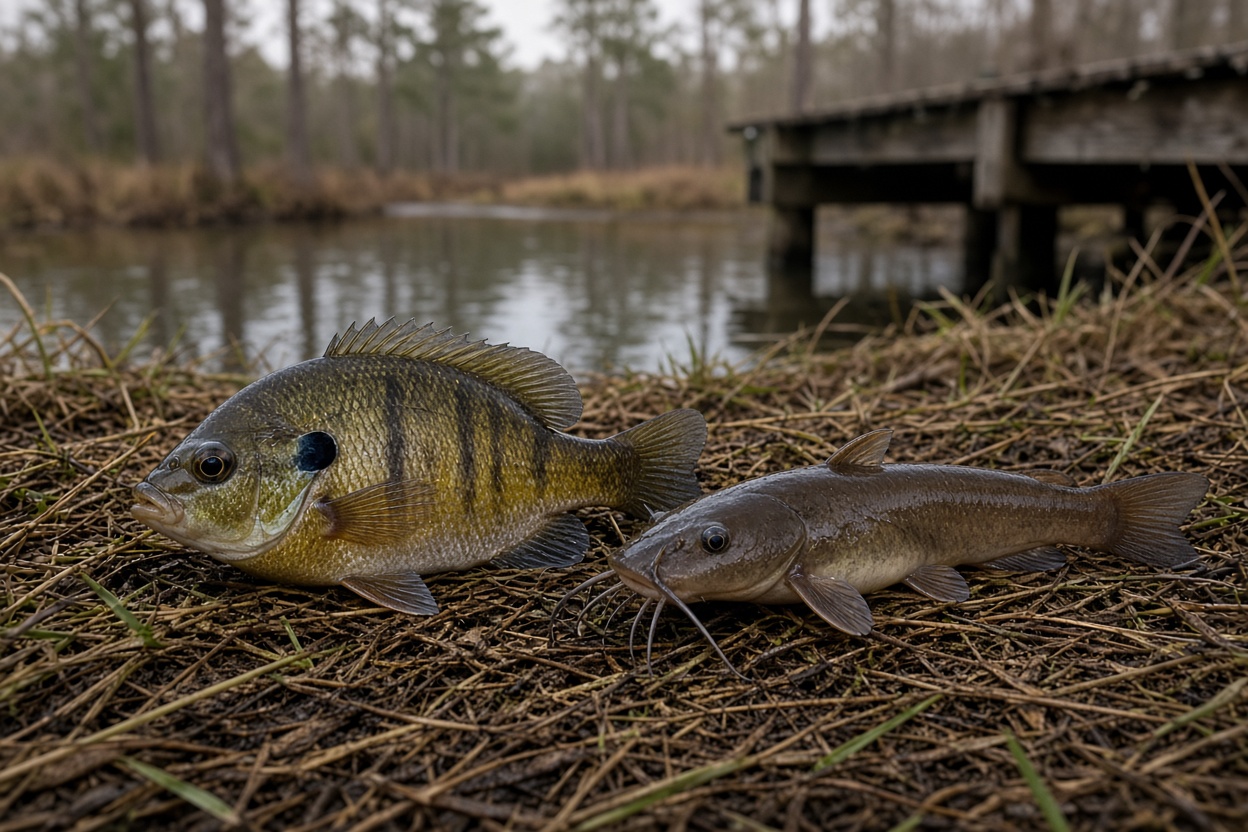
On a pond in my part of the country, February brings you bluegill, the occasional crappie, and sometimes a bullhead or a small catfish near the bottom. Don’t expect a bucket. Two or three fish is a good day, and a skunking is an honest one. I’ve written about the panfish in particular in how to catch bluegill in winter.
Know your state’s rules before you go. Most require an adult license and set size and creel limits. Your wildlife agency’s website will tell you what applies. Keep what you’ll eat and put the rest back gently.
Staying warm and safe
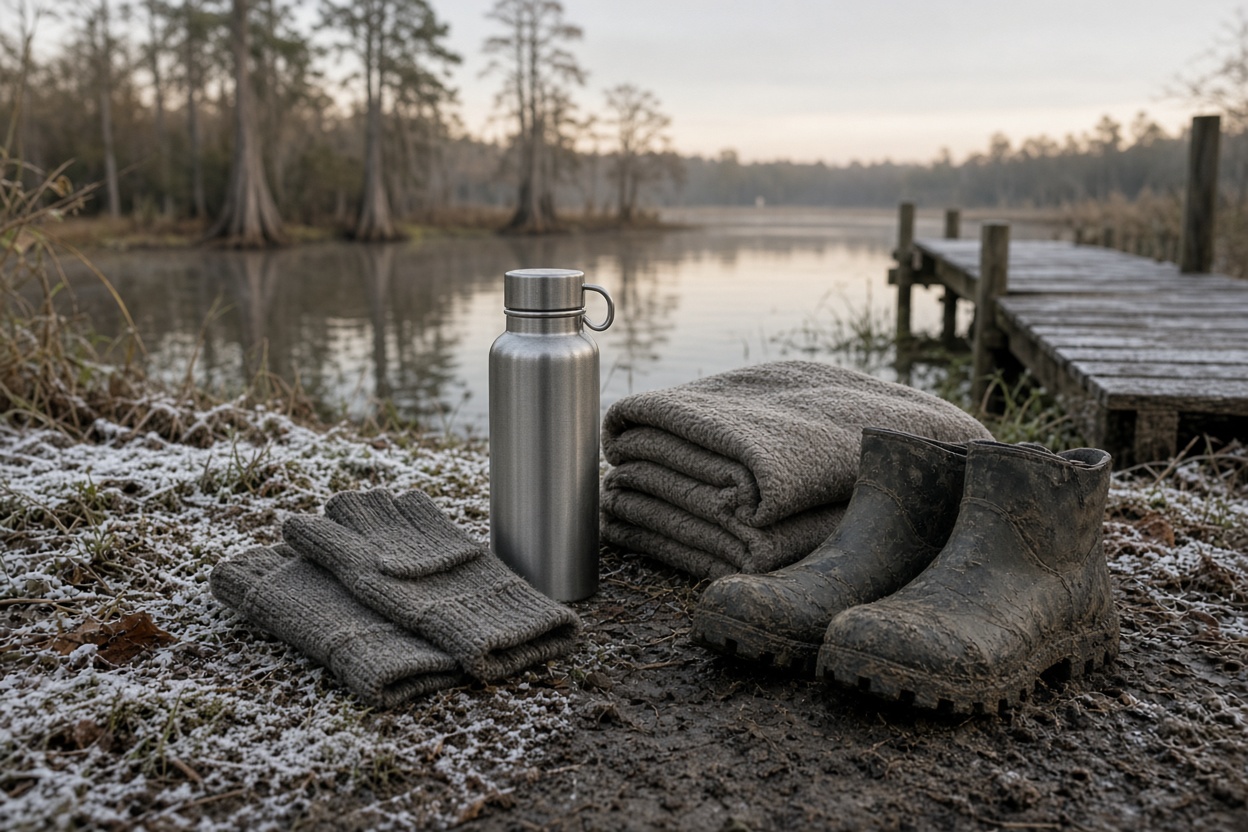
– Dress in layers, with a wool or fleece base, not cotton. Cotton holds the cold.
– Keep your hands working. Fingerless gloves with a mitten flap let you tie a knot and warm up after. I carry hand warmers in my pocket.
– Mind the bank. February banks are slick clay and frost. Wear boots with grip and don’t lean out.
– Stay off the ice. If the pond has a skin of ice, stay on the bank. Ice that looks thick may not be, and I would not trust any of it.
– Tell somebody where you are, and take a child only on a mild day with a short plan. For tips, see how to teach a kid to fish.
I wrote a longer list for the bank in how to pack a cold-weather bank fishing bag.
Reading the signs, the old way

My daddy watched the sky, the birds, and the way the cattle stood in the pasture, and he knew when the fish would bite. I do much the same, with a thermometer in the truck. If you’d like to learn that rhythm, I wrote about it in best days to fish: reading the signs.
And if you’d like to plan your trips by the moon and the weather, I put together a free guide. Grab the Best Days to Fish starter kit.
Read the signs.
