How to Catch Bullheads From a Pond: Bait, Rig, and Handling
Bullheads bite on a warm evening when little else will. Here's the bait, the bottom rig, and the safe way to handle those spines and bring a mess home.
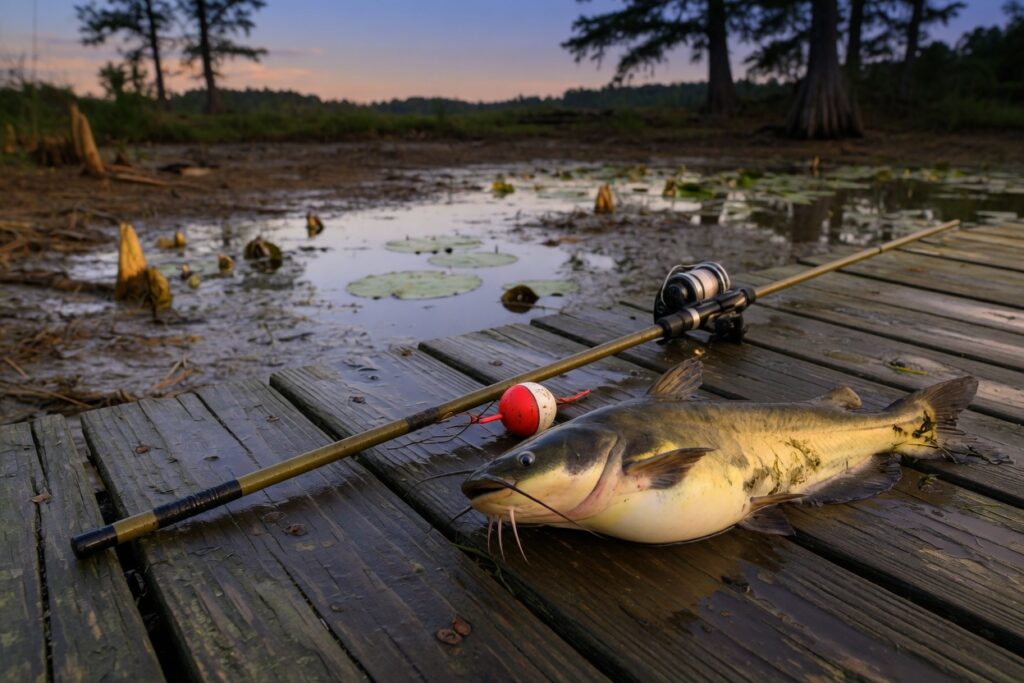
The first bullhead my grandson Isaiah ever caught came off the muddy corner of my pond where the creek runs in, and he held it out at arm’s length like it might bite him. It didn’t. It grunted, which surprised him more than anything, and the whiskers swung back and forth while he decided whether he was proud or frightened. He decided on proud, and that is how a boy gets hooked on fishing.
A bullhead is a small catfish, usually a pound or less, and it is one of the most dependable fish a beginner can catch from a farm pond. It doesn’t care about a cold front or a bright afternoon the way a bluegill does. It wants a worm on the bottom as the light goes, and it will keep taking one. This is a post to read in the winter, because when the water warms in spring it is the fish that will fill your bucket first.
You’ll also need a few small hooks in sizes 4 to 6, a couple of split-shot sinkers or one small egg sinker, a pair of needle-nose pliers, and a bucket. I won’t point you to a particular brand of those, because any of the common ones will do the job.
Where and when

Bullheads like soft, muddy bottoms and slow water. Look for the shallow corners of a pond, the mouth of a creek, a weedy bank, or a place where a ditch drains in. They feed mostly at night and at dusk, so the two hours around sundown are the best time you have. In the spring they begin to bite once the water climbs into the sixties, and they will stay in that mood through the summer.
You can catch them in the middle of the day, but the evening pays better. Take a chair, a lantern, and some patience.
The bait

A worm is the honest answer. A nightcrawler, whole or in pieces, on the bottom will do it. I wrote about worms in how to fish with worms for beginners, and everything there applies. Bullheads will also take chicken liver, cut bait, and the stinky prepared baits sold for catfish. I stay with worms. They are cheap, clean to handle, and a child can bait them.
Thread the crawler on so a tail or two hangs free. A bullhead has small eyes and finds food by smell and by those barbels, so the bait should smell like something and move a little.
The rig
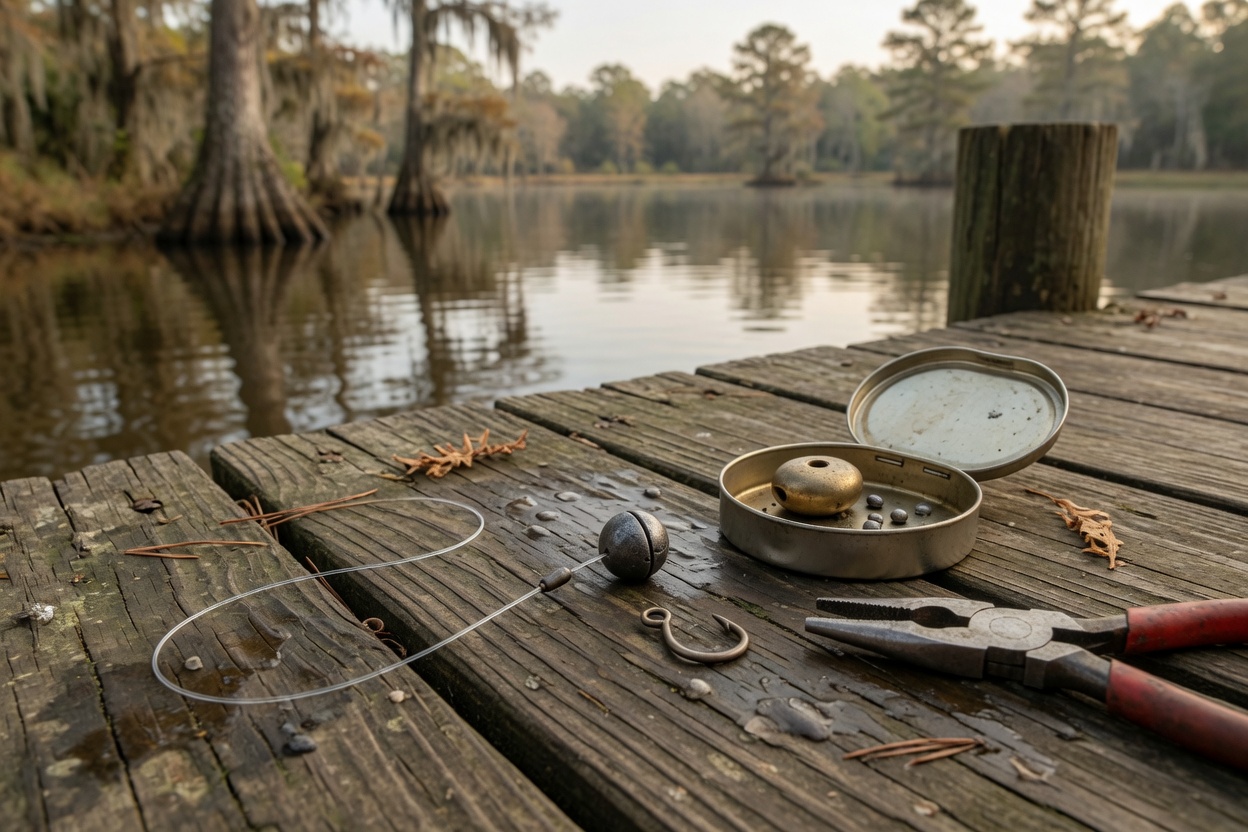
Keep it simple. Slide a sinker onto the line, tie on a small hook, and cast to the bottom. Or use a split-shot sinker pinched on about a foot above the hook. The aim is bait sitting on or just above the mud.
A bobber is optional for bullheads, and I’ll say so plainly. Many old hands fish with the line tight and feel the bite. But a snap-on float set so the bait hangs a few inches above the bottom lets a child watch the bite instead of feeling for it, and that is worth something. Snap-on floats can slip on a hard cast, so check it after you set it.
For a rod, a spincast combo is plenty. It is not made for a long cast across a big lake, but a bullhead pond is a short cast. If you haven’t used one, how to use a spincast reel for beginners will get you started.
Setting the hook

Cast out, let the bait settle, and take up the slack. A bullhead bite is often a steady tug, not a snap. When the line starts to move off or the bobber slides away, wait a beat, then lift the rod tip and reel. Don’t haul back hard. They have small, soft mouths and a hard jerk can pull the hook out.
If you’d like to understand what the fish is doing before you go, my Best Days to Fish starter kit shows how I pick an evening by the moon and the weather.
Handling the spines

This is the part I make every beginner listen to. A bullhead has a sharp spine at the front of each pectoral fin, on either side behind the gill, and one at the front of the dorsal fin on its back. They can stab, and the sting can burn and swell for a good while afterward. Clean any puncture well, and see a doctor if it swells badly or doesn’t heal.
Wet your hand. Grip the fish firmly across the back, behind the head, with your fingers kept clear of the front edge of those fins. Don’t grab it by the belly or run a hand along the side. Use the pliers to back the hook out. If the fish swallowed the hook, cut the line close and let it go, or keep it if you’re keeping it, but don’t dig for it with your fingers.
Teach a child to do this with you, and don’t hand over the fish until they’ve seen how.
Keeping and cleaning

Bullheads are good eating. They have no scales, so you skin them rather than scale them. Nail or clamp the head, cut around behind the gill, and pull the skin back with pliers. How to clean a fish for beginners covers the basics, and when you’re ready to cook, how to fry fresh-caught fish is the way I do it.
Know your local rules before you go. Most states require a license for adults and set limits on what you can keep, and the wildlife agency’s website will tell you what applies. Fish from a pond that gets farm runoff or has an advisory posted deserve a second thought before you eat them. Mine is clean, and I know it.
The best part
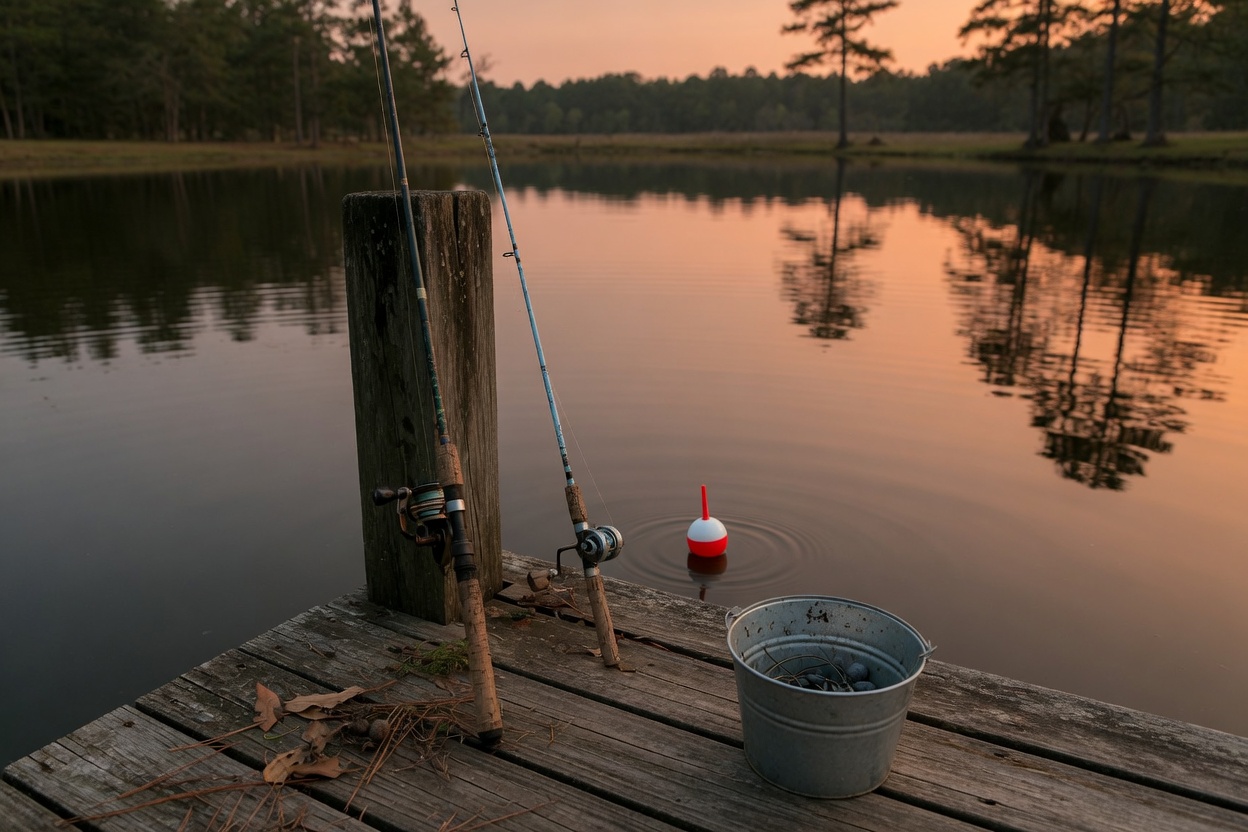
The best part isn’t the fish. It is a child and an elder on a dock at dusk, the frogs starting up, and a bobber that no one is watching until it goes under. If you want something for a young angler to keep a record of their first catches, my book My First Catch is a fishing journal made for them: My First Catch. And for more on bringing a youngster along, see how to teach a kid to fish.
Read the signs.
