How to Forage Spicebush in Appalachia for Twig Tea
How to forage spicebush in Appalachia: where it grows in the coves, how to check it by scent, gathering twigs and berries without harm, and making twig tea.
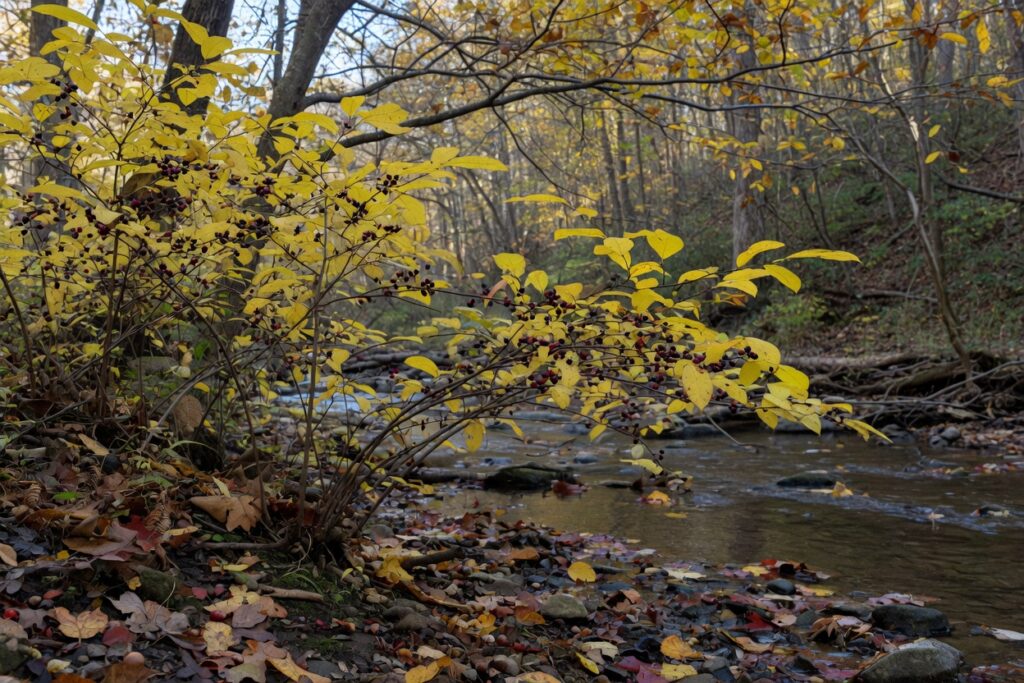
The first time I got spicebush wrong, I was nine years old and I had pulled a handful of twigs off the wrong shrub because my grandmother had said “the one by the branch.” Every shrub along that creek was by the branch. She took one twig out of my fist, snapped it, held it under my nose, and handed it back. It smelled like nothing, which was the whole lesson. Spicebush announces itself the moment you break it, and if the shrub says nothing, you have the wrong shrub.
I still gather it every year in the coves behind my place outside Marshall, North Carolina. The berries come ripe in the fall, and the twigs are good all winter, so this is a plant you can plan a cold-weather kettle around. Here is how I find it, how I take it without hurting the shrub, and what I do with it once it’s on the kitchen table.
You’ll also want a pair of hand pruners, a basket, and a cutting board and heavy knife for chopping twigs. I don’t have listings for those that I’d stand behind, so use what’s already in your kitchen and shed.
Where spicebush grows
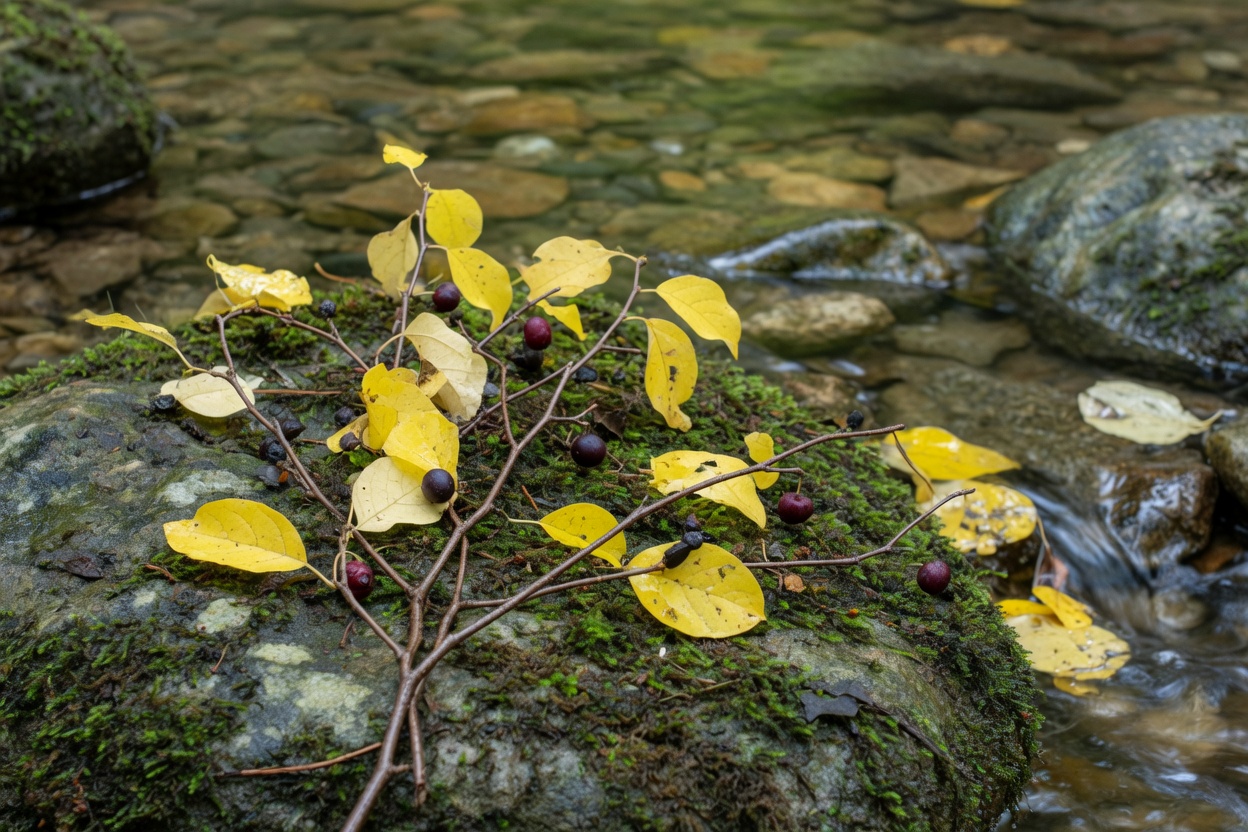
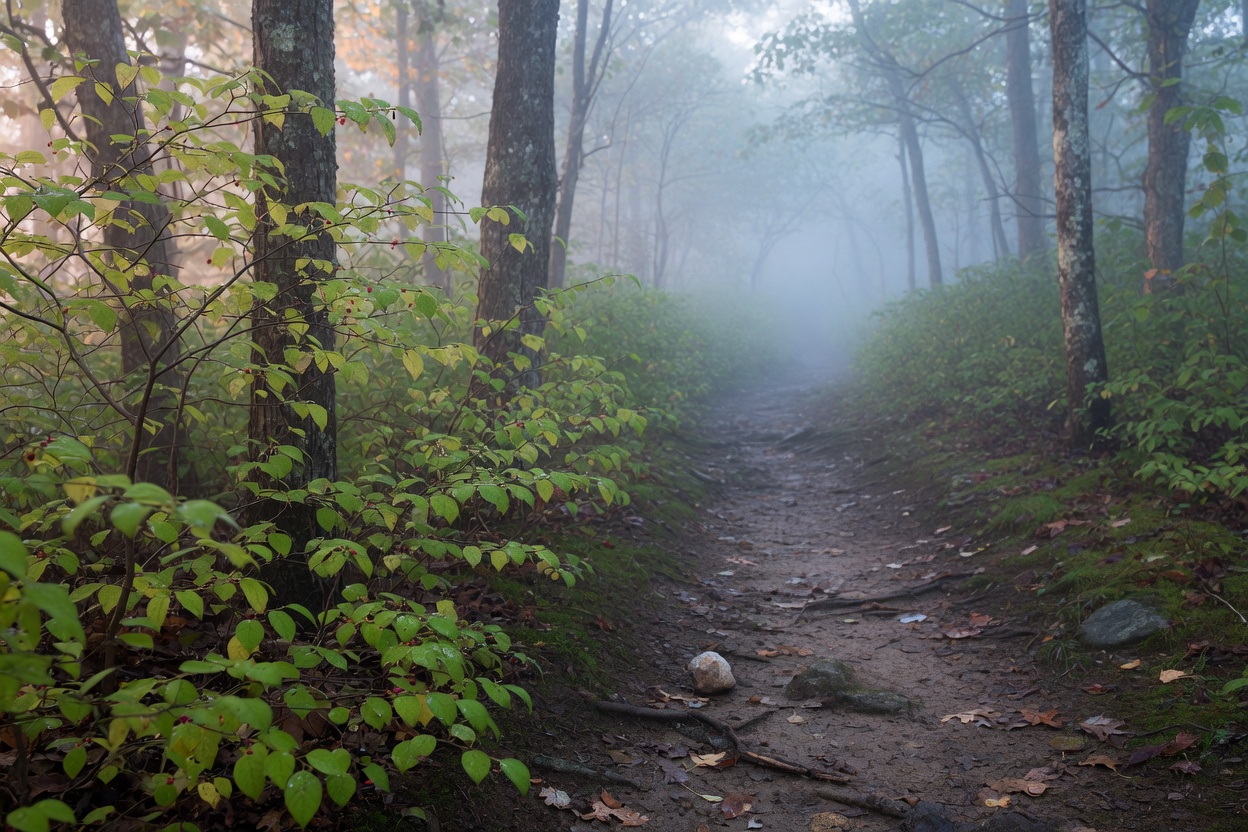
Spicebush (Lindera benzoin) is a native understory shrub of the eastern woods. In the southern mountains it likes moist ground: creek bottoms, cove floors, the seepy edges of a north-facing slope, and the shade under tulip poplar and buckeye. It usually stands six to twelve feet tall, often in loose patches, with smooth grayish-brown bark dotted with small pale spots called lenticels. The leaves are simple, alternate, and oval, with smooth edges.
Old-timers here also called it fever bush or wild allspice. I mention the folk names because you’ll hear them, but go by Lindera benzoin when you check a book. In early March, well before any leaf, the bare twigs are covered in tight clusters of small yellow blossoms. That’s the easiest time of year to spot a patch, so I note the locations in March and come back in the fall.
How I check it before I take anything
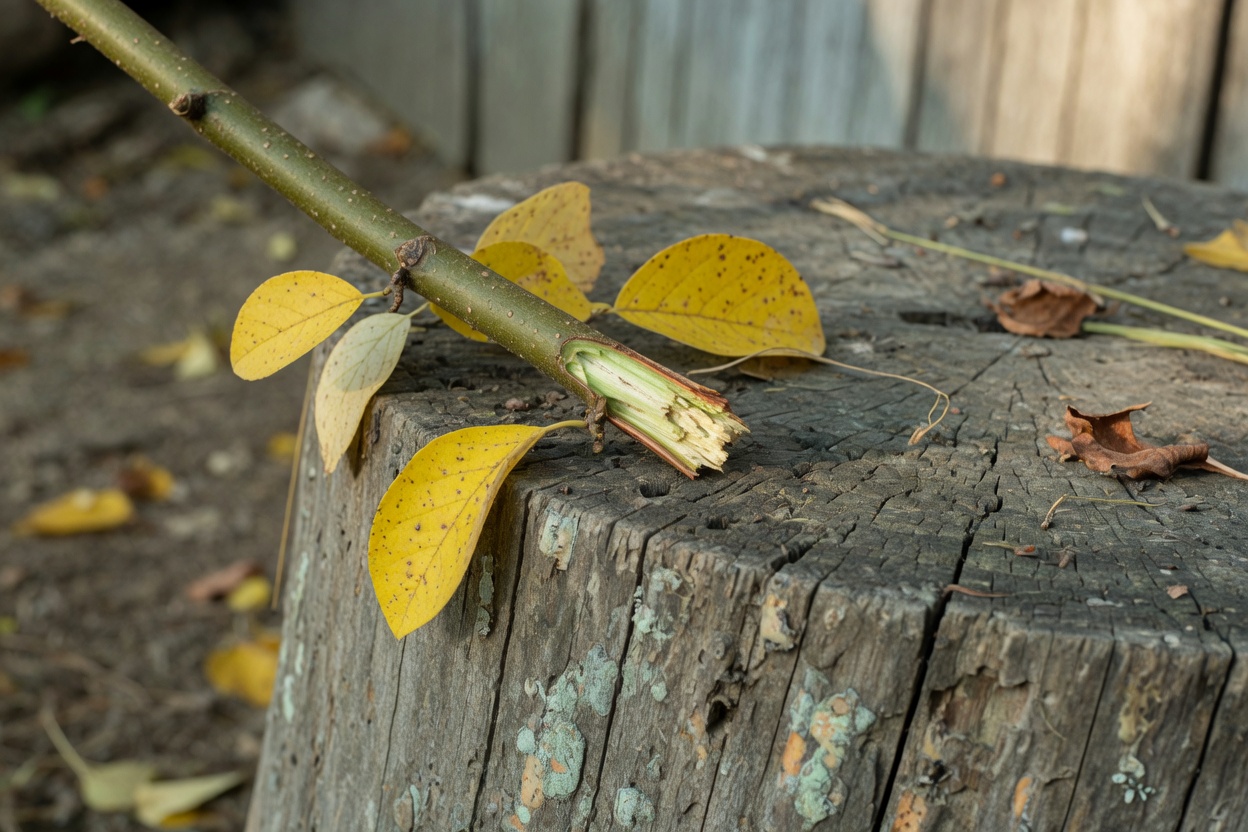
Everything I gather from this plant comes down to the crushed-twig test. Scratch the bark or snap a small twig and smell it. Spicebush gives off a sharp, lemony, faintly spicy smell that’s hard to describe and easy to recognize once you’ve had it. Crush a leaf and you’ll get the same smell. Many other shrubs on those creek banks have smooth bark and alternate leaves, and none of them smell like this.
The scent is one clue, not a verdict. I also check that the leaves are alternate and simple, that the bark and lenticels match, and that the habitat makes sense. If any one of those is off, I leave the shrub alone. There are plenty of woody understory plants in these coves, and I would rather walk away from ten shrubs than misname one.
Never use any wild plant on a book, app, or single source alone. Confirm with multiple reputable guides and an experienced local forager, and when in doubt, leave it. That goes for me too. I walked my first patches with my grandmother and later with other experienced foragers before I trusted my own nose.
How to gather twigs and berries without hurting the shrub
Spicebush is the host plant for the spicebush swallowtail, and the caterpillars fold themselves into its leaves through the summer. That is reason enough to take gently. My rule is a few twigs from each shrub, a few shrubs from each patch, and never more than a small fraction of any stand. A shrub that’s been stripped won’t be generous next year.
Twigs can be cut any time of year, but I prefer November through February. Use clean pruners and take pencil-thin twigs from the outer growth, cutting just above a side bud. A handful, maybe thirty or forty twigs cut to finger length, will keep my kettle going for a good part of the winter. I avoid anything along a road or a sprayed fence line, because the plant takes up what the ground gives it.
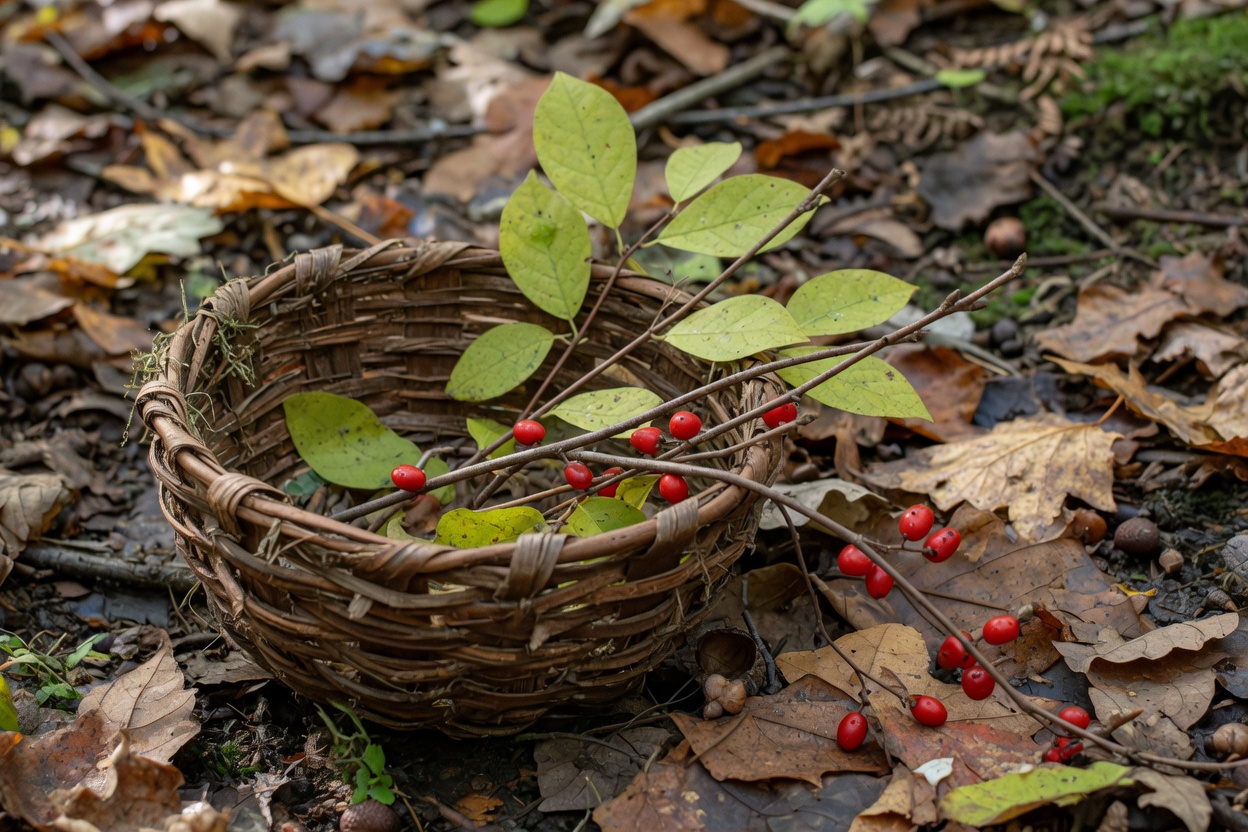
The berries ripen to scarlet in September and October and are usually gone quickly, since the birds know exactly when they’re ready. They’re small, glossy, and oily, and they smell like allspice when crushed. I take a cupful at most, from several shrubs, and leave the rest. If you’re reading this in November or December, you’ve probably missed the berries this year. Mark the shrubs and try again next fall. The twigs are what you can gather right now.
Drying and storing
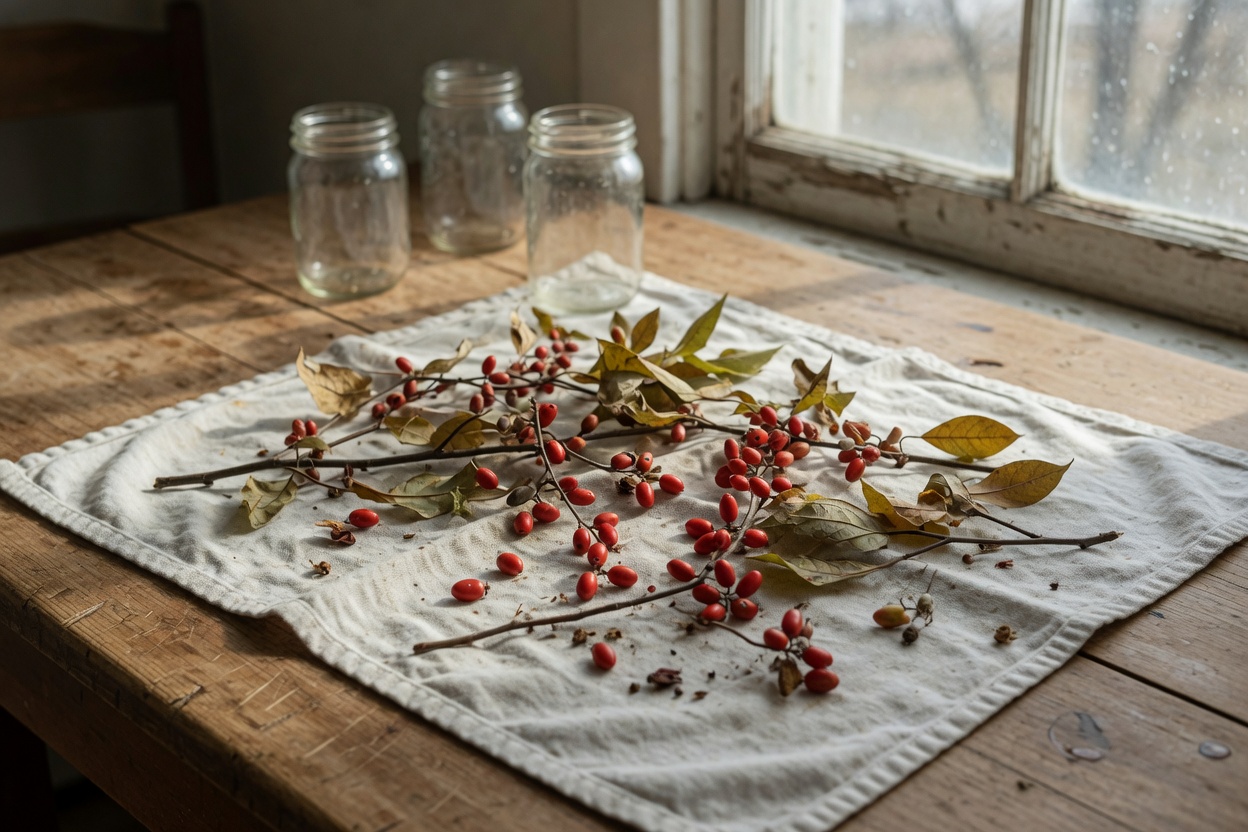
For twigs, I chop them into pieces about half an inch long while they’re still fresh, since dried twigs are stubborn to cut. I spread them on a baking sheet lined with a clean towel in a warm, dry room for a week or two, until they snap cleanly. Damp twigs go musty, so make sure they’re brittle before you close them up. I learned that the hard way with a batch put up in a wet November and opened in January to a smell of old basement.
Berries I dry whole on a screen in the same room, until they’re hard and wrinkled, and then I keep them in a wide-mouth jar out of the light. Ground berries go in a small tin and get used within a season, because the fragrance fades. If your winters run as damp as ours, my post on storing mountain herbs through a humid Appalachian winter covers what I do to keep everything dry.
Making spicebush twig tea
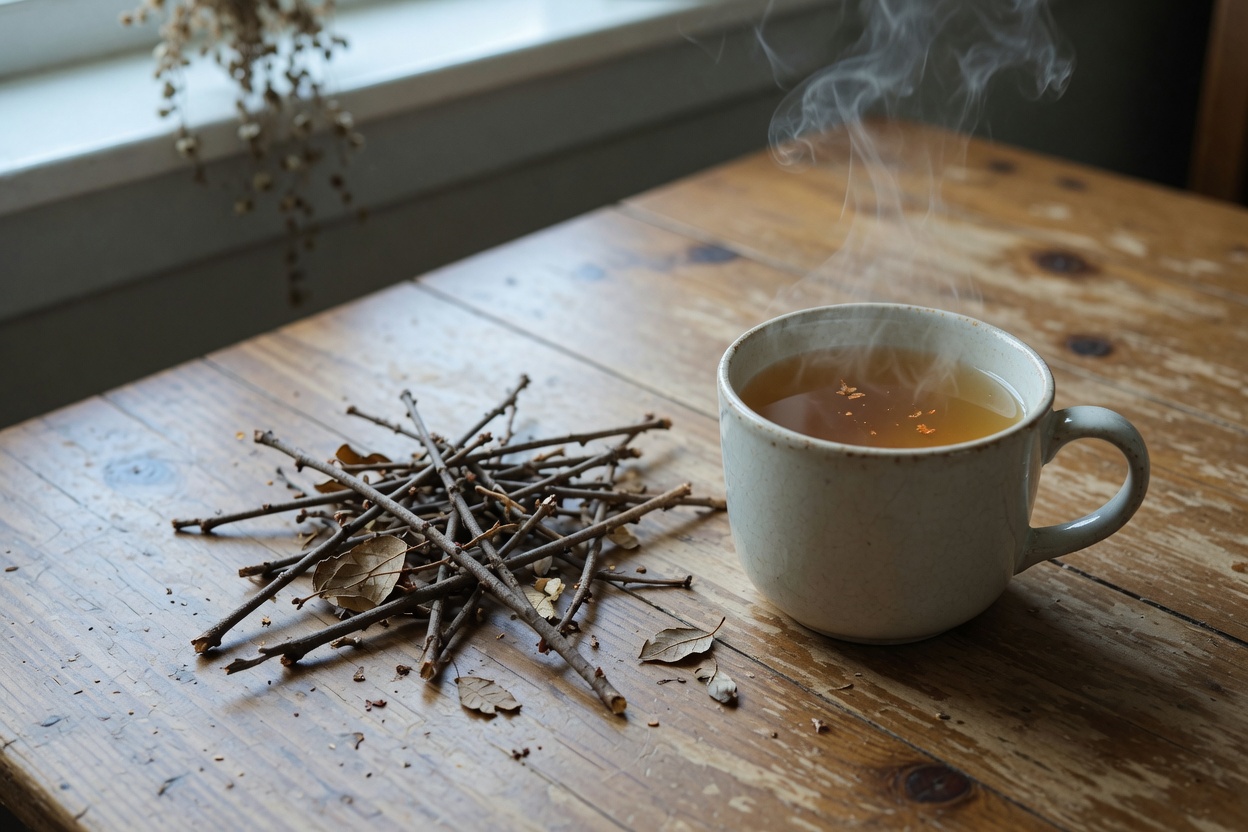
This is a traditional mountain tea, and it is mild, warm, and pleasantly spicy. The Cherokee and other Southeastern peoples used spicebush long before settler families did, as a tea and as a seasoning, and the families I grew up around took the practice from that ground. I’m sharing what I learned. It was theirs first.
Here’s how I make it. Take a small handful of chopped twigs, dried or fresh, and bruise them with the flat of a knife so the inside of the wood is exposed. Cover them with about a quart of water, bring it to a boil, and simmer covered for ten to fifteen minutes. Then let it stand another ten. Strain through cheesecloth into a jar or a cup, and sweeten with honey if you like.
What it tastes like, honestly: gentle, a little citrusy and a little like allspice, with a woody edge. It is not a strong tea, and if you expect a bold black-tea flavor, it will disappoint you. I like it best on a cold evening, next to pine-needle tea, and I’d call it a plain, pleasant winter drink and nothing more. I won’t claim it does anything for anybody’s health. That’s not what I use it for, and I’m not the person to say.
Ways I use the berries
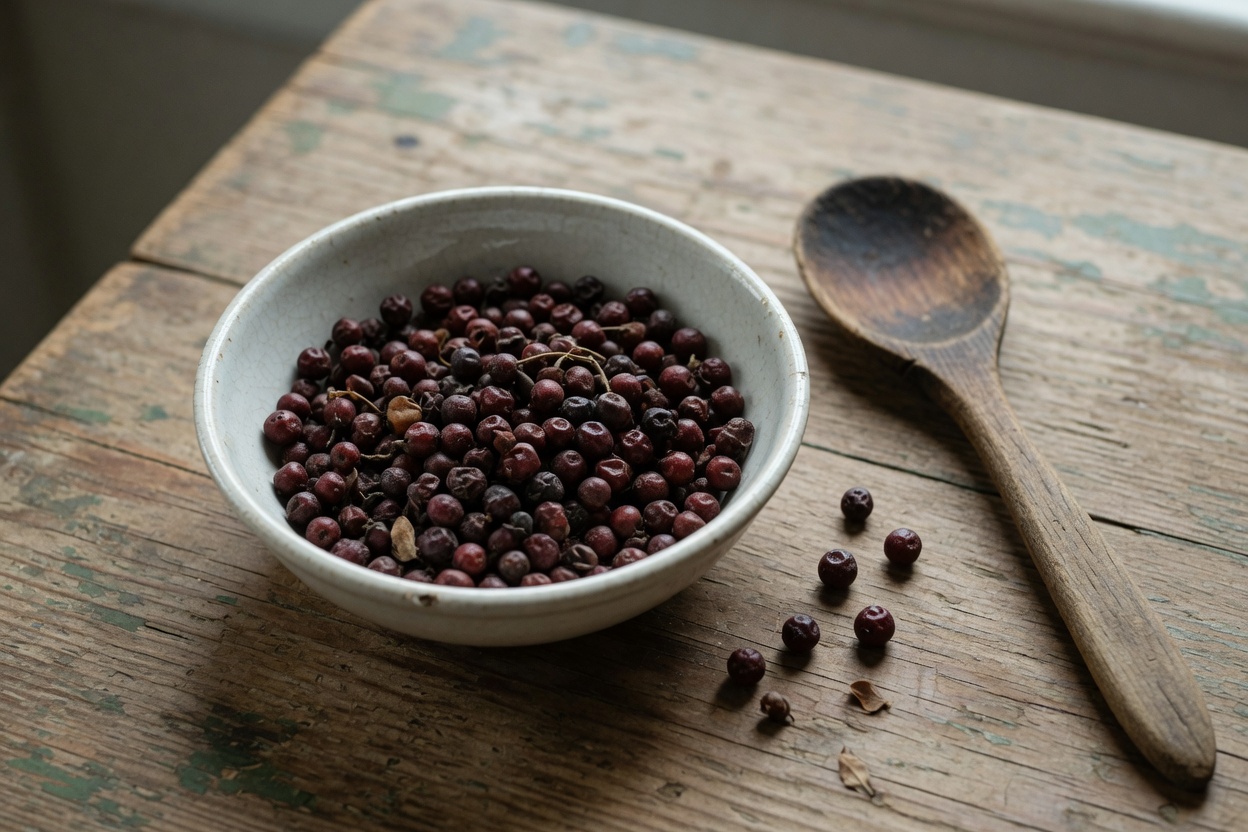
The dried, ground berries are what I reach for in place of allspice. A pinch goes into baked apples, into a pot of dried beans, or into a spice cake. They’re stronger than you’d expect, and a little goes a long way, so I start with less than a recipe calls for and taste as I go. The flavor is not identical to allspice, and I’d say it’s a bit more oily and floral, but it’s a fine cousin.
One caution on the cons. Spicebush isn’t a plant everyone likes, and some people don’t care for the resinous edge. Try a small cup before you commit to a pot. Start with a small amount of anything new, and keep the berries out of reach of children who might mistake them for candy.
Where to go from here
If you want to build the skill to find spicebush and its neighbors on your own, start with what to forage in Appalachia in spring, when the yellow blossoms make patches easy to mark. My post on identifying Appalachian medicinal plants in winter shows what to look for when the leaves are gone, which is how I find spicebush twigs from November on. And if you want another twig-and-needle tea for the same cold months, there’s how to forage eastern white pine needles for tea.
A patch of spicebush is the kind of thing I could walk you through in an afternoon in the cove, and it’s the kind of knowledge I put into my book, Appalachian Medicinal Plants: how to tell each plant from its look-alikes, when to gather it, how to do it without harming the stand, and how the mountain families before us put it up. A blog post can get you started on one shrub. The book is the deeper resource for the rest of what grows in the hollow behind it.
