How to Make a White Pine Pitch Salve for Winter Hands
How to gather hardened white pine resin and make a plain pitch salve for winter hands, with the jars, cloth, and tins I use in my Madison County kitchen.
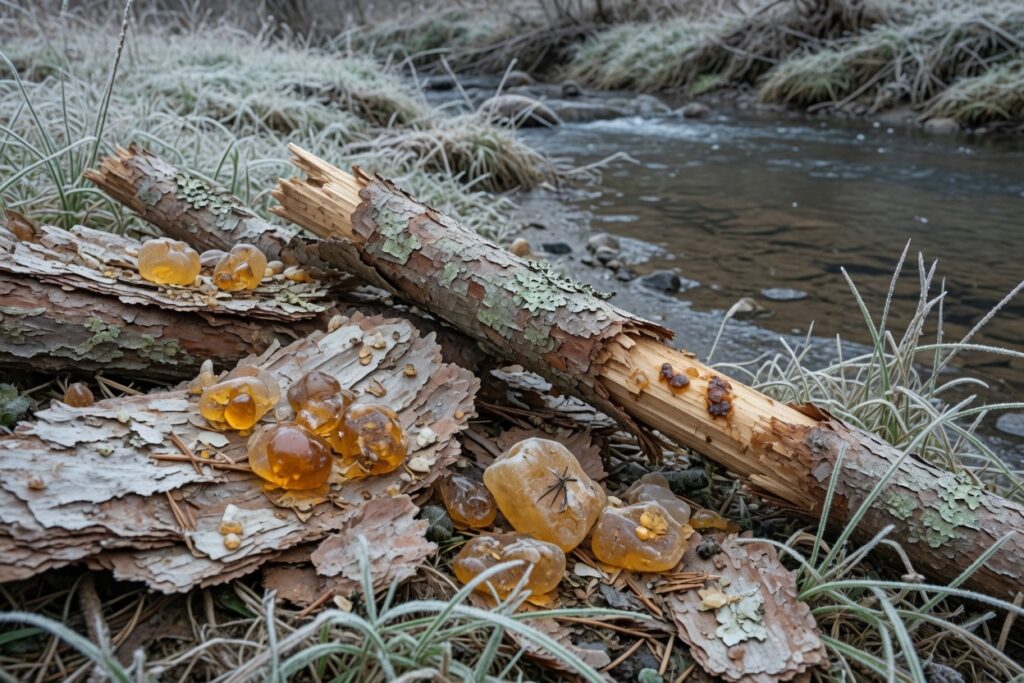
Every winter, a few days after the first hard freeze, I walk the white pines along the fence row above the creek and look for what the wind has left on the ground. A limb comes down in every storm, and where it broke, the tree bleeds a little resin. In summer that resin is a sticky nuisance that welds itself to your fingers and your good pants. In the cold it goes hard and amber, and it chips off the bark in beads the size of a pea.
My grandmother kept a tin of pitch salve on the shelf above the kitchen sink from November until the ground thawed. It was for hands that had spent the fall in dirt and the winter in dishwater and stovewood. She never claimed more for it than that, and neither will I. Pitch salve is an old mountain preparation for work-roughened skin, and it is a good one to learn because it teaches you how a salve is put together, start to finish, out of one thing you gathered yourself.
It is also messier than any other salve I make. I will tell you where, so you don’t lose a good pot the way I did.
Know your tree first
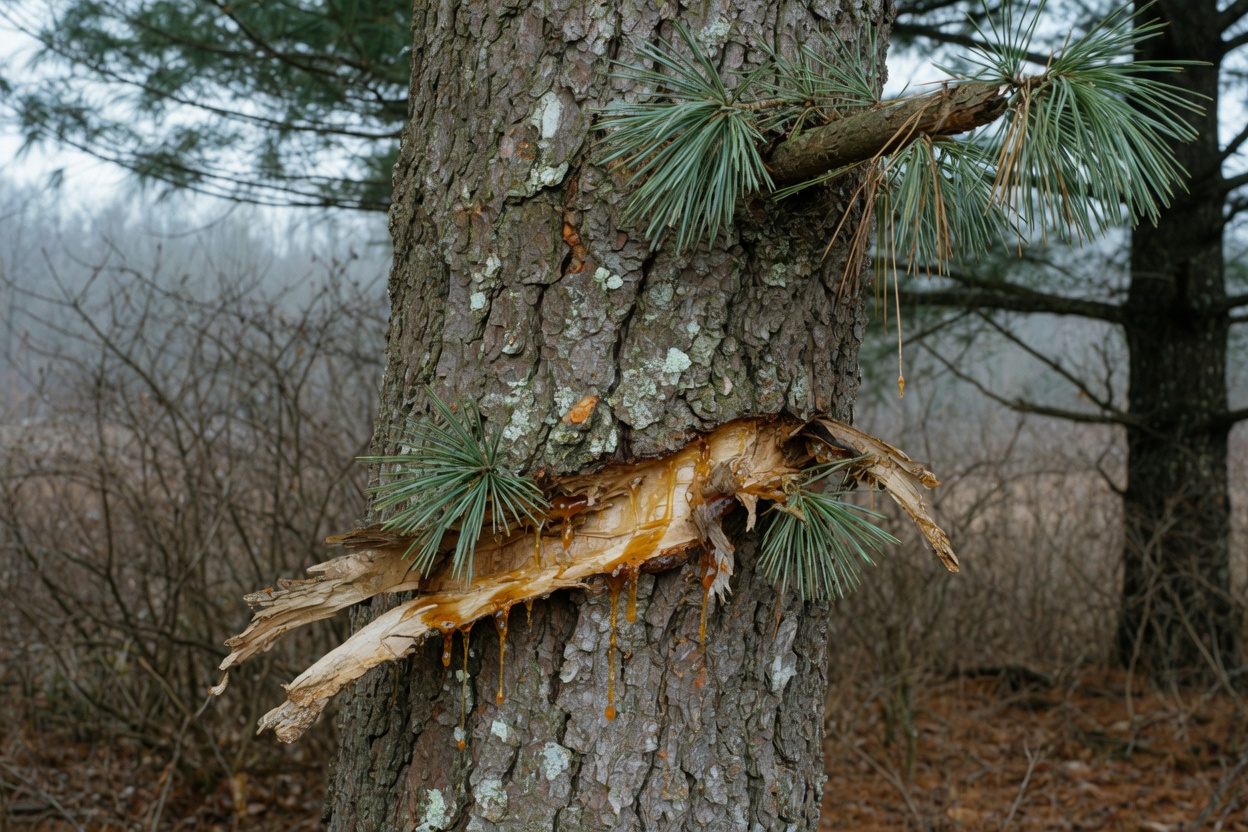
White pine is Pinus strobus, and the reliable mark is the needles: five to a bundle, soft, slender, three to five inches long. Count them on the actual bundle where they join the twig. Virginia pine and pitch pine carry two and three needles and grow rougher and shorter, and they also make resin, but they are a different tree and I only work with the one I can name for certain. If you can’t count five, walk on.
The Cherokee, whose homeland this is, have long used pines in their own ways, and Hamel and Chiltoskey’s Cherokee Plants and Their Uses is the published place to read what is documented. I learned my pitch salve from my grandmother’s kitchen, not from anyone else’s tradition, and I credit theirs without borrowing it.
Gathering the pitch without hurting the tree

Take hardened resin from limbs and trunks that are already down or already broken. Do not cut, gouge, or box a living white pine to get it. A pine that is wounded on purpose is a tree you have shortened the life of, and there is plenty of resin on any woodlot after a winter storm.
Gather on your own land or with the landowner’s permission. On national forest ground, call the district office before you fill a bag; rules on personal-use gathering differ from one ranger district to the next, and it takes five minutes to ask.
Chip the cold resin into a jar with a butter knife or the back of a spoon. It will have bark and needle bits stuck to it, and that is fine because you will strain it later. Two heaping tablespoons of chipped pitch is enough for about four little tins. Keep your hands as clean as you can while you work, or accept that they will smell like a Christmas tree until Thursday.
Melting and straining
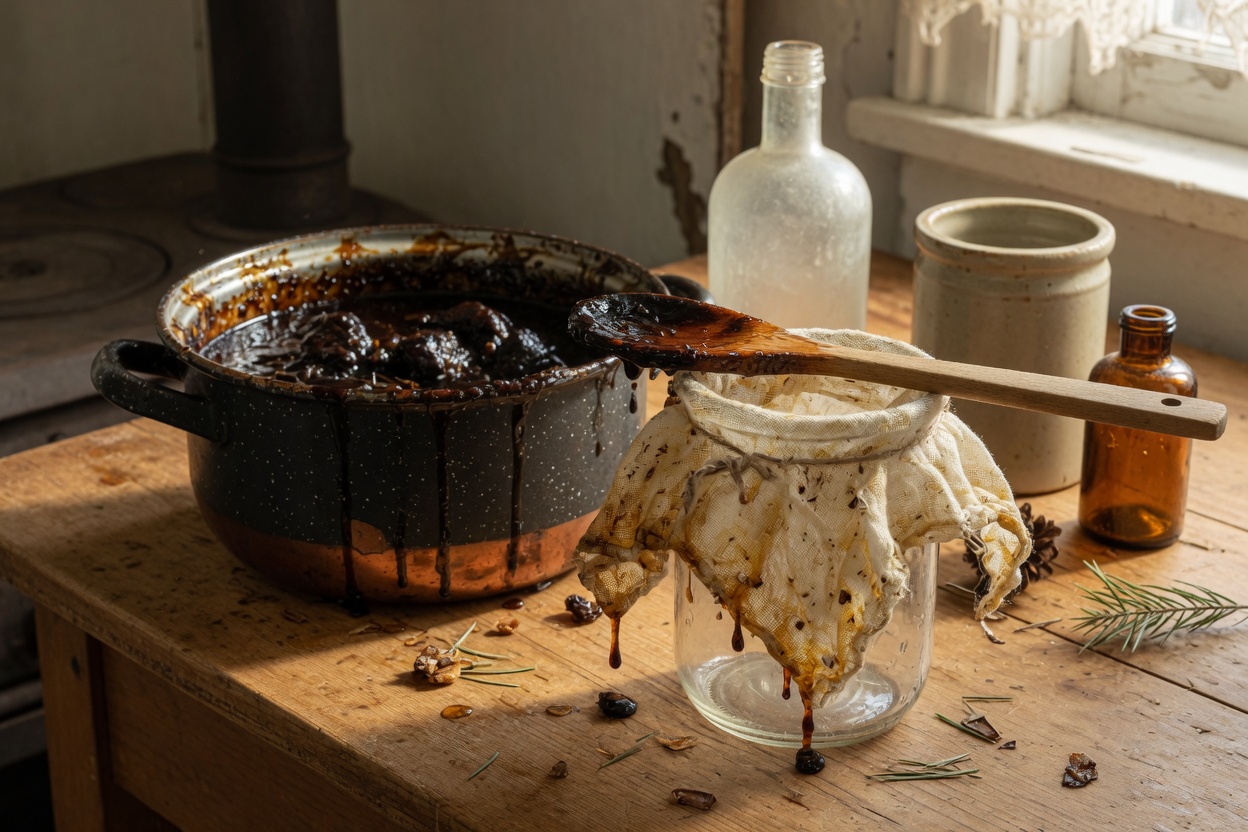
This is the step that costs people a pot. Pine resin does not wash out of a saucepan; it has to be dissolved in oil and then scrubbed with more oil before soap will touch it. I use a dedicated wide-mouth pint jar and let it live at the back of the cupboard afterward, out of the dish rotation.
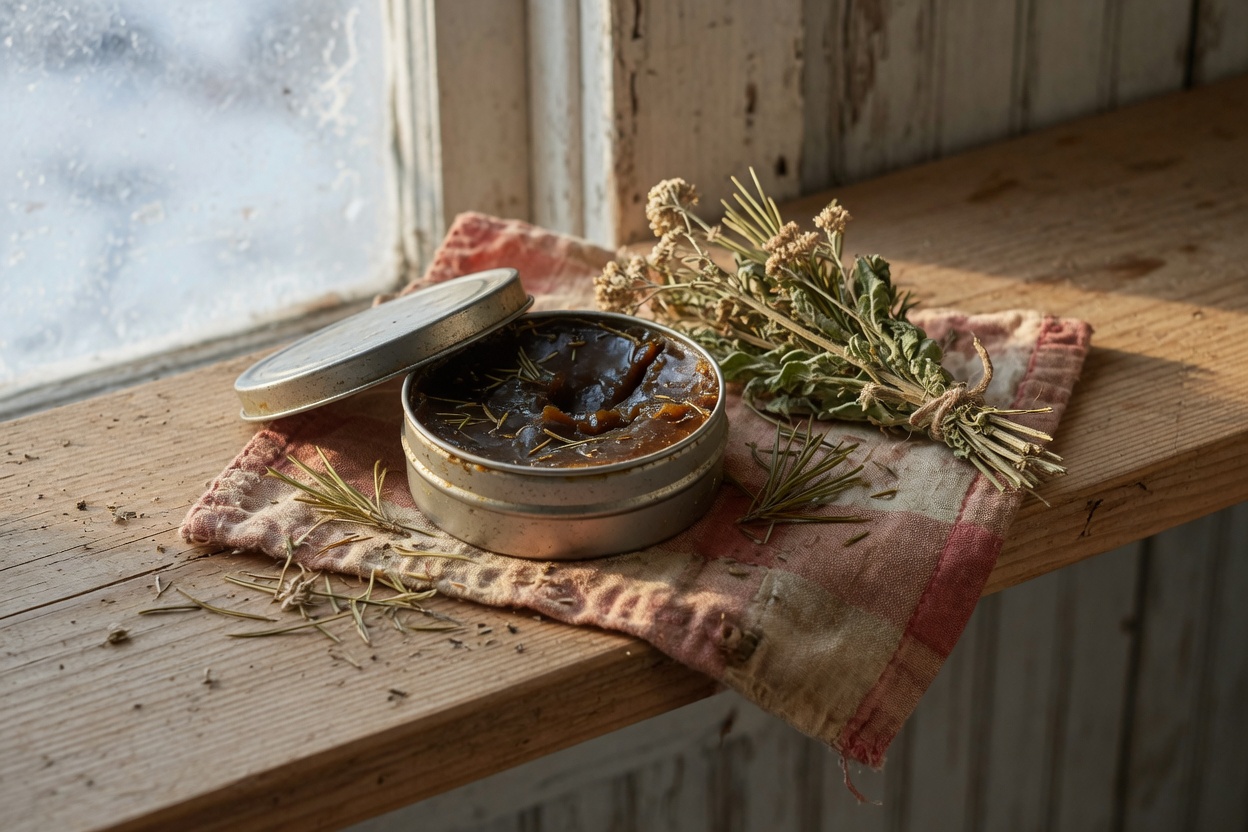
Put the chipped pitch and about half a cup of jojoba oil in the jar. Set the jar on a folded dish towel in a pan of water and bring the water to a slow simmer, never a boil. Never set the glass straight on the burner or on the bare pan bottom, because it will crack. Stir with a wooden chopstick every ten minutes or so. The pitch takes forty-five minutes to an hour to melt into the oil, and it does not melt fully clear. Expect a dark, syrupy amber with some stubborn flecks.
Now strain. Fold a piece of grade-90 cheesecloth into four layers and set it over a second jar or a measuring cup, and pour the hot oil through. The tight weave is why I use grade 90 here; a loose cloth lets the bark grit straight through, and grit in a salve feels like a mistake. Work while the oil is hot, because it thickens fast as it cools. The cloth will clog and hold back more oil than you want. Wring it gently with a spoon against the side and accept that you will lose a tablespoon. If it clogs entirely, swap in a fresh layer.
If you have been making a yarrow salve or a mullein salve this fall, the rest is exactly what you already know. Only the first half was different.
Setting it into a salve
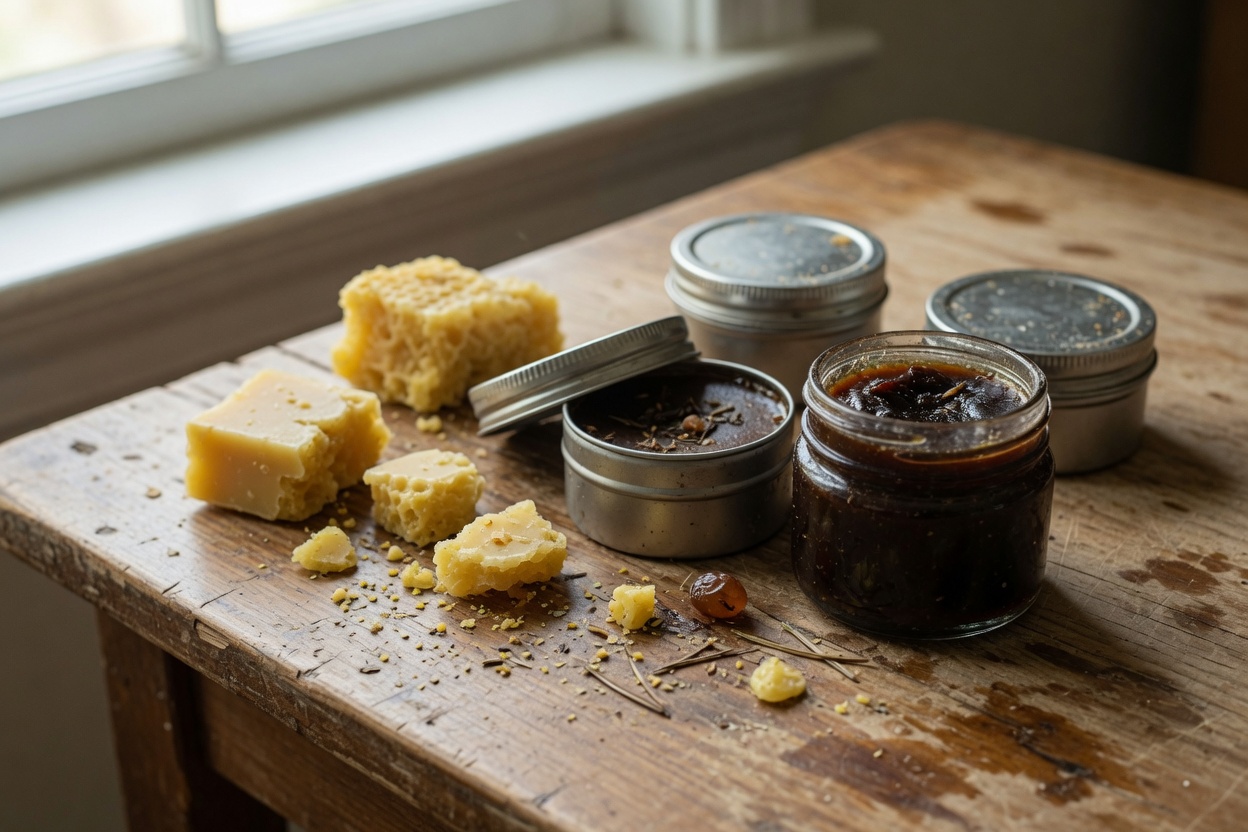
Return the strained oil to a clean jar, still warm. Add about a heaping tablespoon of beeswax pellets for each quarter cup of oil and warm the jar in the water bath again until the wax is gone.
Test before you pour. Dip a cold spoon in, hold it for a minute, and press your thumb to it. It should spread but not run. If it is too soft, add a few more pellets; if it is hard as a candle stub, stir in a spoonful of oil. Pitch salve sets a little firmer than you expect because the resin itself stiffens the mix as it cools, so I go easy on the wax the first time.
Pour into 2 oz tins while it is liquid and leave them alone on the counter until they are set, about an hour. Write the contents and the month on a strip of tape. A dark pitch salve and a dark tincture look the same in the cupboard eight months from now, and I have found that out the hard way.
What I like and what I don’t

I like that it comes from one tree, that nothing about it is complicated, and that it is one of the few salves that smells like the place I live. It holds up well in a coat pocket, and it lasts the whole winter on a shelf.
I don’t like the mess. Pitch gets on everything: the spoon, the towel, the counter, the dog. It is tacky on the skin at first, more so than a beeswax-and-plain-oil salve, and it darkens with time. The smell is strong, and some people find it too much. Jojoba is not the cheapest oil to melt a pinch of resin into, and if you make a batch every year you will feel that. And because pine resin is a known skin irritant for some folks, do a small patch test on the inside of your wrist before you hand a tin to anyone.
Keep what you say about it plain, too. This is a traditional hand salve for work-roughened skin, and I make no claims beyond what my grandmother’s kitchen shelf can back up. Put your effort into the gathering and the straining, which are the parts that matter.
A word on what you gather

Everything I have described begins with knowing a tree by name, and this is where I say it once and trust you to carry it. Never use any wild plant, tree product, or resin on a book, an app, or a single source alone. Confirm with multiple reputable guides and an experienced local forager; when in doubt, leave it. It is a short rule, and it keeps more people out of trouble than any tip about technique.
Where to go next
If you’d like to know what else is growing near those pines in winter, I wrote a walk-through on identifying Appalachian medicinal plants in winter, and one on foraging white pine needles for tea for the other thing that tree gives you. My short list of mountain apothecary supplies covers the rest of the shelf.
The longer education is in my book, Appalachian Medicinal Plants. It is a field guide to the plants of the southern mountains: how to identify each one, when to gather it, how it has traditionally been used, and how to harvest the at-risk ones without emptying a patch. The salve is the easy part. The book is how you learn to know what you’re picking.
