How to Make a Mountain Root Tincture (Beginner’s Way)
How to make a mountain root tincture the old Appalachian way — the roots I start beginners on, the folk ratio I use, and the stewardship that matters.
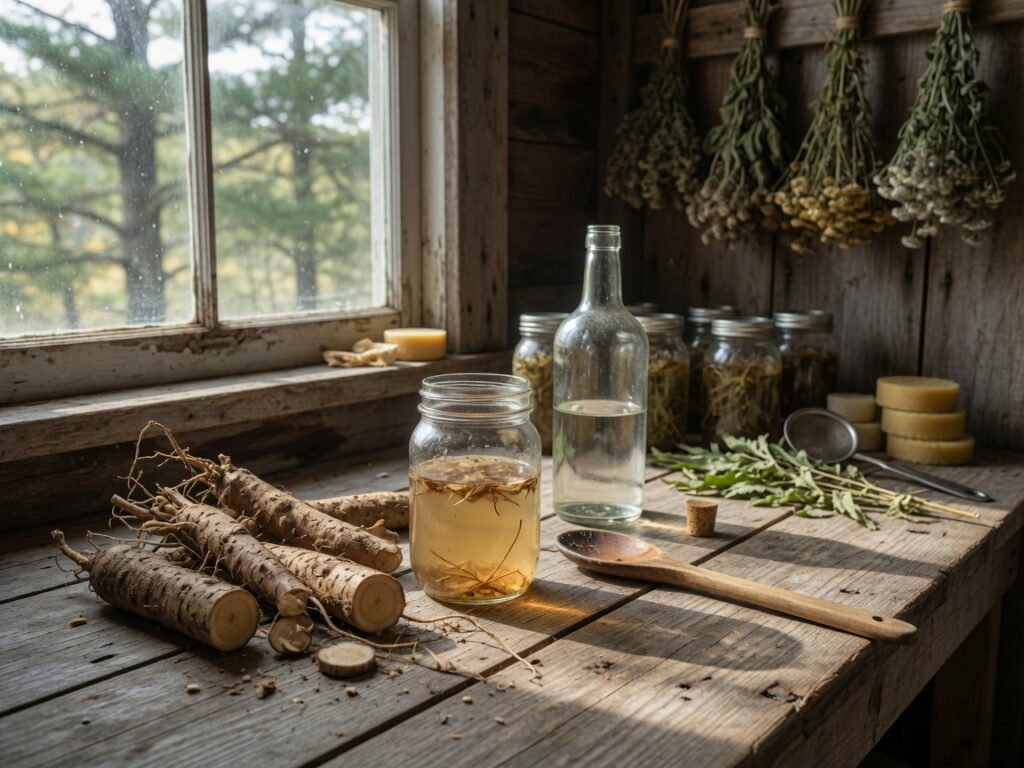
A root tincture is nothing more than a dug root soaked in strong spirits until the alcohol pulls the good out of it. That is the whole of it. People will sell it back to you in a little brown bottle for the price of a tank of gas, and there is nothing in that bottle you couldn’t make yourself on the kitchen table with a clean jar and a few weeks of patience.
I have been putting up tinctures the mountain way — by eye, by the calendar on the wall, by the feel of a root between my fingers — since my grandmother first set me to it up the creek outside Marshall. She kept hers in the cupboard by the woodstove where it stayed dark and warm, and mine live in about the same place fifty years on. What follows is how I would walk a neighbor through a first batch standing at my own bench. I won’t tell you what to take it for or how much — that is a doctor’s lane and the law’s, not mine. This is the traditional method for making the thing, the way the women in my family always have.
Only one of those carries a link right now — the cheesecloth is the piece I can point you to and stand behind. The jars, the mortar, and the amber bottles you likely have or can find at any hardware or canning shelf; I’d rather send you nowhere than send you somewhere I haven’t vetted.
Start with the right root — and leave the at-risk ones be
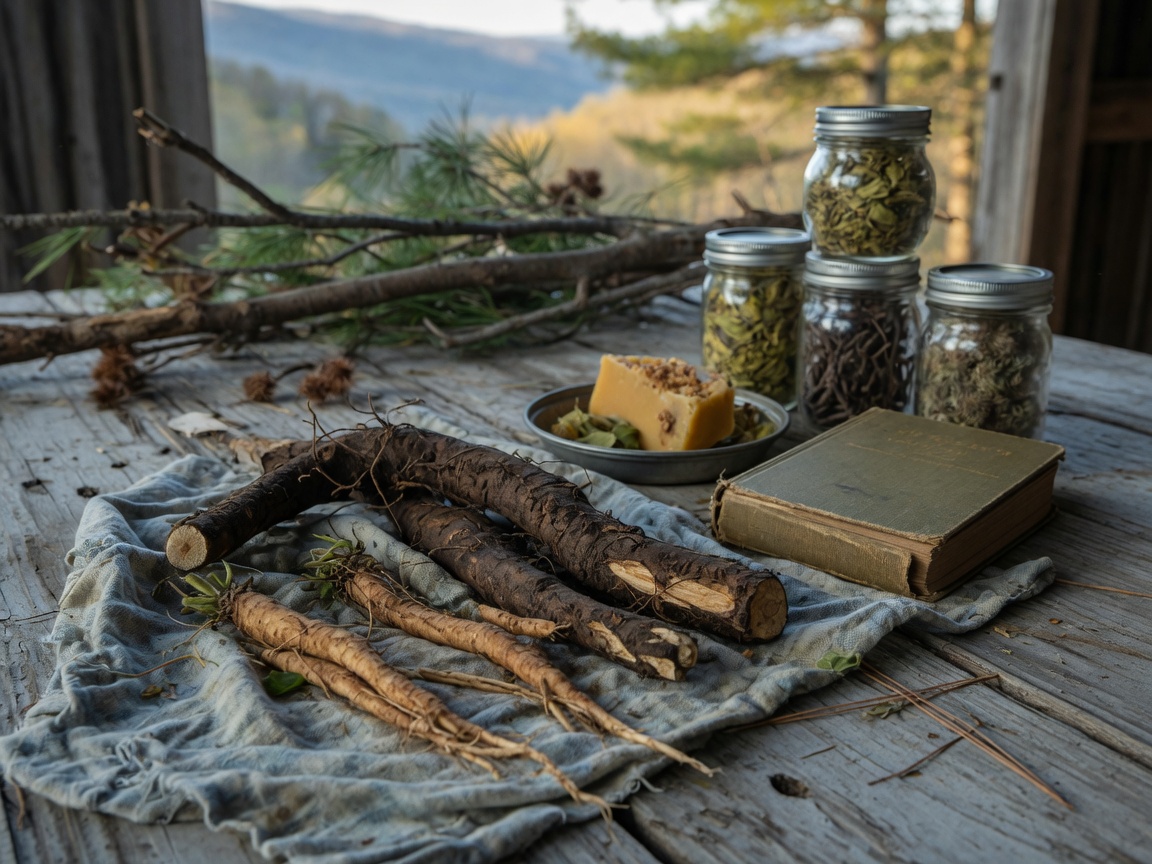
The root decides the calendar. I dig in the fall, after the first good frost has told the plant to pull its strength down underground, usually the last two weeks of October on my slope. That is when the root is at its richest.
For a first tincture I steer beginners to the common, generous roots — the ones that are easy to know, easy to find, and impossible to confuse with anything that will hurt you. Dandelion root (Taraxacum officinale) and burdock (Arctium — what a lot of mountain folk still call stickweed for the burrs) are where I’d have you start. Both grow thick along fencerows and old pastures, both dig easily, and neither one is scarce. Yellowdock (Rumex crispus) is another honest beginner’s root if you can tell it from its neighbors with certainty.
Here is the rule I hold to, and I’ll say it once plainly: some of our headline mountain roots are being dug faster than the mountains can grow them back. Ginseng, goldenseal, bloodroot, and black cohosh are at-risk, and ginseng digging is regulated by law here in North Carolina and across most of the range. A beginner has no business tincturing those. Leave them in the ground until you know the season, the law, and the old rule my grandmother dug by — take a third, replant the seed, and leave the rest for the next hand. Stewardship isn’t a lecture up here; it’s just how you keep a patch alive long enough to pass it on.
One more word on identification, said the once: tincture only what you can name with certainty, confirmed against more than one reliable source and, better still, an experienced local digger. Alcohol does not tame a poisonous root. It concentrates whatever you put in the jar, the good and the bad both.
Pick your alcohol
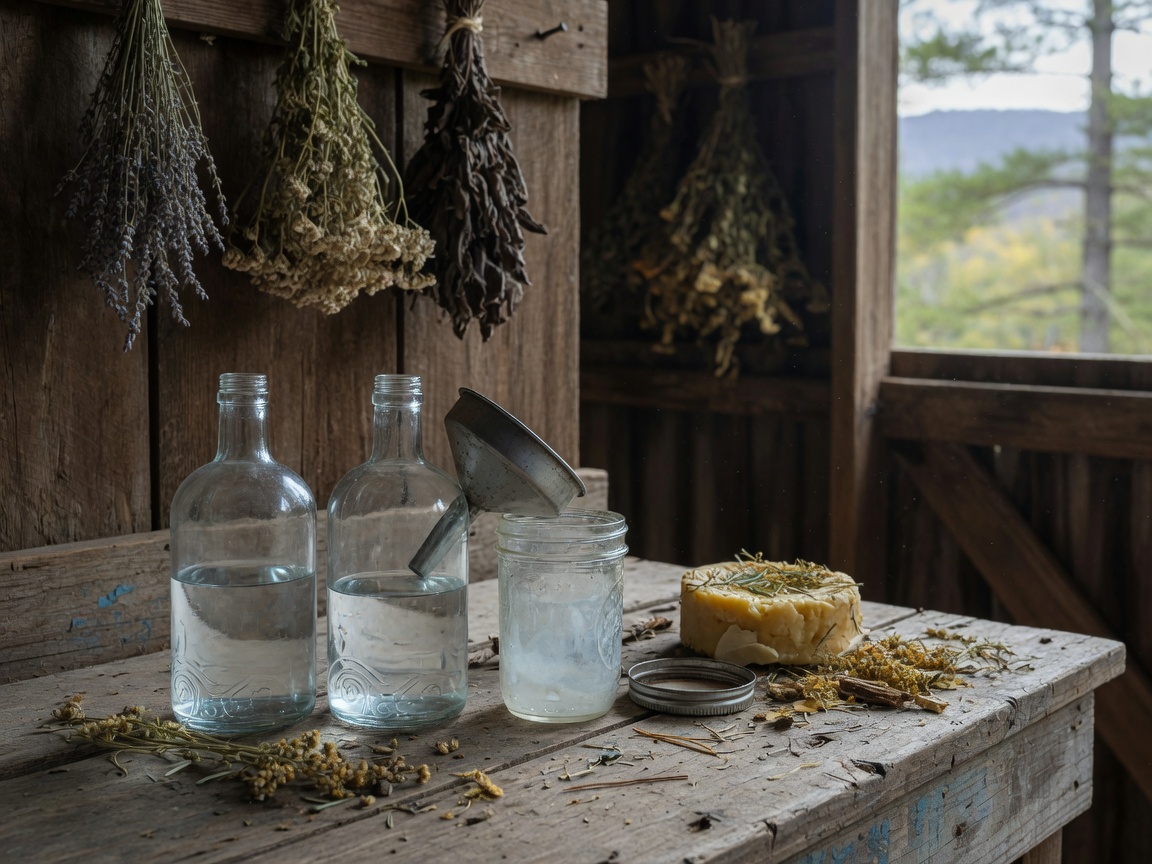
Plain 80-proof vodka does nearly everything a beginner needs. At 40 percent alcohol it is strong enough to keep the tincture from spoiling and mild enough to work with. For tough, dry, resinous roots and bark, higher-proof grain alcohol pulls a little more, but it is harder to come by and easy to overdo. Start with vodka. You can graduate later, the same as I did.
Break the root open
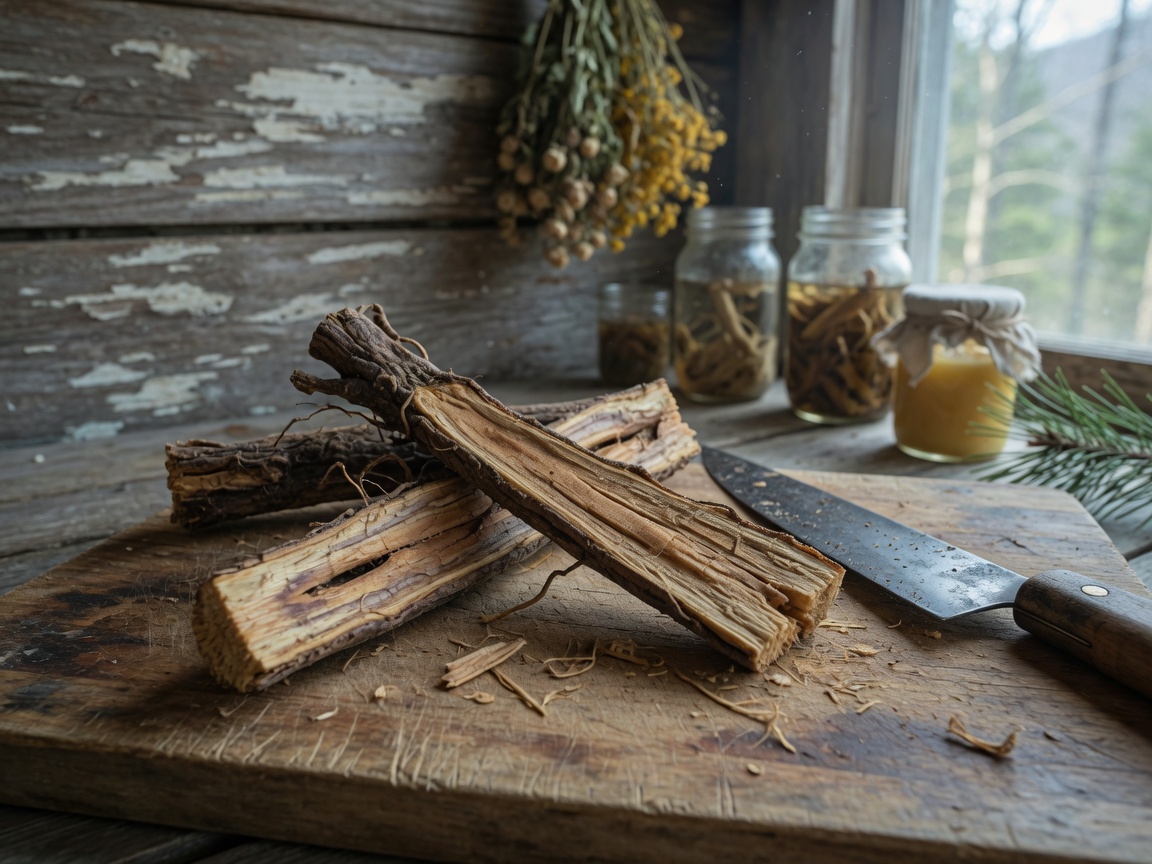
Fresh-dug root goes in chopped small — the more cut surface, the more the spirits can reach. For dried root and bark I bruise the material first in a granite mortar and pestle, not to powder, only to crack it open so the cell walls give up what they’re holding. A heavy granite bowl does work a light one can’t; thirty-odd years of breaking root by hand has its own rhythm to it.
Dried root is the steadier place for a beginner to start. Fresh root carries water, and that water thins your alcohol down below the level that keeps things shelf-stable. If you’re working fresh, lean harder on the vodka and don’t pack the jar so tight the liquid can’t move around.
Fill the jar and cover it
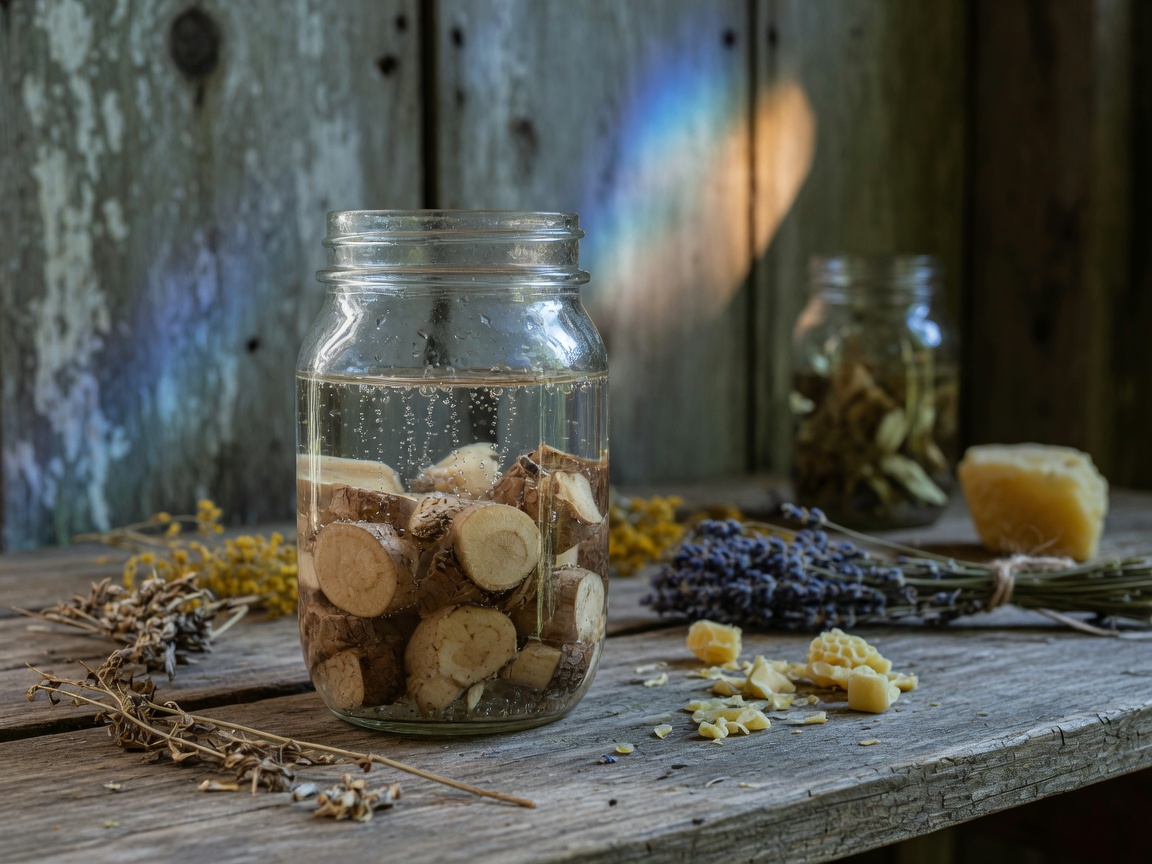
Here’s where the wide-mouth jar earns its keep. A narrow-mouth jar fights you going in and fights you worse coming out, once the root has swelled and locked itself against the shoulder of the glass. Wide mouth, every time.
The folk ratio I use, and the one most beginners do well with: fill the jar about halfway to two-thirds with dried root (or pack it loosely full if you’re working fresh), then pour vodka over until the root is covered with a good inch of liquid to spare. Any root that pokes up above the alcohol will mold, and mold ends the batch. Cap it, and label it with the plant and the date — you will not remember in six weeks, I promise you that. Set it somewhere dark.
Wait, shake, and wait a while longer
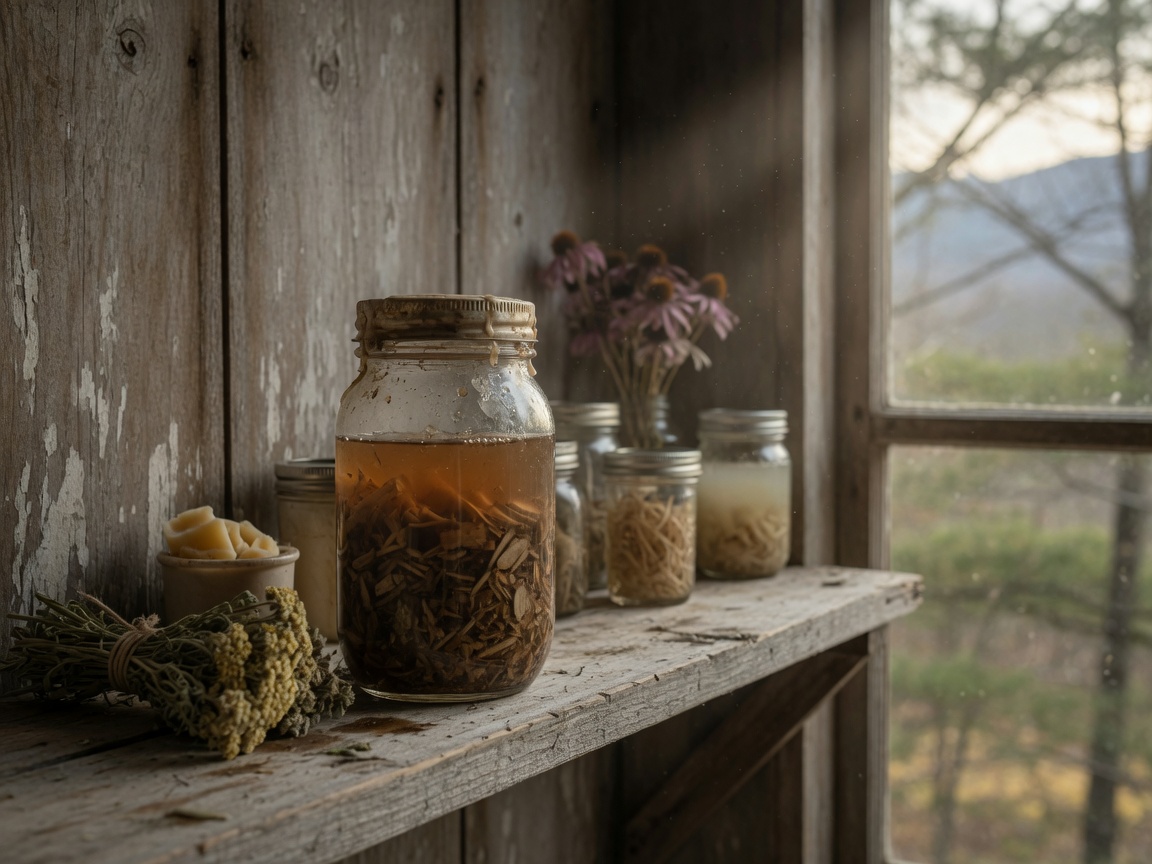
Now the work is mostly waiting, which mountain people are generally good at. I shake my jars once a day the first week or so and less after that — partly to keep everything under the liquid, partly because it gives my hands something to do while the kettle heats. Four to six weeks is the traditional window. Some pull at two, some go for months; I split it and call a root tincture done at six weeks.
The liquid will darken as it goes. Dandelion root turns a warm amber, burdock a deeper brown. That color is the plain visible proof the alcohol is doing its job.
Strain and bottle
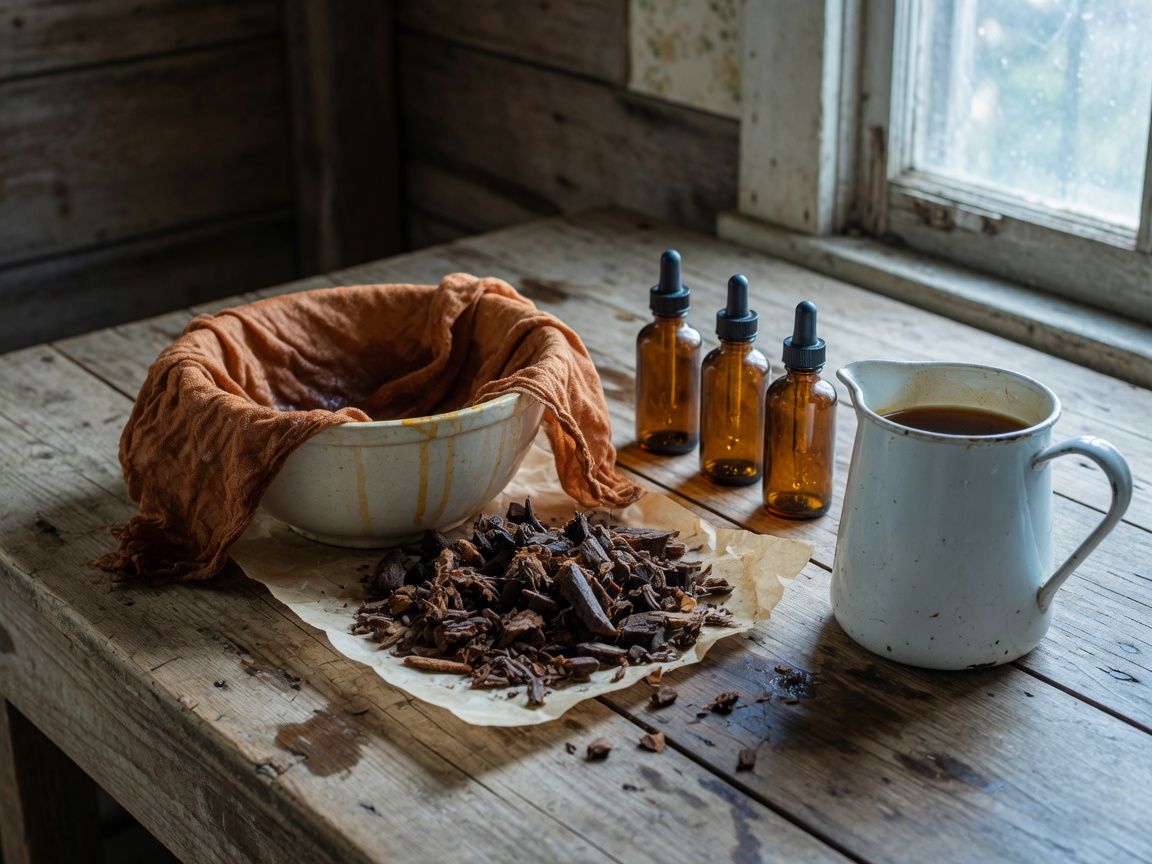
When the time’s up, line a bowl or a wide funnel with a doubled layer of grade-90 cheesecloth and pour the whole jar through. The grade-90 weave is tight enough to catch the fine sediment a looser cloth lets slip — and that sediment is exactly what cost me most of a run of bloodroot tincture the first year I hurried the strain and the bottles went cloudy on me. Gather the corners of the cloth and wring the spent root hard. There’s a surprising amount of tincture still hiding in there, and the last squeeze is the strongest of the batch.
Pour the strained liquid into amber dropper bottles — amber, not clear. Light fades a tincture faster than anything but heat, and dark glass is the difference between one that keeps for years and one that’s gone by spring. Label it again, and store it out of the sun. A root tincture made carefully will outlast the plant that grew it.
Where the method ends and the knowing begins
The mechanics of a tincture take an afternoon to learn. Which root to choose, when to dig it, how each one was traditionally used and which ones don’t belong in a jar at all — that takes longer, and it’s the part I care most about. If you’re just building your bench, my guide to a beginner’s mountain apothecary walks through the rest of the kit, and once you’ve a batch of infused oil going you can turn it into a yarrow salve the same afternoon.
Most of what I know about the roots themselves — how to identify each one without guessing, when to gather it, how the generations before us prepared it, and which the Cherokee, who knew these mountains first, used and taught the settlers who came after — I put into my book, Appalachian Medicinal Plants. The jar and the vodka are the easy part. The book is how you learn what belongs in them.
