Foraging White Pine Needles for Winter Tea in Appalachia
How I forage eastern white pine needles in the Appalachian mountains and steep them into a bright winter tea — how to know the tree, gather it, and put it up.
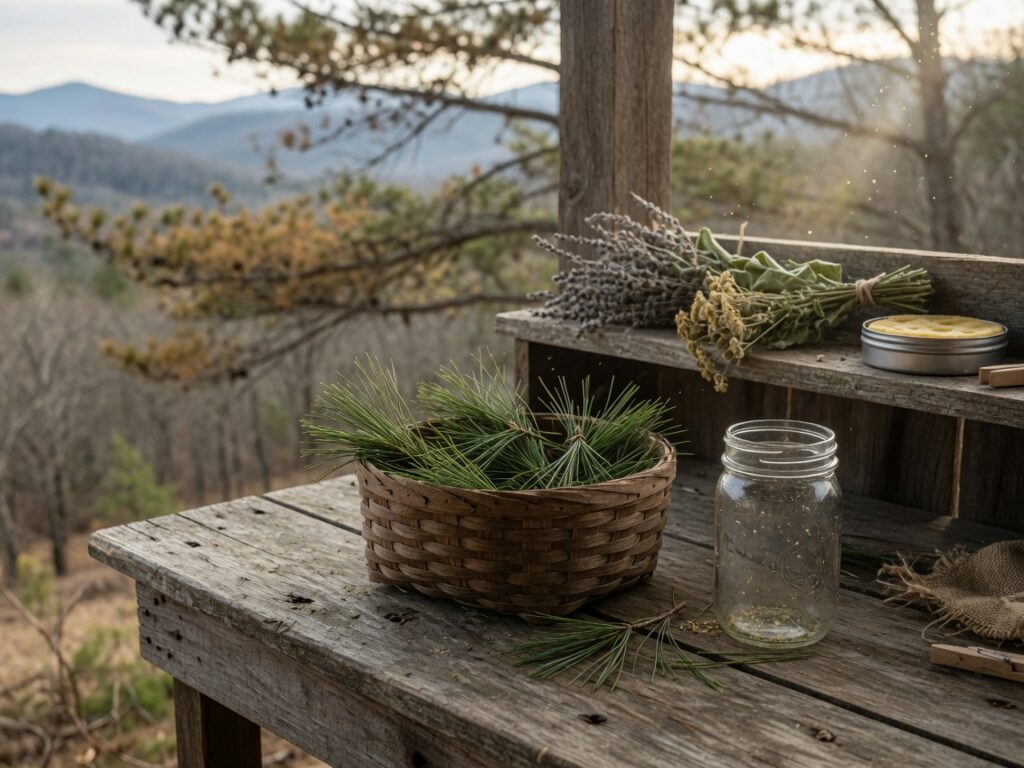
The garden’s gone to sleep and the root cellar’s stocked, and about now every winter I go looking up instead of down. Most of what a mountain forager gathers in December is still green and standing — the pines. Eastern white pine (Pinus strobus) holds its soft blue-green needles all winter long, right through the fog and the first snow, and a handful of them makes a tea that tastes like clean woods and a little citrus. My grandmother steeped it for us when the colds went around, and I have made it every winter of my adult life up the creek outside Marshall.
This is one of the easiest wild plants a beginner can learn to know with certainty, because white pine tells on itself if you count. But there is one tree in these mountains you must never confuse it with, so read the whole of this before you go gathering.
One rule first, and I’ll say it plain because you’re grown: never use a wild plant on the strength of one book, one app, or one website — this one included. Confirm the tree against more than one good guide, and if you can, put it in the hands of someone who already knows it. When in doubt, leave it on the branch.
Everything else you likely already have: a pot, a knife, and a clean jar. I steep in a jar I’ve had for years and strain into a mug. No need to send you off for a kettle you already own.
Know the tree: count to five
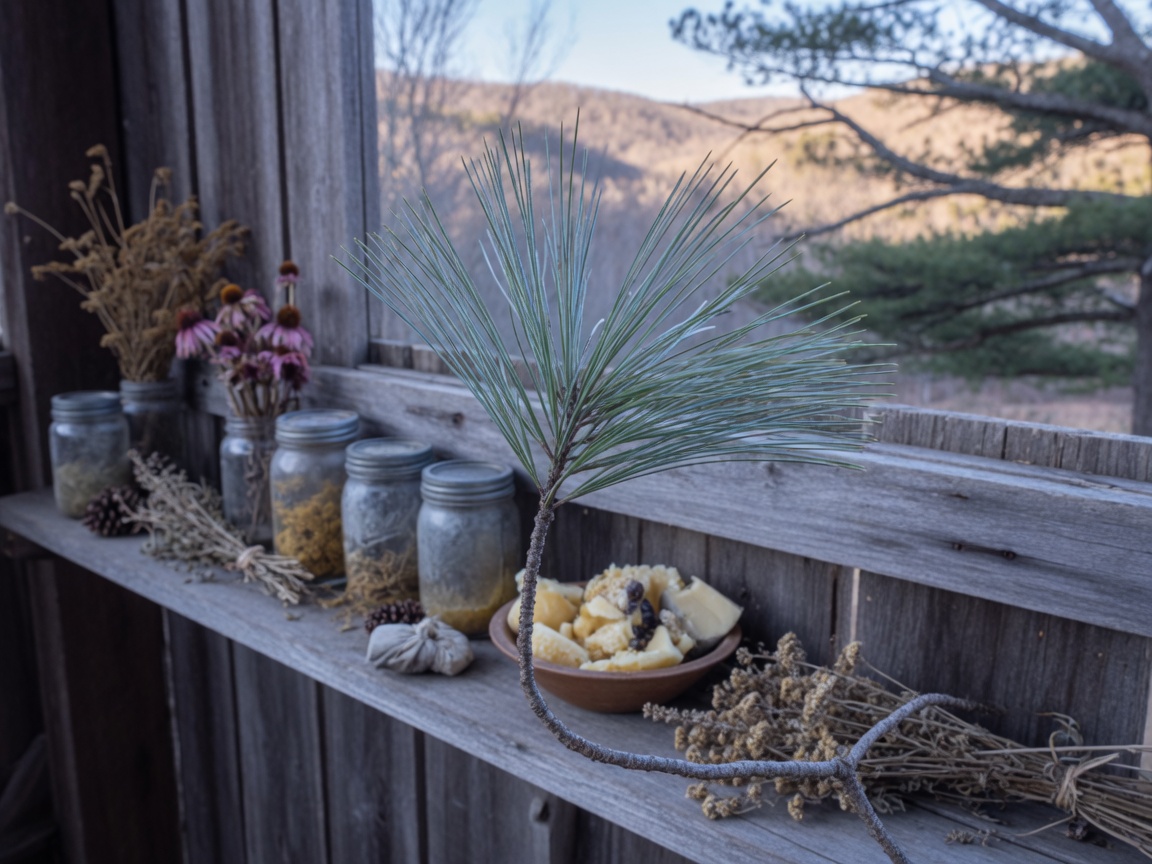
Eastern white pine is the tall, soft-looking pine of our coves and ridges, common from the low creek bottoms clear up into the high hardwood forest across the southern mountains. The needles are the tell, and they are unmistakable once you know the trick: white pine carries its needles in bundles of five. Five soft, slender, three-to-five-inch needles held together in one little papery sheath at the base. I teach it to my grandchildren the same way my mother taught me — the word white has five letters, and white pine has five needles to the bundle. No other pine in these mountains does that.
Run a bundle through your fingers and it should feel soft and flexible, not stiff or sharp. Snap a needle and hold it to your nose — clean, resinous, a little bright, almost lemony. The bark on a young tree is smooth and grayish; on an old one it furrows into long, dark ridges. If you’re new to the tree, the five-needle bundle plus that soft citrus smell is your confirmation, checked against a good regional guide.
I go deeper on knowing our mountain trees and plants without guessing in my beginner mountain apothecary supplies guide — start there if this is your first winter gathering.
The one you must never gather: yew
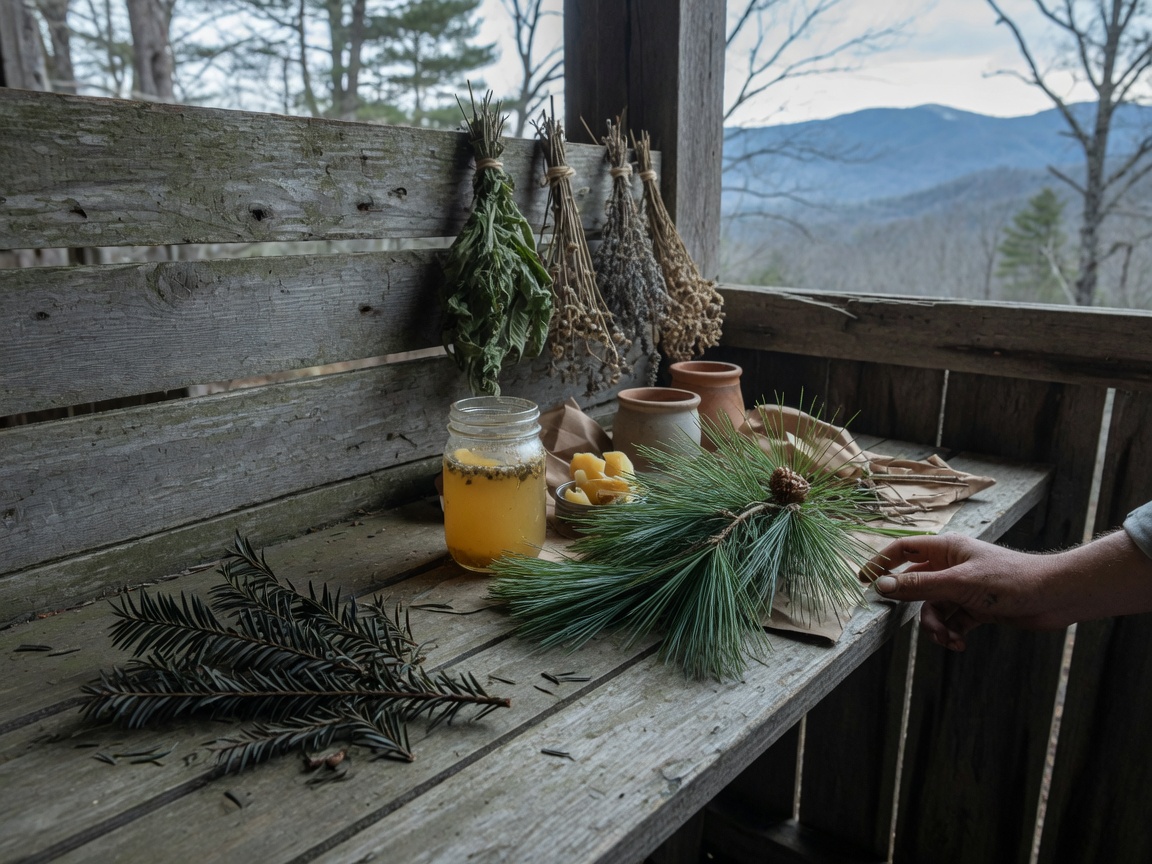
Here is the hard line, and it is not optional. *Do not confuse a pine with yew (Taxus).* Yew is planted as a landscape shrub all over these mountains, and it grows wild in places, and every green part of it — needle, bark, and seed — is deadly poison. There is no safe tea from yew.
Telling them apart is simple once you look. Yew needles are flat, dark green, and attached singly along the twig in two flat rows — never in a bundle of five, never in a papery sheath. Yew also carries a soft, bright-red, berry-like cup in season, which no true pine does. If the needles come off the twig one at a time and lie flat, walk away. If they come in a bundle of five and feel soft and round, you have your white pine. When the two pictures don’t match cleanly, you stop.
A couple of smaller cautions while we’re here. Stick to eastern white pine, which you can positively name by that five-needle bundle; some other evergreens carry their own cautions and aren’t worth the guesswork for a beginner. And if you are pregnant, this is one to set aside for another season and ask your doctor about first — the old-timers were careful there, and so am I.
When and how I gather
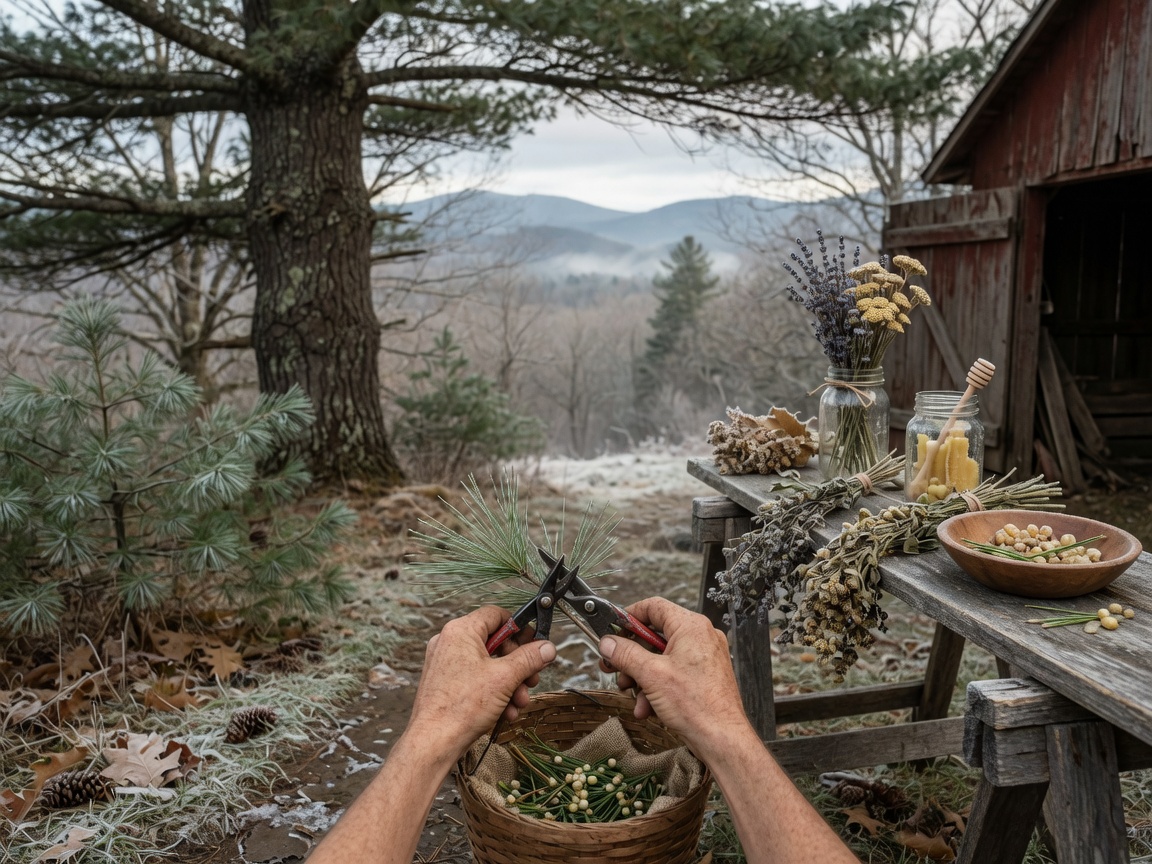
I gather white pine needles all winter, but the new spring growth in April and May — the soft, pale-green candle tips — makes the brightest, mildest tea of the year. In the cold months I take mature needles from the healthy green boughs, and honestly, the best gathering I do is after a windstorm, when the ground under a big white pine is scattered with fresh green branch tips I never had to cut.
Take a little from here and a little from there. Snip a few clusters from several branches rather than stripping one limb bare, and never take the leader or top of a young tree. A grown white pine won’t miss a handful of needle bundles, and gathered that way the tree is exactly as healthy next winter as it is this one. That’s the rule my grandmother followed and the one I pass on: gather so the plant never knows you came.
Making the tea
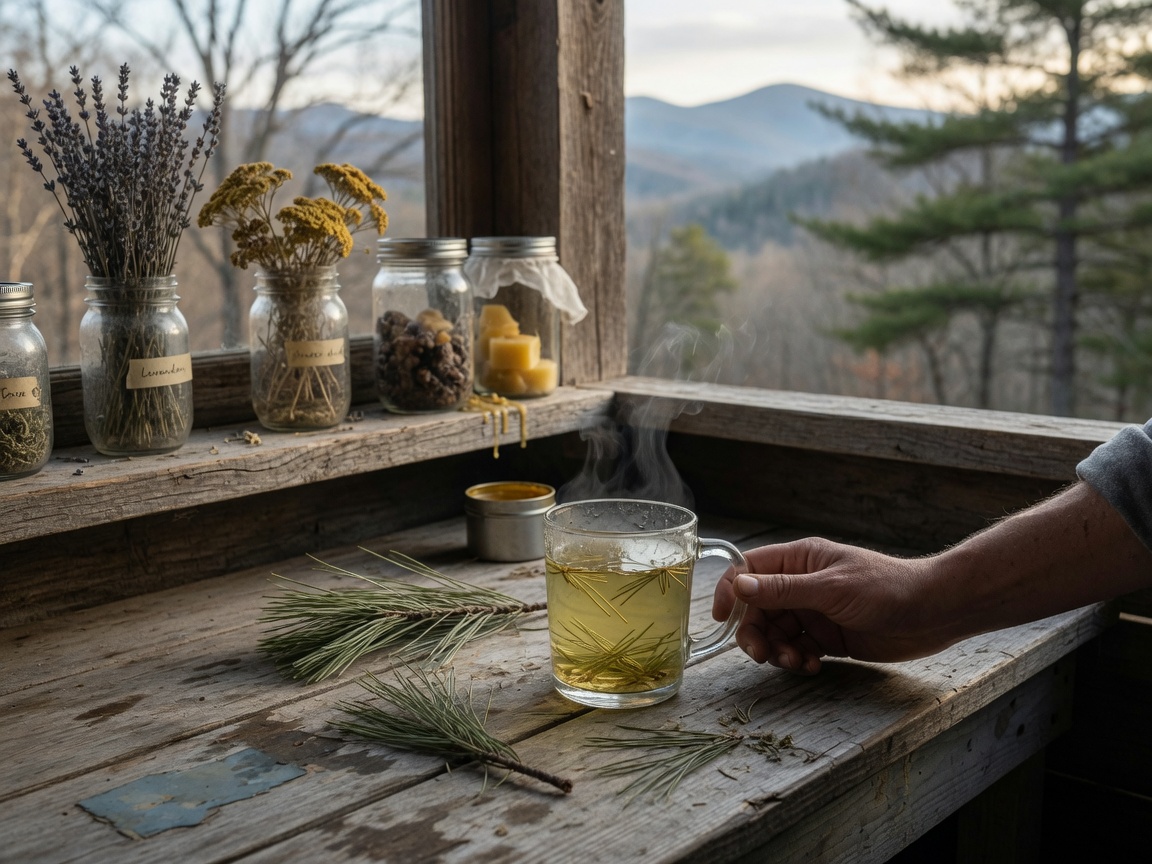
Making pine needle tea is about the gentlest preparation in the whole home apothecary. Take a small handful of needles — I use roughly a tablespoon or two of fresh needles per big mug — and strip them off the woody sheath and stems. Chop or bruise them a little with a knife so the water can get at them; a whole needle gives up less than a cut one.
Here is the part people get wrong: do not boil the needles. Bring your water to just under a boil, take it off the heat, then pour it over the needles in a jar or mug and cover it. Boiling drives off the bright, resinous character and leaves you with something flat. Let it steep covered for ten to fifteen minutes — longer if you like it stronger — then strain. I pour mine through a square of cheesecloth to catch the needles and any fine bits, or I tie the needles up in a little cheesecloth bundle first and lift the whole thing out when it’s done. It comes out pale gold to light green, tastes of clean forest and citrus, and takes a spoon of honey kindly.
The tradition behind it runs deep in these mountains. White pine needle tea was a settler standby against the winter colds and the dullness that comes of a long season with no fresh green, and it was here long before the settlers were — the Cherokee (the Eastern Band, whose homeland these mountains are) used white pine well before my people ever climbed into these hollows. I credit that knowledge rather than claim it, and I’d point you to the Museum of the Cherokee People and the published Cherokee ethnobotany if you want to learn it honestly. I’ll leave the old uses where they belong — as tradition — and let you read further before you lean on this tea for anything more than a good warm cup.
Putting some up for the winter
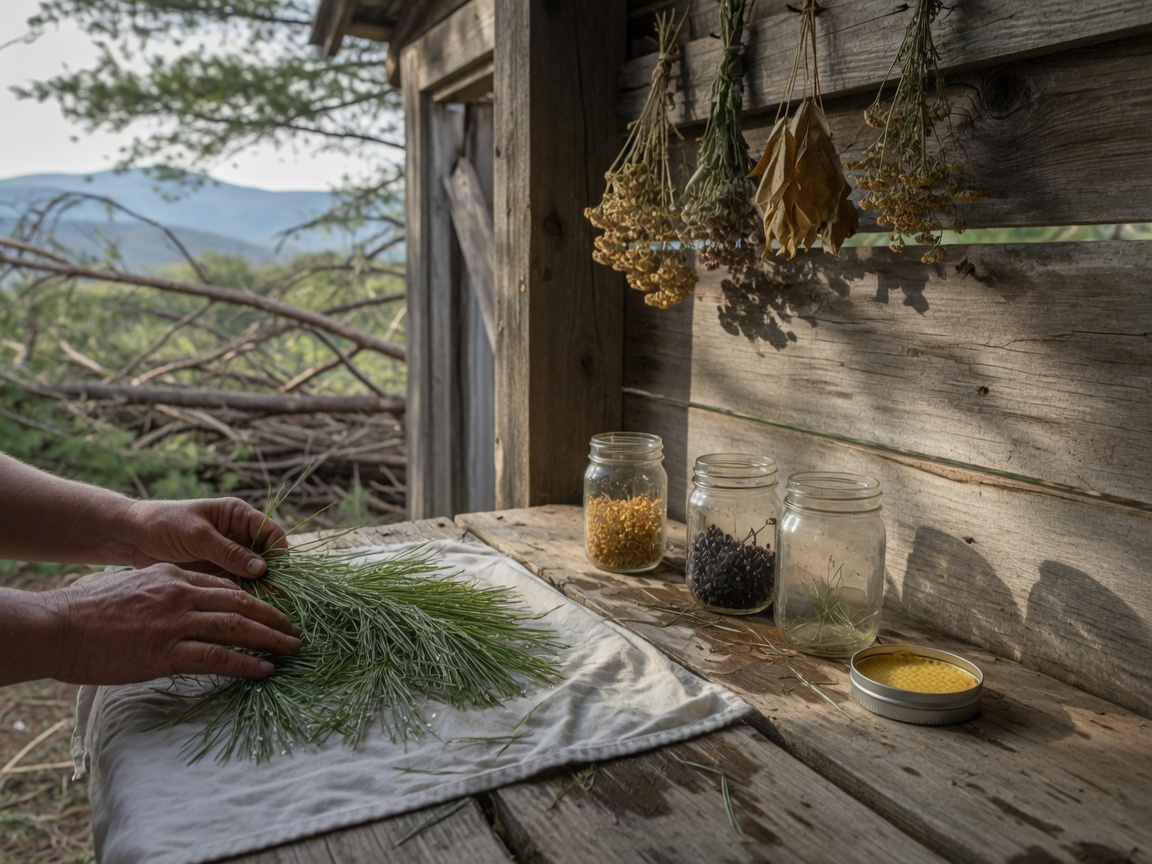
Fresh is best, but a standing white pine means you can gather fresh most of the winter. What I do keep back is a small jar of dried needles for the deep-cold weeks when I don’t feel like walking out to the tree line. Strip and chop the needles, spread them in a single layer somewhere dry and out of the sun, and let them dry until they snap cleanly rather than bending. Damp needles put away soft will mold, same as any herb — dry them hard first.
I store the dried, chopped needles in small tins or a clean jar, kept dark and cool, and I write the tree and the date on every one. You will not remember in February which tin is which — I promise you that. A tin of dried pine on the shelf next to my yarrow salve is the kind of small winter provision the women in my family always kept, and it costs nothing but a walk to the woods.
The whole mountain, tree by tree
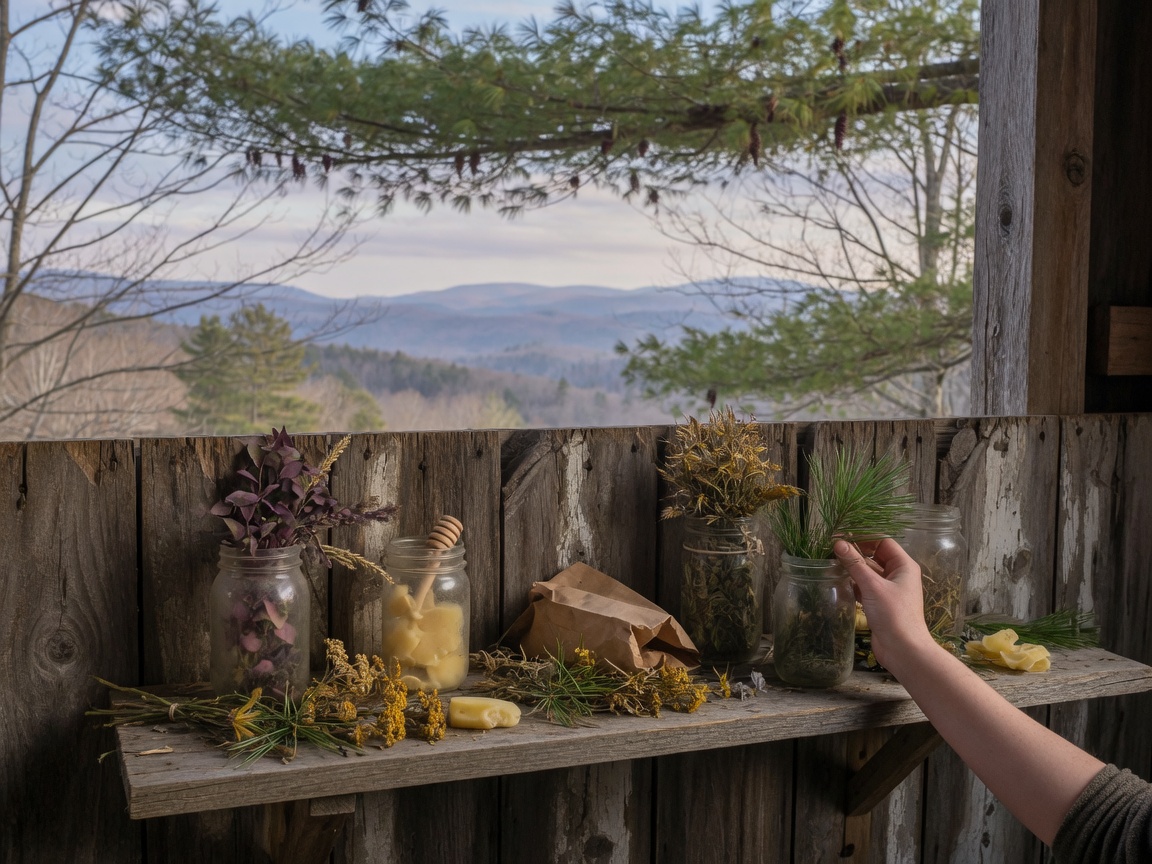
Pine is where I send every beginner first, because you can learn it with real certainty in an afternoon and it’s standing green when everything else has died back. But knowing one tree is just the start of a winter’s gathering. Which evergreens are safe and which will hurt you, how to tell the look-alikes apart without guessing, and how the mountain people put each one up — that’s the part that takes longer than a single post, and it’s the part I care most about getting right.
I put all of it into my book, Appalachian Medicinal Plants: the plants and trees of these southern mountains, how to know each one without guessing, when to gather it, and how the generations before us used it. Winter is long up here, and the woods are still full even now. The book is how you learn to read them.
