How to Stop Your Hens From Eating Their Own Eggs
Egg-eating is a learned habit that spreads fast. Here's how I stopped it in my own flock — roll-away boxes, washable nest pads, dummy eggs, and the real fixes.
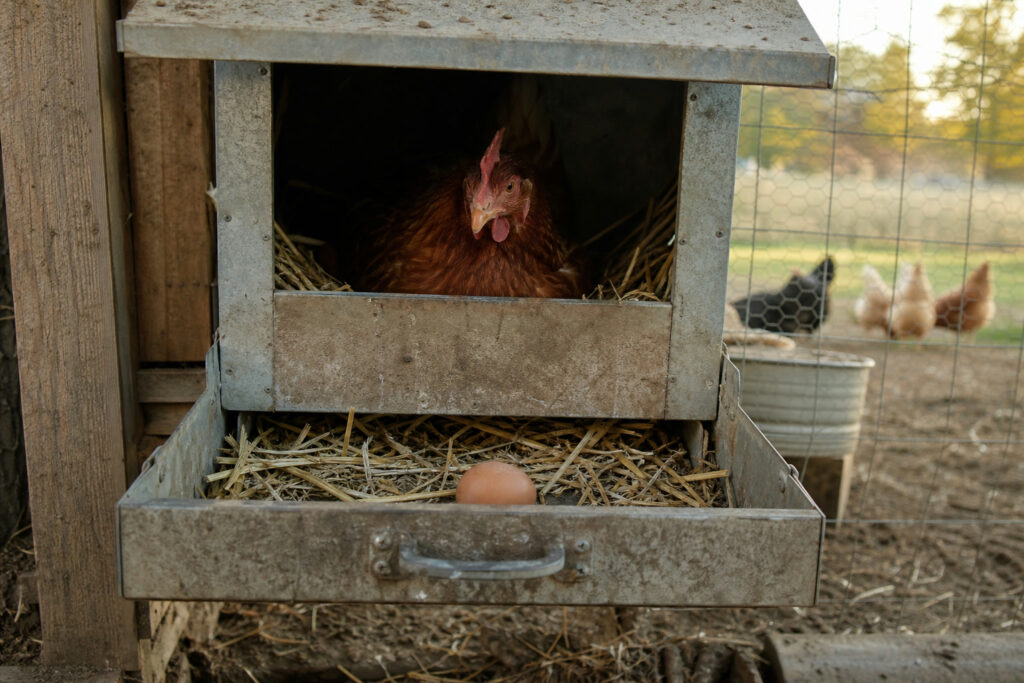
I found the first broken egg in the nesting box and figured a hen had stepped on it. The next morning, two more — shells crushed in, the insides licked clean, yolk smeared down the side of the box. By the third day I caught my Easter Egger, Pippin, mid-bite, beak full of her own egg, looking up at me with zero shame whatsoever. That’s the moment every keeper dreads, because egg-eating is the one bad habit that spreads through a flock like a rumor. One hen learns it, the others watch, and within a week you’re collecting empty shells.
I beat it in my flock, but it took me a couple of weeks of doing several things at once, because there’s rarely one single cause. Here’s everything I changed, in the order I’d tackle it, and the gear that actually made the difference.
First, figure out why it started
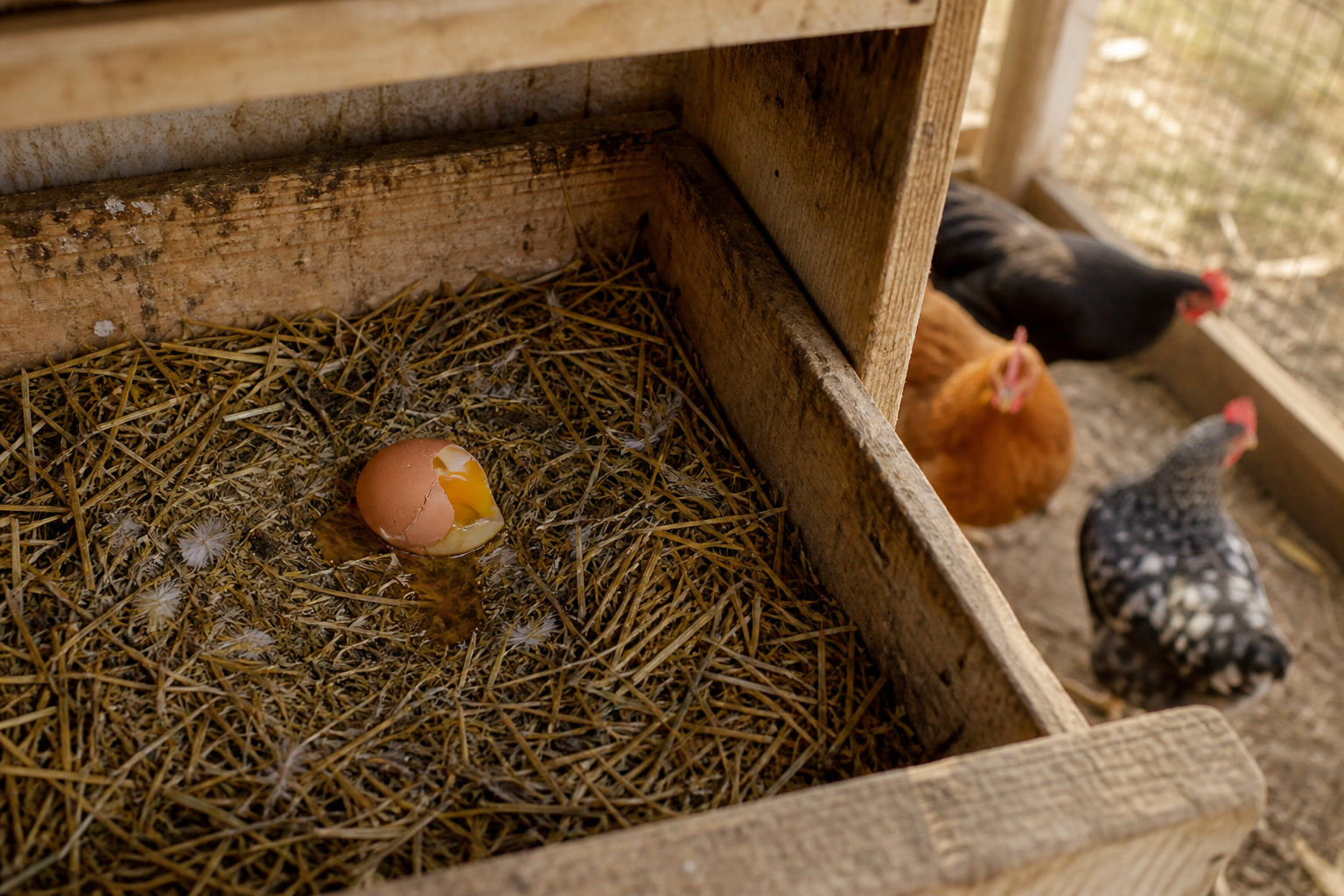
Egg-eating almost always starts by accident. An egg gets cracked — a hen steps on it, two hens crowd the same box, a thin shell gives way — and a curious bird tastes what’s inside. Eggs are protein and chickens love protein, so once she’s made the connection, she goes looking for more. The habit isn’t a moral failing on the hen’s part. It’s a problem you accidentally set up.
Which means the fixes fall into two buckets: stop eggs from breaking in the first place, and remove the reward when one does. Most keepers who lick this problem do a bit of both. Before you spend a dime on gear, run through the cheap causes. Are your hens getting enough calcium? Thin, weak shells crack easily and are the number-one trigger — free-choice oyster shell on the side, separate from their feed, fixes a lot of egg-eating before it ever starts. Are there enough nesting boxes? You want one box for every three or four hens, or they crowd and break each other’s eggs. Are you collecting often enough? An egg sitting in the box all day is an egg waiting to get cracked and eaten. I started collecting twice a day the week I caught Pippin, and that alone cut the problem in half.
The roll-away nesting box: the fix that actually lasts
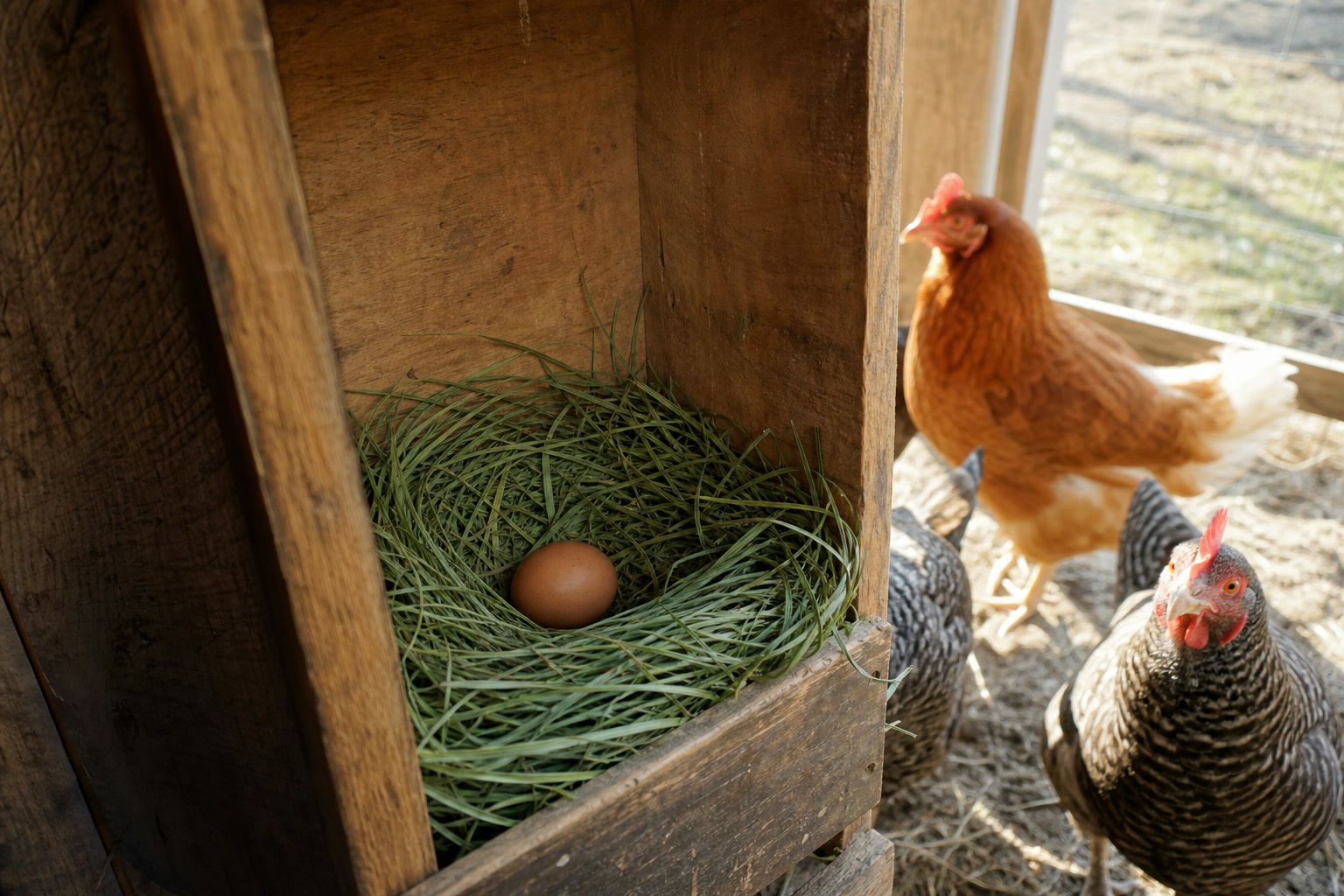
If I could only do one thing, this would be it. A roll-away nesting box has a gently sloped floor, so the moment a hen lays, the egg rolls forward out of her reach into a covered collection tray. She never gets to sit on it, peck it, or break it — because it’s gone before she’s even stood up. No egg in the nest means no egg to eat, full stop.
This is the move that finally ended it in my coop for good. The first week, the girls were suspicious of the new box and a couple of them tried to lay on the floor instead, which is normal — I propped the old box’s bedding into the new one for a few days to make it feel familiar, and they came around. The reversible kind I use lets you collect from the front inside the run or from the back outside the coop, which is genuinely convenient on a rainy Tennessee morning when I don’t feel like trudging in. The eggs come out cleaner, too, since they’re not sitting in bedding the hens have been scratching around in. It’s the priciest item on this list and worth every penny if you’ve got a confirmed egg-eater.
Washable nest pads: clean, soft, and fewer cracks
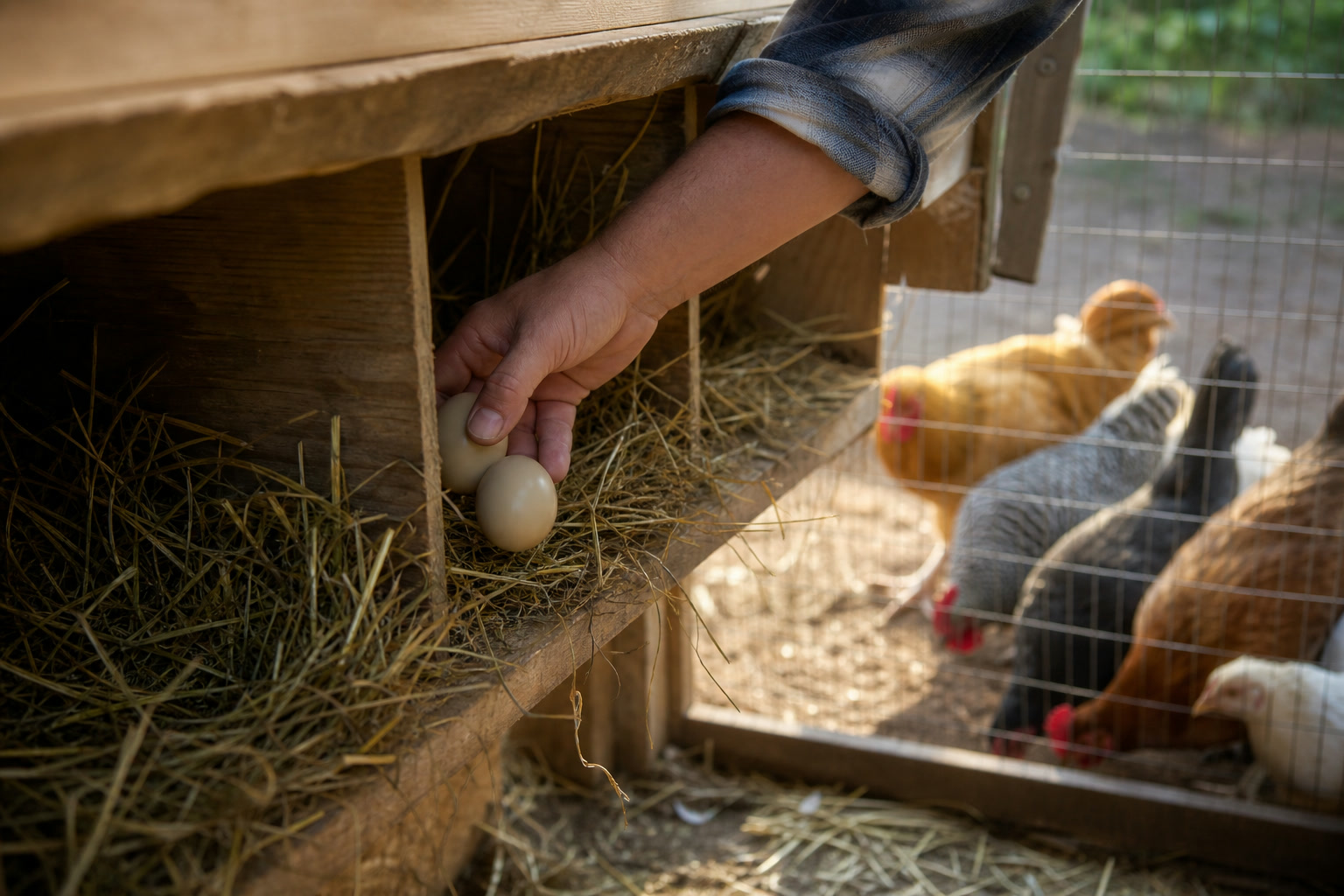
Part of stopping breakage is giving eggs a soft place to land. Bare wood or thin bedding lets an egg knock against a hard surface and crack — and a cracked egg is the open invitation. I switched to washable nest pads in my regular boxes a while back and kept using them under the roll-away as well.
The cushion matters, but honestly the bigger win for me is the cleanliness. With loose shavings, a hen scratches the bedding out of the box within a day and you’re back to a hard floor, plus the bedding tracks poop and damp into the nest. A pad stays put, and when it gets dirty I pull it, hose it off, let it dry, and drop it back in — no constant re-bedding. A cleaner, drier nest means fewer messes, fewer cracked eggs, and fewer reasons for a bored hen to start poking around. They cut to fit most box sizes with scissors, which is handy if you’ve got an odd homemade box like I do.
Dummy eggs: breaking the pecker of the habit
This one’s the cheap psychological trick, and it works on the curious bird who’s just started experimenting. A ceramic dummy egg looks and feels like the real thing, but when a hen pecks it expecting a tasty crack, she gets nothing but a sore beak and a hard, unrewarding thunk. Do that a few times and even a determined hen decides eggs aren’t worth the effort anymore.
I tucked a couple of dummy eggs into each box the same week I caught Pippin. Wooden ones do the same job — anything hard and egg-shaped that won’t break. As a bonus, dummy eggs also teach young pullets where they’re supposed to lay, so I leave one in each box year-round now. A word of warning on the old folk remedy of blowing out an egg and filling it with mustard or hot sauce: I’ve never had it work, the hens I’ve heard about mostly just eat the spiced egg anyway, and it’s a mess. The hard fake egg is the version that actually breaks the habit.
What I’d do if it were your flock
Start with the free stuff — oyster shell out free-choice, enough boxes, collect twice a day. Drop in a couple of dummy eggs to discourage the curious bird. If you’ve got a confirmed, committed egg-eater who won’t quit, the roll-away box is the fix that ends it, because it removes the egg before she can ever get to it. Stack the washable pads underneath for clean, crack-free landings. Most flocks I’ve helped settle down within two weeks of doing all of it at once. And keep an eye out, because a single hen who relapses can re-teach the whole group.
I cover egg-eating, soft-shelled eggs, and the rest of the “is this normal?” first-year worries in my book, Raising Backyard Chickens for Beginners. The steps above are what you can put in motion today. The book is the deeper resource for everything else the girls will throw at you that first year.
