Keep Container Plants Alive Through a Summer Heat Wave
A heat wave hits container plants hardest. Here's how I keep my balcony pots alive through a brutal week — when to water, how to shade, and the gear that helps.
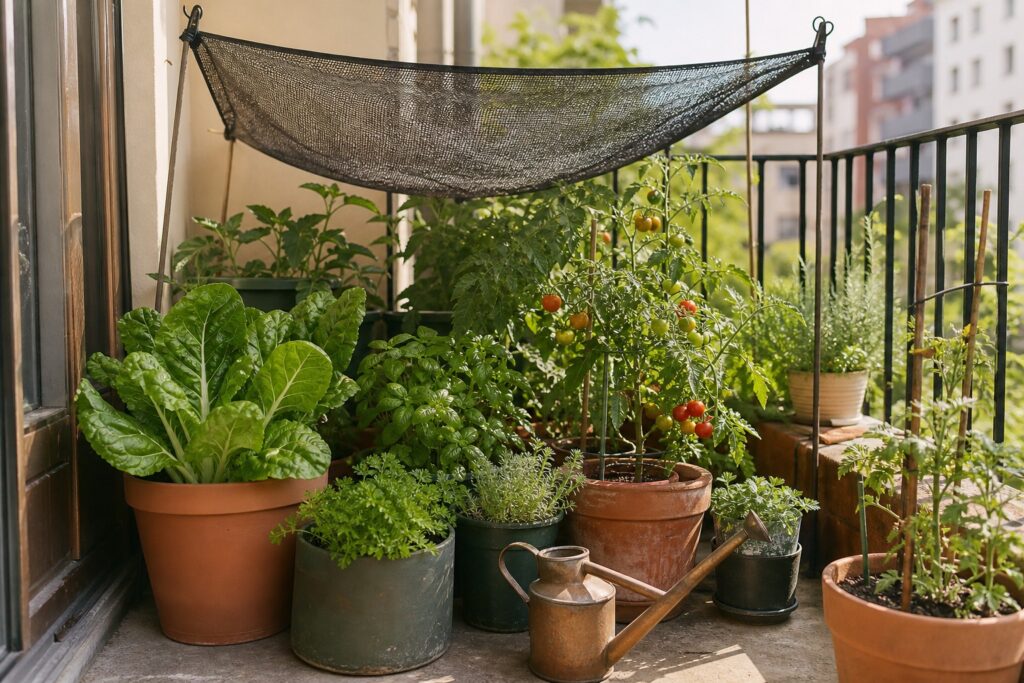
The first summer I gardened on my balcony, a heat dome parked over Portland and sat there for four days. I came home on the third evening to a row of pots that had gone from lush to crisp — the basil flat on its face, the lettuce bolted and bitter, a tomato plant I’d babied since March looking like someone had run it through the dryer. Everything in the ground at my neighbor’s place shrugged the heat off. My containers nearly died.
That’s the part no one warns a beginner about. A pot is not a small garden bed — it’s a much harder place to keep a plant alive when the temperature climbs. Six seasons later I don’t lose plants to heat anymore, and almost none of what saved them was expensive. Here’s exactly what I do the moment the forecast climbs past the mid-nineties.
Why containers cook first
A garden bed holds a huge volume of soil that warms slowly and stays damp deep down. A pot holds a few quarts, sitting up in the air with sun on every side. That small volume heats fast, dries fast, and — this is the part that surprises people — the roots themselves cook against the hot inside wall of the pot.
Dark plastic and metal pots are the worst offenders; they soak up sun and turn into little ovens. Terracotta breathes but wicks moisture out even quicker. Either way, the smaller the pot, the faster it swings from soaked to bone-dry. Knowing that is half the battle, because it tells you the two things to fix: keep water in the soil, and keep the sun off the pot.
Water deep and early — not little and often
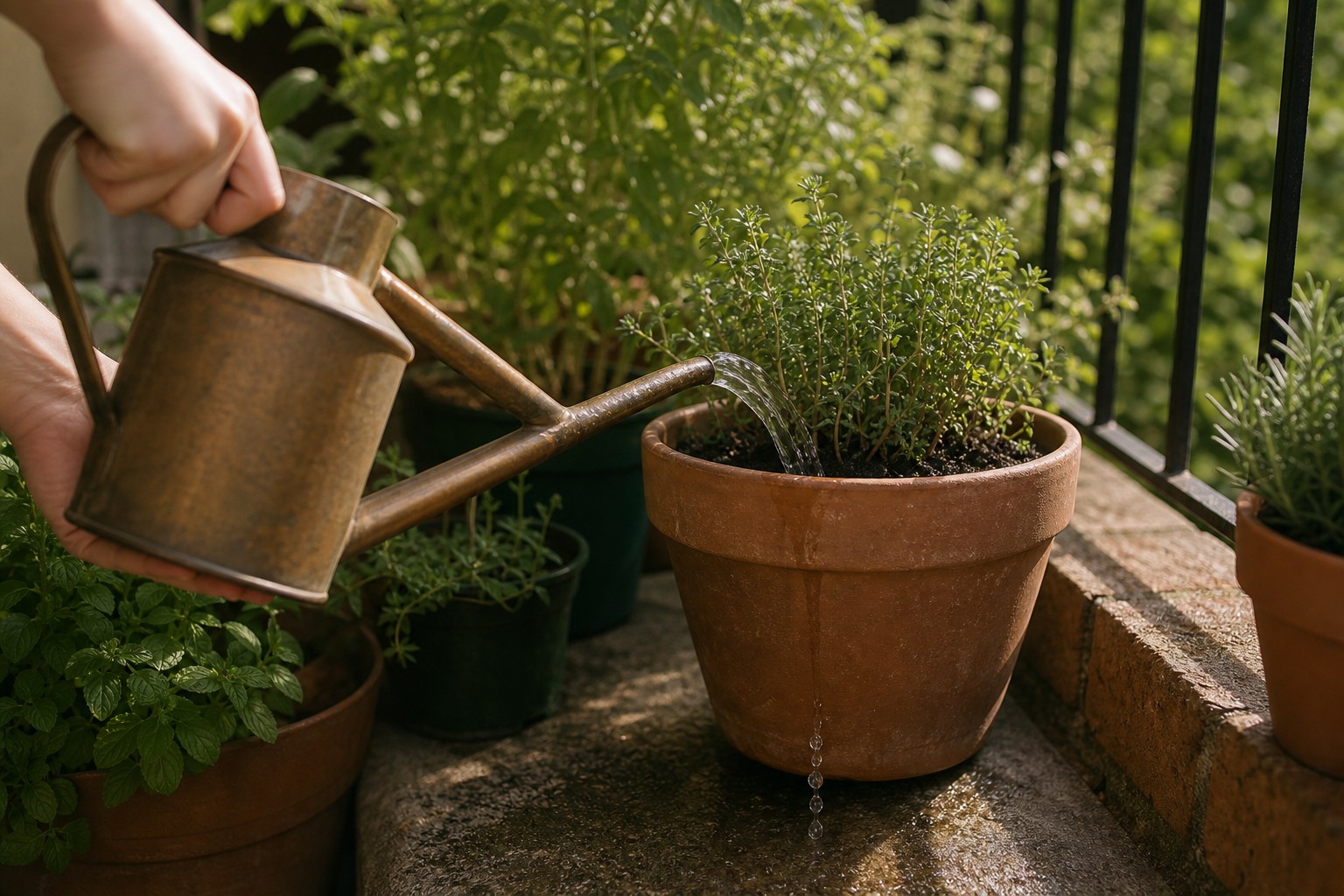
In a heat wave I water first thing in the morning, before the sun is on the balcony. Morning watering fills the soil while it’s cool, so the plant goes into the hot part of the day with a full tank. Watering at noon mostly steams off, and watering on hot foliage in full sun can scorch the leaves.
Water until it runs out the drainage holes, every pot, every morning. A splash on the surface wets the top inch and fools you — the roots down low stay dry and the plant wilts anyway. A long-spout can lets you put water right at the soil under the leaves and reach the back pots without knocking the front ones over. On the worst afternoons I’ll go around a second time around four o’clock, checking only the pots that have actually dried.
One more cheap trick: mulch the surface of each pot. A half-inch of straw, shredded leaves, or even a layer of bark chips shades the soil and slows evaporation dramatically. It’s the closest thing to free, and it’s the step most balcony gardeners skip.
Make shade where there isn’t any
If your containers bake in full afternoon sun, the single biggest thing you can do is take the edge off that sun for a few hours. You don’t need anything fancy. I cluster my pots together during a heat wave — grouped pots shade each other’s sides and hold humidity between them, instead of standing alone like targets.
Then I throw shade over the hottest stretch from about noon to five. A length of shade cloth clipped to the railing works best, but I’ve used an old bedsheet, a beach umbrella angled west, even a folding drying rack with a towel over it. Anything that turns harsh direct sun into bright shade for the afternoon will drop the soil temperature noticeably. Move the smallest, lightest pots — they’re the ones that cook fastest — into whatever shade you’ve already got.
Stop guessing whether a pot is dry
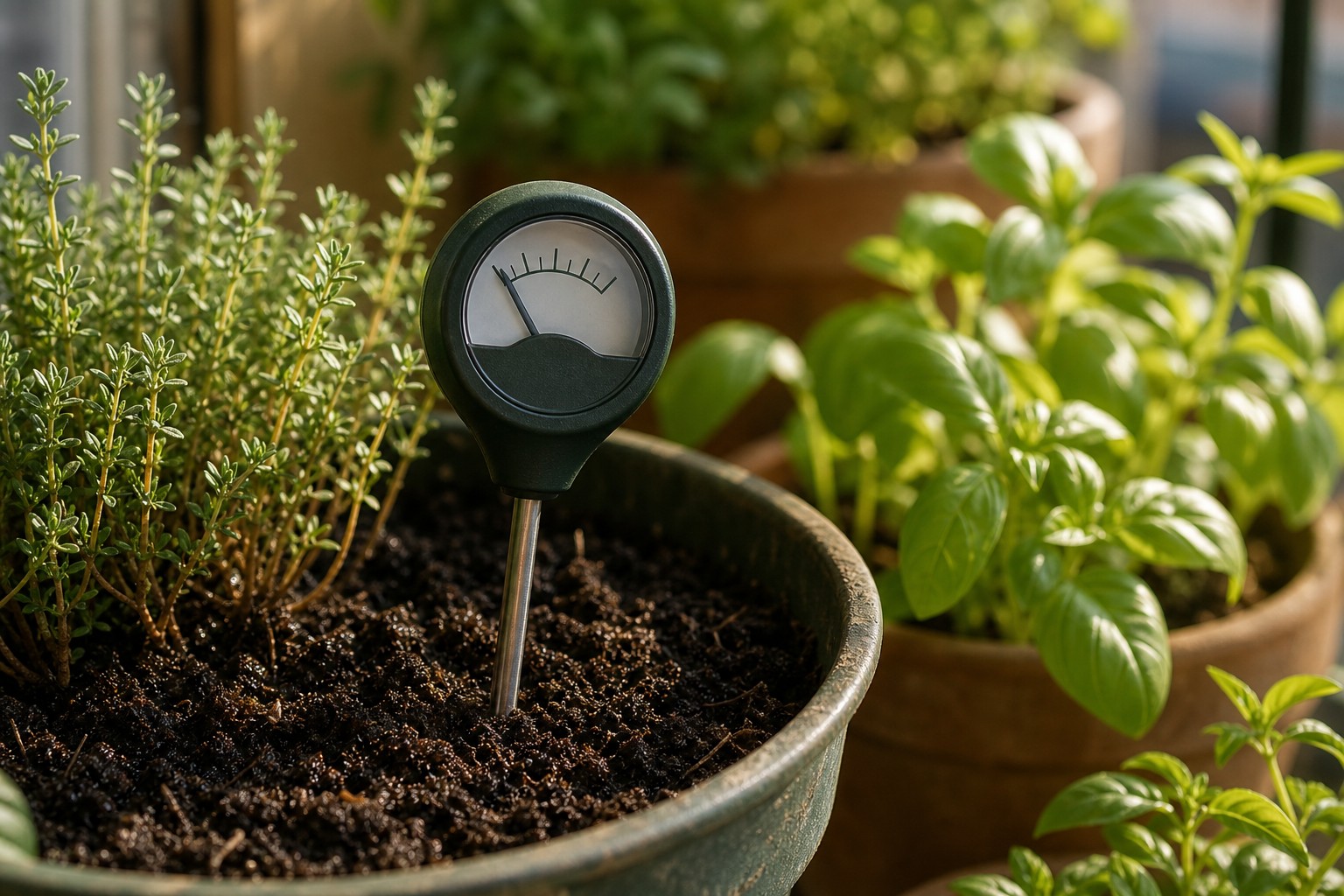
In a heat wave a wilting plant is genuinely confusing: it can be bone-dry, or it can be wet at the root and just flagging in the heat. Water a plant that’s already soaked and you’ll drown it. The finger test — knuckle-deep into the soil — works, but in deep pots it only tells you about the top.
A soil moisture meter settles the argument. You push the probe down to root level, read dry-moist-wet, and water only the pots that actually need it. The simple no-battery kind is all you want — I’ve never needed anything fancier. It saved me from overwatering more plants than it ever saved from drought, which is the opposite of what I expected.
For the pots you can’t babysit
Most of us work, or travel, or simply can’t stand on the balcony with a can twice a day for a week. This is where a little gear earns its place. Self-watering planters have a reservoir in the base that the soil draws from as it dries, so a full one carries a thirsty plant through a hot day — sometimes two — without you. They’re not magic: drought-loving herbs like rosemary and lavender hate sitting wet, so keep those in plain pots. But for tomatoes, leafy greens, and most flowers in July, a reservoir is a quiet safety net.
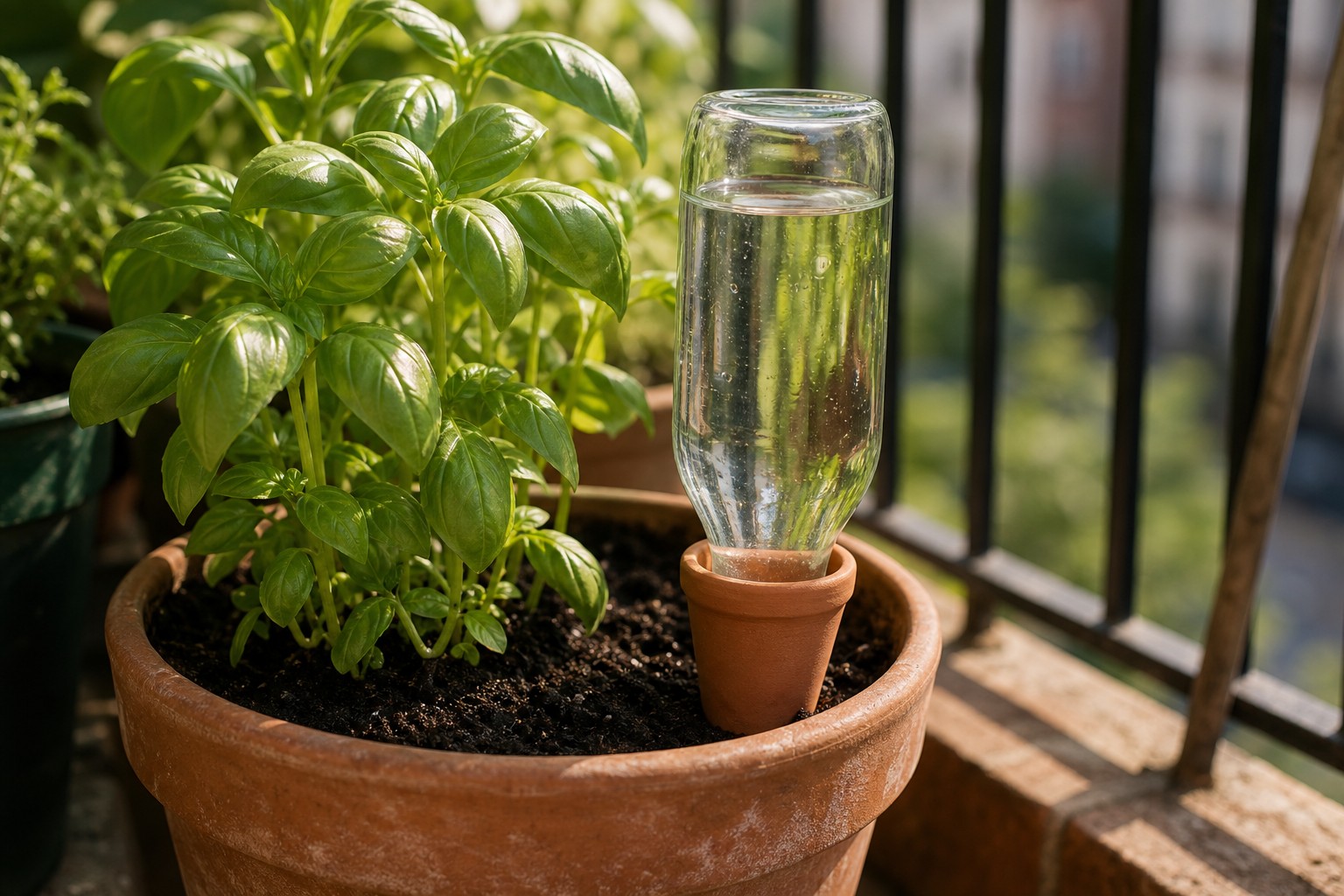
For pots you’ve already planted and don’t want to re-pot, terracotta watering spikes do a similar job. You soak the spike, push it into the soil, and invert a filled wine or soda bottle into it; the unglazed clay releases water slowly as the soil dries. Soak them an hour before first use or they’ll drink the whole bottle in a day. They’re the thing I set up the night before a weekend away.
One honest caution from experience: fabric pots are the exception to all of this. I love my fabric grow bags the other eleven months of the year, but the breathable sides that keep roots happy in spring dry out fastest of anything in a heat wave. If a heat dome is coming and your plants live in fabric, set them inside a slightly larger plastic pot to insulate them, or move them somewhere shaded — and check them first, every day.
The week passes
A heat wave is a few hard days, not the whole season, and plants are tougher than they look in the worst of it. Water deep in the morning, get some shade over the pots, stop guessing with a meter, and lean on a reservoir for the ones you can’t reach — do that and you’ll come out the far side with your balcony intact instead of a row of crisp survivors.
I go deeper on building a small-space garden that holds up all summer — what to grow, in what, and how to keep it alive through a hot July — in Small-Space Big Harvest. This post is the emergency playbook. The book is how to set things up so the next heat wave barely registers. (Otto, who supervises all watering from the shadiest tile on the balcony, declines to comment.)
