How to Water Container Plants in Winter (Less, Then Less)
How to water container plants in winter: how often to water indoor herbs and dormant balcony pots, when to water, and how to check the soil before you pour.

The first December on my old apartment fire escape, I watered my rosemary every Sunday because that’s what I’d done all summer. By the third week it had gone the color of wet cardboard. The soil was still dark and cold when I pulled the pot apart, and the roots had turned to mush.
Summer habits don’t survive winter. A container that dried out in two days in July can hold water for two weeks in December, because there’s less sun, cooler air, and plants that have mostly stopped drinking. The mistake isn’t forgetting to water. It’s watering on a calendar instead of on evidence.
This is the system I use now, on a balcony and a windowsill, for both the pots that live outside and the herbs that come indoors for the cold months.
Why winter watering goes wrong
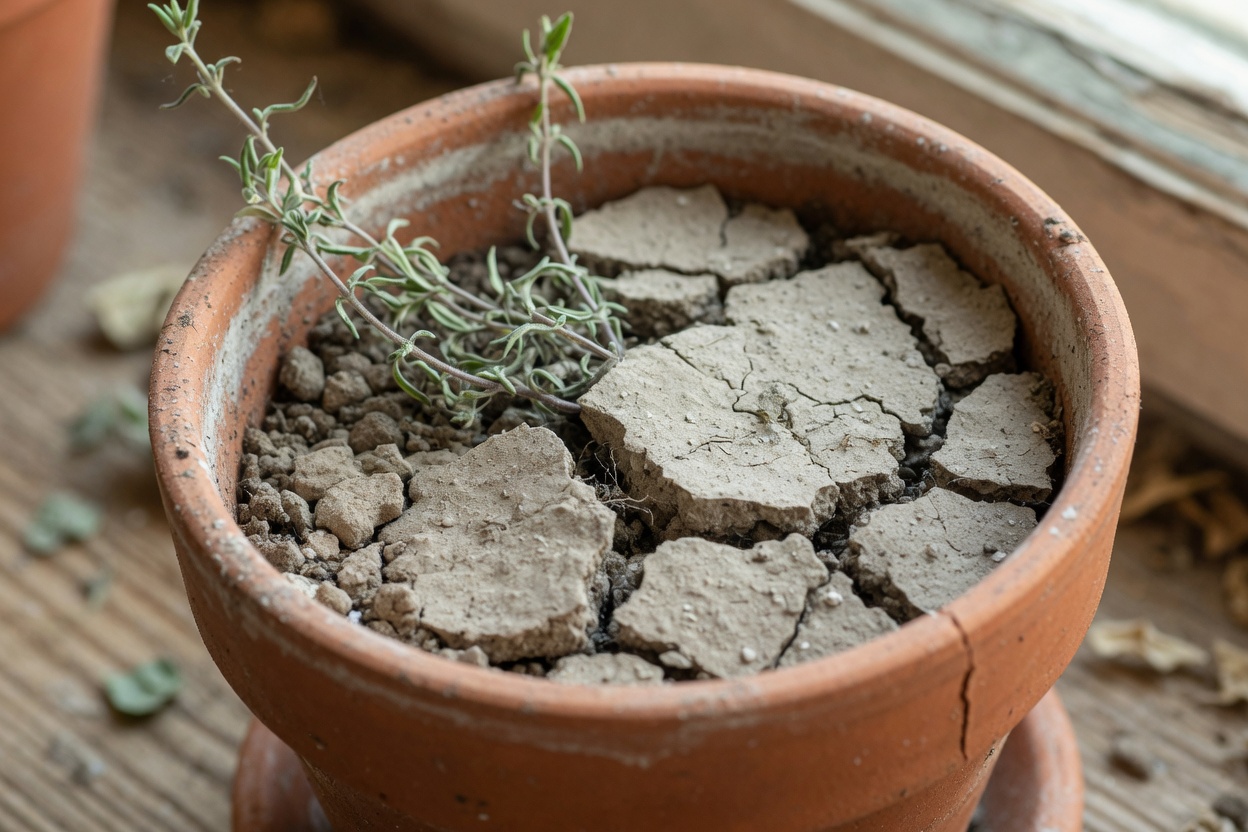
Two things change at once. Light drops, so the plant slows down and pulls up far less water. And the pot loses water more slowly, because cool air pulls moisture out of soil at a fraction of the summer rate.
Put those together and the soil stays wet long after you’d normally refill it. Cold, wet roots can’t get oxygen, and they rot from the bottom up while the leaves droop in a way that looks exactly like thirst. If you’ve watched that happen to a pot, I wrote up the rescue in how to fix an overwatered container plant. Here I’m trying to keep you from needing it.
Check the pot before you pour
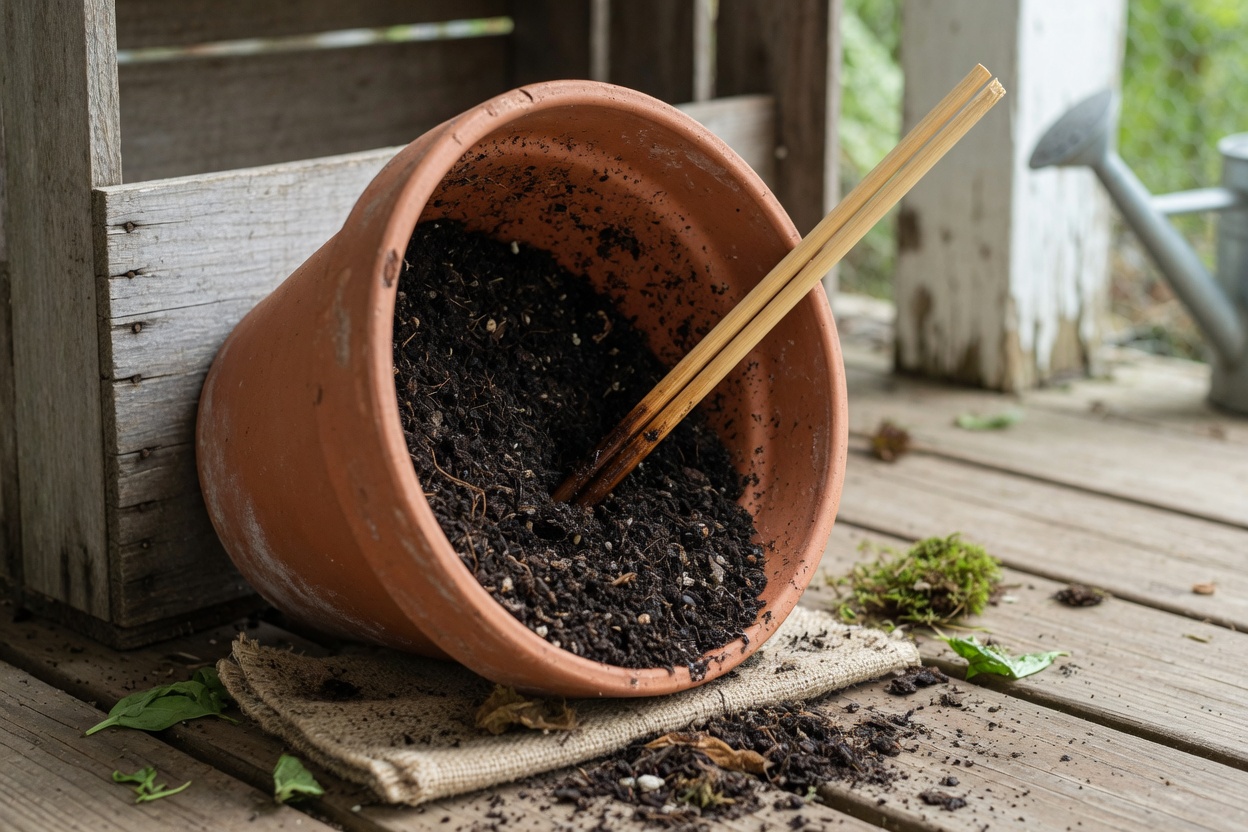
I use three checks, from cheapest to most reliable, and I rarely water on just one.
The finger test. Push a finger two knuckles deep, roughly two inches. If it comes out cool and dark or leaves damp soil on your skin, walk away. This is free and works fine for small herb pots.
The lift test. Pick the pot up the day after a thorough watering and remember how heavy it felt. A dry pot is startlingly light, and once you know the difference you can tell from across the room. It’s the one that works best on a windowsill when your hands are full.
The meter. For deeper pots, I push a no-battery moisture meter most of the way down and read the dial. It catches the pot that’s bone dry on top and soggy at the roots, which is common in winter. It isn’t perfect: in a chunky, bark-heavy mix the probe can land in an air pocket and read too dry, so I test two spots and believe the wetter one. My longer, more honest take is in do you need a soil moisture meter.
How often, by type of pot
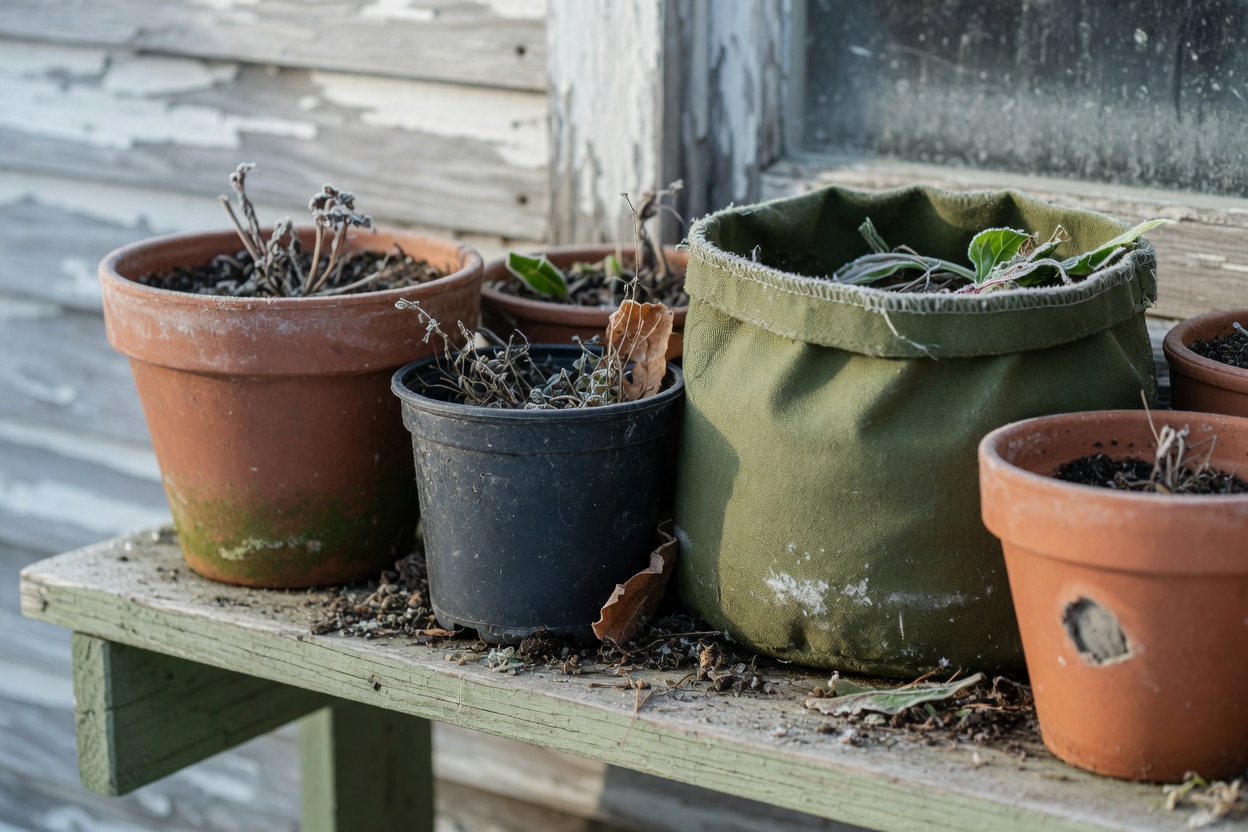
These are starting points from my own pots, not rules. Your radiator, your window, and your mix will move them.
Indoor herbs on a sunny sill (basil, parsley, chives, mint): every 7 to 10 days. Water deeply until it runs from the drainage hole, then leave it alone. Parsley and chives forgive a little dryness. Basil sulks either way, so I don’t fuss when it does.
Indoor rosemary, thyme, and sage: every 10 to 14 days. They’re Mediterranean and want the mix to dry out between drinks. Rosemary is the one I lost in that fire-escape winter, so I check it last and water it least.
Dormant hardy herbs outside (thyme, sage, oregano, chives): roughly every 2 to 3 weeks, and often not at all if you’ve had rain or snowmelt. Chives above ground look dead in January and are fine below it. Water is for keeping the roots from drying out completely, not for growth.
Outdoor greens still going (kale, spinach, mâche): they drink a little more, maybe every 7 to 10 days in a dry spell. Check first, because a cold wet pot is their enemy too.
Fabric grow bags: they dry faster than plastic or glazed pots because the sides breathe. In winter that’s a mercy, since it forgives a heavy hand. I check them a few days sooner than the rest.
Water in the morning, and use the right water
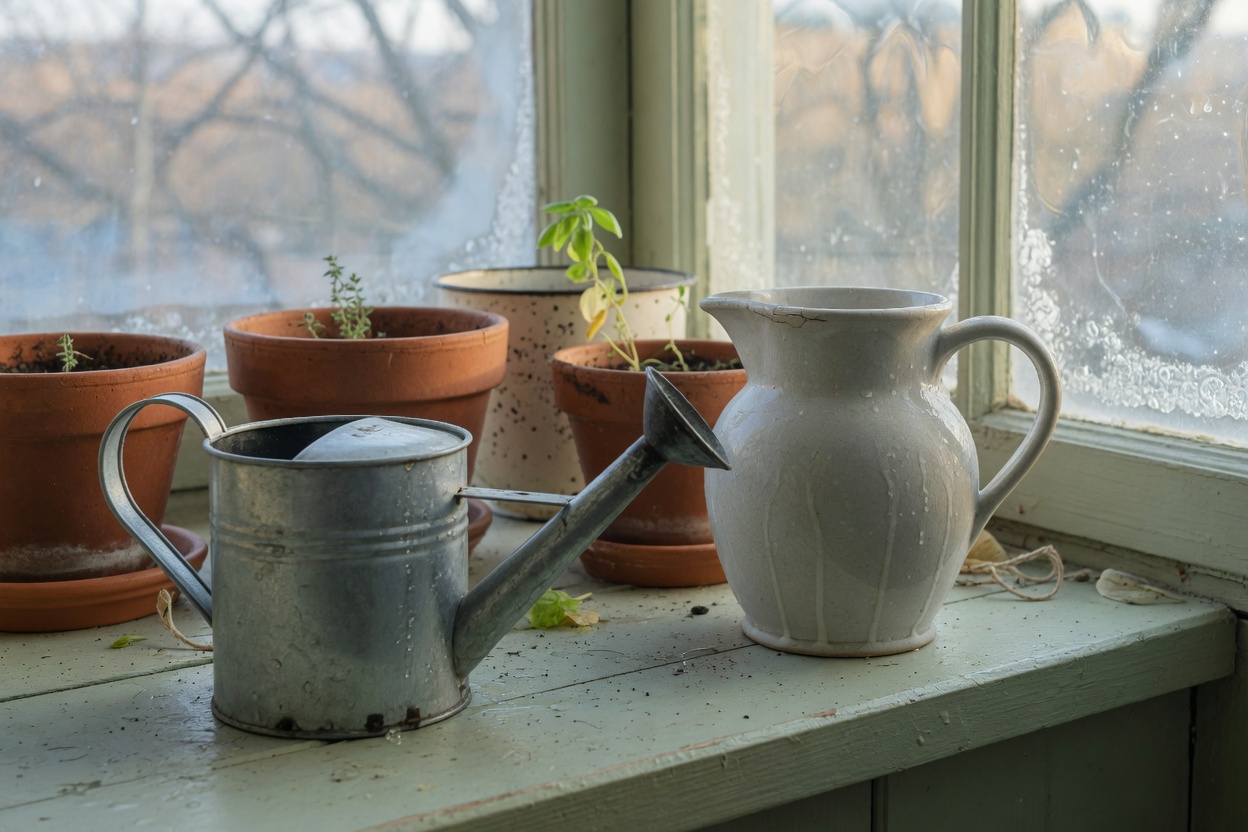
On outdoor pots, water in the morning or early afternoon, on a day that’s above freezing. That gives the pot hours to drain and the surface to dry a little before the night’s cold arrives. Water sitting in a pot at dusk on a 28-degree night is how you get a frozen root ball.
Skip watering entirely if a hard freeze is forecast within a few hours. A pot that’s slightly dry going into a cold snap is safer than one that’s saturated and about to freeze solid.
Water temperature matters more than people expect. Ice-cold water straight from a winter tap can shock roots that are already cool and slow. I fill my long-spout can and leave it on the counter for a few hours so it comes up to room temperature, usually somewhere around 65 to 70 degrees F. As a bonus, chlorine drifts off as it sits, though it won’t remove hard-water minerals.
If your tap water is hard, you’ll see a white crust on the rim of terracotta or on the soil surface. Once a month, I water slowly and thoroughly until it runs freely from the bottom, which flushes out some of the salts. The long spout helps here, since I can pour at the soil line without splashing the leaves.
The radiator-sill problem, and saucers
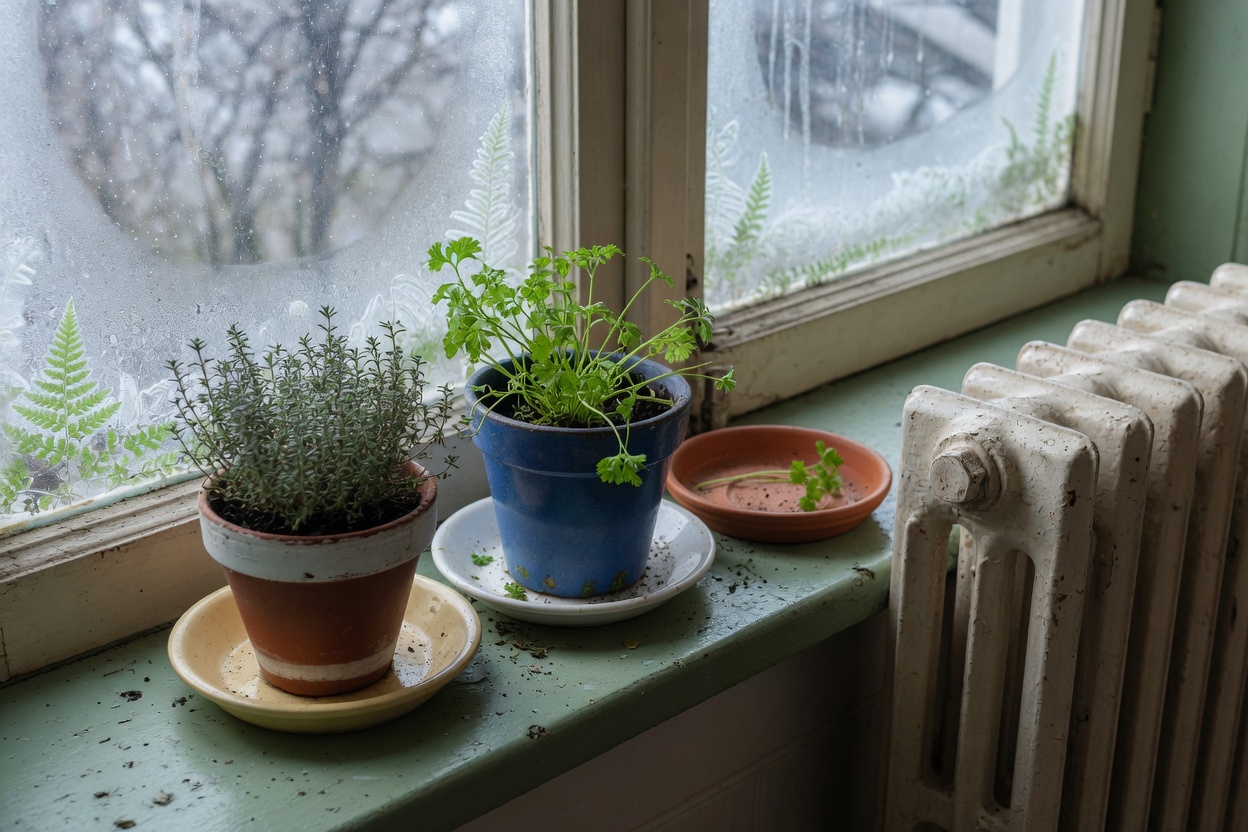
Apartment reality: the sunniest windowsill is often right above a radiator. That sill dries pots out much faster than the rest of the room, so herbs there can need water every 5 to 7 days when everything else is at 10. Move them a few inches back or set a folded towel between the pot and the hot surface, and check them more often than you think you need to.
Saucers are where indoor winter pots go wrong quietly. After a watering, the pot can end up standing in a cold puddle, so I tip out whatever’s in the saucer after about 20 minutes. Leaving a pot sitting in water is the indoor version of the overwatering I described above.
Light matters here too. Short December days mean an indoor plant is barely photosynthesizing on a north-facing sill, which means barely drinking. A clip grow light on for a few hours a day keeps my basil actually growing, and growing plants use the water you give them. I cover the herb side of this in how to grow herbs indoors in winter.
Where spikes and self-watering planters fit in winter

I love terracotta watering spikes in summer. Winter is a different story, and I’d rather tell you so than pretend they’re for every pot. In cold soil, the spike keeps feeding moisture into a pot that isn’t using it, which is the exact overwatering trap. I use them only in indoor herb pots that sit in decent light, and I take them out of anything outdoors. There’s a fuller how-to in using terracotta watering spikes.
A self-watering planter works the same way. Indoors, it’s a good fit for parsley or mint if you keep the reservoir low and let it run nearly empty before refilling. Outdoors, empty it before a freeze, because a full tank can freeze, expand, and crack the base. If you’re heading into the cold with outdoor pots, how to overwinter container plants covers the rest of the protection side.
A simple winter routine
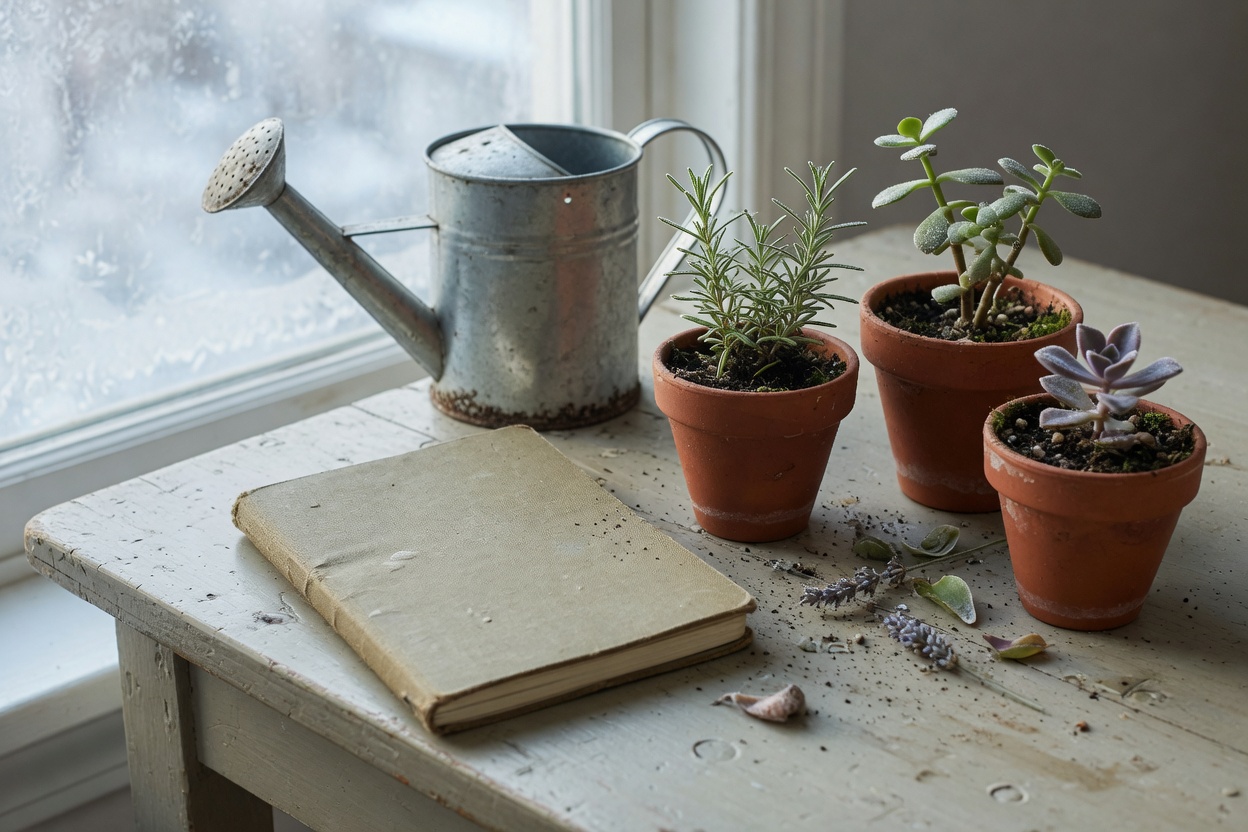
On Saturday morning, I lift and finger-test the sill herbs, check two or three deeper pots with the meter, and water only the ones that ask for it. Most weeks that’s one or two pots. I tip the saucers, rotate the plants a quarter turn toward the light, and I’m done in ten minutes.
That’s really the whole system: check, then water, then leave it alone. Winter houseplants and herbs mostly want to be left alone, and your job is to resist the urge to help.
If you want the fuller picture of how pot size, mix, and light change your watering across the whole year, I go through it in Small-Space Big Harvest. Winter is just the season where the lessons about restraint pay off. Otto, for the record, has learned that the watering can means nothing to him, and still supervises every pour.
