How to Water Chickens in an Unheated Coop All Winter
Keep water open for hens in an unheated coop: waterer placement, a heated base with a metal fount, and a plain backup plan for hard-freeze mornings.
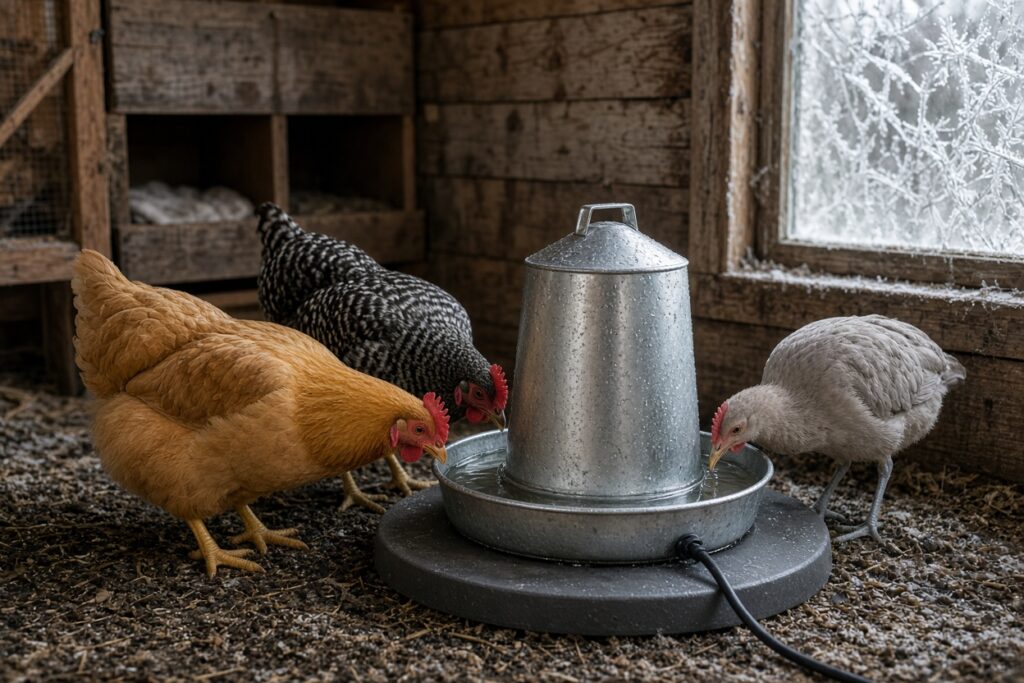
The morning I found Henrietta pecking at a gray disc of ice where her water should have been, I stood in the yard holding a thermos of coffee and realized I had planned for everything about winter except the one thing the girls needed most. The feed was dry. The coop was draft-free. The water was a block.
Hens drink a lot more than people think, and they drink less when the water is bitter cold or frozen, which means they eat less and lay less too. If your coop has no heat, and mine doesn’t, water is the daily chore that makes or breaks a winter. Here is how I handle it in East Tennessee, where we get plenty of nights in the teens.
You’ll also want a couple of flexible rubber pans, a thermometer, and an extension cord rated for outdoor use. None of that needs a link from me.
“Unheated” doesn’t mean “no power”

Here’s a point that trips people up. An unheated coop is one where the air isn’t warmed. Your hens stay warm with their own feathers, a draft-free roost, and dry bedding, which I cover in how to keep chickens warm in winter without heat. The water is a separate problem, and the best fix I’ve found for it uses a little electricity, just at one spot.
If your coop has an outlet, or you can safely run a weatherproof cord to it, a heated base is the easiest way to keep a metal fount from turning to ice. I walk through the setup in how to set up a heated waterer base for a metal fount. If you don’t have power at all, skip to the no-power plan below.
The heated base and fount, honestly

I run the 125-watt base under the galvanized fount. It’s not magic, and here’s what I’ve learned:
– It only works with a metal fount. The heat travels through the metal. A plastic fount on a base can warp or fail to warm the water.
– It keeps water from freezing, not warm. On a 15-degree night my water stays liquid, and it’s cold, not warm. That’s what you want. Hens drink cold water fine.
– A very hard freeze can still skin the top. When we dip into the single digits, I’ll find a thin film some mornings and break it with a knuckle.
– It needs power, and it needs to be safe. Plug it into a ground-fault outlet, keep the cord out of reach of pecking beaks, and check it every few days. If you see a chewed cord, a hot smell, or a scorched spot, unplug it and don’t use it again.
The trade-off is plain: you’re relying on electricity, and the base doesn’t help in an outage. That’s why I always have a backup.
Where to put the waterer
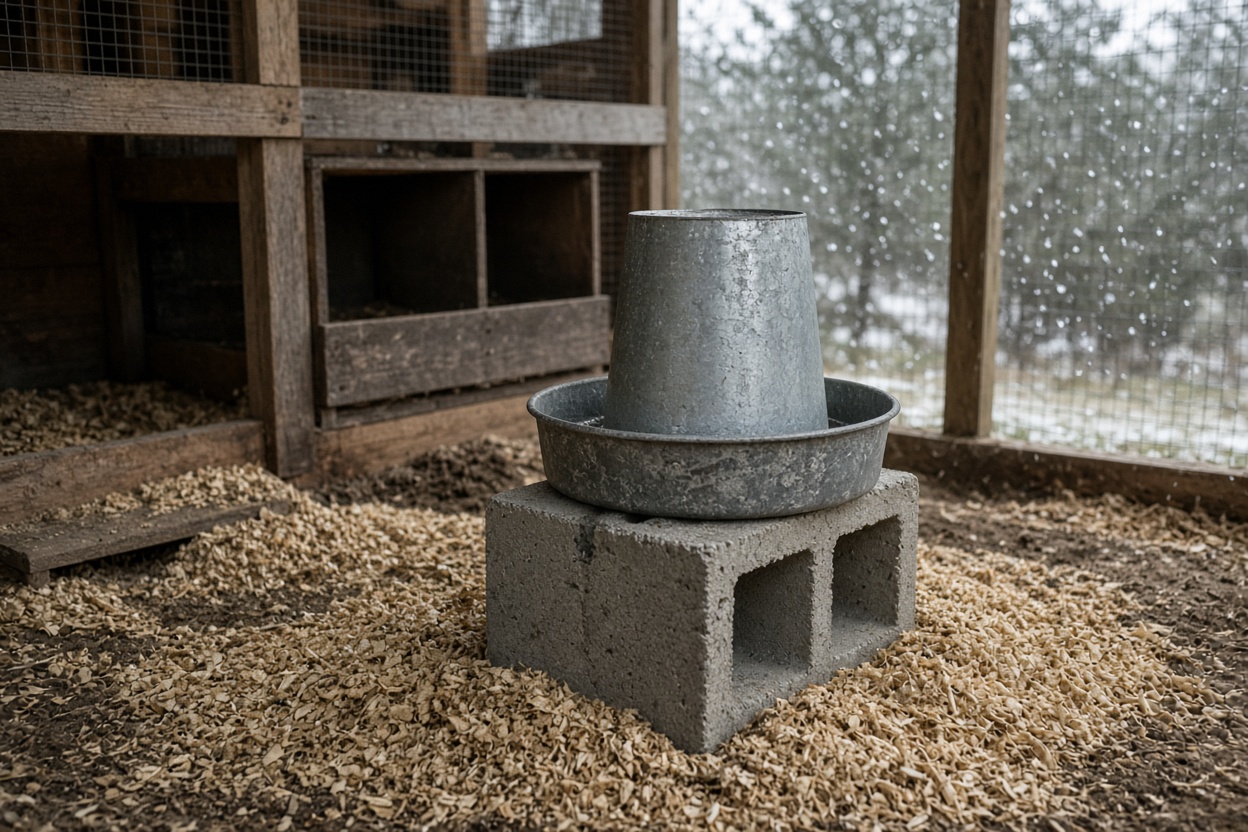
Location counts as much as gear. Put the fount:
– Inside the coop or a covered section of the run, out of wind and sleet.
– Raised on a cinder block or low platform, so droppings and bedding don’t fall in and the water stays cleaner. Hemp bedding around the base stays drier than shavings in my coop. I wrote more about it in how to use hemp bedding for a warmer winter coop.
– Away from the roost. Water under the roost gets poop, and a damp coop is a cold coop.
– Where the morning sun reaches, if you can manage it. A little sun on a bucket adds an hour of open water.
The no-power plan

This is what I do for an outage, or if you simply don’t have an outlet:
1. Use two or three flexible rubber pans instead of one fount. A frozen rubber pan flips over and the ice pops right out, with no cracking.
2. Swap them twice a day. Bring a bucket of fresh lukewarm (not hot) water out in the morning and again in the afternoon. I keep a second set of pans in the mudroom so one is always thawing.
3. Use the double-wall fount as a reserve. Fill it with warm water and it holds heat longer than a single-wall one, even without the base.
4. Make water a routine. I do mine right after I let the girls out, before I do anything else.
I’ve also tried the old trick of floating a ping-pong ball in a bucket. It keeps the water moving a little on a mild day, but it did nothing for me at 12 degrees. Don’t count on it.
Keep an eye on how much they’re drinking

If your hens suddenly drink less, check the water first. Is it frozen, dirty, or too cold to want? A hen who goes a day without water will stop laying within a day or two. If one looks stressed or off her water after a rough day, a poultry electrolyte designed for chickens can help, and I use the OTC electrolyte packets sparingly. I covered the when-and-when-not in how to add electrolytes to chicken water. For anything more than a one-day slump, call a vet who sees chickens, because I’m not one.
What I got wrong
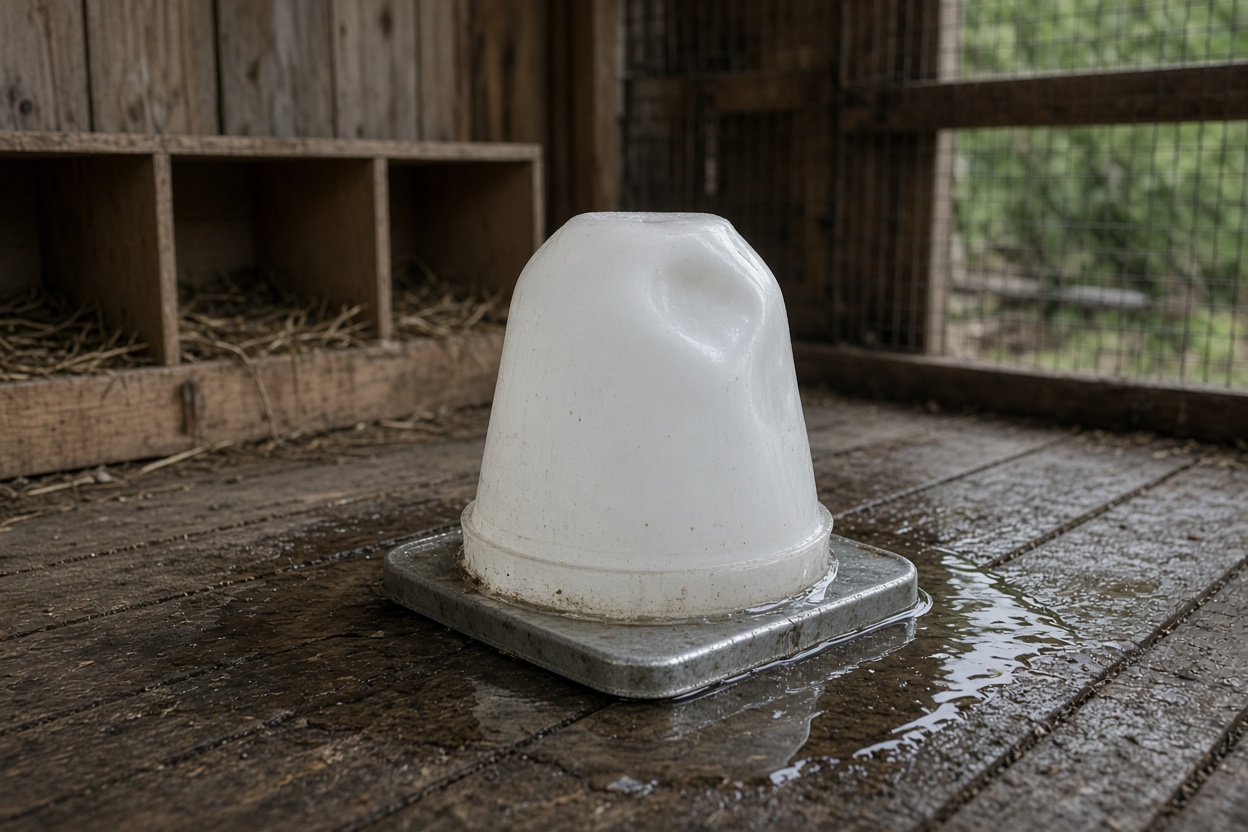
My first winter I bought a plastic fount and set it on a heating plate meant for metal. The plastic sagged and the water leaked. Now I match the gear to the job. I’ve also run a cord across the run with a loose connection, and a wet night tripped the breaker at 2 a.m. Use a cord rated for the cold and wet, and tape or tuck the connection somewhere dry.
Your winter water list
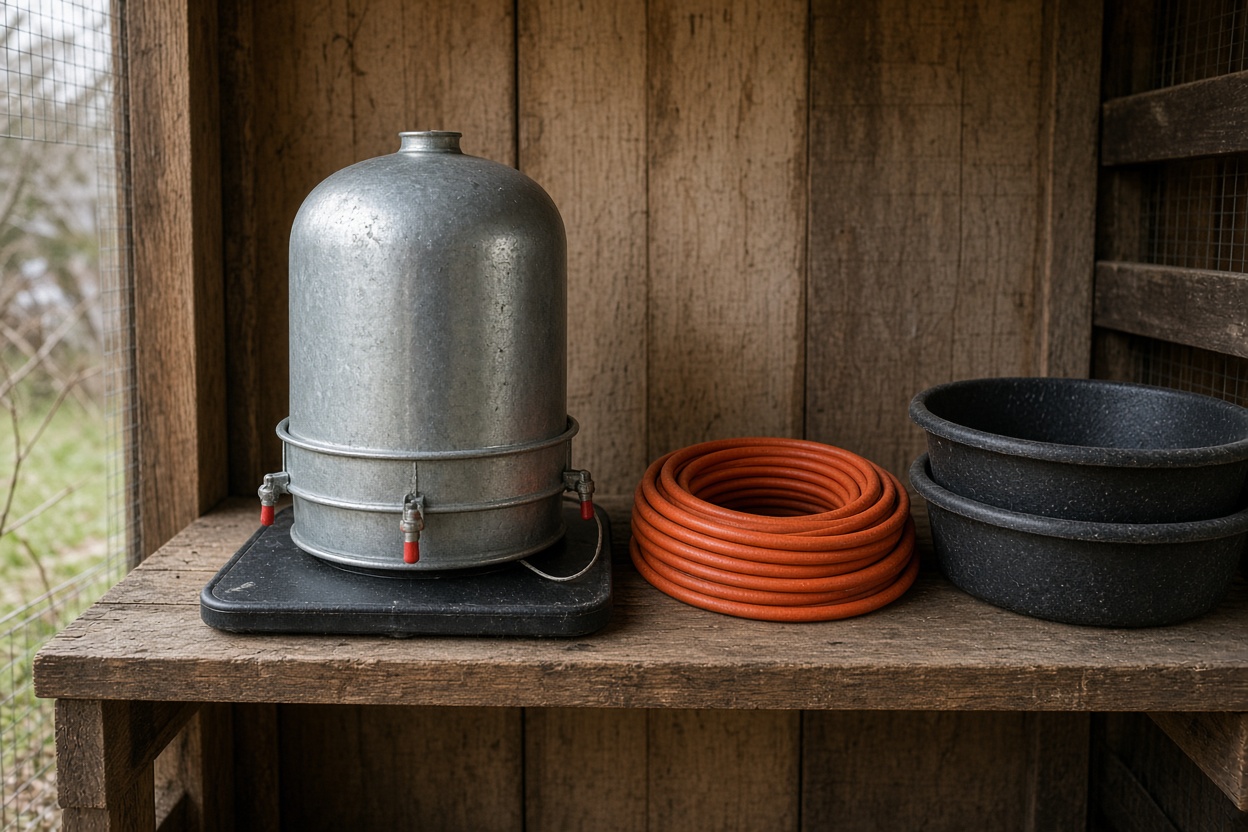
If you take one thing away: have a plan for water before the first hard freeze, not on the morning it happens. A heated base with a metal fount for the nights you have power, rubber pans for the nights you don’t, and a routine you won’t skip. For a side-by-side look at the main options, see nipple waterer vs. galvanized fount for winter.
I go through the whole first-year flock, season by season, in my book, Raising Backyard Chickens for Beginners. There’s a chapter on winter care that covers this and more.
Know your girls.
