How to Use a Solunar Calendar for Fishing (Honestly)
A solunar calendar lists the moon's major and minor feeding periods. Learn to read one, pair it with weather and water, and keep a log to test it.
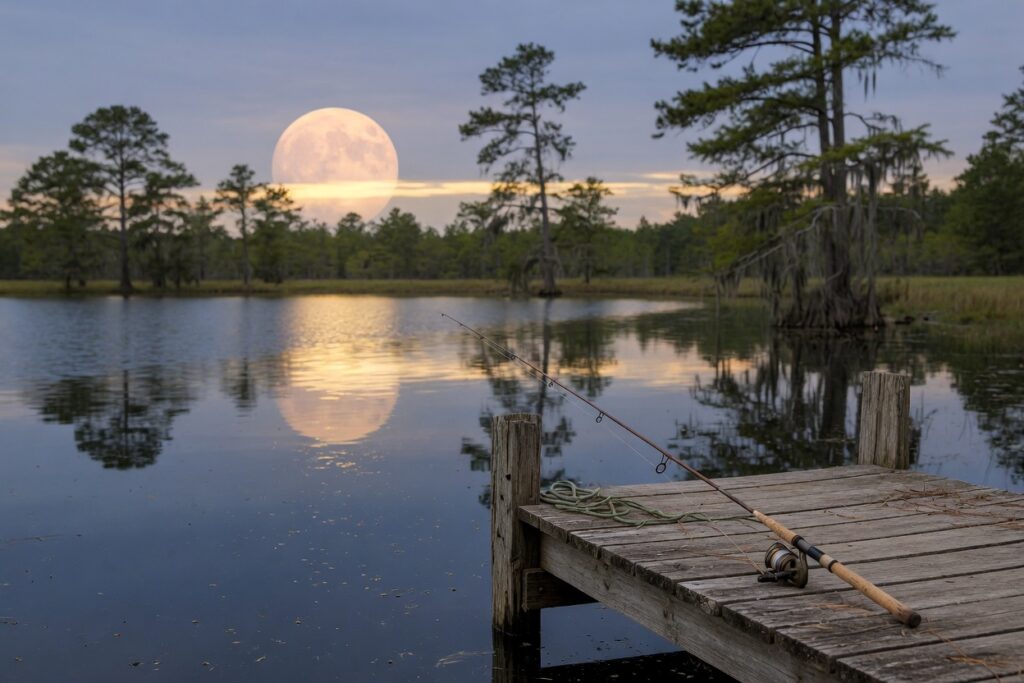
The first time my grandson Isaiah held his phone out and showed me a solunar chart, I laughed, because it was my granddaddy’s moon almanac with a colored bar graph on top. Same idea, new clothes. Isaiah is twelve and fishes with the phone in one hand and a rod in the other, and he wanted to know whether the chart was telling him the truth.
I told him what I’ll tell you. It’s a useful tool and a poor boss. A solunar calendar can help you pick the hour, and a few years of notes will tell you whether it’s helping you at all. Here is how to read one, and how I use it alongside the other signs.
What a solunar calendar is
The idea goes back to 1926, when a Florida writer named John Alden Knight published his solunar theory. He believed fish and game move most at certain times tied to the moon’s position, and he published tables so anglers could plan around them. The Farmer’s Almanac has carried fishing days for generations, and today’s apps and websites do the same math for your location.
A solunar calendar gives you, for each day, a set of windows. The windows come from where the moon is in the sky, not from the clock.
Major and minor periods

You will see two kinds of window on any solunar table.
Major periods run about two hours. They’re centered on the moon being directly overhead, or directly underfoot, on the opposite side of the earth. That is about as strong as the calendar gets.
Minor periods run about an hour. They’re centered on moonrise and moonset. The calendar treats them as a lesser bump.
Two things help you read the chart. First, the times shift later by about fifty minutes each day, because the moon rises later every night. A good window on Tuesday morning won’t be there at the same hour on Wednesday. Second, the periods are strongest around the new moon and the full moon, and weaker in between. Many tables rate each day, with a star count or a bar, and the high ratings cluster around those two phases.
Pick the day first, then the hour
Here is how I put it to use. I don’t start with the solunar chart. I start with the weather and the water. If a front is coming in and the water has been warm for a week, I already want to fish. Then I open the chart to choose the hour.
A good plan stacks the signs. Say the barometer is falling, the pond is above sixty, and the chart shows a major period starting at 6:40 in the morning. That lines up with first light, which is when fish are likely to feed anyway. I’m on the bank by 6:00. If the major period lands at two in the afternoon under a hard bright sun, I treat it as a maybe and fish the dawn bite instead. I covered the three signs in best days to fish: how to read the three signs, and the solunar chart is a fourth tool that sits on top of those.
For the time of day, best time of day to fish in the fall goes into more detail.
What it can’t do
I want to be honest with you. Studies that looked back over years of catch data come out mixed. Some find a small edge near the new and full moons. Some find hardly anything. Weather, water temperature, and fishing pressure are all much louder than the moon, and a chart can’t see any of them.
So don’t schedule your life around it. A high-rated day with a cold snap and a bluebird sky will still be slow, and a low-rated day with a falling barometer can be fine. I’ve caught a good mess of bluegill in the middle of a period the chart called poor, and gone home empty during one it called excellent. Treat it as a tiebreaker, as one more piece of the almanac, and no more than that.
Winter is when it earns its keep
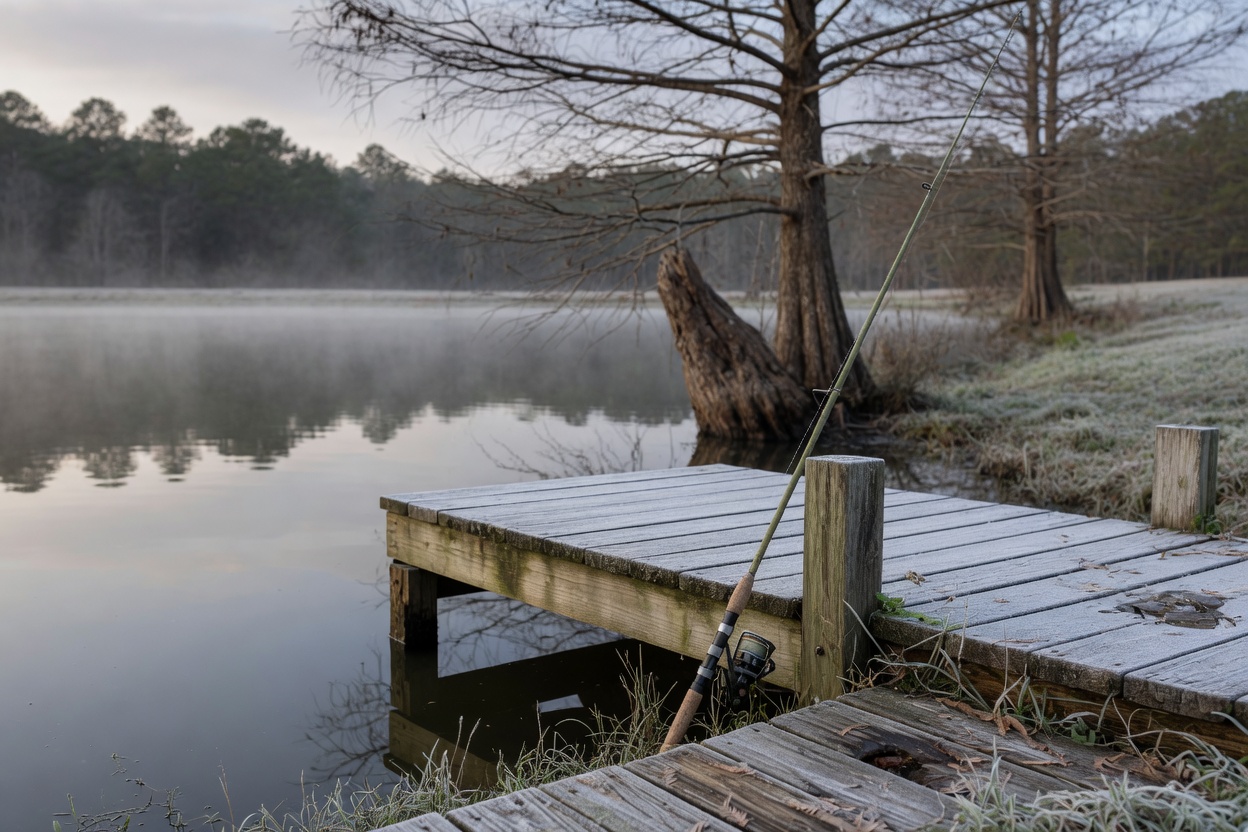
I find the calendar most useful in cold months, when the fish feed in short windows and everything is slower. In January there’s a lot less happening in a pond, and a short window can be the whole day. If you only have an hour, you want it to be the best hour. The same goes for a day when you can only slip out after work. In those cases a major period near dusk, for example, can make the difference between fishing a dead pond and a lively one. Our winter fishing days piece covers which days to pick.
Keep a log and let it decide
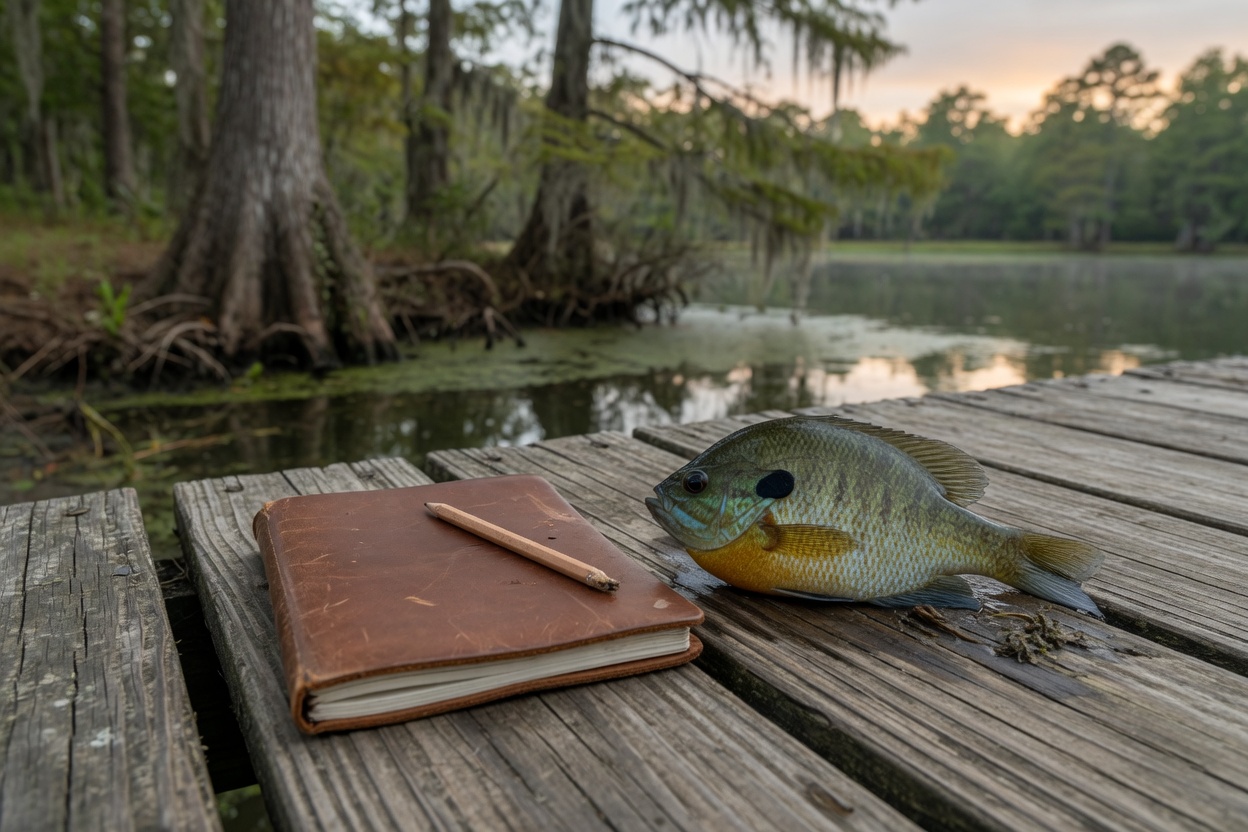
The best way to find out if the calendar works for you is to write things down. Each trip, note the date, the time, the weather, the water temperature if you have it, whether you were in a major or minor window, and what you caught. After a season, look back. Do the windows beat the hours outside them? If they do on your pond, lean on them. If not, you’ve saved yourself some trouble.
This is also how you learn your own water. Every pond has its own habits, and no chart knows yours. It’s a habit I’d teach a child, as I describe in how to teach a kid to fish, and it serves grown folks just as well.
A short checklist

– Look at the weather and the water first.
– Open the solunar chart, and find the major and minor windows for your location.
– Pick the window that sits closest to dawn or dusk.
– Remember the times slide about fifty minutes later each day.
– Fish it, and write down what happened.
– Trust your notes over any chart.
Where to go from here

I put together a simple almanac that shows the best days to fish each month by the moon, the weather, and the water, so you don’t have to do the arithmetic yourself. I give it away free. You can pick up the Best Days to Fish starter kit here.
And if there’s a young one around who wants to keep a record of every fish that goes in the cooler, my little journal, My First Catch, gives them a place to write it all down. The ones who keep a record tend to keep fishing.
Read the signs.
