How to Use Terracotta Watering Spikes (So They Actually Work)
How to use terracotta watering spikes on a balcony: which bottle to use, how deep to push them, why to soak them first, and the mistakes that make them fail.
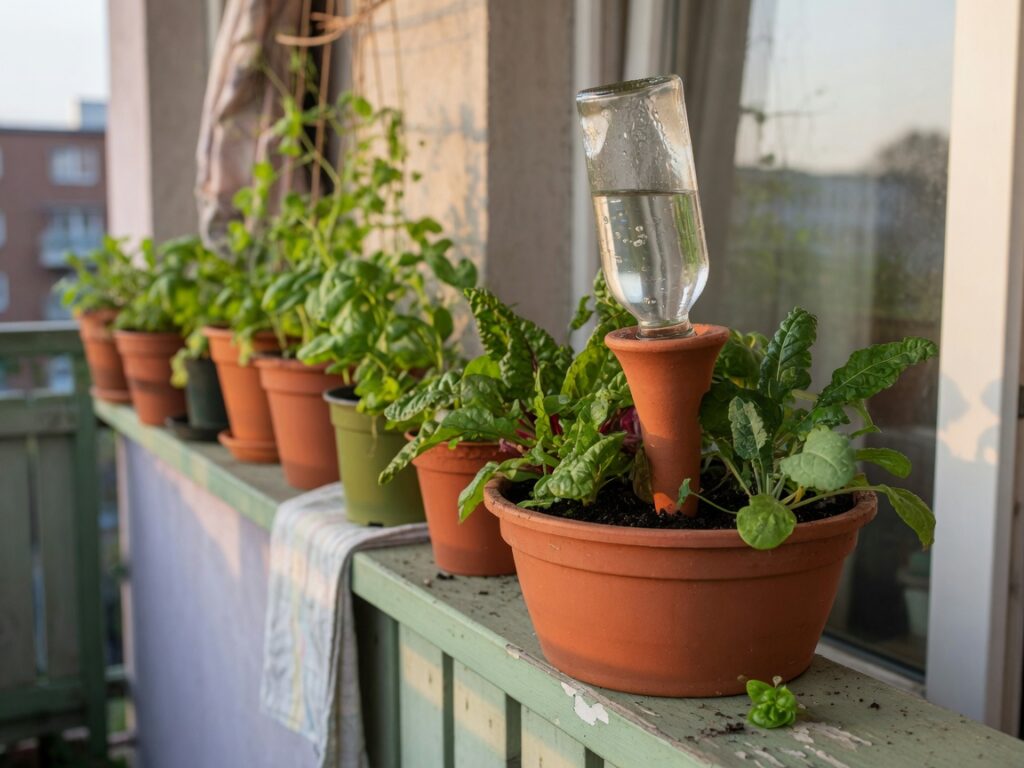
The first time I used terracotta watering spikes, I did it wrong, and I nearly wrote them off. I pushed a dry spike into a dry pot, upended a wine bottle into it, went to work, and came home to a bottle that had glugged its whole self out onto the floor in an afternoon. Not the spike’s fault. Mine. Used right, these little unglazed clay cones are the closest thing a container gardener has to a plant that waters itself — and after six seasons on my balcony, they’re what I reach for every time I’m away for a weekend.
If you’ve never used one, here’s the whole idea in a sentence: you push a hollow terracotta spike into the soil, cap it with a filled bottle of water, and the clay releases water slowly into the soil as the soil dries out. No timer, no reservoir to build, no re-potting. But there are four or five small things that decide whether they work beautifully or dump water everywhere, and nobody tells you those up front. Let me.
Soak the spike before its first use
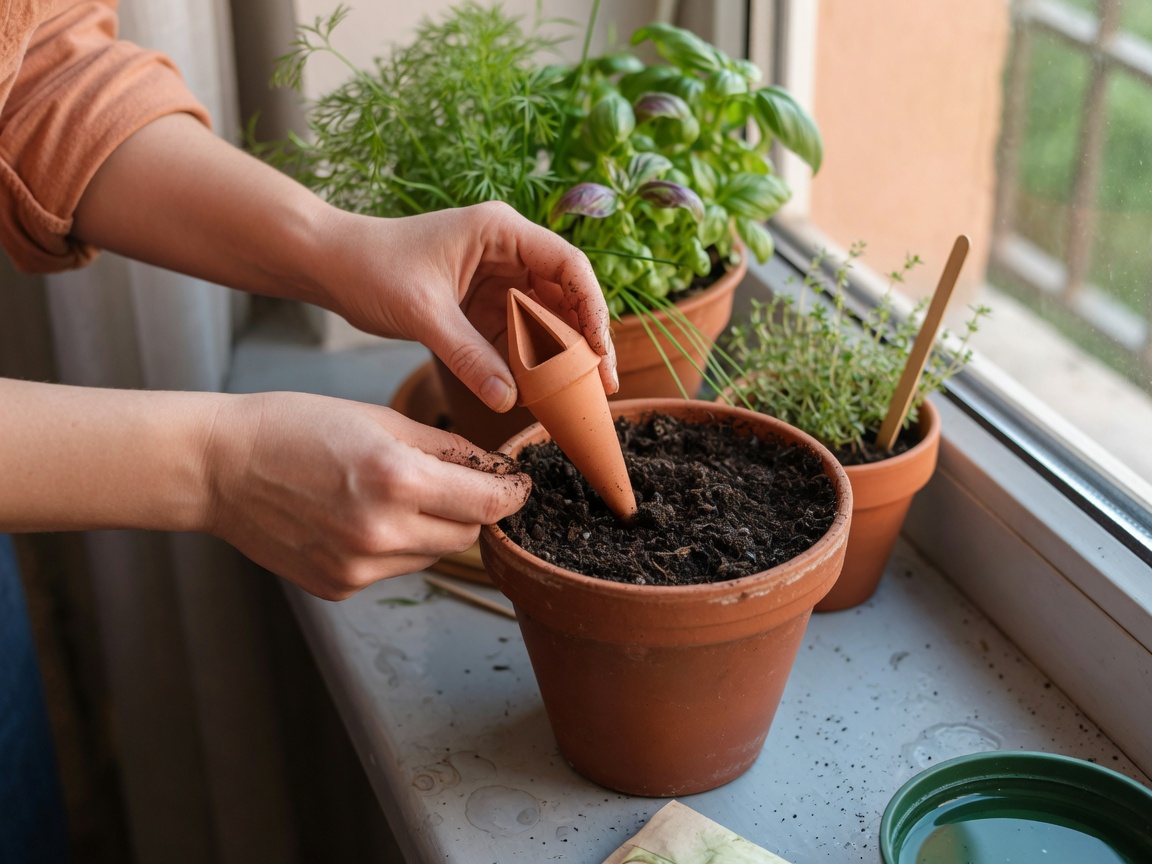
This is the step I skipped, and it’s the one that matters most. A brand-new terracotta spike is bone-dry, and dry clay pulls water through itself fast — which is why my first bottle emptied in an afternoon. Before you use a terracotta spike for the first time, drop it in a bowl of water for an hour or two until it stops bubbling. A saturated spike releases water at a slow, steady creep instead of gulping.
You do the same, in miniature, every time the reservoir runs empty and the clay dries out. If a refilled bottle drains fast, the spike dried between fills — pull it, soak it, reset it. Once you’ve used them a few weeks in a row through a warm stretch, they stay damp and behave.
Water the pot deeply first — the spike is a top-up, not a rescue
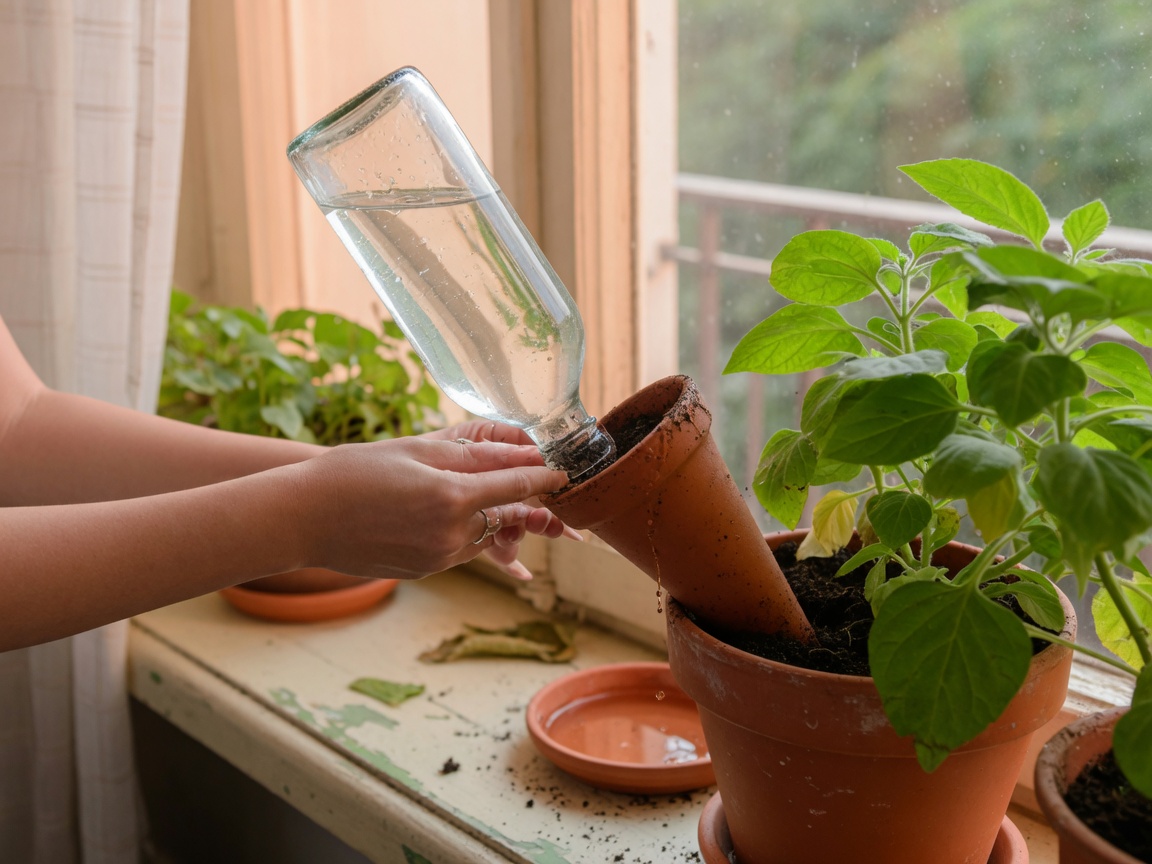
A watering spike keeps a already-watered pot from drying out. It is not built to rescue a pot that’s already gone crisp — the trickle can’t catch up to bone-dry soil in summer. So the routine is: soak the pot, then set the spike.
Give the container a full deep watering first, until it runs out the drainage holes. I use a long-spout can to get the water right at the soil line and reach the back pots. Then push the soaked spike in. Now the spike’s job is just to hold the line while you’re gone, which it does well.
Push it deep, and mind the roots
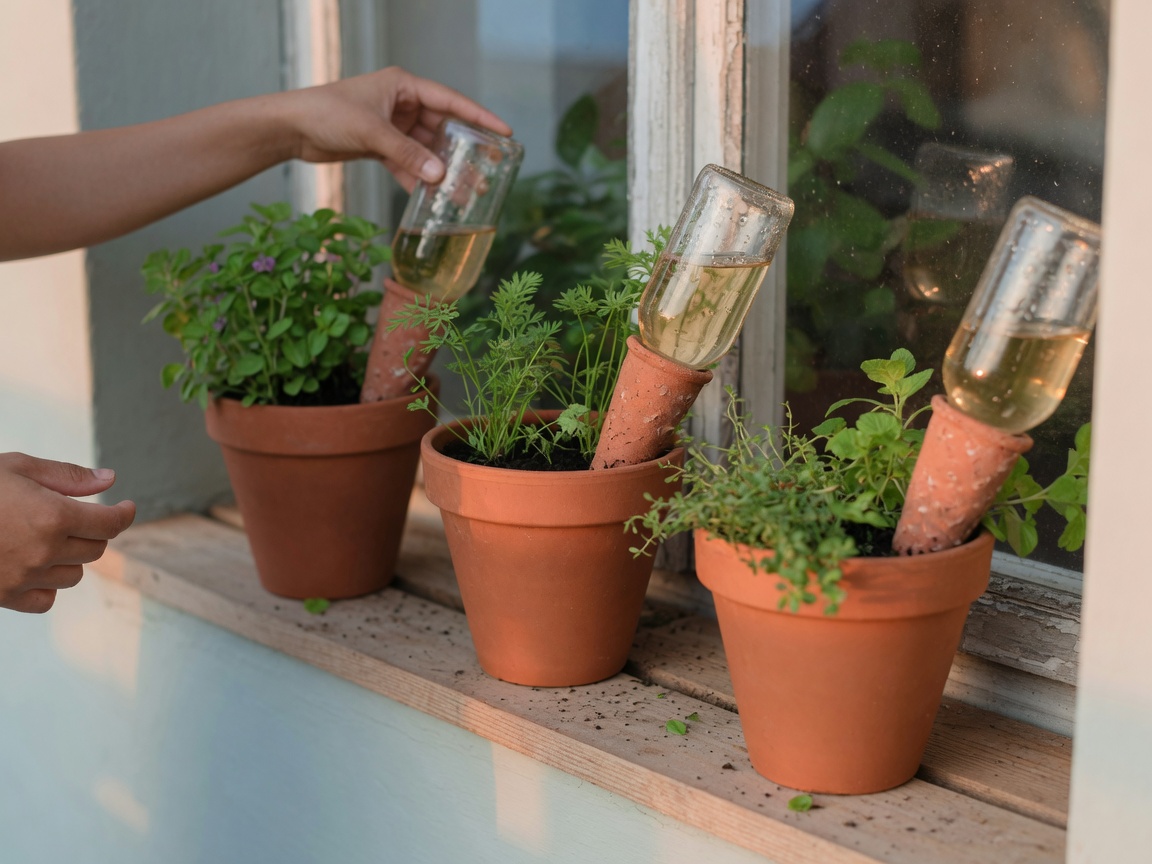
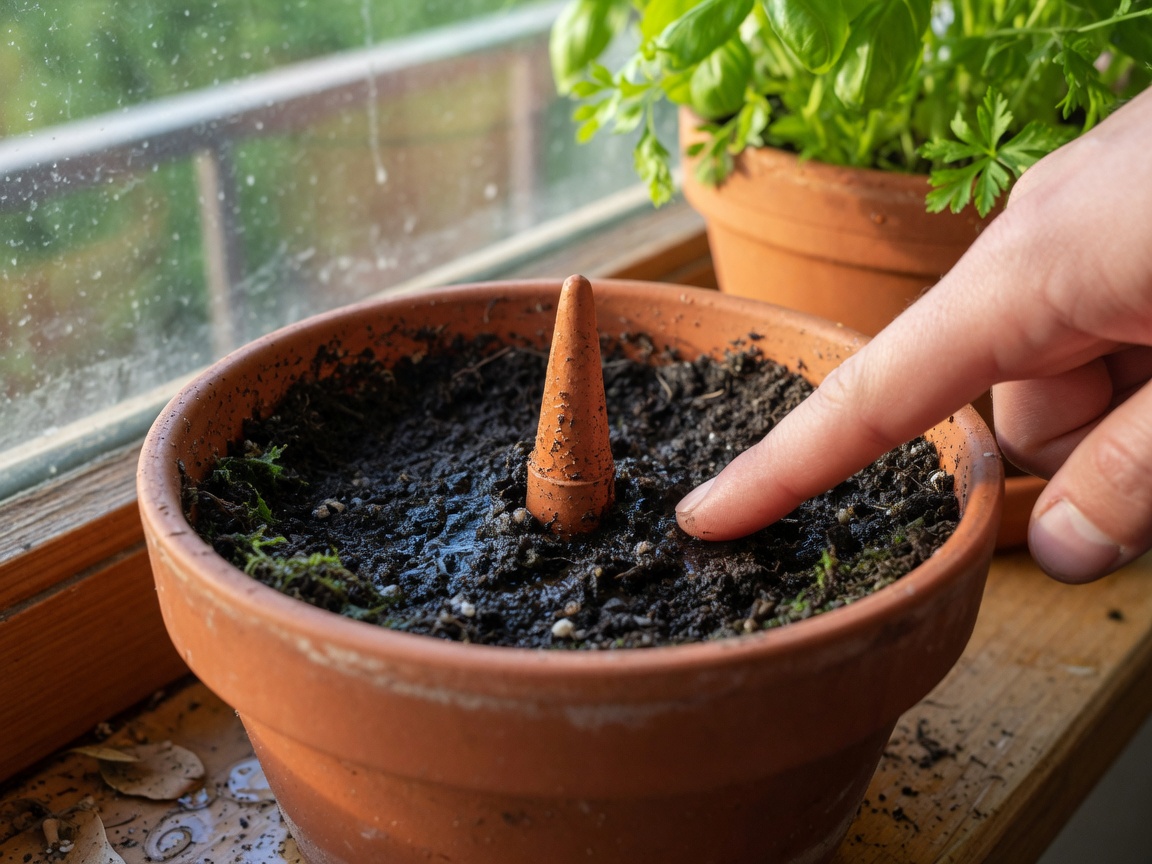
Push the spike in far enough that its whole clay body is buried in the soil — usually most of its length, leaving just the neck and opening above the surface. If half the cone sticks up in the air, that half isn’t touching soil and isn’t doing anything.
Go in gently. In a small pot you’ll feel it if you’re driving through the root ball; ease off and find a spot between the stems rather than spearing straight through the middle. I set mine an inch or two in from the pot’s edge, angled slightly, so it sits in the root zone without fighting the main stem. If the soil’s hard, water first (you’re doing that anyway) and it’ll slide in easily.
Choose the right bottle — and don’t oversize it
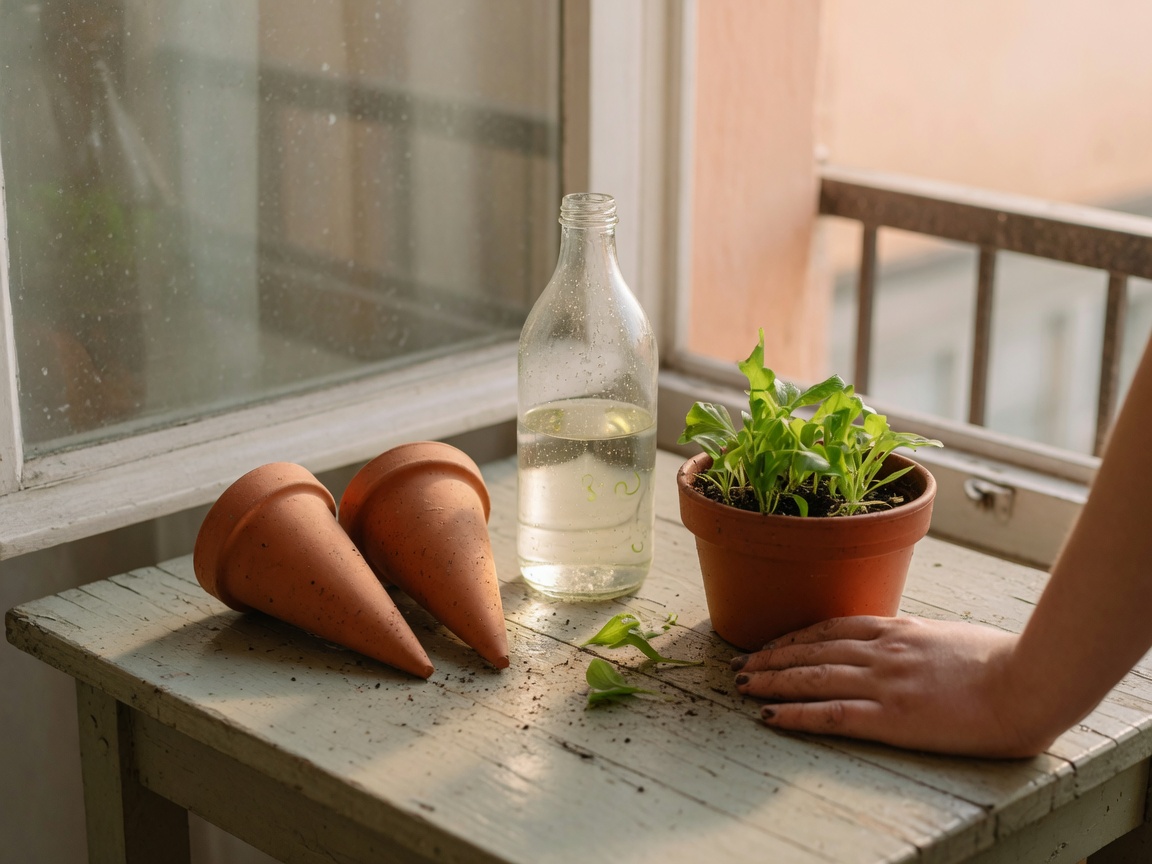
Most spikes are threaded or sized to take a standard wine bottle, and some come with an adapter for a soda or water bottle. A wine bottle holds about 750 ml, which is a sensible amount for a medium pot for a few days. The mistake is reaching for a big two-liter on a small pot: too much head of water can overwhelm the clay and waterlog the soil, and it topples the pot besides.
Match the bottle to the pot. Little herb pot? A small water bottle. Big 5-gallon tomato container in July? A wine bottle, maybe two spikes. Fill the bottle, put your thumb over the opening, invert it quickly into the seated spike, and let go. A little air-glug at the start is normal; a bottle that keeps glugging and dropping fast means the spike wasn’t soaked or isn’t sealed in the soil.
Check it works before you rely on it — with a meter, not a guess
Here’s the part that turns this from a gamble into a system. Before you leave for three days trusting a spike, watch it for a day at home first. Set it up in the morning and check the pot that evening.
The honest way to check is with a soil moisture meter. Push the probe down to root level and read it. If the soil’s holding steady in the moist range a day later, your spike-and-bottle combo is keeping up and you can leave with confidence. If it’s already sliding toward dry, you need a second spike, a bigger bottle, or some shade on that pot. The plain no-battery meter is all you need — it settles the argument that a wilting plant on a hot day always starts. I’ve watched a pot look droopy at noon and read perfectly moist at the root, which meant the plant was just flagging in the heat, not thirsty. Guessing would have had me drown it.
Which plants love them, and which don’t
Spikes shine for the thirsty, even-moisture crowd: tomatoes, leafy greens, most annual flowers, basil and the soft herbs. These are the plants that sulk the moment a pot dries out, and a spike smooths the peaks and valleys beautifully.
They’re the wrong tool for the drought-lovers. Rosemary, lavender, sage, and succulents want to dry out between drinks, and a spike keeping them steadily damp will rot them. Leave those in plain pots and water them by hand when they’re dry. Fabric grow bags are another poor match — they wick moisture out their sides so fast the spike can’t keep pace on a hot day. Reserve the spikes for solid pots and the plants that actually want steady water.
A quiet little system
That’s really all there is to it. Soak the spike, deep-water the pot, push it in to the neck, cap it with a right-sized bottle, and check it with a meter before you trust it. Do that and you can leave your balcony for a long weekend in July and come home to plants that look exactly as you left them — which, the first time it works, feels a little like magic and a lot like relief.
I go deeper on building a small-space garden that survives your real life — travel, heat waves, the busy weeks — in Small-Space Big Harvest. This post is one trick. The book is how to set the whole balcony up so it mostly takes care of itself. (Otto supervised the testing of every spike from the shadiest tile, and remains unconvinced they’re edible.)
