How to Train Chickens to Use a Nipple Waterer This Winter
Learn how to train chickens to use a nipple waterer: the tap-the-pin trick, how long it really takes, and why the old waterer stays out for a full week.

The first nipple waterer I ever hung in my coop sat there for three days while twelve hens looked at it like I’d installed a smoke detector. Henrietta, my oldest Buff Orpington, stood under it and stared. Then she walked over to the old open fount and drank like nothing had happened.
I hadn’t done anything wrong. I’d just skipped the part where you teach them. Hens aren’t born knowing a pin is a faucet, and they won’t thank you for guessing. Here’s how I switch a flock over now, and how long it takes.
Why bother switching

Open waterers fill up with bedding, feed, and the occasional poop within an hour. Hens stand in them and scratch around them. The water gets slopped onto the floor, and a wet floor in a coop is the root of most of my winter trouble, from ammonia smell to cold, damp feet.
A nipple waterer keeps the water closed off until a hen pecks the pin. The water stays clean, and far less of it ends up in the bedding. I cut my waterer cleaning from every day to about once a week. That’s the pitch, and it’s a true one.
Now the honest side. Nipples aren’t magic. They freeze. A pin full of water will lock up in a hard freeze just like an open pan, so a nipple waterer alone doesn’t solve winter, and I still keep a heated option ready for the cold snaps. I wrote about how the two compare in nipple waterer vs. galvanized fount for winter, and my notes on keeping chicken water from freezing cover what to do when it does.
The other cost is the learning curve. Some of the girls get it in ten minutes. Some take a week. A few older hens treat it like a personal insult. If you plan for that, it’s fine.
Pick the spot and the height

Hang it where the birds already go to drink, not in a far corner. Move the old waterer, don’t remove it.
Height matters. Set the pin at about the level of a hen’s back, so she has to reach up slightly to peck it. Too low and she’ll bump it, and it’ll drip. Too high and the little ones can’t reach it. For standard breeds like Buff Orpingtons and Australorps, that’s roughly shoulder height on the hen. If you have a mixed flock with bantams, hang it for the smallest bird and expect the big ones to adapt.
If you hang the waterer from a rafter or off a bucket, make sure it swings freely and is stable enough that a pecking hen doesn’t set the whole thing banging against the wall.
The training, step by step

1. Keep the old waterer out. This is the most important step, and it’s the one I skipped the first time. For at least the first week, the old waterer stays right beside the new one. A hen that can’t find water in the new one still has somewhere to drink, and nobody gets dehydrated while you teach.
2. Show them the drip. Tap the pin with your finger until a bead of water forms. Chickens are drawn to shiny, moving things, and a bead of water glinting on the end of a pin is exactly that. A hen walking by will peck at it out of curiosity, get a mouthful of water, and the lesson is half done.
3. Do it in front of them. Stand quietly nearby, tap the pin, and let the girls come over. Hens learn by watching each other, and the first one to get it right becomes the teacher. Once one hen figures it out, the others follow within a day or two.
4. Repeat for a few days. I tap the pins a few times a day for the first three days, every time I go out to the coop.
5. Hand-train the stubborn ones. If a hen won’t try, hold her gently and touch her beak to the pin so a drop runs into her mouth. Don’t push her face at it or shove her around. A calm bird learns faster than a scared one.
6. Move the old waterer away only when everyone’s drinking. Watch the flock for a day. When every hen has used the nipple, and the old waterer sits full and untouched, pull it out. If one bird still goes to the old one, leave it a few more days.
Chicks learn faster
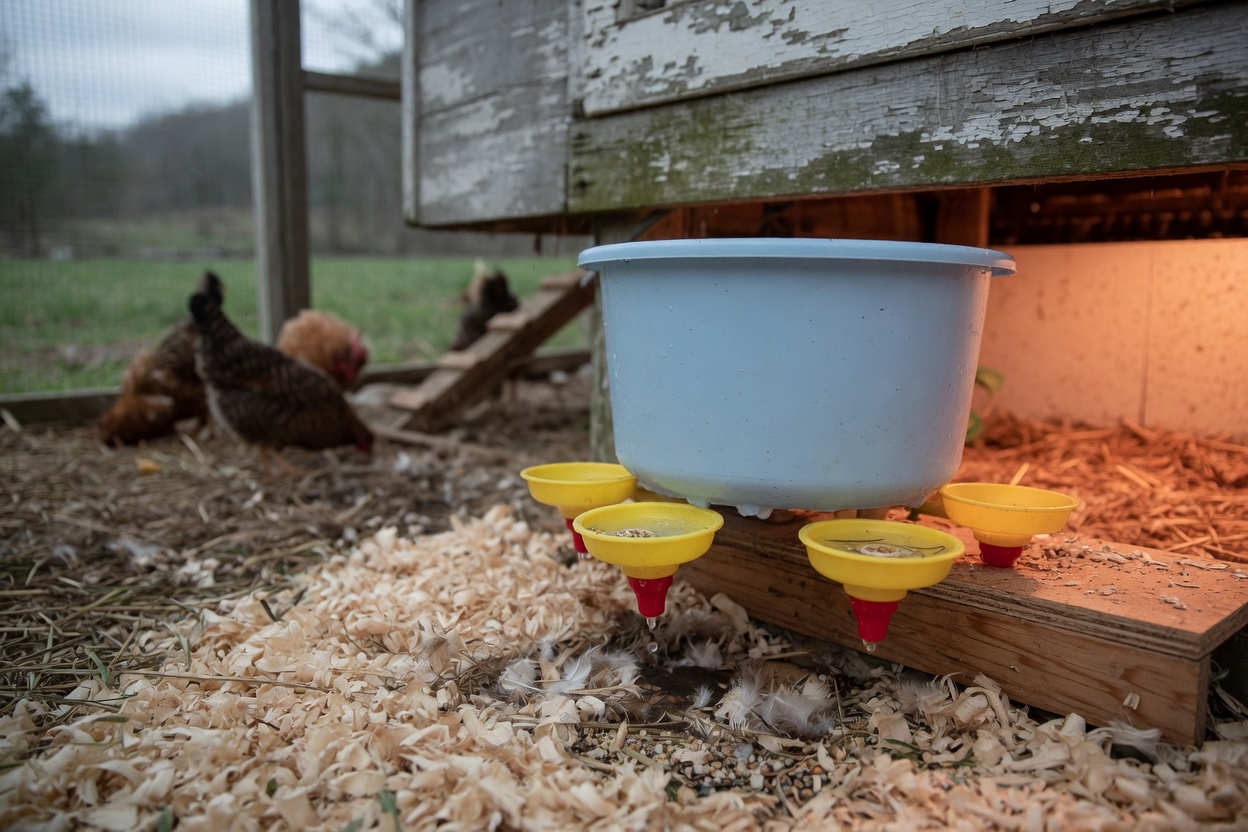
If you’re starting from chicks, put the nipple waterer in the brooder from day one and they’ll never know anything else. Chicks pick it up in a day or two. The switch is mostly a problem with adult hens that already have a habit.
Watch for dehydration

During the switch, check the girls twice a day. A hen that isn’t drinking will look dull, her comb may be pale, and she’ll stand hunched. If you suspect she isn’t getting water, go back to the open waterer right away, and put a little poultry electrolyte in it if you have some, following the label. I don’t gamble with water. It is the one thing a flock can’t go without for long.
Keep it clean and dry
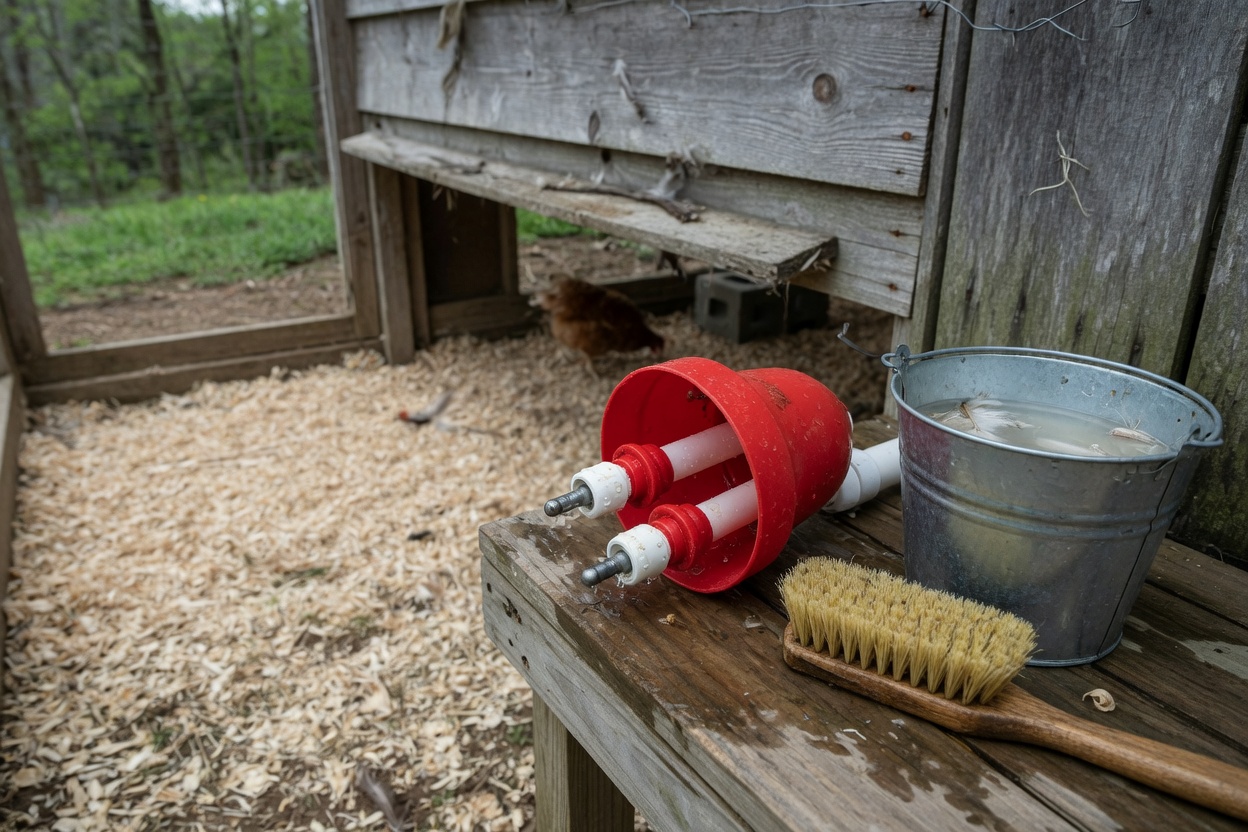
Even a closed waterer needs some attention. Check the pins weekly for clogs and slime, and rinse the cups with a splash of vinegar and water. My notes on keeping chicken waterers clean walk through the routine.
Keep a few inches of fresh hemp bedding under and around the waterer. It’s absorbent, and it soaks up the occasional drip so the floor stays dry. If you’d rather build your own off a bucket, I also wrote up how to make a DIY chicken bucket waterer.
Worth it?

For me, yes. Cleaner water, a drier coop, and less work every morning add up over a winter. But plan for the training week, keep the old waterer around until you’re sure, and don’t expect it to beat a hard freeze by itself.
I go deeper on watering setups, winter coop care, and getting a first flock through its first year in my book, Raising Backyard Chickens for Beginners.
Know your girls.
