How to Teach a Kid to Fish (From an Old Hand)
How to teach a kid to fish so they love it — the right first fish, the simplest rig, and why catching matters more than gear, from an old hand.
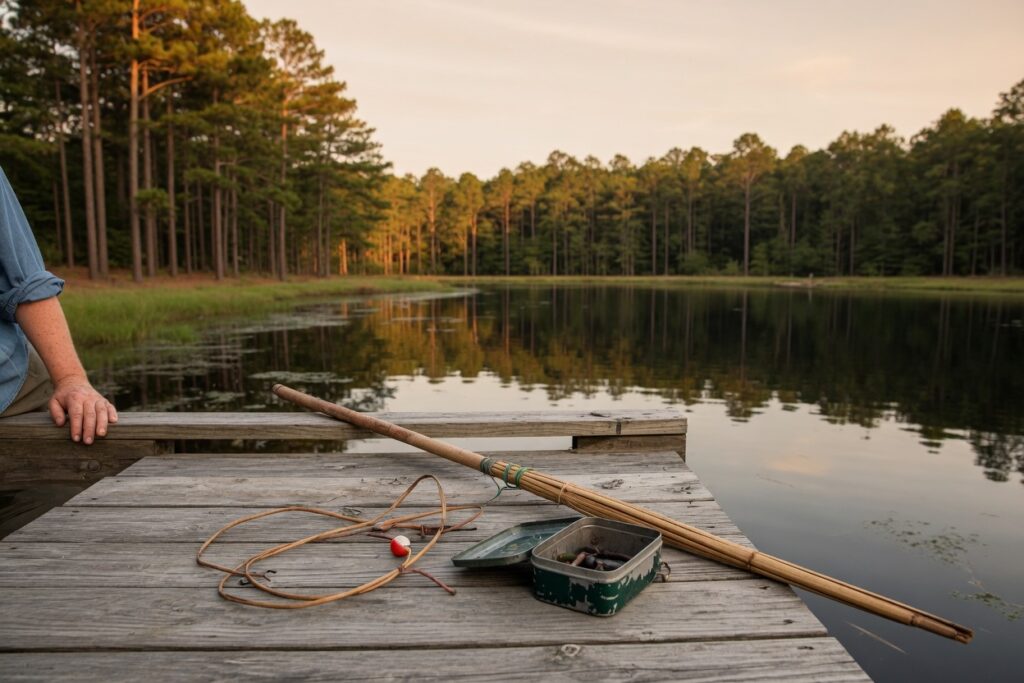
I have taught a good many children to fish, and I can tell you the whole thing turns on one afternoon. Get that first afternoon right and you’ve given a child something that’ll keep them company their whole life. Get it wrong — too long, too hot, too much sitting and staring at a bobber that never moves — and you’ve taught them that fishing is boring. So the aim isn’t to make an angler in a day. The aim is to send them home wanting to go back.
I learned that on my granddaddy’s pond, and I’ve watched it again with my own grandson Isaiah, who took to it, and my granddaughter Ruby, who’s eight and mostly comes for the pond and the hushpuppies but is turning into a fine little fisherman when she’s not looking. Here’s how I’d set you up to do the same, plain and simple.
Start with a fish that wants to be caught
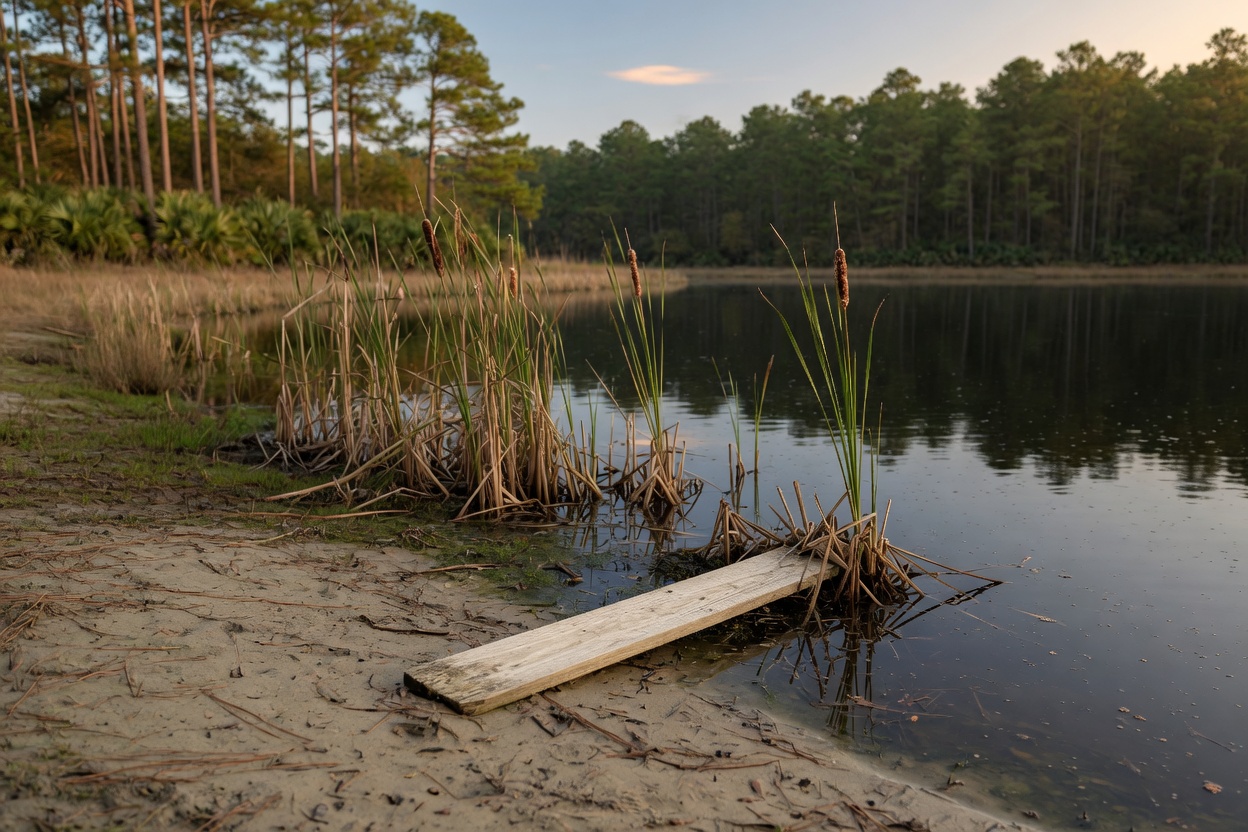
Do not start a child on a fish that’s hard to catch. Start them on a bluegill.
Bluegill — bream, we call them around here — are the most willing fish in fresh water. They gather thick around any dock, laydown log, or shady bank in nearly every pond in the country, they bite in broad daylight when a child can see what’s happening, and they’re not shy. A young one can catch a bluegill. That’s the whole point. A bass or a catfish might make a child wait an hour for one bite, and a child does not have an hour of waiting in them. A bluegill bed in late spring will give a bobber that goes under every few minutes, and that steady action is what hooks a child on the sport. If you want the finer points, I laid the whole method out in how to catch bluegill for beginners.
Pick your spot the same way. Warm water, some shade and cover, and a bank a child can stand on safely without you holding your breath. Easy footing matters more than the perfect fishing hole when you’ve got a little one along.
Keep the gear simple — a cane pole is honest
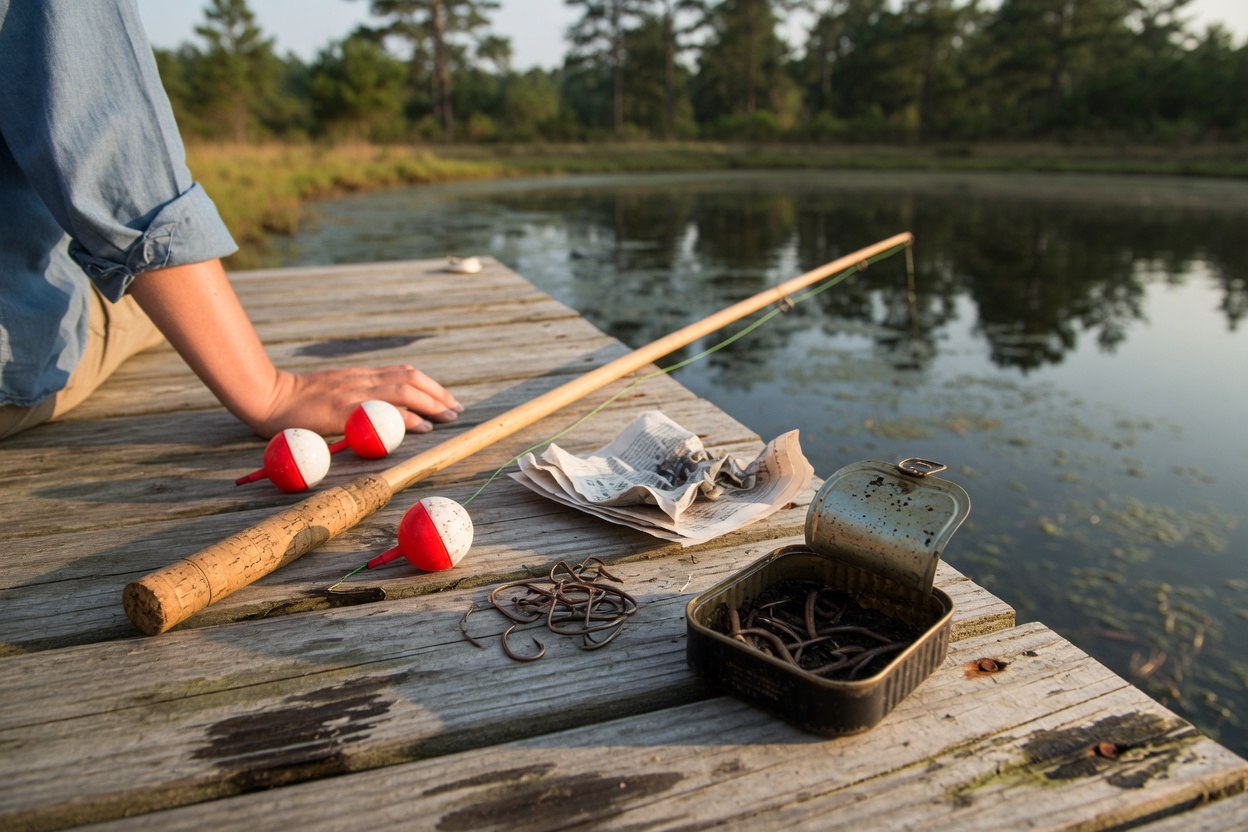
You do not need to spend money to teach a child to fish, and you shouldn’t. A cane pole is still the best teacher there is, because there’s no reel to backlash, no line to birds’-nest, and nothing for small hands to fumble. Just a pole, a line, a bobber, and a hook. The child watches the bobber and lifts. That’s the whole machine.
If you’d rather use a rod, a little push-button spincast combo — the kind sized for a child — does fine, and it lets them cast a short way once they’ve got the rhythm. Either way, keep the rig small: a bobber, a foot or so of line under it, a small split-shot, and a small hook, a size 8 or 10, because a bream has a small mouth. For bait, a live cricket or a piece of red worm outfishes anything fancy, and threading a worm on a hook is half the fun for most children anyway.
Keep your own hands free to help and to bait the hook. Let the child hold the pole. It’s theirs for the day.
Let them do it — and let them catch
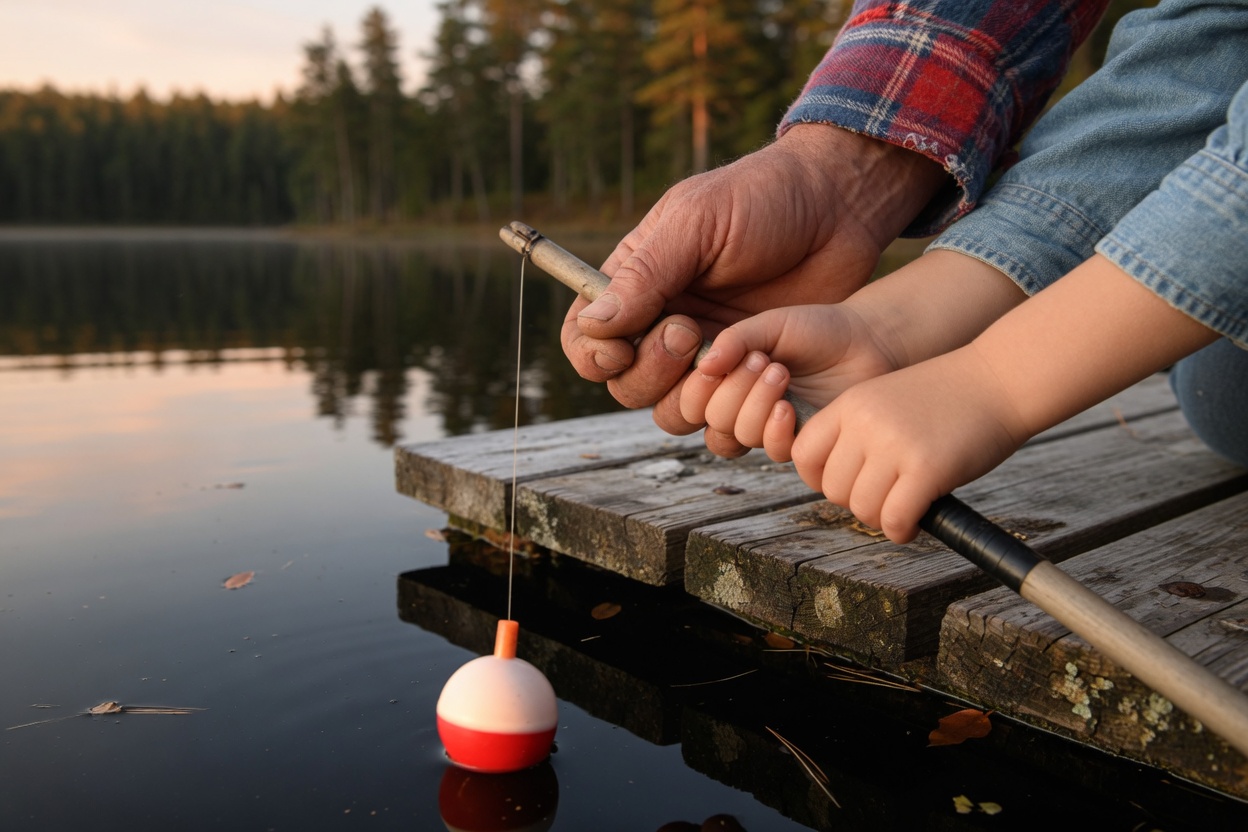
Here’s where a lot of grown folks go wrong. They want to do it for the child — set the hook, reel the fish, hand it over already caught. Don’t. A child needs to feel the whole thing happen in their own hands, or it isn’t theirs.
So teach them the one rhythm that matters and then step back: watch the bobber, wait for it to go all the way under, and lift — a smooth, firm lift, no snatching. A bluegill takes the bait in little tugs before he commits, and if you yank on the first twitch you pull it right out of his mouth. “Watch, wait, lift.” My grandkids learned that in an afternoon, and Ruby will out-fish me on a good bed now if I’m not paying attention.
And when that first fish comes up flapping and silver in the sun — make a fuss over it. That fish is a very big deal. Let them hold it, help them feel how to support it, show them the gill covers and the little blue on the edge that gives the bluegill its name. A photograph of a child holding their first fish is worth more than any tackle you could buy.
Keep it short, keep it fun, feed them
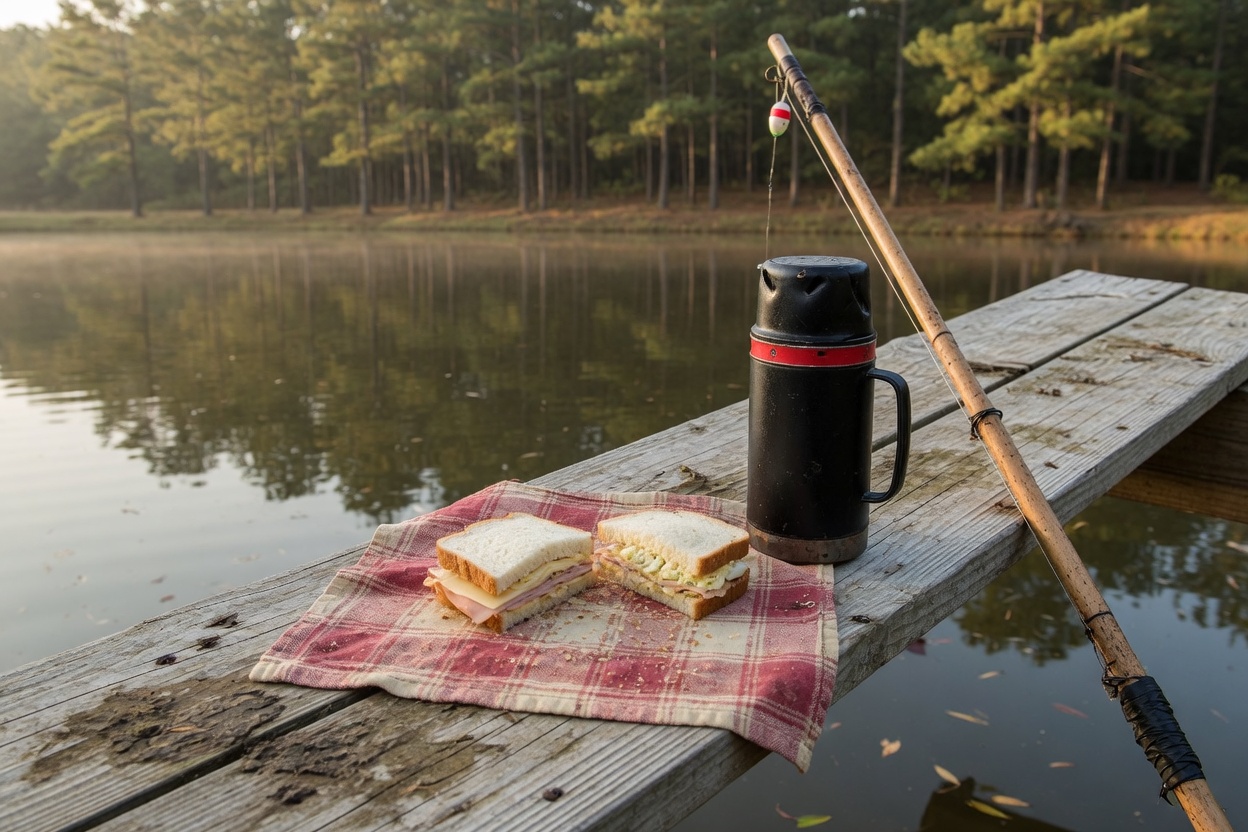
A child’s fishing trip is not measured in hours or in numbers. It’s measured in whether they had a good time. So plan it short — an hour, maybe two on a good bite — and quit while they still want more, not after they’ve melted down in the heat. Leaving them a little hungry for it is exactly right.
Bring snacks. Bring water. Bring a hat and let them poke at the mud and chase a frog if the fish quit biting for a spell — that’s part of the day too, not a failure of it. Ruby caught exactly one bluegill her first trip and spent the rest of the afternoon naming tadpoles, and she still asks to go back. The fishing and the being-outside are the same gift as far as a child’s concerned.
And if you keep a mess of bream, let the child help clean and cook them. A child who catches supper and then eats it has learned something a store can’t teach. Cornmeal, hot oil, a few hushpuppies — that’s the Friday fish fry my church has put on longer than some of the congregation has been alive, and it’s the natural end of a good day on the water. Audra still runs that kitchen.
Read the signs, and stack the day in their favor
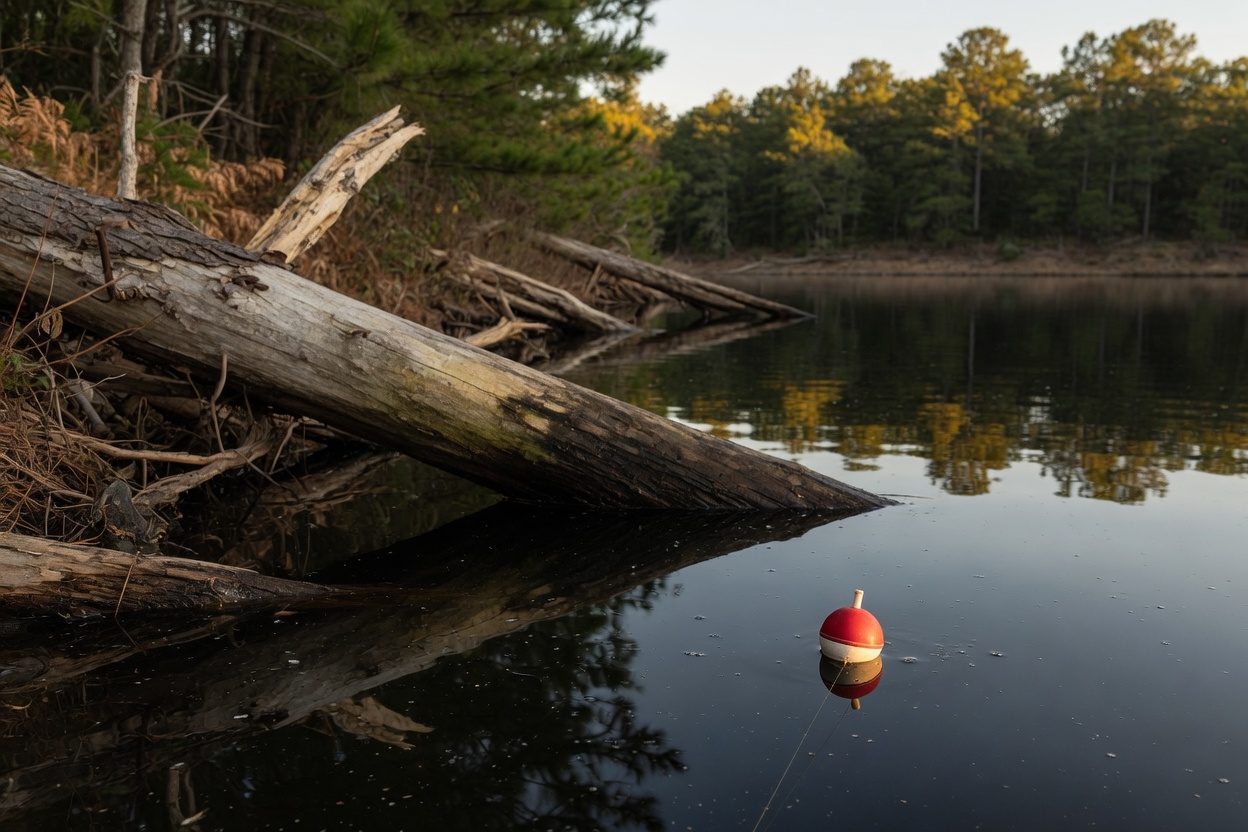
You can put the odds on a child’s side before you ever bait a hook, and it’s worth doing when the whole trip hinges on them catching something. Fish feed best in low light — that first hour after sunup and the last hour before dark — and warm-water fish like bluegill want the water past about sixty degrees before they’ll bite with any real interest. A late-spring or early-summer morning, on a spawning bed, in the low sun, is about as sure a thing as fishing gets.
That’s the almanac my granddaddy taught me: read the water, the weather, and the moon, and go when the signs are right. I keep one for my own pond, and I put together a free one you can use to plan a child’s first trip around a good day — it marks the best days by the moon with a plain checklist for the water. Pick up the free Best Days to Fish starter kit here, and read more on the method in my post on reading the three signs.
One last thing, and it’s the one I’d most want you to do. Let the child keep a record of it — the first fish, the pond, the day, in their own hand. I helped make a simple journal for exactly that, My First Catch — A Fishing Journal for Young Anglers, so a young one can write down and draw what they caught and carry the memory of it long after the fish is fried and gone. A cane pole and a willing bluegill is how most of us started. It’s still the finest way there is to hand the whole thing down.
Read the signs. Tight lines — and take a child with you.
