How to Start Keeping Backyard Ducks Your First Season
Thinking about adding ducks to your backyard flock? Here's what I wish someone had told me before my first season with four Cayugas — water, housing, and the surprises.

I added ducks to my flock three years into keeping chickens, and the thing nobody warned me about is how different the two actually are. I’d assumed ducks were just wetter, louder chickens. They’re not. I keep four Cayugas now alongside my hens, and if you’re thinking about adding ducks this winter for a spring start, here’s what I actually learned instead of what I expected.
Ducks are, in almost every practical way, easier than chickens. Mine have never had a respiratory issue, they free-range without the hawk anxiety I still carry for my hens, and they lay through weather that would shut a coop of chickens down. But the water situation will humble you if you go in thinking a chicken waterer will do the job. It will not. Plan for that before the ducklings arrive, not after.
Water is a different animal entirely

Chickens drink. Ducks submerge. A duckling needs water deep enough to dunk its whole bill and rinse its nostrils, every single time it eats, or it can choke on dry feed — but not so deep that a duckling too small to climb back out can drown in it. I learned to solve this with a shallow dish for the first two weeks, swapped for the galvanized fount once they were bigger and steadier on their feet.
Outside the brooder, adult ducks will turn any water source into a wallow within a day. My four Cayugas go through the galvanized double-wall fount faster than my whole flock of hens does, and I set it on a paver or a wire platform now instead of bare ground — otherwise the area around it turns to standing mud within a week, even in a dry Tennessee fall.
Housing is simpler than a coop, and that surprised me

I built an elaborate coop for my chickens with nest boxes, roosts, and a predator-proof run door with a cam-lock latch. My ducks needed almost none of that. Ducks don’t roost — they sleep on the ground — so headroom and roosting bars don’t matter. What does matter is a dry, draft-free, predator-secure shelter they can waddle into at dusk, because ducks are hopeless at putting themselves to bed on their own compared to chickens, who file onto the roost like clockwork every evening.
Mine share a covered run with the hens but sleep in a separate low, straw-floored shed I converted from an old tool shelter. Line the floor generously — I use the hemp bedding here specifically because duck housing gets wetter faster than a chicken coop ever does, and hemp holds up to that better than pine shavings, which mat down and sour.
They lay through weather my hens won’t
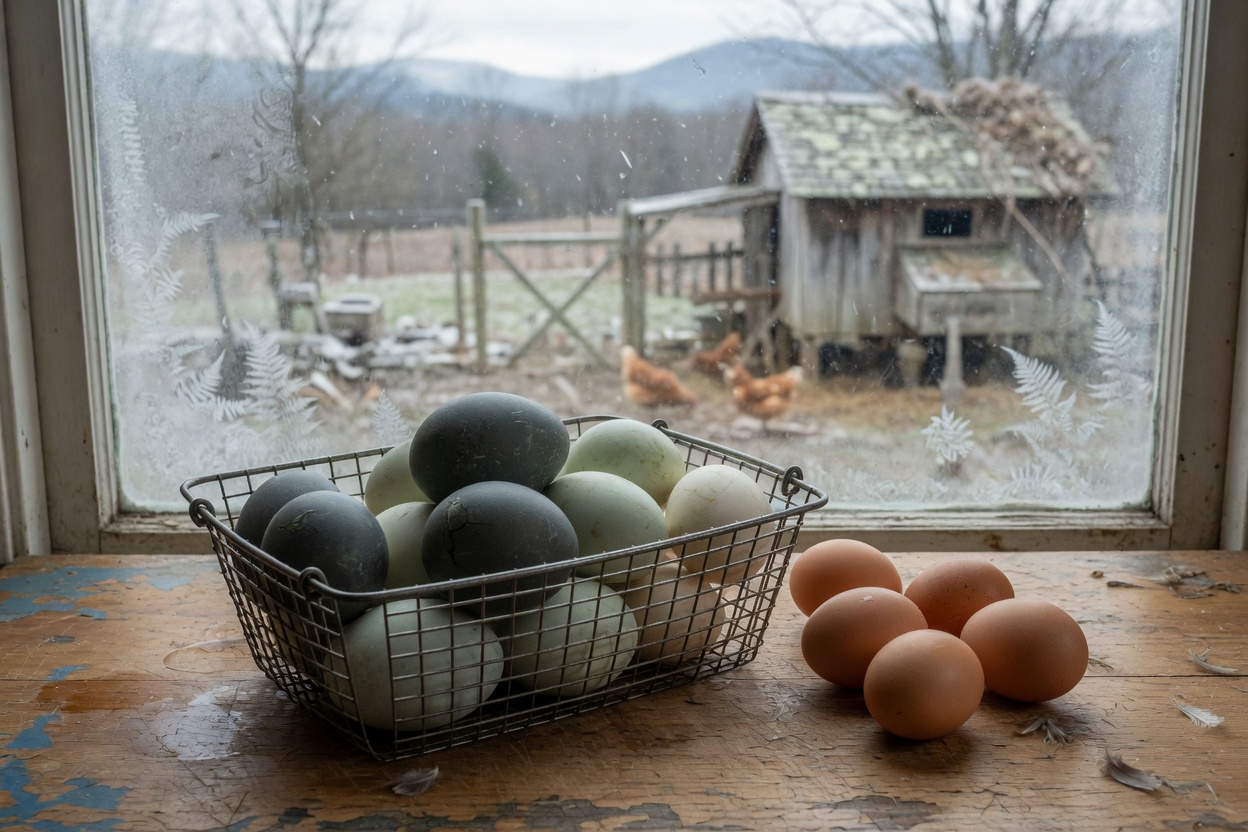
This is the part that changed my mind about ducks being “extra” work. My Cayugas laid straight through a January cold snap that had every one of my hens on strike. Duck eggs are richer, with a thicker shell and a bigger yolk, and if you bake with them you’ll notice the difference in a cake before you notice it in scrambled eggs. Cayugas specifically lay a dark, almost charcoal-colored egg early in the season that fades lighter as the year goes on — the first time it happened I thought something was wrong with my flock. It’s completely normal.
The predator conversation changes too

Ducks are ground sleepers, which means the predator-proofing rules I already knew from chickens apply even harder. Hardware cloth, not chicken wire, on every opening — I will say that until I’m blue in the face for hens and it goes double for ducks, since they can’t fly up out of reach the way even a mediocre-flying hen can. Raccoons and foxes both know a ground-level duck house is an easier mark than a roosted coop. My duck shed gets the same buried-apron hardware cloth treatment my chicken run does, no shortcuts.
Noise, mess, and the honest tradeoffs

Cayugas are quieter than the Pekin ducks my sister-in-law keeps — worth knowing if you have close neighbors, since not all breeds are equal here. What ducks don’t do quietly is make a mess of standing water. If your yard doesn’t drain well, plan your duck area away from anywhere you walk barefoot. I moved mine twice before I found the right spot on my property, uphill from the run and away from the kids’ play area.
Should you add ducks to an existing flock?
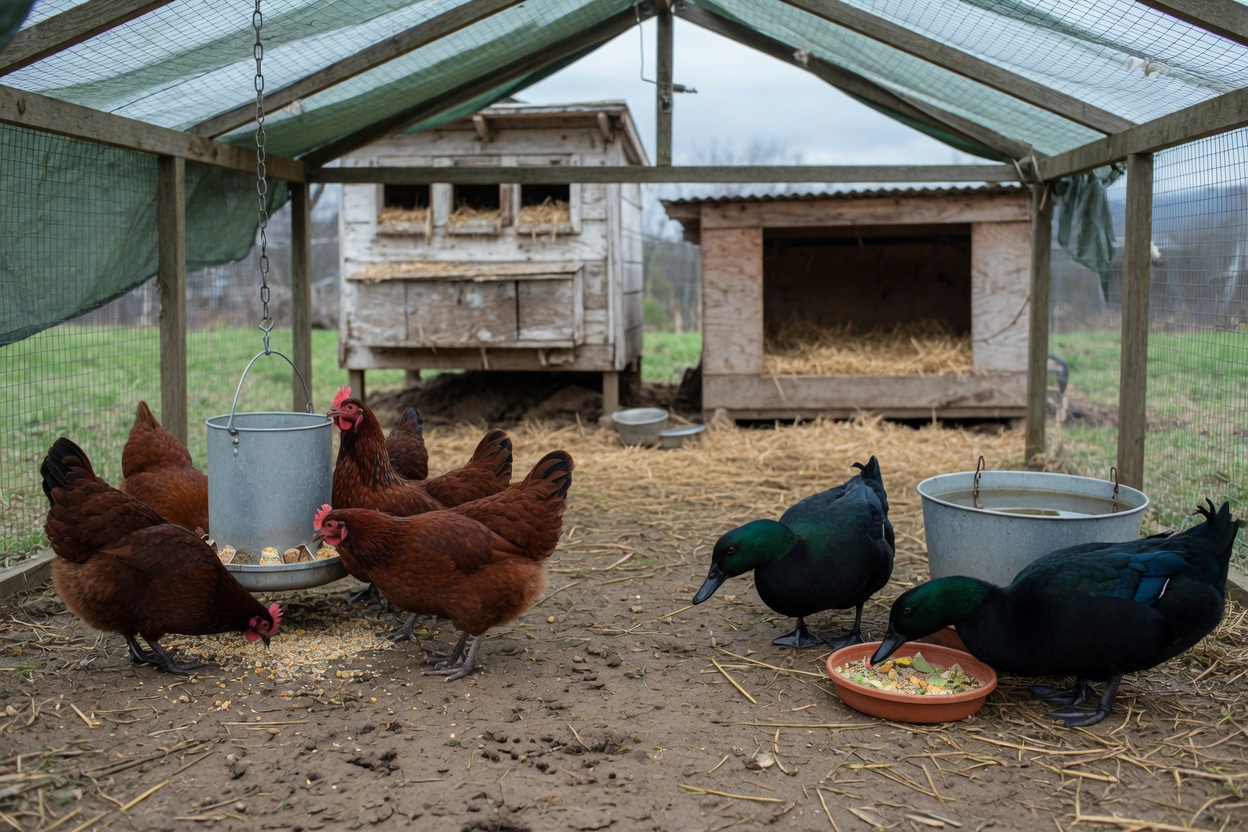
If you already keep chickens and you’re weighing whether ducks are worth the extra setup, my honest answer after three years: yes, if you have the space for a second water station and a spot that can handle getting muddy. No, if your yard is small enough that one soggy corner would bother you every time you looked at it. I run mine alongside my hens without much trouble, but I keep their feed separate — duck feed needs a higher niacin content than chick starter, and mixing the two shortchanges one flock or the other.
I cover the full first-season setup — brooder to yard, hardware, and the mistakes that cost me birds along the way — in Raising Backyard Chickens for Beginners. It’s a chickens book, but if you’re building your first flock from scratch this winter, the fundamentals in there are exactly what carried me into keeping ducks well.
