How to Spot Mites and Lice on Chickens (and What to Do)
Learn how to spot mites and lice on chickens: the night flashlight check, the white sock test, scaly leg, and what to do about each in a small backyard flock.

I found out I had red mites the way most people do: with a gray smear of them crawling up my forearm at nine o’clock one August night while I was latching the coop door. I had no idea what I was looking at. I stood in the dark with a flashlight, turning my arm over, while twelve hens shuffled on the roost bar above me like nothing was wrong.
Something was very wrong, and I’d missed it for weeks. My hens had been laying fewer eggs, a couple of them had pale combs, and I’d blamed the heat. If you keep chickens long enough, you will meet mites or lice. It isn’t a sign you’re a bad keeper. It’s a sign you own birds. What matters is catching it early and knowing which pest you’ve got, because they hide in different places and you check for them in different ways.
Know which pest you’re dealing with

There are three you are likely to meet, and they act differently.
Red roost mites (Dermanyssus gallinae) live in the coop, not on the hen. They hide in cracks, under roost-bar ends, and in nest-box joints all day, then come out at night to feed on blood. By morning they’re gone from the bird. That is why a hen that looks fine at noon can be in trouble.
Northern fowl mites live on the bird all the time. They collect around the vent and tail, and the feathers there often look dirty and dark.
Lice are small, pale, fast-moving insects that live on the skin and feathers and chew on skin flakes. They are visible in daylight if you look closely.
A fourth, the scaly leg mite, burrows under the scales of the legs and feet and doesn’t bother the rest of the bird. I’ll get to it below.
Signs your hens may have them

You won’t see most of this in a quick glance. Watch for:
– Hens that won’t go into the coop at dusk, or that crowd up on the roost’s edge
– Pale combs and wattles, especially in a heavy red mite problem
– A drop in laying that you can’t explain by season or molt
– Restless nights, feather picking, or birds scratching and preening more than usual
– Dirty, ragged feathers around the vent
– Dark spots or gray dust on roost bars and in nest boxes
Don’t panic if you see one of these on its own. Hens molt, and they drop eggs in fall for plenty of reasons. Several together is when I start looking.
The night flashlight check
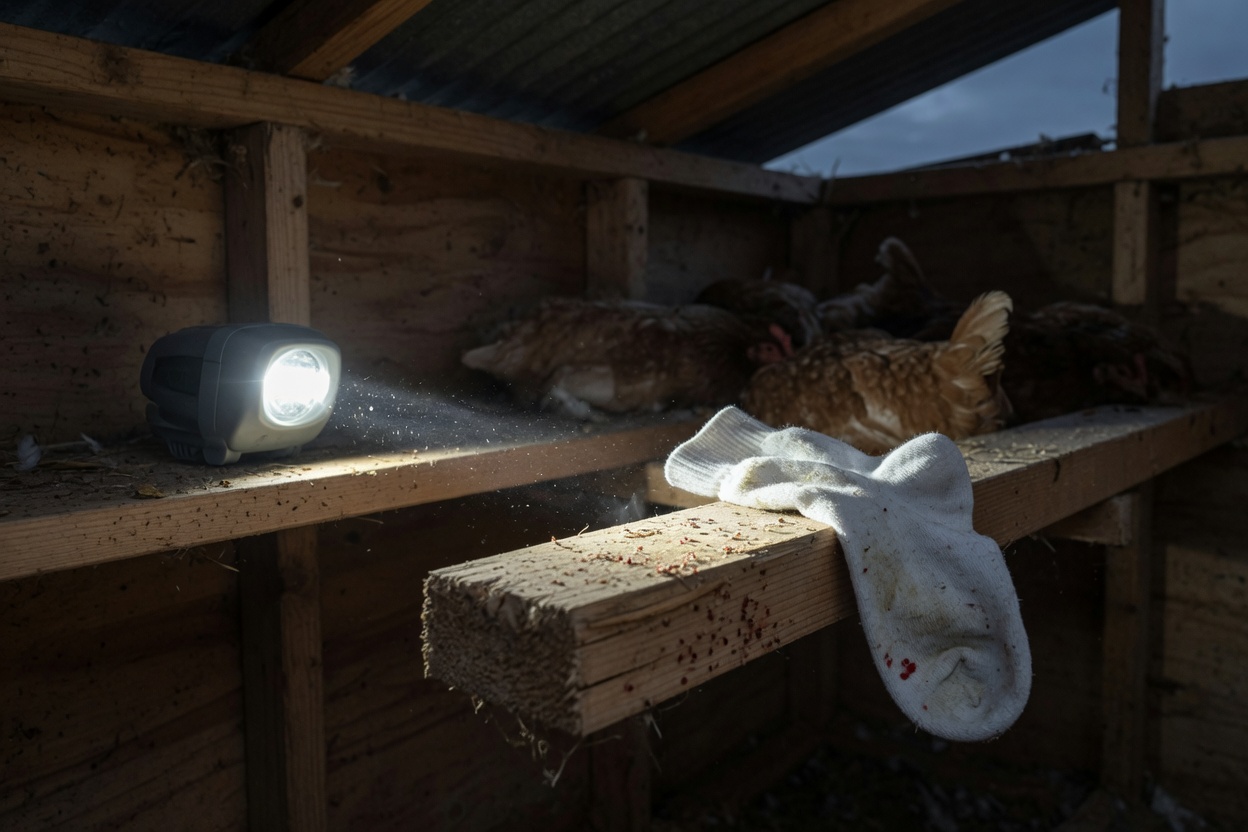
Red mites feed after dark, so that is when you look. An hour after the hens settle in, I go out with a headlamp and look at the roost bars and the underside of the bar ends. If I see gray or reddish specks moving, that is the answer. Dead mites are gray-white. Mites that have just fed are red.
Next, the white sock test. Slip a clean white sock over your hand, wipe it along the underside of a roost bar and inside a nest-box joint, and look at it in the light. Specks that move are mites.
Then I check a bird. Lift her gently under the vent, part the feathers, and look at the skin. Mites and lice both show up there. Lice eggs, called nits, look like clusters of tiny white dots glued to the base of a feather shaft. They won’t wipe off.
Scaly leg mite

This one is easy to spot and slow to cause trouble. The scales on the legs and feet rise up and look rough, crusty, or like they’re coming off in layers. It spreads from bird to bird and gets worse over months. Don’t pick at the scales, because you’ll hurt the bird. The treatment is patient: soak the legs in warm water, pat dry, and coat the legs with petroleum jelly or a plain vegetable oil to smother the mites. I repeat it every few days for a few weeks. If it doesn’t clear, a vet can guide you.
What to do about red mites and lice

I’ll tell you what I do and where I stop. I’m not a vet, and I don’t link prescription products here, since your vet is the person for anything beyond over-the-counter care.
Clean the coop thoroughly. For red mites this is the main event. Remove all the bedding, scrape and brush every roost bar and nest box, and get into the corners and joints. I covered the process in how to clean a chicken coop in winter, and you can use the same steps in any season. Dispose of old bedding away from the coop and the run, not on the compost pile near the birds.
Treat the bird and the building. For lice and fowl mites, an over-the-counter poultry dust labeled for chickens, worked into the feathers at the vent, under the wings, and around the tail, is the standard approach. Follow the product label exactly. For the coop, a labeled poultry coop spray and a dusting of food-grade diatomaceous earth in the cracks and joints are the common choices. Wear a dust mask for DE and keep it away from the hens’ faces, because it is hard on lungs.
Repeat. The life cycle matters. Eggs survive the first treatment and hatch a week or so later, so most labels call for a second round. I put a reminder on my phone.
Keep the new coop dry. Fresh, dry bedding like hemp helps a clean coop stay clean. It isn’t a treatment, and I don’t pretend it is. I wrote about managing the bedding side of this in the deep litter method for a winter coop, but be aware that a deep litter coop with an active mite problem needs a full clean-out first.
When to call the vet

If your hens are lethargic, pale, or off their feed, or if one has a heavy infestation of any of these, call a vet who sees poultry. Heavy red mite loads can drag a bird down. Your county extension office can point you to someone. This post is what I do in my own run, not a replacement for care.
Honest notes on the gear

The best defense is checking regularly. A flashlight and a white sock cost nothing. The galvanized fount is something I’d buy anyway, and it earns its place here as one less surface to scrub. The hemp bedding is a convenience, not a fix. The electrolytes I keep in my first-aid box, and I covered what else belongs in there in chicken first-aid kit essentials (OTC). They support a stressed bird; they don’t treat mites.
Where to go from here
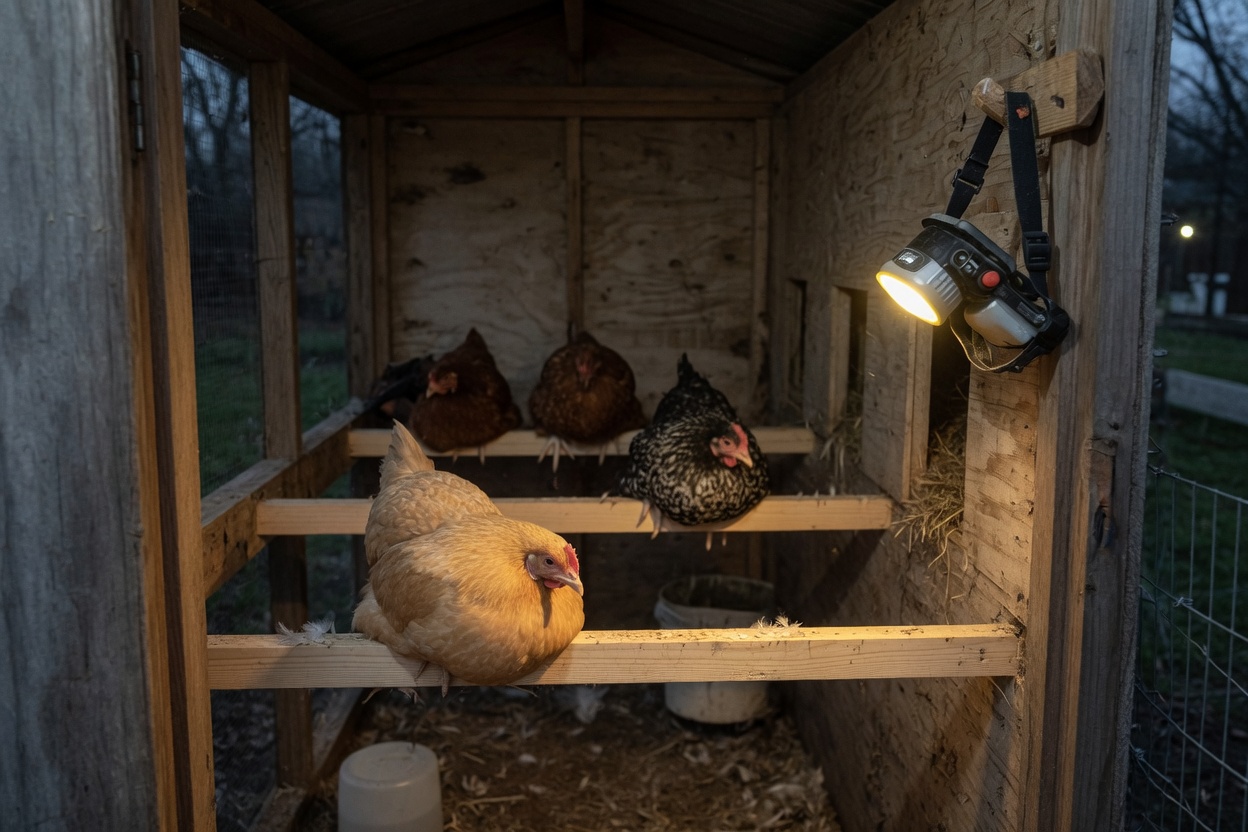
Go out after dark this week with a headlamp. Check the bar ends and the nest boxes, and do the sock test. If you find nothing, you’ve learned what clean looks like, and that makes the next check faster.
I go deeper on spotting trouble early, and on what a first-year keeper can handle alone, in Raising Backyard Chickens for Beginners: Raising Backyard Chickens for Beginners.
