How to Set Up a Vacation Watering System for Your Pots
Vacation watering for container plants, sorted before you go — self-watering spikes, grouped pots, a deep pre-soak, and how to keep a balcony alive for a week away.
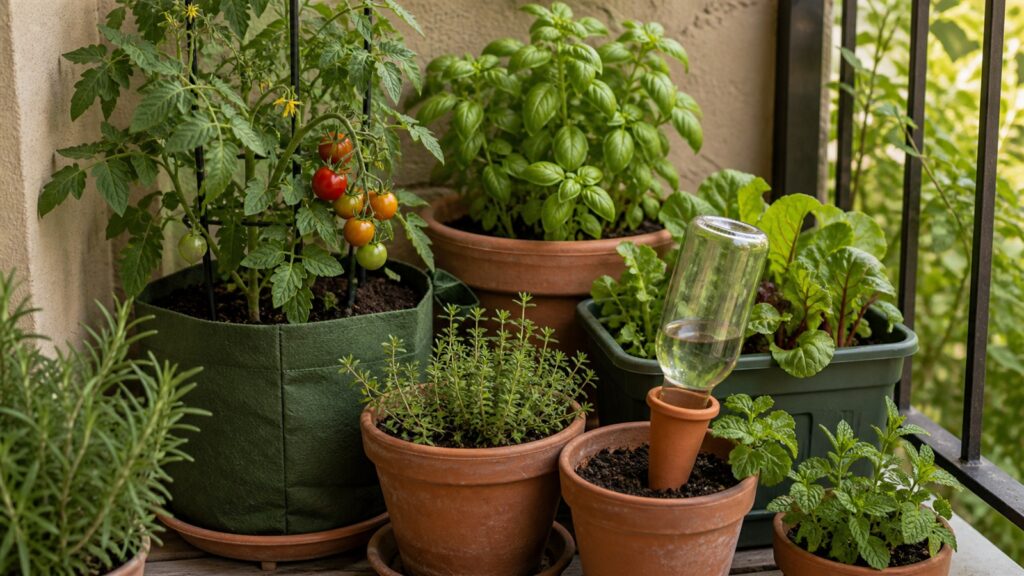
You’re leaving Friday. The forecast for the week you’re gone is sunny and eighty-five. And somewhere in the back of your mind is a balcony full of pots that need water every single day, and no yard hose on a timer to save them.
I’ve come home to the crispy aftermath more than once. A whole railing of nasturtiums gone to brown paper, a tomato that dropped every flower it had. Containers are wonderful, but they hold a small amount of soil and they dry out fast — a pot can go from damp to bone-dry in a single hot day, where a plant in the ground would coast for a week. The good news: you can keep a container garden alive through a trip with about twenty minutes of setup and no fancy equipment. Here’s exactly what I do before I leave.
First, understand what you’re fighting
A pot loses water two ways while you’re gone: the plant drinks it, and the sun and wind pull it off the soil surface and out through the walls. The smaller the pot, the faster both happen. A little four-inch herb pot on a hot sill can dry out by lunchtime; a big fifteen-gallon planter might hold three or four days.
That’s the whole game, and it points at two moves before you leave: give each pot as much water as it can hold when you go, and slow down how fast it loses that water. Do both and even a modest setup buys you a surprising stretch. Terracotta and fabric pots dry fastest, so those get the most help; glazed and plastic pots hold longer.
Move one: group everything and get it out of the sun
This one’s free, and it’s the biggest single thing you can do. Before you leave, gather all your pots into one tight cluster, and move that cluster to the shadiest corner your balcony offers.
Grouped pots shade each other’s soil and raise the humidity in their own little huddle, so they lose water far slower than they would spread out in the sun. A plant that needs daily water in full sun on the rail might coast two or three days once it’s shaded and packed in with its neighbors. Yes, your sun-lovers won’t love a week in the shade — but a slightly sulky, alive tomato beats a dead one in full sun every time. It bounces back in a day when you’re home.
Move two: soak everything deeply right before you leave
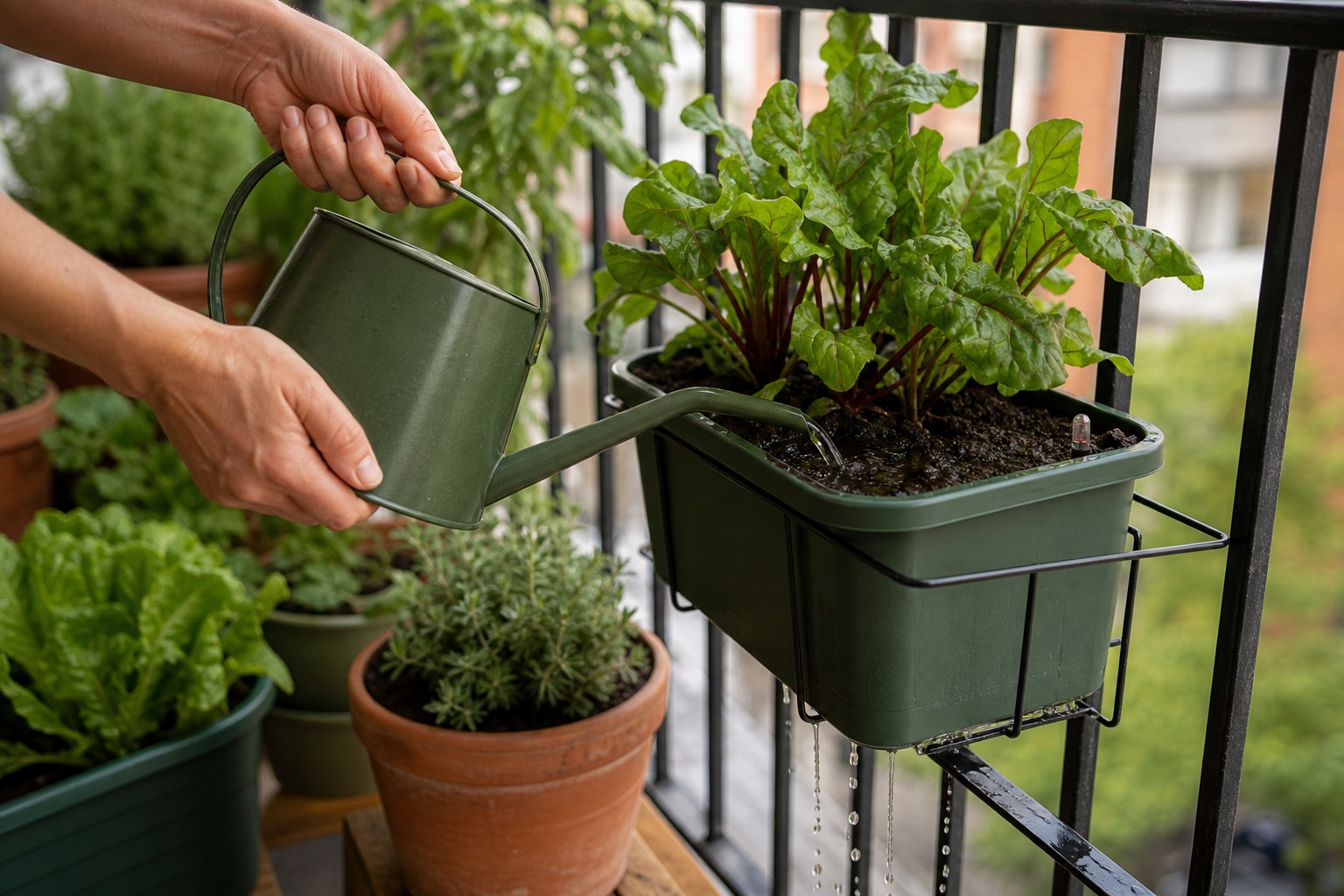
The morning you go, water every pot slowly and thoroughly until it runs out the drainage holes — then wait a few minutes and do it again. You want the entire root ball saturated, not just the top inch. A long-spout watering can makes this easier because you can reach the soil at the base of a crowded, leafy pot without soaking the foliage.
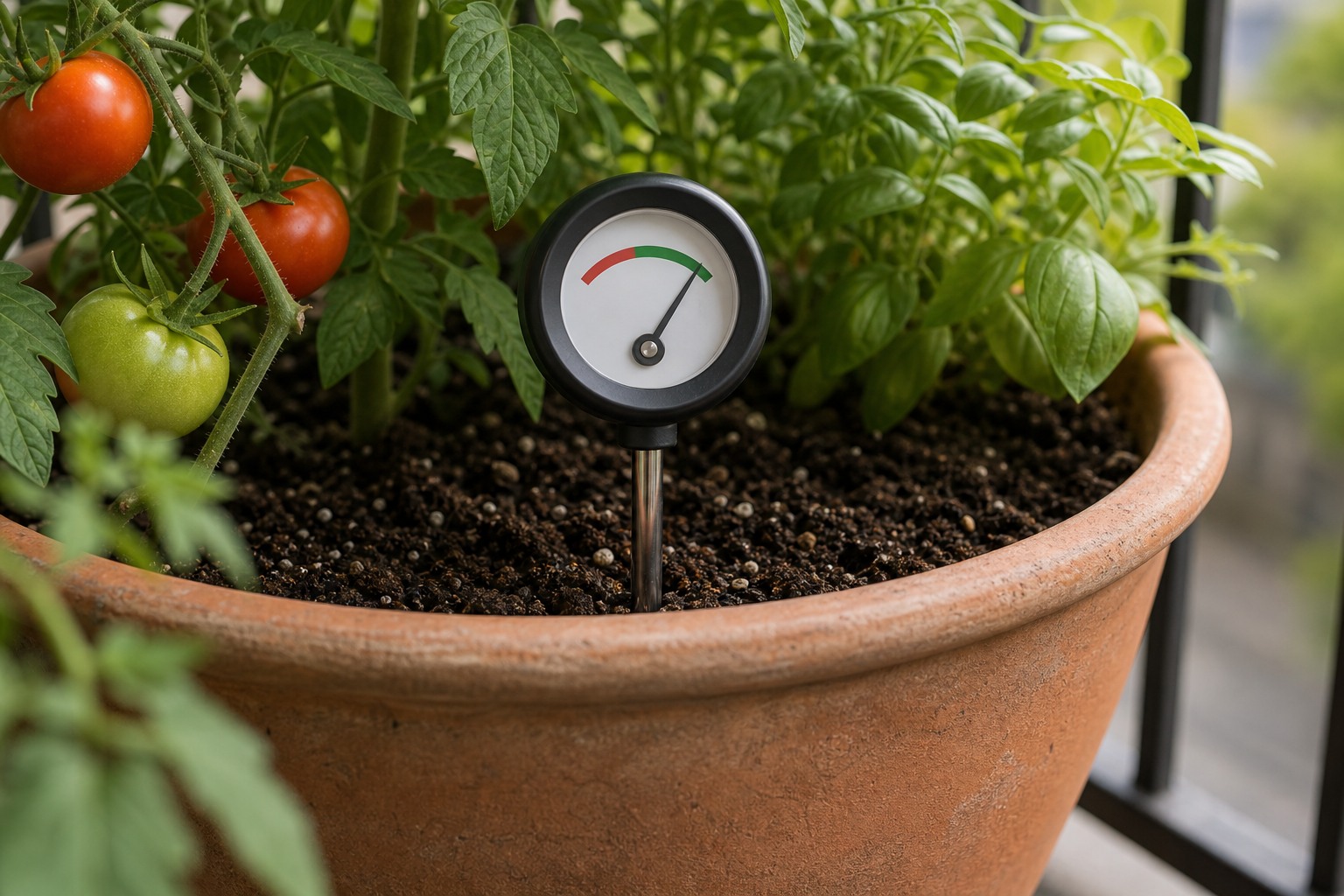
Before you trust that soak, push a soil moisture meter down into the biggest pots and check that the needle reads wet all the way at the root zone, not just up top. It’s the difference between knowing your pots are full and hoping they are — and the whole plan rests on starting full.
Move three: the terracotta spike and bottle trick
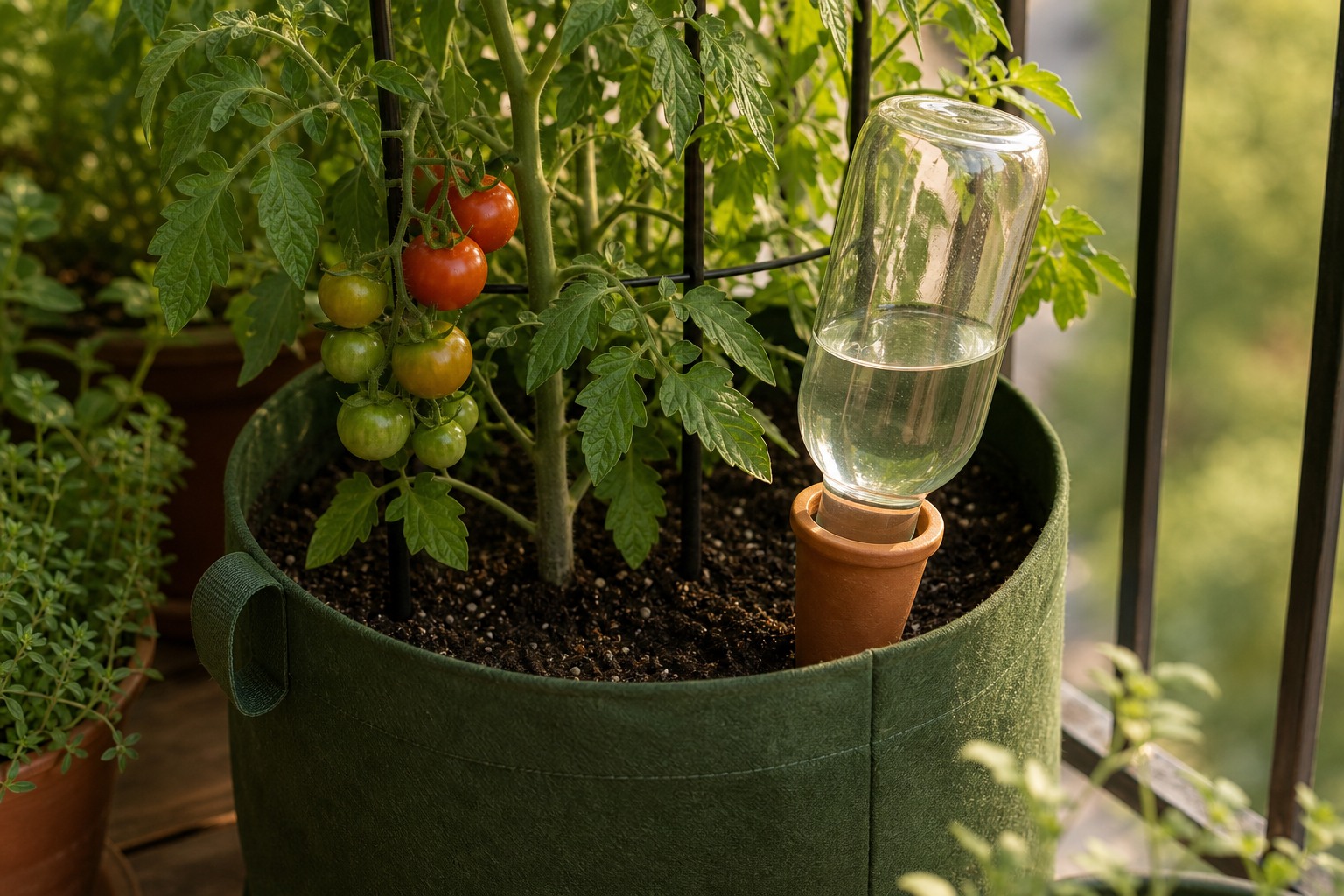
For a trip longer than a couple of days, the cheapest self-watering setup there is: a terracotta watering spike and an empty wine bottle. You fill the bottle with water, push the spike into its neck, and sink the whole thing upside-down into the pot. The unglazed terracotta is porous, so it releases water slowly into the soil only as the soil dries — a self-regulating slow drip that can keep a medium pot going for days on a single bottle.
I use one per thirsty pot — the tomatoes and anything in fabric bags — and I test them a few days before I leave rather than the morning of, because the flow rate depends on your soil and you want to see how long a bottle actually lasts in your setup. Trust me on the dry run. The time to discover a spike drains a whole bottle in six hours is not the day you’re catching a flight.
Move four: for the pots you always worry about, go self-watering
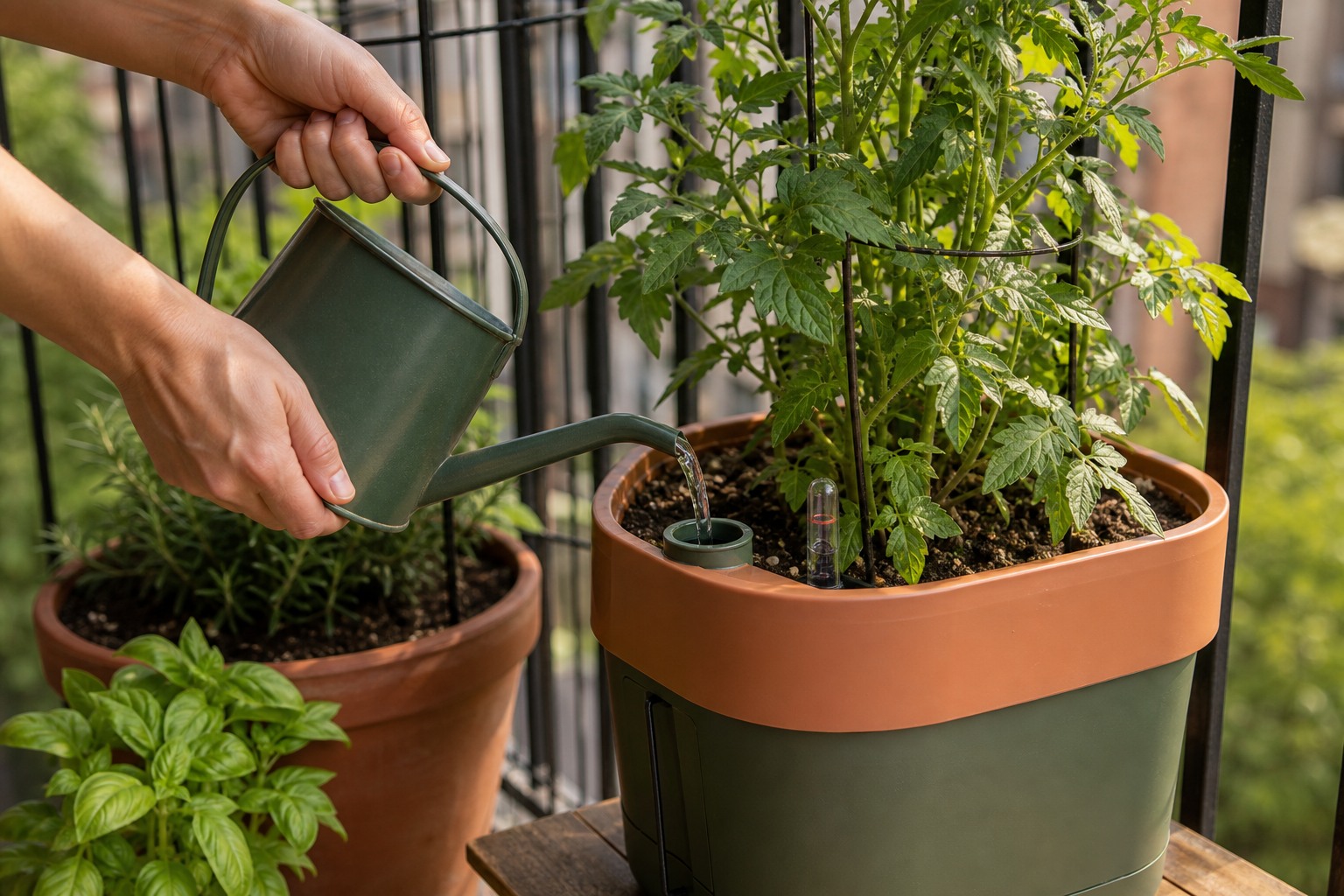
If there are one or two containers you fuss over every single summer — the cherry tomato, the big basil, the pot that wilts if you so much as glance away — the real answer is to stop fighting them and plant them in a self-watering planter. These have a water reservoir built into the base; the plant wicks up what it needs, and you just keep the reservoir topped off. A big one holds enough to run for the better part of a week in summer.
This is the permanent fix rather than the trip-day scramble. I moved my thirstiest balcony plants into self-watering pots two seasons ago and my whole relationship with leaving town changed — I fill the reservoirs, group the rest, and go. Worth doing before a trip, and worth keeping all summer.
Match the plan to how long you’re gone
Put it together by the length of the trip, and it’s simple.
A weekend (2–3 days): group the pots in shade and give them one deep soak. That’s genuinely all most container gardens need.
A week: group and soak, add a terracotta spike and bottle to every thirsty pot, and move your worst worriers into self-watering planters. Top the reservoirs the morning you leave.
Longer than a week: do all of the above, and then ask a neighbor to come by once mid-trip to refill bottles and reservoirs. No system beats one visit from an actual person — trade them a jar of your herbs or a promise to water theirs next time. Leave the watering can out where they’ll find it.
None of this needs a timer, a hose bib, or a yard. It’s a shady corner, a good soak, a few bottles, and knowing which pots to worry about. Do it once and you’ll stop dreading the trip — the balcony will be a little leggy and a little dramatic when you get back, and green, which is the whole point. Otto, for the record, considers guarding the grouped pots his personal vacation assignment.
I cover watering, container sizes, and the whole small-space setup in far more detail in Small-Space Big Harvest. This post is how to leave town without losing the garden. The book is how to keep it thriving the rest of the year.
