How to Set Up a Heated Base for a Metal Waterer
How I pair a heated base with a galvanized fount so the girls have liquid water all winter, plus the cord and placement mistakes that actually matter.

My first two winters with chickens, I hauled a fresh bucket of hot water out to the run every morning before work, dumped the ice out of the fount, refilled it, and hoped it’d still be liquid by lunch. It usually wasn’t. I lost more sleep over frozen water than over any predator, and predators are the thing everybody warns you about.
The fix turned out to be embarrassingly simple: a heated base under the metal fount I already owned. I didn’t need a new waterer. I needed the right thing underneath the one I had. Here’s exactly how I set mine up, because the base alone doesn’t do much if you get the pairing or the placement wrong.
Why the base needs a metal fount, not a plastic one

The base only works if what’s sitting on it can carry heat. A galvanized double-wall fount conducts warmth up from the base and through the metal into the water above it. Set a plastic waterer on the same base and you’re mostly heating air — plastic is a poor conductor, and I’ve seen it happen to a neighbor who bought the base and kept her plastic fount because it was newer. Her water froze the same as before.
If you’re currently running a plastic waterer, this is the year to switch it out for metal. It’s not a huge expense, and it’s the one piece of gear this whole setup actually depends on.
Setting the base up right
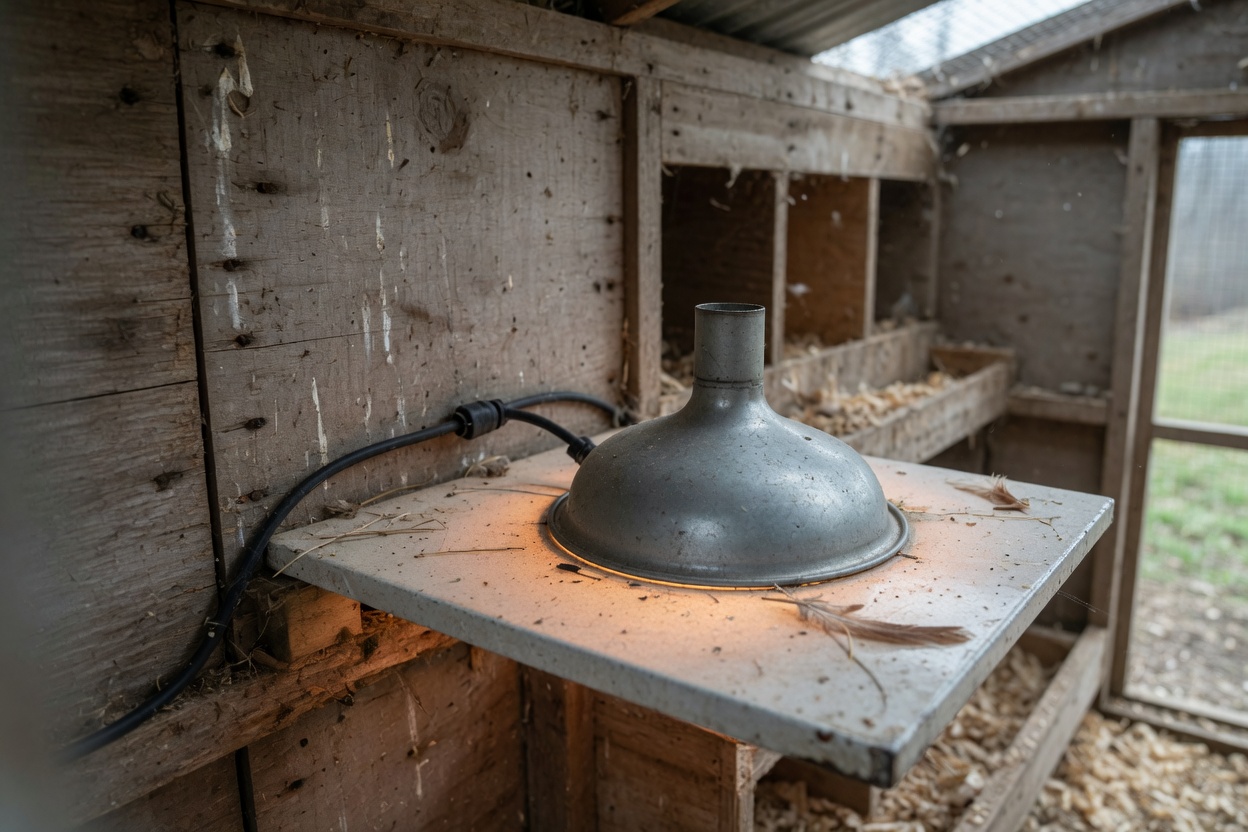
Run the base on a level, stable surface — a paver, a scrap of plywood, or a cinderblock works fine. Chickens knock things over more than you’d expect, especially in a flurry over treats, and a tipped base with water sloshed across it is a hazard you don’t want near an electrical cord.
Keep the cord up off the ground and out of the bedding. I run mine along the wall on a cable clip, a few inches up, so it’s nowhere near where the girls scratch and dust-bathe. A chewed or buried cord is the single biggest risk in this whole setup, and it’s also the easiest one to prevent — it just takes five minutes with a staple gun the first time you install it.
Plug into a GFCI outlet if you can. Coops are damp places by nature, and a ground-fault outlet is cheap insurance against a base that develops a short. If your coop only has a standard outlet, a GFCI extension cord does the same job.
Where I put the whole station

I keep the water station under the coop’s roof overhang, not out in the open run. Rain and snow melting straight into an open fount undoes some of what the heated base is doing, and a covered spot stays a few degrees warmer to begin with. If your run doesn’t have natural cover, even a simple lean-to roof over the water station earns its keep in January.
Height matters too. I set the fount up on a low stand, roughly back-height for my birds, rather than right on the ground. It keeps bedding and droppings out of the water and it’s one less thing dragging the base’s heat down into cold dirt.
What I check every morning anyway

The base is not a “set it and forget it” fix, whatever the box implies. I still walk out every morning and touch the water — not because I expect ice, but because a base can fail quietly, and the first sign is usually just water that’s colder than it should be, not obviously frozen solid. I lost a base to a blown element two winters in without noticing for three days, because the fount hadn’t fully iced over yet. Now I do a quick temperature check by hand every morning, same as I check for eggs.
I also unplug and dry the base off completely every couple of weeks, brush off any accumulated grime, and check the cord for wear where it exits the housing. It’s a five-minute job, and it’s cheaper than replacing a base that shorts out in February.
Is it worth it over just hauling water twice a day

Honestly, yes, and not by a small margin. Before the heated base, checking and re-filling water twice a day in real cold was a standing chore that ate twenty minutes morning and evening. Now it’s a five-second glance. For a flock this size, the setup paid for itself in saved time before the first hard freeze was even over.
If you haven’t decided between waterer styles yet, how to keep chicken waterers clean is worth reading alongside this one — a heated base doesn’t help much if what’s sitting on it is due for a scrub. And if hemp bedding under that water station is new to you, my hemp bedding post covers what I run underneath the whole station through the cold months.
I walk through the girls’ entire winter setup — water, bedding, ventilation, the works — in Raising Backyard Chickens for Beginners. This post is the water station. The book is everything else that gets you through to spring.
