How to Regrow Kitchen Scraps on a Windowsill (What Works)
Regrow kitchen scraps on a windowsill: green onions are the real winner, celery and romaine give a modest return. Here's what works, what doesn't, and how.
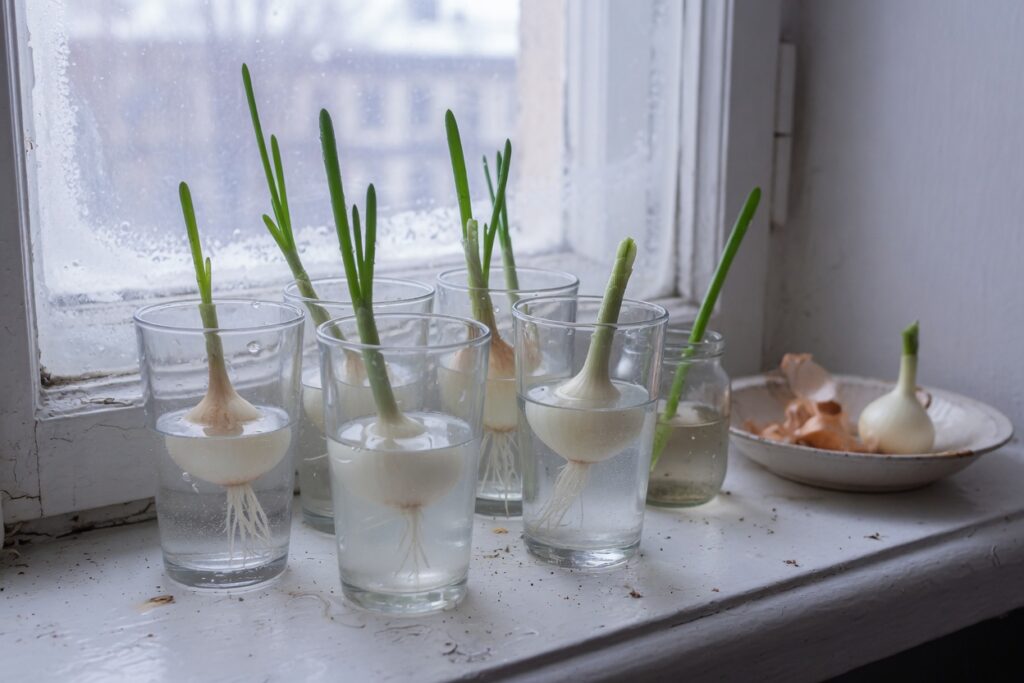
The white ends of a bunch of scallions are sitting in a glass on my sill right now, and by Friday they’ll be taller than they were when I bought them. That’s the whole trick, and it’s the one regrowing project I’d tell anyone to try.
Every fall the internet fills up with photos of lettuce hearts sprouting in saucers and celery bottoms turning into full stalks. I’ve tried nearly all of it on my windowsill over the years, and I’ll be straight about the results. Some of it is genuinely useful, some of it is a fun little science project, and a couple of things are mostly novelty. Here’s which is which, and how to do each one so it has a fair shot.
Start with the one that really works: green onions
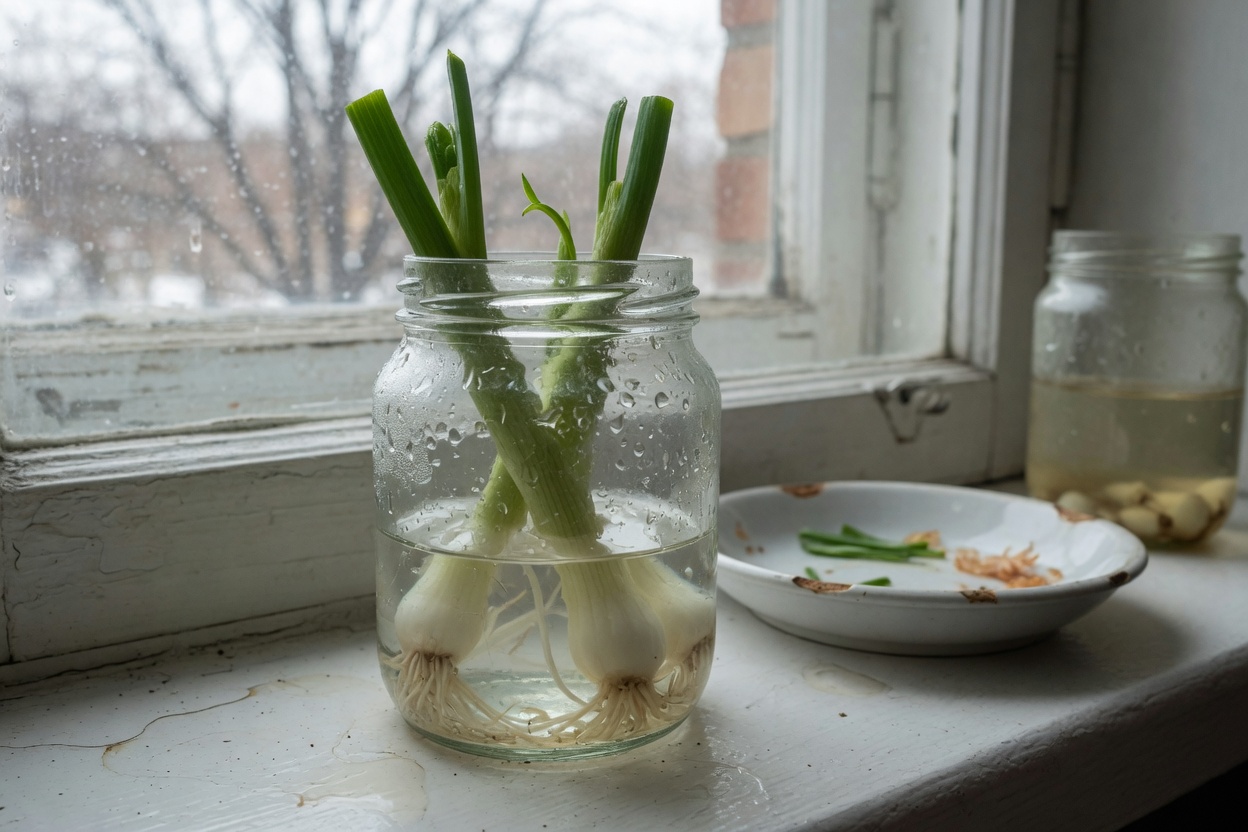
Green onions, also sold as scallions, are the real winner of the whole category. Cut the greens off for dinner as usual, but leave about an inch of white with the roots attached. Stand those pieces upright in a small jar with just enough water to cover the roots, not the whole piece.
Put the jar in your brightest window and change the water every two days. Within a day or two you’ll see the roots perk up, and within a week you’ll have new green growing out of the center, often an inch or more. I snip the greens, leave the white and roots alone, and get several rounds before a batch tires out.
This is where it earns its place. A scallion jar costs nothing, takes up the footprint of a coffee mug, and gives you a few snips of onion flavor for eggs, soup, or noodles. Slime on the roots or a sour smell means the water has been sitting too long. Rinse the roots, wash the jar, and refresh it.
If you want it to last longer, plant the rooted pieces about an inch deep in a small pot of potting mix. The organic potting mix I use is loose and drains well, which matters on a sill where a pot can’t be allowed to sit soggy. Potted scallions keep producing for a few weeks longer than water-only ones, and the greens come in a little thicker.
Celery and romaine: modest returns, honestly
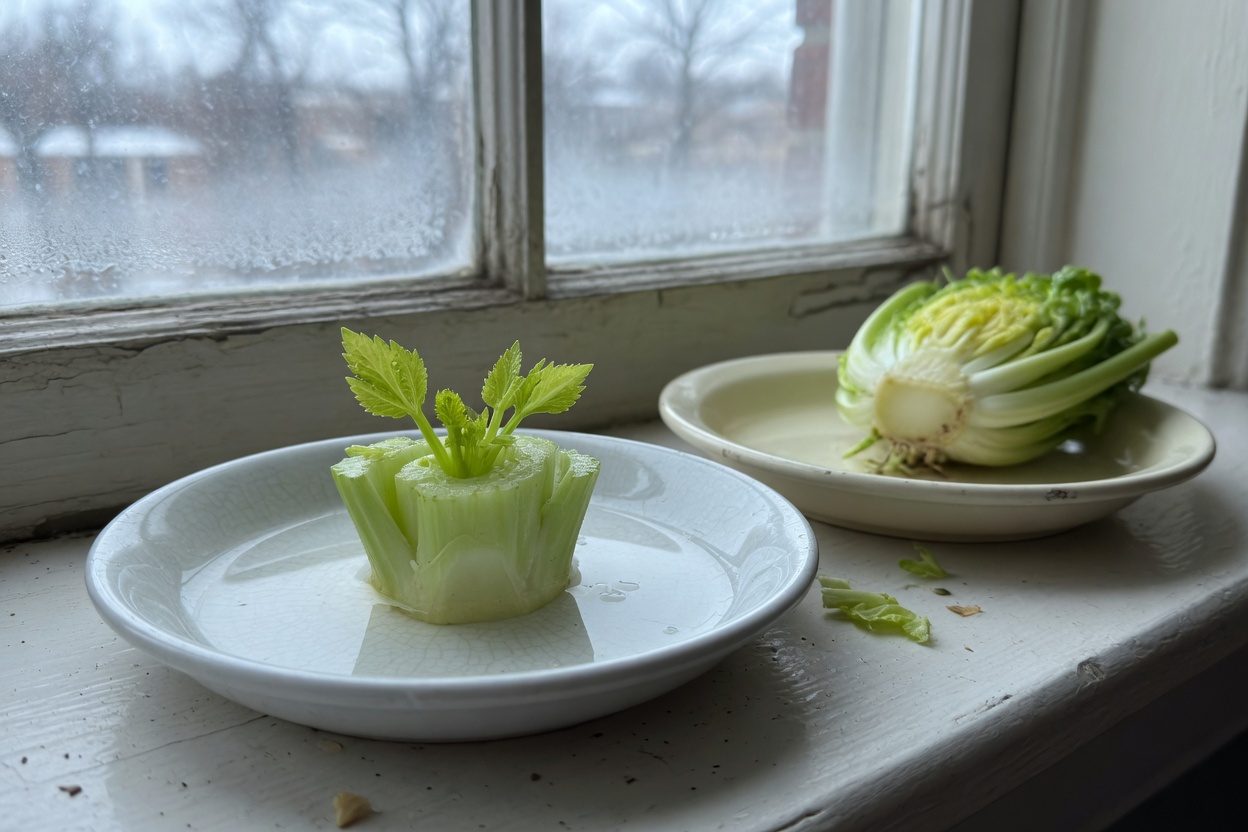
Celery and romaine are the two everyone photographs, so here’s the straight version. They’ll regrow. They just won’t give you what the photos imply.
Celery. Cut the base off about two inches up from the root end and set it cut-side up in a shallow dish of water. In about a week, small new leaves show up in the center and the outer ribs start to look alive again. Move it to a pot of mix once it has roots and a little new growth. What you get is thin, intensely flavored stalks and a lot of leaf, which is lovely chopped into soup or stock. You will not get grocery-store ribs from a pot on a sill.
Romaine hearts. Stand the base, about an inch tall, in a shallow dish with a half inch of water. New leaves appear within several days, and over one to two weeks you can pull a small handful of baby lettuce for a sandwich. It doesn’t form a head, and it gets bitter fast if you leave it. Treat it as one small harvest, then compost it.
I think of both as a cheerful bonus from something I was already eating. They’re worth the dish. They’re not worth building a plan around.
Garlic greens, carrot tops, and basil cuttings
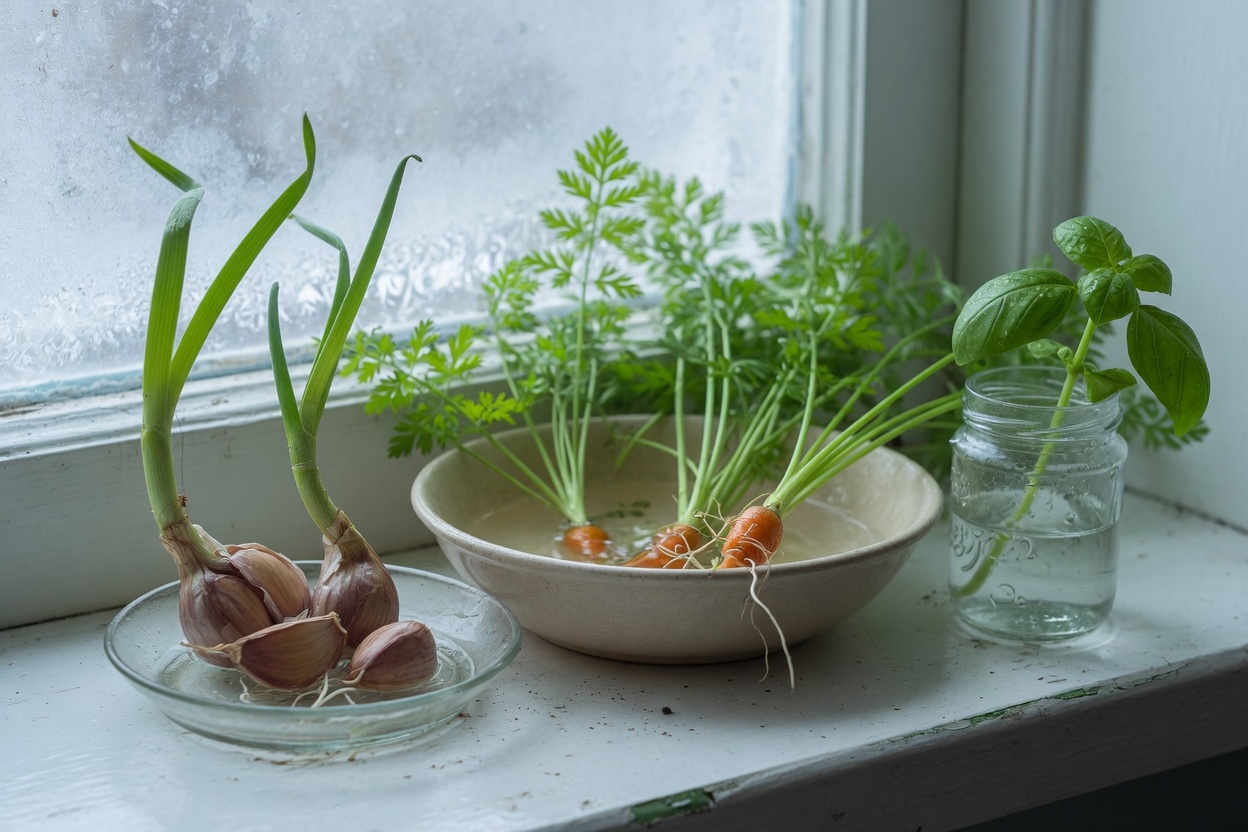
Garlic greens. Take a clove that has started sprouting in your pantry, which is what they do by midwinter, and set it pointed end up in a small pot of mix with the tip just showing. In a week or two you’ll see a green shoot. Snip the shoots when they’re four to six inches tall and use them like chives with a gentle garlic note. You won’t grow a bulb this way, only the greens, and that’s the whole point.
Carrot tops. Set the cut-off top of a carrot in a shallow dish of water and the feathery greens will come up. That’s all you get. The root does not regrow into a carrot, so don’t expect one. The greens are edible and a bit bitter, so I chop them fine like parsley and use a little at a time in a pesto or a grain salad. Honestly, it’s the most novelty-leaning item on this list, but the lacy greens look nice on a sill.
Basil cuttings. This one is different, because you’re not using a scrap, you’re taking a cutting from a store-bought bunch or a summer plant. Choose a four to six inch stem with no flowers, strip the lower leaves, and put it in a glass of water. Roots show up in one to two weeks. Once they’re an inch or two long, move the cutting into a small pot of mix.
Be realistic about winter basil. It wants warmth and strong light, and a short-day window gives it neither. I’ll root cuttings to keep a plant going, and I’ll run a light on them, but I’m happy with a few leaves, not a pesto harvest. For the herbs that do cooperate in winter, my guide to growing herbs indoors in winter is the better place to put your energy.
The water-glass step, done right
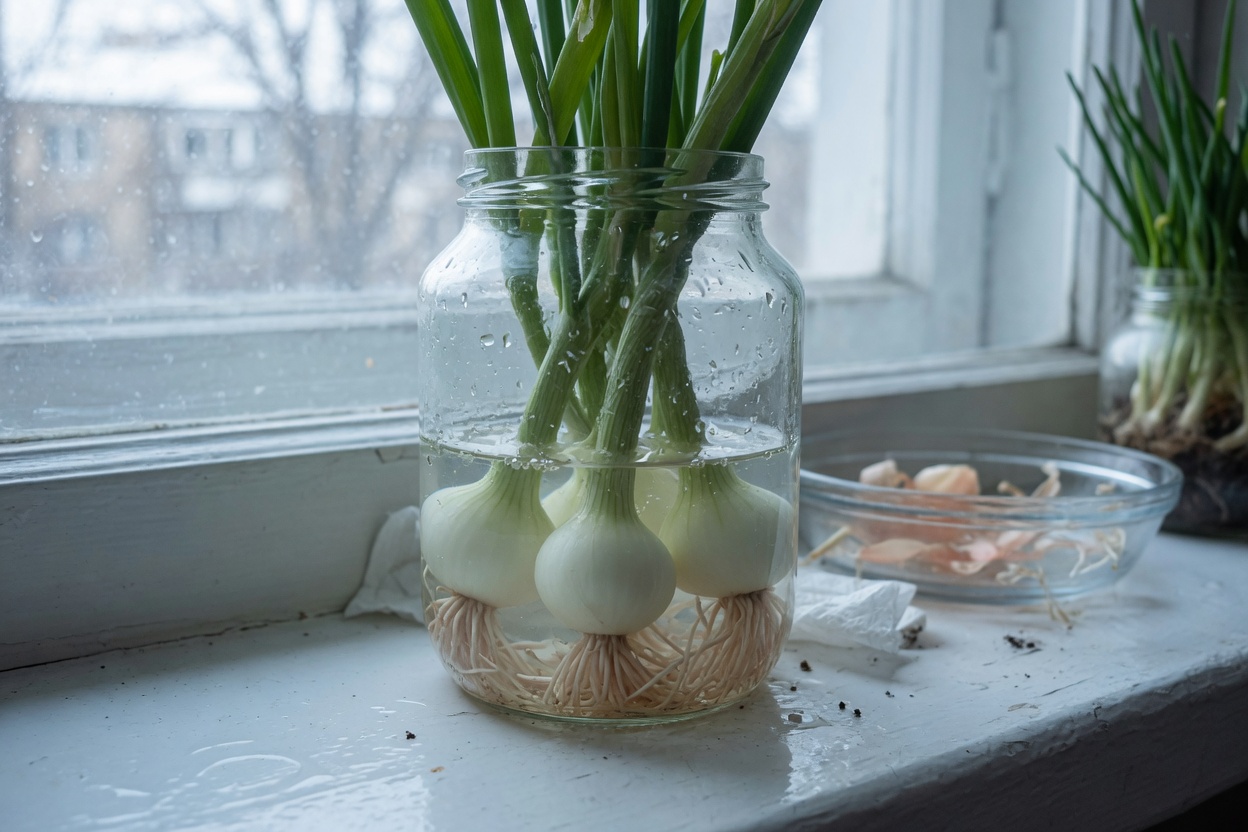
Rooting in water is simple, but a few details separate a thriving scrap from a slimy one.
Use a clean glass or jar that just fits the scrap, so it stays upright. Keep the water level at the roots or the cut surface only, never covering the whole piece. Change the water every two days, and rinse the scrap gently if it feels slick. Keep the glass out of cold window glass at night, since touching a freezing pane damages tender new growth.
Water-only growth is a short-term arrangement. The scrap has only the energy stored in its base and no nutrients in a glass of water, which is why celery and romaine peak and then fade. Moving rooted pieces into potting mix gives them something to keep working with. Use a pot with drainage holes, even for a four-inch pot, and tuck the roots in without burying the new growth.
Light and watering in a winter window
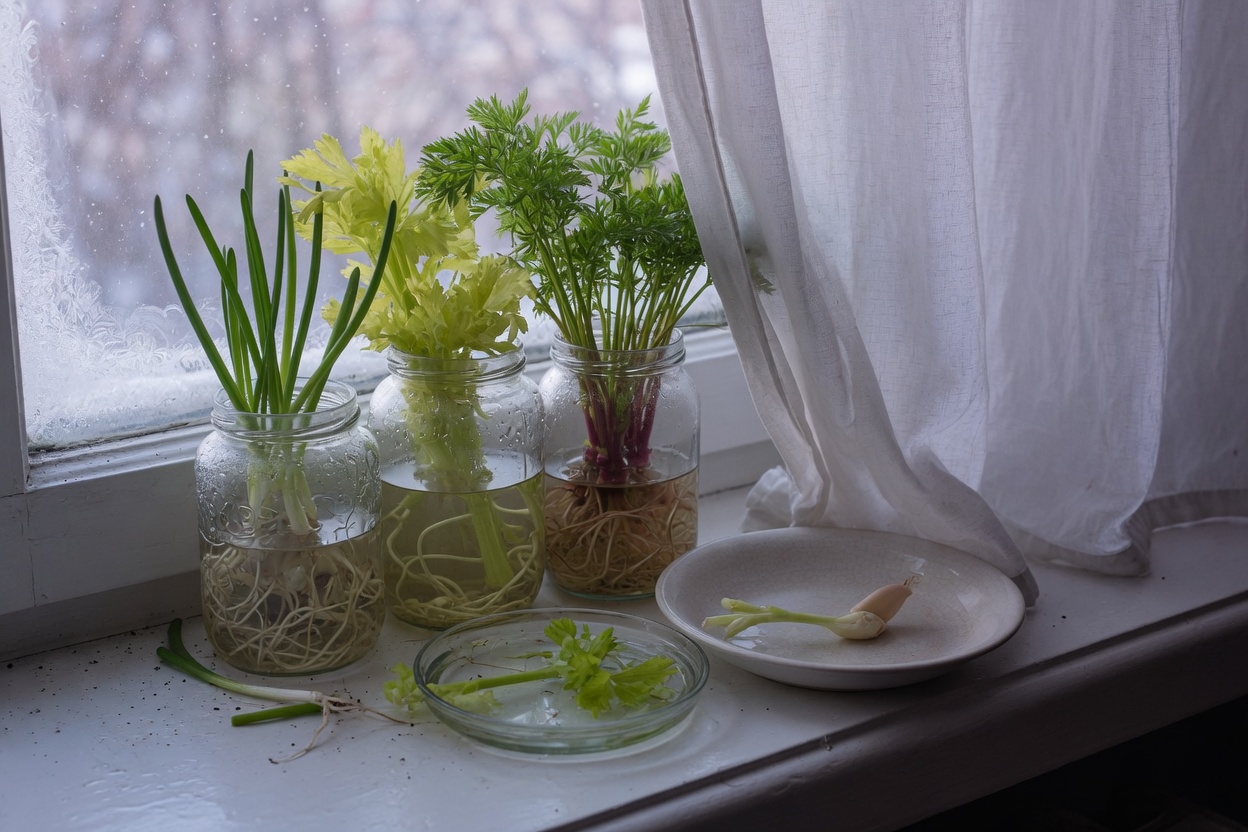
Light is the real limit, not the scraps. A winter window gives you short days and low sun, so even a good south-facing sill delivers less than most plants want. Greens like scallions are forgiving. Romaine and basil are fussier.
A clip-on grow light set on a timer for a few hours a day makes a visible difference. I clip mine to the shelf above the sill, and growth that would have looked pale and stretched stays compact and green. If you’re deciding whether to bother, put one scrap under the light and one without it, and let the difference convince you. My guide to starting seeds indoors on a windowsill covers the same light logic in more detail.
Once scraps are potted, the watering trap is the same one that catches every container plant in winter. Slow growth means slow-drying soil, and wet roots rot. Water with a small long-spout can aimed at the soil, and wait until the top inch feels dry. If you never know when that is, a soil moisture meter takes the guessing out.
What to expect, and what’s not worth it
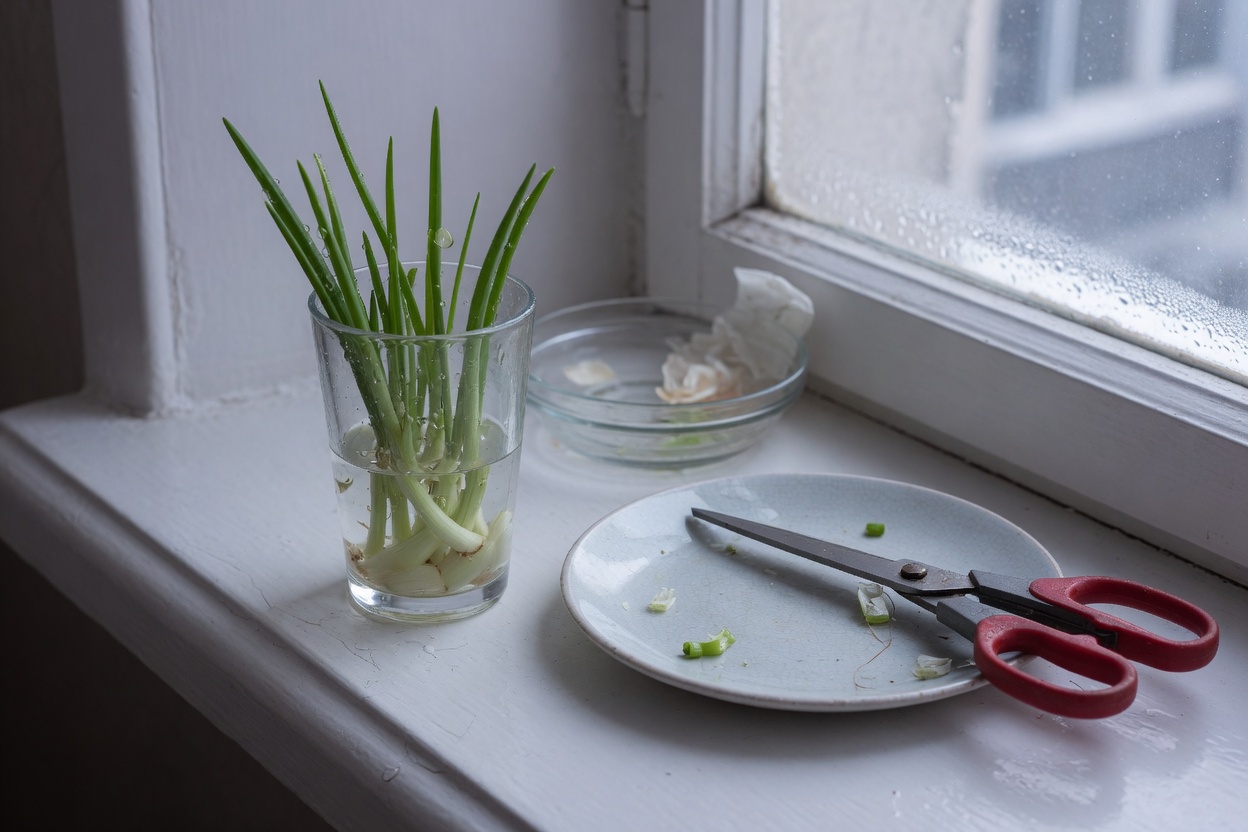
Here’s my honest scorecard after a lot of winters of this.
– Green onions: reliable, fast, and worth doing every time you buy a bunch.
– Basil cuttings: worth it for the plant you already love, with modest expectations in winter.
– Garlic greens: easy and useful, greens only.
– Celery and romaine: a small, pleasant bonus, not a harvest.
– Carrot tops: mostly a novelty, with edible greens as a minor perk.
Nothing here replaces a grocery run, and that isn’t the point. It’s a little fresh green, a living thing in the kitchen, and a good way to stay in the habit of growing through the dark months.
If you like this kind of small, practical growing, I go through the whole year of it, in pots, bags, and tight corners, in Small-Space Big Harvest. It’s the deeper resource if you want to turn a windowsill habit into a small garden when spring comes around.
