How to Protect Container Plants From Frost
How to protect container plants from frost on a balcony or patio — why pots freeze faster, the move-water-cover routine that saves them, and what to just let go.
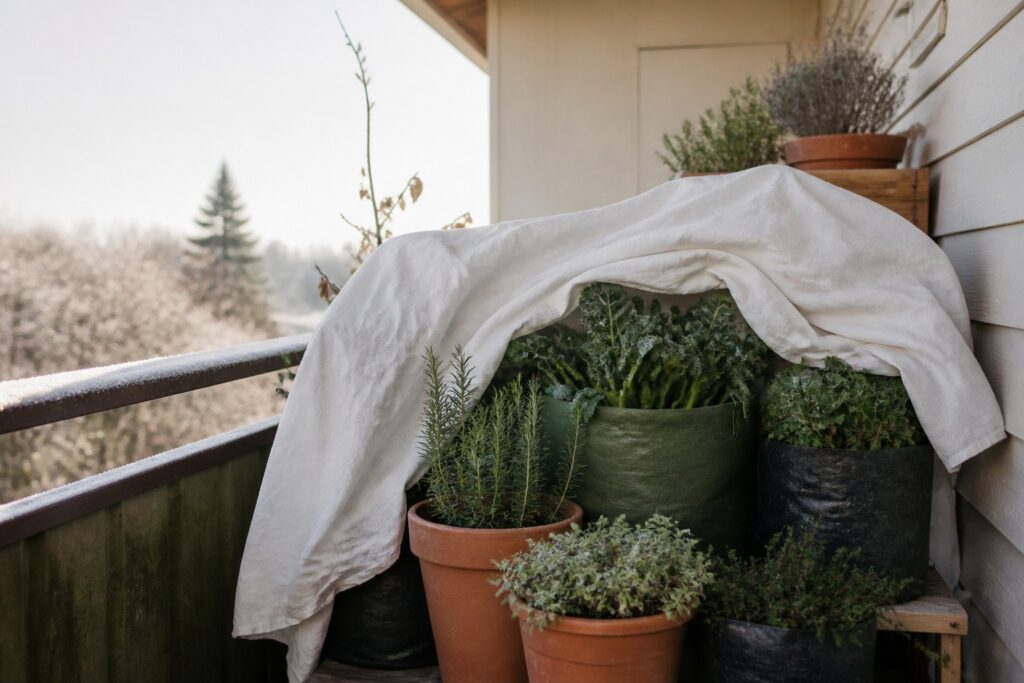
The first frost warning of the year always seems to come on a Tuesday, when you’re busy, and always about two weeks before you expected it. You glance at the forecast, see that little 31°F sitting on Thursday night, and remember that everything you’ve been growing all season is sitting out on the balcony with its roots up in the air.
Take a breath. You have more control than you think, even without a yard, a greenhouse, or a single permanent thing screwed to your wall. Protecting container plants from frost comes down to three plain moves — move them, water them, cover them — and a little judgment about which plants are worth the trouble. Let me walk you through all of it.
Why pots freeze faster than the ground
Here’s the thing nobody explains until you learn it the hard way. A plant in the ground has the whole earth around its roots, and the earth holds warmth and lets go of it slowly — the soil a foot down barely notices a light frost. A plant in a pot has its roots wrapped in a few inches of mix with cold air on every side, top and bottom and all the way around.
So the roots in your containers get colder, faster, and stay colder than the same plant would in a garden bed. That’s the whole problem in one sentence. It’s also why a frost that a neighbor’s in-ground kale shrugs off can turn your potted herbs to mush overnight. Everything below is just working around that one fact.
Move one: get them together, and against the wall
The single most effective thing you can do costs nothing. On the afternoon before a cold night, group all your pots into one tight cluster, pushed right up against the wall of the building — ideally under an eave, a balcony above, or an overhang.
Two things happen when you do this. The wall of a heated building leaks a surprising amount of warmth, and a huddle of pots shields each other the way a flock of anything shares heat — the ones on the inside of the cluster barely feel the cold. An overhead cover, even just the balcony floor above you, traps the day’s warmth rising off the ground and blocks the open sky that pulls heat away on a clear, still night.
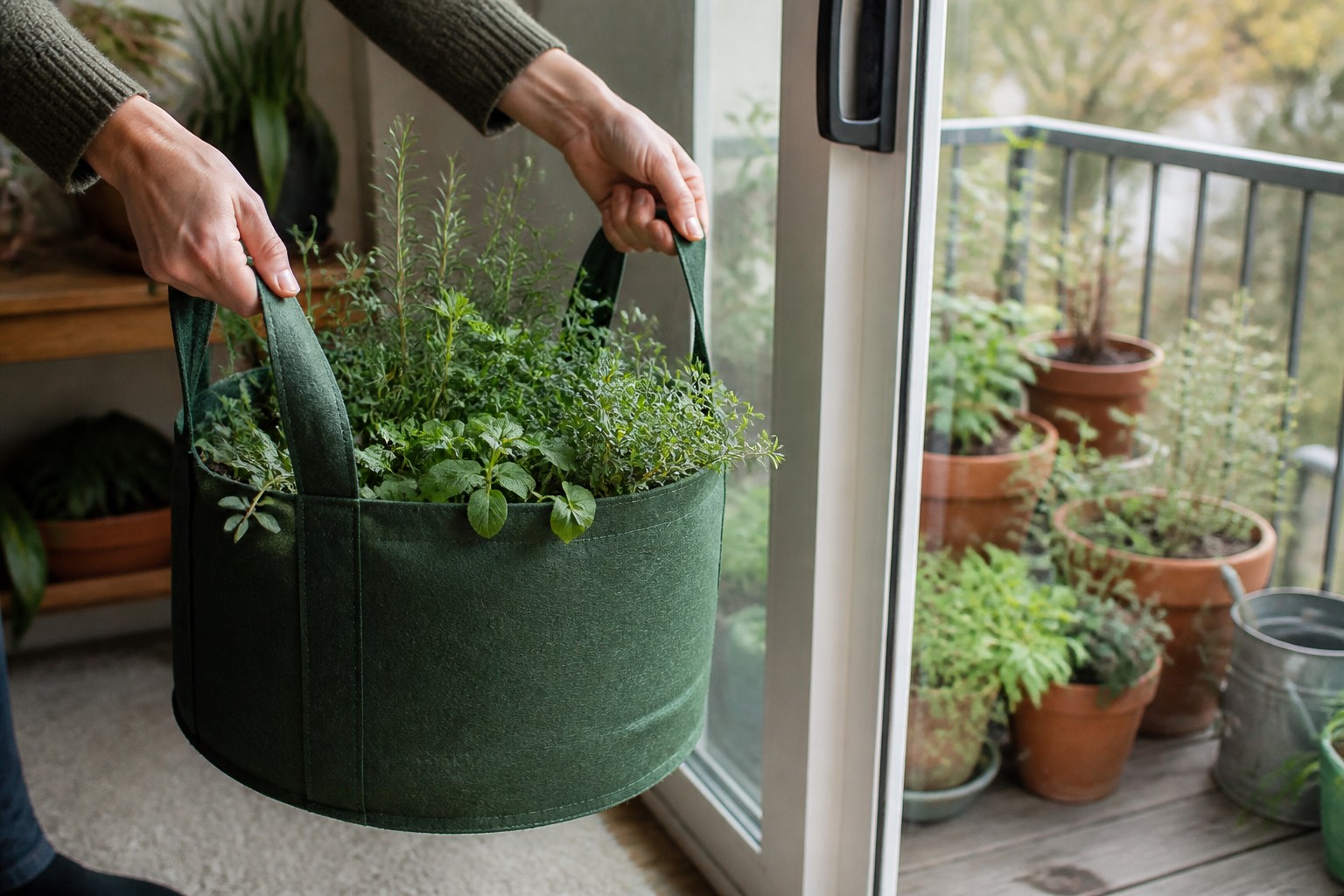
This is where light pots earn their keep. Terracotta and big plastic planters are miserable to drag around; a plant growing in a fabric grow bag weighs a fraction of the same plant in a rigid pot, so you can pick it up with one hand and tuck it into the middle of the cluster — or carry it straight inside for the night. I keep my most tender things in grow bags for exactly this reason. If you’re weighing bags against pots in general, I get into it in my grow bags vs. plastic pots post.
Move two: water in the afternoon (yes, really)
This one sounds backwards, so trust me for a second. Moist soil holds heat better than dry soil. Water has a lot of thermal mass — it soaks up the day’s warmth and releases it slowly through the night, which keeps the root zone a few degrees warmer than bone-dry mix would. Commercial growers water their fields before a frost for this exact reason.
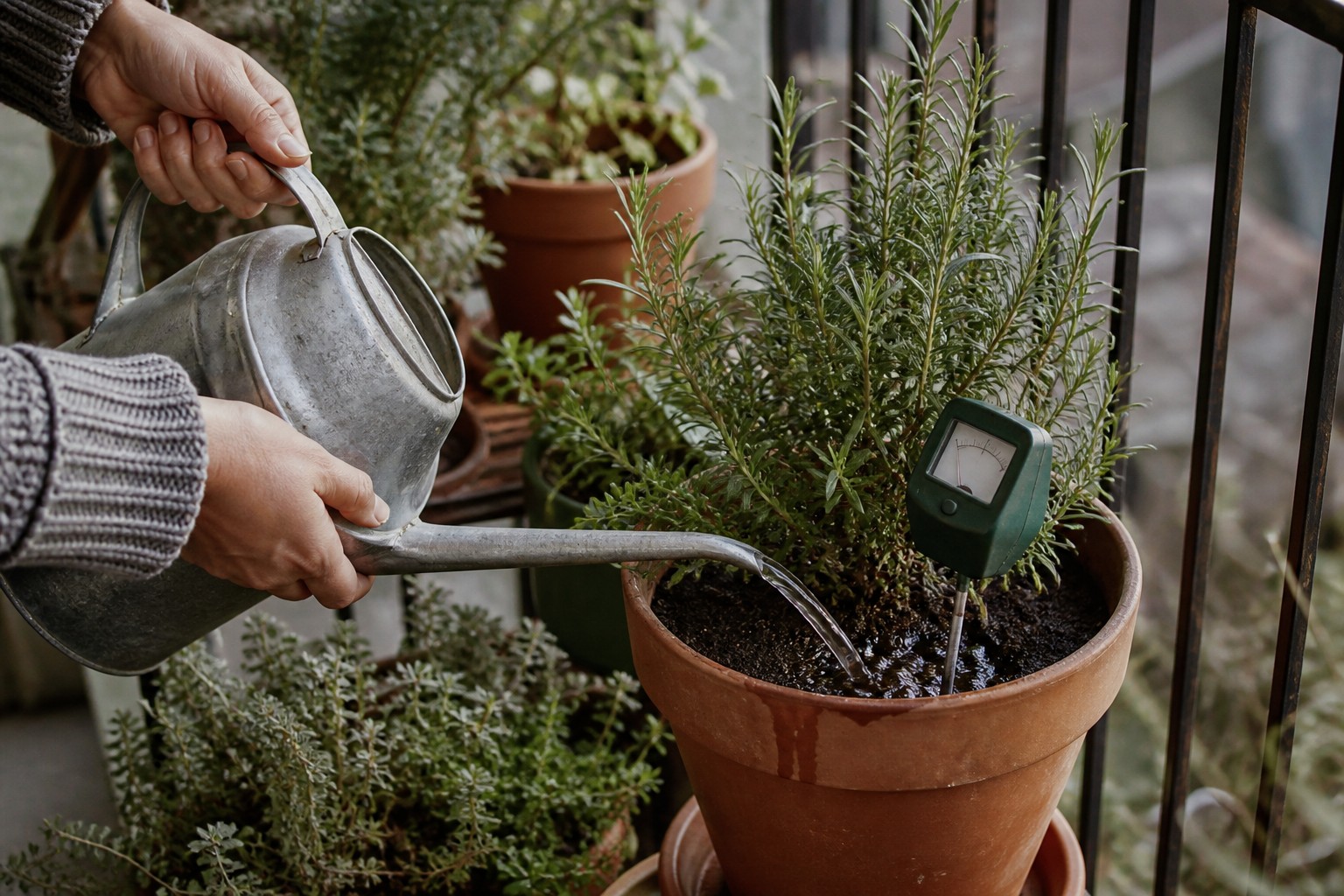
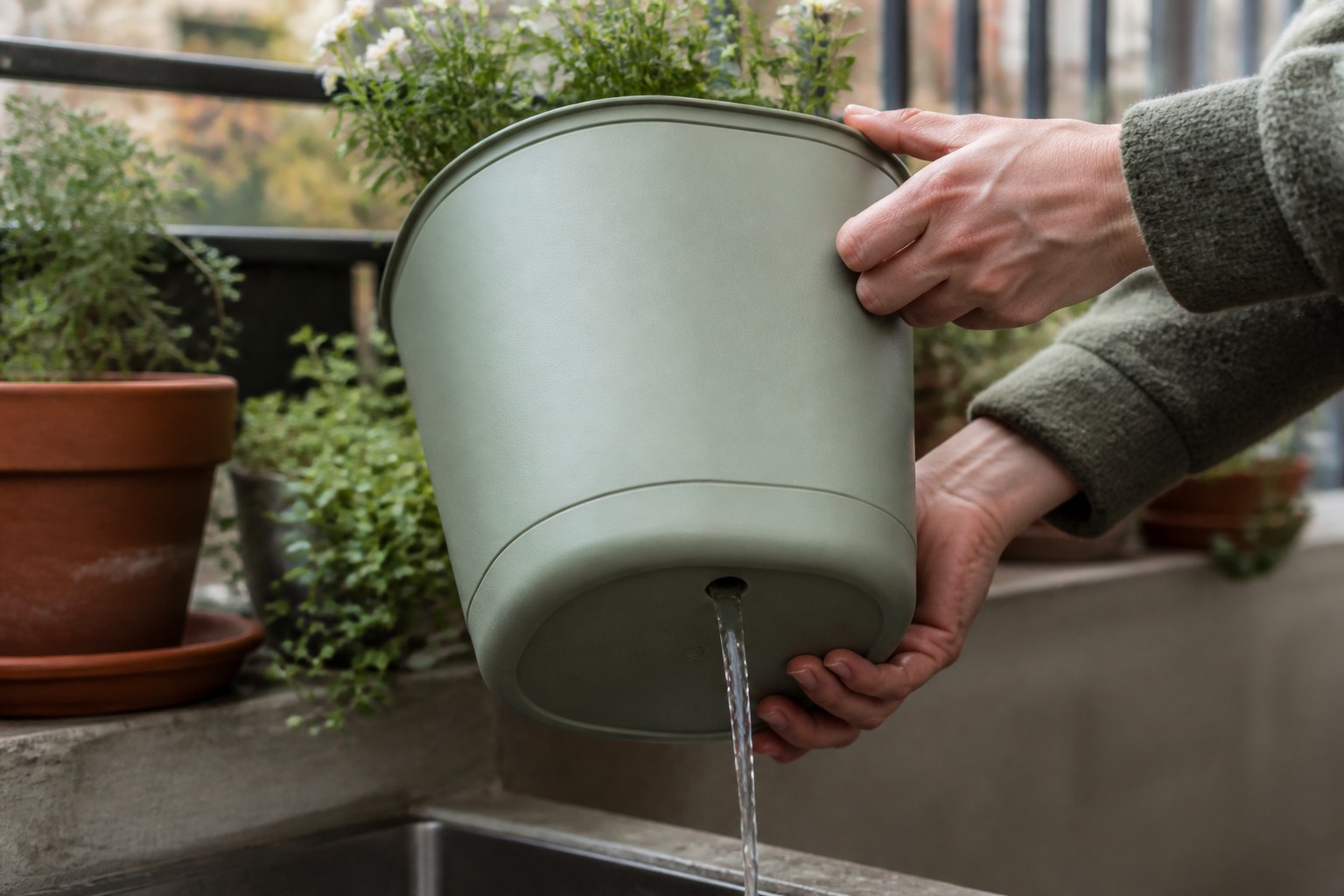
So on the afternoon before a frost, give your pots a proper drink with a long-spout watering can — get down to the roots, not just a splash on the surface. Do it in the afternoon while there’s still sun to take the chill off the water, never at dusk when you’d leave cold wet soil sitting through the freeze.
One honest caution, because I’ve overwatered plants to death in cold weather and I’d rather you didn’t. In fall and winter, plants drink far less than they do in summer, and cold soggy soil rots roots as surely as a freeze burns them. So water for warmth, but check first — I push a no-battery moisture meter down to root level, and if it’s already reading damp, I skip it. Warm and damp is the goal; cold and waterlogged is a different way to lose the plant.
Move three: cover them for the night
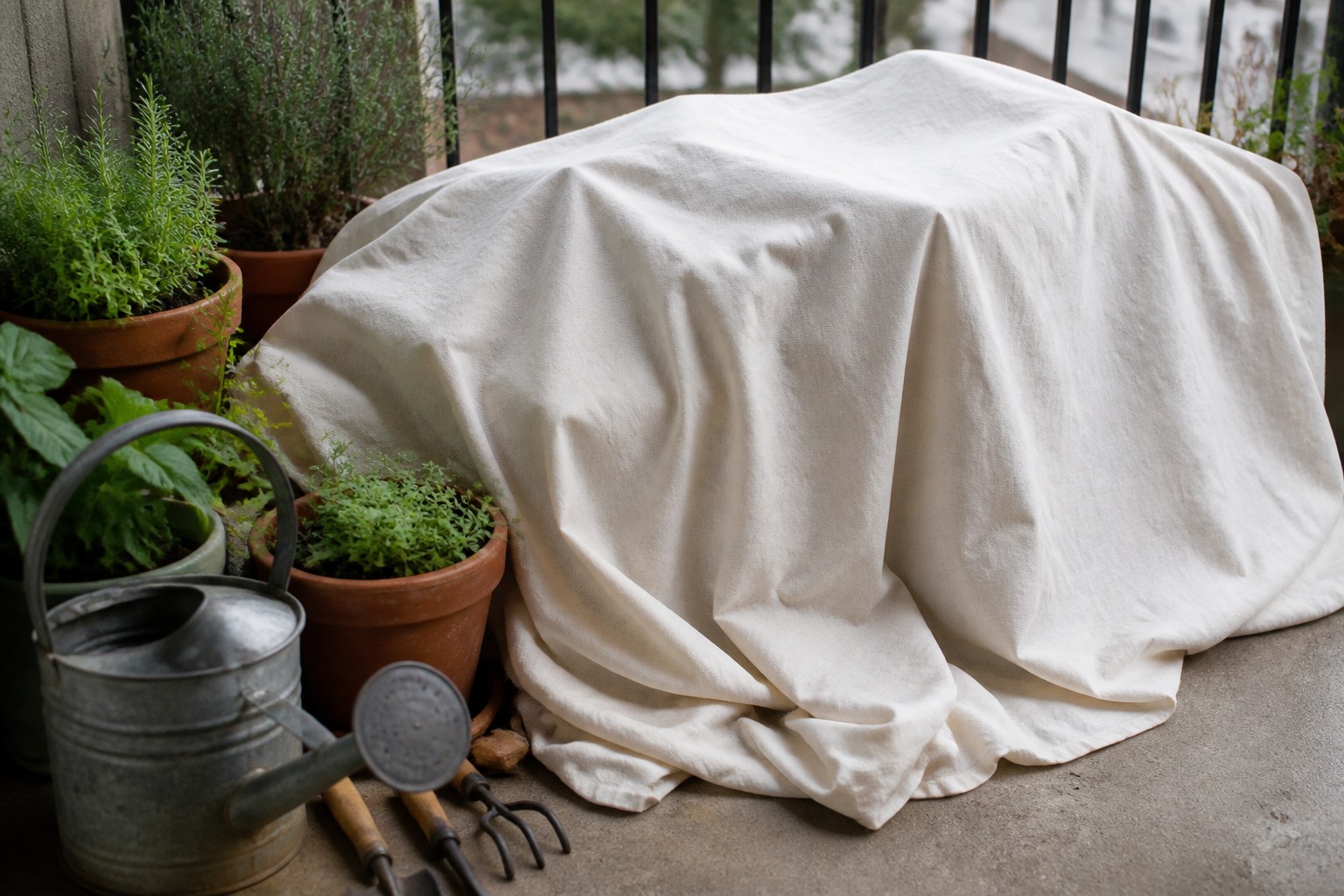
If the frost is more than light, or you can’t move everything, throw a cover over the cluster for the night. The cover works by trapping the warmth rising off the soil before it escapes to the open sky, so it wants to reach the ground on all sides and hold that pocket of warmer air around the plants.
Drape an old bedsheet, a light blanket, or a few sheets of newspaper over the whole group, right down to the balcony floor, and weigh the edges with a book or a brick so a night breeze doesn’t peel it off. For a single precious pot, an upturned cardboard box or a plastic tote does the same job. The one rule: put the cover on at dusk and take it off in the morning once the air warms, so the plants get their light and don’t cook under there on a sunny day. A purpose-made frost cloth (sometimes sold as a plant frost blanket) is worth owning if frost is a regular thing where you are — it’s light, it breathes, and you can sometimes leave it on through a mild day — but a clean sheet from the closet works fine for the occasional cold snap, so don’t let not-having-one stop you.
Know which plants to fight for — and which to let go
Not everything is worth the Tuesday-night scramble, and part of gardening in a small space is being honest about that. A single sentence of triage saves you a lot of fuss.
Bring in or cover the tender things — basil, which dies at the first breath of frost; peppers and any tomatoes still ripening; tender succulents. Let the tough ones ride — kale, chard, parsley, chives, thyme, and most hardy greens actually sweeten after a light frost and don’t need a thing. And let the annuals go when their season is truly over; a nasturtium that’s had a good summer has earned its rest, and chasing one more week out of it isn’t worth losing sleep over. If you’re thinking past a single frost to keeping perennials and herbs alive all season, that’s a bigger project — I cover it in how to overwinter container plants.
The whole routine — move, water, cover, triage — takes about fifteen minutes once you’ve done it a couple of times, and it’s the same muscle you used keeping pots alive in a summer heat wave, just pointed the other direction. Small-space growing is mostly these small, well-timed saves, and there’s a quiet satisfaction in walking out the morning after a frost to find your herbs green and fine.
I go deeper on getting a balcony garden through every season — the cold months included — in Small-Space Big Harvest. The frost night is just one evening’s work. The book is how you keep something growing on that railing all year long.
