How to Get Your Chickens Ready for a Sudden Cold Snap
A 48-hour cold snap checklist for backyard chickens: unfrozen water, dry deep litter, flat roosts that cover their feet, and the heat-lamp mistake to skip.
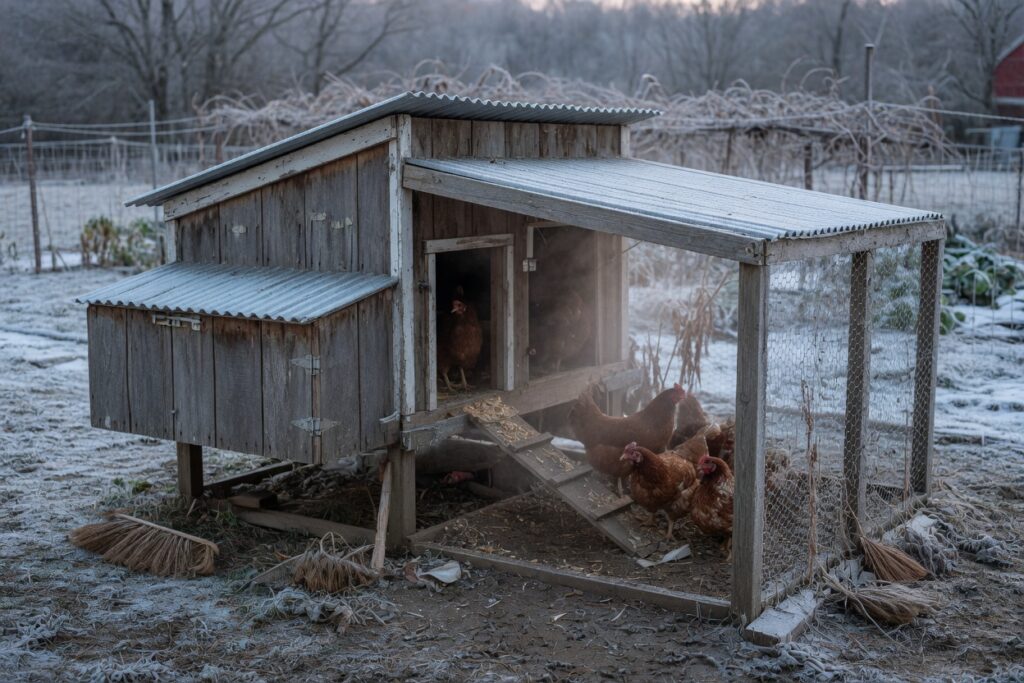
The forecast for our second winter said 38 on Monday and 9 by Thursday night. In East Tennessee that’s not a gentle slide, it’s a drop off a ledge. I did what most first-year keepers do, which was nothing, because the girls had been fine all fall. Thursday morning I walked out to find the plastic waterer frozen solid and cracked down the side, and two of my Easter Eggers standing in the run with water-starved, hunched shoulders.
Nobody lost anything that week except a waterer. But I’ve kept a cold-snap checklist taped inside the feed bin lid ever since, and it has never once been wrong. Chickens handle cold better than most new keepers expect. What hurts them is a sudden change, frozen water, damp bedding, and drafts at roost height. Here is what I do in the 48 hours before a hard freeze, in the order I do it.
Forty-eight hours out: water first

Water is the first thing I fix, because a hen can survive a cold night but not a day with nothing to drink. A chicken in a freeze drinks less than in summer, but she still needs it, and she stops laying quickly when she can’t get it.
Set the galvanized fount on top of the heated base now, not on the night of the freeze. Plug it in and let it run for an hour to make sure it works, because a dead cord is a lot easier to find on a warm afternoon. Make sure the fount sits level on the base. Use an outdoor-rated extension cord, keep the plug off the ground, and run the cord where hens and rats can’t chew it. I tie mine up along a post with zip ties.
The honest downsides: it needs power, and if the power goes out you’re back to carrying warm water by hand. I keep two empty buckets in the garage and fill one with warm tap water before every freeze. If you want to see how the options compare, I wrote up the best heated chicken waterers for winter, and my post on keeping water from freezing covers the no-electric methods.
Dry beats warm

Here’s the one everybody misses. A new keeper’s instinct in a freeze is to seal the coop shut so it stays warm. That traps the moisture the birds breathe out and the damp from their droppings, and wet air at roost level is what gives you frostbitten combs, not the cold itself.
Leave your upper vents open. They should be high on the wall above the roosts, so air moves out without blowing down on the birds. Close off any gap at roost height, since a draft across a sleeping hen is worse than cold air up near the ceiling. A hand held at roost level at dusk will tell you the truth in about ten seconds.
Then add dry litter. I use hemp bedding, and I top the coop floor up by a few inches before a freeze. Pull any damp spots to the compost pile first. If you run a deep-litter coop, my deep litter method post walks through how it works, and I wrote about hemp bedding in winter separately.
Roosts, feet, and combs

Use a flat roost, a two-by-four with the wide side up, so a hen can settle on top of her own toes and keep them covered. Round dowels and skinny branches leave toes out in the air all night. Frostbite shows up first on toes and on the tips of large single combs and wattles, and it shows up a day or two after the cold, as black or grey patches.
Some keepers dab petroleum jelly on combs. I’ve gone back and forth on it. It doesn’t hurt, but it won’t fix a damp coop, so I do the ventilation work first. My post on preventing frostbite goes into what to look for and when to call your vet.
If you keep ducks, as I do, with my four Cayugas, remember that they soak everything. Give them a dry corner and top up their bedding twice as often, because wet duck feet on frozen ground is a frostbite waiting to happen.
Feed, eggs, and what not to do

Give an extra handful of scratch grain in the late afternoon. Digesting it keeps the girls a little warmer through the night. Don’t swap their layer feed for scratch, though. Scratch is a treat and it dilutes the protein and calcium the hens need. Offer a bit extra feed overall and leave it at that.
Collect eggs two or three times a day. At single-digit temperatures an egg freezes and cracks within a couple of hours, and a cracked egg in a nest box means a hen that learns to eat eggs.
And don’t use a heat lamp. Every winter I read about another coop fire that started with one. The birds don’t need it, and a sudden warm spot is worse for them than steady cold air. If you want to know what does work without a lamp, I laid it out in how to keep chickens warm in winter without heat.
The morning after
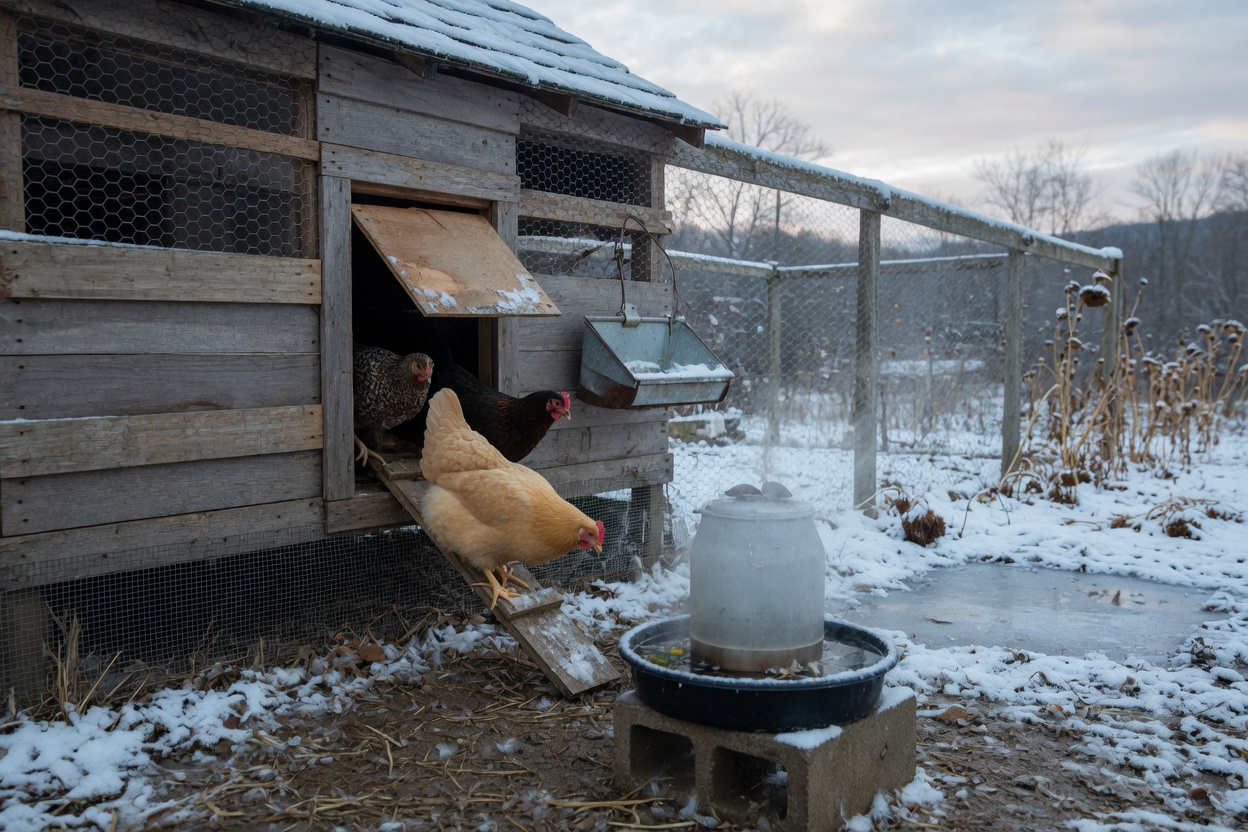
Walk out first thing and count heads, check the water, and look at every comb. Offer electrolytes in the water for a day if anyone looks off, per the label. If a bird is lethargic, her comb has blackened, or she isn’t eating, call a chicken-savvy vet or your county extension office. I’m a keeper, not a veterinarian, and this is the point where my advice ends.
Then do the dull part: put the checklist back in the feed bin lid. You’ll need it again.
Go deeper
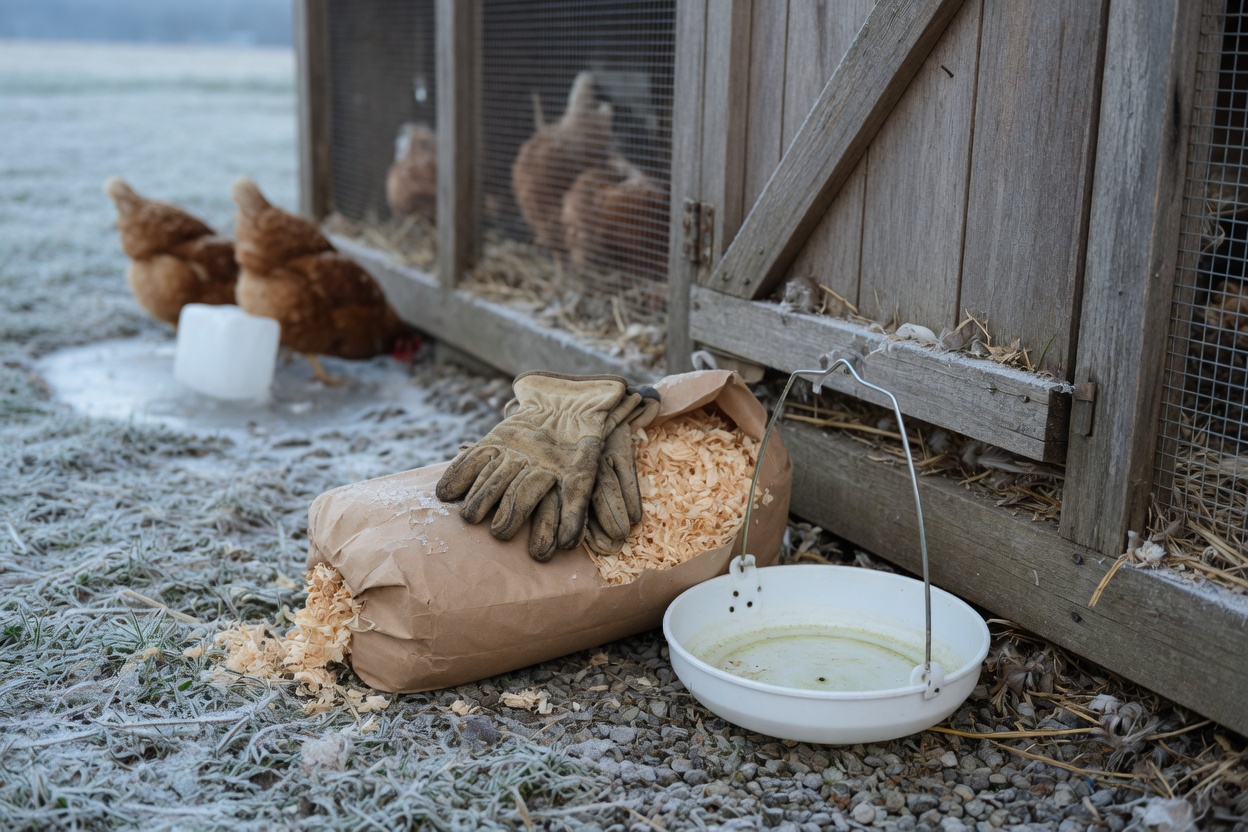
Everything above is a chapter in my book, Raising Backyard Chickens for Beginners: the first-year timeline, the coop setups that survive a hard winter, and the mistakes I made so you don’t have to. The cold snap checklist is one page. The book is the rest of the year.
