How to Overwinter Container Plants on a Small Balcony
How to overwinter container plants when all you've got is a balcony — which pots to save, how to protect the roots without a yard, and the watering trap that kills them.
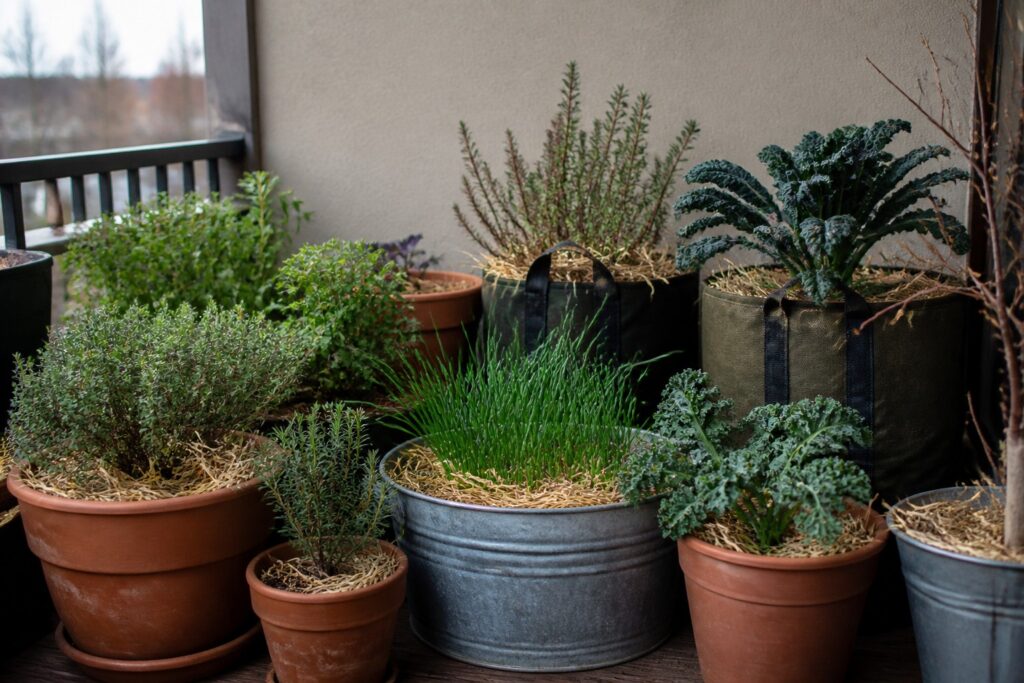
Your pots are more exposed than you think.
A thyme plant that would shrug off a hard freeze in the ground can die in a pot in the same weather, and it took me a couple of lost plants to understand why. In the ground, roots are wrapped in a few feet of earth that holds its warmth. In a container, the roots are sitting a half-inch from cold air on every side. The plant above the soil looks the same. The roots are the ones taking the hit.
So overwintering in containers isn’t about the plant being tough. It’s about protecting the roots, easing off the water, and being honest about which pots are worth saving. You don’t need a yard, a cold frame, or a greenhouse to do it. You need a sheltered corner, a little insulation you can put up and take down, and the discipline to stop watering so much.
Here’s how I get my balcony pots through a Portland winter.
First, decide what’s actually worth saving
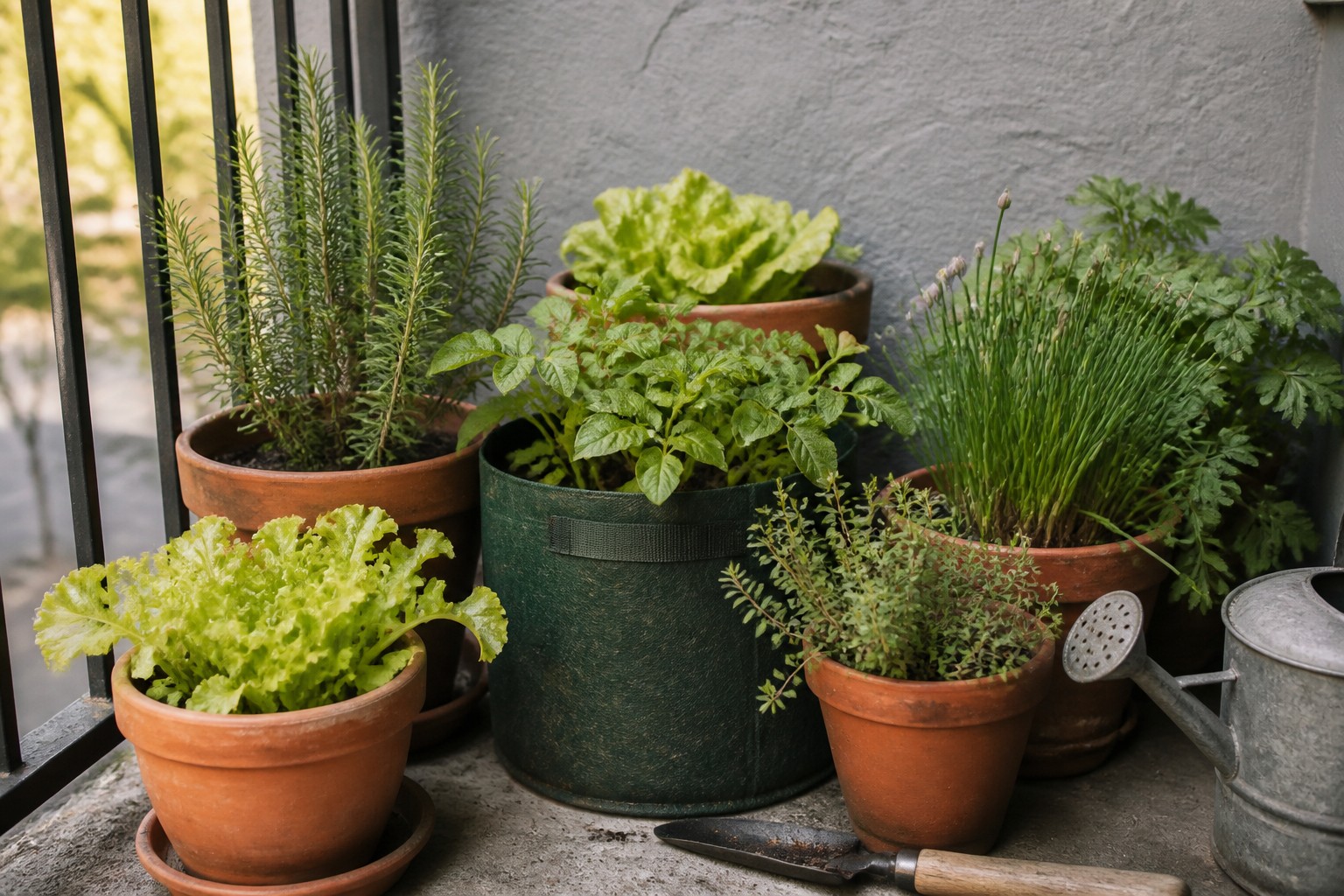
Not every pot gets a winter. Some plants are finished, and pretending otherwise just wastes your effort.
Let the annuals go. Your basil, tomatoes, peppers, and nasturtiums are done — they were never going to overwinter, and there’s no trick that changes that. Compost them, empty the pots, and give yourself the room.
Save the hardy perennial herbs. Thyme, sage, chives, oregano, and mint are the reliable ones in a pot. Rosemary is the gamble — it’ll often make it through a mild winter in a sheltered spot and sulk in a hard one. Chives will die back to nothing and come roaring back in March; don’t throw the pot out because it looks empty.
Protect the hardy greens if you want winter food. Kale, spinach, and mâche can keep going in a container far later than people expect, with a little cover. That’s a whole small win — fresh leaves in December off a balcony.
Cluster the pots — it’s the free half of the job
The easiest protection costs nothing. Push your keeper pots together into a tight group, and shove that group against the wall of the building, out of the wind.
Two things happen when you do that. The wall gives off a little stored heat and blocks the worst of the wind, and the pots insulate each other — the ones in the middle of a cluster stay several degrees warmer than a pot standing alone on an open rail. This is where fabric grow bags earn a spot: they’re light enough to rearrange in five minutes, and they won’t crack the way a frozen terracotta pot will. Their one downside is that fabric breathes, so it insulates less — so tuck the grow bags into the middle of the cluster where their neighbors do the sheltering.
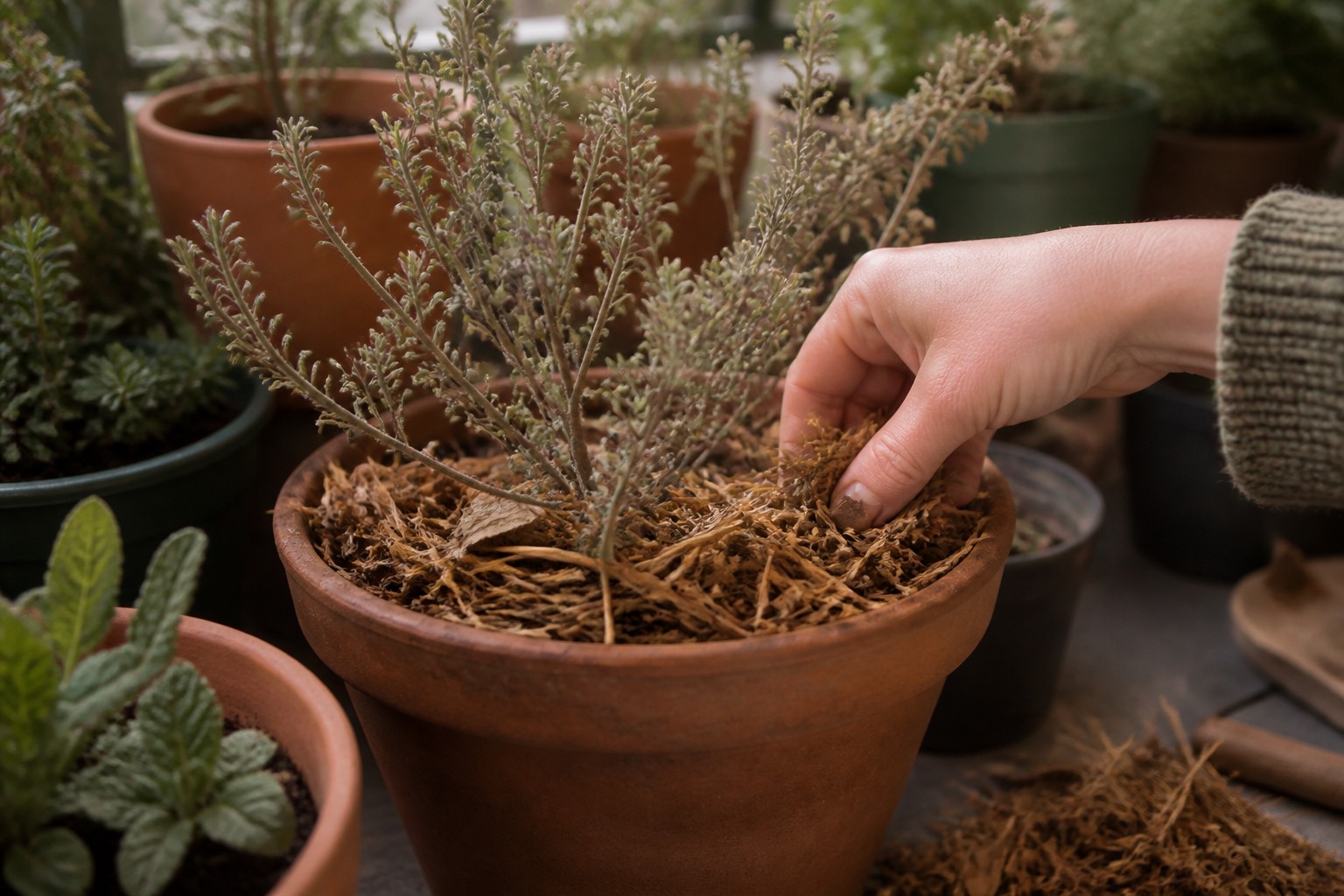
Then mulch the tops. A few inches of straw, fallen leaves, or bark over the soil surface is a blanket for the roots, and it’s the cheapest insurance there is.
The trap that kills more winter pots than cold: overwatering
Here’s the thing that surprised me most. In winter, the danger usually isn’t a dramatic freeze. It’s a wet pot sitting cold for weeks.
A dormant plant barely drinks. The soil dries out slowly because there’s no sun and no growth pulling water up. So if you keep watering on your summer habit, the roots sit in cold, wet soil, and they rot — quietly, from the bottom, until one day the plant just tips over. I’ve done it. It looks exactly like the plant died of cold, and it didn’t.
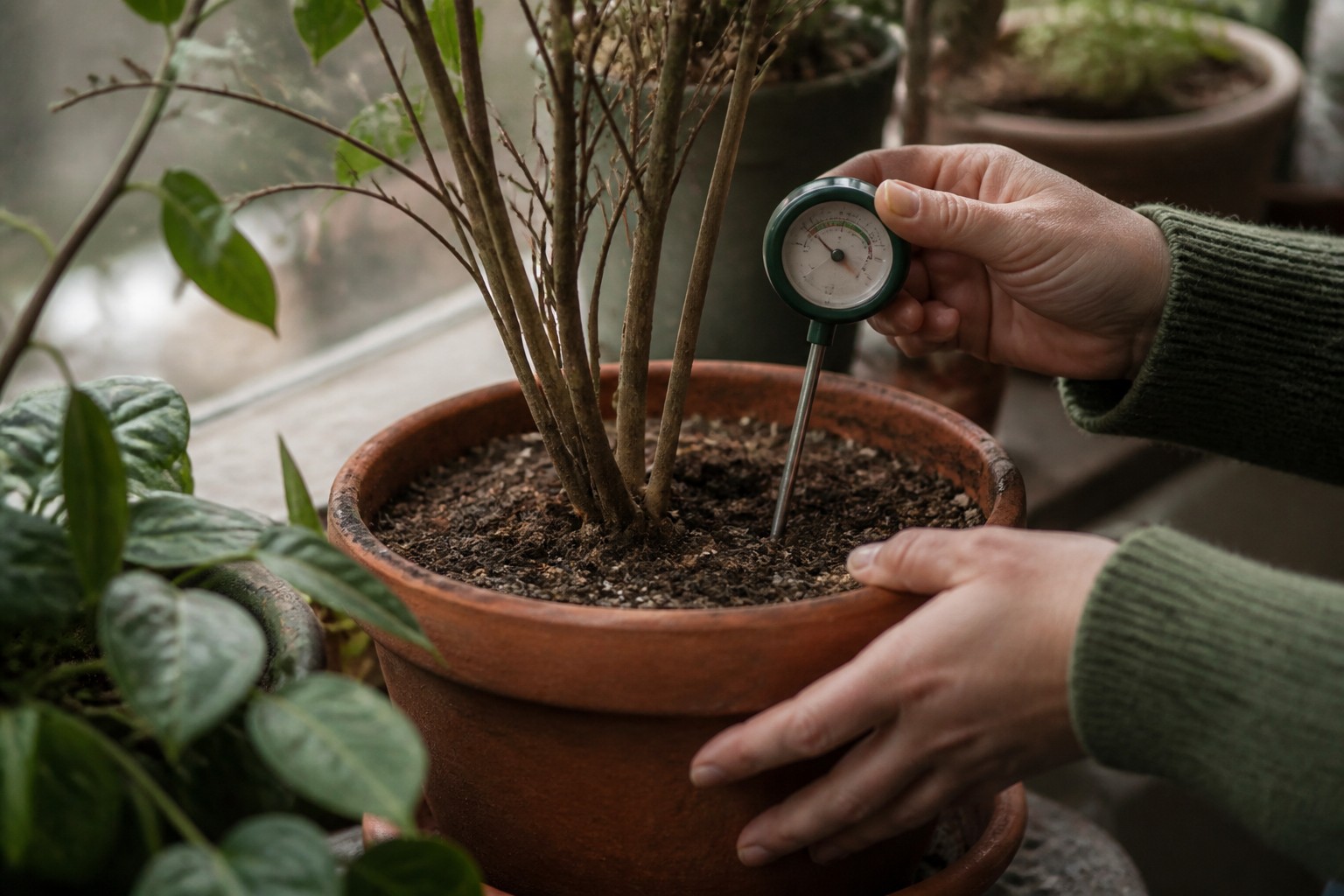
This is why the soil moisture meter is my most-reached-for winter tool. Before I water anything, I push the probe down to root level and actually look. If it reads damp, I walk away. Most weeks in winter, I water nothing at all. When I do, I use a long-spout can to put a little water right at the soil and keep it off the crown of the plant. If you’ve ever lost a pot to soggy roots, my guide to saving an overwatered container plant walks through the rescue — but in winter, the fix is almost always just to stop.
One caveat for self-watering planters
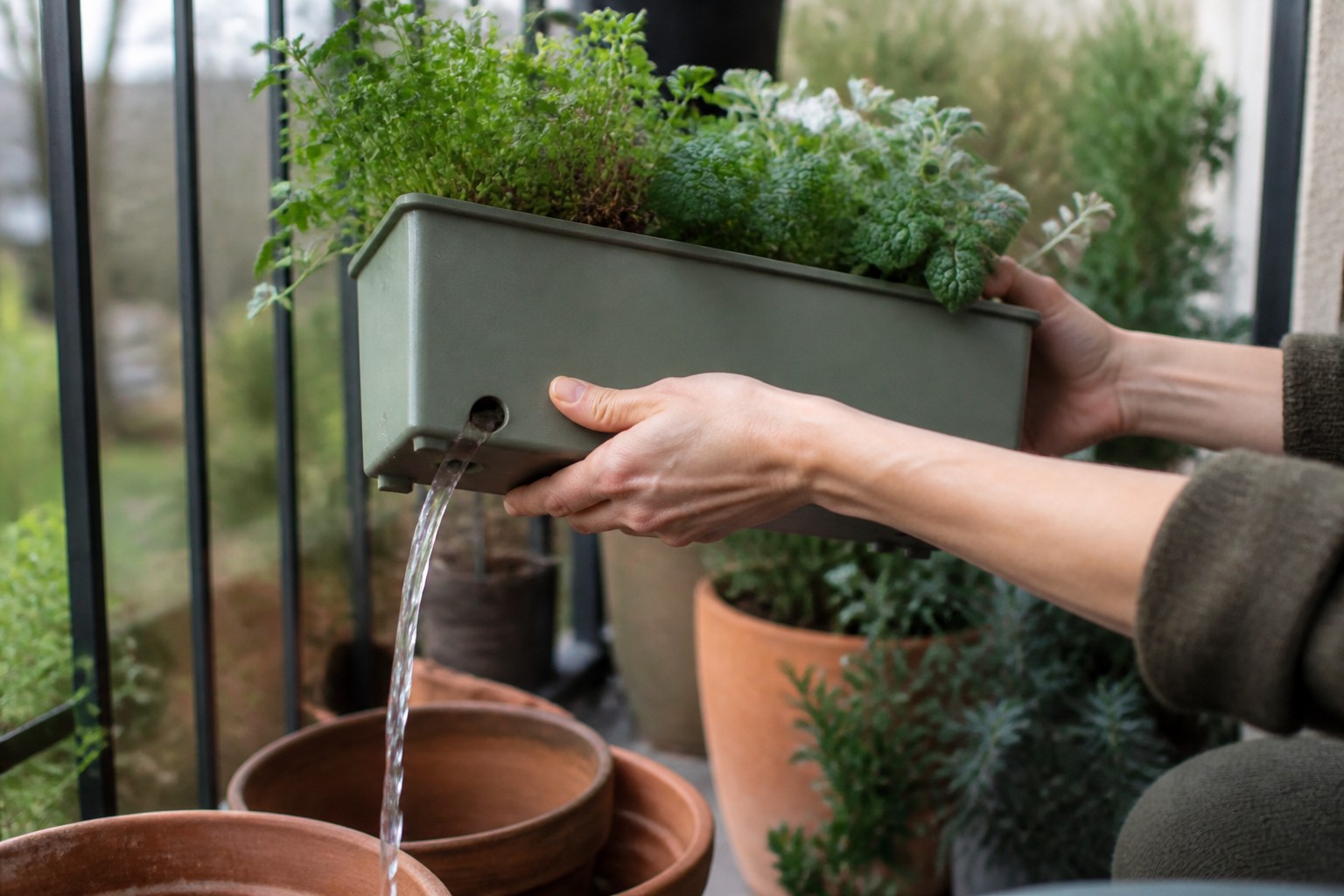
I love a self-watering planter in the growing season — the reservoir is what lets a busy person keep pots alive. But heading into a hard freeze, empty the reservoir.
A tank of water sitting under the soil will freeze, expand, and can crack the planter or the wicking base, and a constantly wet reservoir feeds exactly the cold-and-soggy root rot we just talked about. Tip it out, let the pot run on the drier side, and check it with the meter like any other container. It’ll be ready to fill again in spring.
Come spring, don’t rush it
When the days start to stretch out, resist the urge to strip the mulch and fertilize the second you see a warm afternoon. Wait until the hard frosts are genuinely behind you, then pull the mulch back, top the pots off with a little fresh mix, and start watering as the plant wakes up and asks for it. A pot of chives that looked stone-dead in January will hand you the first green of the year, and you’ll be glad you didn’t toss it. Otto, for the record, considers those first chives a personal salad bar, same as the calendula.
If you want the whole small-space calendar — what to grow, when, and how to keep it going across the seasons in pots and bags and tight corners — I go through all of it in Small-Space Big Harvest. Getting your pots through winter is really just the quiet middle of the year. It’s how you get to start the next one with plants you already have.
And if you’re setting things up for the cold now, my guide to starting a fall container garden is the natural place to go next.
