How to Make Herbal Honey: A Simple Beginner’s Recipe
A simple herbal honey recipe for beginners — how to infuse honey with thyme, sage, or elderflower, strain it clear, and put it up for the winter shelf.
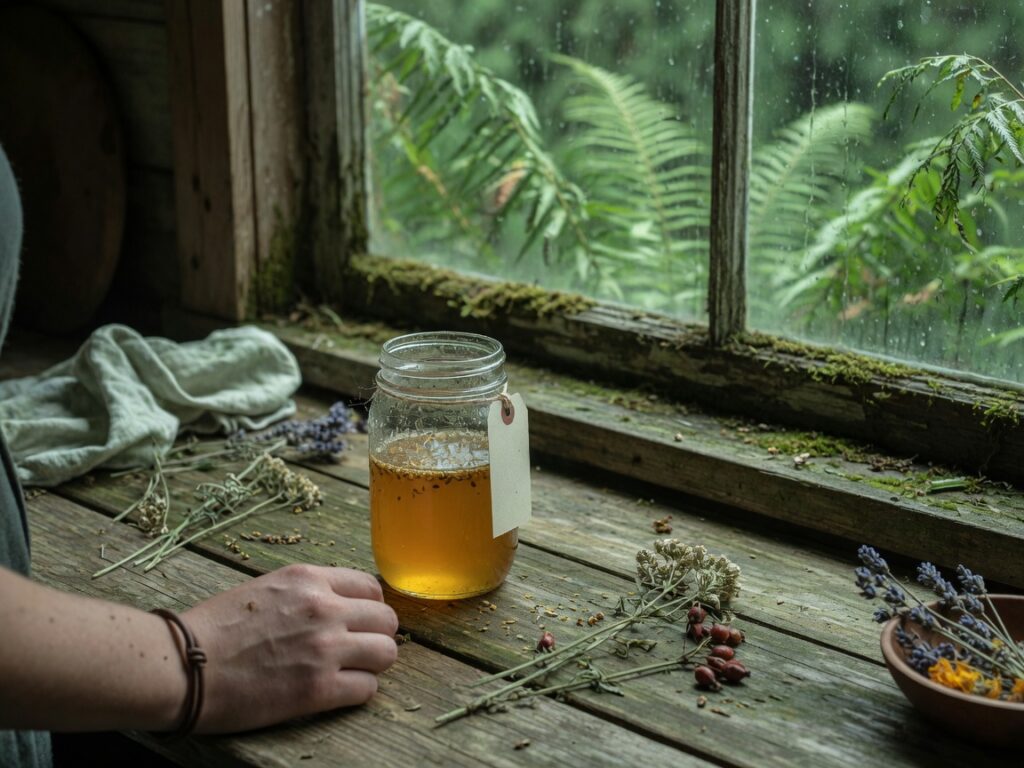
There is a jar at the back of my counter that is nothing but honey and a handful of thyme, and by November it will be the thing I reach for on the mornings the fog doesn’t lift off the Dungeness until noon. A spoonful in hot water, and that’s the whole ceremony. It isn’t medicine and I don’t sell it as such — it’s a warm, faintly resinous honey that tastes like the garden did in July, and that is reason enough to make it.
Herbal honey is the easiest preparation I teach a beginner, easier than a tincture and far easier than a salve. You are not extracting anything difficult or waiting on alcohol to do slow work. You are letting honey — which keeps more or less forever — sit against a dried herb until it takes on the flavor and the character of that plant. That’s it. If you can fill a jar, you can make it.
The one honest caution up front, said once because you’re an adult: use only plants you can name with certainty, and keep it to the familiar culinary and garden herbs until you know your wild plants cold. Honey is a wonderful carrier, which means it will just as happily carry a mistake. When in doubt, leave it out.
You’ll also want a clean wide-mouth glass jar with a good lid — a pint mason jar is what I use, but any clean jar you can get a spoon into will do. I keep the pantry version of this simple; the honey does the work, not the equipment.
Choose the herb — and dry it first
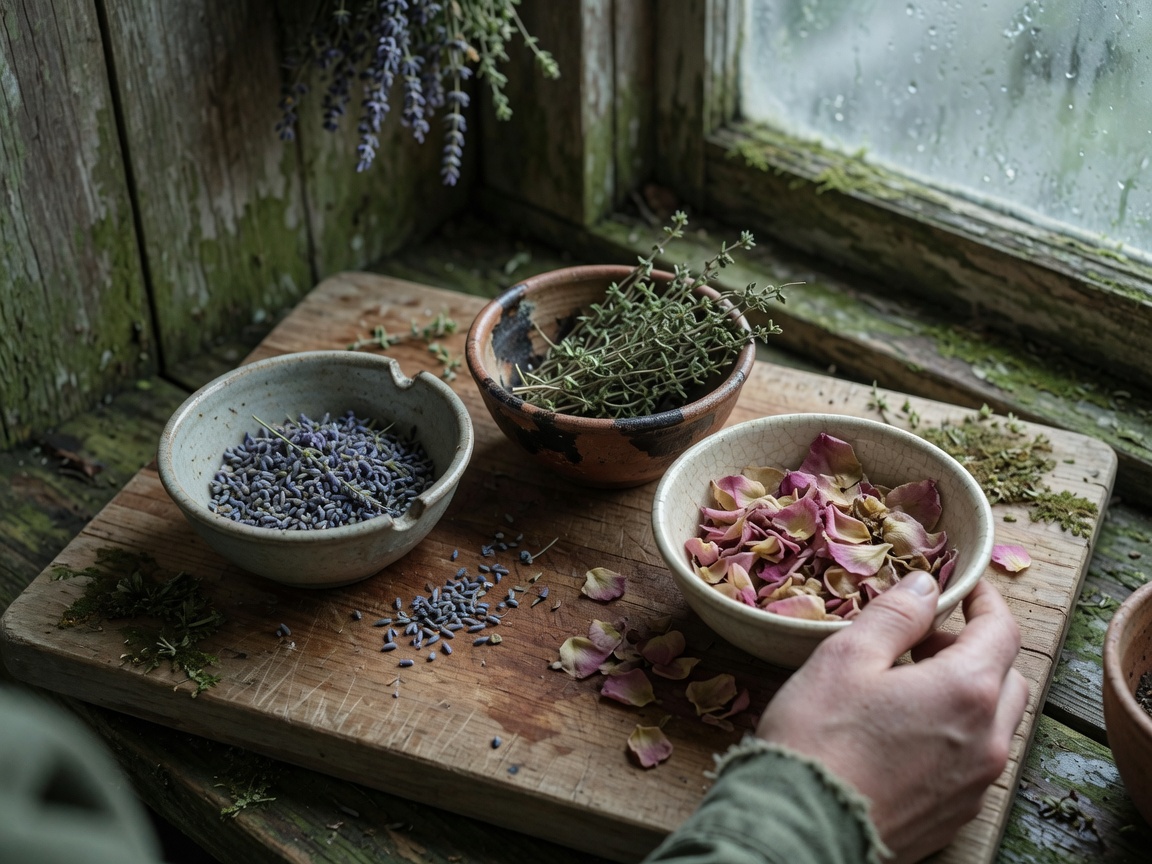
The plants that make the best herbal honey are the ones you already know and cook with: thyme, sage, rosemary, lemon balm, garden mint. Elderflower, if you gathered and dried some in June, makes a honey I’d put up against anything on a store shelf. Rose petals or dried rose hips give you a honey with a soft floral edge — if you put up hips this fall, a spoonful of them belongs in a jar of honey as much as in a syrup. I keep to what I recognize on sight and have used for years. This is not the preparation to experiment with a half-known plant in.
Dry the herb before it goes in. This is the part beginners skip and then regret. Fresh herbs carry water, and water is what turns a jar of honey into a jar of fermenting honey three weeks later. A little bubbling and a boozy smell means water got in — sometimes that’s a feature (fermented garlic honey is made on purpose), but for a clean, shelf-stable culinary honey you want the herb bone-dry going in. If you’re not sure yours is dry enough, it isn’t; give it another few days. It’s worth knowing how to store dried herbs so they last, because the same dryness that keeps a jar of dried thyme good on the shelf is what keeps your honey from spoiling.
Fill the jar and let it sit
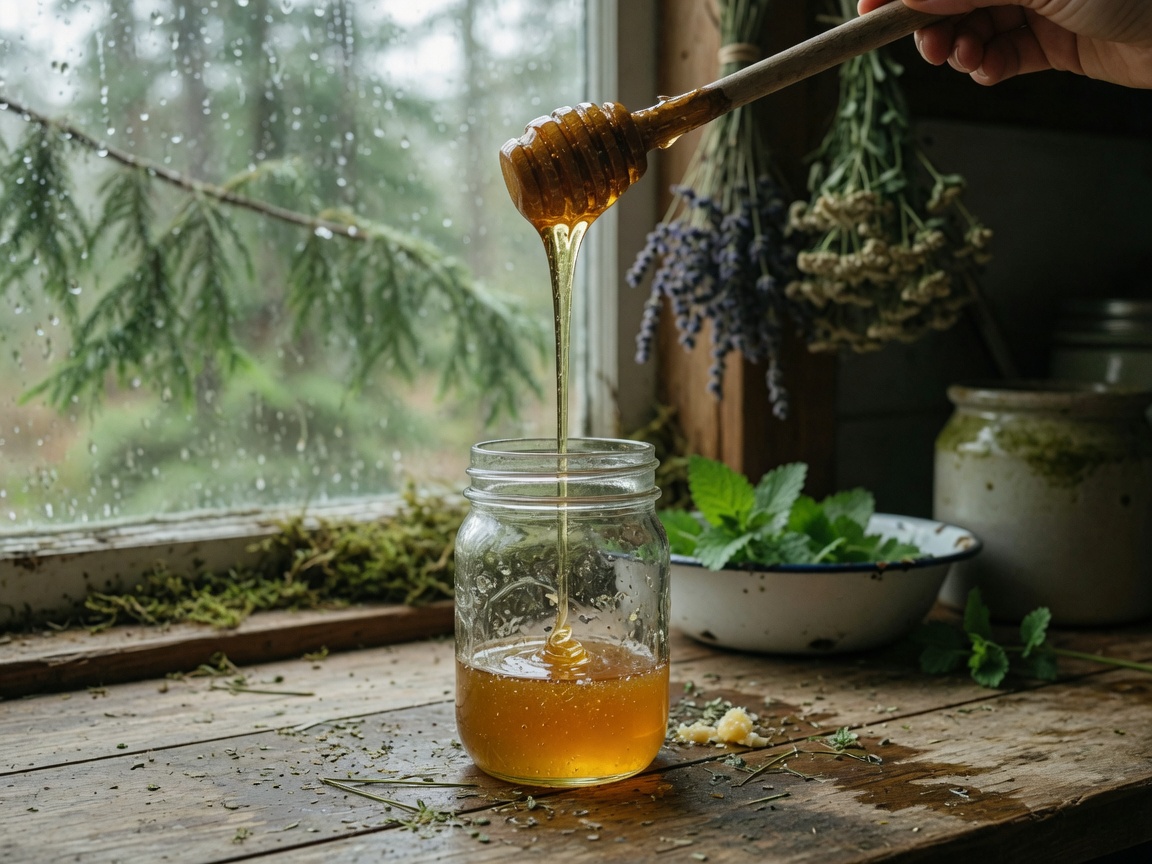
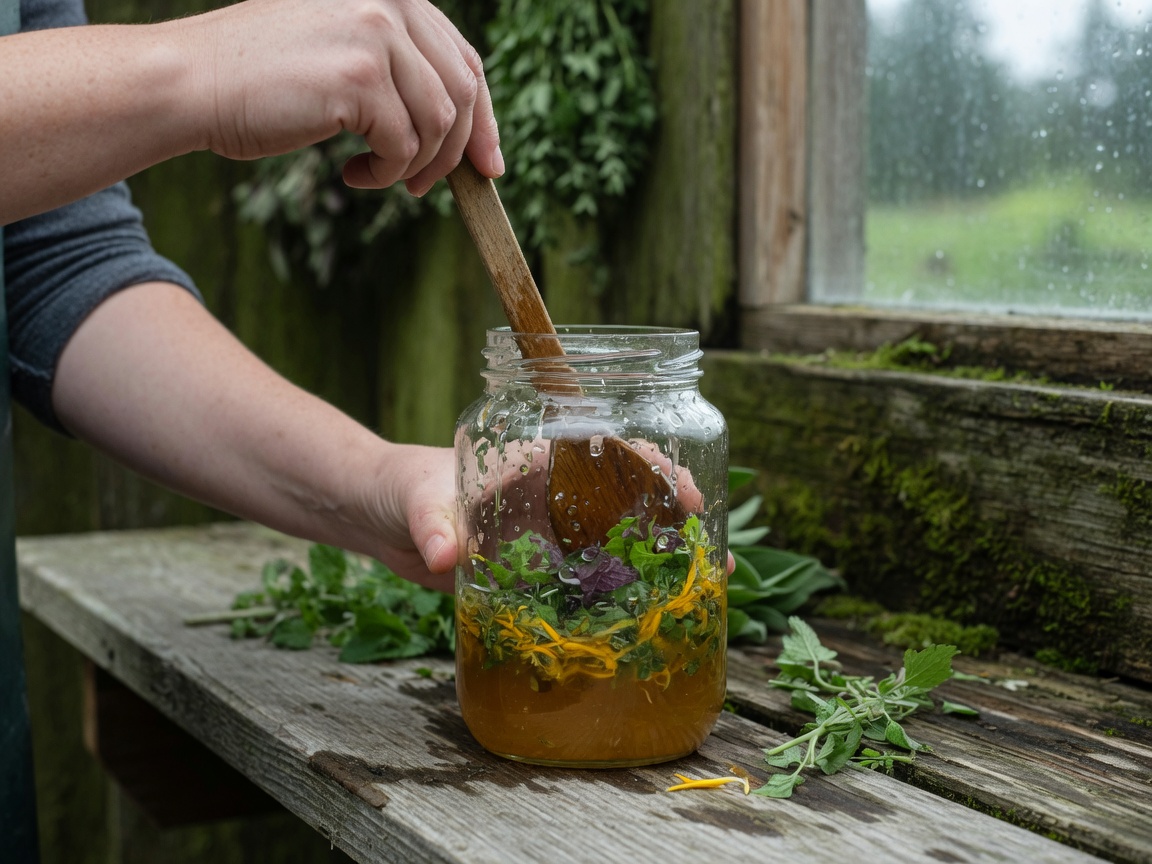
Here is the entire recipe, and you can hold it in your head. Put your dried herb loosely in the bottom of a clean jar — a rough guide is enough herb to fill the jar a quarter to a third of the way, not packed. Pour honey over it slowly, letting it work down through the leaves; go slow, because honey is stubborn about air pockets and you want the herb covered. Poke a clean chopstick or the handle of a spoon down the sides to release the trapped air, top off with more honey so everything is submerged, and wipe the rim.
Cap it and set it somewhere out of direct light. A cupboard is fine; a sunny windowsill is not — heat and light don’t help it and can push it toward that fermenting edge. Then the only real work begins, which is turning the jar over every day or two. Flipping it keeps the herb coated and moves the flavor along. In my kitchen a honey is ready in about two weeks for a gentle one and three to four for a strong one. Taste it off the spoon as you go; when it tastes the way you want, it’s done. There’s no ruining it by waiting longer.
Strain it clear, or leave the herb in
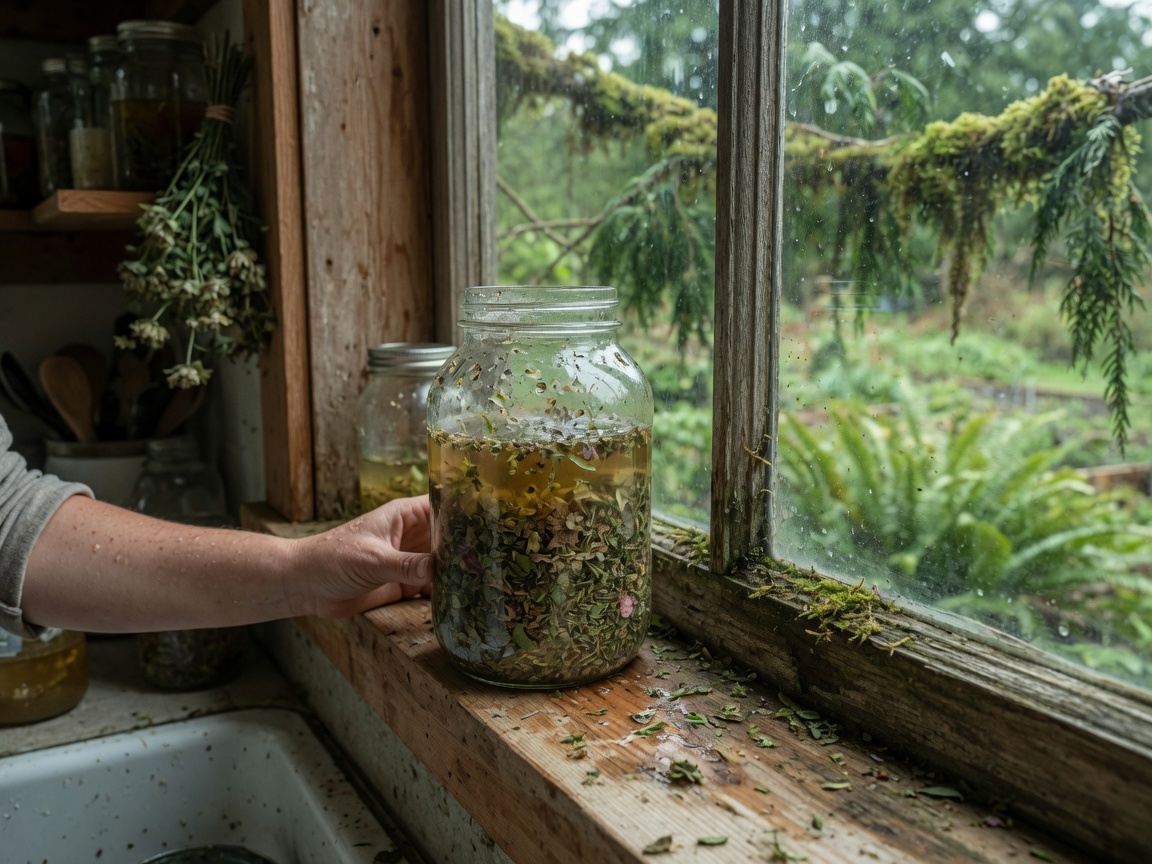
Now you decide what kind of honey you have. If you used a leafy herb like thyme or mint and you want it clean and pourable — for gifts, or just for a jar that behaves on a spoon — warm it gently and strain it. Set the jar in a pan of hot (not boiling) water until the honey loosens, then pour it through grade-90 cheesecloth into a clean jar. The tight weave is what makes the difference here; a coarse strainer leaves flecks of leaf that settle out later and make a nice honey look homemade in the wrong way. Let it drip, then gather the cloth and wring the last of it — there’s always more honey hiding in the spent herb than you’d guess.
Or leave the herb in. A sprig of thyme standing in a jar of honey is beautiful and perfectly good to eat around; you just spoon past it. For rosemary or a whole spring of lemon balm, I often leave it — the jar looks like what it is. For the little dried flowers and rose petals, I strain, because nobody wants a petal stuck to the roof of their mouth.
Put it up and use it
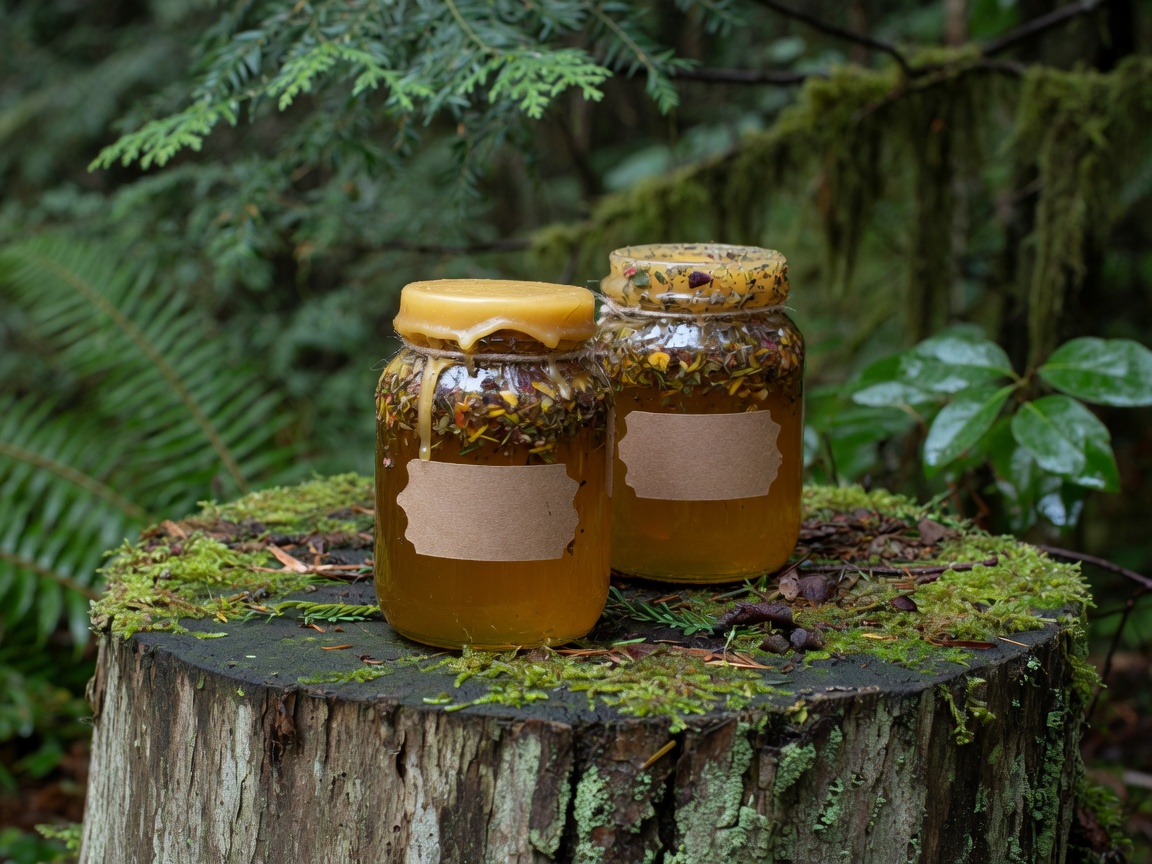
A finished herbal honey keeps for months in the cupboard — honey is one of the few preparations that doesn’t fight you on storage. Label the jar with the herb and the date, because a thyme honey and a sage honey look identical and you will not remember by January. This is the same habit that saves you with a shelf of foraged herbal tea blends: the label is the difference between reaching for the right jar and guessing.
As for using it — a spoon in hot water or tea is where most of mine goes. A thyme or sage honey stirred into warm water is the plain, old comfort my grandmother kept a jar of by the stove for a scratchy winter throat, and I keep the framing exactly that plain: it’s a soothing, good-tasting food, taken because it’s warm and it helps a rough morning feel better, not because a jar of honey is anything more than that. It’s also lovely over a biscuit, in a vinaigrette, or spooned onto a piece of sharp cheese. One real caution worth stating plainly: never give raw honey, herbal or plain, to a baby under a year old — that’s a standard food-safety rule, not a fussy one.
If you dried extra herb, this is where those small tins earn their place — the leftover thyme or elderflower keeps dark and dry until you’re ready to fill the next jar, and once you’ve made one herbal honey you’ll want to.
Where the recipe ends and the knowing begins
Filling a jar with honey is the easy part, and I’ve now given you the whole of it. Which plant to reach for, when to gather it, how to be certain of what you’re holding, and how the generations here actually used it — that’s the longer education, and it’s the part that turns a nice jar of honey into something you trust enough to hand across the table.
That’s most of what went into my book, Pacific Northwest Medicinal Plants — 115 of the wild plants of this coast, how to identify each one without guessing, when to gather it, and how it was traditionally prepared and used. The honey is a good place to start. The book is how you learn what else belongs in the jar.
