How to Make Elderberry Syrup: A Simple Forager’s Recipe
A safe elderberry syrup recipe from thirty years foraging the Olympic Peninsula — which elder to pick, why the berries must be cooked, and how to put it up.
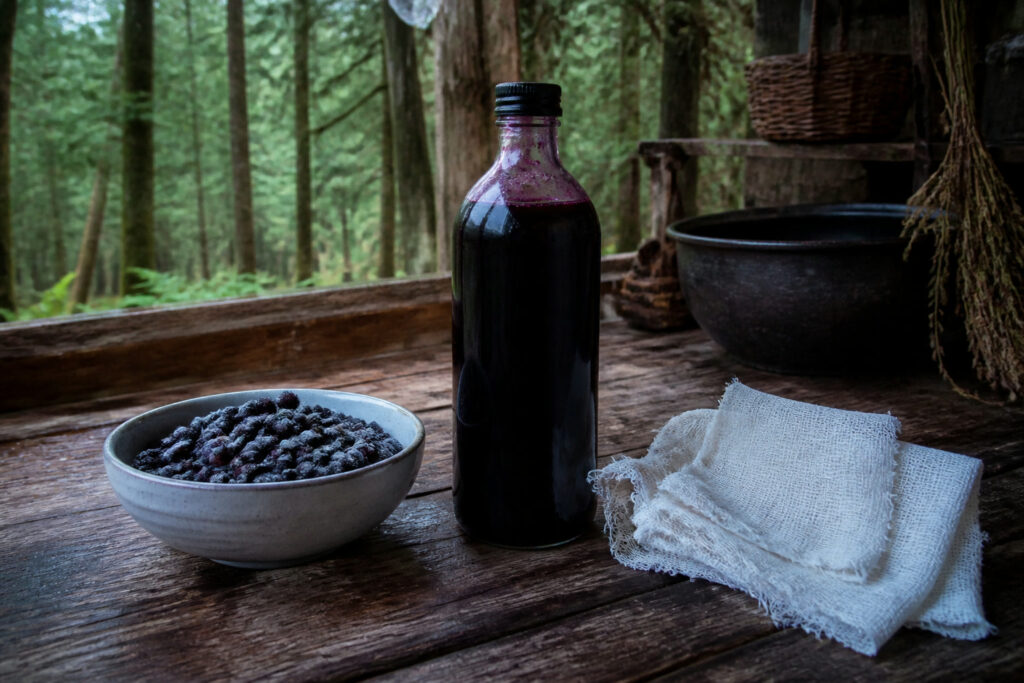
The blue elderberries come ripe here in the last stretch of summer, and I gather most of mine in the first weeks of September along the old fencerows on the dry side of the Peninsula. The flowers were a June affair — flat creamy umbels I use for cordial — but the fruit is what I wait for now, hanging in heavy powder-blue clusters that bend the branch down where I can reach it. A good year gives me more than I can put up, and I put up a lot.
Elderberry syrup is the preparation I make the most of every fall, and it’s one of the more forgiving things a beginner can try — with one hard rule I’ll get to before you touch a pot. It keeps in the refrigerator for weeks and in the freezer for months, and a spoonful over pancakes or stirred into a mug of hot water on a gray afternoon is one of the small good things about this season. Here’s how I gather and make it.
You’ll also want clean glass bottles or jars for the finished syrup. I don’t have a specific listing I’d stand behind to send you to, so use well-washed swing-top or screw-cap bottles you already have — a few clean juice bottles do the job as well as anything.
Pick the blue elder, and know what you’re looking at
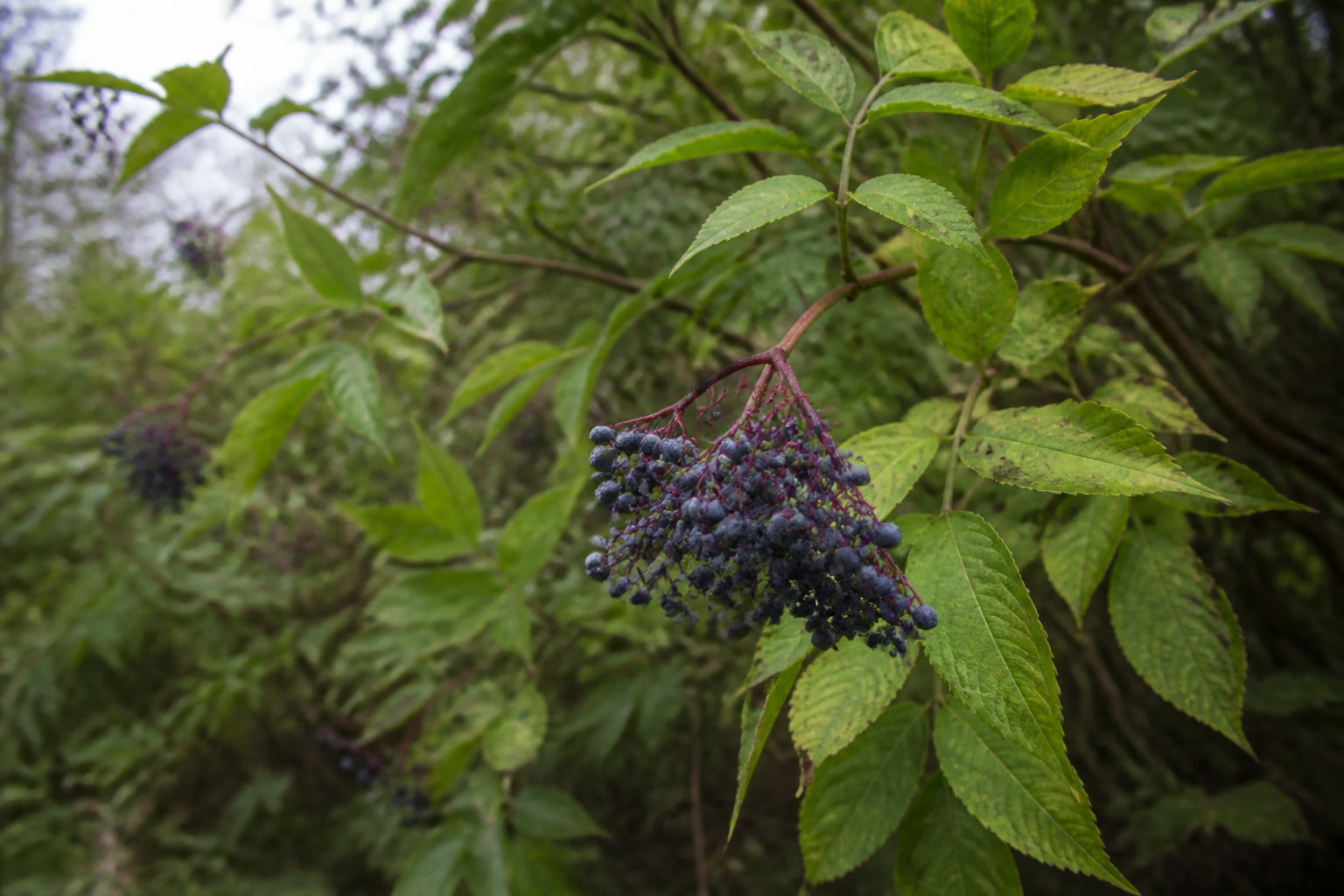
This is the part I won’t let you skip, because elder is a plant where the difference between the right one and the wrong one actually matters. On this coast we have two elders. The one I gather is blue elderberry (Sambucus cerulea, also written S. nigra ssp. cerulea) — a tall shrub with flat-topped flower clusters and, in fall, dusty powder-blue berries that look almost frosted. That waxy blue bloom is the tell.
The other is red elderberry (Sambucus racemosa), which carries its bright red fruit in a cone-shaped cluster rather than a flat one. The red is the one to leave alone as a beginner — its seeds carry more of the compounds we’ll talk about in a second, and it takes more careful handling than a first batch is worth. Learn the blue, with its flat clusters and frosted fruit, and gather only that until you know both cold.
Confirm your identification against at least two reliable sources before you gather, the way you would with anything you intend to eat, and when in doubt, leave it on the branch. Blue elderberries were an important gathered food for many Coastal First Peoples of this region, cooked and dried for winter — Nancy Turner’s Food Plants of Coastal First Peoples documents that history well, and it’s worth reading if you want to understand the plant beyond the recipe.
Why you cook them — the one hard rule
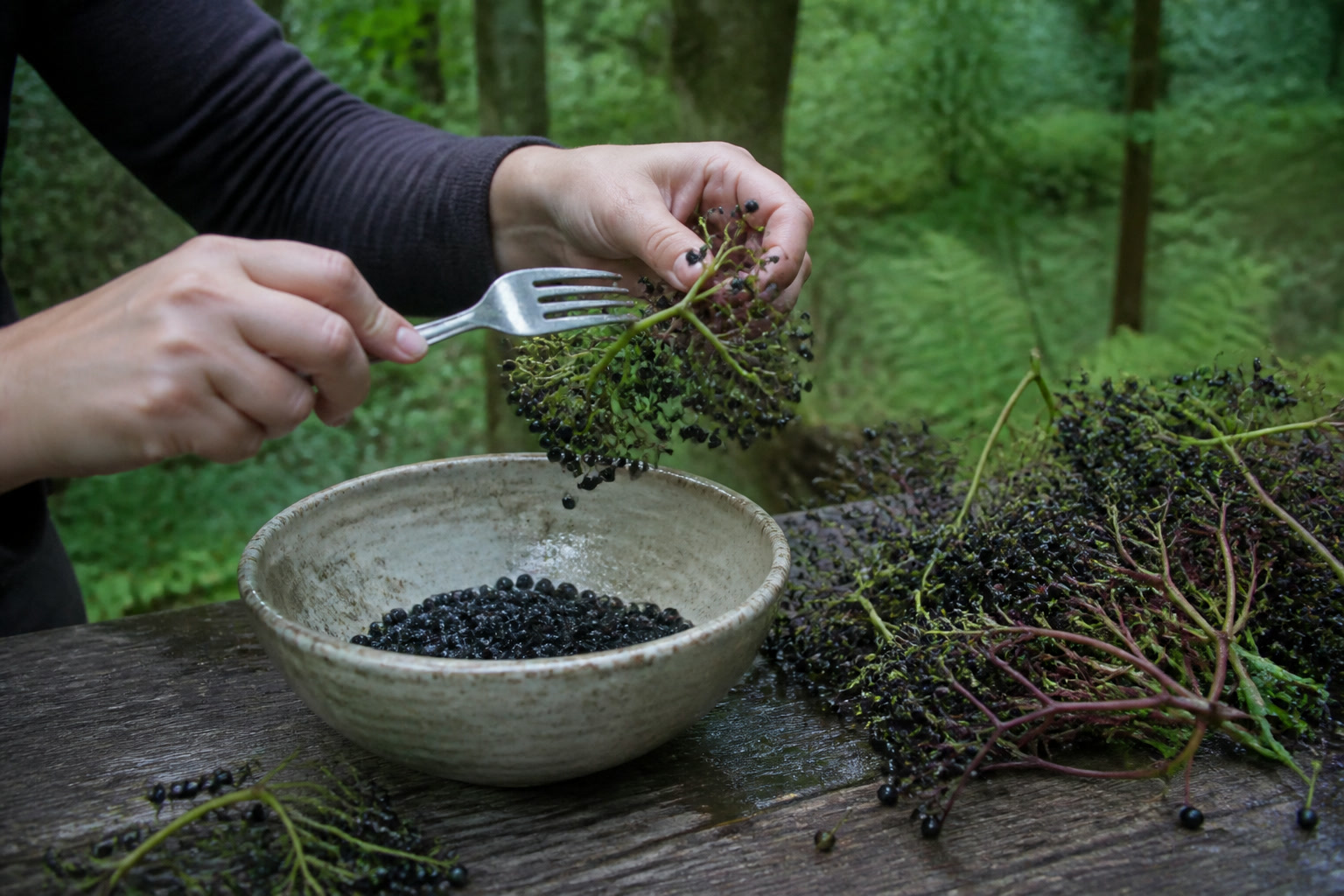
Here is the rule, and it isn’t a suggestion: cook your elderberries, and use only the ripe fruit. The raw berries, and the stems, leaves, and bark of the whole plant, contain cyanogenic compounds that can make you genuinely, miserably sick to your stomach. Cooking the ripe berries thoroughly breaks those compounds down, which is exactly why every traditional elderberry preparation is a cooked one. Nobody eats them raw off the bush, and you shouldn’t either.
So two things follow. Strip the berries off the green stems before you cook — a table fork run down each cluster knocks the ripe fruit off fast, and you want the little stems left behind, not in the pot. And cook the fruit properly, not just a quick warm-through. That’s the whole safety of it, and once you’ve done it, the rest is easy.
Make the syrup
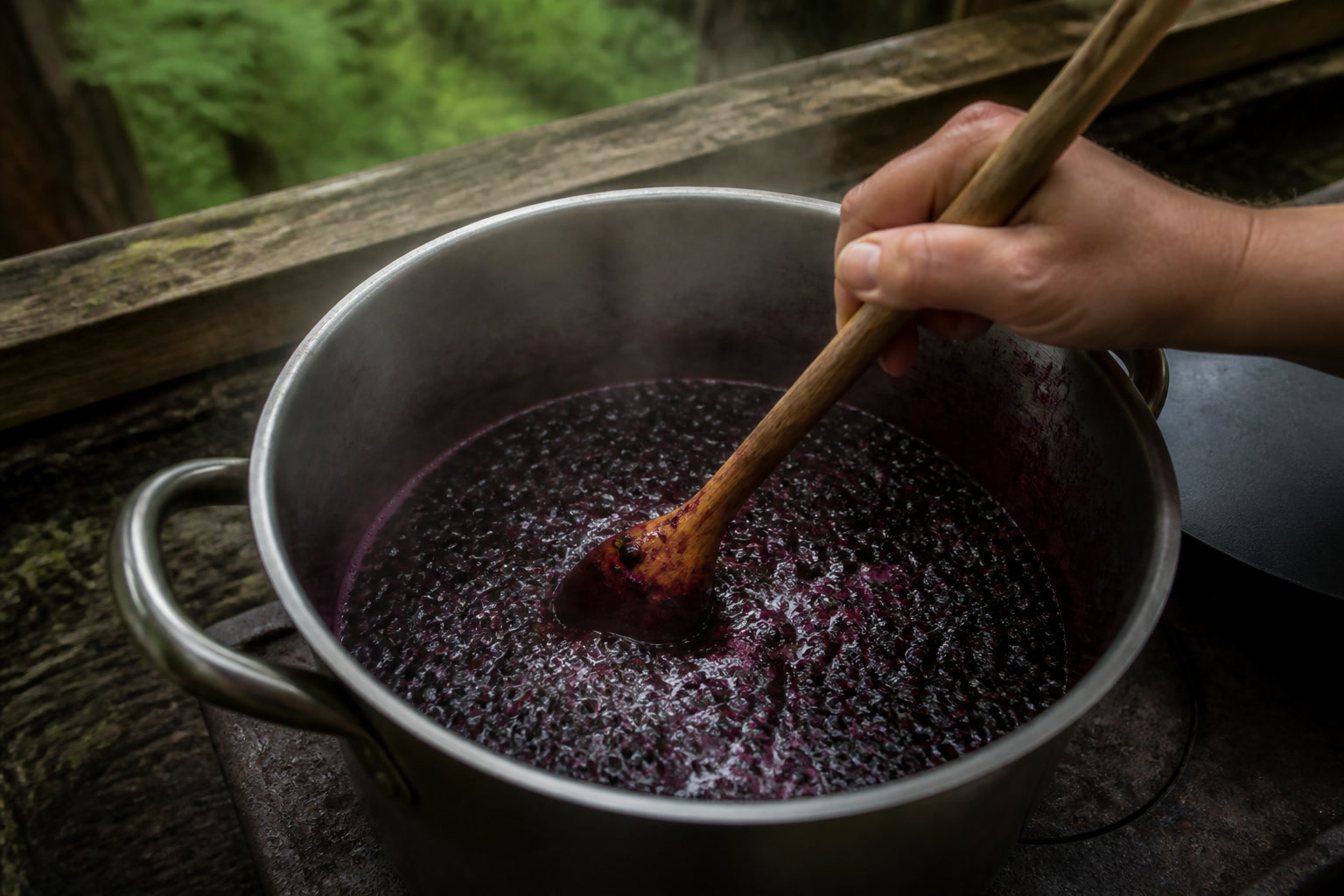
Once you’ve got a bowl of de-stemmed ripe berries, rinse them and pick out any green or shriveled ones. Put them in a pot and add just enough water to not-quite cover them — roughly a cup of water to every three or four cups of berries; you don’t want it watery. Bring it up to a boil, then drop it to a real simmer and let it go for a good twenty to thirty minutes, until the berries have collapsed and given up their deep purple juice. Mash them against the side of the pot partway through to help them along.
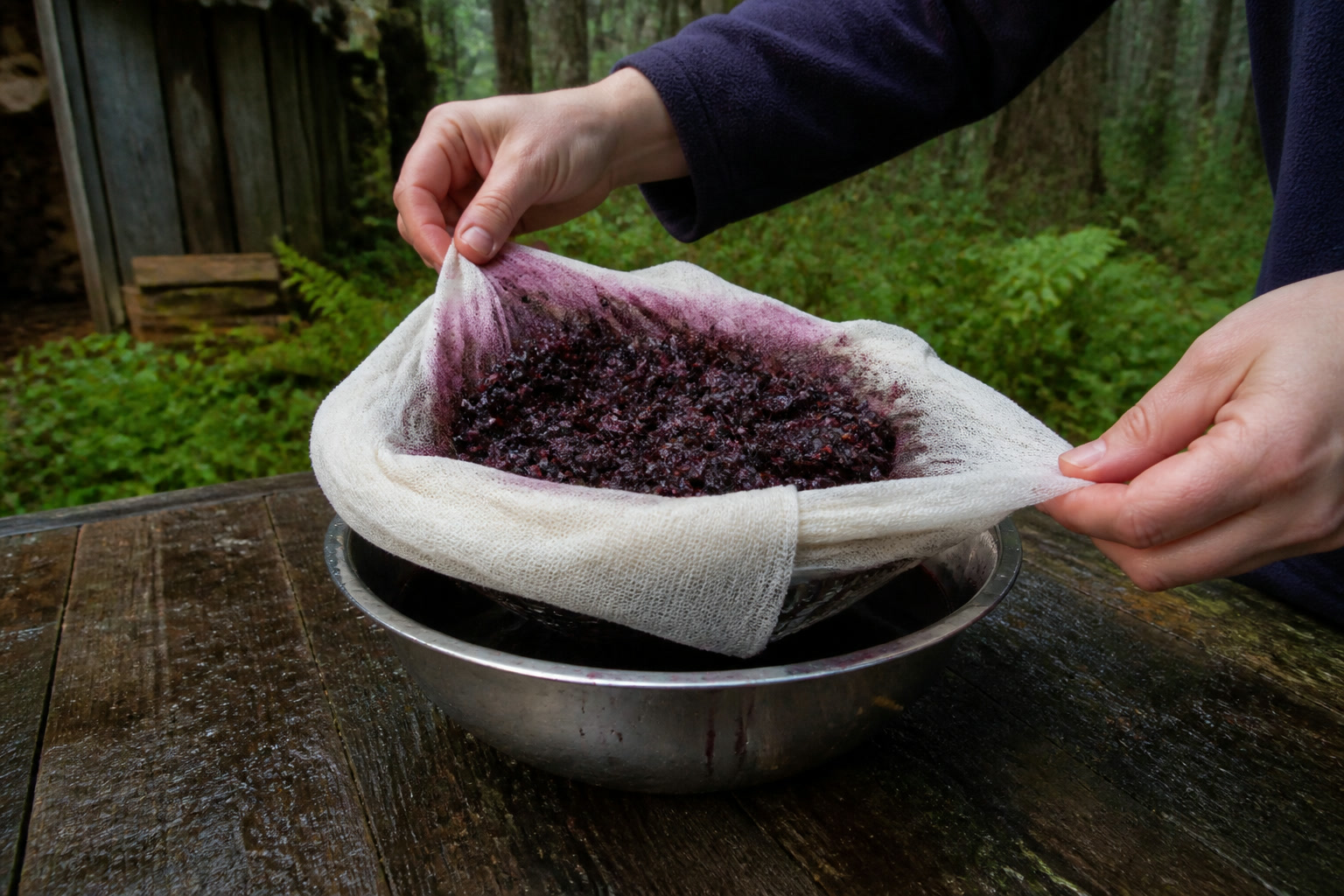
Now strain it, and strain it well. Set a colander over a bowl, line it with a doubled layer of grade-90 cheesecloth, and pour the whole cooked mess through. Let it drip, then gather the corners of the cloth and press to work the juice out while the seeds and skins stay behind. Elderberries have a lot of small seeds, and the tight-woven cheesecloth is what keeps them out of your finished syrup — a coarse mesh strainer waves them right through.
Return the strained juice to a clean pot, and sweeten it. Honey or sugar, roughly to taste — a syrup wants to be properly sweet both for flavor and to help it keep. Warm it gently just until the sweetener dissolves and it thickens a touch; you’re not trying to boil it hard again. Some folks add a stick of cinnamon or a few cloves at this stage, and it’s a nice thing to do. Then bottle it warm into your clean jars.
Putting it up for the winter
Elderberry syrup keeps in the refrigerator for a few weeks. For anything longer I freeze it in small bottles, leaving headroom for it to expand, and pull one out as I go through the winter. Label it with the date — I have lost track of more mystery bottles in the back of the freezer than I’d like to admit.
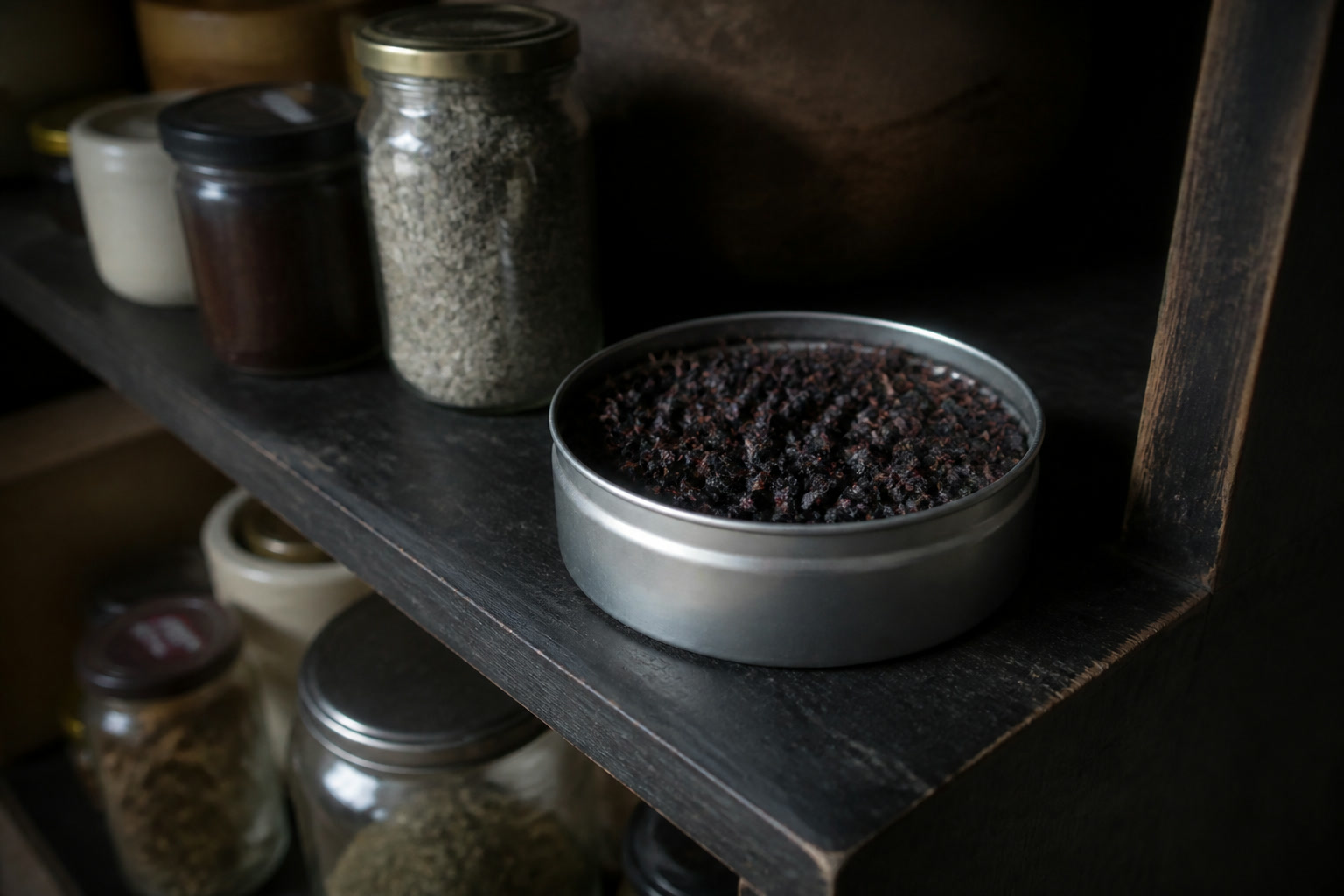
If you’ve gathered more berries than you can cook at once, dry the extras hard on a screen and store them in a small lidded tin on a dark shelf. Dried elderberries keep for months and cook up into syrup later just the same — always cooked, never raw, the same rule holding whether they’re fresh or dried.
An honest word on what it is
Elderberry has a long reputation as a fall and winter standby, and I know that reputation is most of why people go looking for it. I’ll tell you plainly what I tell everyone: I make elderberry syrup because it’s a genuinely lovely thing to have in the house when the weather turns, and I’ll leave the claims to other people. This is what the plant has traditionally been made into, put up for the cold months, and that’s as far as I’ll take it. If you’ve got something that actually needs treating, that’s a conversation for a qualified practitioner, not a jar on the counter.
That kind of plant — common, generous, and easy to get exactly one thing wrong — is the sort I spend real time on in my book, Pacific Northwest Medicinal Plants: 115 wild plants of this coast, how to tell each from the ones it resembles, when to gather, and how the generations before us prepared them safely. The syrup is one good afternoon in September. The book is how you learn the rest of what’s ripening along that same fencerow.
