How to Make an Herbal Poultice the Traditional Way
An herbal poultice is the oldest preparation there is. Here's how to make one the traditional way from fresh plantain, and where a poultice stops being enough.
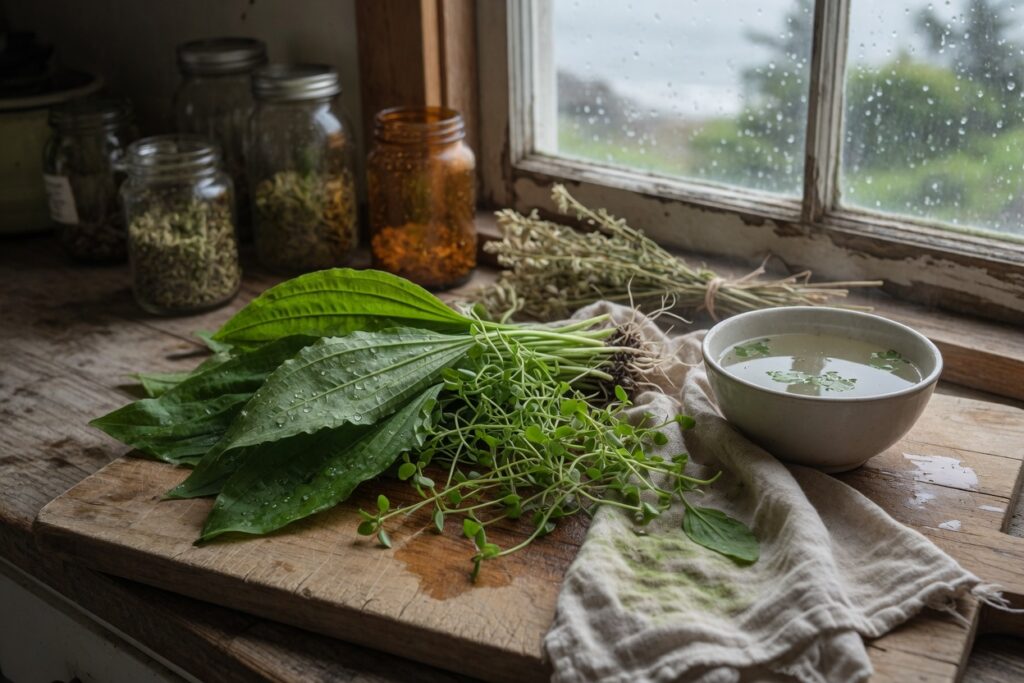
My grandmother kept a rule on the trail: whatever you were going to put on a scrape, you had to be able to name. If the plant had no name in your mouth, it stayed in the ground. She’d crouch at the edge of the gravel, pull a few broad leaves from the weeds at the trailhead, chew them into a green wad, and press it on a skinned knuckle before we’d gone another mile. That is a poultice, in its oldest and plainest form.
I’ve made them for thirty years in kitchens, in the hoop house, and once in the cab of a truck, and the method has hardly changed. Here is how I make one, which plants suit it, and the limits I’d want you to know about before you try.
You’ll also want a clean cotton cloth, a bowl, and a kettle. Nothing exotic.
What a poultice is
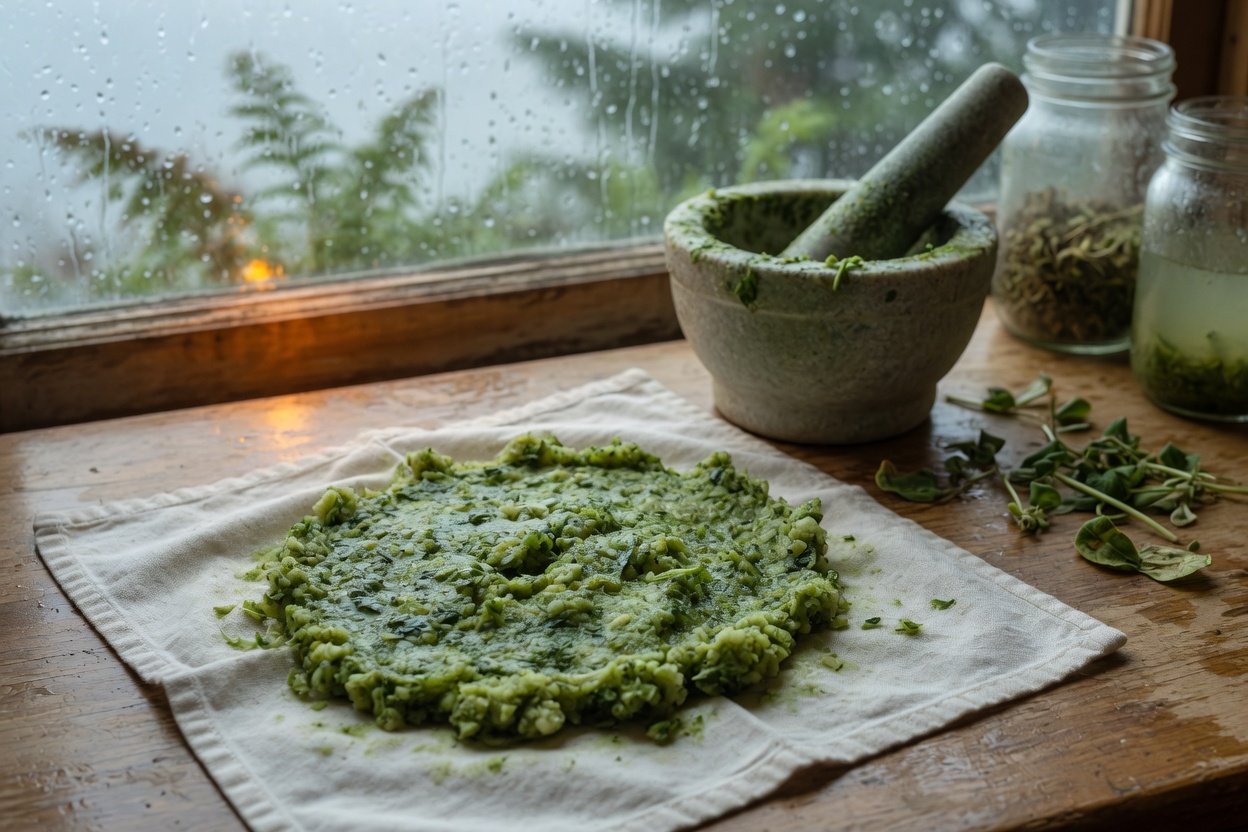
A poultice is plant material, fresh or rehydrated, mashed or lightly warmed and held against the skin with a cloth. That’s the whole idea. It differs from a salve, which is plant oil thickened with beeswax and shelf-stable for a year, and from a tincture, which is plant material in alcohol. A poultice is made fresh, used the same hour, and thrown out afterward. It has no shelf life at all.
This is traditional-use information: how people have used these plants on the skin for generations, and what my family did. It is not medical advice, it doesn’t claim to treat anything, and a poultice is not a replacement for stitches or a doctor. Anyone who is pregnant, nursing, on prescription medication, or allergic to plants in the same family should check with someone qualified first.
Pick a plant you can name
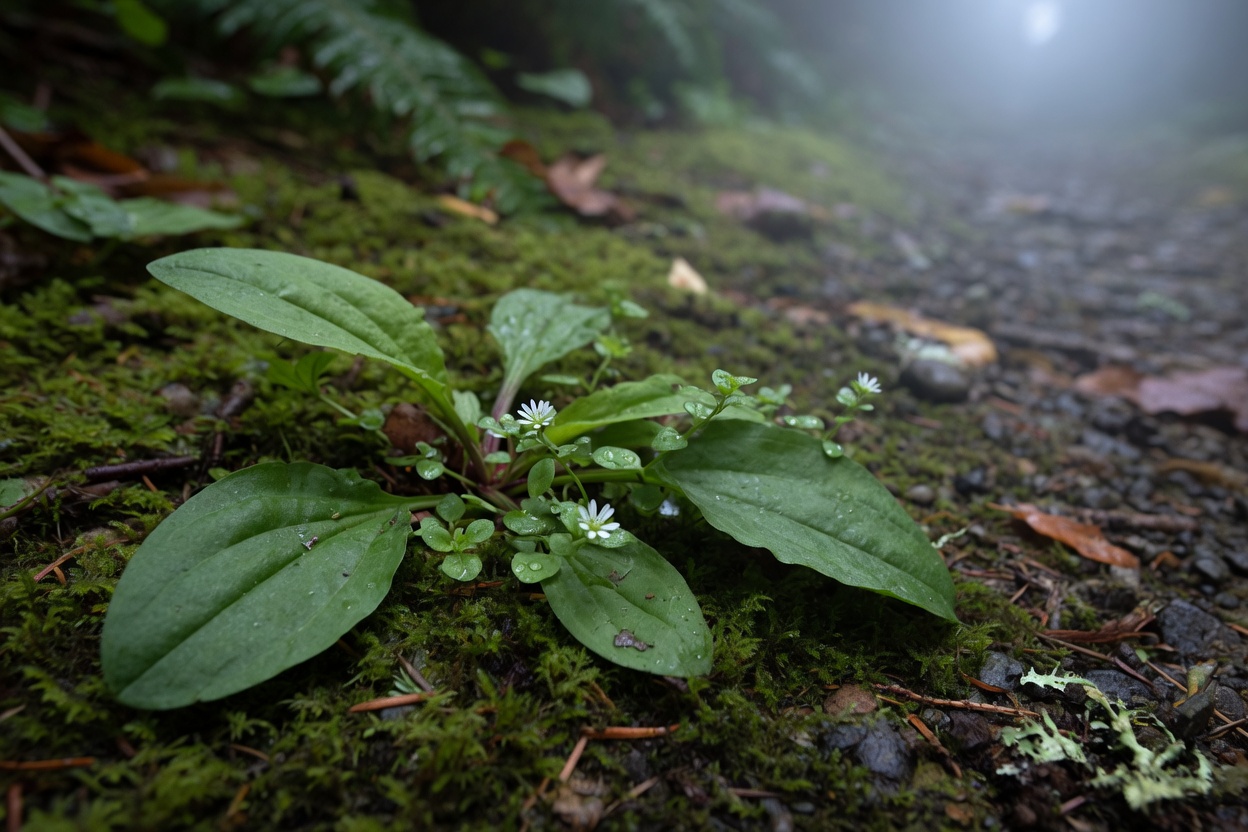
For a first poultice I send people to plantain, because it’s common, it’s hard to confuse once you know it, and you can find it nearly anywhere there’s a footpath. Plantago major, broadleaf plantain, grows in a flat rosette of oval leaves. It came to this continent with European settlers and followed them everywhere, and I find it in the cracks of my own driveway.
Here is how you know it:
Look at the veins. Plantain leaves have three to seven thick veins that run parallel from the stem to the tip. Tear a leaf slowly and the veins pull out like strings from celery. No other common weed does that.
Look at the stalk. In summer a single leafless spike rises from the center, covered in tiny green seeds. No branches, no leaves on it.
Look at the feel. The leaf is smooth, a little leathery, and not fuzzy.
The look-alike I want you to keep away from is foxglove, which grows a rosette in its first year around old homesites and garden edges, and which is toxic. Foxglove leaves are soft, hairy, and have a network of veins like a net, not parallel strings. If the leaf is fuzzy, leave it. Don’t make a poultice from anything on one book’s word, one app, or this page. Confirm with several good guides and, if you can, someone who has gathered it before. When in doubt, throw it out.
Where to gather
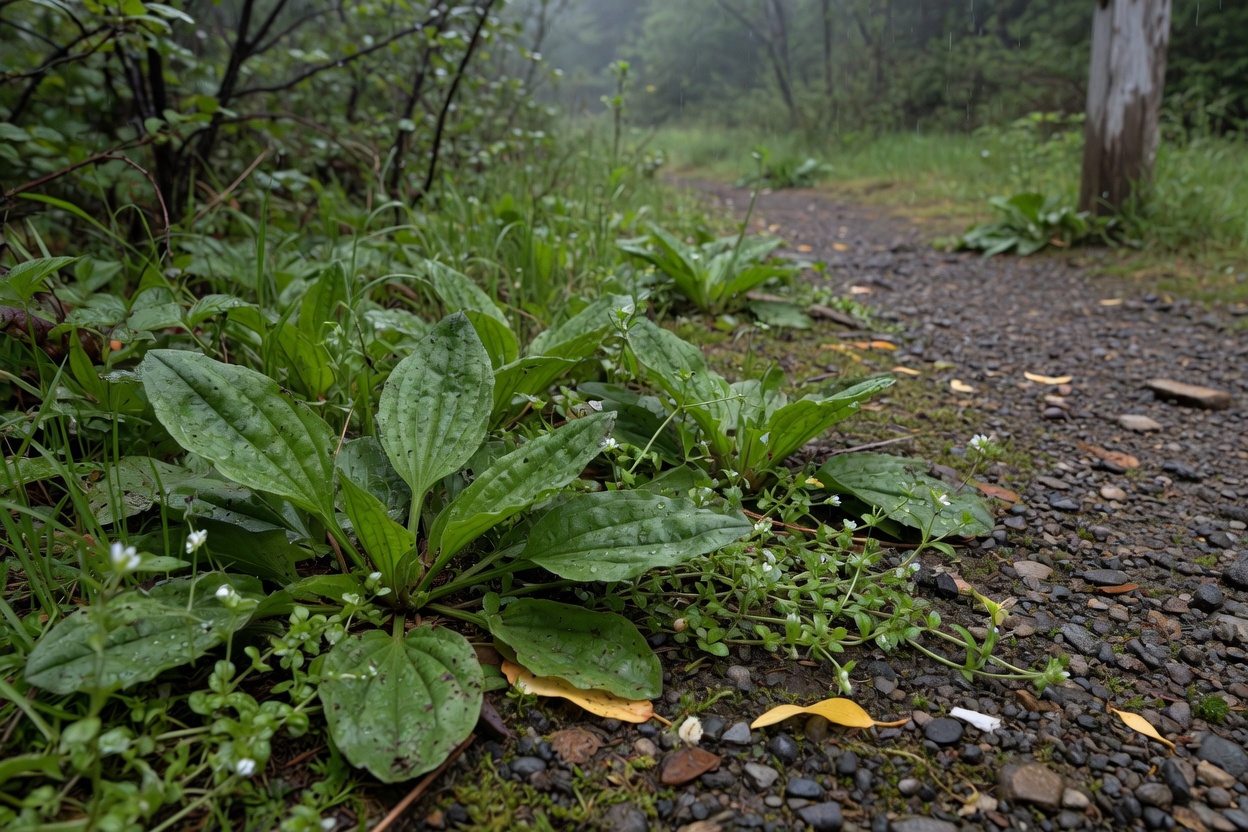
Choose a clean spot. Plantain loves trailheads, lawn edges, and roadsides, and those are the places that get sprayed, salted, and driven over. Don’t gather beside a road, from a lawn that’s treated, or from a ditch that takes runoff. A corner of my own garden or a back pasture where I know what’s been put down is where I pick.
In the Pacific Northwest the plant stays green nearly all year if the frost stays light, which makes it one of the few poultice plants available in November. I lift a whole clump with the hori-hori when I want leaves with the crown attached, and I only take what I’ll use today. Plantain is common, but a plant I leave alone keeps making leaves.
Method one: the fresh poultice
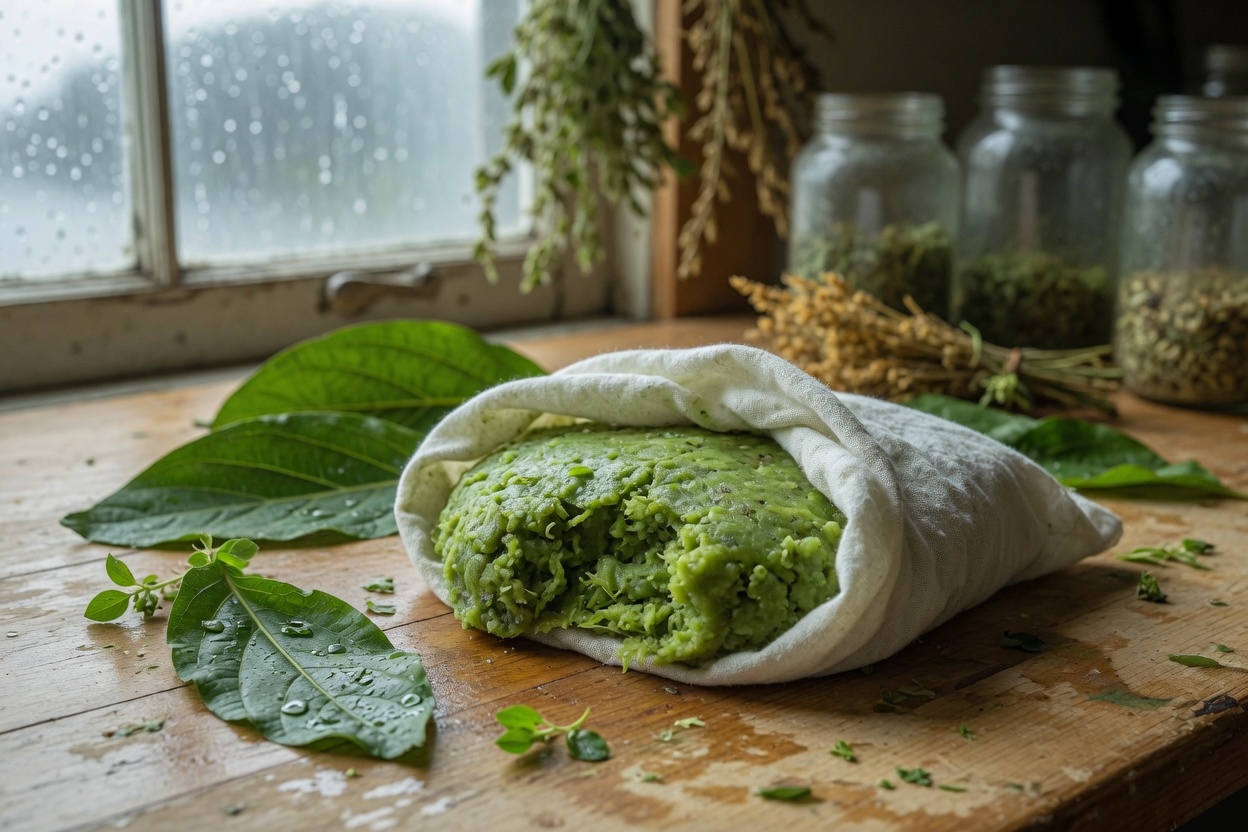
This is the version my grandmother made, and it still works.
1. Rinse the leaves. Cold water, a gentle shake, and a pat dry on a clean cloth. Grit and bugs don’t belong on skin.
2. Crush them. Two or three leaves is plenty for a small area. Bruise them with the flat of a spoon or a clean rolling pin until they’re wet and green, or chew them if you’re out on a trail and you know the plant, which is how I learned it. A mortar works if you have one.
3. Apply and wrap. Lay the crushed leaves on the skin, then hold them in place with a clean wrap. A square of cheesecloth folded in half over the plant, then secured with tape or a strip of cotton, keeps everything where it belongs and lets the area breathe.
4. Replace it. Leave it on for a short while, then take it off and throw it out. A poultice that sits for hours turns warm and slimy, which is a fine place for bacteria to thrive. I change mine within the hour.
Method two: the warm poultice from dried herb
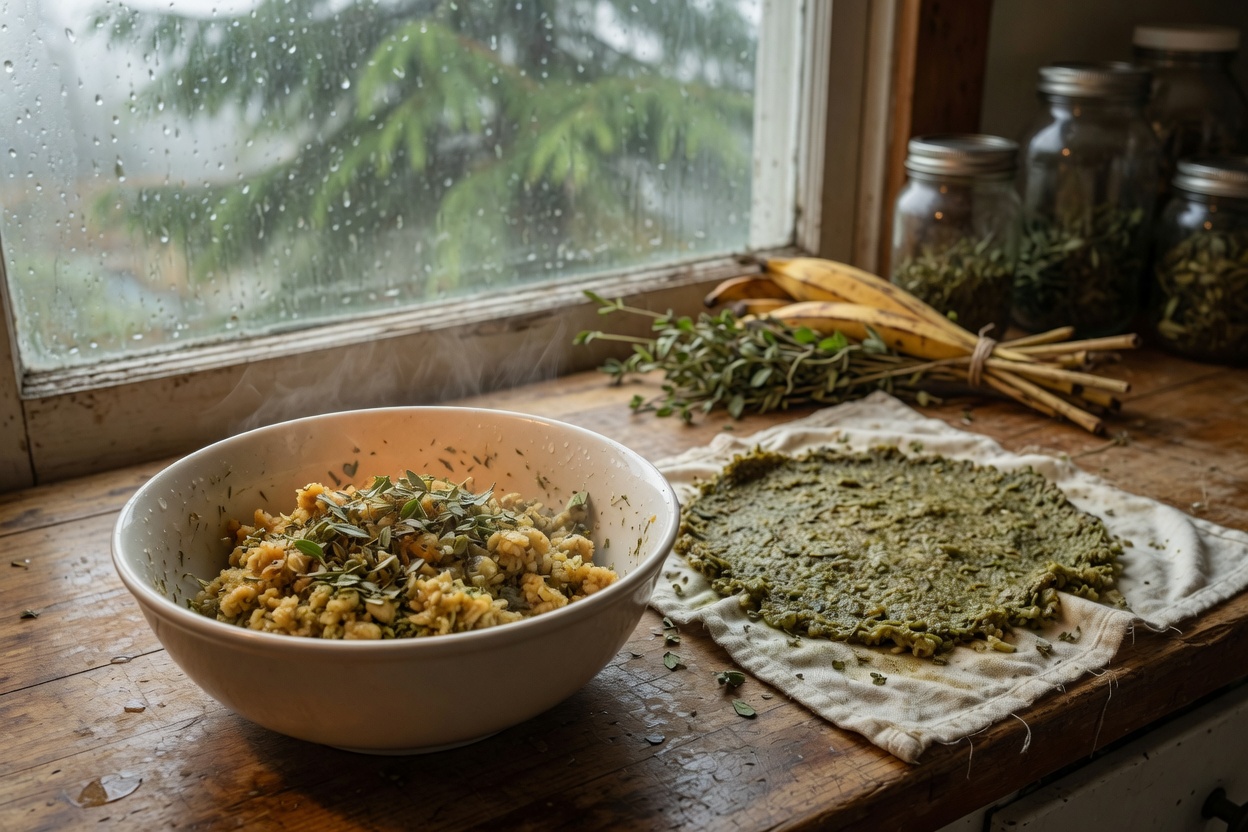
In midwinter, when the plantain is under frost, I work from the dried herb I put up in summer. If you need a refresher on keeping it sound, my notes on storing dried herbs so they last cover it, and I keep mine in wide-mouth jars out of the light.
Crumble a tablespoon or two of dried leaf into a small bowl. Pour just enough hot, not boiling, water over it to make a damp paste, and let it sit for a couple of minutes until it cools to comfortably warm. Test it on the inside of your wrist first. If it’s too hot for your wrist, it’s too hot for a scrape. Spread the paste on a square of cheesecloth, fold it over, and lay the packet on the skin. Remove it when it cools, usually after twenty minutes or so.
The wet, warm cloth does half the work here. That’s worth saying plainly, because it’s easy to credit the plant for something the warmth did.
What a poultice is for, and what it isn’t
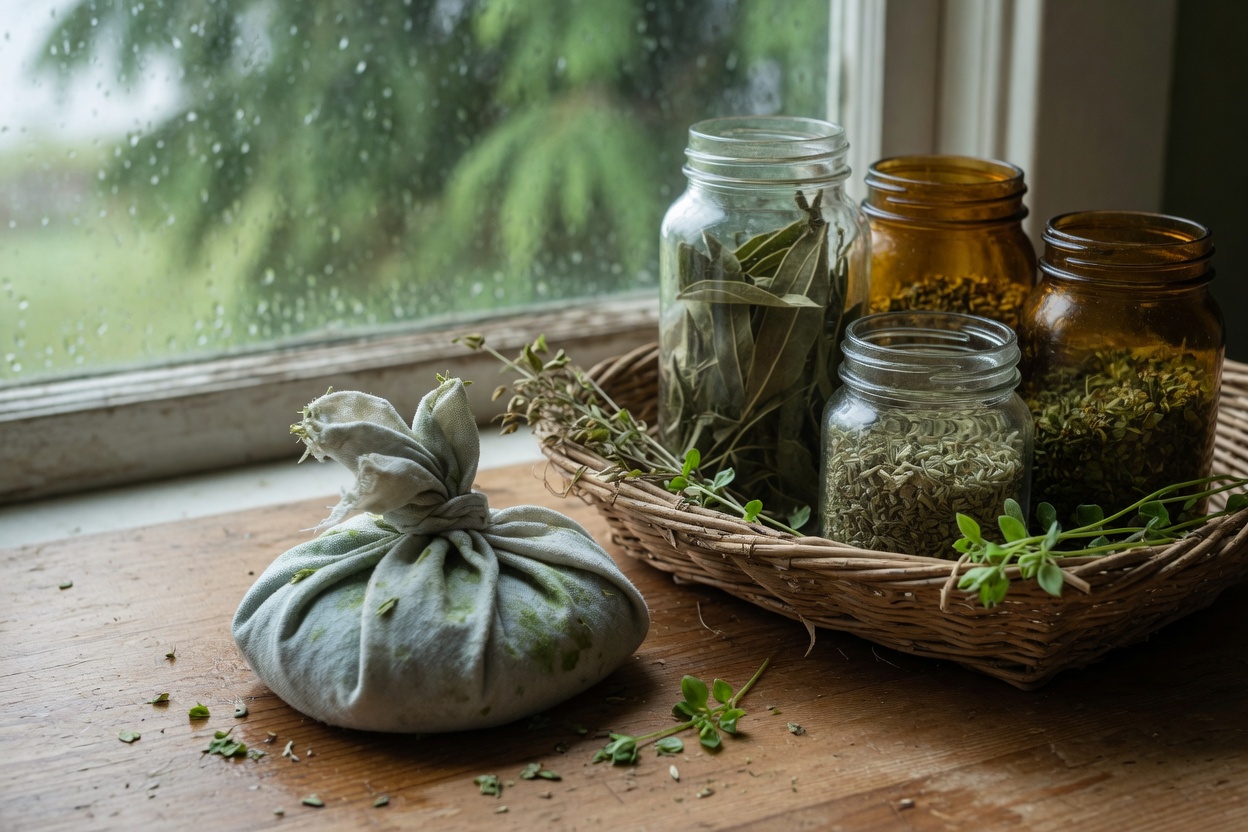
Traditionally, poultices of plantain and similar plants went on insect stings, small scrapes, and sore patches of skin. That is the extent of what I’d say, and it is what the plants were used for in the households I came from.
I’ll be just as plain about the other side. A deep cut, a puncture wound, an animal bite, anything with grit you can’t get out, or any wound that is red, hot, swelling, or leaking is a job for a doctor. I have used a plantain poultice on a thorn scratch and a bee sting, and I’ve also driven to urgent care for a gash that needed stitches, and I don’t confuse the two. Don’t put plant material in an open wound. A poultice belongs on intact skin or the lightest of scrapes, after you’ve washed it clean.
If you want something that keeps, a salve is the next step. I wrote about how to make your first herbal salve, which uses an infused oil and beeswax and sits on the shelf for a year. For a plant you’ve crushed fresh, though, the old way is the old way.
What I’d tell a beginner
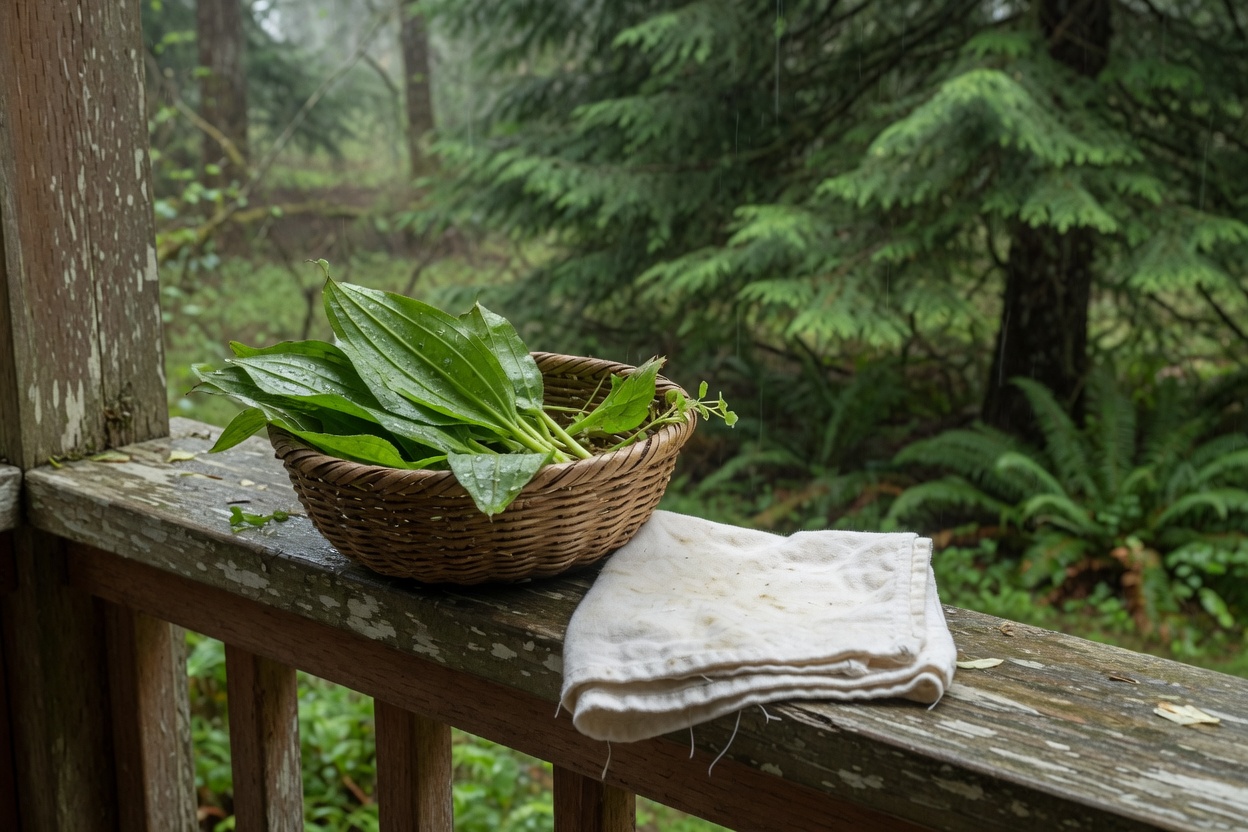
Start with one plant, in your own yard, in a spot you trust. Make a small poultice, do a patch test on your forearm first for skin sensitivity, and keep notes about what you used and when. The first time you do it, you’ll realize how little there is to it, and how much of the work is in knowing the plant.
That knowing, which plants to trust, how to tell them from their neighbors, and how the people here worked with them before any of us wrote it down, is what I put into my book, Pacific Northwest Medicinal Plants. The poultice is the easy part.
