How to Make an Herbal Oxymel (Honey and Vinegar)
How to make an oxymel — the old honey-and-vinegar herbal preparation — step by step. The ratio I use, which herbs to start with, and how to store it for winter.
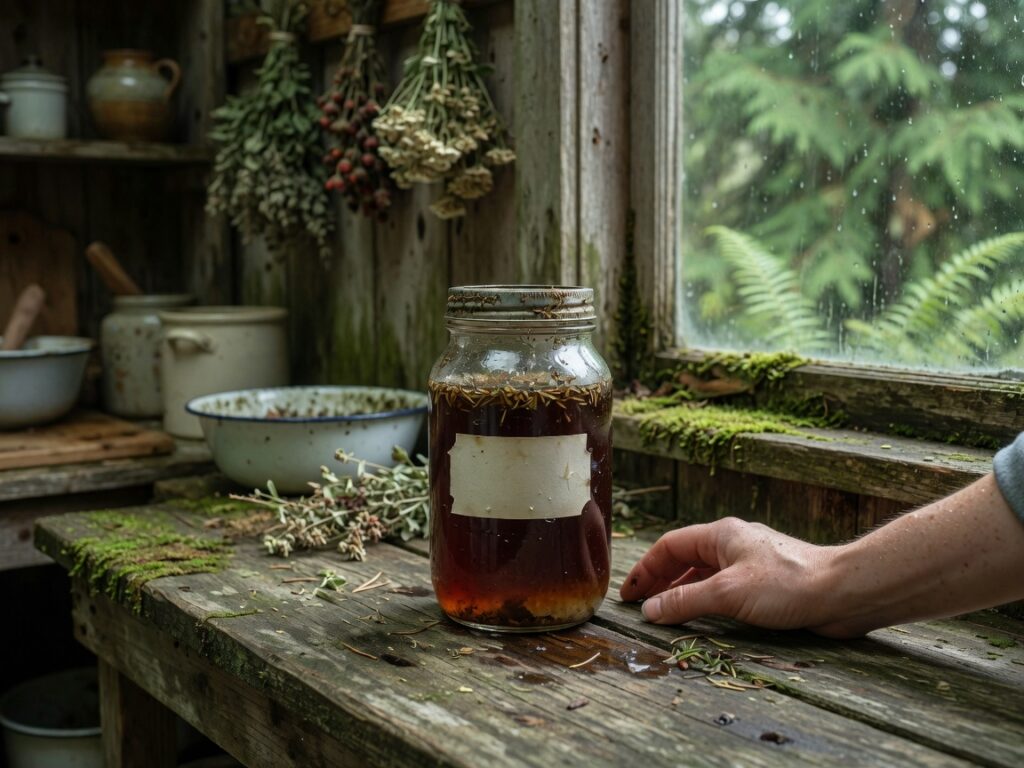
An oxymel is one of the oldest preparations in the kitchen, and one of the simplest. The word is Greek — oxymeli, “acid and honey” — and that’s the whole recipe: honey, vinegar, and a handful of herbs left to sit together until the two have pulled the character of the plant into themselves. No special equipment, no heat, nothing you can’t already find in your pantry. If you can stir honey into a jar of vinegar, you can make one.
I keep a jar of it going through the cold months out of plain habit — the same habit my grandmother had on the Olympic Peninsula, where a shelf of dark bottles lived by the stove from first frost to spring. This is a kitchen tradition, not a medicine cabinet, and I’ll keep it in that lane: I’m going to tell you how it’s made and how the old hands used it, and leave the rest to you and your own good sense. What follows is exactly how I’d walk a neighbor through their first jar.
Start with the herbs, and keep them simple
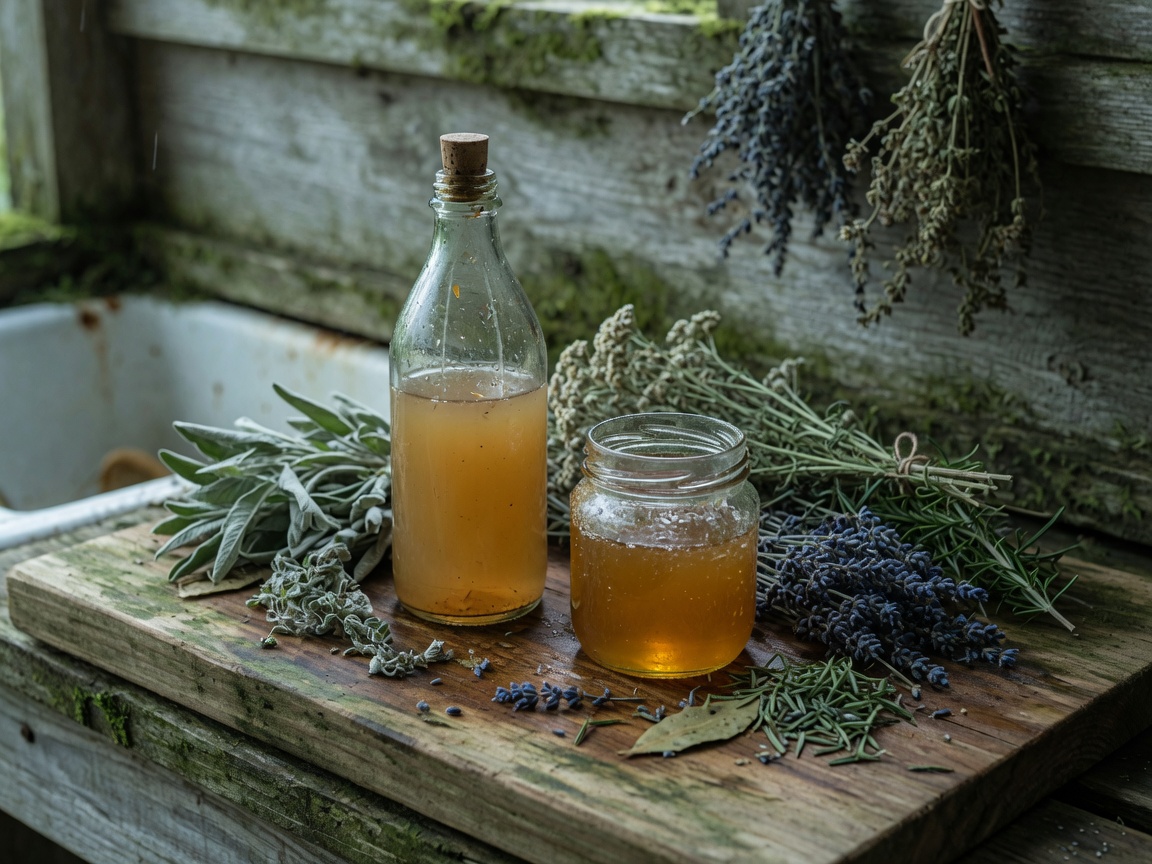
The mistake I made with my first oxymel was crowding it — I threw in everything on the drying rack and ended up with a jar that tasted like all of it and none of it. Start with one plant, or two that belong together, and let them speak.
For a first winter jar I’d point you toward the kitchen-garden aromatics: rosemary, thyme, and sage. They’re impossible to get wrong, they hold their oils well in vinegar, and their flavor was made for the cold half of the year. If you want to bring the woods in, a small handful of Douglas-fir or grand-fir tips (Pseudotsuga menziesii, Abies grandis) gives a bright, resinous, almost citrus note — the same tips I use for conifer-needle tea. Rose hips, split and seeded, lend a tart red color and a flavor like sour apple.
One honest word on the wild ones, said once and then trusted to you: take a plant into your kitchen only when you can name it with certainty, confirmed against more than one reliable source and, better still, an experienced local. Vinegar and honey don’t tame a plant’s character — they carry it. That caution applies to the foraged tips and hips, not to the rosemary in a pot on your sill.
Combine the honey and the vinegar
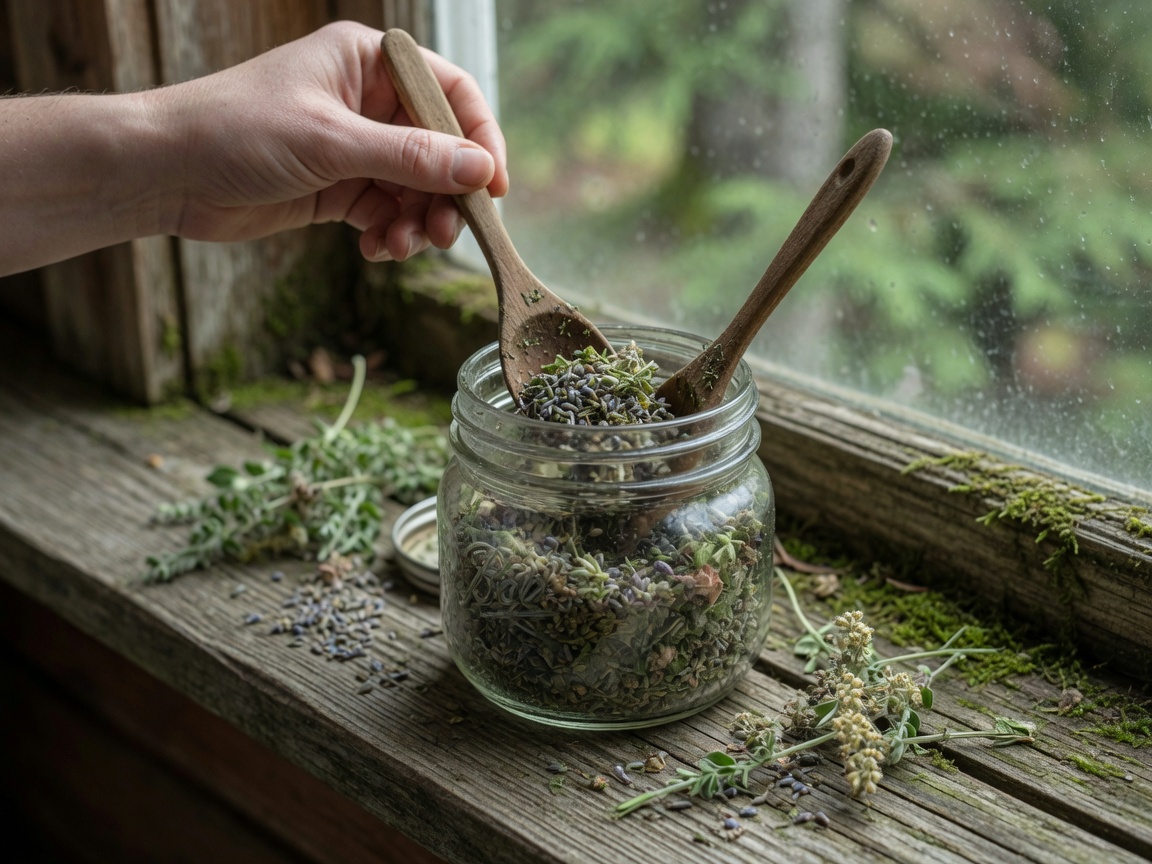
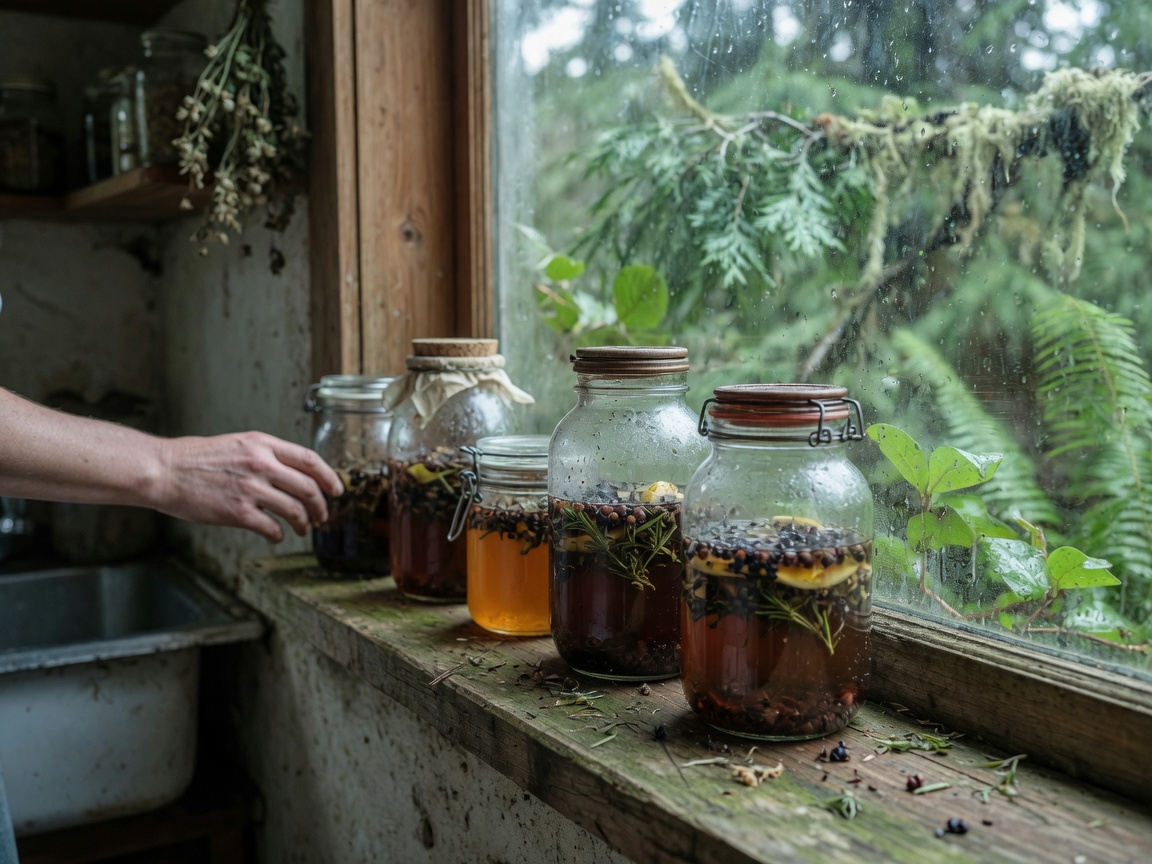
Here’s the whole method. Fill your clean jar somewhere between a quarter and a half full with your herbs — loosely if they’re fresh, a bit less if they’re dried, since dried plant will swell. Then cover them.
There are two ways to cover them, and the difference is only patience. The all-at-once way: pour in roughly equal parts honey and vinegar — a cup of each for a pint jar is a fine starting ratio — stir well, and top off so the plant is fully submerged with an inch to spare. The layered way my grandmother used: gently warm the honey just until it pours easily, coat the herbs with it first, then add the vinegar. Warming the honey a touch helps it let go of the plant later. Either lands in the same place.
Two things matter more than the exact ratio. First, keep the herbs under the liquid — anything poking up above the surface can spoil. Second, use a non-metal lid or that square of parchment, because raw vinegar will eat at a bare metal one over the weeks and leave you with a rusty rim and a metallic jar. I learned that the plain way, with a ruined batch of thyme oxymel and a lid I had to pry off.
The classic ratio is equal honey and vinegar, but treat it as a starting line, not a law. More honey gives a softer, syrupy oxymel; more vinegar gives a sharper, thinner one that keeps a little longer. Taste as you go on future jars and settle where your own mouth likes it.
Let it steep, and give it a shake
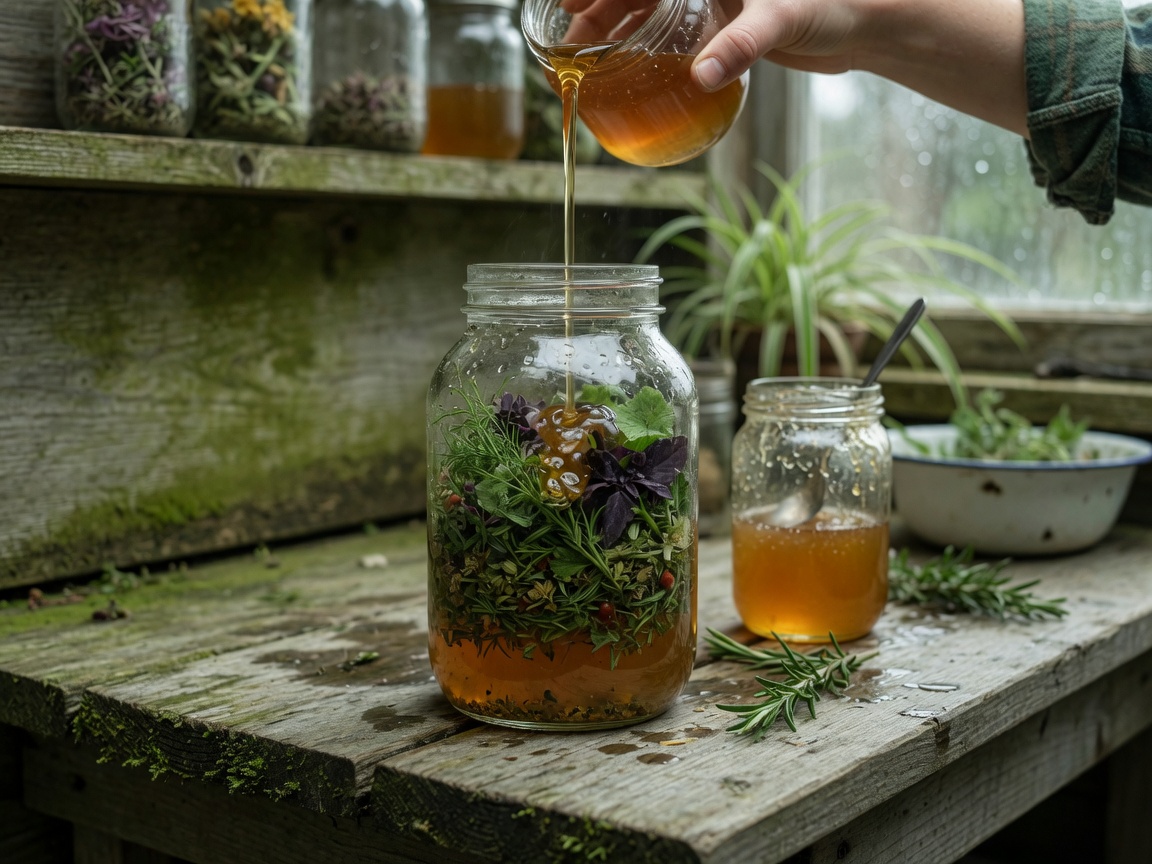
Cap the jar, label it with the herb and the date — you will not remember in a month, I promise you — and set it somewhere out of direct sun. A cupboard is perfect. Then leave it two to four weeks, giving it a shake whenever you walk past and think of it. That shake keeps the herbs turning through the liquid and reminds you the jar is working.
You’ll watch it change. The vinegar clouds and colors, the honey thins as it takes on the plant, and by the third or fourth week the whole jar smells of whatever you put in it. When the flavor is where you want it — bright, herbal, the sharp of the vinegar rounded by the honey — it’s ready. There’s no failing this step. If you forget it for six weeks, it’s only a stronger oxymel.
Strain it clean and bottle it
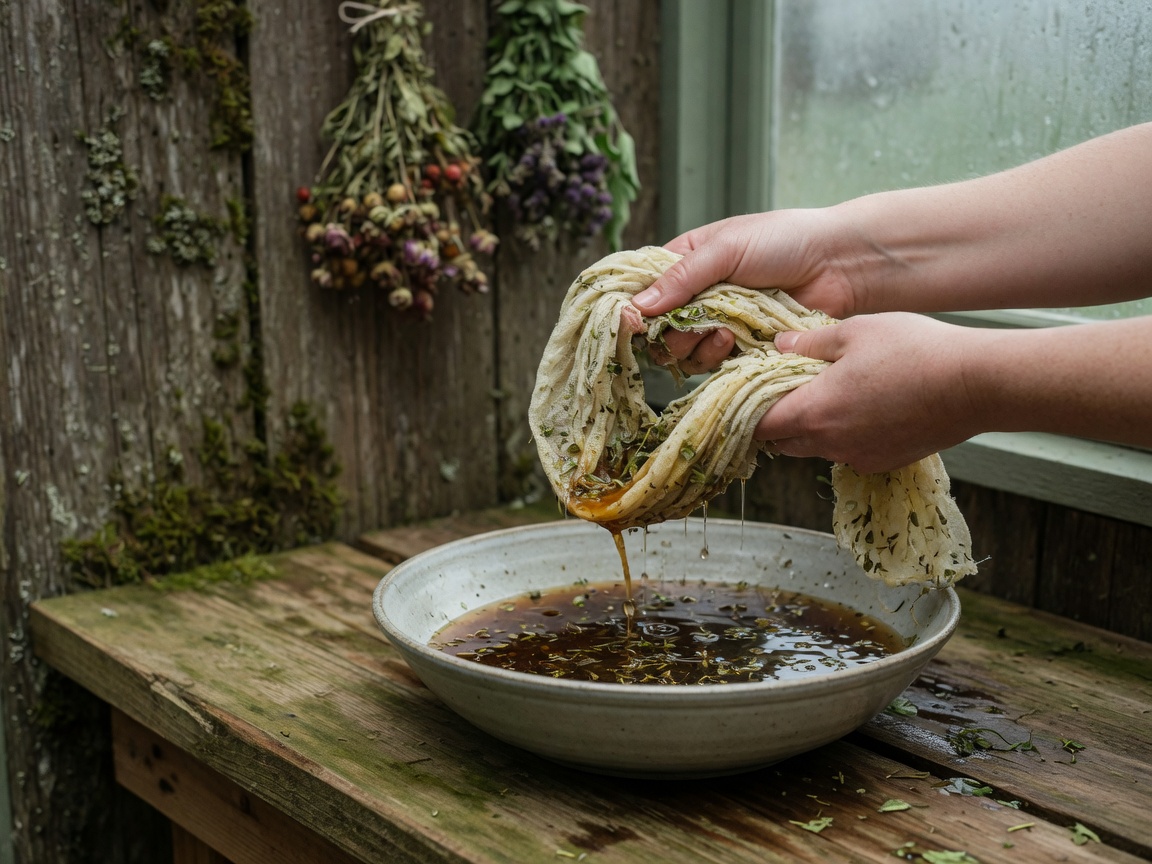
When the steeping’s done, set a funnel or a bowl beneath a doubled layer of grade-90 cheesecloth and pour the jar through. The tight grade-90 weave catches the fine plant grit that a looser cloth lets slip — and that grit is exactly what settles in the bottom of a finished bottle and shortens its life. Gather the corners and wring the soaked herbs hard; there’s a surprising amount of good honeyed vinegar still hiding in there, and the last squeeze is worth the sticky fingers.
Pour the strained oxymel into a clean bottle or jar, cap it, and keep it in a cool cupboard or the refrigerator. Because it’s honey and vinegar — two things that keep themselves — a well-made oxymel holds its character for six months and often past a year. Trust your nose and eyes: if it ever smells off, throws a fuzz of mold, or tastes flat, pour it out and make another. It costs you an afternoon.
How the old hands used it
An oxymel was a kitchen staple long before it was anything else, and that’s where I keep mine. A spoonful stirred into a mug of hot water makes a quick honey-vinegar drink for a raw winter morning. It’s a fine base for a salad dressing — it’s already half a vinaigrette — or a glaze whisked into pan drippings. A splash brightens a pot of greens or a cup of tea the way a squeeze of lemon would. My grandmother kept a fir-tip oxymel by the stove all winter and used it the way some folks use a bitters bottle: a little, often, for the taste of it. If you like the idea of a straight honey preparation too, my herbal honey post is the companion to this one.
Traditionally, honey-and-vinegar preparations were reached for across a lot of old kitchens through the cold season. I’ll leave the tradition as tradition and not dress it up as more than that — Hazel Whitaker sells you no cures. What I’ll vouch for is that it’s good, it’s easy, and it’s a pleasant thing to have on the shelf when the weather turns.
Which plants to gather, when to gather them, and how the generations before us prepared each one — that’s the longer knowing, and it’s the part I care most about. Most of it is in my book, Pacific Northwest Medicinal Plants: 115 wild plants of this coast, how to identify each without guessing, and how they were traditionally used and prepared. The honey and vinegar are the easy part. The book is how you learn what’s worth putting in them.
Learn it before you need it.
