How to Make an Herbal Massage Oil From Foraged Plants
How I make an herbal massage oil from jojoba and dried plants I gathered myself: which herbs, the slow and quick infusions, straining, and a safe scent.
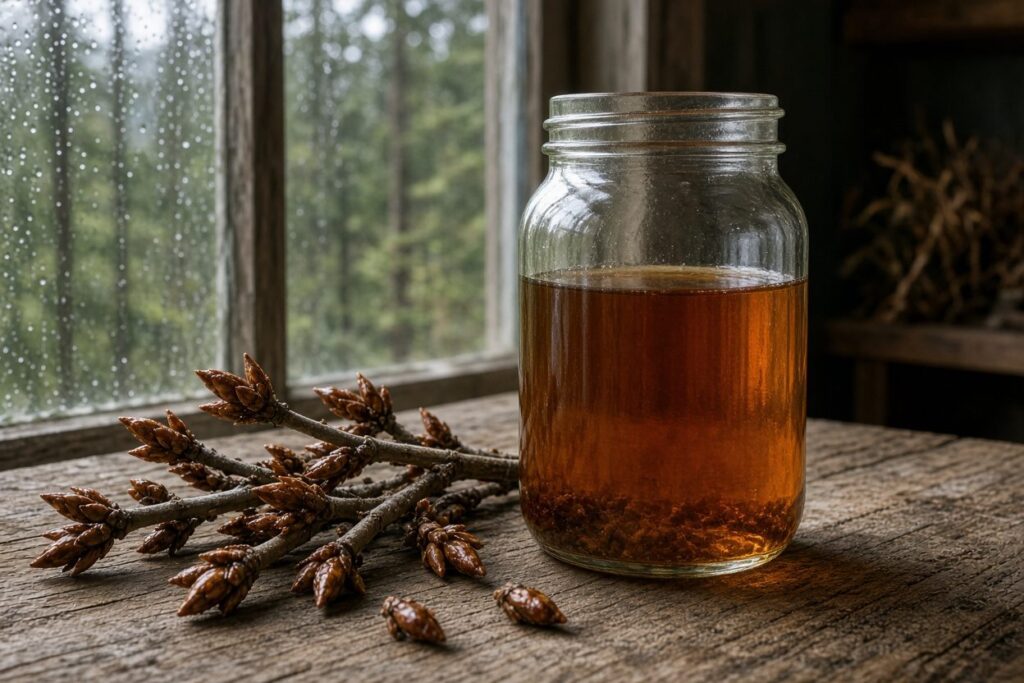
My daughter drove up from Portland last February with her shoulders up around her ears from a winter of hunching over a drafting desk, and the only thing I had in the cupboard worth offering was a pint of cottonwood-bud oil I’d steeped the spring before. I warmed a little between my palms and worked it into the knots at the base of her neck while the kettle came up. She fell asleep on the couch before the tea was ready.
That is all a massage oil is: a good plant steeped in a good oil, kept for the evenings when somebody needs a slow rub after a long week. It is a comfort, not a treatment, and I make no bigger claim for it than that. It is also one of the easiest preparations I know, and late winter is the right time to make it, with the cottonwood buds swelling on the river bars and Valentine’s Day close enough to give a bottle away.
Choose the oil first

Everything you rub into skin is mostly oil, so the oil matters more than the herb. I use jojoba for nearly all my body preparations. Strictly speaking it’s a liquid wax, not an oil, which is why it doesn’t go rancid in six weeks the way sunflower or grapeseed can. It has a light, slightly silky feel and soaks in without leaving you greasy enough to ruin a flannel shirt.
You can stretch it with a kitchen oil if you’re making a big batch. A mix of half jojoba and half sunflower is a fine massage oil, but mark the jar and use it within a few months. Olive oil works in a pinch and smells like supper. I don’t recommend it for anything you’re giving away.
Which plants I steep, and which I leave alone
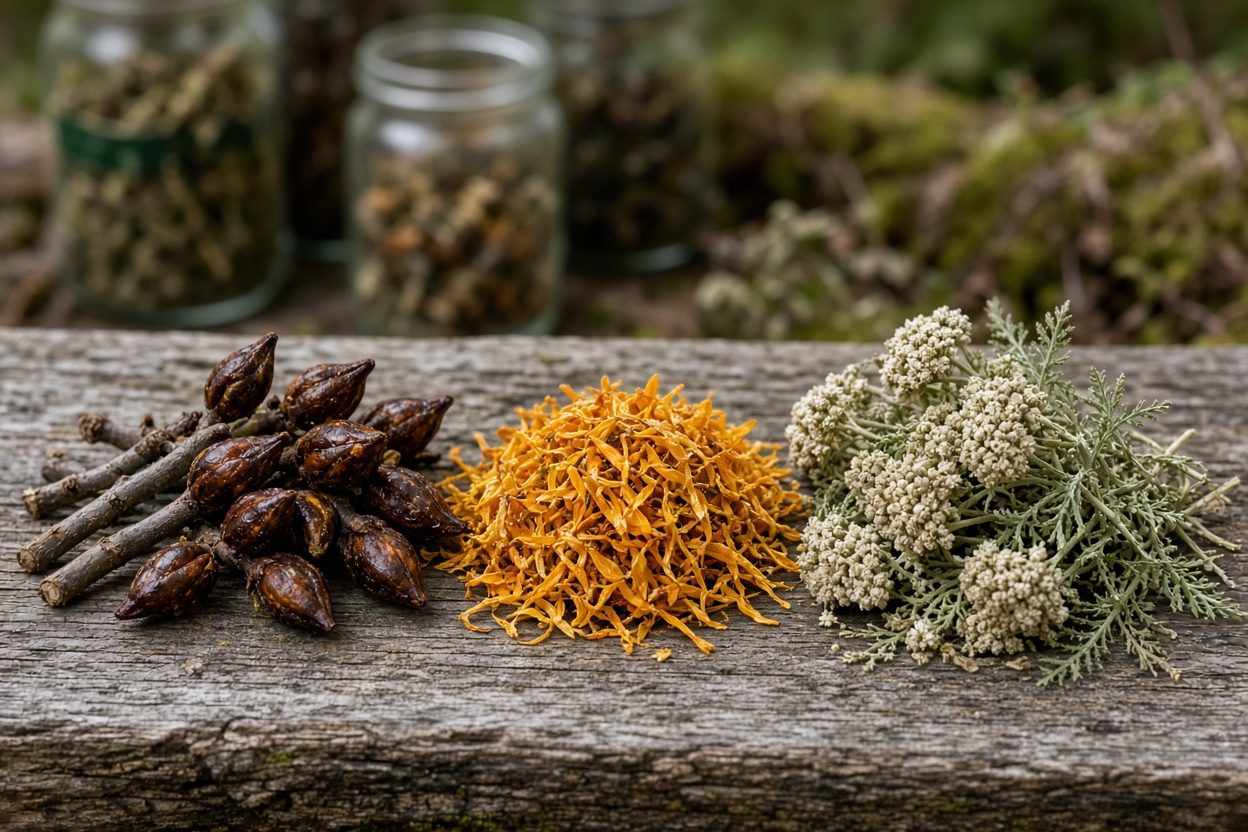
For a massage oil I stay with plants I have known for years, can identify without hesitating, and have used on my own skin many times. My short list:
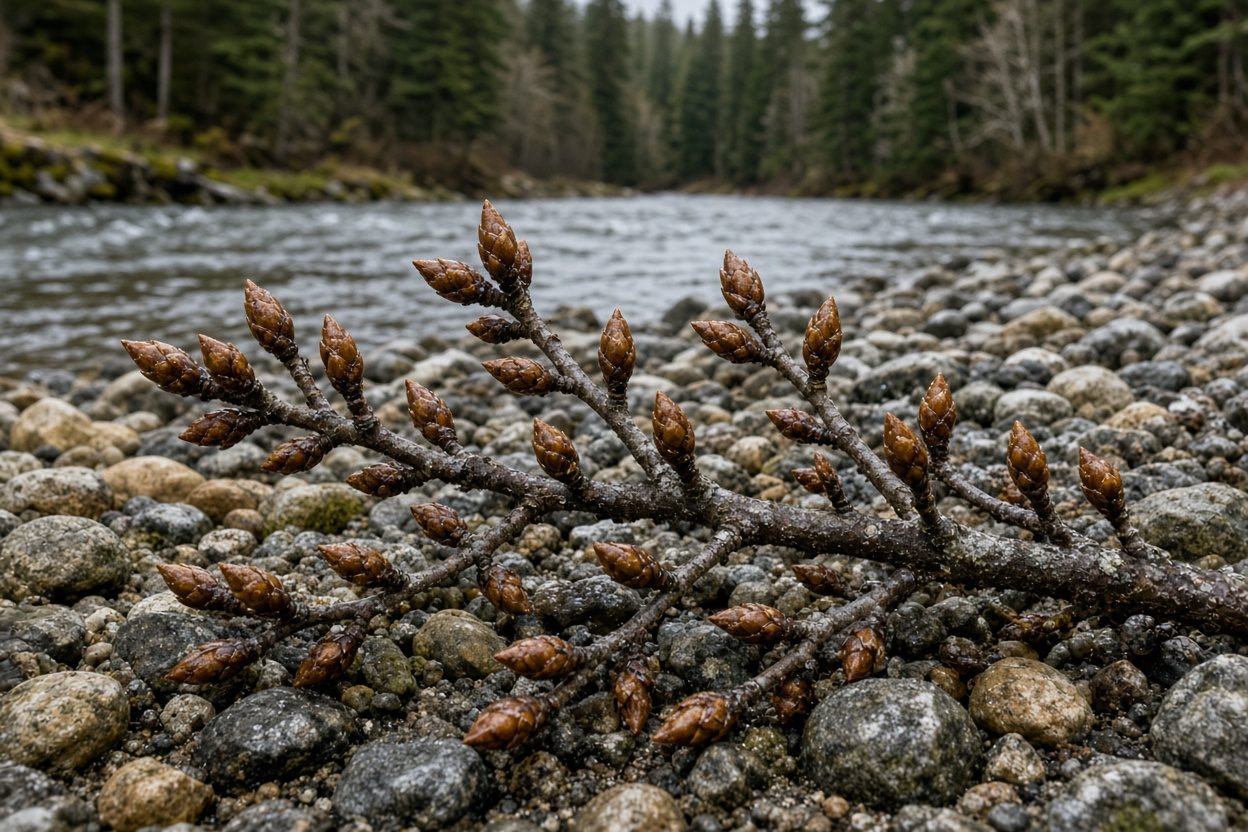
– Black cottonwood buds (Populus trichocarpa) gathered from storm-downed branches in February and March. Sticky, resinous, and the smell is the whole reason to make this oil. I wrote up the harvest in how to forage and use cottonwood buds.
– Dried calendula petals from the garden, for a plain, gentle oil.
– Dried yarrow (Achillea millefolium) tops, gathered in summer and kept for winter.
Cottonwood belongs to the willow family. If you react to aspirin, skip it and use calendula.
I leave out anything I haven’t confirmed against more than one good field guide, and anything with a reputation for irritating skin. Oil draws out what is in a plant, the bad along with the good. That is the one safety rule I’ll state flatly: if you can’t name the plant with certainty, it doesn’t go in the jar.
Everything I steep is dried first, except the cottonwood buds, which are resinous enough to go in fresh. Fresh leaves and flowers carry water, and water in oil is how you grow mold. Dry them the way I describe in how to store dried herbs so they last.
The slow infusion (my preference)
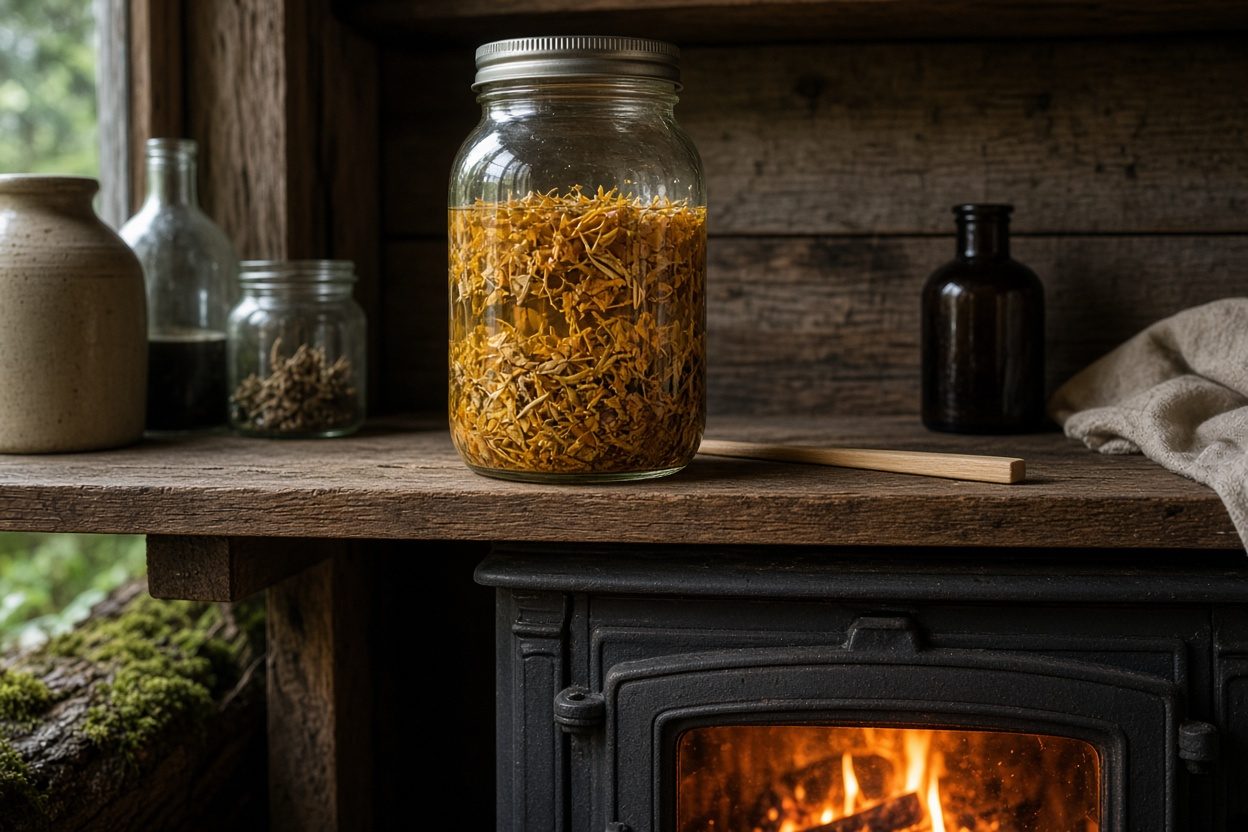
Fill a clean, dry mason jar about two-thirds full of dried herb. Pour jojoba over it until the plant is covered by a full inch, then stir with a chopstick to work out the air bubbles. Top it up if the level drops. Cap it and set it somewhere warm but out of direct sun. The shelf above my woodstove is about right.
Shake it whenever you walk past. In four to six weeks the oil will have taken on the color and the smell of the plant. Cottonwood oil turns a deep amber and smells like warm resin and honey. Calendula goes golden.
This is the same method I use for all my infused oils, and how to make an herbal infused oil goes through it in more detail if you want the long version.
The quick infusion, when the slow one won’t wait
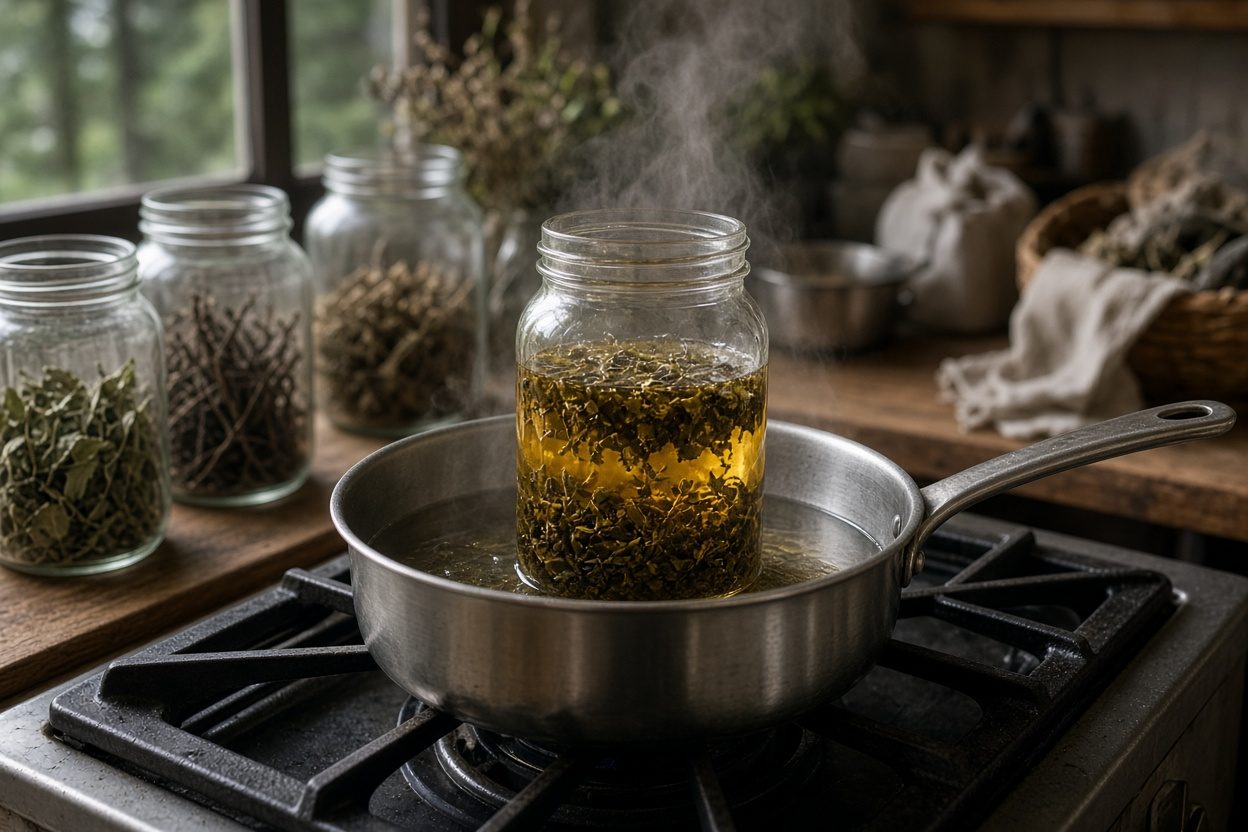
If you need the oil this week, set the uncapped jar in a saucepan with two inches of water and bring the water to the barest simmer. Keep it there for three to four hours, topping up the water as it steams off. The oil should feel warm to the touch, never hot. If it smokes or smells fried, you’ve cooked the plant, and you’ll be starting over.
A gentle heat makes a decent oil. It never has quite the depth of a long steep, but I’ve given plenty of quick-infused bottles away and no one has complained.
Strain it well
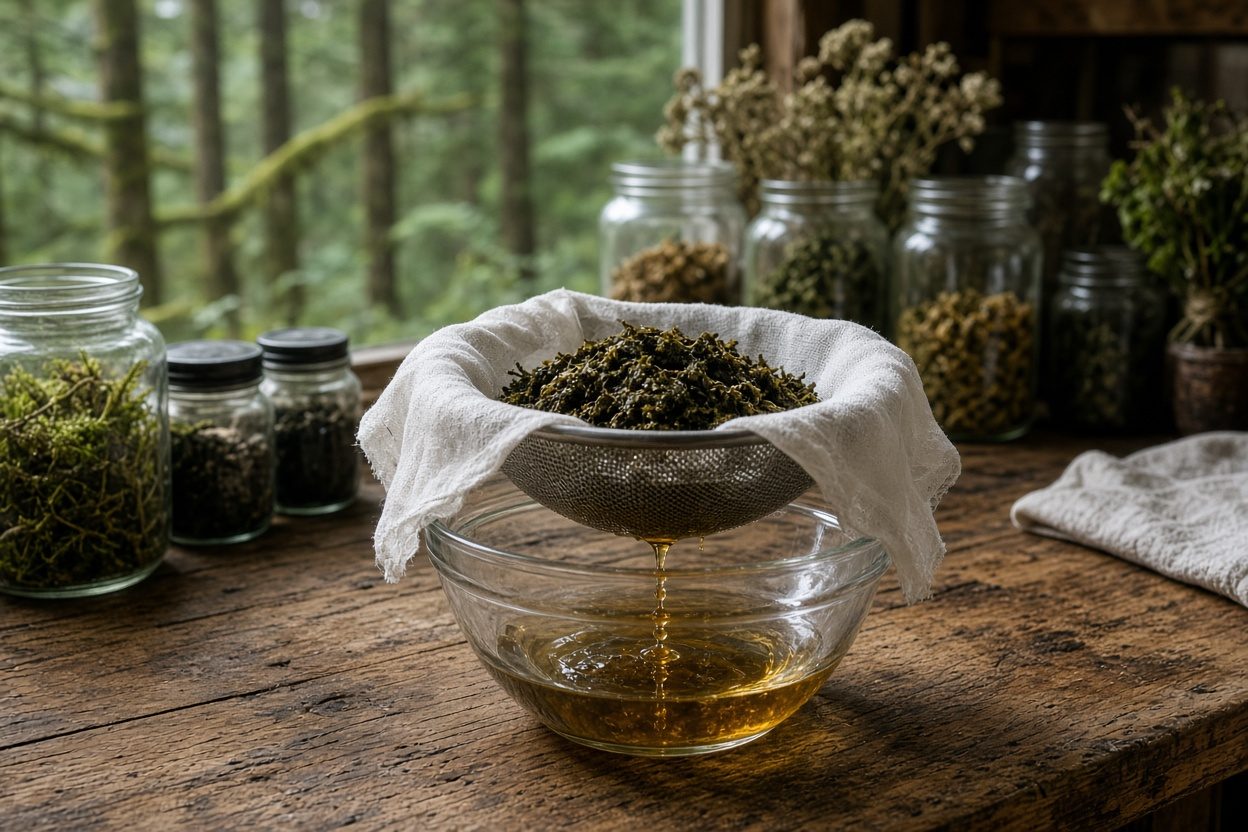
Line a funnel or a sieve with two layers of cheesecloth and pour the oil through. Then gather up the corners and wring the herb hard. You lose a surprising amount of oil to the plant if you don’t. Let the strained oil rest overnight, and pour it off the top carefully the next day, leaving behind any fine sediment or the odd drop of water that has settled to the bottom.
I once bottled a cottonwood batch without that overnight rest. A month later there was a cloudy layer at the bottom of every bottle. I still use it, but I’d rather you didn’t learn that one yourself.
Scent, lightly or not at all
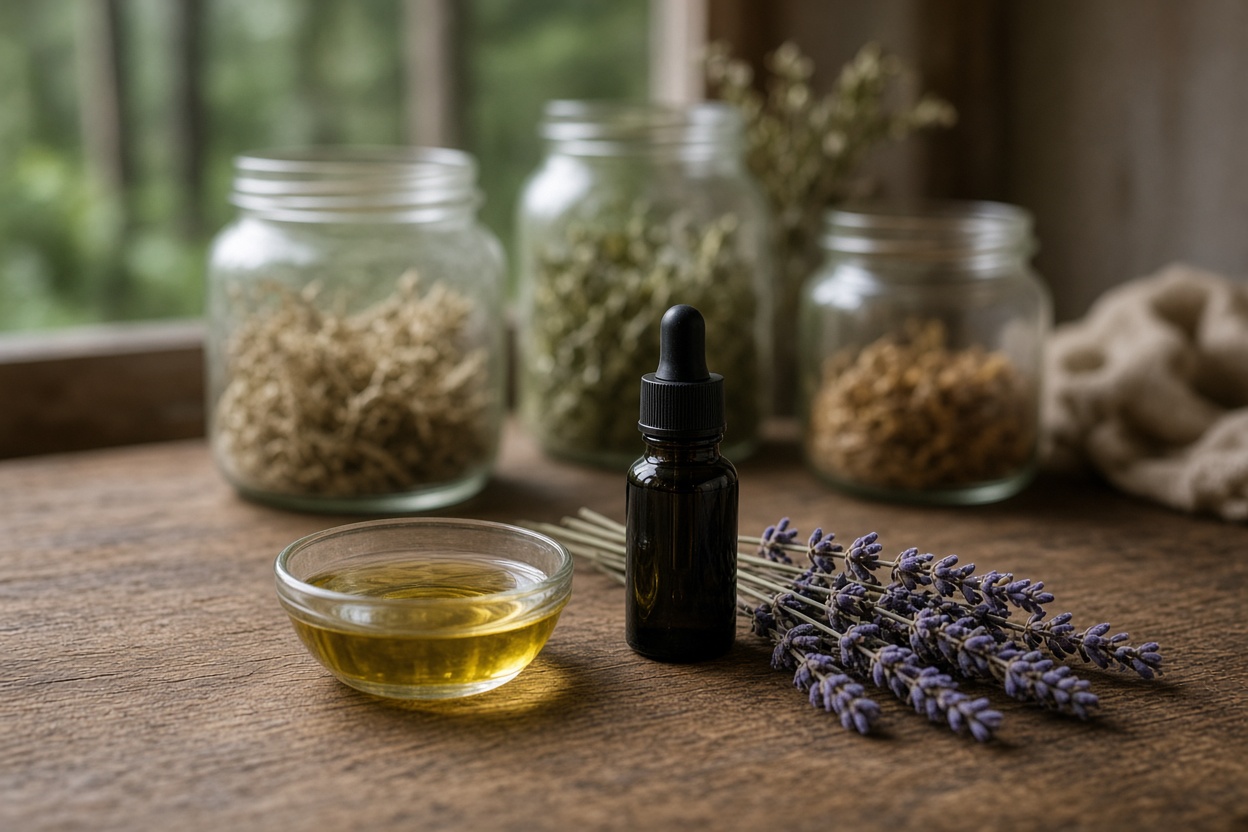
A well-steeped cottonwood oil needs nothing added. For calendula or yarrow oil, some people like a few drops of lavender essential oil. If you add one, keep it to about six drops per two ounces of oil, and skip it entirely for anyone pregnant, for children, or for anyone with sensitive skin. Essential oils are concentrated well past anything you’d find in the plant.
I keep my own bottles plain, and I keep my gift bottles plainer.
Bottle, label, and use it
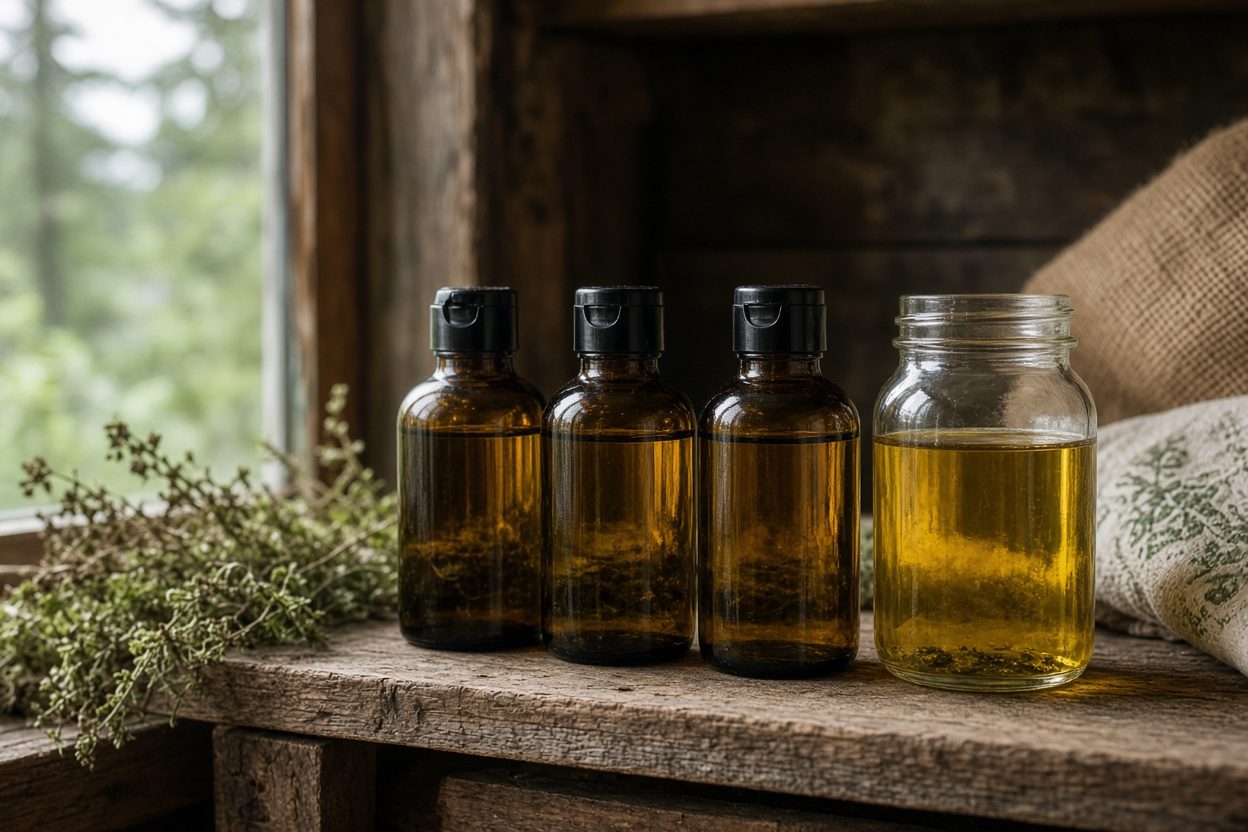
I don’t yet have a verified source to send you to for amber bottles, so I’ll just say a dark glass bottle with a flip cap or a pump is the right container. A clean mason jar works at home. Keep the oil out of the light and away from the stove.
Label it with the plant, the oil, and the date. I go into my labeling habit in how to label and date your herbal preparations, which mostly exists because I once mixed up two unlabeled amber jars and gave my husband calendula when he’d asked for the cottonwood. A jojoba oil made with dried herb and strained clean keeps a good year.
Before anyone uses a new batch, rub a little on the inside of the wrist and wait a day. Don’t use it on broken skin, a rash, or a baby. A warm oil and a slow hand on a stiff back after a day of splitting wood is what this is for. If a pain lasts or gets worse, that’s a visit to someone who can examine it.
If you’re making these for gifts, they pair well with the bath salts in how to make herbal bath soaks for winter evenings.
Where the real learning is
The jar and the oil are the easy part. The harder study is which plants grow near you, when to gather them, how to tell them from their look-alikes, and how people on this coast have used them for generations. That’s what I wrote Pacific Northwest Medicinal Plants to teach. It covers 115 wild herbs of the Northwest, cottonwood and yarrow among them, with how to identify each one before you ever put it in a jar.
