How to Make a Pine Pitch Salve for Cracked Winter Hands
How to make a pine pitch salve from conifer resin, beeswax, and oil: what to gather, how to infuse and strain it, and mistakes to skip. Start now for winter.
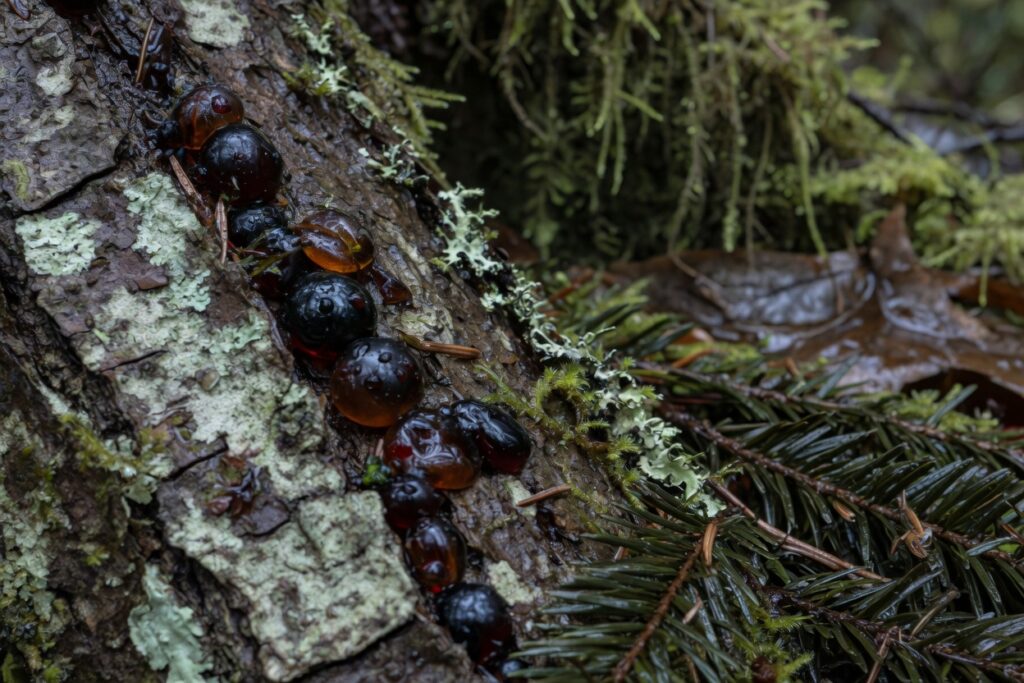
The first hard frost on the Peninsula usually comes in late October, and my knuckles know it a day before the weather report does. By December the skin over them splits along the creases, and no store-bought lotion I’ve bought has ever outlasted a round of dishes and a load of firewood. What has is a dark, sticky, piney salve that my teacher in Port Townsend made every autumn from the resin that weeps out of old wounds on the Douglas-firs behind her cabin.
I’ve made it for twenty-odd years now. It smells like a Christmas tree lot after rain, it stains anything it touches for a week, and it is the one hand salve I actually finish. This is how I do it, including the parts that go wrong.
Start in the fall. Pitch is easiest to find and gather from October through the first snow, when it’s cold enough to be hard and brittle on the bark, and the salve wants a couple of weeks on the shelf before it’s at its best anyway.
What to gather, and where
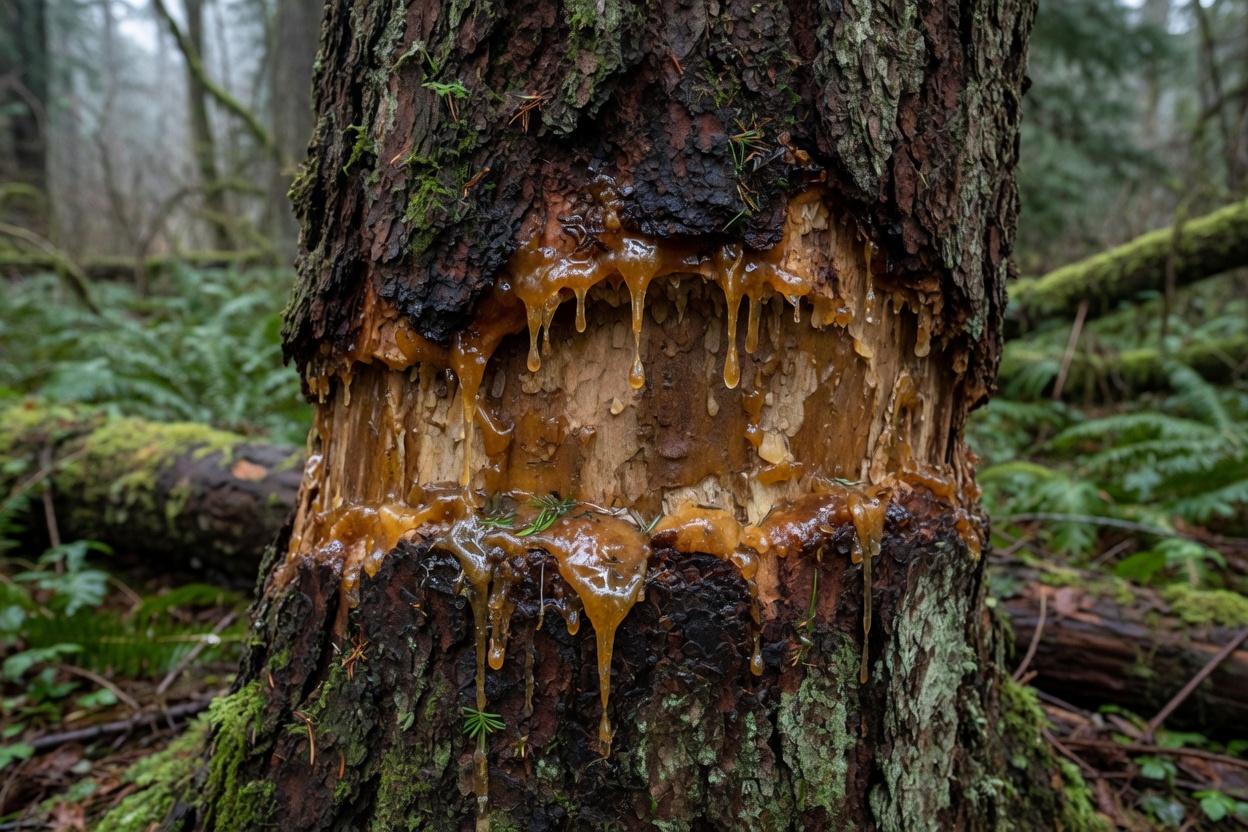
Pitch is the sticky resin that pines, spruces, firs, and Douglas-fir seal their wounds with. On this side of the Cascades, the trees I gather from most are Douglas-fir and grand fir, and I look for the amber beads and hardened blobs that have already formed where a limb broke or a woodpecker went to work. Take only what the tree has already let go of. I never cut into bark to make a tree bleed, and neither should you. A wounded tree is an open door for beetles and rot, and you don’t need much: two heaping tablespoons of packed pitch makes a batch of four tins.
Be sure of the tree. Everything on this list is a conifer that makes true resin, and you should be able to name it from its needles and cones before you put a knife to anything. If you can’t, leave it alone and come back with someone who can. Check who owns the land, too. Olympic National Park doesn’t allow collecting of any kind, and national forest rules on gathering vary by district. A call to the ranger station takes five minutes and saves you a citation.
A bare hand is a poor tool for this work. Pitch sticks to skin like tar and won’t rinse off with water. I carry a small jar with a bit of oil in the bottom, and a flat stick or a hori-hori to pry the hardened bits loose. Cold pitch flakes off cleanly. Warm pitch, on a sunny afternoon, will glue your glove to your coat.
Infusing the pitch
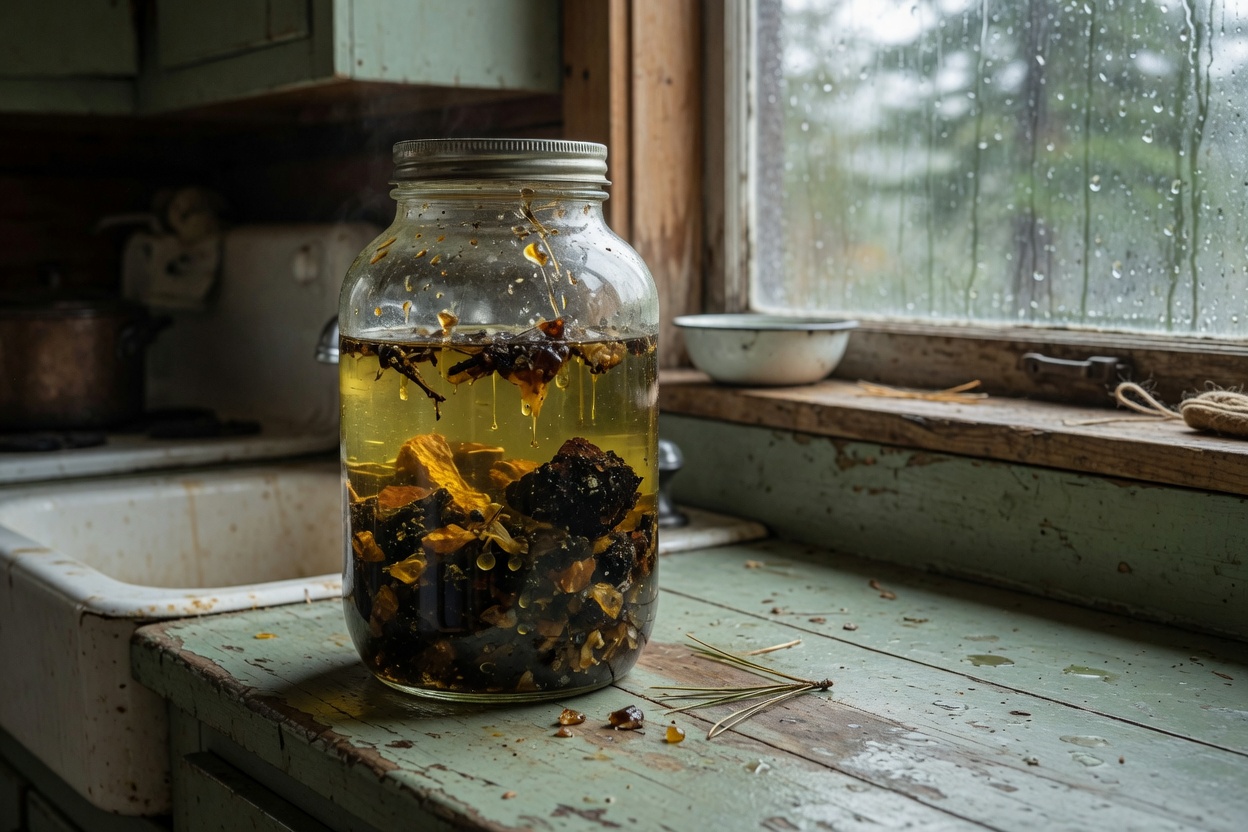
Melting pitch straight into your good oil is how you end up with a ruined pot and a wasted afternoon. Use a jar you’re willing to give up. The wide-mouth Ball pint jars come twelve to a box, which is one reason I buy them; my pitch jar has been retired to the garage for years, and the rest of the box is untouched.
Put the pitch in the jar with about a cup of plain olive oil. I use olive here rather than my jojoba, partly because the pitch clings to the glass and a little of the oil goes with it, and partly because jojoba is the costlier oil and I’d rather not waste it. Set the jar on a folded dish towel in a saucepan, fill the pan with a few inches of water, and hold it at a bare simmer for one to two hours, stirring now and then with a chopstick you’re prepared to throw away.
Never heat pitch over direct flame. Resin is flammable, and a jar set straight on a burner is a kitchen fire waiting to happen. A water bath keeps the temperature low and steady, and it’s the only method I use. When the pitch has melted into the oil and the liquid turns a deep amber, you’re done. Any lumps that remain are usually bark, not pitch.
Straining is the hard part
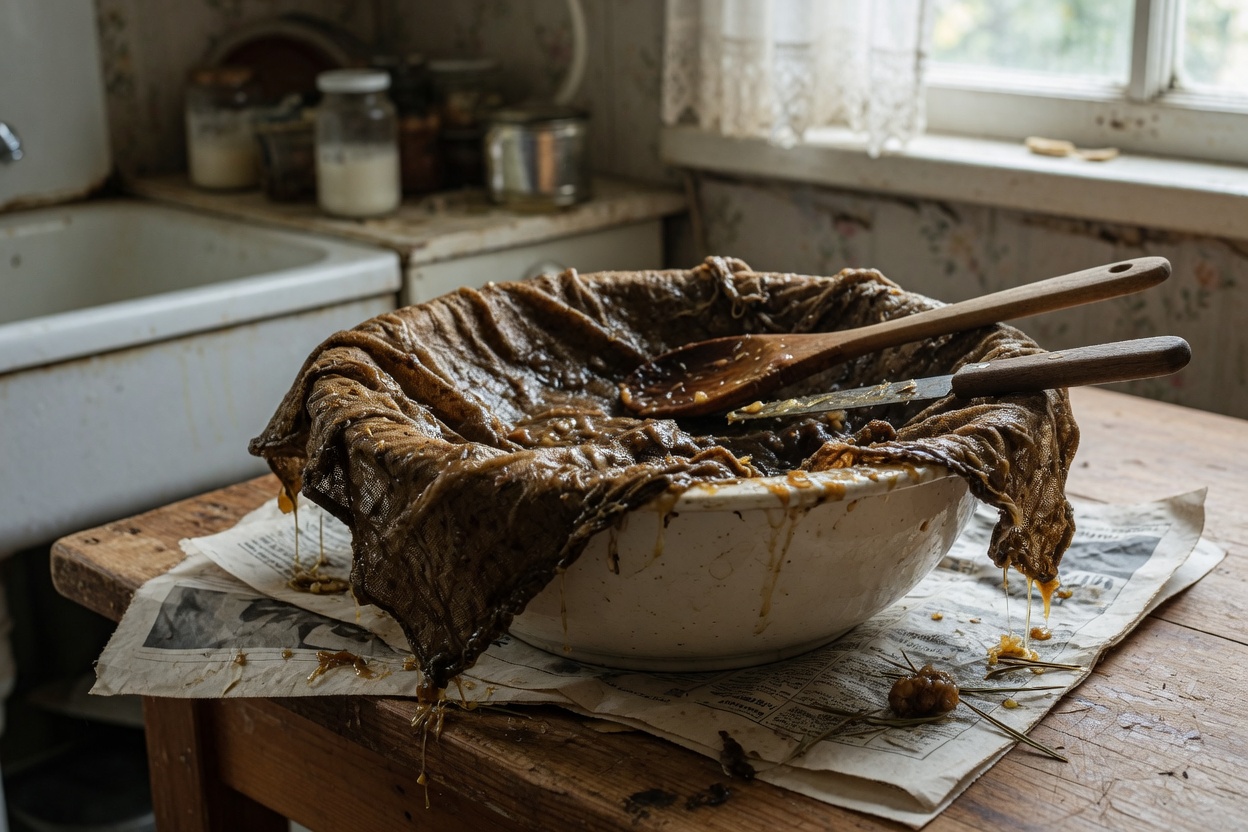
This is where most first batches go wrong, so slow down. Pitch thickens as it cools, and if you let the infused oil sit, it will clog the cloth and you’ll be wringing out a brown paste. Strain it hot.
Double a piece of grade-90 cheesecloth over a second, clean jar, and pour slowly, in a few small pours rather than one big one. Warm the jar first with hot tap water so the oil doesn’t seize on contact with cold glass. What’s left in the cloth is bark grit, needles, and the odd beetle leg, and it goes in the compost. You’ll lose a little oil to the cloth no matter what. I have never found a way around it.
Making the salve
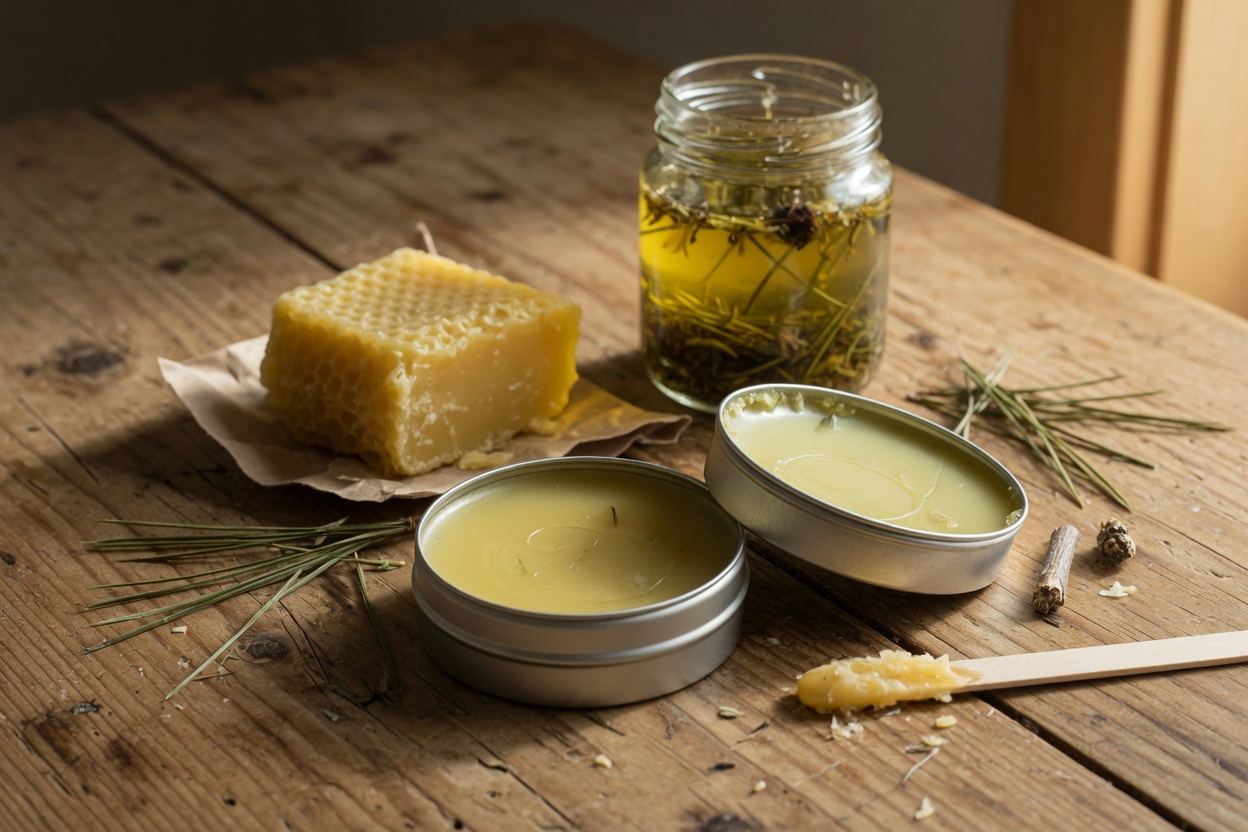
Now measure your strained oil. For every four or five parts of oil, I use one part beeswax by volume; pitch already stiffens the oil, so I lean toward the softer end of the ratio. A cup of infused oil takes about three tablespoons of pellets. Stir in a couple of tablespoons of jojoba oil at this stage if you want a silkier feel on the skin.
Return the jar to the water bath until the wax melts completely. Then run the cold spoon test: dip a metal spoon in the liquid, set it in the freezer for a minute, and touch the film that forms. If it’s hard as candle wax, add oil. If it smears like butter and won’t hold shape, add a few more pellets. Pour into your 2 oz tins while it’s liquid, and leave them alone on the counter until they’ve set, at least a few hours. If you’ve never made a salve before, my step-by-step salve method walks through the oil-and-wax basics more slowly.
What it does and doesn’t do
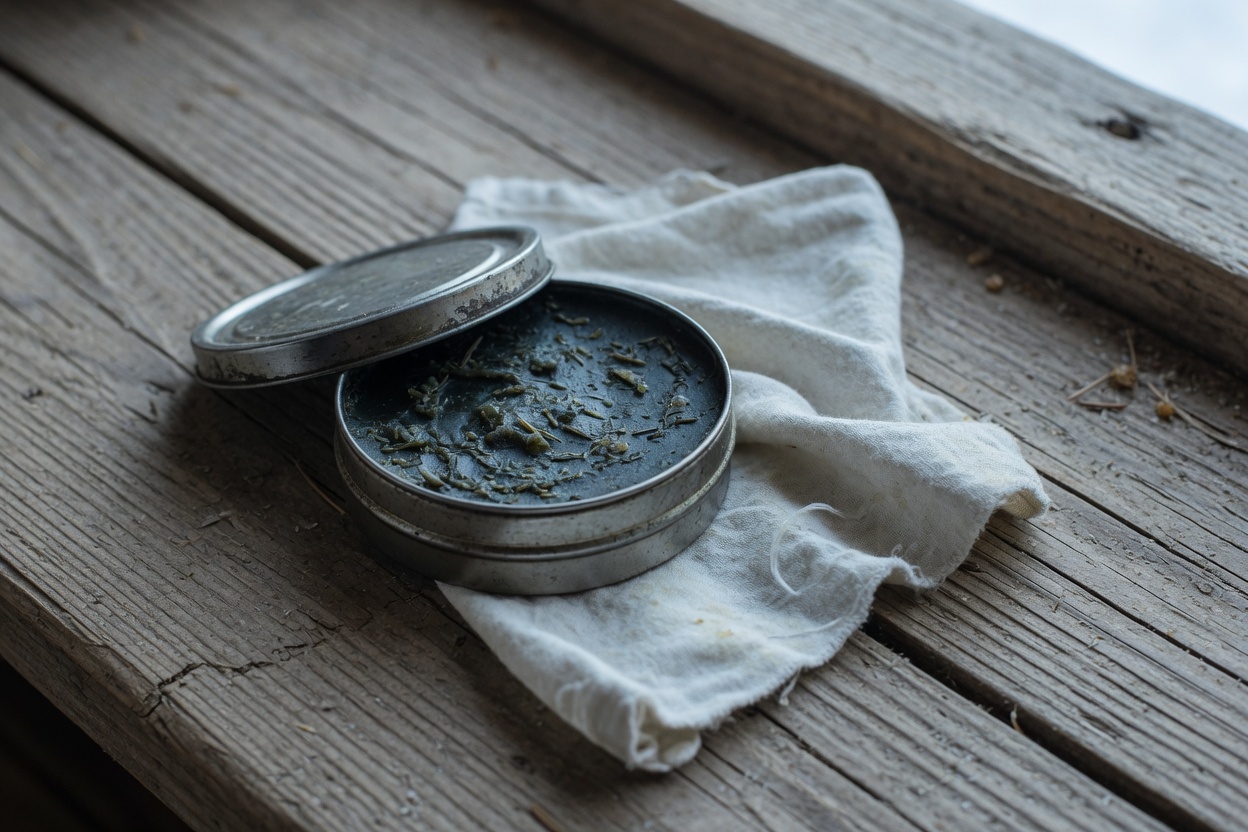
Say it plainly: this is a hand salve, made the way it has been made in these woods by many hands before mine. I use it on cracked knuckles, dry heels, and the corner of my thumb where the pruning shears rub. It’s not a treatment for anything, and I won’t tell you it is. If a crack won’t close or a cut looks angry, that’s a job for a doctor, not a tin of resin.
Some honest cons. The salve is dark and it smells strongly of resin, which a fair number of people don’t care for. It leaves a sticky film for a minute or two before it absorbs, so I put it on at night and wear cotton gloves. It will stain a light-colored sleeve. And a small share of people react to conifer resin on skin, so dab a little on your inner arm and wait a day before using it more widely.
I’d make it again for one reason: nothing else gets me through the months of wet wood and cold water. If you want a gentler, sweeter-smelling alternative, I’ve written up a cedar tip salve for winter hands, and a cottonwood bud balm that lands somewhere between the two.
Label it and let it rest
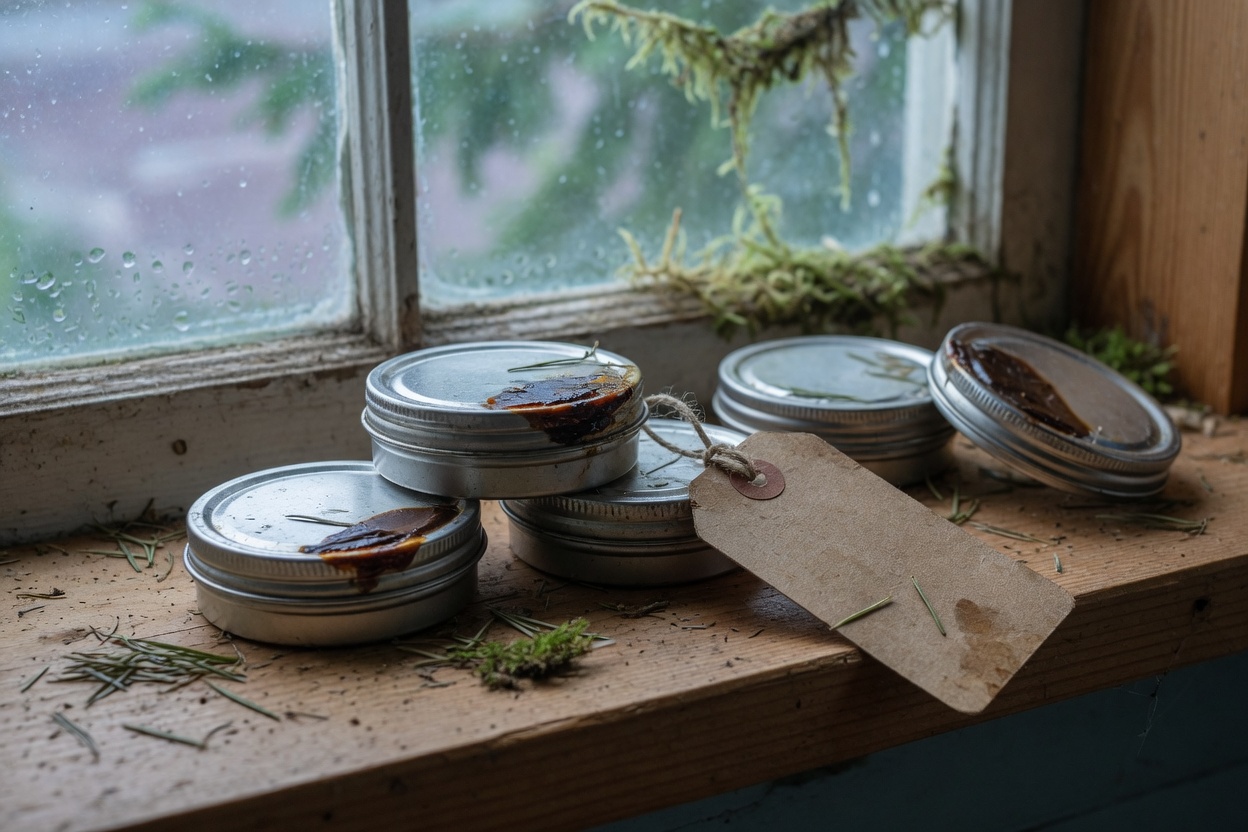
Write the date and the tree on the lid: “Doug-fir pitch, October.” You will not remember in March. Store the tins somewhere cool and dark, and they’ll last a year or more, since both the beeswax and the jojoba keep well. Give one to whoever splits your kindling. They’ll recognize the smell.
Where the making ends and the knowing begins
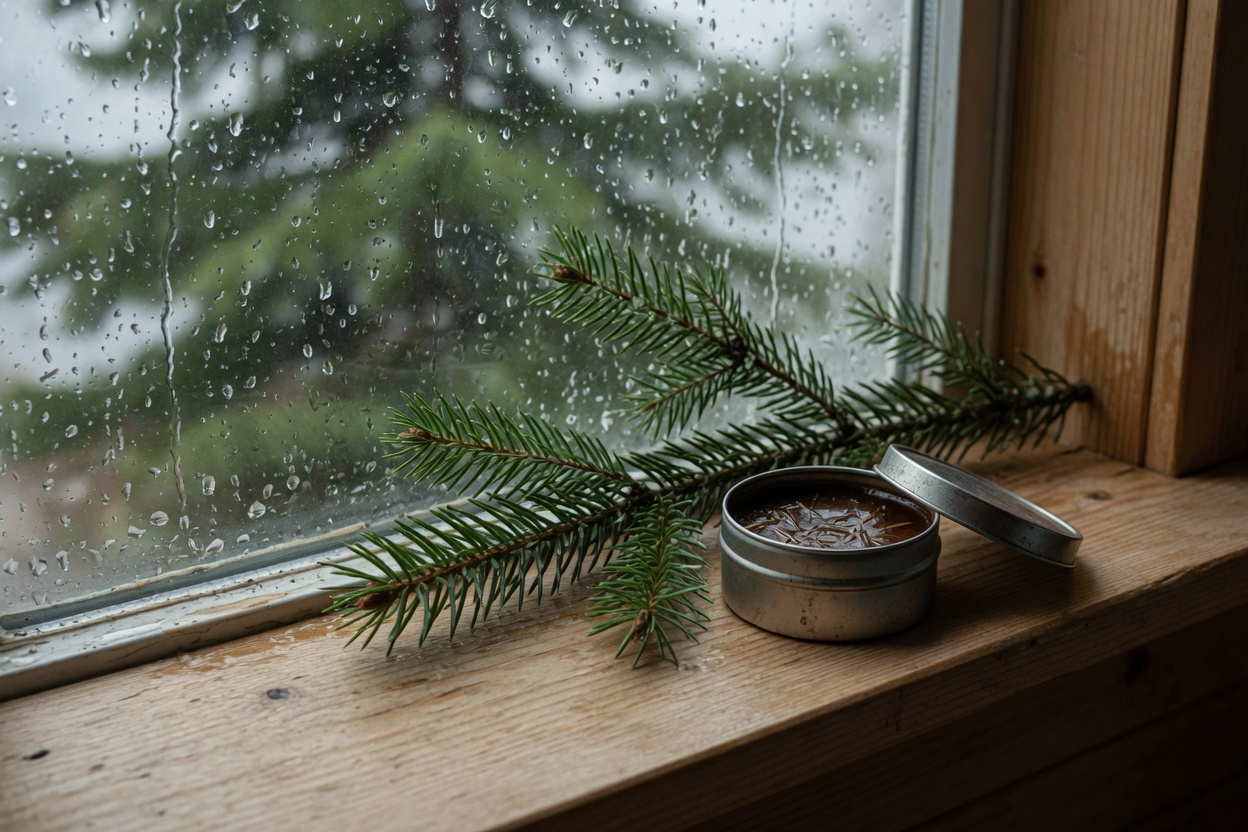
A salve takes an afternoon. Learning to name your trees, know which resins are worth gathering, and understand how the generations before us worked with them takes longer, and it’s the part that makes a tin of dark salve more than a curiosity.
That’s most of what’s in my book, Pacific Northwest Medicinal Plants: how to identify each plant with confidence, when to gather it, and how it was traditionally prepared. Never gather or use a wild plant, or a tree resin, on the strength of a single book, app, or source. Confirm it with several reputable guides and an experienced local forager, and when in doubt, leave it be.
