How to Make a Mullein Flower Infused Oil
How I make mullein flower infused oil the way my grandmother did — the flowers to pick, the slow-infusion method, and what this old mountain standby is actually for.

There’s a mullein stalk that comes up every summer along the fence line below my drying shed, tall as a grandchild by August, with those soft flannel leaves and a spike of little yellow flowers that open a few at a time. My grandmother picked those flowers every year of her life she could get to them, and I’ve never stopped either.
Mullein flower oil is one of the plainest preparations I make — no fancy equipment, no tricky timing — and it’s stayed on my shelf my whole adult life because it’s genuinely useful, not because it’s traditional for tradition’s sake. Here’s how I make it, the same slow way I was taught.
Picking the flowers
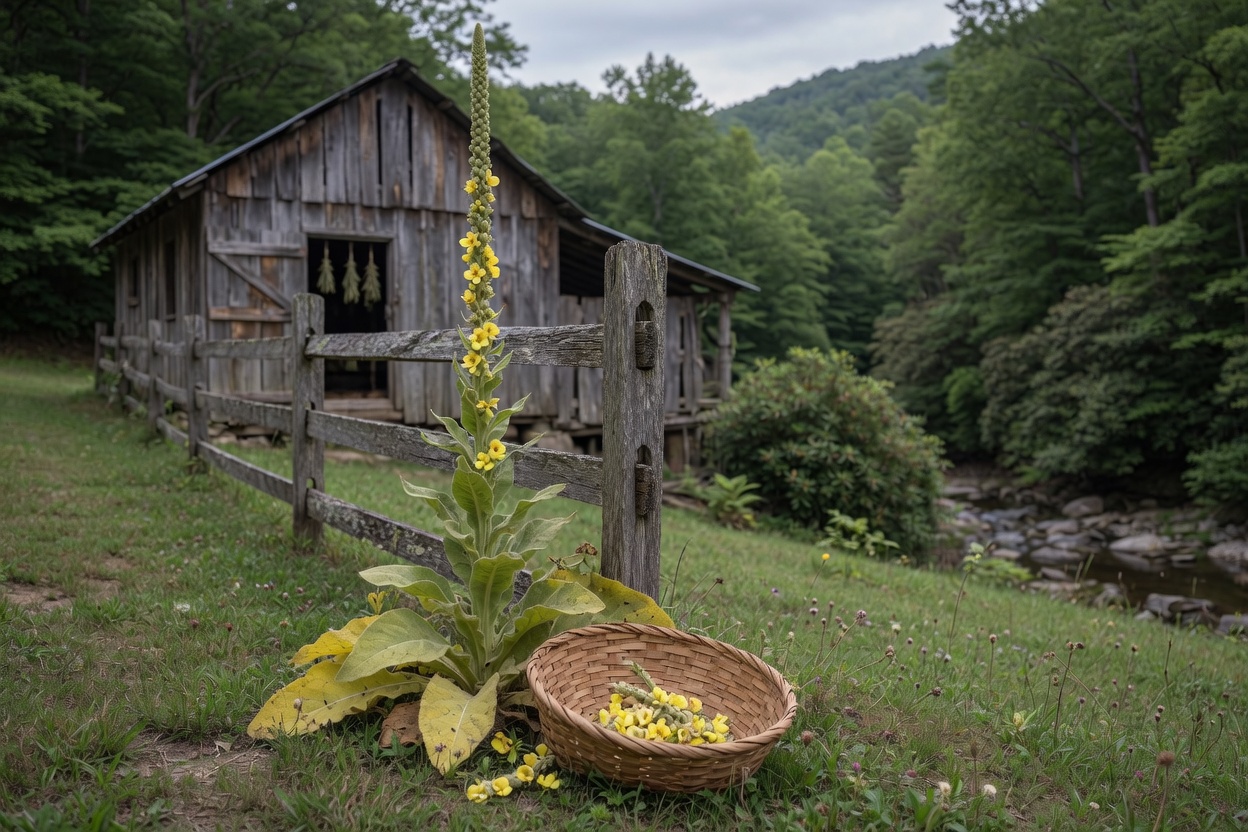
Mullein flowers open a handful at a time along the stalk, usually starting in early-to-mid summer here and running for weeks. Pick only the fresh open blossoms, not the ones already browning at the edge, and pick in the late morning after any dew’s burned off — wet flowers bring moisture into your oil, and moisture is what turns an infused oil moldy on the shelf before it’s finished doing anything useful.
I pick into a shallow basket, not a closed bag, so the flowers don’t steam and wilt on the walk back to the house. A single stalk in a good year gives you flowers a few times over if you keep picking rather than let them all go to seed at once.
Drying the flowers first — don’t skip this
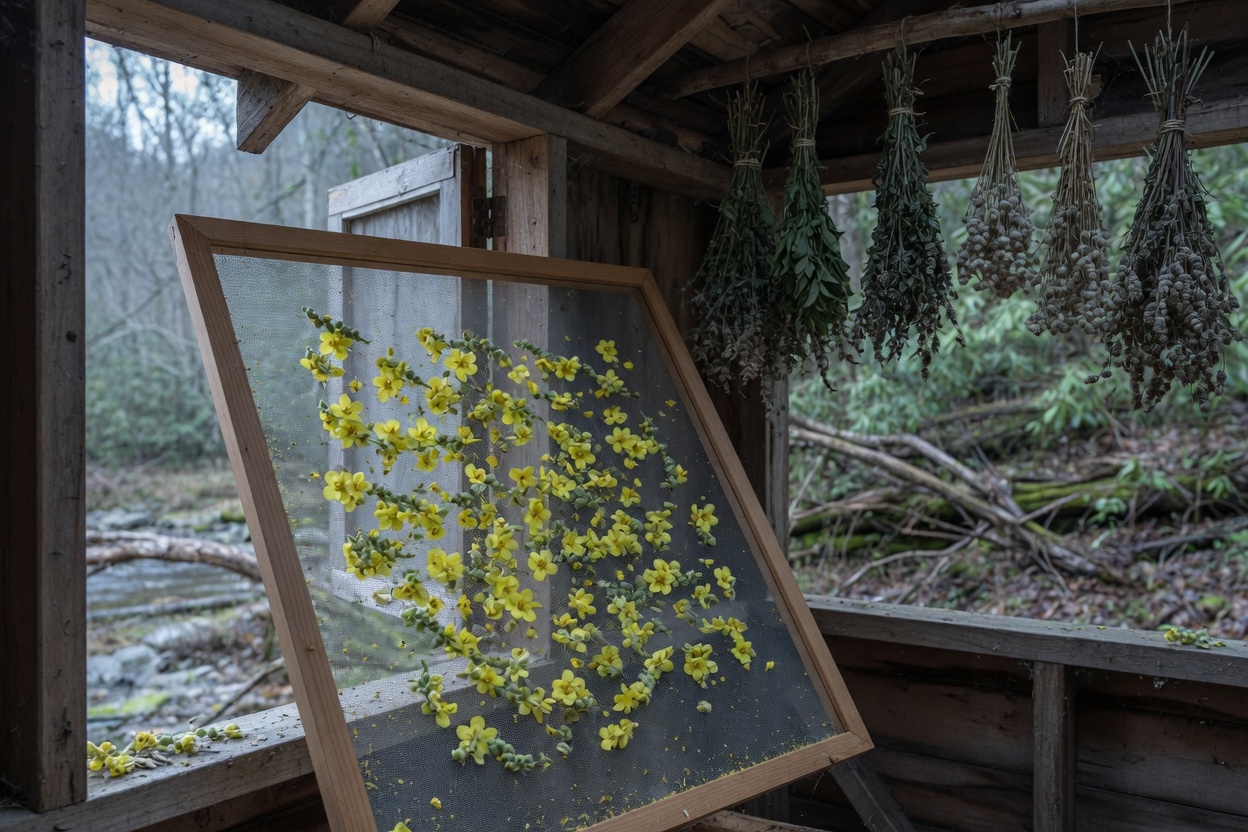
Fresh flowers straight into oil is the mistake I made my first year, and I lost the whole batch to mold inside a week. Water and oil don’t mix, and a fresh flower is mostly water. Spread the picked blossoms in a single layer on a screen or a clean towel, out of direct sun, and let them wilt down for a full day — not bone dry, just past the point of being fresh and damp. That’s enough moisture loss to keep the oil from spoiling underneath it.
The slow infusion

Pack the wilted flowers loosely into a clean mason jar — loosely, not jammed tight, so the oil can move around them — and pour jojoba oil over until the flowers are fully covered by at least half an inch. Give it a stir with a clean spoon to work out any air pockets, cap it, and set it on a sunny windowsill.
I let mine sit for a full three to four weeks, giving the jar a gentle shake every few days. Some people use gentle heat to speed this along — a dehydrator on its lowest setting, or a double-boiler kept just warm — but I’ve always been a patient-shelf-infusion woman myself. The slow way is how my grandmother did it, and I’ve never found a reason to rush it.
Watch for any sign of cloudiness or a sour smell partway through. That’s mold finding a foothold, and if you see it, the batch is done for — better to start over than to strain and use an oil that’s gone wrong.
Straining and storing

Once the infusion’s ready, strain it through a few layers of cheesecloth set over a clean jar, and press the spent flowers gently to get the last of the oil out of them. What comes through should be a pale gold, with the faint sweet-hay smell of dried mullein flower.
Store the finished oil in a jar or divided into a few 2oz tins if you want a portion easy to carry or give away, keeping it somewhere cool and out of direct light. Kept that way, it holds well through the winter.
What this oil is traditionally for

Mullein flower oil has a long history in mountain households as a topical rub for dry, chapped, or irritated skin, and — the use my grandmother swore by — as a warm oil for the outer ear on a cold night, worked gently around the opening rather than dropped in deep. That is a traditional folk use, passed down the way most of what I write about was passed down, and it is not a substitute for seeing a doctor about ear pain, drainage, or anything that doesn’t clear up on its own. If an earache lingers or gets worse, that calls for a clinic visit, not a jar off my shelf.
I keep this oil in the medicine cabinet the same unglamorous way I keep most things I make — used plainly, refilled every summer, no fuss made over it.
If you’re new to infused oils generally, my yarrow salve post walks through the same basic method with a different plant, and once you’ve got a shelf of these going, keeping a drying shed through a humid winter is worth reading so none of it goes to waste before spring.
I write about mullein and the rest of what grows on this mountain in Appalachian Medicinal Plants. This post is one plant, one jar. The book is the whole hollow.
